Life at 8X—Bandedwinged Whitefly

Trialeurodes abutiloneus (bandedwinged whitefly) | Obion Co., Tennessee

The world of minute insects can seem strange and even bizarre when compared to our relatively giant perspective. To the unaided human eye, this bandedwinged whitefly (Trialeurodes abutiloneus), measuring only 1 mm in length, looks like nothing more than a fleck of dandruff. Through a Canon MP-E 65mm 1–5X macro lens with 68 mm of extension tube (resulting in 8X magnification), however, we see an almost moth-like insect with a decidedly adorable “face” negotiating the “trichome forest” of a soybean leaf under-side.

A more conventional 2X view of a whitefly infestation on the underside of a leaf

Whiteflies (order Hemiptera, family Aleyrodidae) are tiny insects (more related to aphids than true flies) that colonize a variety of host plants, often building to extraordinary numbers and densities while sucking juices from the leaves. The bandwinged whiteflies in these photos were seen in a soybean field in northwestern Tennessee this summer and can be easily identified as this species due to the transverse, zig-zag bands on the forewings (Malumphy et al. 2010). In the photo above numerous eggs can also be seen distributed over the leaf surface—a sign that this population is about to explode given the numbers of eggs present.

Zooming in to 8X allows the zig-zag wing pattern to be seen easily.

Whiteflies are an occasional pest of soybean in the U.S., but yield reduction has been documented only in the southeastern U.S. by another species, Bemisia tabaci (sweet potato whitefly). Whiteflies are also occasionally seen on soybeans in the Midwest by B. tabaci or yet another species, Trialeurodes vaporarium (greenhouse whitefly); however, yield impacts in this area are rare. Trialeurodes abutiloneus is occasionally reported from soybean, but this species is actually more commonly encountered on sweet potato and malvaceous crops such as cotton and hibiscus (Clower et al. 1973). There was a lot of cotton growing in the area of this soybean field, so perhaps this infestation was a result of spillover from that crop.

Piercing/sucking mouthparts are inserted into the leaf for feeding.

“Adorable” and “cute” are not words that I’ve ever associated with whiteflies, but these ultra-closeup photographs give them a personality that I’ve not seen before. For an even more astounding view of the face of a greenhouse whitefly, see this incredible 16X photograph by Huub de Waard. Taken with the same lens as these—though I suspect with a 2X converter rather than extension tubes, it shows an amazing level of sharpness compared to the admittedly soft photos in this post. The larger aperture used (f/6.3) may also be a better choice than the small f/13 aperture I used in an attempt to preserve as much depth of field as possible but with which diffraction is likely significantly greater. Stay tuned as I do some more testing…
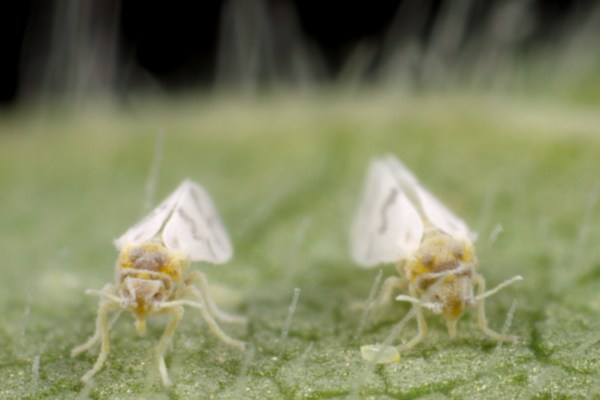
A cute couple!

REFERENCE:

Clower, D. F. & C. M. Watve. 1973. The bandedwinged whitefly as a pest of cotton, pp. 90–91. Proceedings of Beltwide Cotton Production and Research Conference, 11–12 January, Phoenix, Arizona. Cotton Council of America, Memphis, TN.

Malumphy, C., A. MacLeod & D. Eyre. 2010. Banded-winged whitefly Trialeurodes abutiloneus. Plant Pest Factsheet, The Food and Environment Research Agency (Fera), 4 pp.

Copyright © Ted C. MacRae 2012

Tiger lovin’

It seems I’m not the only one that finds tiger beetles irresistible. Gorgeous colors, long legs, and big eyes, they captivate me endlessly with their big, toothy jaws and charismatic behaviors. I blather incessantly about them, but today I’m going to do something that I rarely do here—shut up and let somebody else do the talking!

First up is Troy Bartlett (author of Nature Close-ups), who has just posted some stunning photographs of the super rare Cicindelidia highlandensis (Highlands Tiger Beetle) taken during his recent trip to Florida. I’ve photographed this species before, but not as well as Troy—the face shot he got has me green with envy!

Scarcely three minutes after Troy posted his photos, Delbert La Rue (author of Crooked Beak Workshop), a coleopterist who has studied scarabs for most of his life, shows that he too has fallen prey to the tigers’ charms. It’s a sad thing when collectors pin tiger beetles and put them in a collection drawer without doing anything to protect those stunning colors and amazingly intricate white markings. Delbert describes in detail just how he accomplishes this task, a beautifully prepared unit tray of the Willcox Playa classic Habroscelimorpha fulgoris erronea (Willcox Tiger Beetle) serving as proof of his technique. What mojo!

Please visit both of these blogs and let the authors know you’re down with their tiger lovin’!

Sexual Profiles

I recently happened upon these photographs of Habroscelimorpha severa (Saltmarsh Tiger Beetle), taken in early August last year at the terminus of Florida’s famous “Road to Nowhere“. I hadn’t thought to post them afterwards because I’d already shown a photograph of this species taken at the same spot during the previous year’s visit. I should have, as they are much better photographs than that initial attempt. Blame part of the first attempt on the fact that I was only in my third month of insect macrophotography, but the biggest reason for the improvement was because I’d gotten a little smarter and learned to use a blacklight to bring these extremely wary beetles to me at night rather than try to chase after them during the day. Still, I don’t get much enjoyment out of posting photos for no other reason than to post photos, so they’ve sat on my hard drive for the past year and a half. In looking at them again, however, I realized that the first and second, profiles of a female and a male, respectively, make for a nice comparison of the secondary sexual characters exhibited by adults of this species.

Habroscelimorpha severa (female) | Levy Co., Florida

Females exhibit fewer sexual characters than males, the main one being the presence of grooves on each side at the back of the pronotum (neck). These grooves function during mating, at which time the male grasps the female by the pronotum with his mandibles. This helps to provide a more secure grip for the male to prevent him from being dislodged during mating and subsequent mate guarding. The grooves themselves are not obvious in the photo, but the lack of setae (hairs) within them is, giving the female a less “hairy” look than the male. As with most insects, females also are more robust—their abdomens larger to make room for egg-making machinery, although in this and other tiger beetle species the difference is not that obvious.

Image

Habroscelimorpha severa (male) | Levy Co., Florida

Males are immediately recognizable by several respects. In addition to the smaller abdomen and “hairier” pronotum lacking lateral grooves, male tiger beetles in most of the “higher” genera exhibit brush-like pads on the undersides of the front tarsi (feet). The function of these pads is not completely clear, but prevailing opinion is that they somehow aid in gripping the female during mating. I’m not sure I buy into this—males do sometimes hold onto females with their front legs during mating, but how these pads improve grip escapes me. Further, it is my experience that males actually spend more time during mating and mate guarding with their front legs outstretched to each side. I’ve also noticed that males are reluctant to release females even when danger approaches (even in the form of a giant insect macrophotographer). I’ve seen males tenaciously clinging to the female as she violently tries to shake him off and flee from my approach. It makes me think that perhaps the tarsal pads serve some tactile function as a final warning of impending danger to a grasping male, allowing him to not give up his female until absolutely necessary (hey, it’s an idea—if you have an alternative idea I’d love to hear it). There is more, however—look at that big head!

Habroscelimorpha severa (male) | Levy Co., Florida

Actually,  the male’s head is no larger than the female’s, but the proportionately longer mandibles give the male a distinctly “big-headed” look.  In contrast, the labrum (upper lip) is shorter than the female’s (making the mandibles look longer still). Both of these characters are, again, related to the habit of grasping the female pronotum, with the longer mandibles allowing a more secure grip of the female pronotum and the shorter labrum adding even more functional length to the mandibles (I can also imagine that this might have some effect on choice of prey by males versus females). The male mandibles also have a greater amount of white coloration at their bases—this might simply be a function of the relatively larger size of the mandibles, but given that males of many species exhibit more white overall on both the mandibles and the labrum (the latter of which is usually smaller), it seems more logical to me that the white coloration serves as a visual cue for potential mate recognition.

“Hey baby, I like your grooves!”

“Yeah, well your white lips aren’t so bad either.”

Copyright © Ted C. MacRae 2012

Just repanda… er, wait a minute…

Update 10/7/12, 10:41 a.m.—Thanks to Ben Coulter, who pointed out my rather silly misidentification of these beetles that actually represent Cicindelidia ocellata rectilatera (Reticulated Tiger Beetle). I have only my failure to even consider the possibility of a southwestern species to blame for the error, as the evidence was staring me right in the face (the lack of any trace of lateral connecting band and, most obviously, the reddish parts on the underside). No wonder the habitat didn’t seem quite right! I was not aware of the occurrence of this species east of Texas, so I’ll have to dig a little bit to see if this is an unusual record. Pearson et al. (2006) show the northeastern limit of distribution coming very close to but not actually reaching the southwestern corner of Arkansas, and the closest records given by Graves & Pearson (1973) are in western Louisiana and adjoining Texas. It would be immensely rewarding should this turn out to be a new state record (though there are many sources still to check to confirm this)—not to mention the irony of it in view of the post title (call it a double “er, wait a minute”!). At any rate, I should have been a lot more excited when I saw it than I was.

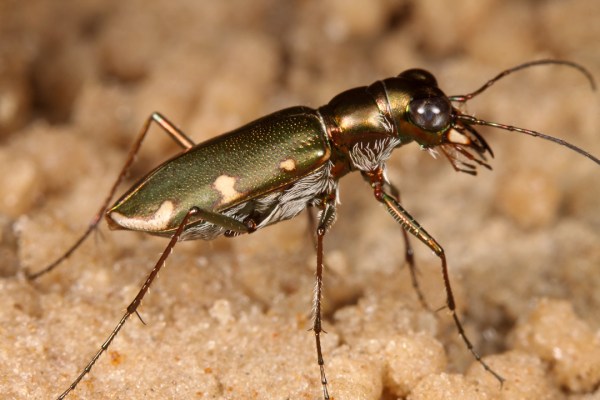
After a fun-filled day of photographing the Limestone Tiger Beetle in northern Texas, it was time to start working my way back to Missouri. I had one last goal that I wanted to accomplish before spending my last day in our state’s White River Hills, and that was to find and photograph the unbelievably gorgeous Cicindela formosa pigmentosignata. Dubbed the “Reddish-green Sand Tiger Beetle” by Erwin & Pearson (2008), this brilliant violaceous and nearly immaculate subspecies of the Big Sand Tiger Beetle is restricted to sandy areas of open pine forests in eastern Texas, southwestern Arkansas, and northwestern Louisiana (Pearson et al. 2006). I had a few specific localities that I’d gleaned from colleagues and the literature and targeted the two “best” (specificity of location, recent occurrence, and reasonably “on the way” back to Missouri) for Day 7 of the trip. The first site in Texas looked perfect—deep, dry sandy 2-tracks leading through open pine/oak forest, and I was actually surprised when I’d searched a mile or so of track and hadn’t yet seen one (the habitat just looked that good). Still, I spent quite a bit more time searching, thinking that numbers could be low and it might take such an effort. Sadly this was all in vain, and the time came to give up and try again at the second locality in Arkansas. The story was largely the same at this second locality also, and by late afternoon I had come to accept that this was one challenge that I was going to lose (for now at least).

Cicindela duodecimguttata Cicindelidia ocellata rectilatera | Nevada Co., Arkansas

As I searched one bit of potential habitat at the Arkansas location, I noted the presence of Cicindela repanda (Bronzed Tiger Beetle). This species is dreadfully common throughout much of the eastern U.S. in just about any near-water habitat, which told me I was probably too close to water to find the higher, drier-ground preferring Big Sand Tigers. I’ve seen millions of C. repanda through the years (this may not be an exaggeration), and since they show so little polytopism (geographically-based variation), at least in the parts of its distribution that I have visited, I hardly pay them mind anymore. As I was walking, however, something caused me to take a closer look—some of them didn’t seem quite “right.” Of course, you can’t just walk up to a tiger beetle and stoop down for a good look at it. Stalking is required, usually of several individuals before finding one that you can approach closely enough to see the necessary characters, and when I did this I realized most of the C.repanda” I was seeing were actually a different species—Cicindela duodecimguttata (12-spotted Tiger Beetle)!

Even tiger beetles get bored during sex—this female preening her antennae seems oblivious to the male engaging her.

I get the impression from literature sources that 12-spotted Tiger Beetles are quite common further east, especially in the northeastern U.S. and southeastern Canada. However, here in the central U.S. they are not commonly encountered. In fact, these are the first of the species that I have seen since I began photographing tiger beetles more than 3 years ago. In Missouri the few instances that I have seen them were along creeks and small rivers with banks composed of sand and a fair bit of dark clay. This makes sense, given their generally darker coloration compared to Bronzed Tiger Beetles, and it is this character that first stands out amongst the hoardes of C. repanda with which it usually co-occurs.  Once the darker coloration draws the eye, the markings of the elytra—reduced and broken into six spots (usually) on each one—confirm its identity. Despite the similarity of appearance to C. repanda, this species is actually more closely related to Cicindela oregona (Western Tiger Beetle), an exceedingly common species found from the Rocky Mountains to the Pacific Coast and north deep into Alaska. In fact, the two species are so closely that they have formed a hybrid zone where they come into contact along the front range of the Rockies—one could almost argue that they are only subspecifically distinct because of this. 

A male pauses briefly while hunting for prey (or mates).

That I found them in this particular habitat was a bit of a surprise to me. I mentioned that in Missouri I’ve seen them on darker creek and river banks, but the creek bank at this location was quite lightly colored and seemed to consist almost entirely of sand. There were a few C. repanda mixed in with this small population. In all, it was a welcome consolation prize that made up for not finding C. formosa pigmentosignata—sort of!

Habitat for Cicindela duodecimguttata Cicindelidia ocellata rectilatera along Mill Creek, Nevada Co., Arkansas.

REFERENCES:

Erwin, T. L. and D. L. Pearson. 2008. A Treatise on the Western Hemisphere Caraboidea (Coleoptera). Their classification, distributions, and ways of life. Volume II (Carabidae-Nebriiformes 2-Cicindelitae). Pensoft Series Faunistica 84. Pensoft Publishers, Sofia, 400 pp.

Pearson, D. L., C. B. Knisley and C. J. Kazilek. 2006. A Field Guide to the Tiger Beetles of the United States and Canada. Oxford University Press, New York, 227 pp.

Added: Graves, R. L. & D. L. Pearson. 1973. The tiger beetles of Arkansas, Louisiana, and Mississippi (Coleoptera: Cicindelidae). Transactions of the American Entomological Society 99(2):157–203.

Added: Pensoft

Copyright © Ted C. MacRae 2012

Some recent publications

I’ve had a few papers published in recent months that may be of interest to some. After a string of papers in 2011 focused exclusively on tiger beetles (five in all), these latest three represent sort a return to my “roots”: taxonomy and biosystematics of woodboring beetles (Buprestidae and Cerambycidae). Summaries are provided below, and hyperlinks in the citations lead to downloadable PDFs for those wishing to see the gory details.

  • MacRae, T. C. & R. L. Westcott. 2012. Nomenclatural history of Melanophila drummondi ab. nicolayi Obenberger, 1944 (Coleoptera: Buprestidae), a change of authorship and synonymy under Phaenops drummondi (Kirby 1837), and a new distribution record and summary of larval hosts for the species. The Pan-Pacific Entomologist 88(1):87–91.
     
    This paper can be considered of the “taxonomic housekeeping” sort. It concerns an “aberration” of the common, widespread jewel beetle species Phaenops drummondi. The current version of the International Code of Zoological Nomenclature (ICZN 1999) considers aberrations and other infrasubspecific (rank lower than subspecies) taxa as unavailable names with no taxonomic standing. However, they may be considered valid depending on date of publication and how they were treated by subsequent authors. In the majority of cases the guidance is clear on whether a given aberration, variety, form, etc. is considered unavailable or valid. However, there are times when multiple, conflicting interpretations are possible. The case described in this paper is one example, and even though the taxon clearly falls within the range of variability exhibited by the parent species, careful study of multiple provisions of The Code were required to determine its proper status. In the end, a change of authorship followed by formal synonymy were deemed the best course of action. Updated information on the distribution of P. drummondi and a summary of known larval hosts are also provided.
     
  • MacRae, T. C., L. G. Bezark & I. Swift. 2012. Notes on distribution and host plants of Cerambycidae (Coleoptera) from southern México. The Pan-Pacific Entomologist 88(2):173–184.
     
    From 2004–2006 I made three collecting trips to México with my friend and colleague, Chuck Bellamy. Our main focus was the rich diversity of jewel beetles that occur in the relatively intact, dry, tropical thorn forests that stretch across the southern states of Guerrero, Michoacan, Oaxaca, and Puebla, and in this respect we were quite successful. I also have an interest in longhorned beetles, but I try to limit my scope in this family to the Nearctic fauna and didn’t specifically target these beetles during those trips. Still, many species were encountered during the course of beating potential jewel beetle host plants. As with jewel beetles, the longhorned beetle fauna of México is rich but very incompletely known, with distributional data below the country level and knowledge of host plants lacking or inadequate for most species. This paper presents specific distributional and host plant information for 78 species in 50 genera of longhorned beetles collected during those trips. Included within the data presented are 47 new state records, 47 new adult host records, and 60 new flower records.
     
  • Steury, B. W., T. C. MacRae & E. T. Oberg. 2012. Annotated list of the metallic wood-boring beetles (Insecta: Coleoptera: Buprestidae) of the George Washington Memorial Parkway, Fairfax County, Virginia.  Banisteria 39:71–75.
     
    Lead author Brent Steury of the U.S. National Park Service contacted me last year about identifying jewel beetles that had been collected at a number of units in the George Washington Memorial Parkway during recent BioBlitz surveys and as by-catch from studies targeting other arthropods. The surveys were worthy of reporting on, as 23 species in nine jewel beetle genera were represented in the material collected—including two species reported for the first time from Virginia: Paragrilus tenuis (LeConte) and Pachyschelus purpureus purpureus (Say). Information is also provided on the collecting methods used during the surveys, with Malaise traps, hand netting, and pan traps being the only ones successful in capturing jewel beetles (Lindgren funnel and pitfall traps did not capture any).

REFERENCE: 

International Commission on Zoological Nomenclature [ICZN]. 1999. International Code of Zoological Nomenclature, 4th Edition. The International Trust for Zoological Nomenclature, c/o Natural History Museum, London. xxix + 306 pp.

Copyright © Ted C. MacRae 2012

Wasp Wednesday—Not!

In early September, the agricultural landscape in the central U.S. awakens from its monotonous cloak of summer green and turns ablaze with a hundred shades of yellow, gold, and tawny. The “fall composites” as they are commonly called, a dazzling diversity of mostly yellow-flowered herbaceous plants in the family Asteraceae, are one of the chief contributors to this explosion of color, and among them none contribute more than goldenrod (Solidago sp.). Occupying nearly every fence row, drainage ditch, and fallow field, the bright yellow fronds of tiny flowers are not only pleasing to the eyes of humans, but a smorgasbord of pollen for all manner of flower-feeding insects. Bees, flies, wasps, beetles, and moths all flock to the bounty in numbers rarely seen during the dog days of summer. Spiders, ambush bugs, mantids, and other predators take up residence amongst the flowers as well—not to feed on the flowers, but rather the abundance of flower-feeding insects upon which they will prey. It is rare to find a goldenrod plant without at least a few insects upon it.

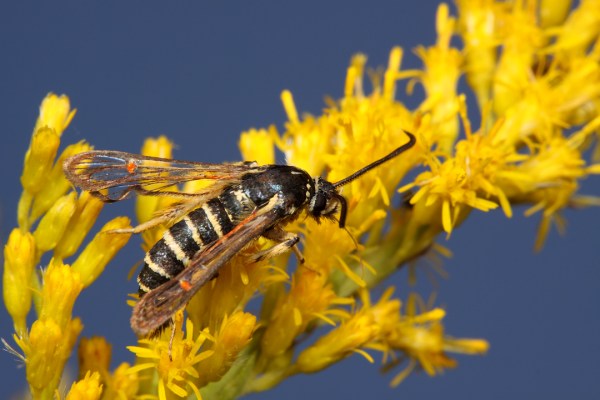
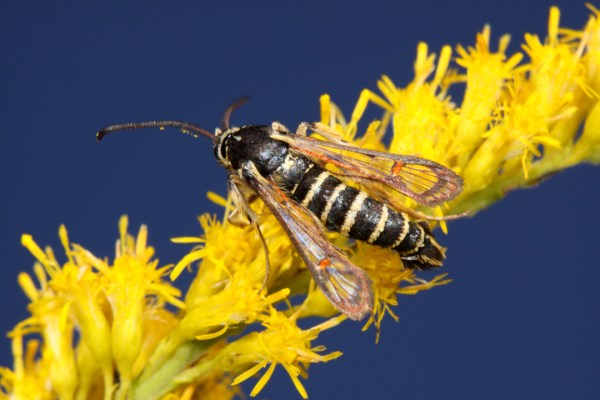
Synanthedon decipiens (oak gall borer) on Solidago sp. | Mississippi Co., Missouri

My favorite goldenrod insects are, of course, the longhorned beetles of the genus Megacyllene, and at least here in Missouri there are none finer than Megacyllene decora (see A classic fall ‘bycid). However, I keep an eye out for other insects as well, and when I first saw this “wasp” sitting on a flower head I had to do a bit of a double take—”something” just didn’t seem quite right about it. A little lean forward was all that was needed to confirm that this was indeed no wasp, but rather a clearwing moth (order Lepidoptera, family Sesiidae)¹. To my mind, of the many insects that try to mimic wasps, none do so more effectively than members of this family. From the elongate body to the yellow abdominal banding and narrow transparent wings, everything about this moth says “wasp”—well, almost everything or I wouldn’t have done a double take to begin with.

¹ I hope Eric Eaton, author of Bug Eric and its Wasp Wednesday series, will forgive my use of his title for this post.

Apparently a male, these moths use pheromones to locate females for mating.

I actually did a fair bit of work with this group in my early years with the Department of Agriculture. Females of most (all?) species emit species-specific pheromone blends that males can detect at incredibly low volumes (only a few molecules are needed to elicit a response by the male antenna). Components of these pheromones have been synthesized, and since a number of species have economic importance in landscape and nursery settings (larvae of most species are borers of woody or perennial plants), these synthetic pheromone blends are commonly employed in traps for survey and detection (e.g., Snow et al. 1985). I conducted surveys for several years during the mid 1980’s in east-central Missouri using these traps and, thus, developed a good eye for distinguishing these moths in flight from the wasps that they so effectively mimic. In fact, I used to keep a pheromone tag on my waist bag, which resulted in male moths frequently flying up to me and “searching” for the female. I never tired of seeing the faces of nursery growers—first showing concern as they were convinced I was under attack by a wasp, and then shock as I calmly reached out and grabbed the “wasp” in mid-flight with my bare hand! (And to be perfectly honest, it took me a while before I could bring myself to start grabbing them out of the air!) I even had one nursery grower continue insisting it was a wasp and could sting even after I had caught it (“Naw, them things sting—I seen ’em!)

The moth in these photos seems to best match Synanthdedon decipiens, widely distributed east of the Rockies and inhabiting the woody galls of cynipid wasps on oaks. In Georgia adults of this species exhibit a bimodal pattern of seasonal occurrence suggestive of two generations per year (Snow et al. 1985), so this September-occurring male might represent a second Missouri generation as well.

REFERENCES:

Snow, J. W., T. D. Eichlin & J. H. Tumlinson. 1985. Seasonal captures of clearwing moths (Sesiidae) in traps baited with various formulations of 3,13-0ctadecadienyl acetate and alcohol. Journal of Agricultural Research 2(1):73–84.

Copyright © Ted C. MacRae 2012

Consolation Crossidius

Rewind back to Day 2 of this year’s Annual Fall Tiger Beetle Trip at Gloss Mountain State Park in northwestern Oklahoma—these were actually the first non-Missouri beetles that I photographed on the trip. Crossidius pulchellus is a longhorned beetle (family Cerambycidae) that occurs commonly on flowers of broom snakeweed (Gutierrezia sarothrae) and relatives throughout the Great Plains and southern Rocky Mountains.

Crossidius pulchellus on flowers of Gutierrezia sarothrae | Major Co., Oklahoma. The dense vestiture (covering of hairs) of the beetles is made more conspicuous by backlighting the beetles with the sun.

I find it rather ironic that Crossidius pulchellus was the first western beetle that I encountered, since my original plans for this year’s late-season trip centered on looking specifically for longhorned beetles in the genus Crossidius (see last year’s Crossidius coralinus fulgidus for an extraordinarily beautiful representative of this genus). Unlike the vast majority of the family that develop as larvae in dead wood, species in this diverse, exclusively western North American genus bore through the roots living, perennial shrubs belonging to the genera Gutierrezia, Chrysothamnus/Ericameria, and Haplopappus (family Asteraceae)—the “goldenrods” of the west, they bloom in widespread, yellow-flowered profusion as summer turns to fall. A wide variety of insects are attracted to these blooms, most of which—bees, flies, wasps, moths, etc.—are opportunistic pollinators. Crossidius beetles, however, are intimately associated with the plants, seemingly spending their entire, brief adult lives either perched, feeding, or mating upon the flowers. Even at night, rather than leaving the plants to search for protected hiding spots, they simply bury themselves deeper amongst the flowers and await the next morning’s first, warming rays of sunlight.

Sampling the diversity of Crossidius that springs forth each year across the west requires carefully timed travel to multiple localities spread widely across rough terrain. As longhorned beetles go, the genus exhibits an astounding level of polytopism (geographically-based variation) that in many respects resembles that exhibited by North American tiger beetles. This has resulted in the description of a relatively large number of species, most of which can be further divided into numerous recognizable subspecies and even local morphs. The discontinuous distribution of their host plants across the broken western topography and resulting isolation of local populations have contributed to this variability, further complicated by hybridization among species occurring together in a given locality (Linsley & Chemsak 1961). I got a taste of the diversity of these beetles during last year’s fall tiger beetle trip as I looped through Colorado, Idaho, and Utah. Although my plans to look for them this year didn’t work out, my appetite remains whetted. There is always next year!

REFERENCE:

Linsley, E. G. & J. A. Chemsak. 1961. A distributional and taxonomic study of the genus Crossidius (Coleoptera, Cerambycidae). Miscellaneous Publications of the Entomological Society of America 3(2):26–64, 3 color plates.

An uncommon fall-active Acmaeodera

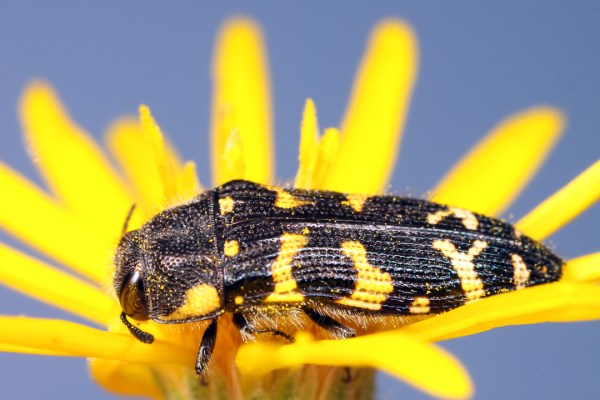
During last week’s visit to Alabaster Caverns State Park in northeastern Oklahoma (Woodward Co.), I saw a fair number of jewel beetles (family Buprestidae) representing a then-unidentified species of Acmaeodera. All of the individuals that I saw were visiting flowers of Heterotheca stenophylla (family Asteraceae), and had it not been fall I wouldn’t have thought much about it. However, fall activity is unusual among North American jewel beetles, particularly in the genus Acmaeodera. An occasional straggler from earlier in the season is one thing, but the numbers seen (perhaps close to two dozen) over the course of a couple hours left no doubt in my mind that these were newly active adults. In North America, most species of Acmaeodera are active during the spring and early summer months, during which time they visit a wide variety of flowers (but especially asteraceous species) to feed on pollen. They can also be found in late summer in southeast Arizona, but in that area nearly all jewel beetles (and a large number of other insect groups as well) occur in synchrony with the monsoonal season that begins in July. Only in southern Texas (and further south in México) have I seen truly fall-active jewel beetles, including several species of Acmaeodera.

This actually was not the first time I had seen this species during fall in Oklahoma. Last year I made a brief stop at Gloss Mountain State Park (about 30 miles southeast of Alabaster Caverns in Major Co.) on my way back from a late September collecting trip to Colorado/Utah/Idaho (still convinced that the Beautiful Tiger Beetle, Cicindela pulchra, might be there). Then, as now, I found more than a handful of adults (also visiting flowers of H. stenophylla), suggesting this was true fall activity and causing me to think, “Hmm, that’s weird.” I was pressed for time, however, and didn’t even grab my camera bag for the short hour or so that I had to look around, and once I returned home I quickly resumed my routine and forgot about trying to identify the beetles.

Acmaeodera macra | Woodward Co., Oklahoma

Returning home after this year’s trip I was not so inclined to forget, and when I mentioned it to my friend Chuck Bellamy he suggested that it might be the fall-active species, Acmaeodera macra (MCZ type specimen). Immediately I knew this was correct, as I had actually seen this species once before—a single specimen that I collected nearly 30 years ago  in south Texas at Bentsen-Rio Grandy Valley State Park on a Helianthus annuus flower (MacRae 2006). I don’t know why I didn’t think of that species when I saw it this time, other than perhaps I was still under the impression that this uncommonly encountered species was limited to the Rio Grande Valley and adjacent areas as stated by Vogt (1949) and Westcott et al. (1979). Recently, however, Westcott (2001) provided the first records of this species from outside of Texas—from Oklahoma!—and later recorded it also from Nuevo León, México (Westcott 2008).¹

¹ Nelson et al. (2008), in their North American catalogue of Buprestidae, also list Arizona in the distribution of this species. However, I am unaware of any supporting references for its occurrence there, and the catalogue is known to be frustratingly rife with errors and omissions. 

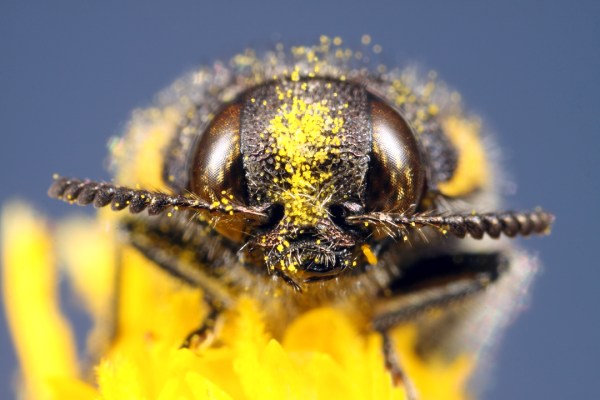
Bathed in pollen!

The Oklahoma records for this species given by Westcott (2001) include localities in Blaine, Cleveland, Greer, and Oklahoma Counties (with the latter taken on Grindelia sp., presumably flowers). Interestingly, with the exception of Greer Co. all of these counties lie along the Blaine Escarpment that separates the Gypsum Hills and Red Hills physiographic regions, and the two additional counties that I have now recorded for the species in Oklahoma (Major and Woodward) lie further to the north along this escarpment as well. With these new records, Alabaster Caverns now becomes the northernmost known outpost for A. macra. However, since Woodward Co. lies along the northern tier of counties in Oklahoma and the Blaine Escarpment extends further into south-central Kansas, it is possible that an even more northern outpost might eventually be found for the species. Little is known about the biology of this species—the only host records are for adults and include my sunflower record (MacRae 2006), Vogt’s (1949) mention of the species’ preference for “composite flowers” and records of adults on Acacia berlandieri and visiting flowers of Verbesina encelioides (Westcott et al. 1979). It’s anybody’s guess as to what the larval host is, but my guess is that in Oklahoma it’s restricted to vertical walls and talus slopes, since I never saw individuals outside of these specific situations despite the widespread occurrence of its H. stenophylla flower host.

REFERENCES:

MacRae, T. C. 2006. Distributional and biological notes on North American Buprestidae (Coleoptera), with comments on variation in Anthaxia (Haplanthaxia) viridicornis (Say) and A. (H.) viridfrons Gory. The Pan-Pacific Entomologist 82(2):166–199.

Nelson, G. H., G. C. Walters, Jr., R. D. Haines, & C. L. Bellamy.  2008.  A Catalogue and Bibliography of the Buprestoidea of American North of Mexico.  Coleopterists Society Special Publication No. 4, The Coleopterists Society, North Potomac, Maryland, 274 pp.

Vogt, G. H. 1949. A biologically annotated list of the Buprestidae of the Lower Rio Grande Valley, Texas. Annals of the Entomological Society of America 42(2): 192–202.

Westcott, R. L. 2001.  An interspecific hybrid in the genus Acmaeodera Eschscholta, a taxonomic note on Chrysobothris kelloggi Knull, and new distribution and host records for United States and Canadian species in these and other genera (Coleoptera: Buprestidae).  Jewel Beetles, 10:76-81.

Westcott, R. L., W. F. Barr, G. H. Nelson, & D. S. Verity.  1979.  Distributional and biological notes notes on North and Central American species of Acmaeodera (Coleoptera: Buprestidae).  The Coleopterists Bulletin, 33(2):169-181.

Copyright © Ted C. MacRae 2012