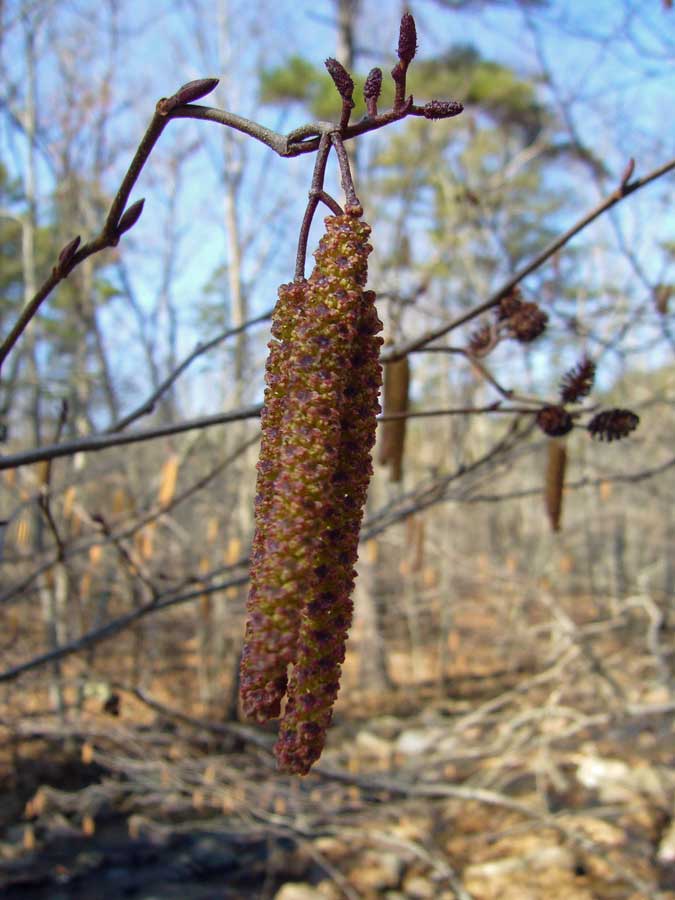
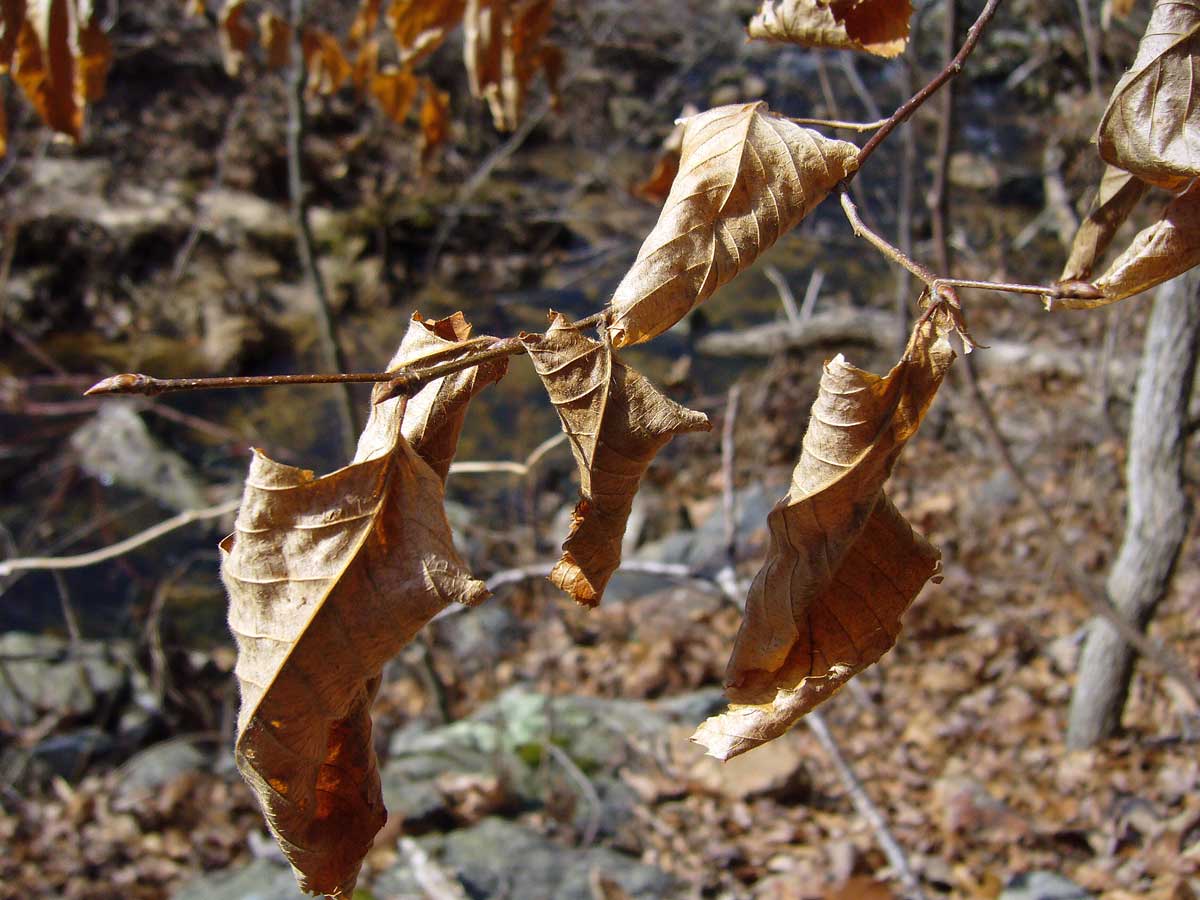
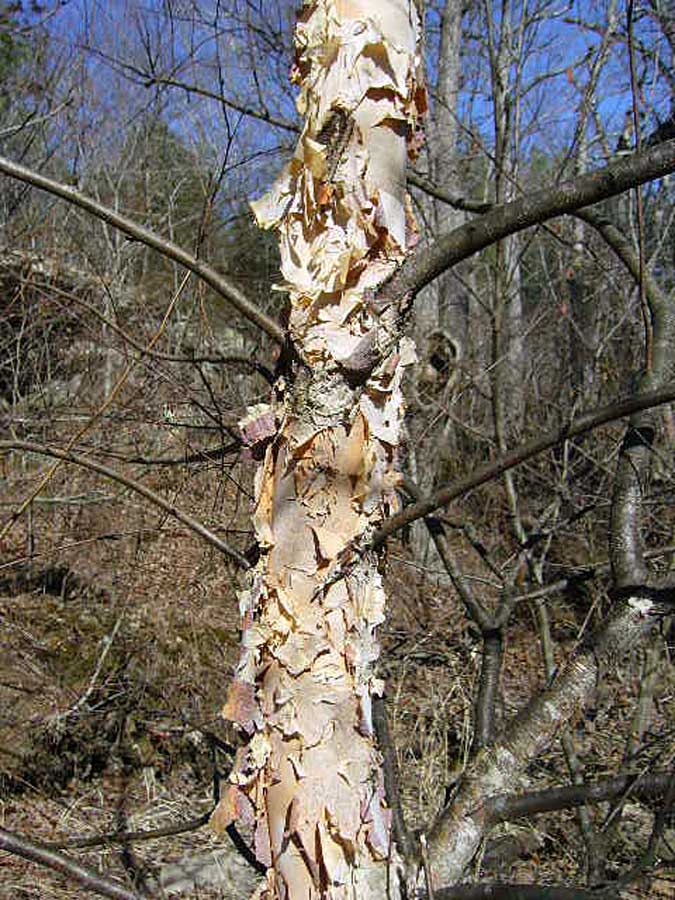
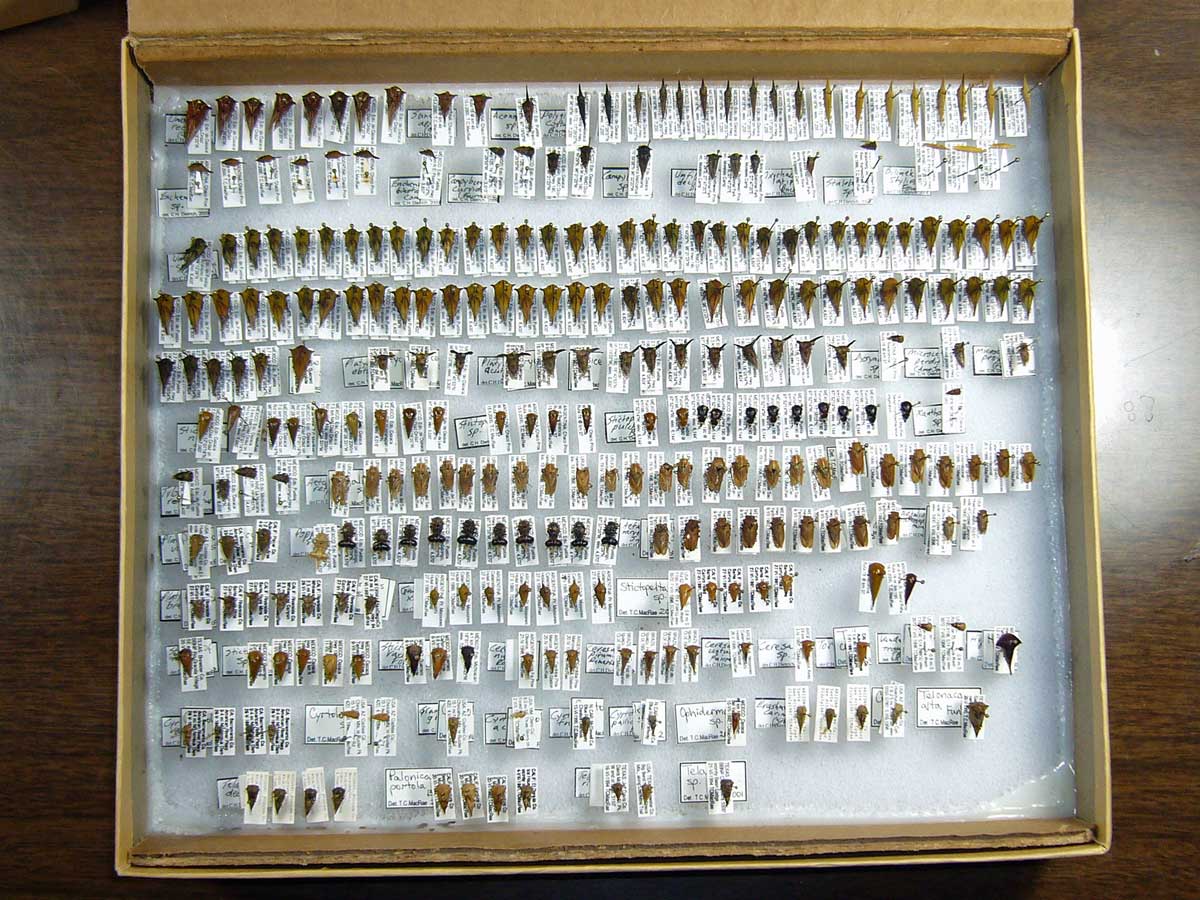
Winter botany quiz #2

In the first winter botany quiz, I learned that I have some rather astute botanists amongst my readership. They were not only able to quickly identify to species every plant I had pictured but also identify their commonality, sometimes from quite afar. As a result, this one is harder.  I use the term “winter botany quiz” in the broadest possible sense – just because it’s winter here doesn’t mean it’s cold everywhere! All of the photos were taken in the same general (for now unspecified) locality during late November and early December (this paragraph simply reeks of clues!).

To give everyone a fair chance, I’ve turned on comment moderation so people can submit their answers without seeing what has already been submitted.  I’ll remove moderation after a couple days or so.  First one with all the right answers wins the admiration and jealousy of their peers!

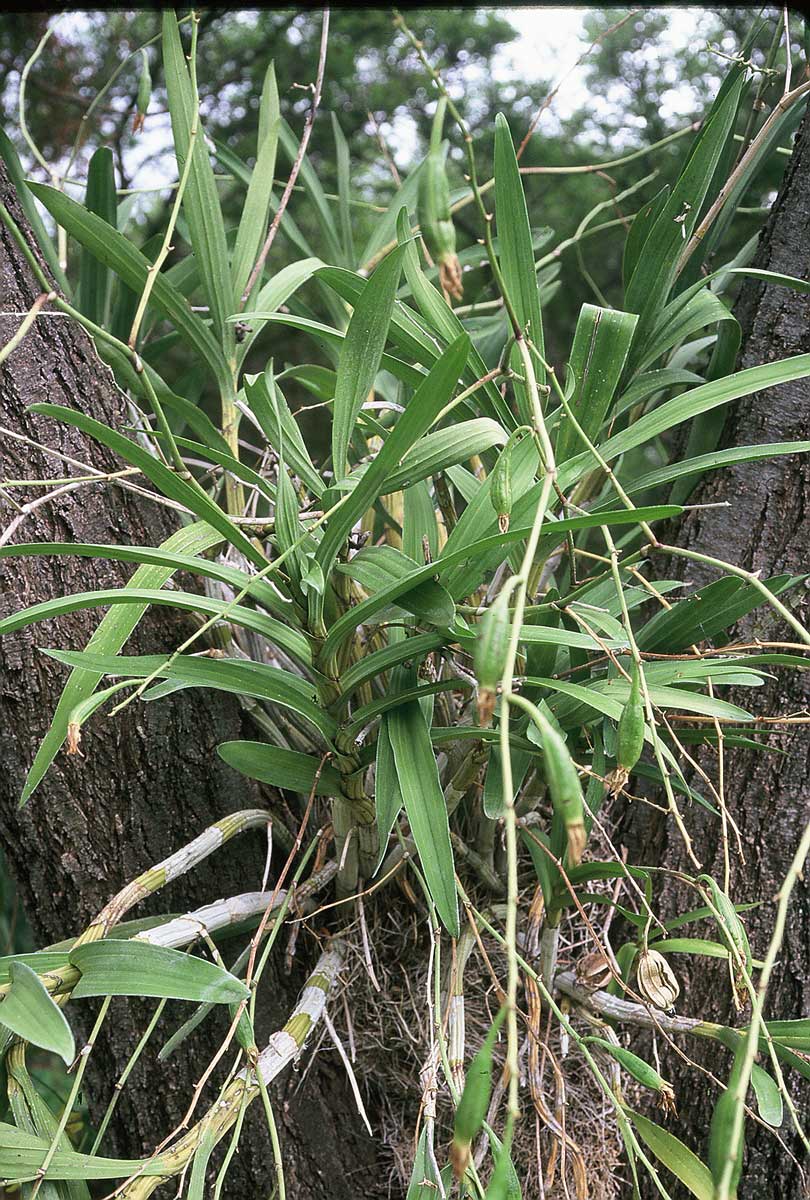
424046-r1-e018_018_21

#1A

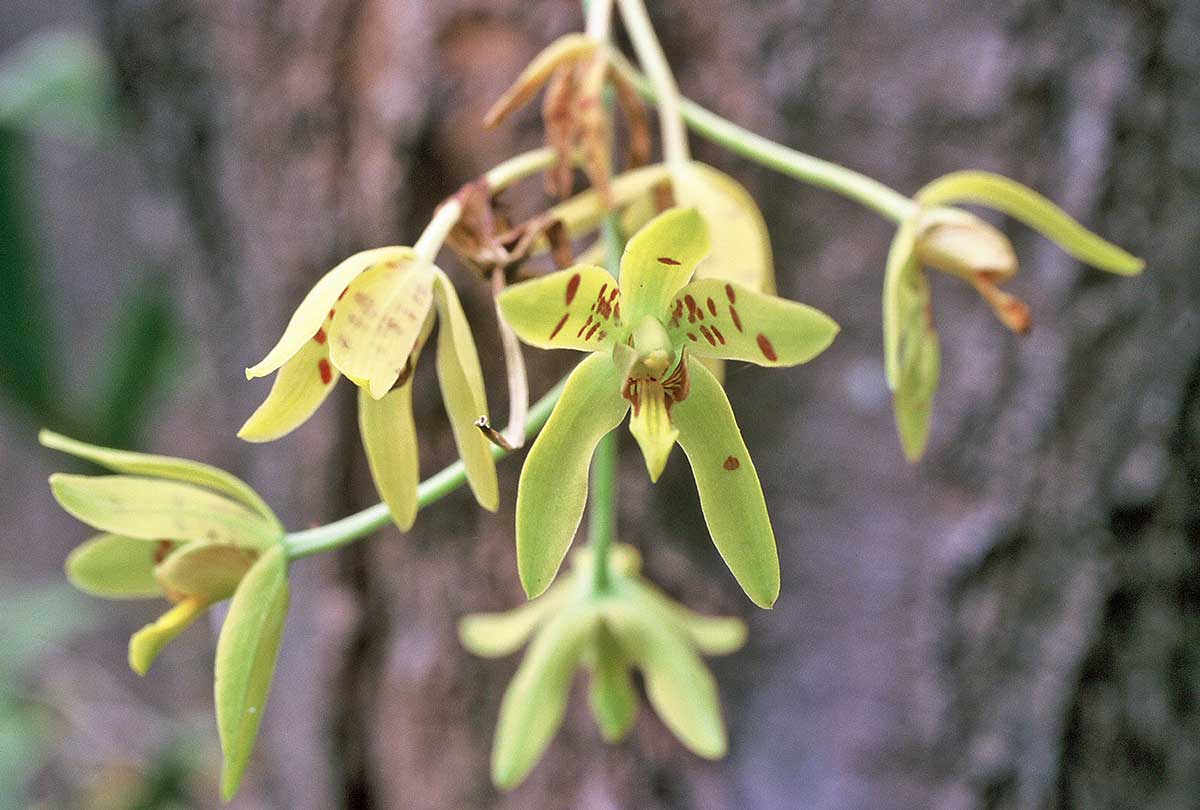
424046-r1-e019_019_21

#1B - closeup of flowers in #1A

424046-r1-e020_020_2

#2A

424046-r1-e021_021_2

#2B - closeup of flowers of #2A

424046-r1-e022_022_2

#3A - the vine, not the trees

424046-r1-e023_023_2

#3B - closeup of vine base

Copyright © Ted C. MacRae 2009

Add to FacebookAdd to NewsvineAdd to DiggAdd to Del.icio.usAdd to StumbleuponAdd to RedditAdd to BlinklistAdd to Ma.gnoliaAdd to TechnoratiAdd to Furl

Magodo – giant twig wilter

petascelis-remipes

In previous posts, I have highlighted some of the insects I observed on a trip to South Africa in November-December 1999.  All of the photos I have shown to this point were taken at Borakalalo National Park in North West Province or at the Geelhoutbos farm of Susan Strauss below the Waterberg Range in the formerly Northern, now Limpopo Province.  Both of these locations are deep inside the bushveld, providing ample opportunity to observe an incredible diversity of insect life.  This is not to say that insects, even spectacular ones, cannot be found in more urban areas.  During the weekend between those two mini-expeditions, I stayed with my friend and colleague, Chuck Bellamy, at his home in Pretoria, a beautiful city with lovely architecture, elegant gardens… and some very impressive bugs!  The bug in this photo was found on a tree in a shrubby enclave, and at well over 35 mm in length it is easily the largest leaf-footed bug (order Hemiptera, family Coreidae) that I have ever seen.  Its chunky build, velvety black coloration with thin yellow lines along the sides and down the center of the thorax, and greatly enlarged hind femora quickly led me to a provisional identification of a male Petascelis remipes, or giant twig wilter.  This ID was confirmed by my friend and colleague Harry Brailovsky, an entomologist at UNAM (Universidad Nacional Autónoma de México) and world expert on Coreidae (and who, incidentally, just recently published a review of this Afrotropical genus – Brailovsky 2008).

According to Picker et al. (2002), these insects are found on plants in the genus Combretum.  Like most species in the family, they have scent (“stink”) glands that provide defensive capabilities. Adults are gregarious and bold, walking towards intruders with antennae vibrating when disturbed, and they are apparently capable of squirting their defensive secretions for some distance.  The nymphs are black as well but futher advertise their noxiousness with warning coloration of red spots on a whitish background. Interestingly, and despite their powerful chemical defenses, this species is considered a delicacy in parts of Mozambique where it is known as Magodo.  In a post called Insects for Dinner (in a blog with the eerily similar title, Beating about the Bush), Bart Wursten of Gorongosa National Park in Mozambique describes how local folk burn small patches of the grassland in which these insects are found to smoke them out and catch them.  The Magodo hunters kill the bugs by breaking off the head and removing the scent glands, which releases a very strong almond-like smell.  In doing this, the locals are able to catch considerable quantities of the bugs, which they eat with supper.

Lest you believe such practices are an anomaly, van Huis (2003) has compiled a list of about 250 insect species used as food in sub-Saharan Africa.  Lepidoptera, Orthoptera and Coleoptera represented the bulk (78%) of species eaten, with Isoptera, Hemiptera, Hymenoptera, Diptera and Odonota making up the rest.  Several examples of toxic insects and the traditional methods used to remove the poisons were given.  It was noted that whether or not insects are eaten depends not only on taste and nutritional value, but also on customs and ethnic preferences or prohibitions.  I’m not one to shy away from the thought of eating insects – after all, shrimp are just bugs that live in water, and insects rank far lower in ‘slime factor’ than many other invertebrates (e.g., oysters) that enjoy great popularity in our culture.  I’ve eaten roasted beet armyworm (Spodoptera exigua) pupae and munched on chocolate covered ants, but that’s kid stuff – the armyworms tasted like the soy sauce in which they were roasted, and the ants tasted like, well… chocolate.  I did once eat a softshelled crab (alive!), and I actually hope to one day taste the enormous grub of the giant metallic ceiba borer, Euchroma gigantea, eaten by indigenous cultures in Central and South America.   Still, I think I’d need a lot of faith in my chef’s scent gland removal prowess before I started scarfing Magodo down like popcorn.

What insects have you eaten?

REFERENCES:

Brailovsky, H.  2008. Notes on the genus Petascelis Signoret and description of one new species (Hemiptera: Heteroptera: Coreidae: Coreinae: Petascelini).  Zootaxa 1749:18–26.

Picker, M., C. Griffiths and A. Weaving. 2002. Field Guide to Insects of South Africa. Struik Publishers, Cape Town, 444 pp.

van Huis, A. 2003. Insects as food in sub-Saharan Africa. Insect Science and Its Application 23(3):163-185.

Copyright © Ted C. MacRae 2009

Add to FacebookAdd to NewsvineAdd to DiggAdd to Del.icio.usAdd to StumbleuponAdd to RedditAdd to BlinklistAdd to Ma.gnoliaAdd to TechnoratiAdd to Furl

Illinois Butterfly Monitoring Network

For those of you who plan to be in the Chicago area on Saturday, March 7th, perhaps you’ll be interested in attending the 2009 Illinois Butterfly Monitoring Network Annual Indoor Workshop. I’ll be giving a talk entitled, “From Hilltops to Swamps: Insects in Missouri’s Rarest Prairies,” in which I’ll focus on the natural history and some associated insects in two of Missouri’s most critically imperiled natural communities – the loess hilltop prairies in the northwestern corner of the state, and the sand prairies of the southeastern lowlands. How a beetle guy ended up being invited to talk to a butterfly group is still a little confusing to me, but apparently IBMN Director, Doug Taron (author of Gossamer Tapestry) put in a good word for me.

The Illinois Butterfly Monitoring Network (IBMN) is a citizen scientist program monitoring the health of butterfly populations throughout northeastern and central Illinois.

The IBMN was initiated in 1987 by The Nature Conservancy to explore the effects of habitat management on invertebrates. From 7 sites in the Chicagoland area in its first year, the program has expanded greatly and is now monitoring more than 100 sites throughout Illinois.  Butterflies are ideal “indicator organisms” with which to monitor the effects of prescribed burning and other management techniques, since many species are restricted to intact prairie and savanna remnants by narrow habitat requirements.  The fact that they are relatively easy to identify allows them to be monitored in a cost effective manner with the help of dedicated amateurs.  Much the same can be said for tiger beetles (which will – surprise! – be featured prominently my talk).

The workshop will be held Saturday, March 7, 2009, 9:30 AM until 3:00 PM at the Gail Borden Public Library, 270 North Grove Avenue, Elgin (directions).  Registration is required, contact Mel Manner at (847) 464-4426 or by email.

Copyright © Ted C. MacRae 2009

Add to FacebookAdd to NewsvineAdd to DiggAdd to Del.icio.usAdd to StumbleuponAdd to RedditAdd to BlinklistAdd to Ma.gnoliaAdd to TechnoratiAdd to Furl

Ship-timber beetle

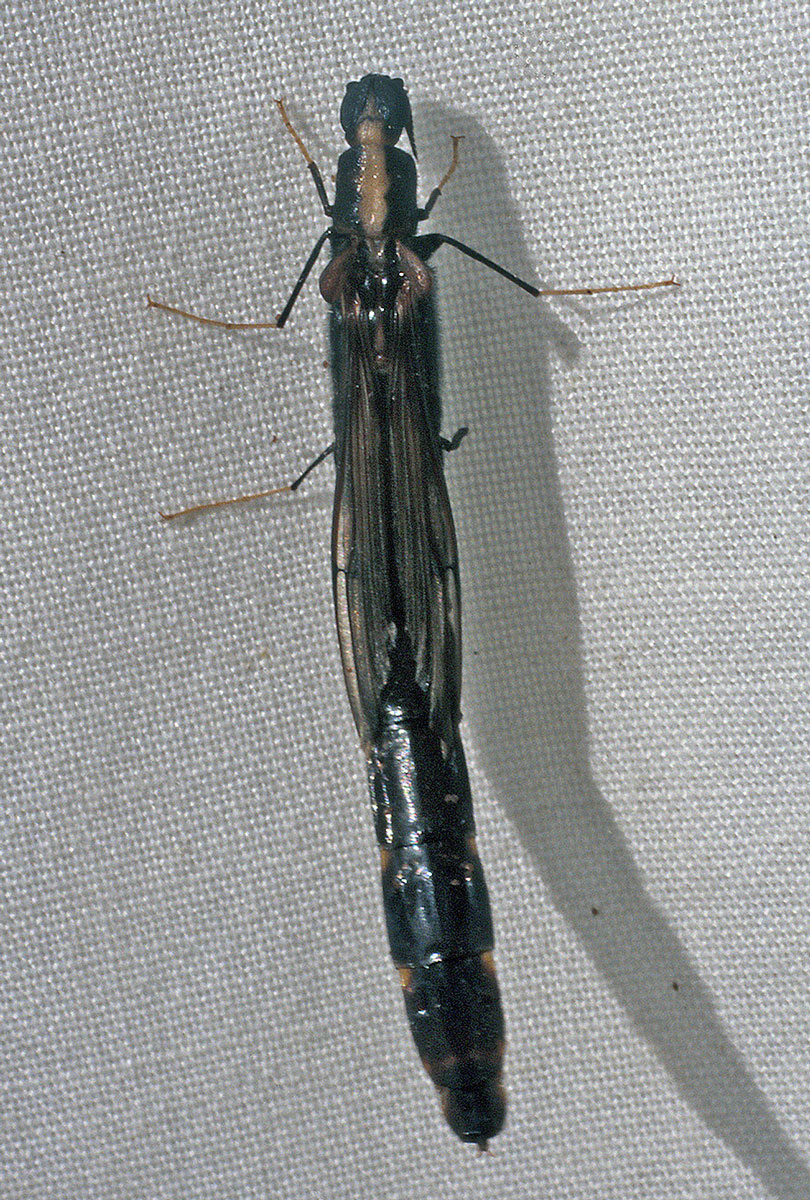
Atractocerus brevicornis

One of the more unusual, and enigmatic, beetles that I encountered in South Africa was this beetle in the pantropical genus Atractocerus.  Placed in the family Lymexylidae (ship-timber beetles), species in this genus look less like beetles than they do large flying ants or strange damselflies due to their highly reduced elytra that expose their greatly elongated abdomen and leave the hind wings uncovered.  The hind wings also are unusual in that they are held fan-like in repose rather than folded as in most other beetles.  Atractocerus brevicornis is the only species in the genus found in Africa (Scholtz & Holm 1985).

Adults are attracted to light at night, as was this individual that came to our ultraviolet light at Geelhoutbos farm below the Waterberg Range in Limpopo Province. Nothing is known about the biology of Atractocerus, but larvae of other genera are reported to bore into hardwoods and palm stems (Picker et al. 2002). Larvae of the genera Lymexylon and Melittomma are believed to form symbiotic associations with ambrosia fungi that grow on the walls of their galleries (Young, 2002).  Adult females deposit fungal spores in a sticky matrix when they lay their eggs, and the hatching larvae carry the spores into wood on their bodies.  The large eyes of Atractocerus, however, suggest a predatory lifestyle. The common name of the family originates from a northern European species that has in the past been a destructive pest of ship timbers.

Atractocerus species are rarely encountered and therefore, not well studied. Their evolutionary history is still unknown; however, the oldest known lymexylid fossil is a very primitive member of the genus Atractocerus preserved in 100 myo Burmese amber (Grimwold & Engel 2005). Thus, the lineage containing these beetles had already appeared by the mid-Cretaceous and may have originated as early as the Jurassic, a fact that has earned them the moniker “living fossils.” These beetles were once thought to be among the most primitive of all Coleoptera – their simple wing venation, almost undifferentiated antennae and tarsi, and naked abdomen being likened to a supposed neuropteran common ancestor. Most authors now consider the family to be most closely related to the cucujiform groups Cleroidea and Cucujoidea (Wheeler 1986, Young 2002), although some have placed it in the Elateriformia near the Lampyridae based on wing venation. Scholtz and Holm (1985) accepted a cucujiform placement but related the group to the Styopidae (twisted-winged parasites), apparently due to the similarity of their highly reduced forwings.  At the same time, they acknowledged the many morphological and behavioral differences between the two groups, the latter itself being the subject of much evolutionary debate due to disagreement about whether the reduced forwings of male stylopids are truly homologous to the elytra of Coleoptera (some have even suggested homology with the halteres of Diptera that were switched from the metathorax to the mesothorax as a result of homeotic mutation). Most authors now place this latter group in the separate order Strepsiptera.

REFERENCES:

Grimaldi, D. and M. S. Engel. 2005. Evolution of the Insects. Cambridge University Press, New York, xv + 755 pp.

Picker, M., C. Griffiths and A. Weaving. 2002. Field Guide to Insects of South Africa. Struik Publishers, Cape Town, 444 pp.

Scholtz, C. H. and E. Holm (eds.). 1985. Insects of Southern Africa. Butterworths, Durbin, South Africa, 502 pp.

Wheeler, Q. D. 1986. Revision of the genera of Lymexylidae (Coleoptera: Cucujiformia). Bulletin of the American Museum of Natural History 183:113-210.

Young, D. K.  2002. 71. Lymexylidae Fleming 1821, pp. 261-262.  In: R. H. Arnett and M. C. Thomas [eds.], American Beetles, Volume 2, Polyphaga: Scarabaeoidea Through Curculionoidea, CRC Press, Boca Raton,880 pp.

Copyright © Ted C. MacRae 2009

Add to FacebookAdd to NewsvineAdd to DiggAdd to Del.icio.usAdd to StumbleuponAdd to RedditAdd to BlinklistAdd to Ma.gnoliaAdd to TechnoratiAdd to Furl

Sanctuary for the Betulaceae

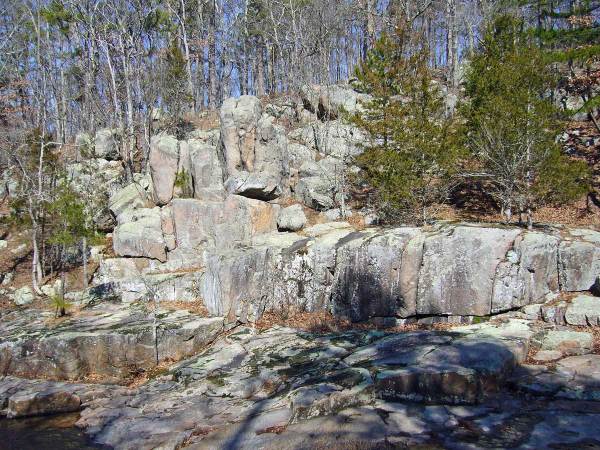
Nestled on the eastern side of the St. Francois Mountains, where the craggy exposures of the Ozarks most ancient rocks begin to subside underneath the Cambrian sandstones laid down over them, lies Hawn State Park – considered by many to be the loveliest of Missouri’s state parks. I have written previously about Hawn – in fact, it was the subject of my very first post on this blog. I have long treasured Hawn for its excellent insect collecting, diversity of plants and habitats, and unbridled beauty. I have hiked the incomparable Pickle Creek and Whispering Pine Trails many times – far more than any other trail in the state, and each time I fall more deeply in love with what, to me, represents the essence of the Missouri Ozarks in their most pristine state.

Lamotte sandstone cutThe charm of Hawn results from a unique combination of geological features. The Lamotte sandstone outcrops that dominate Hawn’s landscape are the oldest sedimentary rocks in the state, formed from coarse sand deposits that were laid down over the Precambrian rhyolites and granites that form the core of the St. Francois Mountains. These sand deposits were themselves buried under limestone and dolomite layers formed at the bottom of vast seas that later covered much of the interior of the continent. Subsequent periods of uplift and erosion once again exposed these sandstones, whose unique ability to hold groundwater has resulted in the formation of spring-fed streams that have cut deep into their soft layers to create canyon-rimmed valleys with tall vertical cliffs. rhyolite shut-ins One of these streams is Pickle Creek, which is fed throughout the year by Pickle Spring and has in some places cut all the way down to the underlying igneous rock to form “shut-ins.” In contrast to the slow, sandy bottomed stretches where Pickle Creek is still cutting through sandstones, the water in these igneous shut-ins rushes through narrow openings in the highly resistant rock. The igneous and sandstone exposures found in Hawn are spectacularly beautiful and support a unique flora due to the acid soils they produce. One group of plants that have taken sanctuary in these moist, acid soils is the Betulaceae, or birch family. Missouri is home to five native species of Betulaceae¹, and while none of them are extraordinarily uncommon they are limited in their occurrence to natural communities with sufficient moisture and exhibit a clear preference for acidic soils. This confluence of conditions occurs perfectly along Pickle Creek, allowing all five native species to grow here side-by-side – a betulaceous “hot spot” that represents not only the full diversity of the family in Missouri, but also the total generic diversity of the family in North America. In fact, only one other genus (Ostryopsis, shrubs related to Corylus and restricted to China) is assigned to the family on a global basis (Furlow 2004).
¹ Dr. George Yatskievych, in his recently published Steyermark’s Flora of Missouri (2006), regarded the presence of Corylus cornuta in Missouri as unlikely despite earlier reports of such. Dr. Yatskievych also recorded a single escape of the European species Alnus glutinosa from Springfield, Missouri.

The Betulaceae are deciduous trees and shrubs that occur primarily in the boreal and cool temperate zones of the Northern Hemisphere, although outposts are also known from high elevations in the Neotropics and, as mentioned above, China. Fossils of this ancient lineage of flowering plants are traceable to the late Mesozoic (upper Cretaceous), and the family appears to form a clade with hamamelidaceous plants. As would be expected from a group with boreal affinities, most species exhibit adaptations for survival in cold climates, such as small stature, shrubby growth habits, and small leaves. Several of Missouri’s species have performed well and gained acceptance as ornamental trees and shrubs, while others are important as sources of hazelnuts (genus Corylus) or ecologically for their ability to fix nitrogen (genus Alnus). My interest in these plants has nothing to do with their economic importance, but rather in their role as host plants for several rarely encountered species of woodboring beetles. Often, insects in this group may be collected on foliage of their hosts during the summer, making host identification fairly easy due to the presence of leaves. This is not always possible, however, due to limited periods of adult activity or low population densities. Rearing these insects from their hosts provides additional opportunity to document their occurrence, and winter is often the best time to collect the dead branches in which they breed, since by that time they have nearly completed their development and will be ready to emerge as soon as temperatures rise during spring. Identifying woody plants without foliage can be a challenge, but the ability to distinguish host plants by non-foliage characters such as bark, growth habit, bud shape, etc. greatly facilitates studies of wood boring beetles through rearing. In the past I have relied heavily on Cliburn and Klomps’ (1980), A Key to Missouri Trees in Winter, which utilizes mostly details of the twigs and buds to discriminate among Missouri’s 160+ species of trees. However, after a certain level of familiarity is gained, one eventually learns to recognize winter trees and even downed logs or fallen branches simply by their “look”.

Betula nigra - habit

Betula nigra - habit

Betula nigra - old bark

Betula nigra - old bark

Betula nigra - sapling

Betula nigra - sapling

Betula nigra (river birch) is the only member of this largely boreal genus found in the middle and southern latitudes of the U.S. and, thus, cannot be confused with any of Missouri’s other betulaceous species². It is the largest of the five and, along with the following species, is the most demanding in terms of keeping its “feet” wet. Trees are usually encountered right at the water’s edge, with tall, slender, often twisted or leaning trunks. Young trees and large branches on older trees exhibit gorgeous reddish brown bark peeling in thin, papery sheets, becoming thick and scaly on the main trunks of older trees. Small branches are dark, purplish brown in color with smooth bark and distinctly horizontal lenticels.  I have reared a small jewel beetle from fallen, dead branches of this tree collected at several locations in Missouri – this beetle turned out to be new to science, which I described and named Agrilus betulanigrae in reference to its (then) only known host (MacRae 2003).  I have also reared tremendous series of another jewel beetle, Anthaxia cyanella, which at the time was not known to utilize this host and was considered uncommon.  As it turns out, Betula nigra is its preferred host, and the rearing of large series from many locations resulted in improved knowledge about color forms and variability in this species (MacRae & Nelson 2003).

² The widely planted but dreadfully non-adapted Betula pendula (European white birch) and B. papyrifera (paper birch) can be recognized by their distinctly white bark. These species are limited to urban landscapes where they rarely achieve significant stature before declining and eventually succumbing to insect pests such as Agrilus anxius (bronze birch borer). River birch provides an equally attractive and much more durable choice!

Alnus serrulata - habit
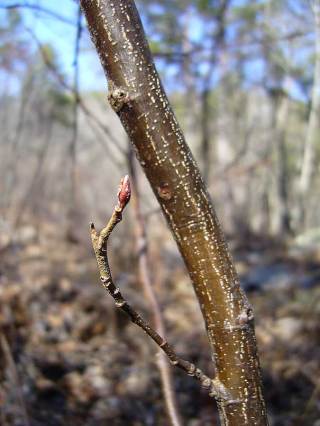
Alnus serrulata - habit

Alnus serrulata - sapling
Alnus serrulata - sapling

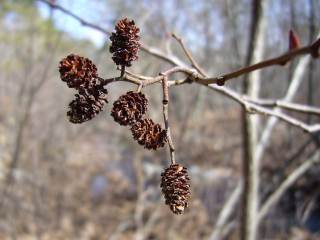
Alnus serrulata - old cones

Alnus serrulata - old cones

Alnus serrulata (common alder, hazel alder, smooth alder, tag alder…) also demands to be next to (or even in) the water.  Unlike B. nigra, however, this species rarely reaches true tree status, instead usually forming shrubby thickets along the water’s edge.  Saplings can resemble those of B. nigra due to their smooth brownish bark, but the latter is usually more purplish, and the lenticels of A. serrulata are not distinctly horizontal as in B. nigra. The large purple-red buds also differ from the small brown buds of B. nigra, and during winter A. serrulata is adorned with numerous staminate catkins.  The persistent woody cones also cannot be mistaken for those of any other species of Betulaceae in Missouri. Associated with this plant is the longhorned beetle, Saperda obliqua, which reaches its southwesternmost distributional limit in Missouri on the basis of a single specimen collected some 25 years ago right here along Pickle Creek and given to me by lepidopterist George Balogh. Numerous attempts to find this species here since then have not (yet!) been successful.

Carpinus caroliniana - habit

Carpinus caroliniana - habit

Carpinus caroliniana (blue beech, hornbeam, musclewood) is one of my favorite betulaceous species. The beautifully fluted trunks and smooth, light gray bark are remniscent of the limbs of a sinewy, muscular person – every time I see this tree I cannot resist the temptation to grab and stroke the hard limbs (should I be admitting this?). This character begins to show even in very young trees, making its identification during winter quite easy. These trees also like to be near water, but they are not so demanding to be right at the water’s edge as are the previous two species. They usually form small trees, often in clumps with multiple trunks.  There are some notable insect associations that I’ve found with this plant.  One is a small jewel beetle, Agrilus ohioensis, which I reared from dead branches of this plant collected along Pickle Creek (Nelson & MacRae 1990), and which after more than 20 years still remain the only known Missouri specimens of this species.  Another is the longhorned beetle, Trachysida mutabilis, a single adult of which I reared from a dead (almost rotting) branch of this plant collected not too far from Pickle Creek in Iron Co.  This beetle also is the only representative of its species known from Missouri (MacRae & Rice 2007).

Ostrya virginiana - habit

Ostrya virginiana - habit

Ostrya virginiana - trunk

Ostrya virginiana - trunk

Ostrya virginiana (hop hornbean, American hornbeam) has a form and growth habit very similar to C. caroliniana, but its leaves that persist through the winter make it instantly recognizable from afar.  In Missouri, this habit is most often seen with the oaks (Quercus spp.).  This species can be found even further away from the water than the previous species, and its small stature combines with the orangish, persistent leaves to form a distinctive understory layer during winter.  Also, in contrast to the smooth gray bark of Carpinus, this species exhibits scaly, light reddish brown to brownish gray bark.  I have succeeded in rearing one of the two known Missouri specimens of another jewel beetle, Agrilus champlaini, from O. virginiana collected along Pickle Creek (the other specimen was reared from wood collected at Graham Cave State Park, another site where sandstone bedrocks favor an O. virginiana understory).  Unlike most other jewel beetles, A. champlaini forms galls in small living branches of its host.  I have collected the distinctive swellings during winter on many occasions but managed to rear only these two individuals (plus one ichneumonid parasitoid).  I have also noted similar swellings on Carpinus but have not yet managed to definitely associated them with this beetle.

Corylus americana (hazelnut, American hazelnut) is the smallest of Missouri’s five betulaceous species, always forming shrubs, sometimes in thickets, and never assuming the form of a tree. Its staminate catkins present during winter immediately identify plants of this species as Betulaceae, but the small, globe-shaped buds are unlike the more pointed buds of Ostrya and the elongated, reddish buds of Alnus. This species is the least demanding in terms of being near water and can be found even in upland prairies and glades. I haven’t yet associated any woodboring beetles with this plant in Missouri, but there are several jewel beetles known from the eastern U.S. that utilize Corylus (Agrilus corylicola, A. fulgens, and A. pseudocoryli) and could occur in Missouri.

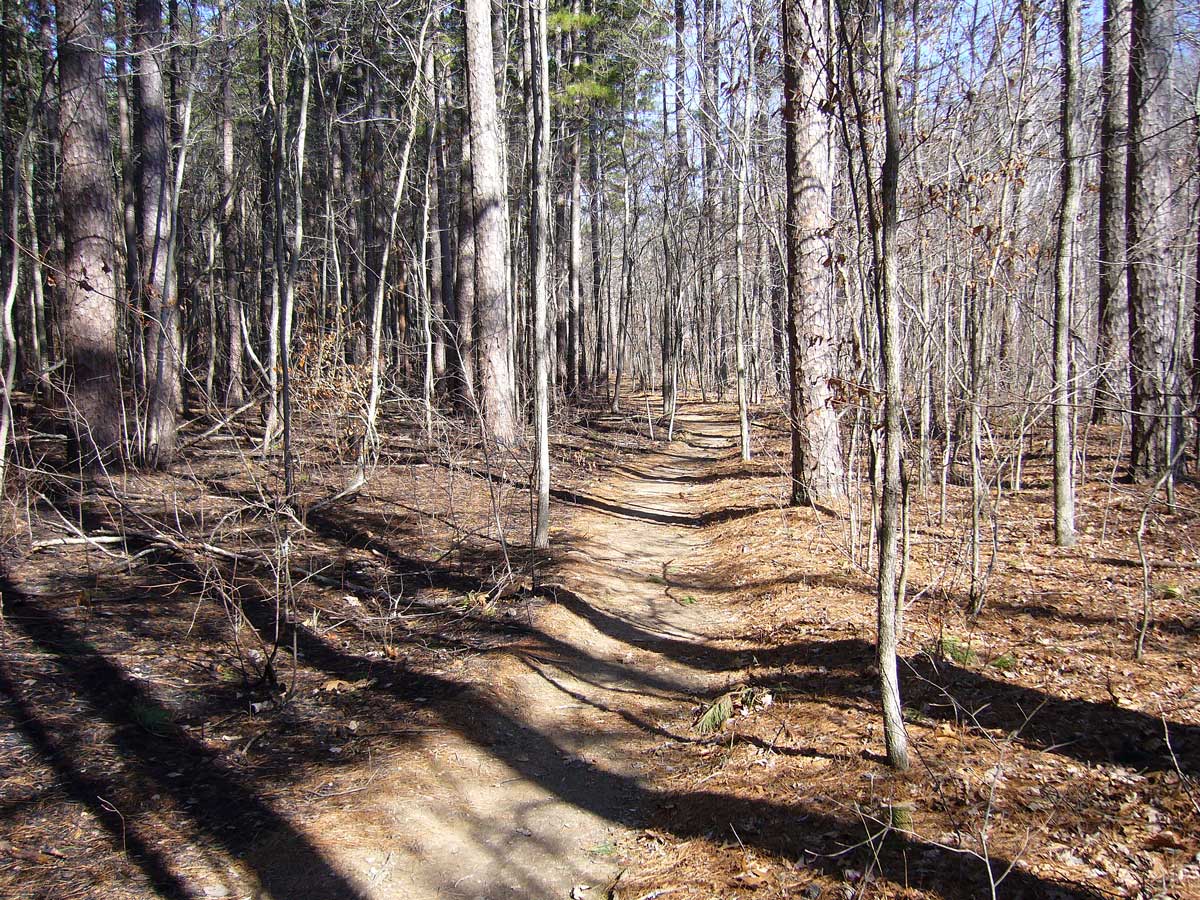
pine savanna - fire managementThe upland habitats at Hawn are of interest as well. Lamotte sandstones are the dominant bedrock, creating acid soils that support a canopy dominated by Missouri’s only native species of pine, Pinus echinata (shortleaf pine), several species of oak, and a diversity of acid-loving shrubs primarily in the family Ericaceae (including the stunningly beautiful Rhododendron prinophyllum, or wild azalea). Historically, so-called “pine savanna” was prevalent in this area, a natural community in which periodic fires maintained an open structure amongst the fire-adapted pines and allowed a diverse herbaceous layer beneath the open canopy. Much of Hawn has closed up after decades of fire suppression; trail through pine savannahowever, the Department of Natural Resources has implemented a rotational burn management regime to recreate pine savanna habitat within Hawn’s Whispering Pines Wild Area. Evidence of what appeared to be very recent burns could be seen at several places as I hiked along the Whispering Pines Trail, and while many visitors might have been alarmed at the apparent “damage” they were observing, my heart sang with the prospect of seeing mature pine savanna communities taking hold throughout my beloved Hawn. As I stood atop this ridge and looked back down from where I had come, I could almost see Henry Schoolcraft and Levi Pettibone in the distance on horseback, perhaps pausing to gaze at an elk.

REFERENCES:

Cliburn, J. and G. Klomps. 1980. A Key to Missouri Trees in Winter, 2nd edition. Missouri Department of Conservation, Jefferson City, 43 pp. (subsequently revised)

Furlow, J. J.  2004. Betulaceae in Flora of North America @ efloras.org. http://www.efloras.org/florataxon.aspx?flora_id=1&taxon_id=10101.

MacRae, T. C. 2003. Agrilus (s. str.) betulanigrae MacRae (Coleoptera: Buprestidae: Agrilini), a new species from North America, with comments on subgeneric placement and a key to the otiosus species-group in North America. Zootaxa 380:1–9.

MacRae, T. C., and G. H. Nelson. 2003. Distributional and biological notes on Buprestidae (Coleoptera) in North and Central America and the West Indies, with validation of one species. The Coleopterists Bulletin 57(1):57–70.

MacRae, T. C. and M. E. Rice. 2007. Distributional and biological observations on North American Cerambycidae (Coleoptera). The Coleopterists Bulletin 61(2):227–263.

Nelson, G. H. and T. C. MacRae. 1990. Additional notes on the biology and distribution of Buprestidae (Coleoptera) in North America, III. The Coleopterists Bulletin 44(3):349–354.

Yatskievych, G. 2006. Steyermark’s Flora of Missouri, Volume 2. The Missouri Botanical Garden Press, St. Louis, 1181 pp.

Copyright © Ted C. MacRae 2009

Add to FacebookAdd to NewsvineAdd to DiggAdd to Del.icio.usAdd to StumbleuponAdd to RedditAdd to BlinklistAdd to Ma.gnoliaAdd to TechnoratiAdd to Furl

Millipede assassin bug

Ectrichodia crux

I continue the hemipteran theme begun in the last post with this photograph I took in South Africa below the Waterberg Range in Northern (now Limpopo) Province. I recognized them as members of the family Reduviidae (assassin bugs), and since to my knowledge species in this family are exclusively predaceous (except for the so-called “kissing bugs” of the mostly Neotropical subfamily Triatominae, large distinctive bugs that feed exclusively on vertebrate blood), I found what I took to be a case of scavenging on a dead millipede to be rather curious.  It had rained the previous evening, resulting in a burst of millipede (and insect) activity that night, and this scene was rather commonly encountered the following morning. Of course, appearances can be deceiving, and it turns out that I actually was witnessing predation – and a most unusual case at that.  The individuals in this photo represent Ectrichodia crux (millipede assassin bug), a common species in many parts of southern Africa.  Although nearly 500 species of assassin bugs are known from the region (Reavell 2000), E. crux is easily recognizable due to its large size (adults measure up to 22 mm in length), stout form, and coloration – shiny black, with a distinctive black cross incised on its dull yellow thorax and with yellow abdominal margins (Picker et al. 2002). The nymphs as well are distinctive – bright red with black wing pads. Clearly, these insects are advertising something.

Ectrichodia crux belongs to the subfamily Ectrichodiinae, noted for their aposematic coloration – often red or yellow and black or metallic blue, and as specialist predators of Diplopoda (Heteropteran Systematics Lab @ UCR).  Species in this subfamily are most commonly found in leaf litter, hiding during the day under stones or amongst debris and leaving their shelters at night in search of millipedes (Scholtz and Holm 1985). They are ambush predators that slowly approach their prey before quickly grabbing the millipede and piercing the body with their proboscis, or “beak.”  Saliva containing paralytic toxins and cytolytic enzymes is injected into the body of the millipede to subdue the prey and initiate digestion of the body contents, which are then imbibed by the gregariously feeding assassin bugs.

Millipedes employ powerful chemical defenses – primarily benzoquinones and sometimes hydrogen cyanide gas as well, which are discharged from specialized glands along the millipede’s body – to protect themselves from predation.  Thus, specialized predation of millipedes is a niche that has been exploited by relatively few predators, and little is known about the mechanisms used for circumventing these defenses. The recently reported millipede specialist, Deltochilum valgum (order Coleoptera, family Scarabaeidae), has been observed killing its prey by violently decapitating and disarticulating it before feeding on the body contents (Larsen et al. 2009, summary here); however, the exact manner by which the beetle avoids or withstands the millipede’s chemical discharges remains unknown.  For ambush predators such as Ectrichodia crux and other ectrichodiines, a strategy similar to that described for another millipede specialist predator, larvae of the phengodid beetle, Phengodes laticollis (order Coleoptera, family Phengodidae), might be employed. This species subdues its millipede prey by piercing thinner regions of the millipede’s integument (e.g., intersegmental membranes on the ventral surface) with its hollow sickle-shaped mandibles and apparently injecting gastric fluids that abruptly paralyze the millipede, thereby preventing it from discharging its gland contents (Eisner et al. 1998).  These undischarged benzoquinones remain confined to the glands and are prevented from diffusing into the body cavity by the glands’ impervious cuticular lining, thus allowing the phengodid larva to safely imbibe the liquified systemic contents of the immobilized millipede.

REFERENCES:

Eisner, T., M. Eisner, A. B. Attygalle, M. Deyrup and J. Meinwald. 1998. Rendering the inedible edible: Circumvention of a millipede’s chemical defense by a predaceous beetle larva (Phengodidae).  Proceedings of the National Academy of Sciences USA 95(3):1108–1113.

Larsen, T. H., A. Lopera, A. Forsyth and F. Génier. 2009. From coprophagy to predation: a dung beetle that kills millipedes. Biology Letters DOI:10.1098/rsbl.2008.0654.

Picker, M., C. Griffiths and A. Weaving. 2002. Field Guide to Insects of South Africa. Struik Publishers, Cape Town, 444 pp.

Reavell, P. E. 2000. The assassinbugs (Hemiptera: Reduviidae) of South Africa. http://oldwww.ru.ac.za/academic/departments/zooento/Martin/reduviidae.html#ectrichodiinae.

Scholtz, C. H. and E. Holm (eds.). 1985. Insects of Southern Africa. Butterworths, Durbin, South Africa, 502 pp.

Copyright © Ted C. MacRae 2009

Add to FacebookAdd to NewsvineAdd to DiggAdd to Del.icio.usAdd to StumbleuponAdd to RedditAdd to BlinklistAdd to Ma.gnoliaAdd to TechnoratiAdd to Furl

Bizarre, beautiful extremes

No niche, it seems goes unfilled. Specialization is likely to be pushed to bizarre, beautiful extremes.–E. O. Wilson, The Diversity of Life

Wilson didn’t mention treehoppers specifically when he made the above quote, referring to the exuberance of extreme behavioral and morphological adaptations seen in the biota of the tropics, but he could have just as easily led off with them.  Treehoppers (order Hemiptera, family Membracidae) are well-known for their variety of oddly grotesque shapes resulting from a curiously inflated pronotum – presumably having evolved to resemble thorns and buds on their host plants, or the ants that vigorously defend numerous treehopper species in exchange for their sweet honeydew, or perhaps to aid in the dispersal of volatile sex pheromones (an attractive hypothesis but lacking experimental support). Despite inordinate attention in relation to their low economic importance, it remains that the pronotal modifications of many treehoppers are so bizarre that they continue to defy any logical explanation.

I must admit that, despite my passion for beetles, treehoppers were my first love.  (Well, actually anything that I could bring home from my solo wanderings in the urban woodlands and vacant lots near my childhood home and keep alive in a terrarium was my first true love, but from an academic standpoint, treehoppers were the first group to arouse my taxonomic interest as I began my transformation from child collector to serious student.) I had just begun graduate school in the Enns Entomology Museum under the late hemipterist Tom Yonke to conduct leafhopper host preference and life history studies, and although far more Cornell drawers in the museum contained Cicadellidae, it was the treehopper drawers that I found myself rifling through each afternoon after completing the day’s thesis duties. Despite their lesser number, the treehopper drawers had recently benefited from the attentions of a previous student, Dennis Kopp, whose efforts during his time at the museum concentrated on collecting treehoppers from throughout Missouri and culminated in the four-part publication, The Treehoppers of Missouri (1973-1974). I was enamored by these little beasts – specifically by their exaggerated pronotum – and started collecting them whenever I could on my forays around the state surveying for leafhoppers. They were closely enough related to leafhoppers to make them relevant to my work, only cooler – like leafhoppers on steroids! With The Treehoppers of Missouri as my bible and my desk located a half dozen footsteps from the largest treehopper collection within a several hundred mile radius, I delved into their taxonomy and, for a time, considered a career as a professional membracid taxonomist.

Fast forward nearly 30 years, and my involvement as a taxonomist is neither professional nor deals with membracids. Beetles have taken over as my focal taxon, and I conduct these studies strictly as an avocation. Still, I continue to collect treehoppers as I encounter them, and although such efforts have been largely opportunistic, I’ve managed to assemble a fairly diverse little collection of these insects as a result of my broad travels. Much of this has occurred in the New World tropics, and it is this region that is the center of diversity for the family Membracidae (fossil evidence suggests that subfamily diversification and subsequent New World radiation began during Tertiary isolation about 65 million years ago after South America separated from Africa, since only the primitive subfamily Centrotinae occurs in both the Old and the New Worlds – all other subfamilies are restricted the New World (Wood 1993)).  Every now and then, as I accumulate enough material to fill a Schmidt box, I sit down and study what I’ve collected, comparing it to my meager literature to attempt identifications.  For material I collect in eastern North America, this works fairly well, as there have been a number of publications covering different parts of this area.  Outside of this area, however, my only hope is to entice one of the few existing membracid specialists into agreeing to look at what I’ve accumulated and ask for their help in providing names, in exchange for which they will be granted retention privileges to benefit their research.

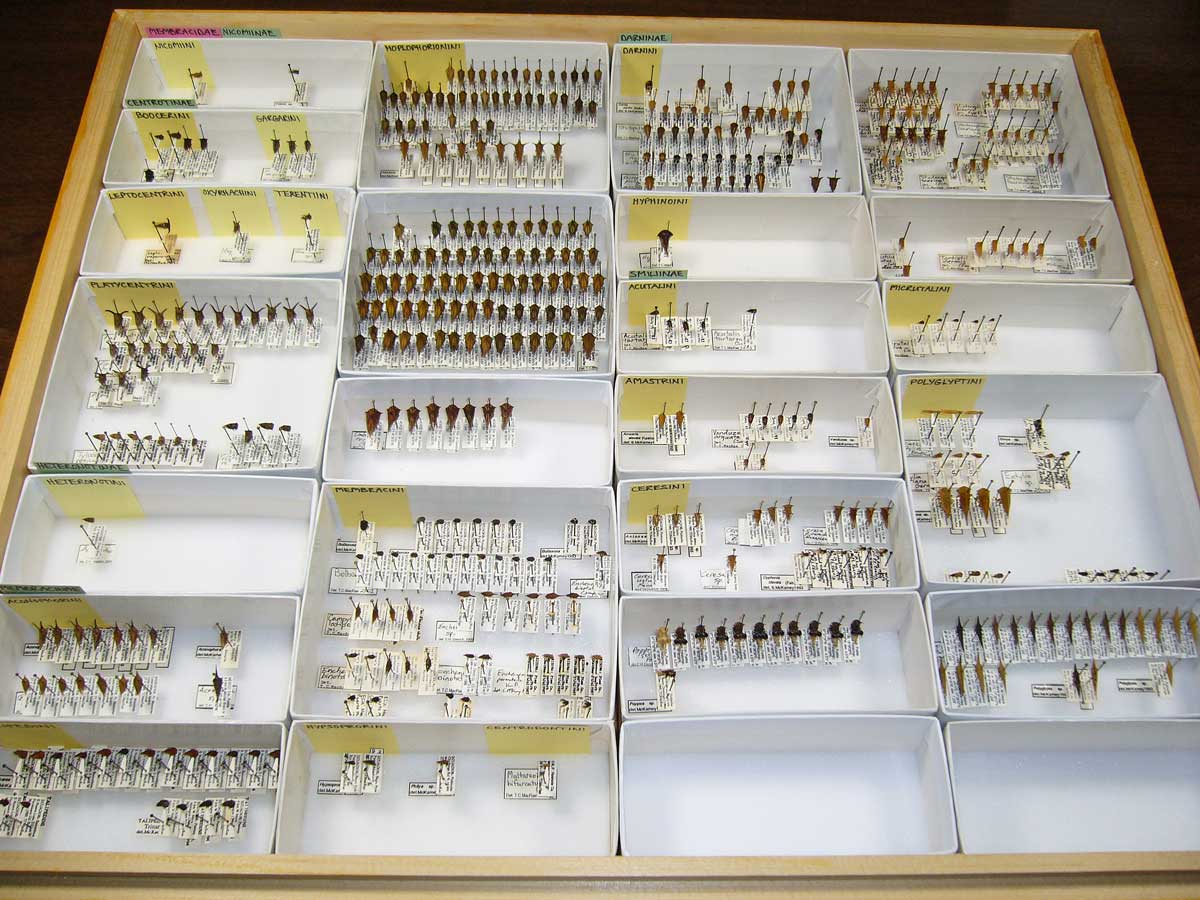
idd-treehoppersMost recently, I was able to convince Illinois Natural History Survey entomologist Chris Dietrich to take a look at the material I had accumulated during the past ten years or so, which included many specimens from Mexico and a smattering from other world areas, including South Africa. Chris did his doctoral work at North Carolina State University under “Mr. Membracid” himself, Lewis Deitz, and has since been conducting evolutionary and phylogenetic studies on Membracidae and the related Cicadomorpha. I recently received this material back from Chris (photo above), the majority of which he had been able to identify to species – only a few specimens in the more problematic genera were left with a generic ID.

Oaxaca)

Campylocentrus sp. (Mexico: Oaxaca)

Oaxaca)

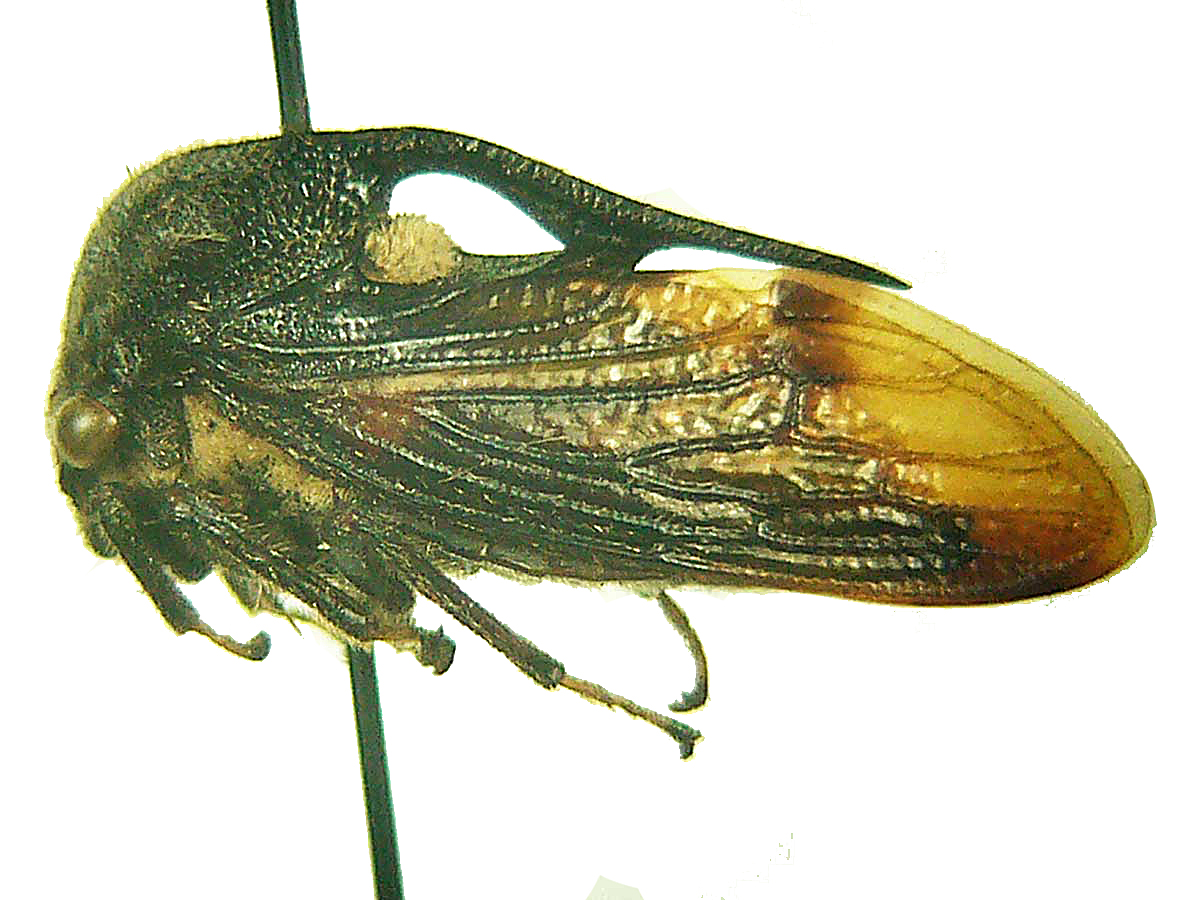
Hyphinoe obliqua (Mexico: Oaxaca)

Puebla)

Poppea setosa (Mexico: Puebla)

Oaxaca)

Umbonia reclinata (Mexico: Oaxaca)

Puebla)

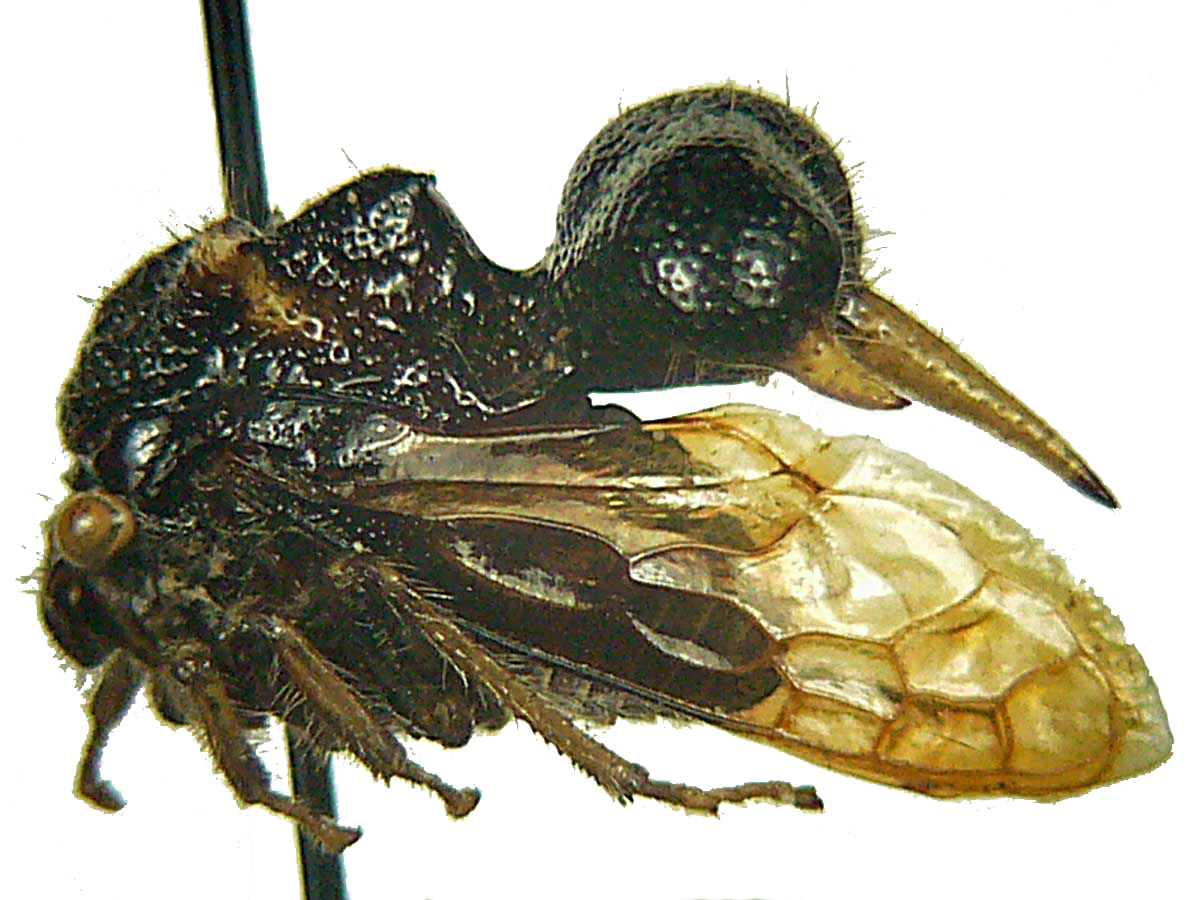
Umbonia crassicornis male (Mexico: Puebla)

umbonia_crassicornis_female

Umbonia crassicornis female (Mexico: Puebla)

The selection of photos here show a sampling of some of the more interesting forms contained within this batch of newly identified material – all of which hail from southern Mexico. Campylocentrus sp. is an example of the primitive subfamily Centrotinae, distinguished among most membracid subfamilies by the exposed scutellum (not covered by the expanded pronotum).  Hyphinoe obliqua is an example of the largely Neotropical subfamily Darninae, while Poppea setosa represents one of the more bizarre ant-mimicking species of the subfamily Smiliinae.  Umbonia is a diverse genus in the subfamily Membracinae, occurring from the southern U.S. south into South America. Umbonia crassicornis is one of the most commonly encountered species in this genus, with the photos here showing the high degree of sexual dimorphism it exhibits.  As membracids go, these species are quite large (10 mm in length from frons to wing apex for Campylocentrus sp. and P. setosa, a slightly larger 11-13 mm for the others); however, the many smaller species in this family are no less extraordinarily ornamented.  I’ve also included a photo (below) of one of the drawers from the main collection after incorporating the newly identified material – this drawer represents about half of my treehopper collection, with the largely Nearctic tribe Smiliini and the primitive family Aetalionidae contained in another drawer. In all, the material contained one new subfamily, six new tribes, 13 new genera¹, and 30 new species for my collection. For those with an appetite for brutally technical text, a checklist of the species identified, arranged in my best attempt at their current higher classification, is appended below (any treehopper specialist who happens upon this should feel free to set the record straight on any errors). For each species, the country of origin (and state for U.S. specimens) is indicated along with the number of specimens, and higher taxa new to my collection are indicated with an asterisk(*). Don’t worry, I didn’t type this up just to post it here – it’s a cut/paste job from my newly updated collection inventory for Membracoidea. Happy reading!

¹Wildly off topic, and perhaps of interest only to me, but two of the genera represented in the material are homonyms of plant genera: Oxyrhachis is also a Madagascan genus of Poaceae, and Campylocentrus is a Neotropical genus of Orchidaceae. Scientific names of plants and animals are governed by separate ruling bodies (ICBN and ICZN, respectively), neither of which specifically prohibit (but do recommend against) creating inter-code homonyms. The number of such homonyms is surprisingly high – almost 9,000 generic names have been used in both zoology and botany (13% of the total in botany) (source).  Fortunately, there is only one known case of plant/animal homonymy fr BOTH genus- and species-level names – Pieris napi japonica for a subspecies of the gray-veined white butterfly (Pieridae) and Pieris japonica for the popular ornamental plant Japanese andromeda (Ericaceae).

treehopper_drawer
REFERENCES:

Kopp, D. D. and T. R. Yonke. 1973-1974. The treehoppers of Missouri: Parts 1-4. Journal of the Kansas Entomological Society 46(1):42-64; 46(3):375-421; 46(3):375-421; 47(1):80-130.

Wood, T. K. 1999. Diversity in the New World Membracidae. Annual Review of Entomology 38:409-435.
.


.
Superfamily MEMBRACOIDEA
Family MEMBRACIDAE
Subfamily CENTROTINAE

 *Tribe BOOCERINI
*Campylocentrus curvidens (Fairmaire) [Mexico] – 4
Campylocentrus sp. [Mexico] – 1

*Tribe GARGARINI
*Umfilianus declivus Distant [South Africa] – 3

*Tribe OXYRHACHINI
*Oxyrhachis latipes (Buckton) [South Africa] – 1

Tribe PLATYCENTRINI
Platycentrus acuticornis Stål [Mexico] – 11
Platycentrus obtusicornis Stål [Mexico] – 3
Platycentrus brevicornis Van Duzee [USA: California] – 7
Tylocentrus reticulatus Van Duzee [Mexico] – 4

*Tribe TERENTIINI
*Stalobelus sp. [South Africa] – 1

*Subfamily HETERONOTINAE

*Tribe HETERONOTINI
*Dysyncritus sp. [Argentina] – 1

Subfamily MEMBRACINAE

Tribe ACONOPHORINI
Aconophora sp. female [Mexico] – 1
*Guayaquila xiphias (Fabricius) [Argentina] – 7

Tribe HOPLOPHORIONINI
Platycotis vittata (Fabricius) [USA: Arizona, California] – 3
Umbonia crassicornis (Amyot & Serville) [Mexico] – 73
Umbonia reclinata (Germar) [Mexico] – 8

Tribe MEMBRACINI
Enchenopa binotata complex [Mexico] – 1
Enchenopa sp. [Argentina] – 6

Subfamily DARNINAE

Tribe DARNINI
Stictopelta nova Goding [Mexico] – 9
Stictopelta marmorata Goding [USA: Texas] – 1
Stictopelta pulchella Ball [Mexico] – 11
Stictopelta varians Fowler [Mexico] – 3
Stictopelta sp. [USA: Arizona, California] – 5
Stictopelta sp. [Mexico] – 5
Stictopelta spp. [Argentina] – 6
*Sundarion apicalis (Germar) [Argentina] – 2

*Tribe HYPHINOINI
*Hyphenoe obliqua (Walker) [Mexico] – 1

Subfamily SMILIINAE

Tribe AMASTRINI
Vanduzeea triguttata (Burmeister) [USA: Arizona] – 2

Tribe CERESINI
Ceresa nigripectus Remes-Lenicov [Argentina] – 3
Ceresa piramidatis Remes-Lenicov [Argentina] – 4
Ceresa ustulata Fairmaire [Argentina] – 1
Ceresa sp. female [Argentina] – 1
Poppea setosa Fowler [Mexico] – 11
Tortistilus sp. [USA: California] – 1

Tribe POLYGLYPTINI
*Bilimekia styliformis Fowler [Mexico] – 3
Polyglypta costata Burmeister [Mexico] – 18

Tribe SMILIINI
Cyrtolobus acutus Van Duzee [USA: New Mexico] – 1
Cyrtolobus fuscipennis Van Duzee [USA: North Carolina] – 1
Cyrtolobus pallidifrontis Emmons [USA: North Carolina] – 1
Cyrtolobus vanduzei Goding [USA: California] – 4
Cyrtolobus sp. [USA: Arizona] – 2
*Evashmeadea carinata Stål [USA: Arizona] – 4
*Grandolobus grandis (Van Duzee) [USA: Arizona] – 1
Ophiderma sp. [Mexico] – 1
Palonica portola Ball [USA: California] – 4
Telamona decora Ball [USA: Missouri] – 4
Telamona sp. [USA: Texas] – 1
*Telamonanthe rileyi Goding [USA: Texas] – 2
*Telonaca alta Funkhouser [USA: Texas] – 1
Xantholobus sp. [Mexico] – 1

Subfamily STEGASPINAE

Tribe MICROCENTRINI
Microcentrus perditus (Amyot & Serville) [USA: Texas] – 1
Microcentrus proximus (Fowler) [Mexico] – 1

Family AETALIONIDAE
Subfamily AETALIONINAE

Aetalion nervosopunctatum nervosopunctatum Signoret [Mexico] – 9
Aetalion nervosopunctatum minor Fowler [USA: Arizona] – 2
Aetalion reticulatum (Linnaeus) [Argentina, Uruguay] – 26

Copyright © Ted C. MacRae 2009

Add to FacebookAdd to NewsvineAdd to DiggAdd to Del.icio.usAdd to StumbleuponAdd to RedditAdd to BlinklistAdd to Ma.gnoliaAdd to TechnoratiAdd to Furl