Pismire Puzzle

I returned home from a much-needed vacation late last night, and even though it was a family trip I have much to share from the past 10 days. However, I must remain coy about where I was for the time being so that I may present this little quiz:

Who am I?

I had planned to post this yesterday, but the best title I could come up with – “Monday Myrmecine Mystery” – was just too similar to a Monday tradition on another blog that we’ve all grown to love.  (Also, I just couldn’t get to it.)  No longer constrained by an M-themed title, I came up with this alternative¹ that I hope will make the 12-year old boy in each of us giggle aloud.

¹ Pismire (from pissemire) is an archaic name of Scandinavian origin for ant. Derived from pisse urine (referring to the smell of formic acid) + mire ant.

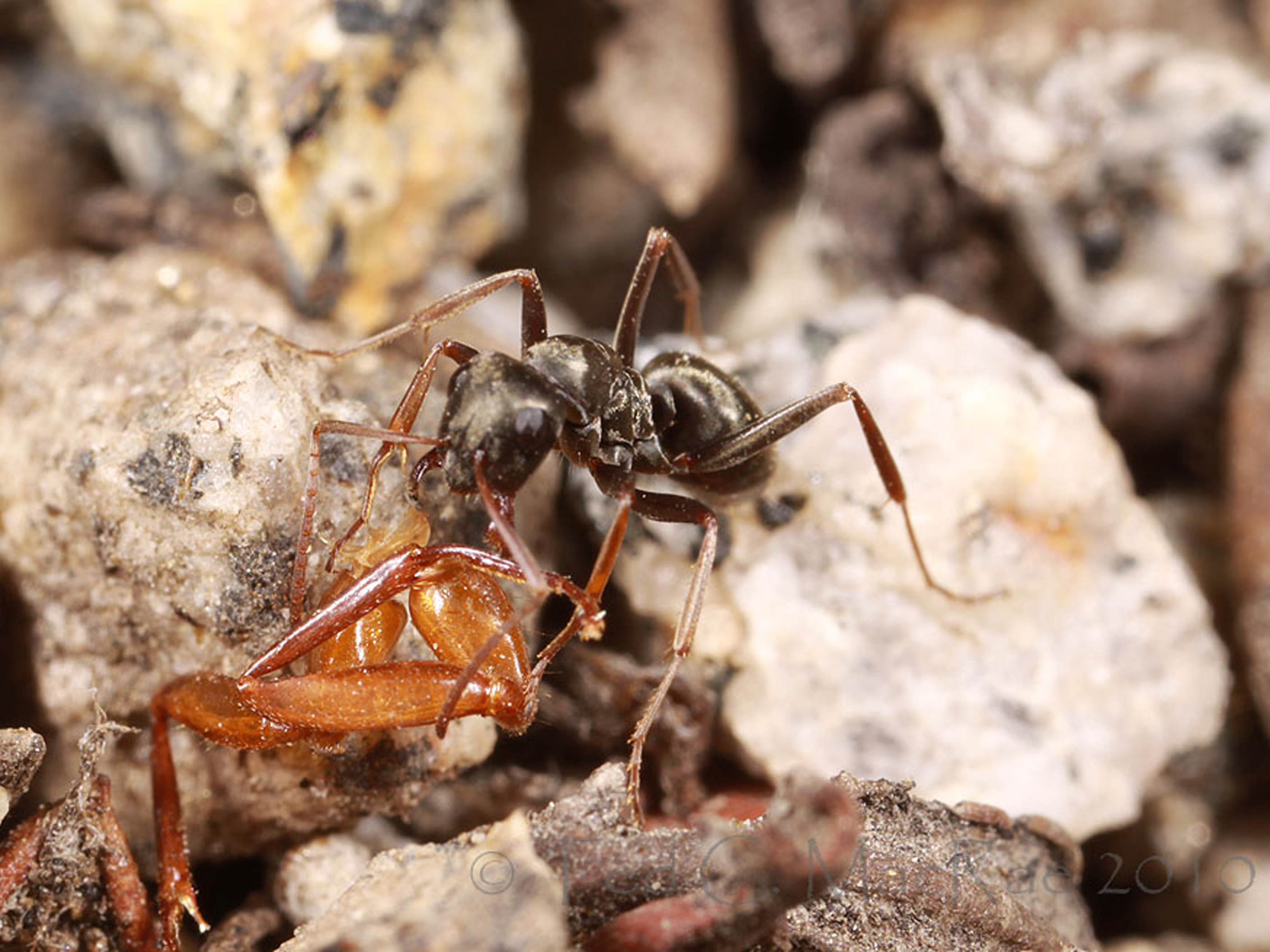
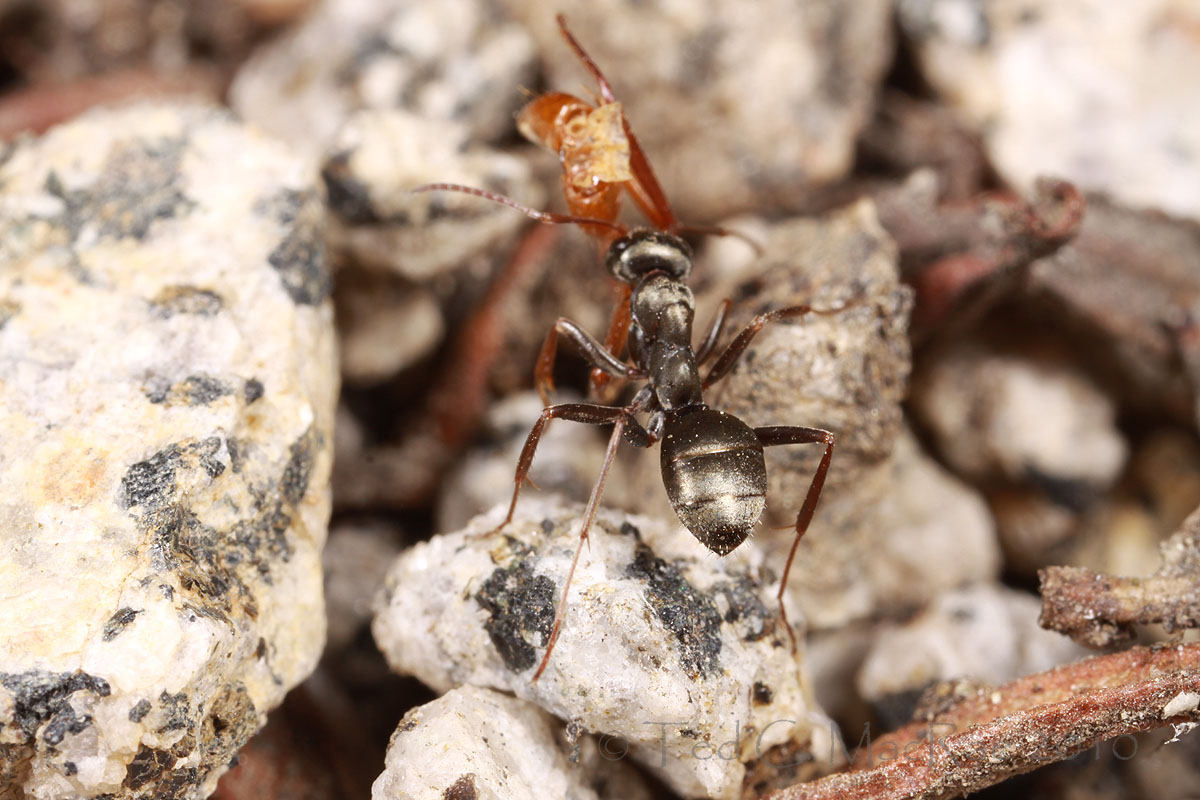
What am I doing?

I expect members of the Formicine Guild will jump all over this, so I should probably make this quiz about more than just the name of the ant (which I don’t know, so does that make this an illegal quiz?).  Maybe I should offer double points to non-myrmecologists for a proper ID (but then, I would need the consensus of the myrmecologists – perhaps a conflict of interest?).

Why do I do this?

I could also offer points for correctly guessing what the ant is carrying – which again I wasn’t able to figure out, so I guess points will have to be awarded for the most plausible explanation.  What I do know is the ant carried this carcass while meandering aimlessly over the same patch of ground – occasionally stopping very briefly to dig its jaws into it before resuming its wanderings.  I followed the ant for about 10 minutes, and it never left an area of about 1 square foot – no nest nearby that I could see, no direction to its travels, no apparent purpose to its labors.

This is where I live.

I most definitely know where I was, so firm points are on offer for correctly guessing the answer to that question – either on the basis of the ant ID or the above photograph of its habitat.  Yes, that is snow on the ground – lots of it!

Copyright © Ted C. MacRae 2010

Add to FacebookAdd to DiggAdd to Del.icio.usAdd to StumbleuponAdd to RedditAdd to BlinklistAdd to TwitterAdd to TechnoratiAdd to Yahoo BuzzAdd to Newsvine

Email to a friend

The Inexorable March of Spring!

Granted, the progress of spring seems to advance in halting baby steps with occasional falls onto its muddy bottom, rather than as a determined forward march, but spring is welcome, no matter how it arrives. When little green tips start poking up and there’s a bit of that “spring smell” in the air, I simply must get out and catch up on the status of Nature — the old-fashioned way (she doesn’t have a Facebook account). Over the last week, I’ve gone forth in search of signs that everything else living is about as tired of winter as I am, and wants to get this spring show on the road! There is already so much happening, I can’t recount it all here — A partial list of unphotographed notables: owls breeding; hawks nesting; woodcocks doing their silly, repetitive and almost invisible (because it’s nearly dark) courtship displays; wood ducks on forest ponds; year-round resident songbirds reestablishing territories; spring peepers, chorus frogs, wood frogs and southern leopard frogs singing, especially in the fishless ponds; winter crane flies and midges swarming in sun flecks in the woods; wild filberts, silver and red maples flowering, etc…

Formica pallidefulva sniffs the spring air


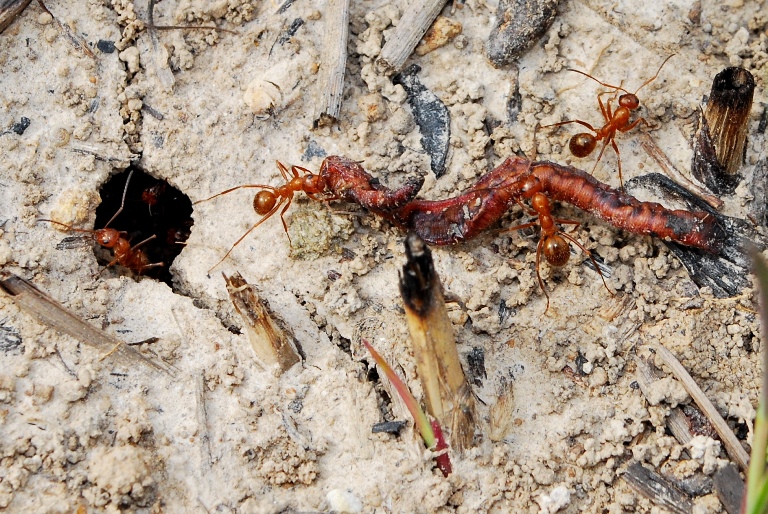
Of course, I look for the first ants out at this time of year, though with the exception of 10 March, when the temperature exceeded 70F, they haven’t been notably active. However, that afternoon I encountered, among others, a worker of Formica pallidefulva poking its head out cautiously to sniff the spring air. This is one of my favorite local ants — largish (5-6mm), abundant, active in daylight even when it’s hot, usually shiny bronzy red to red-brown, usually with a darker gaster (the apparent abdomen of ants) around here, but ranging from a beautiful reddish gold (in the deep South) to almost pure black-coffee brown (New England and southern Canada) across its wide geographic occurrence (Rocky Mountain foothills of Wyoming to New Mexico, all the way east to Québec and Florida). It has the added charm of being the host species to a wide range of social-parasitic and dulotic (“slave-making”) ants both in its own and in another closely related genus, with which it lives in temporary or permanent mixed colonies (as with the Polyergus illustrated in my last post). The image below of these ants bringing home a charred earthworm was taken almost one year ago, as one of Shaw Nature Reserve’s prairie areas was beginning to resprout after a prescribed burn a few weeks earlier. Ants will take their food raw or cooked!

Formica pallidefulva with charred earthworm


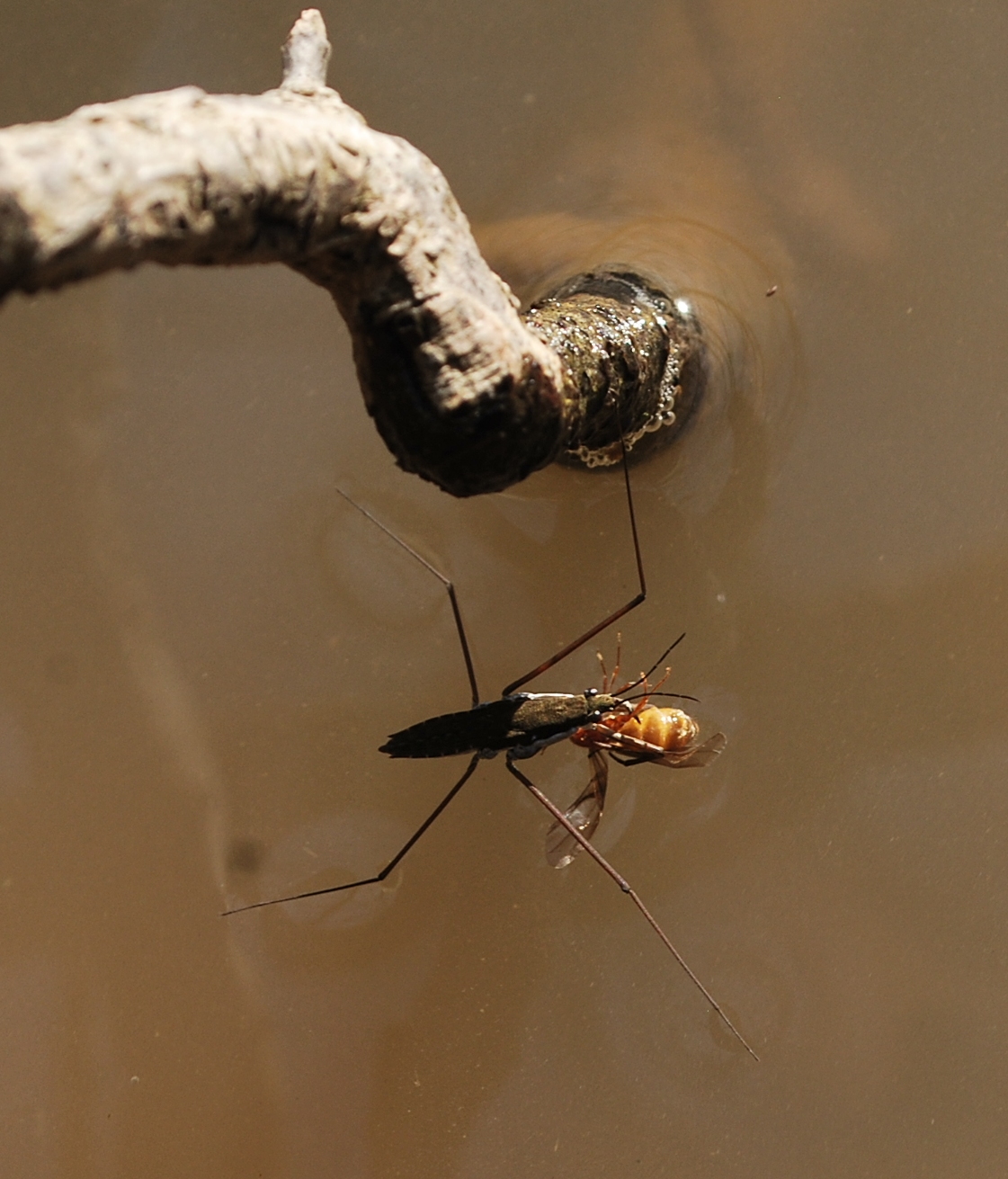
Prenolepis imparis alate in the clutches of a gerrid

Another ant I mentioned last time I was with you, Prenolepis imparis, has the distinction of being the only ant in our fauna that has mating flights while there is still a good chance of frost in the forecast for the next few weeks. In this picture of a mating pair at  BugGuide, note the size difference that inspires their name “imparis”, Latin for disparate. Any time after mid-February when it is sunny and not too windy, and the temperature rises above 65F, the winged males and females reared the preceeding fall, fly out to partake of a grand insectan orgy. Typically, they have big flights on the first couple of appropriately warm days, then some smaller ones (i.e., fewer individuals participating) over the next few weeks. The flying males look like gnats, bobbing up and down in drifting swarms, a few feet off the ground over a shrub, near a woodland edge or in a sunny opening. (One of my co-workers got into the midst of a group of such swarms once when we were conducting a prescribed burn in a wooded area, and I recall her commenting she “felt like Pigpen with all the little bugs flying around”!) The much larger, golden-brown females lift slowly off the ground, fly ploddingly (or is it seductively?) through the male swarms, are there mobbed by the tiny fellows, and then glide away and slightly downward, mating in flight with the winner of the males’ tussling. Rather clumsy fliers, the females do not always land in a good spot, as occurred to this hapless one that ended up as a feast for a water strider. Those that survive break off their wings, dig a burrow, seal themselves in, and raise a small brood of workers on food produced in their own bodies (like say, milk in mammals or “cropmilk” in doves and some other birds.)

But lest you to think I only have eyes for ants, I feel indeed fortunate to have encountered a tarantula this week, of the same species as Ted recently posted and I didn’t even have to go to Oklahoma for it. This bedraggled individual was at the mouth of its completely flooded burrow in what is most often a very dry habitat — a dolomite glade. Stunned and muddy at the time, my guess is this creature, belonging to a resilient and ancient lineage, will dry off, clean up, and saunter away as soon as she warms up.

Aphonopelma hentzi in flooded burrow


And speaking of emerging from flooded burrows, how about this handsome fellow, a male three-toed box turtle, his sex revealed by his bright orange and red markings, coming up for a breather? In truth, it was perhaps only just warm enough to make him need air, but not really enough so for him to be up and about, so he just sat there, nearly immobile, looking pretty, notwithstanding mud and leaves glued onto his shell.

Male box turtle emerges


Copyright © James C. Trager 2010

Add to FacebookAdd to DiggAdd to Del.icio.usAdd to StumbleuponAdd to RedditAdd to BlinklistAdd to TwitterAdd to TechnoratiAdd to Yahoo BuzzAdd to Newsvine

Email to a friend

North America’s largest jewel beetle

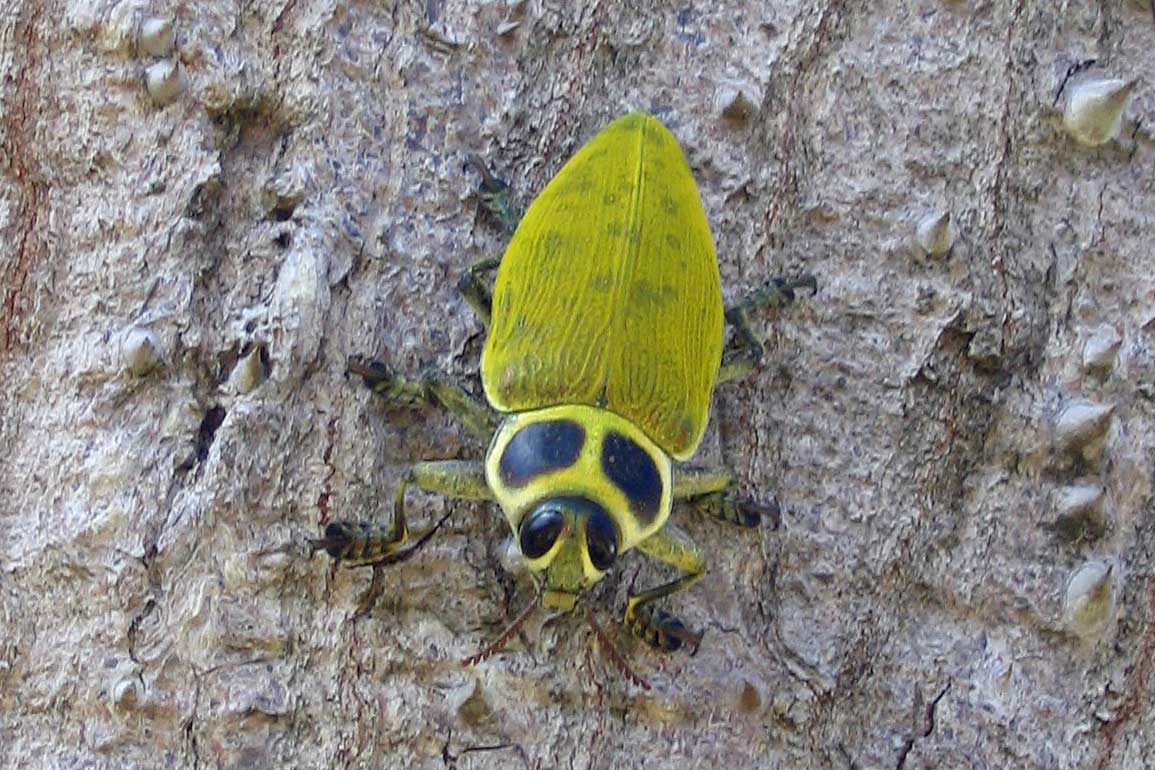
Euchroma gigantea in Jamaica. Photo © Steve Meyer


In recent weeks I’ve featured a few jewel beetles that I have encountered amongst specimens sent to me for identification (see “Aaack!-maeodera” and “Acmaeodera carlota in northern Arizona“).  While the new distributions and even unknown species that they represent are fascinating from a scientific perspective, their diminutive size (~6 mm in length) probably makes them less than spectacular to the non-specialist.  The family Buprestidae does, however, contain some very large species, including a few that qualify as bona fide giants.  One such species, Euchroma gigantea (Giant Metallic Ceiba Borer Beetle), occurs from Mexico through Central America, the West Indies, and most of South America.  At a maximum of 65mm in length, it is not only North America’s largest jewel beetle, but also the largest jewel beetle in the entire Western Hemisphere.

My colleague Steve Meyer encountered and photographed this individual in Negril, Jamaica.  Although its scientific name translates to “colorful giant”, the beetle in the photo is especially so due to the delicate, waxy bloom covering its elytra. This bloom is secreted by the adult after transforming from the pupa and prior to emerging from its larval host, giving it a bright yellow-green appearance.  After the beetle emerges and becomes active, the bloom is quickly rubbed off and the beetle takes on the shiny, iridescent purple-green color by which it is more familiar.  The presence of bloom on this individual suggests that it had just emerged from the trunk of the kapok tree (Ceiba pentandra) on which it was sitting.  Kapok and other large trees in the family Bombacaceae serve as hosts for larval development for this species (Hespenheide 1983).

Indigenous peoples in Central and South America have long utilized the dazzlingly colored elytra of these beetles to create beautiful natural jewelry and adorn their clothes and textiles.  The species is also eaten in both the larval and adult stages – Tzeltal-Mayans in southern Mexico (Chiapas) roast the adults when available, and the Tukanoans (northwestern Amazon) also eat the larvae (Dufour 1987). I have eaten a few insects in my day, but none as thick and massively juicy as the grub of this species must be. Holometabolous larvae typically contain a rather high percentage of fat (up to 66% dry weight) to meet the demands of pupal development and adult reproduction, and I suspect this makes the larvae quite tasty (especially when roasted). If there is any insect in the world that I really, really, really want to eat – it is the larva of this one!

REFERENCES:

Dufour, D. L.  1987.  Insects as food:  A case study from the northwest Amazon.  American Anthropologist 89(2):383–397.

Hespenheide, H. A.  1983.  Euchroma gigantea (Eucroma, giant metallic ceiba borer), p. 719.  In: D. H. Janzen [ed.], Costa Rican Natural History, University of Chicago Press, Chicago.

Copyright © Ted C. MacRae 2010

Acmaeodera carlota in northern Arizona

Acmaeodera carlota Fall – Coconino Co., Arizona

This is another of the interesting species that I encountered during my examination of material submitted for identification this past winter.  Acmaeodera carlota is one of 149 species/subspecies in North America belonging to this very difficult genus (recall my recent post, Aaack!-maeodera), and as with so many of its congeners it wasn’t described until after the last revision of the genus more than a century ago (Fall 1899).  Obviously, the genus badly needs another revision – or at least a revised key – so that the known species can be identified with some degree of confidence without having to send specimens to a specialist. There have been a handful of buprestid workers in recent decades who may have been able to accomplish this daunting task, but to date none have been willing to embrace this considerable challenge.

As far as is known, A. carlota occurs only in Arizona.  Fall (1932) described this species from a few specimens collected from cactus blossoms near Globe, Arizona (~90 miles east of Phoenix).  Since then, the only specific information recorded about this species was by Westcott et al. (1979), who reported adults cut from wood of Quercus dumosa near Sunflower (~60 miles northwest of the type locality) and collected from flowers in west-central Arizona near Wikieup.  Fall’s original description leaves much to be desired (as is the case for nearly all original descriptions prior to the last 50 years or so), and to this point no images have been published in the literature or appeared on the web.  This particular specimen was found in a batch of material sent to me by cerambycid-enthusiast Jeff Huether (the same batch containing the previously discussed Acmaeodera robigo), and the only reason I was able to identify it was by comparing it to a specimen given to me by the late Gayle Nelson, who collected the species near Wikieup after its occurrence was reported there by Westcott and colleagues.  The interesting thing about this specimen is that it was collected near Page, Arizona – nearly 200 miles north of any of the previous known localities and just south of the Utah border.  In suspect this species occurs even more broadly and is not, as the limited records suggest, restricted to Arizona.

Acmaeodera carlota belongs to a group of species that I loosely refer to as the A. tubulus-species group.  It is not clear that all of the species are actually closely related, but they do all resemble each other in their small size (<8 mm), general appearance (i.e., black with confused yellow maculations on the elytra), and inclusion in the so-called ‘Truncatae’ group (a subdivision of the genus established by 19th Century coleopterist George Horn to include those species having the prosternal margin nearly straight and not retracted from the sides). Within the Truncatae, the species in the tubulus-species group are distinguished by lacking a subapical crest on the last ventral segment and general appearance.  Only three species were known at the time of Fall’s revision (conoidea, neglecta, and tubulus); however, an additional eight species have been described since (carlota, ligulata, neoneglecta, opuntiae, parkeri, sabinae, starrae, and thoracata).  I have collected many of these species in my travels across the southwestern U.S. and lack only starrae and thoracta in my collection (the latter is known only from the type).  In the case of A. carlota, note the rather flattened dorsal surface that is densely clothed with long, stiff, dark, suberect hairs; the coarsely, contiguously punctate pronotum; and the subrugose, slightly irregular elytral intervals, which serve to distinguish this species from others in the group.

The group’s namesake, Acmaeodera tubulus, is widespread and common across the eastern U.S., making it relatively easy to identify. However, the remaining species of the tubulus-species group are limited to the south-central and southwestern U.S., and the lack of available identification keys and suitable descriptions makes them nearly impossible to identify except by comparison with determined specimens. As a result, I have built a key to the species in the Acmaeodera tubulus-species group that I use to assist in my own identifications.  The key is based on distinguishing characters given in the original descriptions (if any) and augmented by my examination of the material at my disposal.  I invite users to test the key with their own material and let me how well it works.

My sincere appreciation to Jeff Huether for allowing me to retain this specimen in my collection as a voucher for the range extension that it represents.

REFERENCES:

Fall, H. C.  1899.  Synonpsis of the species of Acmaeodera of America, north of Mexico.  Journal of the New York Entomological Society 7(1):1–37 [scroll to “Journal of the New York Entomological Society”, “v. 7 1899”, “Seq 12”].

Fall, H. C.  1932.  Four new Buprestidae from Arizona.  The Pan-Pacific Entomologist, 8(2) (1931):81-84.

Westcott, R. L., W. F. Barr, G. H. Nelson, and D. S. Verity.  1979.  Distributional and biological notes notes on North and Central American species of Acmaeodera (Coleoptera: Buprestidae).  The Coleopterists Bulletin, 33(2):169-181.

Copyright © Ted C. MacRae 2010

Add to FacebookAdd to DiggAdd to Del.icio.usAdd to StumbleuponAdd to RedditAdd to BlinklistAdd to TwitterAdd to TechnoratiAdd to Yahoo BuzzAdd to Newsvine

Email to a friend


A Tiger Beetle Aggregation

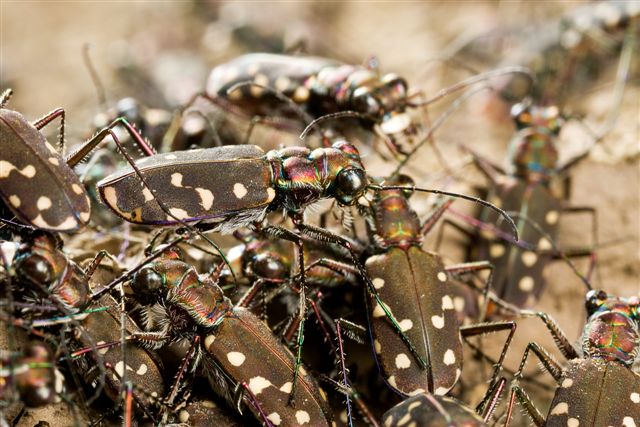
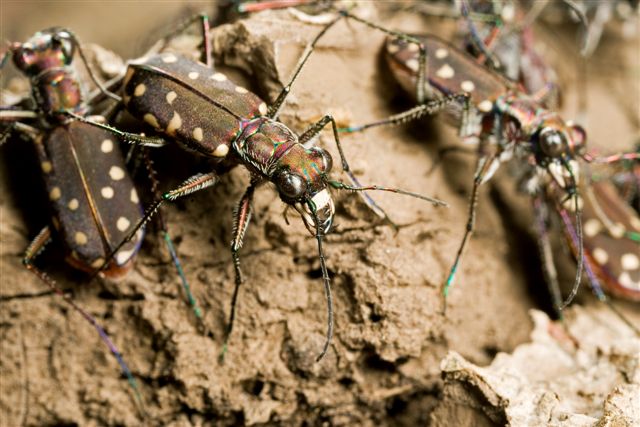
Not long ago, I received an interesting series of photographs from Joe Warfel, a nature photographer and macro specialist based in Massachussetts.  Joe traveled to Arizona last July, where he photographed an aggregation of Cicindela (Cicindelidia) sedecimpuntata (Western Red-bellied Tiger Beetle¹) near a small pool in the bottom of a dry creek bed at night.  Joe estimates that there may have been as many as 200 to 300 beetles per square meter in the aggregation, most of which were just “hanging out” and with only occasional individuals mating or feeding on moths that had been attracted to his headlamps.

¹ Found in the Sonoran and Chihuahuan Deserts of the southwestern U.S. and south through Mexico to Costa Rica. U.S. and northern Mexican populations are assigned to the nominate subspecies, while more southern populations are classified into four additional subspecies (Erwin and Pearson 2008).

Western Red-bellied Tiger Beetles are among the first tiger beetles to appear prior to the summer monsoons in the Sonoran Desert.  The species is famous for its daytime aggregations of as many as several thousand individuals, which congregate along the drying waterways and prey upon stranded tadpoles and other aquatic organisms (Pearson et al. 2006).  Joe noted that he has seen these aggregations many times before during the daytime at small pools and mudflats, with beetles usually mating and feeding frantically.  However, the aggregation shown in these photographs differs from those daytime aggregations by the relative inactivity of the beetles and the fact that they were congregated on dry ground rather than the moist areas that they frequent during the daytime.  In these respects, it seems to more resemble a communal nocturnal roost such as has been reported for several species of Odontocheila in South America.  In those cases, up to 70 beetles have been found resting on the foliage of low shrubs, apparently as an adaptation to avoid predation by multiplying chemical defense effectiveness as well as awareness of approaching enemies (Pearson and Vogler 2001 and references therein).  Cicindela sedecimpunctata is primarily a diurnal species (i.e., it is active during the daytime), though individuals are often attracted to lights at night, and adults of most diurnal species have been reported spending the night protected in burrows or under detritus and vegetation.  I am not aware of communal nocturnal roosts as a reported behavior for C. sedecimpunctata or any other North American tiger beetle species.

It is a bit ironic to think of tiger beetles – voracious predators that they are – as prey, but they must have many of their own predators to deal with since most species employ multiple antipredator mechanisms. In addition to the communal roosting behavior seen in these photos, a second antipredator characteristic exhibited by this species can be seen in their bright orange abdomen.  The abdomen is fully exposed only during flight, seemingly implying a “flash coloration” function for the bright color that disappears upon landing, momentarily confusing potential predators.  However, Pearson (1985) experimentally determined that orange abdomens in tiger beetles actually have an aposematic function in protecting them from predation against robber flies.  Most tiger beetle species with an orange abdomen also release a combination of benzaldehyde and cyanide² when captured (any tiger beetle collector is familiar with the characteristic “fruity” smell of a tiger beetle releasing benzaldehyde).  Pearson painted the abdomen of paper tiger beetles models either orange or black and endowed them with or without a drop of fresh benzaldehyde.  When presented on a tether to robber flies in the field, orange-abdomened models with benzaldehyde triggered significantly fewer attacks from robber flies than any other combination.  Interestingly however, vertebrate predators (lizards and birds) were not deterred by the defense chemicals or by the orange abdomen, perhaps explaining why only some and not all tiger beetle species produce defense chemicals and have bright orange abdomens (Pearson and Vogler 2001).

² Tiger beetles, thus, join millipedes as being among the few invertebrates that are capable of producing cyanide.

My sincere thanks to Joe Warfel for allowing me to use his photographs. More of his work can be seen at Eighth-Eye Photography.  Joe also recently had several images published in American Scientist magazine (November/December 2009 issue) for an article on harvestmen.  Check out the jaws on that juvenile!

REFERENCES:

Erwin, T. L. and D. L. Pearson. 2008. A Treatise on the Western Hemisphere Caraboidea (Coleoptera). Their classification, distributions, and ways of life. Volume II (Carabidae–Nebriiformes 2–Cicindelitae). Pensoft Series Faunistica 84. Pensoft Publishers, Sofia, 400 pp.

Pearson, D. L.  1985.  The function of multiple anti-predator mechanisms in adult tiger beetles (Coleoptera: Cicindelidae).  Ecological Entomology 10:65–72.

Pearson, D. L., C. B. Knisley and C. J. Kazilek. 2006. A Field Guide to the Tiger Beetles of the United States and Canada. Oxford University Press, New York, 227 pp.

Pearson, D. L. and A. P. Vogler.  2001. Tiger Beetles: The Evolution, Ecology, and Diversity of the Cicindelids.  Cornell University Press, Ithaca, New York, 333 pp.

Copyright © Ted C. MacRae 2010

Add to FacebookAdd to DiggAdd to Del.icio.usAdd to StumbleuponAdd to RedditAdd to BlinklistAdd to TwitterAdd to TechnoratiAdd to Yahoo BuzzAdd to Newsvine

Email to a friend

Euhagena nebraskae in Kansas

Gypsum Hills region of south-central Kansas (Barber Co.)

One of my favorite destinations for insect collecting is the Gypsum Hills region in Barber County of south-central Kansas.  I first went there in May 1986 after seeing a diverse selection of more typically Texan Buprestidae that J. Richard Heitzman, an iconic lepidopterist in the Kansas City area and author of Butterflies & Moths of Missouri, had collected there on soapberry (Sapindus saponaria).  I had my own success with Buprestidae as well during that trip, but in recent years I have returned to Barber County several times during the fall to look for one of North America’s most beautiful tiger beetles, Cicindela pulchra (Beautiful Tiger Beetle).  This species had been recorded in the area by the well-known cicindelophiles Ron Huber and Dave Brzoska, who suggested that I look in the red clay hills just west of Medicine Lodge.  My first trip to look for this beetle in 2004 was unsuccessful, and I suspect the early September timing of my trip may have been a tad too early.  I returned again in 2005, this time in early October and also enlisting the help of local entomologist “Beetle Bill” Smith, who knew of a population on private land near his home in Hardtner (south of Medicine Lodge).  Although at first it looked like success might again elude me, in the end I saw a robust population of these spectacular beetles and published an account of that marvelous experience (MacRae 2006).

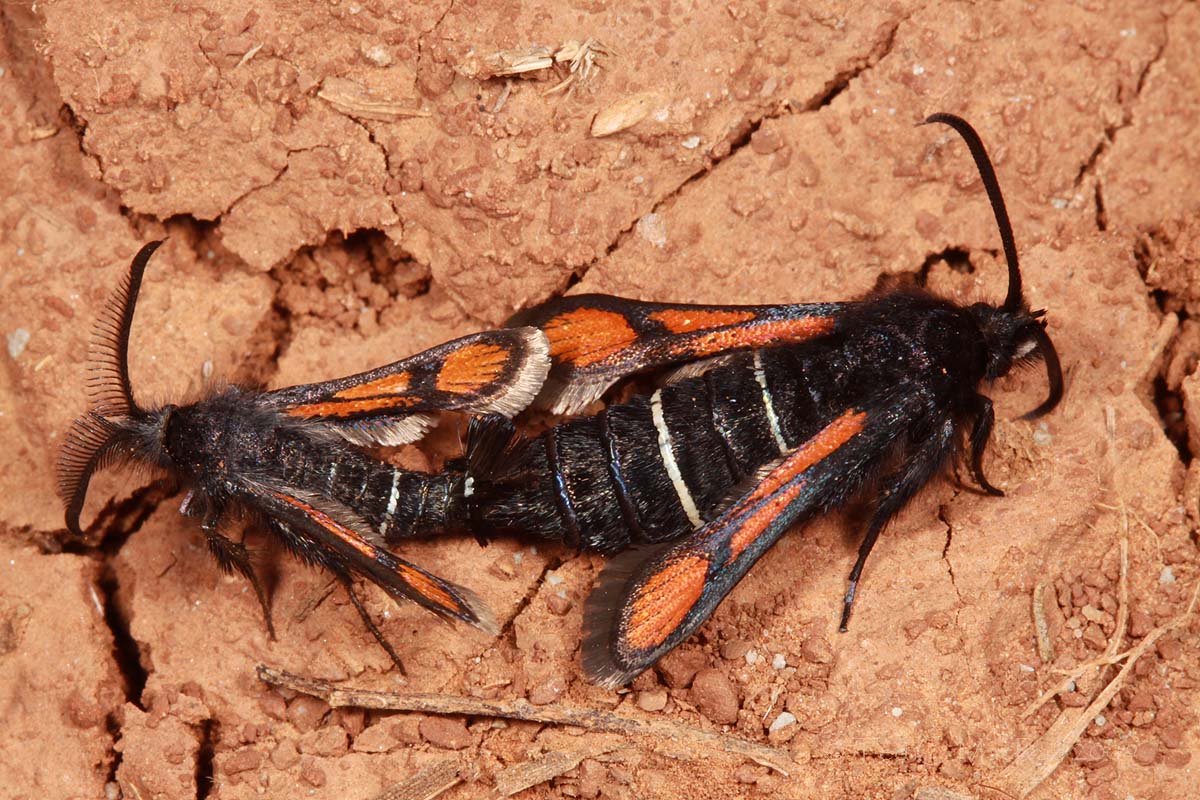
As with so many of the things that I have seen over the years, they came before my interest in photography, and I now find myself wanting to re-find some of the more spectacular insects that I’ve previously found so that I can properly photograph them.  Such is the case with C. pulchra, so in October of last year I returned to Barber County in hopes of seeing this species armed not only with an aerial net, but also a Canon 50D.  Sadly, this would not come to pass – the same sudden cold snap that dashed my hopes of finding this species in nearby Woodward/Major Counties, Oklahoma would keep any tiger beetle activity to a bare minimum the following day in Barber County as well.  Despite bright sunny skies, I would see only two tiger beetles the entire day, both representing the dreadfully ubiquitous Cicindela punctulata (Punctured Tiger Beetle).  Not all insect activity, however, was squelched, and after scanning the red soils for an hour or so without seeing the object of my desire I began to notice some of these other not-so-temperature-finicky species.  One of the more magnificent of these is shown in the photo below — Euhagena nebraskae in the family Sesiidae (cess-EYE-id-ee) (formerly Aegeriidae).

Euhagena nebraskae

Euhagena nebraskae (Lepidoptera: Sesiidae)

Although I wasn’t sure of the species at first, I recognized it immediately as a clearwing moth.  I had an interest in this family of moths for a time in my early days as a field entomologist with the Missouri Department of Agriculture.  Many species are important pests of woody plants in orchard and ornamental landscapes, and it was during that time that synthetic pheromones became widely used for monitoring purposes.  I often walked around with a pheromone tag pinned to my bag to attract the male moths — it was fun watching people seeing these moths “buzzing” me and thinking I was under attack by the wasps that they so effectively mimic (despite my calmness in these situations, I still found it hard to actually grab one from the air with my hand – so convincing is their mimicry).

Euhagena nebraskae is one of two species in the genus in North America, both of which develop as larvae in the roots of plants in the evening primrose family (Onagraceae) (Eichlin and Duckworth 1988).  In fact, I had seen its congener — E. emphytiformis — many times in the 1980s in pheromone traps that I used to place in the glades of Jefferson County just south of St. Louis, where it presumably breeds in one or both of two Oenetherea species growing there (O. gaura and O. macrocarpa).  Euhagena nebraskae is a more western species that does not occur in Missouri, occurring instead across the Great Plains west to California and from southern Alberta and Saskatchewan south to Mexico.  It is likely that many entomologists never see this species, as adults are active only during late fall.  Thus, its perception as an uncommon species may be an artifact of its late seasonality. 

I thought it odd that nearly every individual that I saw was sitting on the ground rather than perched higher on a plant.  At first I wondered if the cold temperatures were a reason for this, perhaps causing the moths to seek out the ground as a source of radiant heat.  This seems doubtful, however, since females always seemed to be “calling” – their tufted abdominal tips raised in the air with the scales spread apart, apparently releasing pheromone.  I was fortunate to find this mating pair, which shows nicely the rather high degree of sexual dimorphism seen in these moths.  Note the much more highly bipectinate antennae of the male (pectinate = resembling a comb, bipectinate = ‘teeth’ on both sides of the main stem) versus the simple antennae of the female — males use their antennae for detecting female pheromones, and the bipectinate form presumably provides greater surface area for placement of sensory pores. Note also the male’s smaller size, “hairier” head and thorax, and greater amount of white coloration on the abdomen and wings.  Engelhardt (1946) supposed that the excessive hairiness of adult Euhagena species was an adaptation to their late-season emergence (principally during October and sometimes as late as November), a time when frosty nights prevail in their high-elevation haunts.    

REFERENCES:    

Eichlin, T. D. and W. D. Duckworth. 1988. The Moths of America North of Mexico, Fascicle 5.1, Sesiodea: Sesiidae. Wedge Entomological Research Foundation, Washington, 176 pp.

Engelhardt, G. P. 1946.  The North American clear-wing moths of the family Aegeriidae. Bulletin of the United States National Museum 190:1-222.

MacRae, T. C. 2006. Beetle bits: The “beautiful tiger beetle”. Nature Notes, Journal of the Webster Groves Nature Study Society 78(4):9–12.

Copyright © Ted C. MacRae 2010

Add to FacebookAdd to DiggAdd to Del.icio.usAdd to StumbleuponAdd to RedditAdd to BlinklistAdd to TwitterAdd to TechnoratiAdd to Yahoo BuzzAdd to Newsvine

Email to a friend

Monday Ménage – Brachyleptura rubrica

Photo details: Canon 100mm macro lens on Canon EOS 50D, ISO 100, 1/250 sec, f/18, MT-24EX flash w/ Sto-Fen diffusers.

This mating pair of longhorned beetles represents Brachyleptura rubrica, one of several so-called “flower longhorns” (including the rare Typocerus deceptus) that I saw on flowers of Hydrangea arborescens last June at Trail of Tears State Park in southeastern Missouri.  Flower longhorns collectively represent the subfamily Lepturinae, which among the Cerambycidae are distinguished by their posteriorly tapering elytra and generally narrow pronotum that give them a rather broad-shouldered look.  Their conical coxae (basal segment of the leg) and eyes that usually do not surround the base of the antennae distinguish them from the subfamily Cerambycinae, and the prognathous (forward slanting) face distinguishes them from the Lamiinae (flat-faced longhorns).  Additionally, a great majority of Lepturinae are diurnal (active during the day) and visit flowers as adults, whereas most other Cerambycidae (with notable exceptions) are nocturnal and seldom active during the day (most often being encountered by their attraction to lights).  The subfamily is named for its type genus, Leptura — derived from the Greek word λεπτός (leptos), or narrow, which I presume to be a reference to their relatively more slender appearance compared to other Cerambycidae.  Species in the genus Brachyleptura are distinguished from other Lepturinae by their often abbreviated elytra (“brachy” derived from the Greek word βραχύς, or short), although this is only scarcely the case in B. rubrica.  I’m confident most of you can determine the derivation of the species name.

Although fairly widespread across the eastern U.S., I can remember being really excited the first time I saw this species back in the mid-1980s when I was beginning my faunal study of the Cerambycidae of Missouri (MacRae 1994).  It is by no means rare, but at the same time it is not so routinely encountered as other common flower longhorns in the state such as Strangalia famelica solitaria, S. luteicornis, S. sexnotata, Typocerus octonotatus, and T. velutinus.  Unlike those more commonly seen species, B. rubrica shows a distinct preference for plants with white, compound, flat-topped floral structures.  No plant in Missouri meets this description better than Hydrangea arborecens, and it is on flowers of this plant that I have most often seen the species.  Other flowers on which I have collected it include Ceanothus americanus, Cornus drummondiiDaucus carota, and Parthenium integrifolium — all white, compound, and (except Ceanothus) flat-topped.  Larvae have been recorded breeding in a variety of hardwood species such as beech, birch, elm, hickory, and maple; however, I have only reared this species once — a single individual that emerged from a rather punky dead branch of Carpinus caroliniana (blue beech, musclewood, hornbean) (MacRae and Rice 2007).  I suspect that the condition of the wood (slightly decayed rather than freshly dead) is more important than the actual tree species (although perhaps it is confined to hardwoods and does not utilize conifers).

There is a related species in Missouri, Brachyleptura vagans, which resembles B. rubrica in form and by its white-annulated antennae, but it is distinguished by the elytra being wholly black except for small (usually) red patches behind the humeri (shoulders).  I haven’t encountered this species quite as commonly in Missouri, mostly in shortleaf pine (Pinus echinata) forests of the Ozark Highlands.  I’ve collected it on most of the same flowers as B. rubrica, but rather than H. arborescens it seems to be most fond of C. americanus.

REFERENCES:

MacRae, T. C. 1994. Annotated checklist of the longhorned beetles (Coleoptera: Cerambycidae and Disteniidae) known to occur in Missouri. Insecta Mundi 7(4) (1993):223–252.

MacRae, T. C. and M. E. Rice. 2007. Distributional and biological observations on North American Cerambycidae (Coleoptera). The Coleopterists Bulletin 61(2):227–263.

Copyright © Ted C. MacRae 2010

Add to FacebookAdd to DiggAdd to Del.icio.usAdd to StumbleuponAdd to RedditAdd to BlinklistAdd to TwitterAdd to TechnoratiAdd to Yahoo BuzzAdd to Newsvine

Email to a friend

Alkali Tiger Beetle

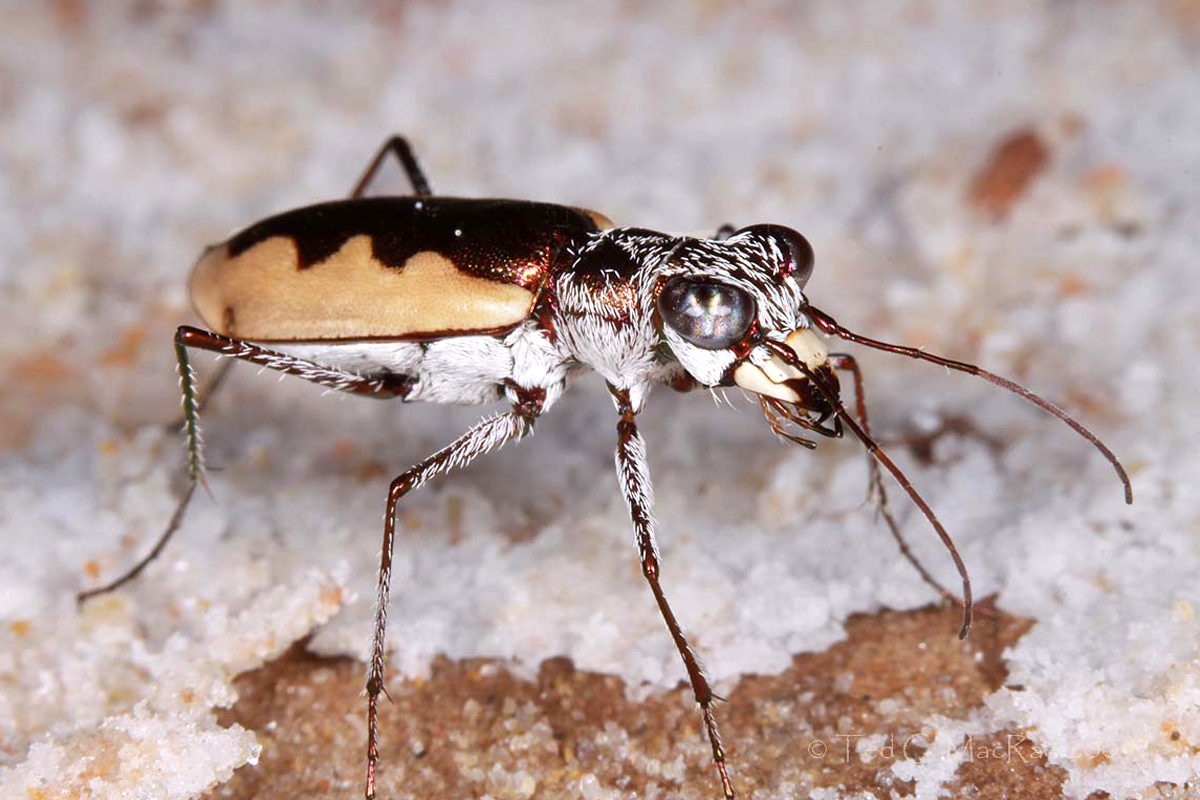
Eunota togata globicollis - Salt Plains NWR, Oklahoma

I haven’t written much about my early October trip to Oklahoma, where I had hoped to confirm a hunch that the gorgeous Cicindela pulchra (Beautiful Tiger Beetle) would be found in the red clay/gypsum hill habitats of Woodward and Major Counties (the same place where I had found the much rarer Cylindera celeripes the previous June).  Unfortunately, a sudden cold snap and overcast skies conspired against me for the duration of that short, 5-day trip, reducing tiger beetle activity to near zero and sending me back to Missouri with little to show for my efforts — save a scorpion, a torpid Cicindela splendida, and some very beautiful ladie’s-tresses orchids in peak bloom.  I did have one moderately successful day, however, when I returned to Salt Plains National Wildlife Refuge in north-central Oklahoma, a place where I observed seven species of tiger beetles during my June trip.  An eighth species that I did not see on that trip, but which I had observed in previous years, was my goal this time, and despite the cold temperatures and cloudy skies I was fortunate to find several individuals of Eunota togata globicollis.  Occurring primarily on saline flats in the central and southern Great Plain, this subspecies was called the Alkali Tiger Beetle¹ by Erwin and Pearson (2008), who reserved for the nominate form (found in salt marshes and tidal flats along the Gulf Coast) the more descriptive name White-cloaked Tiger Beetle².  A third subspecies, E. togata fascinans (Salt Flat Tiger Beetle) is restricted to salt flats in central New Mexico and west Texas (Pearson et al. 2006) (you may remember this subspecies from my habitat partitioning post last month).

¹ In reality, I have come to consider the term ‘alkali’ as a bit of a misnomer, as it is saline soils specifically — not just those with high pH (alkaline) — that the species is fond of. Moreover, there are many species of tiger beetles in addition to this one that are associated with saline soils.

² Okay, I might as well just get all this off my chest. Pearson et al. (2006) gave common names to each species of tiger beetle in the U.S., but not subspecies. I think most non-taxonomists probably consider this a good thing, although it is not without its problems (some species already had multiple common names applied to them, forcing choices that are sure not to please everyone). Erwin and Pearson (2008) took this further and came up with common names for all of the subspecies as well, and like any good taxonomist they steadfastly applied existing common names only to nominate forms. Eunota togata, however, is an example where the original common name would have been better applied to one of the non-nominate subspecies. The species epithet togata means “cloaked” (being derived from the Latin word toga — a reference to the broad white band running along the elytral margins). Each of the two non-nominate forms are distinguished by the white band being more broadly expanded (indeed, almost entirely covering the elytra in subspecies fascinans), yet it is the nominate subspecies — the least “cloaked” of the three — that retains the original common name. A silly argument I suppose, but if we start applying the “prinicple of priority” to common names in the same manner as scientific names, then what have we gained? Of course, I am of the opinion that most insect groups are too diverse and their taxonomy still too unstable to warrant a rigid system of “official” common names. Is it really any easier to learn White-cloaked Tiger Beetle than Eunota togata? How about Mount Ashland Night-stalking Tiger Beetle instead of Omus cazieri? And this is not even considering what happens when category-level shifts occur. For example, the genus Tetracha was formerly called the Big-headed Tiger Beetles; however, its former subgenera were recently elevated to genus level. Erwin and Pearson, accordingly, applied the common name to the entire subtribe containing Tetracha and its relatives and applied a new common name, Metallic Tiger Beetles, to the new, more limited concept of Tetracha. Thus, in an ironic case of common name instability despite no change in scientific name, the Virginia Big-headed Tiger beetle (Tetracha virginica) became the Virginia Metallic Tiger Beetle. Are your eyes bugging yet? Common names may be appropriate for higher vertebrates, but can they really be used effectively for beetles and other insect groups where the increasing use of molecular tools is sure to result in additional, perhaps radical, shifts in taxonomy? There — I said it, and I feel a lot better!

This species is restricted to saline flats in the central/southern Great Plains.

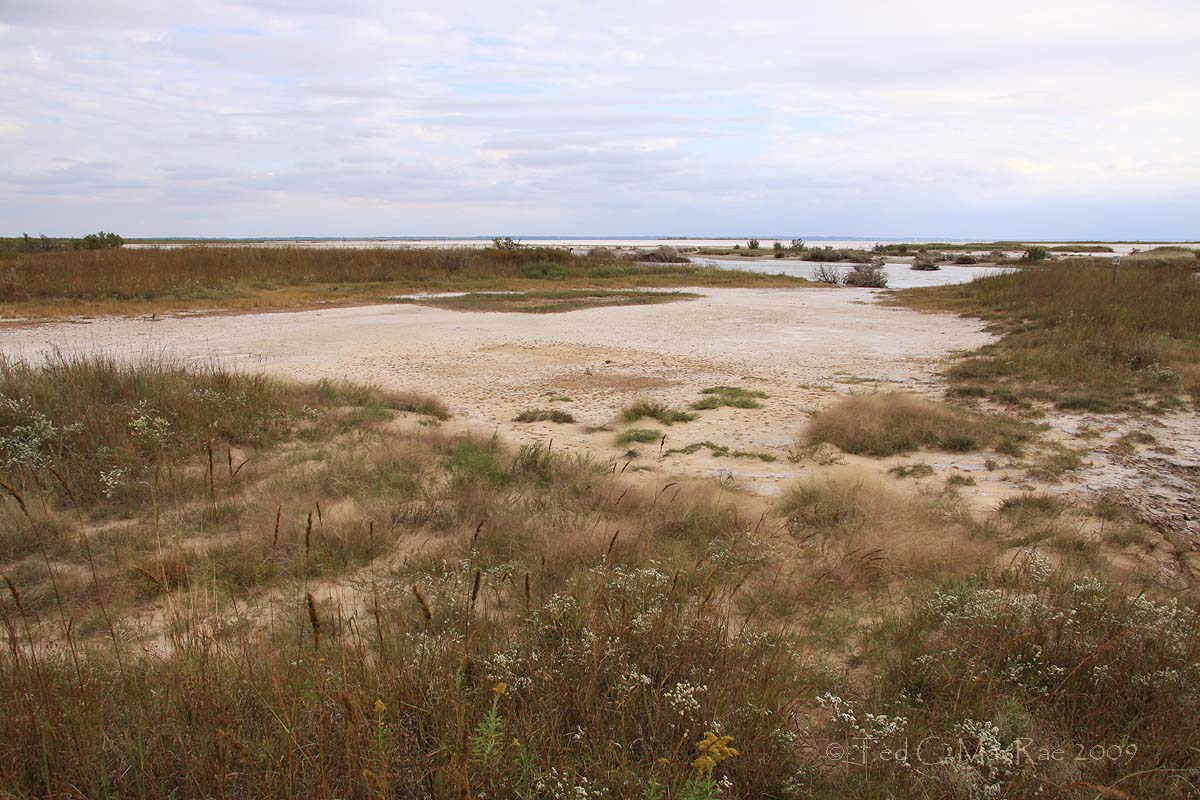
Of the eight tiger beetle species that I’ve now observed at Salt Plains NWR, half of them (Cicindela fulgida, C. nevadica knausii, E. togata globicollis, and Habroscelimorpha circumpicta johnsonii) are true saline habitat specialists.  One of the other four species (Cicindela tranquebarica kirbyi) is also fond of saline habitats but also occurs commonly on dry, sandy soils as well, and two show a high affiinity for nearly any moist (Cicindela repanda) or moist to dry (Cicindela punctulata) soils with little regard for salinity.  Only Cicindela formosa, a denizen of dry, deep sands seems a little out of its element on the moist, salty mud at Salt Plains NWR — perhaps the few individuals I’ve observed here are incidental visitors, mistaking the white, barren expanses of salt-encrusted soil for the dry sand the species prefers during disperal searches.  This again brings up the question of habitat partitioning for competition avoidance among tiger beetle species sharing the same habitat.  Eunota togata globicollis is active during the spring and fall and, thus, temporally isolated from C. nevadica knausii and H. circumpicta johnsonii (both summer-active species).  The other saline specialist at Salt Plains NWR (C. fulgida) is active during the same seasons as E. togata globicollis; however, in my observations that species prefers the sparsely-vegetated zone at the edge of the saline flats, while E. togata globicollis prefers to stay out in the more open areas.  These observations mirror those of Melius (2010) for E. togata fascinans and the other seven species he noted in the Laguna del Perro area of New Mexico, and of Willis (1967), who recorded as many as 11 sympatric tiger beetle species in saline habitats in the central U.S.

Saline flats at Salt Plains NWR are home to eight species of tiger beetles.

Microhabitat selection and seasonal occurrence are not the only isolating mechanisms that can minimize interspecific competition among the different tiger beetle species at Salt Plains NWR.  Cicindela tranquebarica kirbyi is also a spring/fall species and doesn’t appear to display a preference for open versus vegetated areas, potentially allowing it to compete directly with both E. togata globicollis and C. fulgida.  However, C. tranquebarica kirbyi is a decidely larger species, while the other two are smaller, and correlated with such differences in overall size is the size of their mandibles.  Mandibular size directly correlated to prey size in a number of tiger beetle species (Pearson and Mury 1979), thus providing another mechanism for avoiding competition between these three co-occurring species. 

Photo details:
Beetles: Canon 100mm macro lens w/ 68mm Kenco extension tubes on Canon EOS 50D (manual mode), ISO 100, 1/250 sec, f/18-20, MT-24EX flash 1/4 power w/ Sto-Fen diffusers.
Landscapes: Canon 17-85mm zoom lens (22mm) on Canon EOS 50D (landscape mode), ISO 100, 1/100 sec, f/10, natural light.

REFERENCES:

Erwin, T. L. and D. L. Pearson. 2008. A Treatise on the Western Hemisphere Caraboidea (Coleoptera). Their classification, distributions, and ways of life. Volume II (Carabidae-Nebriiformes 2-Cicindelitae). Pensoft Series Faunistica 84. Pensoft Publishers, Sofia, 400 pp.

Melius, D. A. 2009. Post-monsoonal Cicindela of the Laguna del Perro region of New Mexico. CICINDELA 41(4):81-89.

Pearson, D. L., C. B. Knisley and C. J. Kazilek. 2006. A Field Guide to the Tiger Beetles of the United States and Canada. Oxford University Press, New York, 227 pp.

Pearson, D. L. and E. J. Mury. 1979. Character divergence and convergence among tiger beetles (Coleoptera: Cicindelidae). Ecology 60:557–566.

Willis, H. L.  1967.  Bionomics and zoogeography of tiger beetles of saline habitats in the central United States (Coleoptera: Cicindelidae).  The University of Kansas Science Bulletin 47(5):145-313.

Copyright © Ted C. MacRae 2010

Add to FacebookAdd to DiggAdd to Del.icio.usAdd to StumbleuponAdd to RedditAdd to BlinklistAdd to TwitterAdd to TechnoratiAdd to Yahoo BuzzAdd to Newsvine

Email to a friend