Trees of Lake Tahoe – The Deciduous Trees

Alder, Maple, and Nuttall’s Flowering Dogwood make beautiful bowers over swift, cool streams at an elevation of from 3000 to 5000 feet, mixed more or less with willows and cottonwood; and above these in lake basins the aspen forms fine ornamental groves, and lets its light shine gloriously in the autumn months.–John Muir, The Mountains of California (1894).

p1020724_2

This is the third installment of a “Trees of Lake Tahoe” series summarizing the trees of Tahoe Basin. The basin forests are, of course, dominated by a diverse assemblage of conifers – eleven species in all.  These were covered in parts 1 (Trees of Lake Tahoe – The Pines) and 2 (Trees of Lake Tahoe – The “Other” Conifers ) of this series.  Yet, despite this coniferous domination, the 14 species of deciduous trees¹ that occur in the Tahoe Basin is three more than the number of coniferous tree species.  These deciduous tree species will be covered in this third and final part, including the nine species I was able to locate on my recent visit to the area back in mid-March.  Because of the timing of that trip, the trees will be discussed from a decidedly wintertime perspective that makes species identifications a little more challenging compared to the coniferous species.

¹ Admittedly, I use the term “tree” in the broadest sense, since many of these species might better be described as “tree-like shrubs” or “shrubby trees,” often representing only the largest examples of genera whose members include a number of true shrubs.  Only a handful of these species routinely form large, unmistakably tree-like forms, the largest of which still pale in comparison to the coniferous giants that dominate the basin.

Family SALICACEAE

This family of dioecious plants (male and female flowers on separate plants) is represented in the Tahoe Basin by two genera.  Two species of Populus occur here, and both decidedly trees in form.  Most of the nine species of Salix that grow in the basin grow only as shrubs, while two of them sometimes form distinct trees.

Quaking aspen (Populus tremuloides)

…in winter, after every leaf has fallen, the white bark of the boles and branches seen in mass seems like a cloud of mist that has settled close down on the mountain, conforming to all its hollows and ridges like a mantle, yet roughened on the surface with innumerable ascending spires.–John Muir, Steep Trails (1918).

p1020610_2p1020611_2

Quaking aspen is one of the most unmistakable trees of the Tahoe Basin – regardless of the season.  Famous for its shimmering foliage during summer and blazing fall colors, it is equally distinctive during winter when its smooth, creamy, greenish-white trunks stand in stark, leafless contrast to the dark green coniferous foliage that cloaks the landscape.  Thick stands of this species are common in moist meadows and stream margins, with stands typically representing clonal colonies of genetically identical trees sprouting from a common root mat.  Although another species of Populus does occur in the basin (black cottonwood – see below), that species is not nearly as abundant as quaking aspen and lacks its distinctive smooth bark.

The second photo above shows some of the few, still-clinging leaves that I found, unremarkable in senescence but showing the flattened petioles that cause to summertime leaves to flutter and quiver incessantly with the summer breezes, alternately flashing their bright green upper surface and silvery underside.

Black cottonwood (Populus balsamifera ssp. trichocarpa)

p1020701_2p1020700_2

Black cottonwood is the largest American Populus and the tallest non-conifer in western North America.  Growing throughout the cool, moist Pacific Northwest, it is at its elevational limit in the Sierra Nevada along moist streams and lakeside habitats in the lower Tahoe Basin. The wonderfully knowledgeable Forest Service worker, who helped me greatly in my quest to locate all of the basin’s conifers, was skeptical about my chances of finding this species; however, while hiking the Rubicon Trail at Emerald Bay State Park I spotted the unmistakable, deeply furrowed, gray bark of this close relative of our own eastern cottonwood (Populus deltoides).  Examining the twigs revealed the large, pointed buds, sticky with resin, and a few clinging leaves whose wide, ovate shape confirmed the species’ identity.  It was the only black cottonwood I saw in the basin, although surely others exist throughout the basin at lakeside elevations.

Willows (Salix spp.)

p1020673_2

As a group, willows are easily distinguished from the other deciduous trees and shrubs that occur in the Tahoe Basin.  However, discriminating among the several species can be quite difficult, even for trained botanists.  Winter is not the best time to try to identify willows, as many species are distinguished by characters of the foliage and flowers.  In some cases, examination of both male and female flowers is required – frustrating since they are borne on separate plants!  Wintertime characters normally useful for other plants such as bark and twig color are rarely informative for different species of willow, and even growth habit as trees or shrubs can vary greatly within species depending on elevation and available moisture.  All of this is a long-winded way of saying I don’t know which or how many species of willow I observed in the Tahoe Basin.

p1020705_2p1020707_2According to Graf (1999), there are nine species of willow in the Tahoe Basin; however, only two of them are trees – the abundant shining willow (S. lucida spp. lasiandra), and the more drought-tolerant Scouler’s willow (S. scouleriana).  The remaining seven species are shrubs that rarely exceed 10-12 feet in height.  Indeed, one of them – arctic willow (Salix arctica) – grows no more than 4 inches tall, occurring in seepy slopes and along lake and stream margins in the subalpine zone at Carson Pass.  Most of the willows I observed were at lower elevation along the shore of Emerald Bay and in the wet meadows around South Lake Tahoe and Spooner Lake and were growing as large shrubs or small trees and exhibited either bright yellow or red bark on the year-old branches, turning to smooth gray on older branches.  I don’t know whether these represent one or more species, or if they even represent one of the two arborescent species, but I suspect the yellow-twigged species may represent Lemmon’s willow (S. lemmonii), one of the shub species and Tahoe’s most common willow.  Perhaps a stretch goal for next year’s trip could be to find and distinguish all nine Tahoe Basin willow species, but realistically I would settle for knowing for sure what species the plants in these photographs represent (although I definitely would like to find the diminutive arctic willow).

Family BETULACEAE

Like the Salicaceae, plants in this family have male and female flowers on separate structures called catkins, but the plants themselves are monoecious (both sexes on the same plant).  Two genera – Alnus and Betula – occur in the basin, each represented by one species.

Mountain alder (Alnus incana ssp. tenuifolia)

p1020675_2p1020677_2

Like the willows, mountain alder is another deciduous plant that straddles the line between tree and shrub, and as is typical of most species in these two plant families (Salicaceae and Betulaceae) the species shows a high affinity for moist sites along stream and lake margins and on seepy north- and east-facing slopes.  The largest specimens I saw, as pictured above left, were found growing on the granite sand beaches along the Rubicon Trail on the western shore of Emerald Bay in Emerald Bay State Park.  Like alders anywhere, this species is immediately recognizeable in winter due to the persistent woody cones that represent the previous year’s female catkins.  Another larger species of alder, white alder (A. rhombifolia), occurs in the Sierra Nevada, but it is not clear to me whether this species actually occurs in the Tahoe Basin proper.  Graf (1999) does not include it in his rather comprehensive treatment of Tahoe Basin plants, but Peterson & Peterson (1975) and Quinn (2006) both list it from the basin (although rare). 

Water birch (Betula occidentalis)

I did not observe this species, which Graf (1999) records from Carson Pass.  The only birch occurring in the Sierra Nevada, it is more common outside the basin proper on the eastern slopes above the burning sagebrush plains.  Like alder, separate male and female catkins are borne on the same tree; however, the female catkins of birch are solitary rather than clustered and disintegrate when ripe rather than persisting as woody cones.

Family FAGACEAE

This family contains the über diverse genus Quercus – represented in California by 20 species.  However, of the five arborescent oaks that occur in the Sierra Nevada, only one has successfully penetrated the high elevations of the Tahoe Basin. A second species of Quercus also inhabits this montane region but grows exclusively as a low shrub, and another shrub in the related genus Chrysolepis also grows here – these two latter species will be treated more fully in a future post.

Canyon live oak (Quercus chrysolepis)

The trunk was all knots and buttresses, gray like granite, and about as angular and irregular as the boulders on which it was growing—a type of steadfast, unwedgeable strength.–John Muir, The Mountains of California (1894).

p1020618_2p1020614_2

This is one of North America’s most variable oaks, exhibiting extreme variability in leaves and fruit and developing as either a tree or a shrub, depending upon the site where it grows. Slow growing and solid, it does best in sheltered locations, where it can develop an impressive, spreading crown and live a hundred years or more. On exposed slopes, it takes on a shorter, shrubbier aspect (above left) or forms dense thickets (above right).  I saw most of this species at lower elevations within the basin – along the Vikingsholm Trail in Emerald Bay State park leading down to the west shore of Emerald Bay.

p1020615_2

The leaves of this evergreen species are bluish green with numerous golden glandular hairs when young and becoming dull gray and smooth with age. Although there are no other arborescent oaks at this elevation with which it can be confused, I did find growing alongside it the strictly montane and shrubby huckleberry oak (Q. vaccinifolia).  The somewhat smaller, mostly entire leaves were the only indication it was not merely a shrub form of canyon live oak, and further study revealed that the two species can be distinguished by the presence of multiradiate glandular hairs on both leaf surfaces of canyon live oak.  These two species are closely related (both are in the Protobalanus – or “golden oak” – section of the genus), and widespread hybridization has apparently been documented in this part of the Sierra Nevada where the two species’ distributions overlap (Nixon 2002).

Family ROSACEAE

This large family of dioecious plants with usually pentamerous radial flowers is represented in the Tahoe Basin by nearly three dozen mostly perennial shrubs.  Six of these species, representing the genera Amelanchier, Cercocarpus, Prunus and Sorbus, sometimes develop a tree form.

Cherry (Prunus sp.)

p1020713_2p1020712_2

Two species of Prunus – bitter cherry (P. emarginata) and western chokecherry (P. virginiana var. demissa) – occur in the Tahoe Basin, both growing as either shrubs or small trees.  I cannot say for sure which species is represented in these photographs (taken on the slopes above Emerald Bay at Emerald Bay State Park), as the two species are best distinguished by subtle differences in their flowers and foliage.  Bitter cherry is apparently common in the Tahoe Basin and has bark that is smooth and dark brown, while chokecherry is more of a foothill species that is uncommon on the western shore (where these photos were taken) and has more grayish brown and somewhat scaly bark.  I can go either way with bark color based on these photos, so I’ll forgo an ID for the time being and seek to follow up during my next visit.  A third species of Prunus, the strictly shrubby desert peach (P. andersonii), formerly occurred at low elevations around the south shore, but it is now considered to be extirpated from the basin.

Mountain ash (Sorbus californica)

While hiking the Rubicon Trail in Emerald Bay State Park, I spotted a single, small tree with distinctive, large winter buds that reminded me immediately of the ornamental species mountain ash (Sorbus aucuparia) from my former days as a nursery inspector.  This thought seemed to be confirmed when I found a senesced but still attached leaf, pinnately compound with nine ovate, toothed leaflets.  However, my pocket copy of Native Trees of the Sierra Nevada (Peterson & Peterson 1975) included no species of Sorbus, and I concluded it must be something else.  This lone tree was located in deep shade within the white fir forest near the western shore of Emerald Bay, so I opted to find another tree in better lit conditions for taking photos – unfortunately, no other trees of this species were found.  Once I got back home, I was happy to find Sorbus californica listed in my just purchased copy of Graf (1999).  This species has attractive white flowers in small panicles during the summer that give rise to bright red berries during fall and is apparently common in mid- to higher-elevation riparian communities around the lake.

Serviceberry (Amelanchier spp.)
Curl-leaf mountain mahogany (Cercocarpus ledifolius)

I did not locate either of the two species of serviceberry that occur in the Tahoe Basin, the common serviceberry (Amelanchier utahensis) and the more localized glabrous serviceberry (A. alnifolia var. pumila).  Being highly familiar with our eastern species, A. arborea (just recently finished flowering), I suspect either of these species would be readily recognized, even in winter, by their smooth, silvery-gray bark and shrubby, small-tree form.  I also did not see curl-leaf mountain mahogany (Cercocarpus ledifolius), another species that barely qualifies as a small tree.  It is apparently more at home on the dry eastern flank of the Sierra Nevada but can be found within the basin proper sporadically in the southwest and along the southeastern lake shore and more commonly on dry slopes in the far north and south of the basin.  I have collected a number of woodboring beetles from mountain mahogany across the southwestern U.S. from the mountains of southern California to the Chisos Mountains of Texas.

Family ACERACEAE

The single North American genus, Acer, is represented in California by four species, three of which occur in the Sierra Nevada but only one occurring in the Tahoe Basin.  Plants in this family are closely related to the Hippocastanaceae, represented in the Sierra Nevada foothills by California buckeye (Aesculus californica).

Mountain maple (Acer glabrum var. torreyi)

As with mountain ash, I found a single small tree representing this species near the west shore of Emerald Bay while hiking the Rubicon Trail.  Despite lacking foliage, I recognized it immediately as a maple by its opposite, scaly buds.  Also like mountain ash, I assumed I would see more after finding the first one and thus didn’t photograph this particular tree growing in deep shade.  That’ll teach me.  This species sometimes grows as a multi-stemmed shrub in moist situations, and even when assuming tree form, as did the one I saw, it is at best a small tree with a maximum height of only around 15′.  With fall foliage in varying shades of pink to red, it must rather nicely compliment the blazing yellow cloak of the quaking aspen during September and October.  Tahoe Basin individuals are placed in var. torreyi due to their bright reddish twigs, while those on the eastern slope of the Sierra Nevada exhibit gray twigs and are placed in var. diffusum.

This concludes my “Trees of Lake Tahoe” series – at least until next year when I hope to locate some of the remaining species I did not find during this year’s visit.  However, I do have one more “flora of Lake Tahoe” post in preparation covering some of the many woody shrubs that occur within the basin.

REFERENCES:

Arno, S. F. 1973. Discovering Sierra Trees. Yosemite Association, Yosemite National Park, California, 89 pp.

Graf, M. 1999. Plants of the Tahoe Basin. Flowering Plants, Trees, and Ferns. A Photographic Guide. California Native Plant Society Press, Berkeley, 308 pp.

Muir, J. 1894. The Mountains of California. The Century Co., New York, xiii+381 pp.

Muir, J.  1918. Steep Trails. Houghton, Mifflin, Boston, ix+390 pp.

Nixon, K. C. 2002. The oak (Quercus) biodiversity of California and adjacent regions. USDA Forest Service General Technical Report PSW-GTR-184, 20 pp.

Peterson, P. V., and P. V. Peterson, Jr. 1975. Native Trees of the Sierra Nevada. University of California Press, Berkeley, 147 pp.

Quinn, C.  2006.  A Nature Guide to the Southwest Tahoe Basin: Including Desolation Wilderness and Fallen Leaf Lake: Trees, Shrubs, Ferns, Flowers, Birds, Amphibians, Reptiles, Mammals, and Fishes Inhabiting the Sierra Nevada Watershed Southwest of Lake Tahoe, California.  CraneDance Publications, Eugene, Oregon, 232 pp. 

Copyright © Ted C. MacRae 2009

Add to FacebookAdd to NewsvineAdd to DiggAdd to Del.icio.usAdd to StumbleuponAdd to RedditAdd to BlinklistAdd to Ma.gnoliaAdd to TechnoratiAdd to Furl

Posted in Aceraceae, Betulaceae, Fagaceae, Rosaceae, Salicaceae | Tagged , , , , , , , , | 8 Comments

Library expansion

p1020873_3

If there is anything that I love as much as beetles, it’s books! Pulling a handsome, leatherbound volume from its location on the shelf and smelling the aging paper while leafing through its pages quickens my pulse the way no electonic reprint ever can. That is not to say I don’t appreciate the convenience and increasing accessability of digital literature – especially with regards to searchability and the growing body of older, previously unobtainable works that can be downloaded and printed at will. Still, whenever I have a choice between pulling a real entomology journal from my shelf or accessing its electronic version on CD or online, I will opt for the real thing.

p1020884_3Over the years, I’ve had the opportunity to obtain complete series of several journals key to my studies. The first, and most important of these, was The Coleopterists Bulletin. About 15 years ago I was able to purchase a nearly complete set of this journal previously owned by cicindelid icon Norman Rumpp. His set contained a few recent volumes overlapping with my own set, started in the early 1980’s, and dating back to all but the earliest of years. When I acquired the Rumpp set, I set about purchasing the missing volumes from the available stores of back issues still offered by The Coleopterists Society. However, a few of the earliest numbers were simply not available, so I borrowed copies of these from my good friend Gayle Nelson, carefully made 2-sided copies of each, and trimmed the papers to match the size of the originals. I then took the entire combined set of issues – Rumpp originals and Nelson photocopies – to the bindery and had them bound in antique burgundy, just as one would expect to see them in a university library. In the years since then, I have begun binding my other journal series as time and funds permit. Not only do these bound volumes look attractive, but they are eminently more functional – standing upright on their own and remaining nicely organized through heavy use.

p1020870_3This week I placed my newest complete journal series on the bookshelf – the exclusively tiger beetle-focused journal, Cicindela. I’ve actually had the complete set for awhile now, purchased last year when editor Ron Huber had a limited number of complete sets reprinted. Being a more recent convert to tiger beetles, I hadn’t started my series of Cicindela until around 2000, although I did obtain some older volumes from the library of the late Prof. Wilbur R. Enns, kindly given to me upon his passing in 2003 by his close friend Prof. Ben Putler. Ron made all of the remaining volumes of this fine journal available to me to complete my set, and I’ve finally gotten the set bound – all 40 volumes dating back to 1969.

While I was taking journal volumes to the bindery, I took advantage of the opportunity to bind a complete set of the SCARABS Newsletter. In keeping with the times, SCARABS is a completely virtual publication – all issues are created, distributed, and archived electronically, with the end user free to print a copy for themselves or not. p1020880_3I chose to print, again carefully generating 2-sided printed of each issue on a color laser printer, and had them bound in “volumes” of appropriate thickness. The example shown here is the “Frank T. Hovore” issue, produced as a memorial to one of our time’s most enthusiastic collector of beetles. Frank, known among scarab circles as “Mr. Pleocoma” for his dedication to rain beetles, died of a heart attack in 2006 while on a collecting trip to a remote part of Ecuador. There is something ironically satisfying about having a complete, bound set of a modern, electronic periodical.

Other complete sets that I have bound in my library include Insecta Mundi (vols. 1-18, subsequent volumes electronic only), Jewel Beetles (vols. 1-11), Consortium Coleopterorum (vols. 1-4), and Michigan/Great Lakes Entomologist (vols. 1-40). Also, while not complete, I have the last 21 volumes of The Pan-Pacific Entomologist, nicely bound in forest green.  Oh, and look at the first photograph again – the book on the right side of the photo is an original copy of Catalogue of the described Coleoptera of the United States, published by Frederick Ernst Melsheimer in 1853. It is the oldest book in my library – received as a gift from the family of the late Marshall Magner, a long-time member of our local Webster Groves Nature Study Society, upon his passing in 2005.

Copyright © Ted C. MacRae 2009

Add to FacebookAdd to NewsvineAdd to DiggAdd to Del.icio.usAdd to StumbleuponAdd to RedditAdd to BlinklistAdd to TwitterAdd to TechnoratiAdd to Furl

Posted in [No taxon] | Tagged , , , , , , | 8 Comments

Winter botany quiz #5

This may be the last winter botany quiz for awhile, but I did come across this interesting little plant on my recent visit to Lake Tahoe that doesn’t fit neatly into any other category upon which I have (or will be) posting about. I was excited to see this plant, and I’ll be interested in seeing what others think about it. Hints: photograph taken on 03/17/2009 at Emerald Bay State Park, along Rubicon Trail, elev. 6,250′.  The host is ponderosa pine (Pinus ponderosa).

p1020672_2

The usual rules – I’ll leave the photo up for a couple days to give people time to research their answer, with comment moderation turned on during that time. Whoever gets it right (or is closest in case nobody gets it right) wins, and being first is always good in case of a tie-breaker!

EDIT 04/20/2009 – Wow, congratulations to, well… almost everyone, for getting this one right. I guess it was not as hard as I thought it would be, since I’d never heard of dwarf mistletoe until I ran into this plant.

To be exact (something I’m fond of being), this is western dwarf mistletoe (Arceuthobium campylopodum, arse-youth-OH-bee-um cam-pie-low-POE-dum). The term dwarf mistletoe refers to the genus as a whole, while ponderosa pine dwarf mistletoe generally refers to what is now called southwestern dwarf mistletoe (A. vaginatum) from AZ and NM. Accordingly, Kirk deserves special mention for being the first to get both the common name (spelled correctly with lower case) and the scientific name, while Doug was the first to properly italicize the scientific name. I know, I’m being really picky – it’s my nature. Also, Adrian added a nice tidbit of information regarding the impact these plants can have on their hosts.

I can be fairly certain about the ID, but not 100%. According to Hawksworth & Wiens (1998), four species of dwarf mistletoe occur within the Tahoe Basin. Of these, only western dwarf mistletoe utilizes ponderosa pine as a principal host.  There is a small chance it could be lodgepole pine dwarf mistletoe (A. americanum), which occasionally utlizes ponderosa pine but is most often (as the common names suggests) associated with lodgepole pine. The two remaining species, fir dwarf mistletoe (A. abietinum) and hemlock dwarf mistletoe (A. tsugense), are restricted in the Tahoe Basin to white/red fir and mountain hemlock, respectively.

REFERENCE:

Hawksworth, F. G., and D. Wiens. 1998. Dwarf Mistletoes: Biology, Pathology, and Systematics. Diane Publishing Company, Darby, Pennsylvania, 410 pp.

Copyright © Ted C. MacRae 2009

Add to FacebookAdd to NewsvineAdd to DiggAdd to Del.icio.usAdd to StumbleuponAdd to RedditAdd to BlinklistAdd to Ma.gnoliaAdd to TechnoratiAdd to Furl

Posted in Viscaceae | Tagged , , , , , , , , | 13 Comments

An extendable handle for insect nets

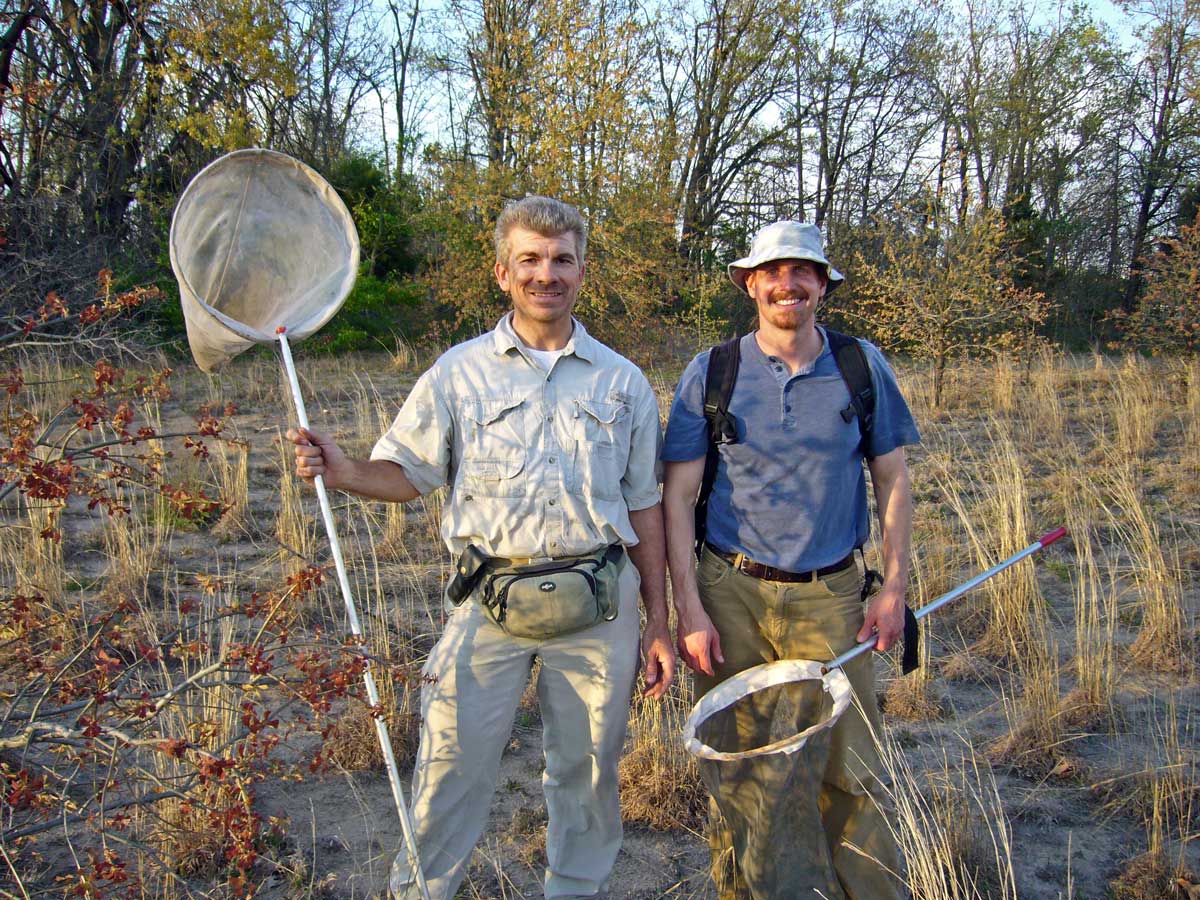
For many years, my standard insect collecting gear has been a beating sheet and a short-handled aerial net (see small photo at right in “The Author” or the full-sized version under About). From the deciduous forests of the Ozark Highlands to the tropical bushveld of South Africa, these two pieces of equipment have been all that I’ve needed to collect the woodboring beetles that have dominated my interests. The beating sheet is, of course, an absolute necessity for anyone interested in jewel beetles (family Buprestidae), longhorned beetles (family Cerambycidae), and the many other insects that tend to be found on tree branches. Woodboring beetles are most frequently, but not exclusively, found on dead branches of their host trees, but regardless of whether the branches are alive or dead, the concept for collecting beetles off of them is the same – a beating sheet is held underneath the branch, and the branch is given a decisive whack with a stick of some kind. This dislodges any beetles that may be foraging or resting on the branch and causes them to drop onto the sheet, where they can be spotted easily and picked off before (hopefully) they escape. For my “stick” I like to use the handle of an aerial net, as the net itself is quite handy to have in case I stumble upon some of the many flower-feeding species or for more general collecting (my inability to focus exclusively on any one taxon is by now well documented). Using a net handle as a beating stick, unfortunately, forces one to compromise on the length of the handle – the handle must be relatively short (no more than 3′ long) to be effective as a beating stick, but such a short handle severely limits reach when the net is being used.  This problem has become even more apparent during the past few years as I have become increasingly interested in tiger beetles (family Cicindelidae).  There is no way around it – you need a long-handled net to have any hope of collecting tiger beetles, and the longer the better (ideally about 6′).  Thus my quandary – I needed a short-handled net to best collect woodboring beetles, but a long-handled net to best collect tiger beetles.

Enter the extendable handle for insect nets, available from BioQuip Products.  This ingenious net handle consists of two telescoping aluminum tubes with a clutch-lock device.  When fully collapsed the handle measures only 36″ in length – perfect for use as a beating stick and when extra length is not needed.  When a longer net handle is needed, however, a quick turn of the clutch-lock frees the inner section, allowing the handle to be extended to nearly 6′ in length – perfect for those fast-moving tiger beetles. Once extended, another quick twist of the clutch-lock secures the handle in place, and that Cicindela is mine!  To cap it all off, the handle is fully compatible with standard insect net rings and bags, including the red “T” knob for ring attachment. It was almost as if the handle had been designed specifically for my purposes.

I purchased mine at the beginning of the last field season. While the design seemed a perfect solution for my short handle-long handle quandary, I wasn’t convinced it would be able to withstand the rigors of field use. Specifically, I questioned whether the inner section would remain firmly seated within the outer section after a few slams of the net against the ground with the handle fully extended (for example, when using the ‘slap’ method for those tiger beetles I hadn’t yet figured out). I expected that repeated flexing of the handle would eventually cause the joint to fail and the handle to lose its rigidity. I also wondered how quickly and easily the handle would extend – especially after seeing some wear and tear. Any difficulty in this regard would quickly negate the convenience offered by an extendable handle.

I was immediately impressed with this handle upon its very first use, and after one full season of heavy use, it appears my concerns about its durability were unfounded. Weighing only 12 oz, it is extremely lightweight and easy to carry, and I am also pleased at how easily the handle extends and collapses – the clutch-lock disengages completely with a single twist, and the inner section slides into and out of the outer section smoothly and quickly. The true test of its durability, however, came during last year’s annual fall tiger beetle trip – a test that it passed with flying colors. I really put the net handle to hard use, and despite repeatedly slapping the net ring against the ground with the handle fully extended, the joint remained solid and rigid. I was able to swing the net with just as much assertion at the end of the trip as at the beginning.

Even during those times when I wasn’t carrying a beating sheet, I found myself routinely preferring to carry the extendable handled-net rather than the long-handled net. It was easier to carry and use when a short handle was sufficient, yet it could be extended quickly and easily when the extra length was needed. At $22.95, I consider its cost to be rather modest compared to the convenience and versatility it offers. For those of you who need a long-handled net but don’t want to wield a long handle all the time (and for the one or two other people in the world who use their net handle as a beating stick), this is the handle for you.

Copyright © Ted C. MacRae 2009

Add to FacebookAdd to NewsvineAdd to DiggAdd to Del.icio.usAdd to StumbleuponAdd to RedditAdd to BlinklistAdd to Ma.gnoliaAdd to TechnoratiAdd to Furl

Posted in [No taxon] | Tagged , , , , , , | 17 Comments

Coral Pink Sand Dunes tiger beetle – range map

Those of you on RSS feed might be interested in revisiting my previous post, Coral Pink Sand Dunes tiger beetle on ARKive.  I’ve added a Google screen shot to the post that shows a visual perspective of the entire range of Cicindela albissima within a tiny inset of the state of Utah.  The image provides a sobering reminder of just how vanishingly small the range of this species is.  If we, as a society, cannot take the steps required to ensure the survival of a beautiful little species such as this one – living on only the tiniest sliver of the lands under our stewardship, it speaks ill of our ability to do so for other species with much greater habitat requirements.
Copyright © Ted C. MacRae 2009

Add to FacebookAdd to NewsvineAdd to DiggAdd to Del.icio.usAdd to StumbleuponAdd to RedditAdd to BlinklistAdd to Ma.gnoliaAdd to TechnoratiAdd to Furl

Posted in Cicindelidae, Coleoptera | Tagged , , , , , , , , , | Leave a comment

Coral Pink Sand Dunes tiger beetle on ARKive

I’ve been meaning to write about ARKive for awhile now. ARKive is a unique collection of videos, images and fact-files assembled from among the world’s very best wildlife videographers and photographers in an attempt to create a centralized digital library of life on Earth. Their short to mid-term priority is the completion of audio-visual profiles for the 16,300-plus species on The IUCN Red List of Threatened Species, before moving on to profiling all species that have ever been filmed or photographed. With backing from many of the world’s leading conservation organizations, ARKive hopes to “promote public understanding and appreciation of the world’s biodiversity and the need for its conservation, through the power of wildlife imagery.”

With tiger beetle season almost now upon us, it seems appropriate to highlight the media collection that ARKive has assembled for one of North America’s most spectacularly beautiful and critically imperiled tiger beetles, Cicindela albissima (Coral Pink Sand Dune tiger beetle). This amazing species is not only stunning in appearance, with its nearly pure white elytra, but has perhaps the most restricted habitat of any tiger beetle species in North America – the entire population being restricted to 400 hectares within coral-pink-sand-dunes_3Utah’s Coral Pink Sand Dunes State Park and the adjacent Bureau of Land Management (BLM) dune management area (Pearson et al. 2006). The Google screen shot at right shows the entire range of this species as a light pink swath (inset shown on larger map of the state of Utah).  Regarded initially as a subspecies of the widespread C. limbata (sandy tiger beetle), recent molecular studies showed this beetle to be only distantly related to that species and, thus, deserving of full species status (Morgan et al. 2000).

Unfortunately, the beetle’s highly restricted habitat continues to be adversely affected by ongoing, recreational off-road vehicle use, especially in the interdunal swales used by the larvae. Impacts occur not only by direct run-over mortality, but also through disruption of normal adult and larval activity, damage to vegetation, reduction of arthropod prey of C. albissima, and mixing of the upper soil layer which increases desiccation of the larval microhabitat (Knisley and Hill 2001). The species was nominated for federal protection under the Endangered Species Act in 1996 (when it was still considered a subspecies of C. limbata), and two years later a Conservation Agreement between BLM, U.S. Fish and Wildlife Service, Utah Department of Parks and Recreation and Kane County was established in an effort to protect the critically sensitive habitats in which this species lives. Despite these conservation measures, ongoing monitoring and research within the protected areas has documented a continuing decline in the population, suggesting that these areas may not be of sufficient size to enable the population to increase, and off-road vehicle use continues outside of the protected areas (U.S. Department of Interior, Fish and Wildlife Service (FWS) 2008). While still only a candidate for federal listing as an endangered or threatened species, the FWS now considers the magnitude of the threat from off-road vehicles, in view of these recent findings, to be high and imminent. As a result, the FWS has increased the priority of the species’ candidacy from 8 to 2 (1 being the highest priority a candidate species can receive).

While I would dearly have loved to embed one of ARKive’s extraordinary videos or photographs of C. albissima within this post, copyright considerations do not allow that.  What I can do is provide hyperlinks directly to the site, and I encourage everyone to visit ARKive and see their images of this gorgeous species.

Photos by Christine Breton: adult beetle, dorsal view, adult beetle, adults mating, habitat

Videos by Ganglion Films: overview, adults mating, adult burrowing in sand, OHVs threatening protected habit.

In addition to the ARKive images, Chris Wirth, author of the blog Cicindela, has taken photographs of this species and presents stunning examples of both the larva and the adult in his post Cicindela albissima (Re-post). I myself am making plans to visit Coral Pink Sand Dunes – perhaps this season – to find and photograph this species for myself. When I succeed, rest assured those photographs will appear on this site.

REFERENCES:

Knisley, C. B., and J. M. Hill. 2001. Biology and conservation of the Coral Pink Sand Dunes tiger beetle, Cicindela limbata albissima Rumpp. Unpublished report.

Morgan, M., C. B. Knisley and A. Vogler. 2000. New taxonomic status of the endangered tiger beetle Cicindela limbata albissima (Coleoptera: Cicindelidae): evidence from mtDNA. Annals of the Entomological Society of America 93(5):1108-1115.

Pearson, D. L., C. B. Knisley and C. J. Kazilek. 2006. A Field Guide to the Tiger Beetles of the United States and Canada. Oxford University Press, New York, 227 pp.

U.S. Department of Interior, Fish and Wildlife Service. 2008. 50 CFR Part 17. Endangered and threatened wildlife and plants; review of native species that are candidates for listing as endangered or threatened; annual notice of findings on resubmitted petitions; annual description of progress on listing actions; proposed rule. Federal Register 73(238) (December 10, 2008):75176-75244.

Copyright © Ted C. MacRae 2009

Add to FacebookAdd to NewsvineAdd to DiggAdd to Del.icio.usAdd to StumbleuponAdd to RedditAdd to BlinklistAdd to Ma.gnoliaAdd to TechnoratiAdd to Furl

Posted in Cicindelidae, Coleoptera | Tagged , , , , , , , , , , | 22 Comments

Myths about why Lake Tahoe does not freeze

p1020598_2In my recent post, Born of glaciers, I touched on the formation of Lake Tahoe and discussed the glacial origins of Emerald Bay and nearby Fallen Leaf and Donner Lakes.  At the end of that post, I listed some interesting facts about Lake Tahoe, including the fact that Lake Tahoe does not freeze over.  That last fact was linked to one of the many internet sources explaining that Lake Tahoe’s massive size and the fact that its waters are always in motion prevent it from freezing. Sounded good to me.

Fortunately, my post drew the attention of David C. Antonucci, an environmental and civil engineer and author of the website TahoeFacts.com. David pointed out that this widely circulated explanation for why Lake Tahoe doesn’t freeze (repeated even by the U.S.D.A. Forest Service, Lake Tahoe Basin Management Unit FAQ website) is, in fact, wrong. David is currently updating his TahoeFacts.com website to include a more detailed explanation about this, but he sent me a draft of his update and has graciously given me permission to quote from it in order to help clear up some of the confusion.

As David points out, size is not the reason – Lake Baikal has more than three times the depth of Lake Tahoe and 160 times the volume, yet is freezes over to a thickness sufficient to support a railway. Nor is it the motion of the water – the Bering Sea is rocked all winter long by violent storms but still forms thick ice cover. The real reason results from a combination of three basic scientific principles:

  1. Freshwater has the unique property of reaching its maximum density at about 39°F – that is, water is densest at a temperature 7°F above the temperature at which it freezes.    For any lake to freeze, its surface waters must cool to 39°F, at which time they become denser than the underlying waters and sink beneath them.  This process continues until the water at all depths is a uniform 39°F, after which the surface waters can continue cooling down to 32°F and begin freezing.
  2. Freshwater bodies gain heat during summer when air temperatures exceed the temperature of the water at the surface and lose it during winter when air temperatures are below the water surface temperature.  The rate at which stored heat is lost during winter depends upon the surface area/volume ratio – lakes with a higher ratio (i.e., they have a large surface area compared to their volume) lose heat quickly, while those with a smaller ratio (small surface area compared to their volume) lose it more slowly.
  3. The rate at which heat is lost is also affected by climate.  Freshwater bodies in colder climates will lose heat more quickly than those with the same surface area and volume in a milder climate.

These three principles combine to explain why Lake Tahoe does not freeze over.  Lake Tahoe has a very small surface area/volume ratio due to its great depth but relatively small circumference.  This limits the rate at which stored heat is lost from the lake during the colder winter months.  The relatively mild climate that occurs in the Tahoe Basin, due to its proximity to the warm Pacific Ocean, further limits the rate at which stored heat is transferred to the air above it.  The result of all this is that the surface temperature of Lake Tahoe never reaches 39°F.  The lake is coldest in late March with a temperature of 41°F at the surface and gradually decreasing to 39°F at a depth of 500-600 ft and below.  Before the surface of the lake has a chance to cool further, increasing sunlight and air temperatures start raising the temperature at the surface.  By early May, surface temperatures reach 50°F, and they peak at 65°F to a depth of 15 ft by mid-August.  However, the summer warming penetrates only to a depth of about 375 ft – where the temperature has remained at 41°F.  Since the upper layers of water never cool below this temperature, they never sink below this depth and allow further cooling to take place.  It is, ironically, a lack of movement that prevents Lake Tahoe from freezing. In order for Lake Tahoe to freeze over, climatic conditions would have to become much colder, or the lake would have to fill in and decrease its depth enough to achieve a sufficiently high surface area/volume ratio.

David also points out that Emerald Bay has formed complete ice cover at least three times during the 20th Century and partial cover in more years. The reason for this is that Emerald Bay lacks the same depth of the main lake – its surface area/volume ratio is high enough to lose its accumulated heat and reach the required 39°F top to bottom during particularly cold winters.

Copyright © Ted C. MacRae 2009

Add to FacebookAdd to NewsvineAdd to DiggAdd to Del.icio.usAdd to StumbleuponAdd to RedditAdd to BlinklistAdd to Ma.gnoliaAdd to TechnoratiAdd to Furl

Posted in [No taxon] | Tagged , , , , , | 23 Comments

Trees of Lake Tahoe – The “Other” Conifers

The inviting openness of the Sierra woods is one of their most distinguishing characteristics. The trees of all the species stand more or less apart in groves, or in small, irregular groups, enabling one to find a way nearly everywhere, along sunny colonnades and through openings that have a smooth, parklike surface.–John Muir, The Mountains of California (1894)

p1020595_2

In a previous post (Trees of Lake Tahoe – The Pines), I discussed the six species of pine that can be found within the Tahoe Basin. These include Jeffrey pine (Pinus jeffreyi) – dominant around the lake at lower elevations, lodgepole pine (P. contorta ssp. murrayana) – common in meadows at lower elevations and replacing Jeffrey pine at higher elevations, ponderosa pine (P. ponderosa) – uncommon in the basin due to its preference for lower elevations, sugar pine (P. lambertiana) – the magnificent giant of high quality mesic sites along the western shore, western white pine (P. monticola) – co-occurring with lodgepole pine at higher elevations, and whitebark pine (P. albicaulis) – covering the highest peaks with its gnarled and twisted form.  In this post, I will cover the five “other” coniferous trees that can be found growing in the Tahoe Basin.  These other conifers belong to several different genera in two gymnospermous families – the Pinaceae and the Cuppressaceae.  Together with the pines, these trees comprise what John Muir described as one of the most diverse and appealing coniferous forests in the world. I am most inclined to agree with him.  The diversity of conifers found in the Tahoe Basin is reflective of the wide range of conditions occurring there as a result of differences in elevation (from 6,200 ft to more than 10,000 ft), exposure, and moisture.

Family-level identification of Tahoe Basin conifers is relatively straightforward – those with needle-shaped leaves belong to the Pinaceae (the pine family), while those with scale-like leaves belong to the Cuppressaceae (the cypress family).  There are other characters that distinguish members of these two families, but leaf shape is the most useful for purposes of field identification.  Nine of the eleven species of conifers found in the Tahoe Basin belong to the Pinaceae, while only two are members of the Cuppressaceae.  Within the families, the genera can be distinguished most readily by the following characters:

Pinaceae

  • Pines (Pinus) – needles linear, arranged in bundles or clusters of up to 5 needles held together at the base by sheath of papery bark (discussed in Trees of Lake Tahoe – The Pines).
  • Firs (Abies) – needles more or less flattened, growing directly and singly from the branch and with a plump base that leaves a round depression on the branch.  Cones upright, on upper branches.
  • Hemlocks (Tsuga) – needles more or less flattened and growing directly and singly from the branch like firs, but narrowly stalk-like at the base where they are joined to tiny wooden pegs.  Cones pendant, on outer branches.

Cuppressaceae

  • Incense-cedars (Calocedrus) – scale-like leaves 4-ranked, twigs branching in one plane to form flat sprays, cones > ½” in length, consisting of two large scales separated from a closed center.
  • Junipers (Juniperus) – scale-like leaves arranged in circles of 3, twigs not forming flat sprays, cones < ½” in length, berrylike.

There are three additional coniferous genera in the Sierra Nevada – each represented by a single species and found along the western slope – that do not occur in the Tahoe Basin.  These include: Douglas-fir (Pseudotsuga menziesii) – widespread at elevations from 2,500 ft to 6,000 ft (higher at the southern end of its range); giant sequoia (Sequoiadendron giganteum) – primarily in Giant Sequoia National Monument, and California nutmeg (Torreya californica) – of scattered occurrence.

White fir (Abies concolor)

As old age creeps on, the bark becomes rougher and grayer, the branches lose their exact regularity, many are snow-bent or broken off,…but throughout all the vicissitudes of its life on the mountains, come what may, the noble grandeur of the species is patent to every eye.

p1020574_2p1020575_2p1020587_2

White fir is second only to Jeffrey pine as the dominant conifer at the lower elevations within the Tahoe Basin¹.  It is immediately recognizable as the only non-pine member of the Pinaceae to occur at these elevations – red fir and mountain hemlock are found only at higher elevations in the basin.  Young trees have a nearly perfect pyramidal shape, with silvery gray bark that is thin, smooth, and p1020588_2covered with resin-filled blisters that can be “popped” to shoot out the resin. Older trees develop a more cylindrical and slightly irregular crown, and the bark becomes thick and roughly furrowed, changing to a dark gray or brown color. The foliage has a gray frosted appearance from below, and crushing the needles releases a delightful citrus smell that I found myself partaking in repeatedly. In the narrow elevational zone where white fir and red fir co-exist, white fir may be recognized by its more flattened needles (cannot be “rolled” in the fingers) which are distinctly twisted near the base, causing them to appear 2-ranked. White fir was seen throughout the Tahoe Basin at elevations below around 7,500 ft, and especially along the western shore and southern shores where the greater moisture and protection of north and east facing slopes are to this species liking.

¹ This post by Watching The World Wake Up provides an excellent introduction to the characteristics and distribution of white fir and its relatives. It also contains what must be the best tangent to ever appear in a botanical blog – the connection made between white fir and the alluring Salma Hayek (annoyingly mispelled “Selma” Hayek), softly singing Siente Mi Amor, is pure brilliance!

Despite its “noble grandeur,” white fir may be regarded as somewhat of a pest species. The suppression of fires that have been the hallmark of 20th century forest management have encouraged the replacement of pines throughout the Sierra Nevada by this species. White fir does not tolerate fire as well as the pines with which it occurs, but unlike those species it does well in shadier conditions. The suppression of fires has resulted in dense stands of white firs growing up in the spaces between the pines. Since it tends to retain its lower branches as it grows, when fires do occur the white firs can act as “fire ladders” that allow the fires to reach the upper canopies of the pines. Pines are not as shade tolerant as firs and are thus unlikely to become established beneath the dense canopy of firs. The result of these fire suppression policies are mixed-conifer forests that are denser and contain a much higher proportion of white fir than in the past, making the forests more vulnerable to stand-replacing fires as well as stress-induced insect and disease outbreaks. These counterproductive management policies are beginning to change – and I saw two controlled burns taking place during the week while I was in Lake Tahoe – but there is still much progress yet to be done if we are to once again see large expanses of the “inviting openness” that so captivated John Muir.

Red fir (Abies magnifica)

This is the most charmingly symmetrical of all the giants of the Sierra woods, far surpassing its companion species [white fir] in this respect… Happy the man with the freedom and the love to climb one of these superb trees in full flower and fruit.

p1020785_2I suspected I had seen this magnificent relative of the white fir in the higher elevations at Heavenly Ski Resort on my first trip back to the area last year, but lacking any real knowledge or field guides at the time it remained only a suspicion. When I returned to Heavenly this year, I was ready for it, and I recognized it instantly when I reached elevations around 8,000 ft. The massive trees with deeply reddish bark were unmistakable, and my only disappointment in seeing this species was that I was unable to approach them closely enough to allow a more thorough examination of their needles and bark. Like the white firs I saw at lower elevations, these massive trees had developed a bit of irregularity in their long, cylindrical crowns.

Younger trees can appear more similar to white fir because of their thin, smooth gray bark with elliptical resin blisters. However, in trees both young and old, the foliage is a more boldly colored blue-green than the paler foliage of white fir. p1020784_2Both species develop thick, deeply furrowed bark as they age, but the bark of red fir is distinctly reddish-brown or reddish purple, compared to the dark gray or brown bark of white fir – almost ashen in appearance. In the hand, the needles are not so flattened as white fir – almost quadrangular in cross-section and able to be rolled in the fingers – nor are they distinctly twisted near the base. The photo at right shows a stately red fir on the left next to a Jeffrey pine on the right at Lakeview Lodge on the California side of Heavenly (elevation 8,250 ft – the highest at which I saw the latter species).  I found this species growing in the company of western white pine (Pinus monticola), lodgepole pine (P. contorta ssp. murrayana), and mountain hemlock (Tsuga mertensiana), as well as in groves of its own kind (unfortunately, seen only from my perch upon a ski lift).

Mountain hemlock (Tsuga mertensiana)

The Hemlock Spruce is the most singularly beautiful of all the California coniferæ. So slender is its axis at the top, that it bends over and droops like the stalk of a nodding lily. The branches droop also, and divide into innumerable slender, waving sprays, which are arranged in a varied, eloquent harmony that is wholly indescribable.

p1020804_2I hadn’t a clue whether I would succeed in finding mountain hemlock – I knew it was a denizon of the snowy high mountains, though less common than some of the other high country conifers, and I didn’t recall noticing anything that might be this species during last year’s visit to the slopes of Heavenly. Of course, being a long-time resident of the Midwest I have little experience with hemlocks in general – eastern hemlock (T. canadensis) is on occasion planted in urban landscapes here, but mountain hemlock is markedly different from that species, as well as its Pacific counterpart western hemlock (T. heterophylla), due to its needles growing out of the twigs in all directions rather than in two flat planar sprays. Additionally, the needles are square in cross-section like spruce (Picea), a genus that does not now occur in the Sierra Nevada. These features caused 19th century botanists to suspect that mountain hemlock might have originated from an intergeneric hybridization event, as evidence by John Muir’s reference to it as “Hemlock Spruce.” However, no crosses between genera in the Pinaceae have ever been substantiated, and no compelling evidence of the presumed crossing events proposed for mountain hemlock has been brought forth (Lanner 1999).

p1020803_2Perhaps being primed by the readings I had done beforehand, I knew instantly I had found this species while riding a ski lift and seeing what looked at first like small junipers, but with a Tolkienesque appearance due to the gracefully nodding leader and drooping branch tips.  My hurried attempts to snap photographs of the trees from the moving ski lift produced nothing but skewed views marred by lift cables and passing cars, but once at the summit I was able to ski down to a little grove next to the ski run for closer inspection.  I immediately noticed the many cones clustered at the branch tips and was struck by their pine cone-like appearance. They were quite large – nearly 2” long (massive by hemlock standards).  Sadly, the only examples I would see of this species would be these small trees that only hinted at the charms of the massive specimens with trunks up to six feet in diameter that so enamoured John Muir.  Like the rare Washoe pine (Pinus washoensis) that occurs just outside Tahoe Basin on the eastern slopes of Mt. Rose, attempts to find some of these graceful 100-footers will have to await my next year’s visit.

Incense-cedar (Calocedrus decurrens)

Casting your eye over the general forest from some ridge-top, the color alone of its spiry summits is sufficient to identify it in any company.

p1020687_2p1020688_2p1020693_2

The incense-cedar is my favorite of all the Tahoe Basin conifers. The bright, cinnamon-red bark of mature trees, deeply-furrowed, fibrous and peeling, is reminiscent of California’s two most iconic conifers – redwood (Sequoia sempervirens) and giant sequoia (Sequoiadendron giganteum), respectively the world’s tallest and most massive trees. Incense-cedar is neither as tall as redwood nor as massive as giant sequoia – p1020590_2indeed, it is not even very closely related (redwood and giant sequoia belong to yet another coniferous family, the Taxodiaceae, containing also the graceful but much smaller resident of southeastern U.S. swamps, baldcypress – Taxodium distichum). Nevertheless, old trees – veterans of centuries of fires and storm damage – are stunning specimens to behold, their massive, buttressed trunks often draped in yellow-green mosses and bearing deep basal fire scars, their spired crowns often broken and forked.  Their flattened sprays of foliage give the tree a delicate, lacy appearance in beautiful contrast to its grizzled, gnarled bark. Indeed, even in death these trees stand out for their stark beauty.

Incense-cedar is common at lower elevations in the Tahoe Basin, especially down close to the lake and in the communities ringing the shore. It rarely forms “stands” like white fir and the pines, p1020670_2but rather most often occurs singly – as if to emphasize their distinctiveness. I found it most common along the western shore, where it grows scattered amongst white fir and Jeffrey, sugar, and ponderosa pines. Some of the most massive incense-cedars I have ever seen were found down near the lakeshore along the Rubicon Trail in Emerald Bay State Park. Common on these trees were what I take to be incense-cedar mistletoe (Phoradendron libocedri) (family Santalaceae), which is apparently rare in the Tahoe Basin but known to occur in the mesic forests of the west shore.

Incense-cedar is another of the so-called “wrongly named” conifers – it is not a true cedar (thus, the hyphen in the name), a group of conifers belonging to the genus Cedrus in the family Pinaceae that is found across Eurasia². While somewhat resembling the true cedars, incense-cedar’s closest relatives are restricted to China and Taiwan. p1020640_2Early botanist-explorers, when they first encountered this tree, named it for what it most resembled to them – the old world cedars. This distinctiveness makes older trees the easiest Tahoe Basin conifer to identify. Even it’s cones that litter the ground under mature trees are unique – slender, spindle-shaped, and about an inch long, with the two longest scales bending back at maturity in a manner resembling a wide-open duck’s bill with the tongue sticking out. Young trees resemble Sierra juniper by their scale-like leaves and peeling bark, but the flattened, yellow-green sprays of incense-cedar and shiny reddish coloration of the bark of twigs and younger branches are immediately distinctive.

² There are actually numerous examples of such wrongly named conifers – Douglas-fir (Pseudotsuga menziesii) is not a true fir; eastern redcedar (Juniperus virginiana), western redcedar (Thuja plicata) and Alaska-cedar (Chamaecyparis nootkatensis) are not true cedars; and baldcypress (Taxodium distichum) is not a true cypress. Long live scientific names!

Like white fir, the Sierra Nevada has seen a bit of a population explosion of incense-cedar due to the fire-suppressive forest management practices of the past century. Despite the thick, fire-resistant bark of older trees, the thin-barked seedlings and saplings are intolerant of fire and grow more slowly than the fire-adapted pines. As a result, the frequent low-intensity fires of the past kept seedling establishment to a minimum, resulting in spot occurrences of mature, fire-resistant specimens. The suppression of these fires, combined with the ability of incense-cedar to germinate in shade and thick layers of duff, have allowed this species to increase in incidence throughout the Sierra Nevada. Along with white fir, it is gradually replacing the pines. This may seem like a good thing from the perspective of foresters and loggers, who value the wood of incense-cedar for its use in making pencils and cedar chests, but from an ecological perspective this has the same negative consequences discussed above for white fir.

Sierra juniper (Juniperus occidentalis ssp. australis)

Its fine color and odd picturesqueness always catch an artist’s eye, but to me the Juniper seems a singularly dull and taciturn tree, never speaking to one’s heart.

p1020766_2p1020600_2p1020603_2

This was another conifer that I didn’t recall seeing on my previous visits, but from what I had read I really hoped I did. Gnarly and burly, mature specimens have a weather-beaten, picturesque quality that is unmatched by any other Tahoe Basin conifer save whitebark pine (P. albicaulis). While I did not find this tree to be common in the Tahoe Basin, I did find it in the most surprising of places – Emerald Bay overlook, where I had gazed in admiration at Lake Tahoe on so many previous occassions. This enduring dweller of exposed granite crags grows where no other trees can, anchored to crevices with only the tracest amounts of soil, p1020613_2seemingly thriving on nothing more than rock, snow, and sunshine. Old trees, with their massively short trunks supporting wind-pruned crowns, cannot be mistaken for any other Tahoe Basin conifer. The wood, it seems, is almost as hard as the granite upon which the trees grow, accounting for John Muir’s impression of this tree as without expression – not even the strongest Sierra winds evoke the slightest of shudders or the quietest of whispers in its unyielding bows.

I did not find this species commonly in the areas of the Tahoe Basin that I visited (which were mostly lower elevation sites below 7,000 ft). In addition to the specimens seen at Emerald Bay State Park, I also found this species near Upper Truckee River before the climb to Echo Summit, and I found a number of fine mature specimens outside of the basin proper at Pyramid Creek Geological Area.  Where I did find it, Jeffrey pine was the most common associate, but in most cases the trees stood alone in their own starkness.  Among the Tahoe Basin conifers, the small scale-like leaves are recognizable to almost any easterner as those of juniper, immediately placing it in the family Cuppressaceae alongside incense-cedar.  Even the young trees can be distinguished from that species by their non-glossy foliage borne on twigs that radiate out from the branches in all directions.  p1020602_21The bark of young trees is shreddy and peeling like that of incense-cedar, but it is dull brown to reddish-brown rather than the shiny purple-red color of incense-cedars.

Sierra Nevada populations of Juniperus occidentalis are considered a separate subspecies due to differences in reproduction and elevational preference.  Trees in nominotypical populations, found in northeastern California and up through eastern Oregon and Washington, are found at somewhat lower elevations (4,000 ft to 5,000 ft) and have cones of both sexes on the same tree; while those of subspecies australis, limited to higher elevations (usually from 6,500 ft to over 10,000 ft) in the Sierra Nevada, have either all male cones or all female cones.

REFERENCES:

Arno, S. F. 1973. Discovering Sierra Trees. Yosemite Association, Yosemite National Park, California, 89 pp.

Graf, M. 1999. Plants of the Tahoe Basin. Flowering Plants, Trees, and Ferns. A Photographic Guide. California Native Plant Society Press, Berkeley, 308 pp.

Muir, J. 1894. The Mountains of California. The Century Co., New York, xiii+381 pp.

Lanner, R. M. 1999. Conifers of California. Cachuma Press, Los Olivos, California, 274 pp.

Peterson, P. V., and P. V. Peterson, Jr. 1975. Native Trees of the Sierra Nevada. University of California Press, Berkeley, 147 pp.

Copyright © Ted C. MacRae 2009

Add to FacebookAdd to NewsvineAdd to DiggAdd to Del.icio.usAdd to StumbleuponAdd to RedditAdd to BlinklistAdd to Ma.gnoliaAdd to TechnoratiAdd to Furl

Posted in Cupressaceae, Pinaceae | Tagged , , , , , , , , , , | 34 Comments