
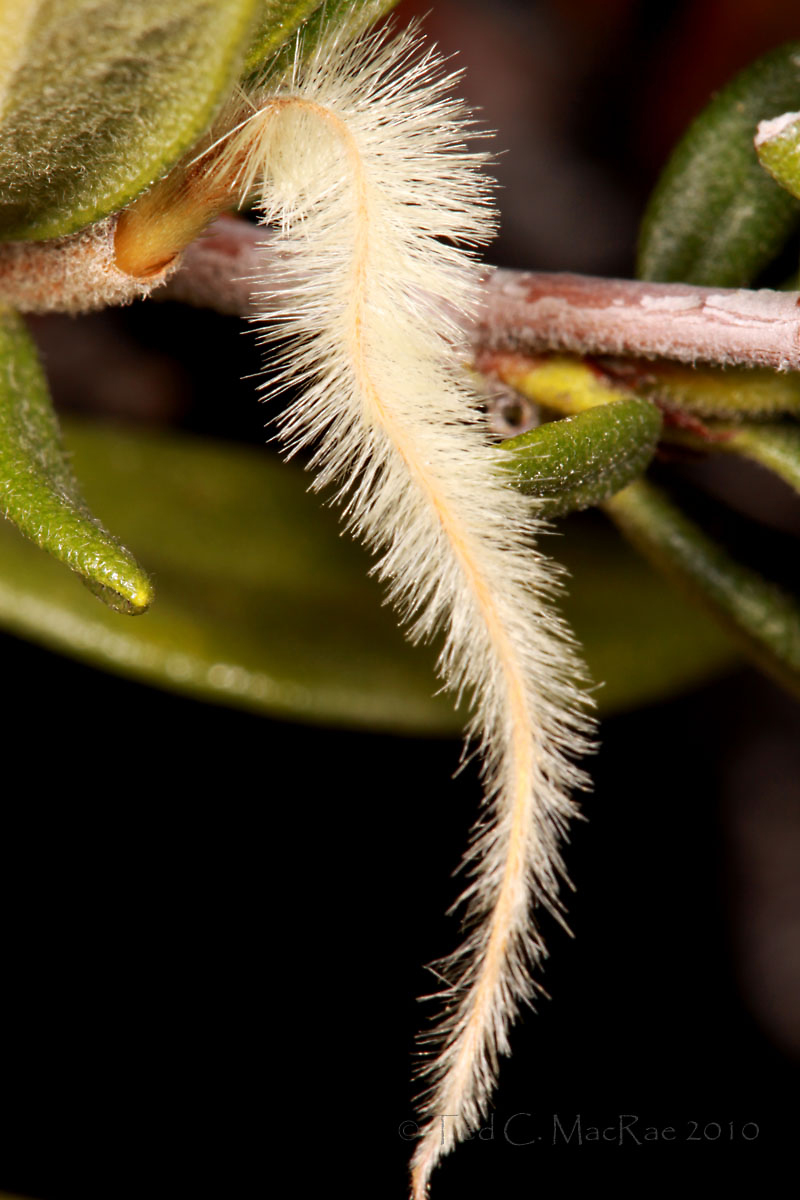
I thought yesterday’s Winter Botany Quiz #6 would be a fairly difficult, and given the apparent difficulty of my previous quizes (Pismire Puzzle and Tuesday Teaser) I thought I’d give readers a break this week and narrow down the location to the Lake Tahoe area. Despite publishing in the dead of night, it took only 31 minutes for Peter Yeeles to swoop down and correctly name the family, genus, species, and function for the structure pictured. His only lapsus regarded the terminology used for the name of the structure itself, leaving the door open for James Trager to snag some scrap points. The plant is, of course, Cercocarpus ledifolius (curl-leaf mountain mahogany) in the family Rosaceae, and the structures pictured above and in the previous post are the stigmas of the flowers persisting as wind-assisted dispersal structures for the fruit. “Cercocarpus” is, in fact, derived from the Greek words for “tailed” and “fruit”, whose numerous erect hairs give the plant in a silvery sheen late in the growing season.

Why was I interested in this plant? It was one of the few tree species occurring in the Lake Tahoe Basin that I wasn’t able to find for last year’s 3-part series, Trees of Lake Tahoe (including The Pines, The “Other” Conifers, and The Deciduous Trees). Widespread in the mountainous west (and barely qualifying as a tree), its occurrence in the Tahoe Basin is more sporadic. Better stands are found outside the basin proper on the dry eastern flank of the Sierra Nevada (Graf 1999), and indeed these plants were photographed at ~6,500 feet on the eastern slopes of Mt. Rose.
My real interest in Cercocarpus, however, is as a favored host plant for species of jewel beetles (family Buprestidae). About two dozen species of these beetles have been associated with Cercocarpus spp. in North America, nine of which have been confirmed as breeding within dead branches of these plants and five having been associated with no other plant. I’ve collected a number of these species myself, particularly in the San Gabriel and Santa Rosa Mountains of southern California and the Chisos Moutains of Big Bend National Park in Texas, including Polycesta cazieri, Chrysobothris piuta, and paratype specimens of Acmaeodera rubrocuprea. I thought it might be of interest to any readers who might collect these insects to present a checklist of Buprestidae associated with Cercocarpus in North America (see appendix below).
REFERENCE:
Graf, M. 1999. Plants of the Tahoe Basin. Flowering Plants, Trees, and Ferns. A Photographic Guide. California Native Plant Society Press, Berkeley, 308 pp.
Checklist of North American Buprestidae associated with Cercocarpus
(Bold indicates species that have been reared from Cercocarpus. An asterisk indicates species that have been associated exclusively with Cercocarpus).
– Acmaeodera (s. str.) angelica Fall
– Acmaeodera (s. str.) connexa LeConte
– Acmaeodera (s. str.) dolorosa dolorosa Fall
– Acmaeodera (s. str.) idahoensis Barr
– Acmaeodera (s. str.) mariposa mariposa Horn
– Acmaeodera (s. str.) mariposa dohrni Horn
– Acmaeodera (s. str.) nelsoni Barr
– Acmaeodera (s. str.) nexa Fall
– Acmaeodera (s. str.) plagiaticauda Horn
– Acmaeodera (s. str.) pubiventris lanata Horn
– Acmaeodera (s. str.) rubrocuprea Westcott & Nelson*
– Acmaeodera (s. str.) vandykei Fall
– Acmaeodera (s. str.) variegata LeConte
– Acmaeodera (Squamodera) vanduzeei (Van Dyke)
– Anthaxia (Haplanthaxia) caseyi sublaevis Van Dyke
– Anthaxia (Melanthaxia) porella Barr*
– Anthaxia (Melanthaxia) simiola Casey*
– Chrysobothris bisinuata Chamberlin*
– Chrysobothris mali Horn
– Chrysobothris piuta Wickham
– Chrysobothris purpureovittata purpureovittata Horn
– Chrysobothris purpureovittata cercocarpi Westcott & Nelson*
– Dicerca (s. str.) hornii hornii Crotch
– Polycesta (Tularensia) californica LeConte
– Polycesta (Tularensia) cazieri Barr
Copyright © Ted C. MacRae 2010















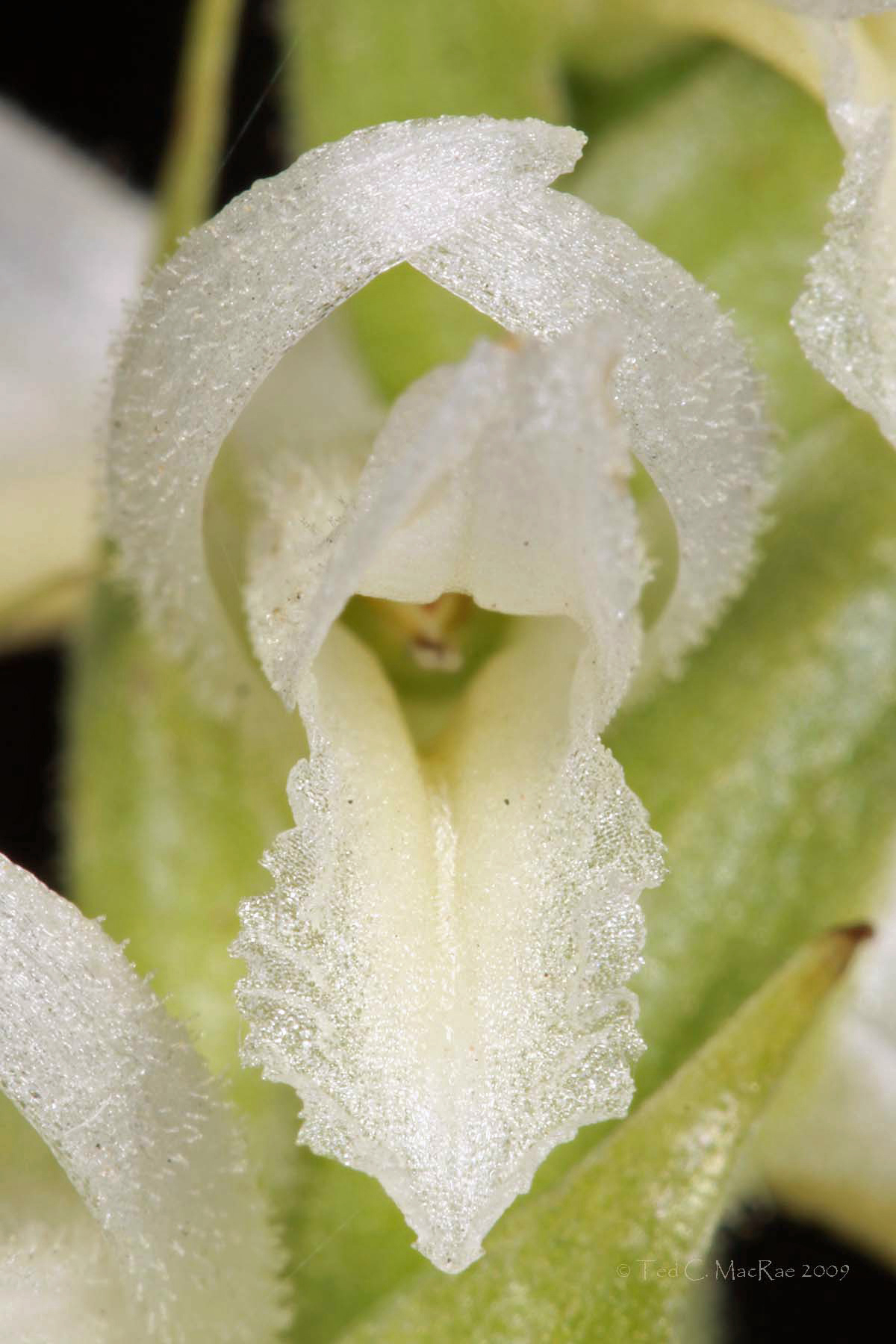
 Spiranthes¹ is one of the more complex genera of North American orchids, seven of which are known to occur in Missouri (Summers 1985). Spiranthes magnicamporum² is closely related to S. cernua and was only recently (1975) described as a distinct species. Conclusive separation of the two species requires microscopic examination of the seeds (those of S. magnicamporum are monoembryonic, whereas a large percentage of the seeds of S. cernua are polyembryonic) (Luer 1975). In the field, however, S. magnicamporum can generally be distinguished from S. cernua by its spreading rather than appressed lateral sepals and absence of basal leaves at the time of flowering³. It is likely that many previous records of S. cernua in Missouri actually refer to this species, as both occur throughout much of southern Missouri and sporadically in northern Missouri (refer to the


 Beetles In The Bush