The “Big 3” of corn in Argentina

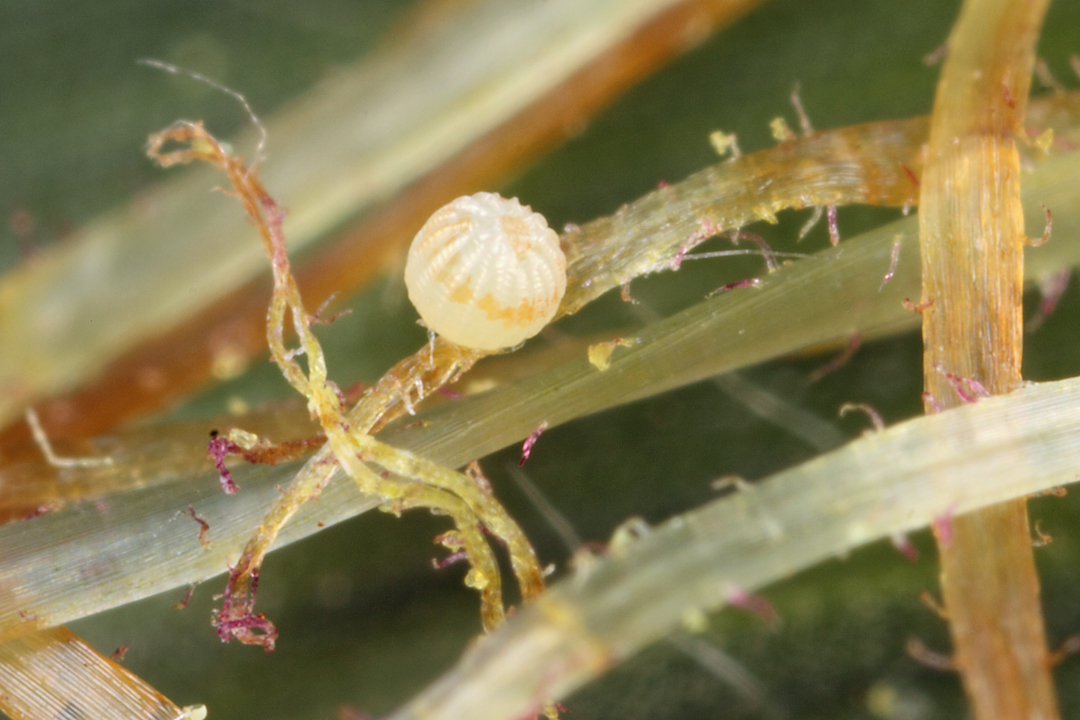
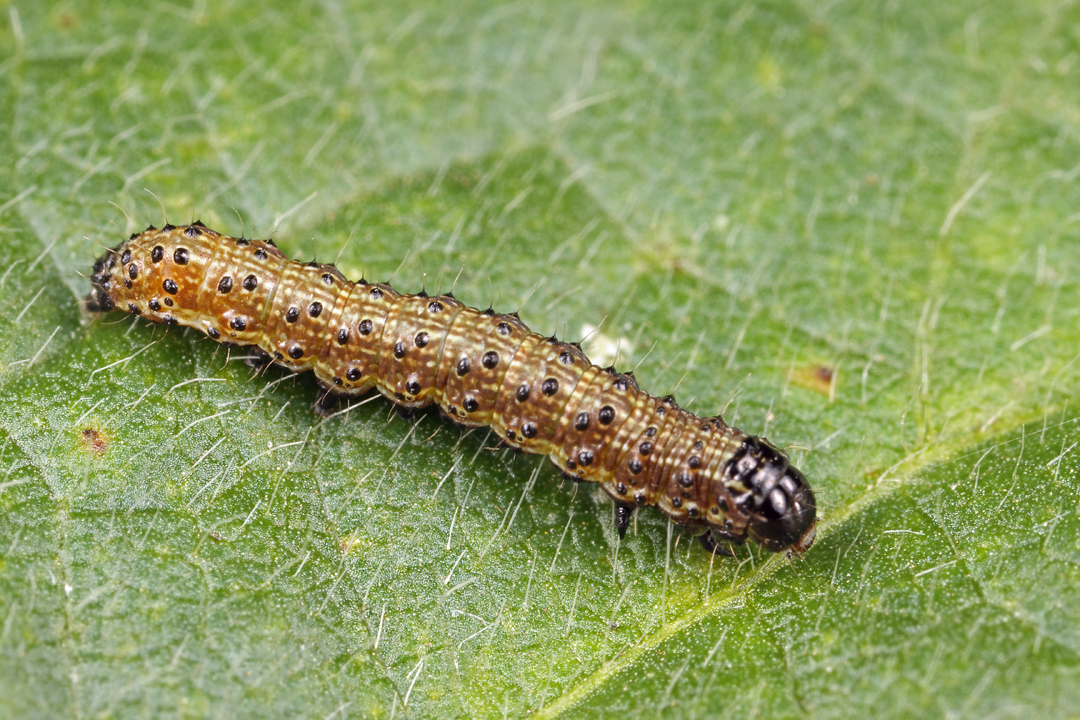
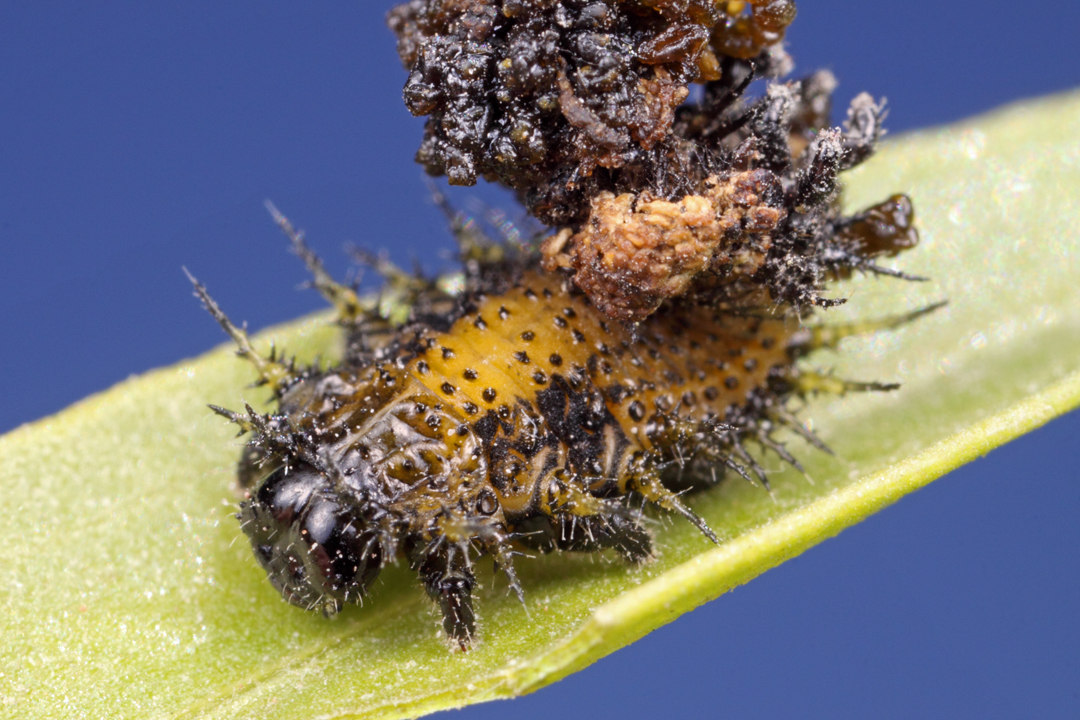
While leafcutter ants are one of the more unusual pests that Argentina corn farmers must deal with, the three most important confront farmers throughout the Western Hemisphere: stalk borers, earworms, and armyworms. In the U.S. the primary stalk boring pest of corn is the European corn borer (Ostrinia nubilalis), while in Argentina it is the sugarcane borer (Diatraea saccharalis). Corn earworm (Helicoverpa zea) and fall armyworm (Spodoptera frugiperda), on the other hand, are common to both countries. Here are some recent photos of the three species in Argentina – the first two on corn and the latter on soybean.

After you look at the photos, I have a funny story…

Diatraea saccharalis eggs ready to hatch | Buenos Aires Prov., Argentina

Helicoverpa zea egg on corn silk | Buenos Aires Prov., Argentina

Spodoptera frugiperda mid-instar larva on soybean | Buenos Aires Prov., Argentina

Learning to speak a foreign language via immersion can result in some embarrassingly funny moments. This afternoon I made an unplanned visit to the field with some colleagues. There has been much rain recently so the ground was rather muddy. Not having my boots with me, I picked my way through as best I could, and afterwards as I was cleaning the mud off my shoes, I commented (in Spanish) to one of my Argentine colleagues (a young female) that this was my only pair of clean shoes. I said everything okay but messed up the word for shoes—instead of saying “calzados” I said “calzones.”

In Argentina, calzones means “underwear.”

I’m really glad the shocked look on her face quickly gave way to hysterical laughter once she figured out what I was trying to say.

Copyright © Ted C. MacRae 2012

Cycloalexy in tortoise beetle larvae

One of the first insects I encountered during my visit this past November to  in Buenos Aires, Argentina were these tiny beetle larvae grouped together on a single leaf of an unidentified shrub.  The presence of fringed lateral appendages and exuvial-fecal debris masses held by caudal appendages immediately identifies them as larvae in the leaf beetle subfamily Cassidinae, known commonly in North America as “tortoise beetles” due to the appearance of the adults.  With nearly 3,000 species distributed throughout the world, tortoise beetles are easily recognizable as a group; however, species identifications can be much more difficult, especially in the Neotropics where the group reaches its greatest diversity (Borowiec and Świętojańska 2002–2011). Identification of larvae can be even more challenging, as the larvae of many species remain unknown, and I was unable to find adults in association with the larvae to aid my identification.

Anacassis sp. (poss. exarata) early-instar larvae on Baccharis salicifolia | Buenos Aires, Argentina

Nevertheless, host plant can be an important clue to leaf beetle identity, as most species in the family limit their feeding to a single plant genus or group of related plant genera. The shrub on which the beetles were feeding looked familiar to me, and while perusing a list of plants that have been recorded from the Reserve (Burgueño 2005) I had an “Aha!” moment when I spotted the asteraceous genus Baccharis. I decided the plant must represent Baccharis salicifolia because of its narrowly lanceolate, willow-like leaves with fine apical serrations (Cuatrecasas 1968) (see first photo). The only tortoise beetles known to feed on Baccharis are species in the genus Anacassis (McFadyen 1987), several species of which are known from Argentina, and one (Anacassis exarata) looking very much like the larvae in these photos.

Note the circular, heads-directed-inward orientation of all larvae around the periphery

The manner in which these early-instar (perhaps even newly hatched) larvae were feeding as a group while working their way down the length of the leaf towards its base is not something I had observed before. Larvae of most tortoise beetles are solitary feeders (Borowiec and Świętojańska 2002–2011), and I was further intrigued by the deliberate circular formation that the larvae had assumed.  The larvae around the periphery were all facing inward, tightly packed against each other and with their exuvial-fecal debris masses directed outward. Additional larvae were seen inside the circular formation. As I manipulated the leaf for photographs, the larvae would occasionally raise their debris masses up and outward, presumably a defensive reaction to disturbance and a perceived threat. It was clear to me that the larvae had deliberately “circled their wagons” for defensive purposes.

Close body contact allows exuvial-fecal debris masses to form a protective barrier against predators

In fact, this type of defensive strategy has been reported in a number of South American cassidines, as summarized by Jolivet et al. (1990), who coined the term “cycloalexy” (from the Greek κύκλος = circle, and αλεξω = defend) to describe such strategies. Cycloalexy can either be “heads in, tails out” or vice versa and is usually associated with other repellent activities such as coordinated threat movements, regurgitation, or biting. The strategy is intended to provide protection from predators such as ants and true bugs and parasitioid wasps, although some parasitoids seem to have thwarted the strategy by depositing their eggs where they can be ingested (thus avoiding direct confrontation with the prey). Cycloalexy has been described primarily among chrysomelid beetles and tenthredinoid hymenopterans (sawflies); however, examples from a few other insect orders (e.g., Diptera, Neuroptera, Lepidoptera) are known as well (Jolivet 2008).  All known cycloalexic insects are subsocial in the larval stage and often also exhibit maternal protection of eggs or newly hatched larvae.

This and several other older larvae had become solitary, presumably protected in part by greater size

In addition to this single group of early instar larvae, I noted also a few larger individuals—all of whom were feeding on the plant in a more solitary fashion. Presumably as the larvae grow larger they are more able to defend themselves, or perhaps larger larvae simply demand more “elbow room” because of the larger amounts of leaf tissue they require for feeding. If cycloalexy is beneficial for small cassidine larvae but less so for larger larvae, perhaps this behavior is actually more common than is currently realized.

REFERENCES:

Borowiec, L., and J. Świętojańska. 2002–2011. Cassidinae of the world – an interactive manual (Coleoptera: Chrysomelidae). http://www.biol.uni.wroc.pl/cassidae/katalog%20internetowy/index.htm [accessed 3 Dec 2011].

Burgueño, G. 2005. Manejo de la vetación en reservas naturales urbanas de la region metopolitana de Buenos Aires. Aves Argentinas, Asociación Ornitológica del Plata, Proyecto Reservas Naturales Urbanas, 16 pp.

Cuatrecasas, J. 1968. Notas adicionales, taxonómicas y corológicas, sobre Baccharis. Revista de la Academia Colombiana de Ciencias Exactas, Físicas y Naturales 13(50):201–226.

Jolivet, P. 2008. Cycloalexy. In: J. L. Capinera [Ed.], Encyclopedia of Entomology, Springer Science+Business Media B.V.

Jolivet, P., Vasconcellos-Neto, J., and Weinstein, P. 1991. Cycloalexy: A new concept in the larval defense of insects. Insecta Mundi 4(1–4) (1990):133–141.

McFadyen, P. J. 1987. Host-specificity of five Anacassis species [Col.: Chrysomelidae] introduced into Australia for the biological control of Baccharis halimifolia [Compositae]. Entomophaga 32(4):377–379.

Copyright © Ted C. MacRae 2011

“Sunflower looper” – Rachiplusia nu

Rachiplusia nu ''oruga medidora'' | Santa Fe Province, Argentina

With a planted area approaching 20 million hectares, soybean has become Argentina’s most important agricultural crop.  Most of the planted area is located within the so-called “Humid Pampas” region of central Argentina (Buenos Aires, Córdoba, Santa Fe and Entre Rios Provinces), but the crop continues to expand in the northestern part of the country as well (Chaco, Tucumán and Salta Provinces).  More than any other crop in Argentina (except perhaps cotton), soybean is attacked by a tremendous diversity of insects.  The most important of these are the defoliating Lepidoptera, primarily species in the family Noctuidae.  Anticarsia gemmatalis (velvetbean caterpillar) is the most consistent and widespread defoliator, but an increasingly important species in Argentina is Rachiplusia nu (“oruga medidora del girasol,” or sunflower looper).

Eggs are laid primarily on the undersides of leaves

Rachiplusia nu belongs to the noctuid subfamily Plusiinae, the larvae of which can be recognized by having three pairs of prolegs and the “looping” manner by which they walk.  Chrysodeixis includens¹ (soybean looper), much better known because of its status as a major pest of soybean in the southeastern United States (and of growing importance in Brazil as well), also belongs to this group, and in fact the larvae of the two species are quite similar in appearance.  While R. nu is the primary plusiine species affecting soybean in Argentina, C. includens has appeared with increased frequency on soybean in Argentina in recent years, primarily in the more northern, subtropical growing regions adjacent to those areas in Brazil where it is now a major pest of the crop.

¹ Although still widely referred to in the literature as Pseudoplusia includens, the genus Pseudoplusia was synonymized under Chrysodeixis some eight years ago by Goater et al. (2003).  More recently the synonymy was accepted and formally applied to the North American fauna by Lafontaine and Schmidt (2010). 

Neonate larva on soybean

Despite their similarity of appearance, larvae of the two species can be rather conclusively distinguished by the shape of their spinneret (Angulo and Weigert 1975).  This is not a very convenient character for use in the field, however, leading to misidentifications in areas where the two species co-occur.  This is not an insignificant problem, as the two species exhibit differing susceptibilities to pesticides labeled for their control (C. includens especially having become resistant to a number of pesticides).  The result is control failures and subsequent application of even more pesticides in an effort by farmers to protect their crops.  While not as conclusive as the shape of the spinneret, in my experience R. nu larvae (at least older larvae) tend to have a darker, smoky-blue cast to the color (compared to the bright yellow-green of C. includens) and rather distinct patches of tiny black asperites on the thoracic ventors that are not apparent in C. includens.

Younger larvae consume only the lower surface between veins, resulting in ''window paning''

As the common name implies, soybean is not the only crop attacked by R. nu.  Early season infestations tend to occur in alfalfa and flax, after which the populations spread to soybean and sunflower.  The latter crop especially is heavily attacked by this insect, primarily in the drier western regions in Córdoba Province.  Dry conditions seem to favor an increase in the populations of this species, while moist conditions promote increased incidence of pathogenic fungi that are very effective at suppressing R. nu larval populations.
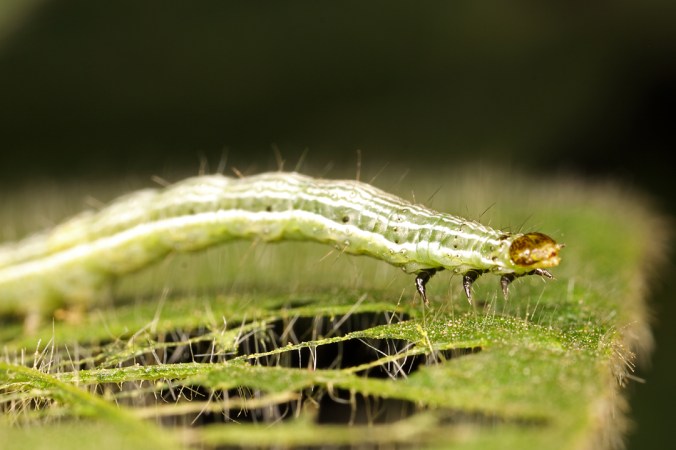
Older larvae consume entire tissues but still avoid veins, resulting in a ''skeletonized'' appearance

Like many defoliating lepidopterans, eggs tend to be laid on the undersides of leaves, where the larvae begin feeding after they hatch.  Young larvae consume only the lower epidermal layer of the foliage between the veins, leading to an appearance in the foliage called “window paning”.  As they larvae grow they begin consuming the entire tissue layer but still preferentially avoid vascular tissue, resulting in a skeletonized appearance to the foliage.  A single larvae can consume more than 100 cm² of soybean foliage, which translates to several trifoliates.  As a result, it doesn’t take many larvae to cause significant loss of foliage on the plant.  Soybean has the ability to compensate for loss of foliage due to increased photosynthesis in lower foliage exposed by feeding in the upper part of the plant, but losses exceeding around 15% during the later reproductive stages of plant growth are enough to significantly reduce yields (and it is during these reproductive stages of growth that R. nu infestations tend to occur).

Rachiplusia nu adult | Buenos Aires Province, Argentina

Rachiplusia nu is the most widely distributed of three South American species in the genus, occurring in Argentina, Bolivia, Brazil, Chili, Paraguay, Peru and Uruguay, while a fourth species, R. ou, is widely distributed throughout North and Central America (Barbut 2008).  Unlike R. nu, its North American counterpart R. ou has not gained status as a pest of soybean or other crops.

In a BitB Challenge first, nobody was able to correctly ID the larva of this species beyond the level of subfamily.  This, despite the huge Argentina hint bomb that I dropped when I posted the challenge and my well-known vocation as a soybean entomologist.  I figured the answer would be forthcoming as quickly as one could Google the search phrase “Argentina soybean Plusiinae” (which, in fact, shows the following except for the very first result “Pseudoplusia includens is the most common soybean Plusiinae in the Americas (Herzog, 1980). Rachiplusia nu in southern Brazil, Uruguay and Argentina, and…” [emphasis mine]). Most participants guessed, predictably, soybean looper, while only a few were fooled into guessing Geometridae (the true loopers, and distinguished by having only two pairs of prolegs).  As a result, I’m not declaring a winner for ID Challenge #14, although the appropriate points will still be awarded (when I get around to assigning them, that is.  Hey, I’m working in Argentina right now—it was enough for me just to get this post out!).

REFERENCES:

Angulo, A. O. and G. T. H. Wiegert. 1975. Estados inmaduros de lepidópteros noctuidos de importance economica en Chile y claves para su determinación. Sociedad Biologico Concepción, Publicación Especial 1:1–153.

Barbut, J. 2008. Révision du genre Rachiplusia Hampson, 1913 (Lepidoptera, Noctuidae, Plusiinae). Bulletin de la Société entomologique de France113(4):445–452.

Goater, B., L. Ronkay and M. Fibiger. 2003. Noctuidae Europaeae. Vol. 10, Catocalinae, Plusiinae. Entomological Press, Sorø, 452 pp.

Lafontaine, J. D. and B. C. Schmidt. 2010. Annotated check list of the Noctuoidea (Insecta, Lepidoptera) of North America north of Mexico. ZooKeys 40: 1–239.

Copyright © Ted C. MacRae 2011

Brazil Bugs #16 – Royal Moth Larva

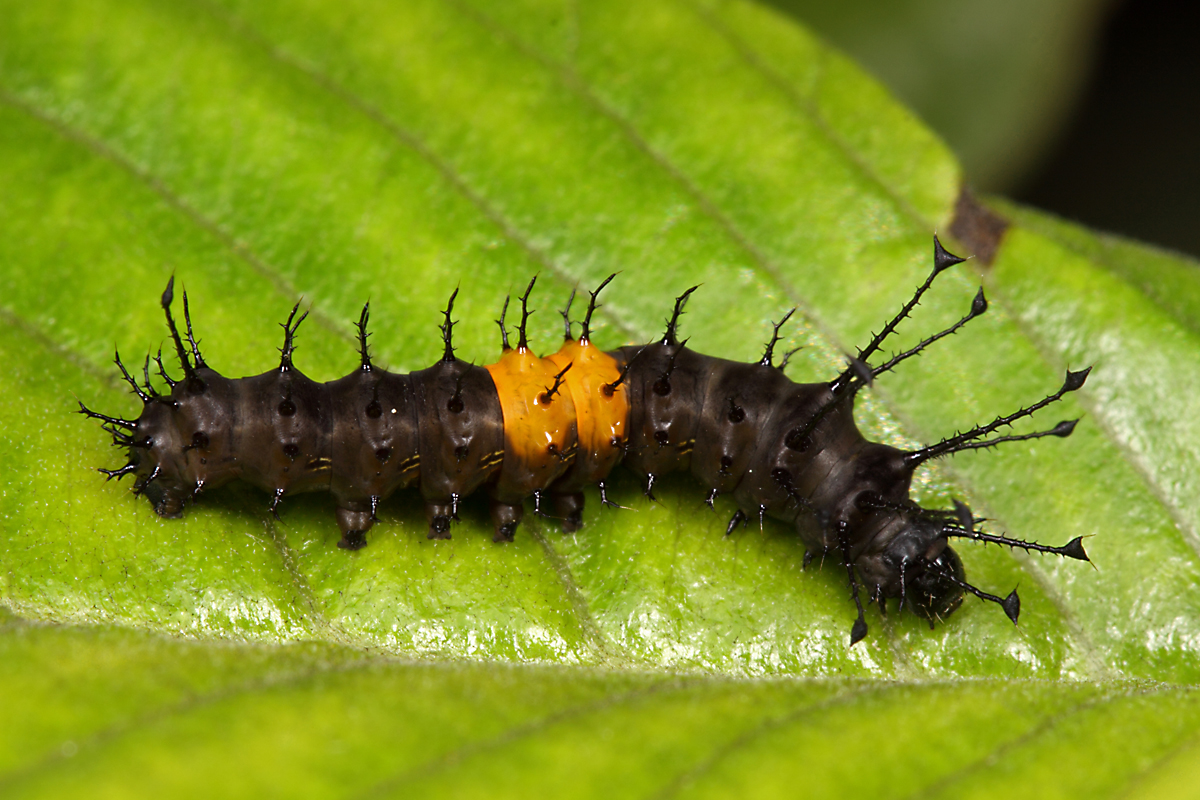
Citheronia laocoon? 1st instar larva | Campinas, Brazil

I was sure Super Crop Challenge #6 would be a win for the house, but Troy Bartlett scored an impressive points sweep by correctly deducing that the structures shown were the spines of an early instar caterpillar of “something akin to a hickory horned devil (Citheronia regalis).”  I found this caterpillar feeding on the foliage of a small tree in the Ciudad Universitaria (Distrito Barão Geraldo) area of Campinas, Brazil last January.  I must confess that I spent considerable time trying to identify it myself before I finally threw in the towel and called on the experts for help.  The spines made me think it must be some kind of nymphalid butterfly larva, although I had never seen such “fly swatter” clubs at the ends of the spines, so I sent the photo to Phillip Koenig, a local butterfly expert who has collected extensively in Ecuador.  He, too, was puzzled and forwarded the photo to Charley Eiseman, who himself didn’t know what to make of it and forwarded it on to Keith Wolfe, a lepidopterist who specializes in butterfly immatures.  After stumping his Brazilian contacts, Keith had the idea that perhaps it wasn’t a late-instar larva—as we all had assumed (this larva was a good 15–20 mm in length), but rather one in an early stadium.  A quick search of several standard websites revealed this to be the L1 or L2 larva of a species of Citheronia (Saturniidae, Ceratocampinae).  To support his ID, he provided links to larval photos of C. splendens (Arizona) and C. lobesis (Central America).  The L1 larva of both of these species bears the same “fly swatter” spines, and the latter is remarkably similar in color pattern as well.

In trying to determine what species of Citheronia occur in southeast Brazil, I came across this link with photos of a caterpillar from southern Brazil—the L1 looking nearly identical—that was eventually identified as the common Brazilian species C. laocoon.  Troy suggested C. brissotii—another good possibility as that species is found from southeastern Brazil through Uruguay to Argentina.  However, in perusing a number of online sources, it appears there are several other species of Citheronia that also occur in Brazil, so a species ID for the larva in this photo may not be possible.

Troy’s win vaults him into 3rd place in the current session overalls, but steady Tim Eisele took 2nd place with 6 pts and takes over the session lead.  Newcomer Roy rounds out the podium in 3rd place with 5 points.  Dave’s pity points are nothing to sneeze at, as they helped him retain sole possession of 2nd place in the overall standings (let that be a lesson to those who don’t play because they’re “stumped”!).  There will be at least two more challenges in the current session before a winner is crowned, so look for an opportunity to shake up the standings in the near future.

Copyright © Ted C. MacRae 2011

Pardalophora phoenicoptera – Orange-winged grasshopper

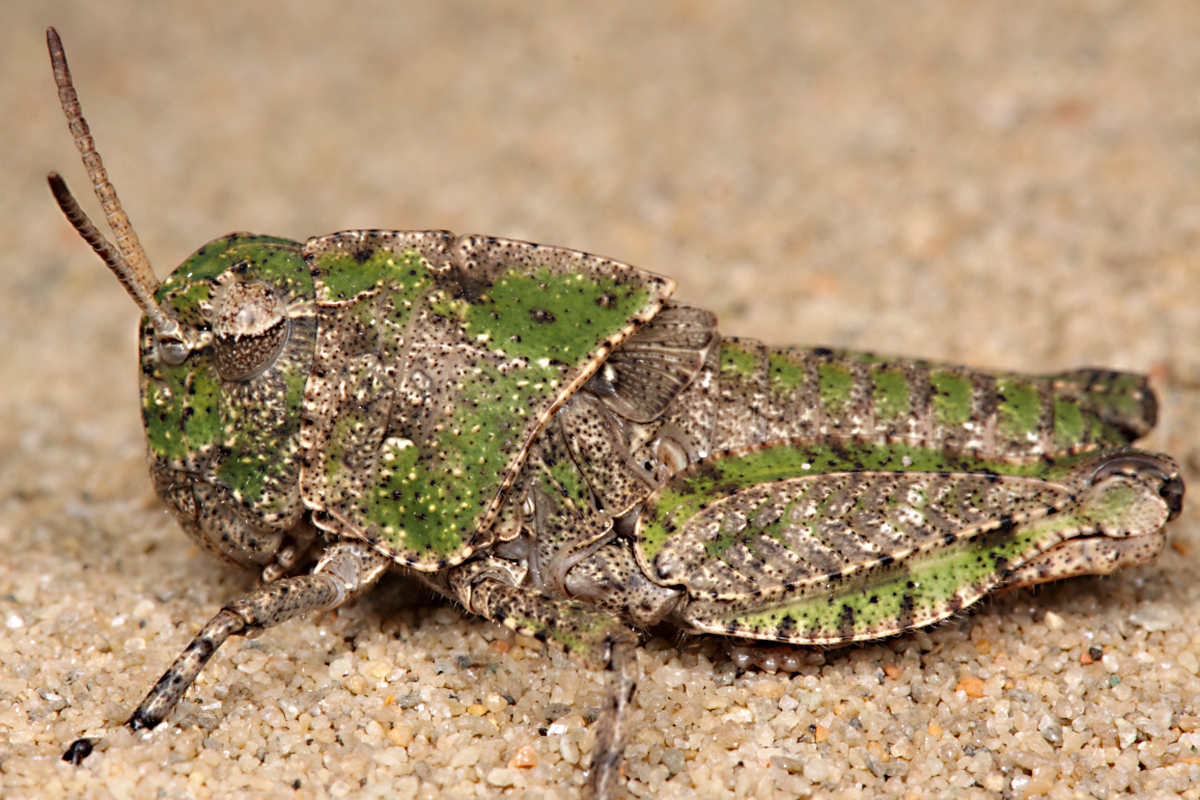
For some reason, I’ve found myself increasingly fascinated with certain grasshoppers—not just any grasshoppers, but band-winged grasshoppers (family Acrididae, subfamily Oedepodinae).  And not just band-winged grasshoppers, but band-winged grasshopper nymphs.  It began last year when I found adults and nymphs of Trimerotropis latifasciata in the Glass Mountains of northwestern Oklahoma.  I believe it has something to do with the combination of their frequent association with the same habitats where I look for my beloved tiger beetles and their marvelously cryptic coloration.  Adults themselves are cryptic enough—that is, until they flash their brightly colored hind wings, but the nymphs are positively invisible until they move.  Moreover, many species show a wonderful range of intraspecific diversity in their crypsis—Ronald Reagan may have thought every redwood tree looked the same, but when you’ve seen one band-winged grasshopper nymph, you most certainly have not seen them all.


These two band-winged nymphs were seen at St. Joe State Park (St. Francois Co., Missouri) in the vast central “sand flats” of the park (actually waste areas of crushed limestone tailings left from lead mining operations during the previous century).  At first I assumed they each represented a different species, but based on comments at BugGuide I take both of them to represent Pardalophora phoenicoptera (orange-winged grasshopper)—distinguished from Xanthippus by having only one notch in the pronotal crest and unusual amongst most grasshoppers in that the winter is passed as a nymph rather than egg.  This leads to well-developed nymphs at the beginning of spring and adults much earlier in the season than many other grasshoppers.  These photos were taken on April 28, and the size of the wing pads suggests they are not quite full-grown yet, maybe 3rd or 4th instars.  Acridoid aficionado David J. Ferguson has found this species in the Ozarks on rocky/gravelly hilltops (e.g., “cedar glades”) and on gravelly or stable sandy slopes in sunny openings in Oklahoma. He places the species (particularly the green ones) high on his favorite hopper list, and I’d have to say I agree with him (so far).

One of these days, I’m going to find and photograph the king of all green oedepodines—Trimerotropis saxatilis!

Update 6/8/11: Dave Ferguson has kindly confirmed the ID, writing:

…yes these are identified correctly.  Assuming 5 instars, they look like 4th (where there are 6 instars, numbers 4 and 5 look a lot alike).

Copyright © Ted C. MacRae 2011

A thrips is a thrips…

Caliothrips phaseoli (bean thrips) - adults | Fontezuela, Pcia. Buenos Aires, Argentina

The critter in ID Challenge #6 is, as most surmised, a thrips¹, and although the black-and-white banding of the elytra make the predaceous “banded thrips” (Aeolothrips sp. of the family Aeolothripidae) a logical ID choice, the species in the photograph is actually the phytophagous “bean thrips” (Caliothrips phaseoli of the family Thripidae).  The individuals in that photo and the additional photos shown here were encountered in several soybean fields during my visit to Argentina last week.  The species seems to be having a bit of a population surge on soybeans in the Humid Pampas – Argentina’s main soybean growing region – due to the dry conditions they’ve had as of late.  Their short life cycle (egg to egg in 2 weeks) and preference for generally protected lower leaf surfaces, along with the lack of any registered chemical insecticides labeled for their use on soybean, makes control of this insects especially problematic.

¹ Yes, that’s “a thrips” – not “a thrip” (similar to deer, species, sheep, etc.).  Personally, I’ve always had trouble with singular use of this definitely plural-looking word – it must be the “s” at the end and the completely natural sound of the word “thrip” in singular use.  Then again, one “specie” doesn’t sound right, so who knows?  At any rate, I’ve managed to force myself to say “a thrips” (although I still wince a little bit inside whenever I do).

Caliothrips phaseoli (bean thrips) - nymphs | Oliveros, Pcia. Santa Fe, Argentina

Thrips are tiny – the adults in the above photo (only slightly cropped) measure no more than ~1 mm in length, testing the limits even of my MP-E 65mm 1-5X macro lens at full magnification.  There are some interesting features about the morphology and life history of thrips – namely their “rasping-sucking” mouthparts and life history that seems somewhat intermediate between the incomplete metamorphosis exhibited by other exopterygote insects (egg, nymph, adult) and the complete metamorphosis of the endopterygotes (egg, larva, pupa, adult).  Thrips actually have only a single mandible (the other aborting development during embryogenesis), which they use to “rasp” a hole into the plant tissues upon which they feed.  The remaining mouthparts then form a sort of siphon, that is used to imbibe the liquids that accumulate within the hole.  This seems to represent – at least functionally – an intermediate step in the evolution of the true piercing/sucking mouthparts exhibited by other hemipteroid insects.  Life history-wise, only the first- and second-instar nymphs (2nd photo above) feed, the third- and fourth-instars becoming quiescent stages termed the propupa and the pupa, respectively.

Reader question: I presume the shiny, black globs on the hairs of the plant are fecal deposits, but why are they placed as such? Does it help avoid spoilage of the leaf feeding surface – I’m not aware of any other insects that are so fastidious (except perhaps ants). Maybe there is a defensive function? I’ve searched and found nothing about this, so please let me know if you have any insight.

There seems to be some difference of opinion regarding the actual species name for these insects.  Most applied economic literature dealing with thrips in soybeans calls these Caliothrips phaseoli – a widespread species occurring in North, Central, and South America.  However, a number of references (both economic and taxonomic) recognize South American populations as a distinct species, C. brasiliensis (or C. braziliensis, depending on the source), based on the solid dark rather than medially lightened elytral band.  I also found some references that seem to regard C. phaseoli as s a synonym of C. fasciatus (although this comparison at Pests and Diseases Image Library seems to show distinct differences in abdominal sculpturing between the two species).  I’m going with C. phaseoli over C. brasiliensis based on a checklist of Brazil Thysanoptera (Monteiro 2001) and the Argentina checklist at the World Thysanoptera website, and the general lack of mention of C. fasciatus as a pest of soybean in Argentina in the literature also makes me go with C. phaseoli.  Congratulations to Ben Coulter, who wins this challenge with a clean sweep of the ID and host plant, and to HBG Dave, whose 4 pts moves him into the lead in the current BitB Challenge session.
 
REFERENCE:

Monteiro RC. 2001. The Thysanoptera fauna of Brazil. Pp. 325–340 in Marullo, R. & Mound, L.A. (eds) Thrips and Tospoviruses: Proceedings of the 7th International Symposium on Thysanoptera. Australian National Insect Collection, Canberra.

Copyright © Ted C. MacRae 2011

Answers to ID Challenge #5 – Artrópodes em casca de árvore morta

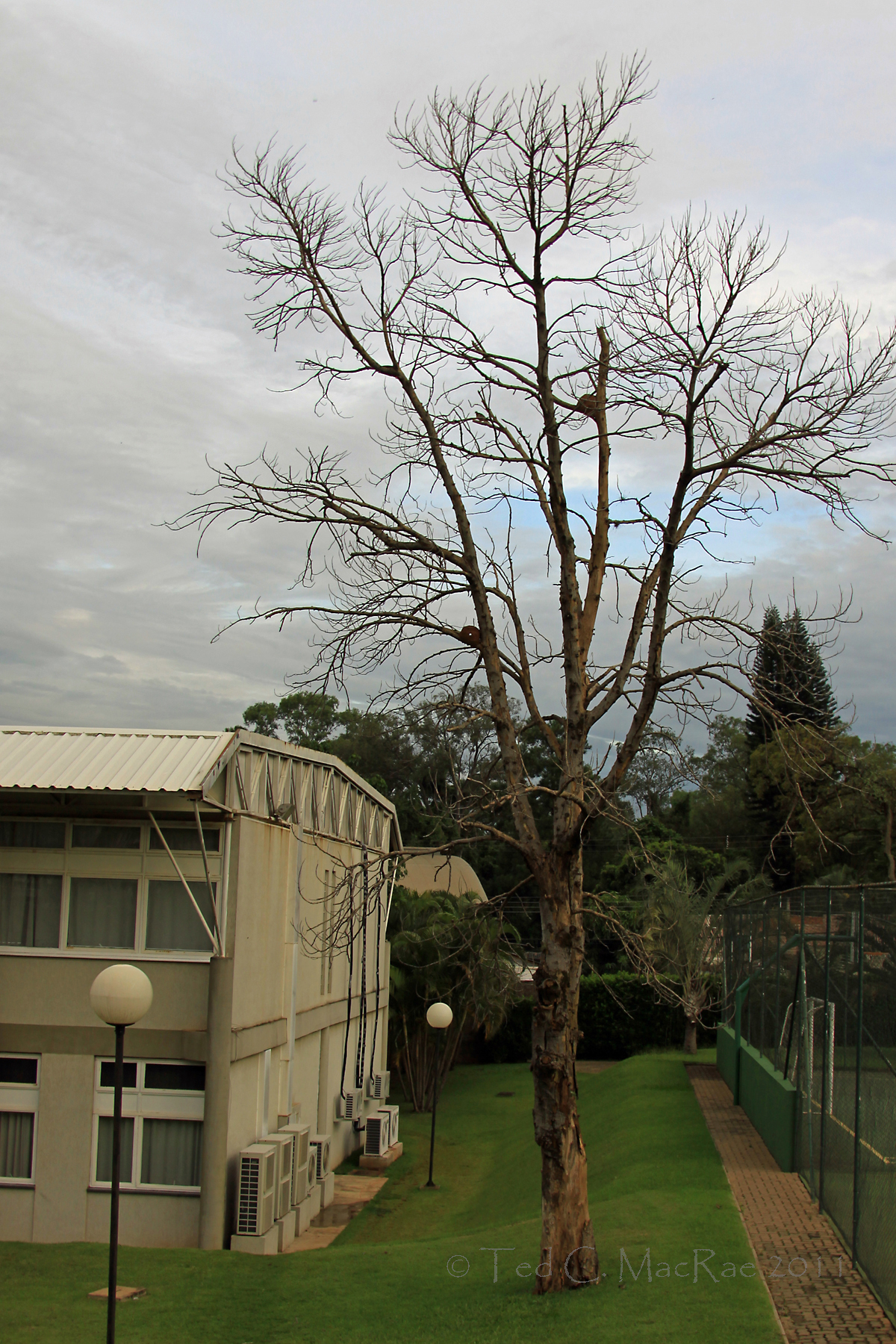
Dead tree in Campinas, Brazil

After checking into my hotel in Campinas, Brazil I couldn’t wait to start exploring the grounds to see what insect life I might be able to find.  Almost immediately, I encountered this dead tree in back of the hotel.  To a beetle collector, a dead tree is an irresistible draw – especially one that is still standing and with loosely hanging bark, as in this one.  I approached the tree, gave it a look up and down the trunk to see if any beetles or other insects might be found on the outer surface of the bark, and when none were seen began carefully peeling sections of the bark away from the trunk.  Out from beneath the first section darted a small, black lizard – it reminded me in general form of our North American fence lizards (genus Sceloporus), but honestly it darted so fast up the trunk that I didn’t get a good look at it (much less even the chance to attempt a photograph).  Peeling the bark further away from the wood revealed a goodly number of what I took to be beetle larvae, although they were unlike anything I’d ever seen before.  They were fairly good-sized – about 25mm in length, and although there are a number of beetle families whose larvae may be encountered under the bark of dead trees, there aren’t many with larvae of this size.

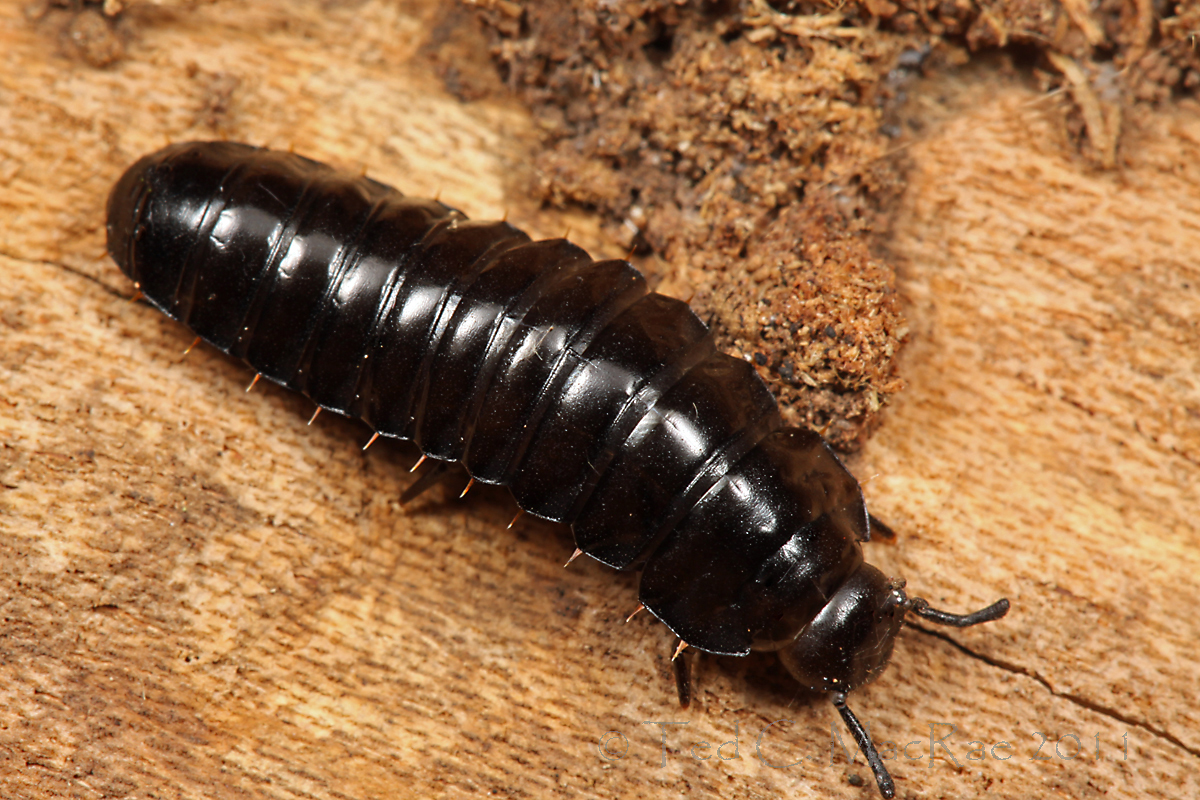
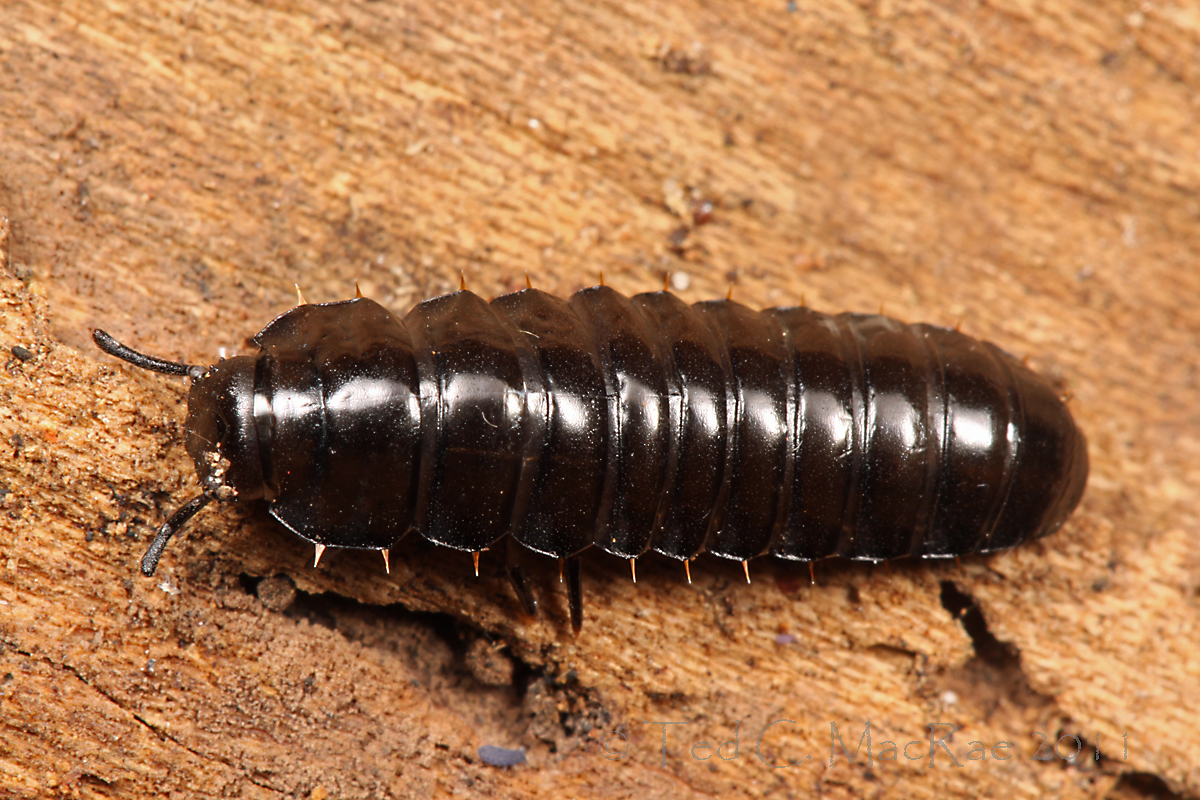
Coleopteran larva (Tenebrionidae?) under bark of dead tree.

Despite their odd appearance, their basic gestalt suggested to me that they might be something in the family Tenebrionidae (darkling beetles).  Sadly, the state of beetle larval taxonomy is far from complete, especially in the tropics, and given the extraordinary diversity of the order as a whole I knew it could be difficult to impossible to identify them.  This task was further complicated by the fact that I did not collect any voucher specimens.¹

¹ Insect collecting permits are required in Brazil and are exceedingly difficult to obtain.  Although enforcement is lax, a few unlucky foreigners have been caught and suffered tremendous inconvenience at the hands of notoriously unsympathetic authorities.  This being a business trip, I had no desire to tempt fate for the sake of a few larvae in a group I don’t even study.

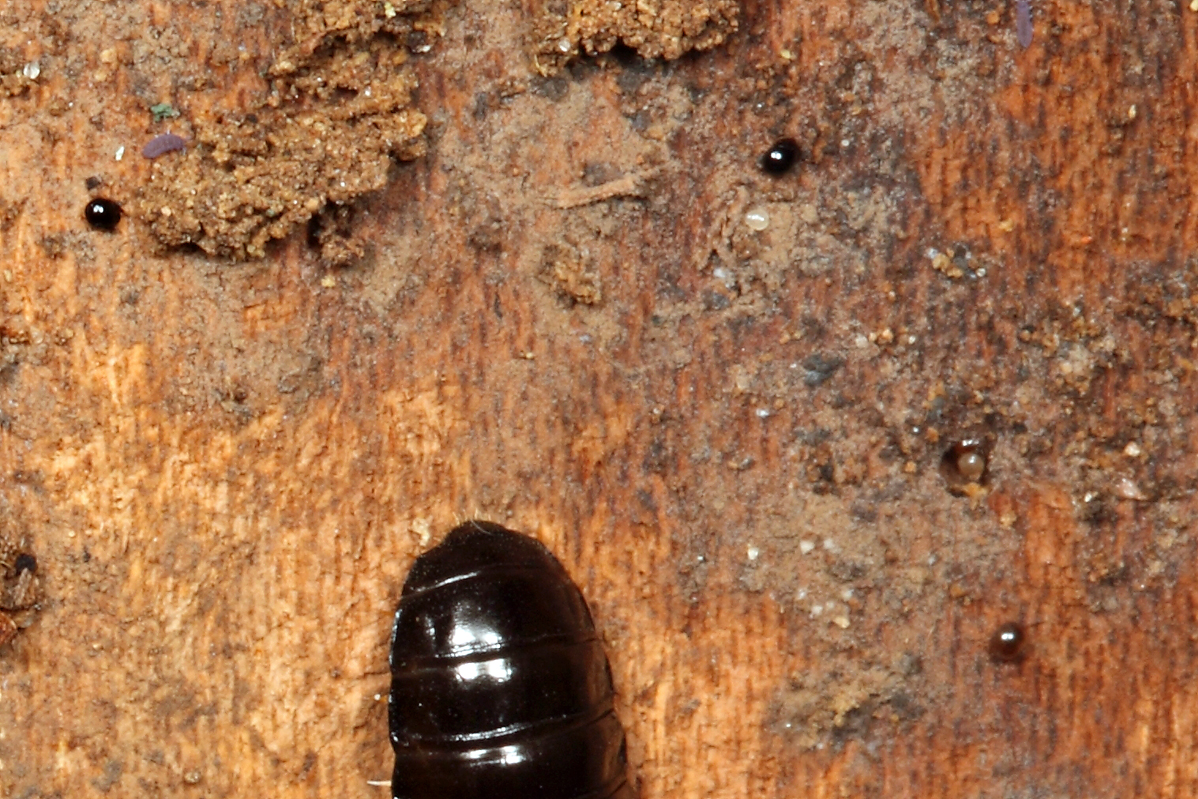
Despite a millipede-like appearance, six legs and loose cluster of ocelli indicate its true identity.

After consulting all of the print and online resources at my disposal and failing to find a convincing match at even the family level, I began to second guess not only whether these were tenebrionids, but larvae or even beetles.  I’m not aware of any tenebrionids with larviform adult females, but such are common in the Lampyroidea.  That didn’t seem to fit, however, as the latter tend to be much more flattened and armored in appearance, and the round head is really unlike the elongate and narrow head so often seen in that group.  The actually began to wonder if it was even a beetle – most xylophagous beetle larvae are light-colored and rarely so heavily sclerotized, and the antennae are unlike the typical 3-segmented antennae seen with most xylophagous beetle larvae.  In fact, the antennae and the shape of the head actually reminded me of a millipede, but the obvious presence of six legs (and no more) made this untenable (even though 1st instar millipedes are hexapod, the large size of these individuals precludes them from being 1st instar anything).  Eventually, I could only conclude that they were coleopteran – possibly a larviform adult, but more likely larval.  As a last resort I sent photos to Antonio Santos-Silva, a coleopterist at the University of São Paulo.  Although he specializes in Cerambycidae, I reasoned this might be a fairly common species since I had found good numbers on a single tree in an urban area near São Paulo, and as such it might be something he would recognize.  Antonio quickly replied saying that he agreed it was the larva of a species of Tenebrionidae, with an appearance similar to the larvae of Goniodera ampliata (a member of the Lagriinae, formerly considered a separate family).  I’ve not been able to find photos of the larva of Goniadera or related genera, but these do bear a striking (if more glabrous) resemblance to these presumed tenebrionid larvae from Australia.  Until a more convincing opinion is forthcoming, Tenebrionidae seems to be the consensus.

Polyxenid millipedes and two types of Collembola (several Poduromorpha and one Entomobryomorpha)

Three tiny adult coleopterans (family?) surround a large larval coleopteran

Although nobody zeroed in on Tenebrionidae for this challenge (#5 in the ID Challenge series), I must say that I enjoyed the diversity of opinion about what it might represent.  Moreover, congratulations to those who ‘took nothing for granted’ and noted the presence of several other organisms in the photo – this is where the big points were to be earned, and several participants successfully ID’d what I take to be a number of poduromorph collembolans, a single entomobryomorph collembolan, a central cluster of polyxenid millipedes, and several indistinct but clearly coleopteran adults (see super crops above).  David Hubble got the most correct answers to earn 15 points and the win in this inaugural post of BitB Challenge Season , while Dave and Troy Bartlett earned 13 and 10 points, respectively, to complete the podium.  Seven other participants got in on the fun and earned some points – I hope you’ll join the fun next time, too!

Copyright © Ted C. MacRae 2011

Diversity in Tiger Beetle Larval Burrows

One of the fascinating aspects of tiger beetle study is their often high degree of fidelity for specific habitats.  Some species prefer wet habitats, while others frequent the drier uplands.  Some like sand while others need clay.  Differences in salinity, vegetational cover, and even slope dictate what species might be expected to occur in a given habitat, thus, the diversity of tiger beetle species one encounters is directly proportional to the diversity of habitats explored.  Unfortunately, tiger beetles can be rather ephemeral in their occurrence as adults.  Despite a life cycle that requires at least one year (and may take 2-3 years or even more), adults are often present for only for a few short weeks.  Even during the time that adults are present, they often hide if conditions aren’t right (too cold, too hot, too wet, too early, too late, etc., etc.  Add to that their marvelous evasive capabilities, and it’s a wonder I ever see or catch any at all!).  The study of tiger beetles is not, however, entirely dependent upon the adults.  The presence of larval burrows in an area is also useful information, and through understanding of the species that might occur in an area and their habitat preferences, it is possible to identify – at least tentatively – the species that might be living in them.

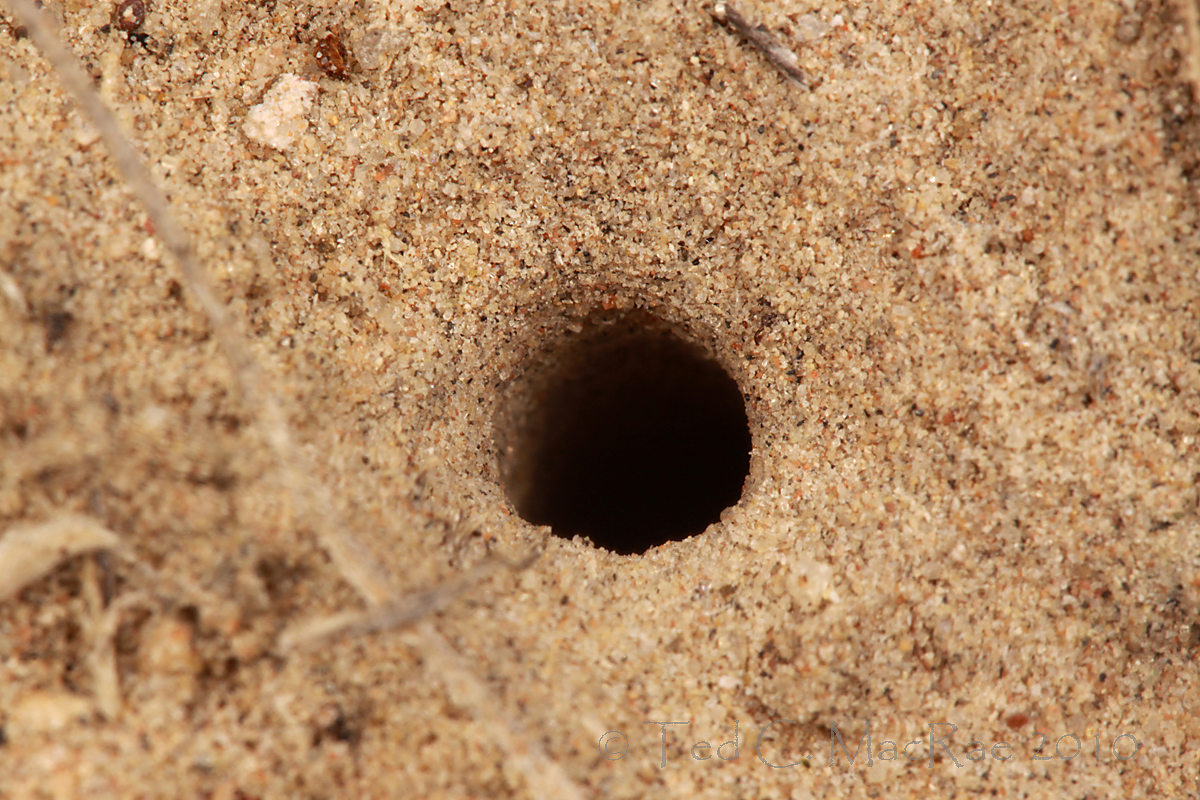
Cicindela lengi? (sandy tiger beetle) - Sioux Co., Nebraska

To the uninitiated, tiger beetle burrows might seem nothing more than a simple hole in the ground – anything could have made it.  However, with experience one becomes able to distinguish tiger beetle larval burrows almost instantly from burrows made by other ground-burrowing organisms.  The most common type of burrow is recognized by a combination of characters – almost perfectly circular except for a slight flattening on one side that gives the burrow a faint D-shape, and with the edge smoothly beveled.  This is your classic tiger beetle burrow and, for most U.S. species of Cicindela and related genera, averages ~5-6mm in diameter for 3rd instar larvae (tiger beetle burrows are most often observed at 3rd instar, since it is this final instar in which the larva spends the majority of its time and the burrow becomes most noticable).  The above burrow is one such burrow, found at Monroe Canyon in northwestern Nebraska last September.  While a number of species are known from the area, there are only a few that make their burrows in deep dry sands such as those that occur at this site.  We can eliminate Cicindela formosa (big sand tiger beetle) for reasons discussed below, and we can also dismiss Cicindela limbata (sand blow tiger beetle) because the habitat is not the barren, wind-shaped sand blow habitat that the species prefers.  This leaves two possibilities – Cicindela scutellaris (festive tiger beetle), a common and widespread inhabitant of sand habitats throughout the Great Plains, and Cicindela lengi (sandy tiger beetle), a much more localized resident of sand habitats with more western distribution.  The burrow likely represents the latter, since adults of this species have been found with greater frequency than C. scutellaris on the very fine-grained sands that occur in this part of Nebraska.  My confidence in this ID is bolstered by the fact that a larva I collected in the area from just such a burrow successfully finished its development and emerged a few months later as an adult C. lengi.

Cicindela pulchra pulchra (beautiful tiger beetle) - Fall River Co., South Dakota

Sometimes size alone is enough to indicate the species responsible for a burrow.  The above burrow was encountered last September in southwestern South Dakota on a clay/shale embankment in sage/shortgrass prairie.  A number of tiger beetle species fond of clay were observed at the site, including the two generalist species Cicindela tranquebarica (oblique-lined tiger beetle) and Cicindela purpurea audubonii (Audubon’s tiger beetle).  However, at ~8 mm in diameter the burrow is too large to have been made by either of these species.  The only tiger beetle in the area capable of making a burrow this size is Cicindela pulchra (beautiful tiger beetle), and in fact this burrow was found at one of several sites recently discovered by Matt Brust for this species in South Dakota.  Note again the classic shape – slightly flattened along the bottom side (the flattening accommodates the mandibles of the larval head – tiger beetle larvae always orient themselves in one position when sitting at the burrow entrance).

Cylindera celeripes (swift tiger beetle) - Woodward Co., Oklahoma

Just as large size was diagnostic for the previous burrow, the small size of the above burrow was also diagnostic.  This burrow, found at Alabaster Caverns in northwestern Oklahoma in October, 2009, measured only 3-4mm in diameter and can only have been made by Cylindera celeripes (swift tiger beetle).  This provisional ID was suggested by the fact that adults of the species had been observed abundantly in the lichen-encrusted clay exposures of this shortgrass prairie the previous June.  This photo, in fact, represents the first-ever discovery of the larval burrow of this species, and the identity of the species was confirmed when the larva collected from this and neighboring burrows and placed in rearing containers in the lab later emerged as adults.  I have found very similar-sized burrows in bottomland forest habitats in southeastern Missouri where the closely related species Cylindera cursitans has been seen.  The burrows are identical in size and shape, but the drastic difference in habitat is enough to distinguish the species that made them.

Cicindela formosa formosa (big sand tiger beetle) - Sioux Co., Nebraska

Not all tiger beetles utilize the simple hole-in-the-ground style of burrow, but rather incorporate some rather unique engineering features that make specific identification much easier.  This burrow can only be made by Cicindela formosa (big sand tiger beetle), a common resident of a variety of dry sand habitats throughout the Great Plains and eastern U.S.  The burrow entrance is on the large size for U.S. Cicindela (~6mm in diameter), and rather than opening flush on the ground it is directed horizontally and opens into a pit that is excavated to one side and underneath the burrow entrance.  No other U.S. tiger beetle makes a burrow quite like this (although I have noted Cicindela limbalis (common claybank tiger beetle) burrows on steep clay banks with a similar but much less distinct excavation on their lower side).  The pit apparently functions as a trap for potential prey, and since I have most often encountered burrows of this species in areas with some slope, I suspect the pit may help the larva capture its prey by preventing the prey from tumbling down the slope at the first sign of trouble.

Cicindela formosa 3rd instar larvae - Sioux Co., Nebraska

This is a different burrow by the same species, also at Monroe Canyon last September, that shows a 3rd instar larva sitting at the burrow entrance.  The sickle-shaped mandibles are resting against the slightly flattened lower edge of the burrow entrance, while the round pronotum fills the rest of the entrance profile.  The upper pair of eyes can be seen above the mandibles, but the lower pair (between the upper pair and the mandibles) are not visible in this photo due to the downward-facing angle of the burrow entrance.  I waited for quite some time with camera in position in hopes that I could photograph the larva, and when it did return to the burrow entrance I had time enough to fire off just a couple of shots before it retreated once again to safety in the depths of its burrow.

Cicindela fulgida fulgida (crimson salt flat tiger beetle) - Sioux Co., Nebraska

This unusual-looking burrow was found in a dry clay saline creek bed in the Badlands of northwestern Nebraska last September.  The turret structure is unique, but the nearly perfectly round and smoothly beveled burrow entrance identify it, nevertheless, as that of a tiger beetle larva.  These burrows can only be made by Cicindela fulgida (crimson salt flat tiger beetle).  There are several other saline-tolerant tiger beetles species in Nebraska, but most such as Ellipsoptera nevadica knausii (Knaus’ tiger beetle), Eunota togata (cloaked tiger beetle), and Habroscelimorpha circumpicta johnsonii (Johnson’s tiger beetle) require much more moisture than was found in this bone-dry creek bad.  I’ve found two other much more widely distributed clay-associated species – Cicindela tranquebarica and Cicindela purpurea audubonii – at this and other sites where I’ve seen C. fulgida; however, the larvae of those species do not utilize this unique turret-shaped structure for their burrows.  The turret is thought to have a cooling function for the larva during the heat of summer by raising it above the hottest layer of air against the white salt-encrusted ground and by aiding in the dissipation of heat from the larval burrow.  I wanted to photograph the larva sitting at the burrow entrance and spent quite a bit of time stalking out this and nearby burrows for a chance to do so.  Alas, however, on this day the larvae had greater patience than I!

Cicindela tranquebarica kirbyi (Kirby's tiger beetle) adult & larval burrows - Sioux Co., Nebraska

The above burrow entrances were photographed in September 2008 at the same dry saline creek bed in Sioux Co., Nebraska.  I mentioned above that Cicindela tranquebarica kirbyi and Cicindela purpurea audubonii both occurred commonly at this site along with Cicindela fulgida; however, these burrows likely represent the former.  That species seems to be found more consistently in high saline environments than the latter, which in this case probably have their larval burrows in the more normal clay soil further away from the creek bed.  During that 2008 trip, I did collect larvae from burrows like these in several similar, high saline habitats in Nebraska, South Dakota, and Oklahoma, and in each case adults of C. tranquebarica kirbyi were what emerged.  I have also reared this species from larvae collected on clay banks and wet sand habitats – in all cases, the burrows are a tad larger than those I have seen for other species in the genus that I have reared, such as Cicindela limbalis and Cicindela repanda (common shore tiger beetle) – logical since adults of C. tranquebarica tend to be a little more robust than these other species (but smaller than Cicindela pulchra and Cicindela obsoleta vulturina (prairie tiger beetle)).  In the above photo, I believe the the upper-right burrow is that of a larva, while the the lower-left one is that of an emerged adult – note the not-perfectly-circular opening and more ragged edge to the burrow.  In fact, the latter burrow looks very much like the adult emergence burrow that I saw at this very location last September, in which the still unemerged adult was seen sitting!  Granular chunks of soil can be seen scattered about the latter burrow, but I believe these were actually tossed by the larva rather than the adult as a result of burrow excavation – the amount of soil an adult would need to remove to re-open its burrow for emergence would probably be far less than what can be seen in this photo.  I did not search the surrounding grasslands for larval burrows, but if I had done so, it is likely that I would have found similar burrows that belonged to the larvae of Cicindela purpurea audubonii – the only other tiger beetle that we have seen in this inhospitable place!

Copyright © Ted C. MacRae 2011