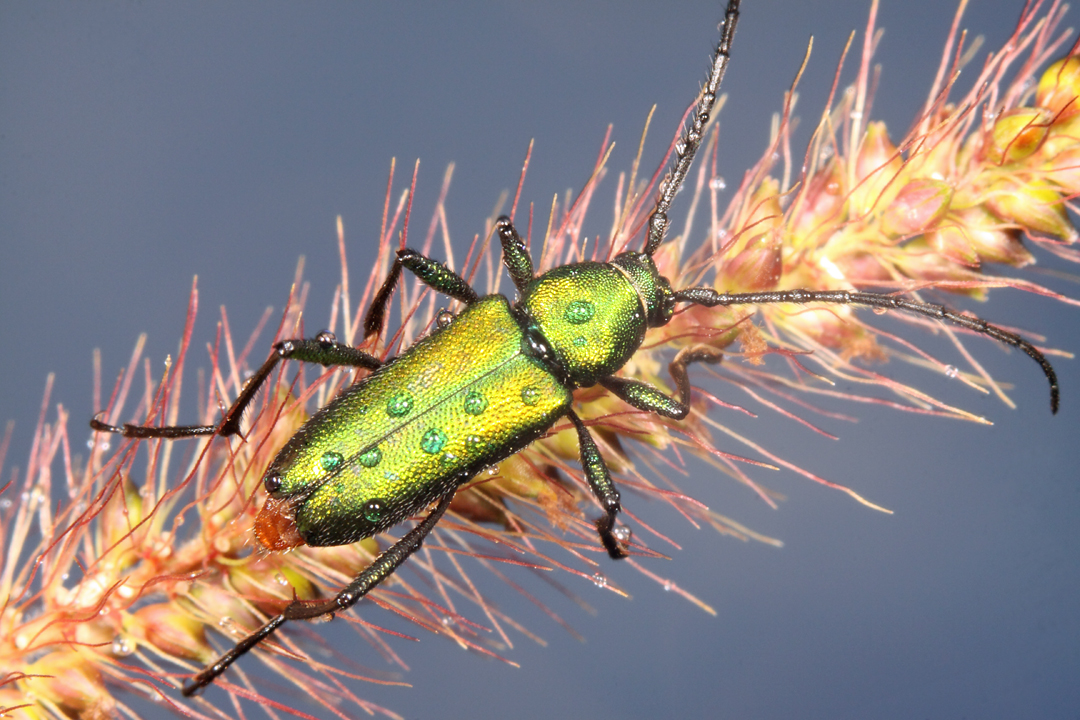
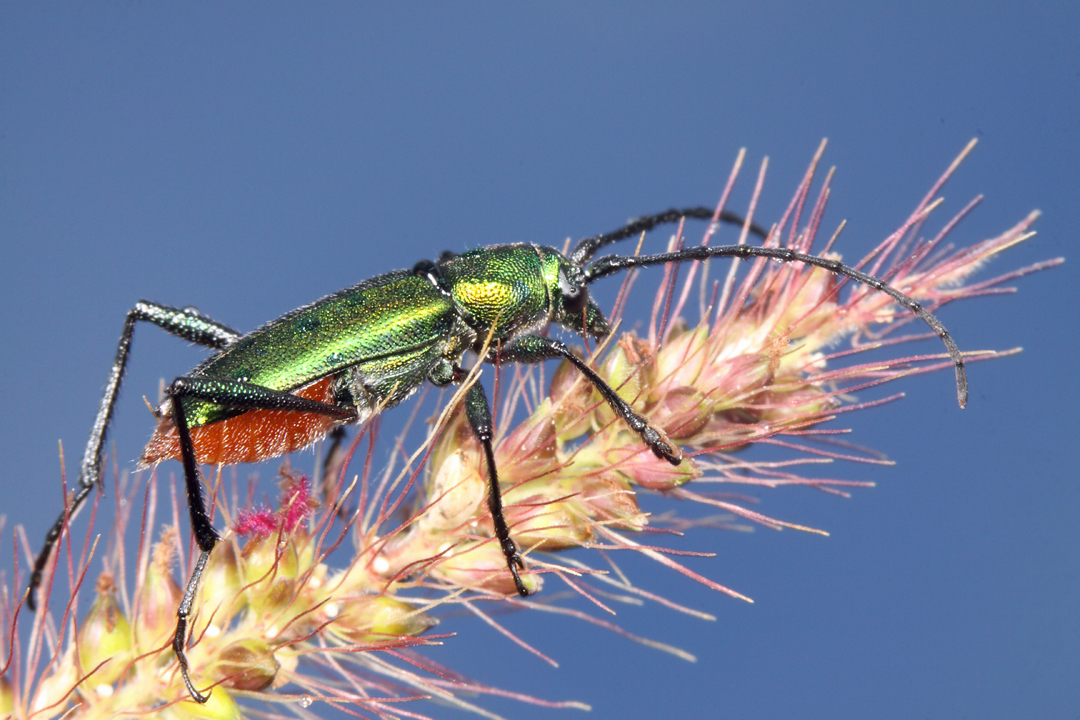
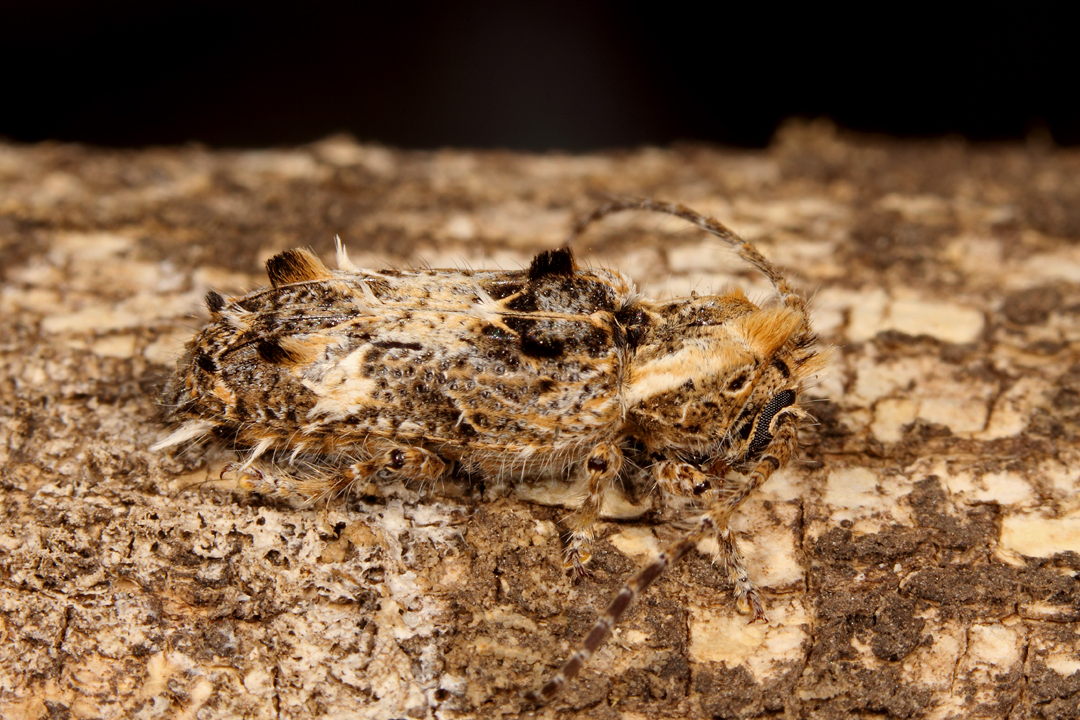
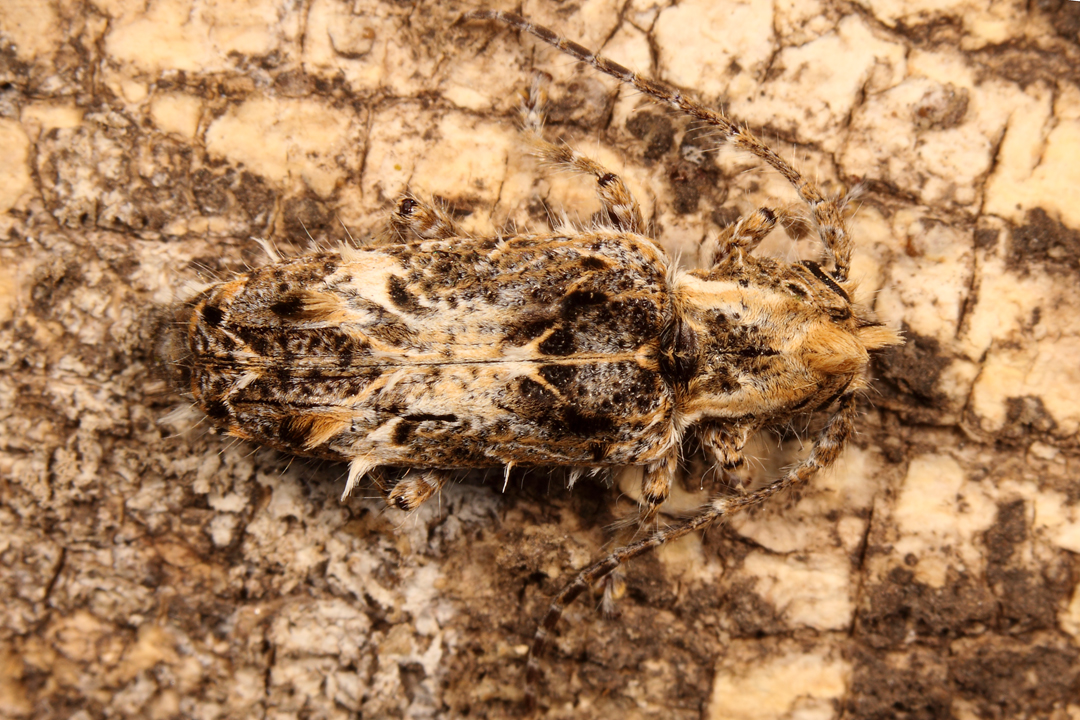
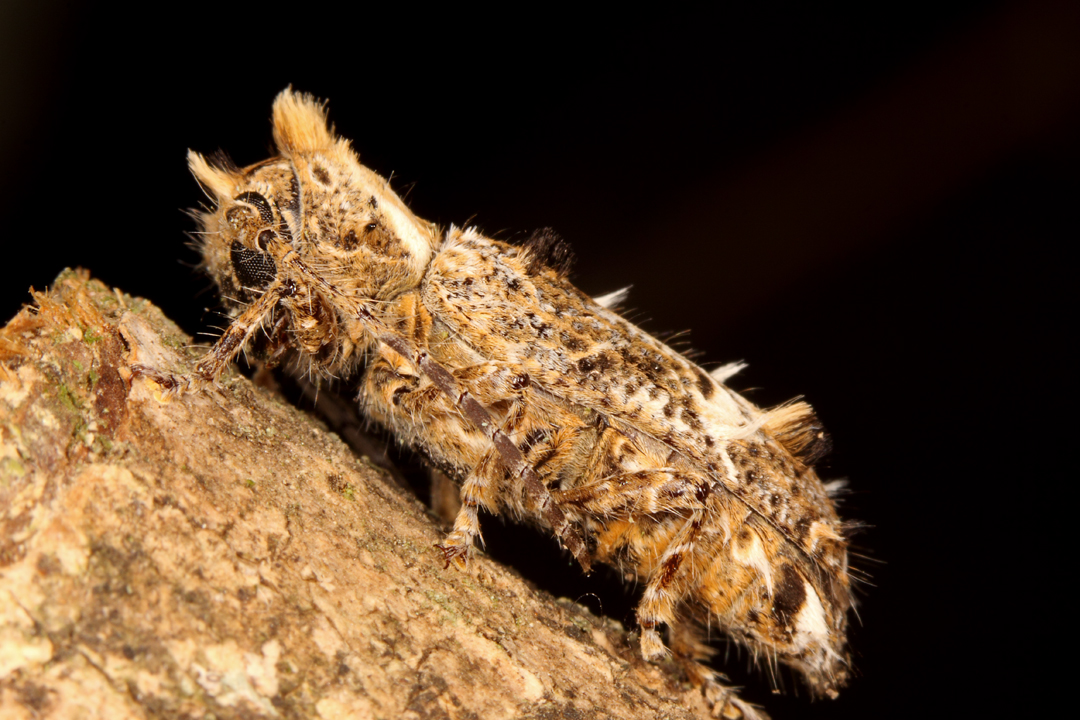
The hardest EASIEST ID Challenge in like ever!

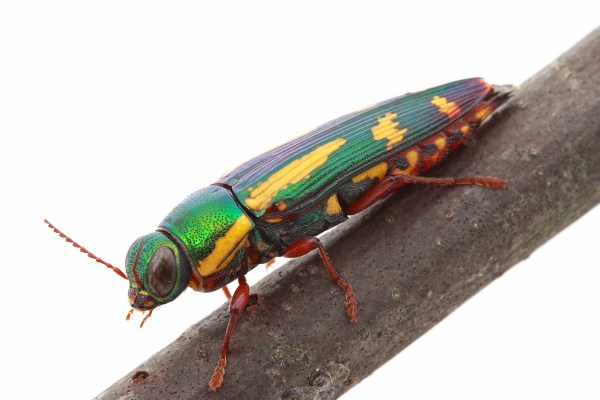
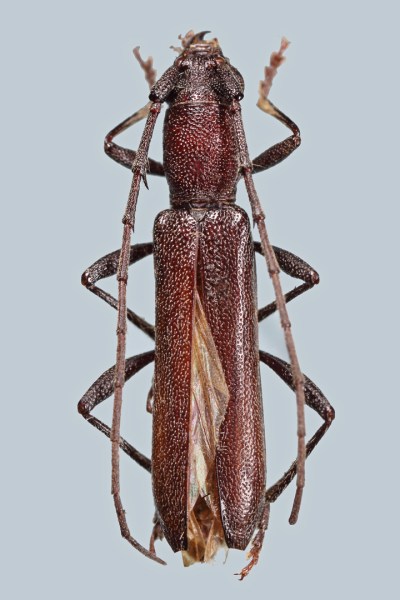
This is not only the hardest ID Challenge I have ever posted, it is probably the hardest one anyone has EVER posted. I’m not going to ask for order or family because they’re so easy. I will ask for the genus, because maybe only a few of you will get that right, but the genus alone won’t be enough. I want the species! Don’t even think about searching the internet for a matching photo—it doesn’t exist! You’re going to have to utilize other resources to figure this one out.

Because of the difficulty of this challenge, all the normal rules are out the window—no points, no sessions, no moderated comments, no nothing. This is winner take all—first person to correctly guess the species gets loot! I’ll even provide all the collection data in the caption. Good luck!

Update 10/29/12 10:12 pm: Well, I goofed and didn’t think about somebody Googling the label data, which Ben Coulter did to quickly arrive at the correct answer. Stupid Google!

At any rate, and with great anticlimactic fanfare, say hello to Aneflomorpha cribellata, described by Bates more than a century ago (1892) and known only from that single type specimen until the collection of this one in southern Mexico in 2005 (MacRae et al. 2012). This is the first photograph of the species and will be added to Larry Bezark’s A Photographic Catalogue of the CERAMBYCIDAE of the World.

Reference:
MacRae, T. C., L. G. Bezark & I. Swift. 2012. Notes on distribution and host plants of Cerambycidae (Coleoptera) from southern México.  The Pan-Pacific Entomologist 88(2):173–184.


MEXICO: Oaxaca, 4.8 km E La Ventosa, Hwy 190, 16°33’27″N, 94°54’27″W, elev. 76′, 28.vii.2005, beaten from unidentified dead branches, coll. T. C. MacRae.

Copyright © Ted C. MacRae 2012

Some recent publications

I’ve had a few papers published in recent months that may be of interest to some. After a string of papers in 2011 focused exclusively on tiger beetles (five in all), these latest three represent sort a return to my “roots”: taxonomy and biosystematics of woodboring beetles (Buprestidae and Cerambycidae). Summaries are provided below, and hyperlinks in the citations lead to downloadable PDFs for those wishing to see the gory details.

  • MacRae, T. C. & R. L. Westcott. 2012. Nomenclatural history of Melanophila drummondi ab. nicolayi Obenberger, 1944 (Coleoptera: Buprestidae), a change of authorship and synonymy under Phaenops drummondi (Kirby 1837), and a new distribution record and summary of larval hosts for the species. The Pan-Pacific Entomologist 88(1):87–91.
     
    This paper can be considered of the “taxonomic housekeeping” sort. It concerns an “aberration” of the common, widespread jewel beetle species Phaenops drummondi. The current version of the International Code of Zoological Nomenclature (ICZN 1999) considers aberrations and other infrasubspecific (rank lower than subspecies) taxa as unavailable names with no taxonomic standing. However, they may be considered valid depending on date of publication and how they were treated by subsequent authors. In the majority of cases the guidance is clear on whether a given aberration, variety, form, etc. is considered unavailable or valid. However, there are times when multiple, conflicting interpretations are possible. The case described in this paper is one example, and even though the taxon clearly falls within the range of variability exhibited by the parent species, careful study of multiple provisions of The Code were required to determine its proper status. In the end, a change of authorship followed by formal synonymy were deemed the best course of action. Updated information on the distribution of P. drummondi and a summary of known larval hosts are also provided.
     
  • MacRae, T. C., L. G. Bezark & I. Swift. 2012. Notes on distribution and host plants of Cerambycidae (Coleoptera) from southern México. The Pan-Pacific Entomologist 88(2):173–184.
     
    From 2004–2006 I made three collecting trips to México with my friend and colleague, Chuck Bellamy. Our main focus was the rich diversity of jewel beetles that occur in the relatively intact, dry, tropical thorn forests that stretch across the southern states of Guerrero, Michoacan, Oaxaca, and Puebla, and in this respect we were quite successful. I also have an interest in longhorned beetles, but I try to limit my scope in this family to the Nearctic fauna and didn’t specifically target these beetles during those trips. Still, many species were encountered during the course of beating potential jewel beetle host plants. As with jewel beetles, the longhorned beetle fauna of México is rich but very incompletely known, with distributional data below the country level and knowledge of host plants lacking or inadequate for most species. This paper presents specific distributional and host plant information for 78 species in 50 genera of longhorned beetles collected during those trips. Included within the data presented are 47 new state records, 47 new adult host records, and 60 new flower records.
     
  • Steury, B. W., T. C. MacRae & E. T. Oberg. 2012. Annotated list of the metallic wood-boring beetles (Insecta: Coleoptera: Buprestidae) of the George Washington Memorial Parkway, Fairfax County, Virginia.  Banisteria 39:71–75.
     
    Lead author Brent Steury of the U.S. National Park Service contacted me last year about identifying jewel beetles that had been collected at a number of units in the George Washington Memorial Parkway during recent BioBlitz surveys and as by-catch from studies targeting other arthropods. The surveys were worthy of reporting on, as 23 species in nine jewel beetle genera were represented in the material collected—including two species reported for the first time from Virginia: Paragrilus tenuis (LeConte) and Pachyschelus purpureus purpureus (Say). Information is also provided on the collecting methods used during the surveys, with Malaise traps, hand netting, and pan traps being the only ones successful in capturing jewel beetles (Lindgren funnel and pitfall traps did not capture any).

REFERENCE: 

International Commission on Zoological Nomenclature [ICZN]. 1999. International Code of Zoological Nomenclature, 4th Edition. The International Trust for Zoological Nomenclature, c/o Natural History Museum, London. xxix + 306 pp.

Copyright © Ted C. MacRae 2012

Consolation Crossidius

Rewind back to Day 2 of this year’s Annual Fall Tiger Beetle Trip at Gloss Mountain State Park in northwestern Oklahoma—these were actually the first non-Missouri beetles that I photographed on the trip. Crossidius pulchellus is a longhorned beetle (family Cerambycidae) that occurs commonly on flowers of broom snakeweed (Gutierrezia sarothrae) and relatives throughout the Great Plains and southern Rocky Mountains.

Crossidius pulchellus on flowers of Gutierrezia sarothrae | Major Co., Oklahoma. The dense vestiture (covering of hairs) of the beetles is made more conspicuous by backlighting the beetles with the sun.

I find it rather ironic that Crossidius pulchellus was the first western beetle that I encountered, since my original plans for this year’s late-season trip centered on looking specifically for longhorned beetles in the genus Crossidius (see last year’s Crossidius coralinus fulgidus for an extraordinarily beautiful representative of this genus). Unlike the vast majority of the family that develop as larvae in dead wood, species in this diverse, exclusively western North American genus bore through the roots living, perennial shrubs belonging to the genera Gutierrezia, Chrysothamnus/Ericameria, and Haplopappus (family Asteraceae)—the “goldenrods” of the west, they bloom in widespread, yellow-flowered profusion as summer turns to fall. A wide variety of insects are attracted to these blooms, most of which—bees, flies, wasps, moths, etc.—are opportunistic pollinators. Crossidius beetles, however, are intimately associated with the plants, seemingly spending their entire, brief adult lives either perched, feeding, or mating upon the flowers. Even at night, rather than leaving the plants to search for protected hiding spots, they simply bury themselves deeper amongst the flowers and await the next morning’s first, warming rays of sunlight.

Sampling the diversity of Crossidius that springs forth each year across the west requires carefully timed travel to multiple localities spread widely across rough terrain. As longhorned beetles go, the genus exhibits an astounding level of polytopism (geographically-based variation) that in many respects resembles that exhibited by North American tiger beetles. This has resulted in the description of a relatively large number of species, most of which can be further divided into numerous recognizable subspecies and even local morphs. The discontinuous distribution of their host plants across the broken western topography and resulting isolation of local populations have contributed to this variability, further complicated by hybridization among species occurring together in a given locality (Linsley & Chemsak 1961). I got a taste of the diversity of these beetles during last year’s fall tiger beetle trip as I looped through Colorado, Idaho, and Utah. Although my plans to look for them this year didn’t work out, my appetite remains whetted. There is always next year!

REFERENCE:

Linsley, E. G. & J. A. Chemsak. 1961. A distributional and taxonomic study of the genus Crossidius (Coleoptera, Cerambycidae). Miscellaneous Publications of the Entomological Society of America 3(2):26–64, 3 color plates.

9th Annual Fall Tiger Beetle Trip: Day 1

Once again, I have embarked upon my Annual Fall Tiger Beetle Trip, this being the ninth consecutive year that I have done such a trip. Unlike previous editions, however, the quarry on Day 1 (Sept. 15) was not a tiger beetle but a longhorned beetle. Ataxia hubbardi is not uncommon in the eastern and central U.S. and breeds in the living tissues of a variety of herbaceous plants, but especially certain species of Helianthus, Ambrosia, and Silphium in the family Asteraceae. I was hoping to see a distinctive population of this beetle that is associated with prairie dock (Silphium terebinthinaceum) in the dolomite glades just south of St. Louis. This population is interesting because individuals are smaller, darker, and narrower in form than is typical for the species, and I would like very much to get some photographs of the adults, which seem most abundant in the fall, on the tall flower stalks of their host plant.

Victoria Glades Natural Area | Jefferson Co., Missouri

I first discovered the population many years ago—back in the 1980s when I visited one particular glade, Victoria Glades Natural Area, almost weekly over a period of several years. I left Missouri for a few years in the early 1990s but returned in 1995, and during my absence fire was implemented in Victoria Glades and other glades in the area as a management practice for controlling invasion by woody plants (primarily eastern red-cedar, Juniperus virginiana). While the use of fire has certainly done much to restore the glades and improve its floral diversity, it seems more than coincidental that insect abundance and diversity on the glades is only a fraction of what I observed during my pre-burn collecting in the 1980s. There are a number of beetle species that I found at the glade historically that I have not seen now for more than 20 years; one of which is this distinctive population of A. hubbardi.

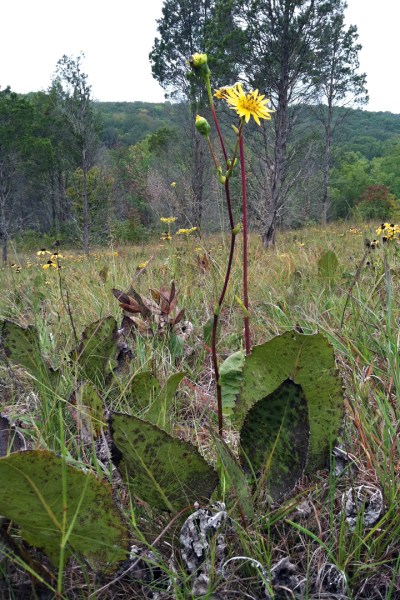
Prairie dock (Silphium terebinthinaceum) – host for Ataxia hubbardi

The prairie dock plants were at the height of bloom, but the flower stems seemed shorter and the normally large, spatulate basal leaves of the plants generally smaller than typical—perhaps a result of this summer’s severe drought. How such conditions affect the beetles is unknown. The day was also rather cool due to unbroken cloud cover and light drizzle, with temperatures in the low 70s during my visit. I spent the better part of two hours inspecting the stems of every prairie dock plant that I encountered and did not see a single beetle, so it has now been 23 years—almost a quarter century—since I’ve seen this once fairly common species at the glade. Can I prove that fire management has extirpated the beetle? No—populations might have been knocked down by the drought, or maybe the adults hide on cool, cloudy, drizzly days. Still, the pattern is too consistent to ignore, and I become increasingly worried that a special feature of these glades has now been lost.

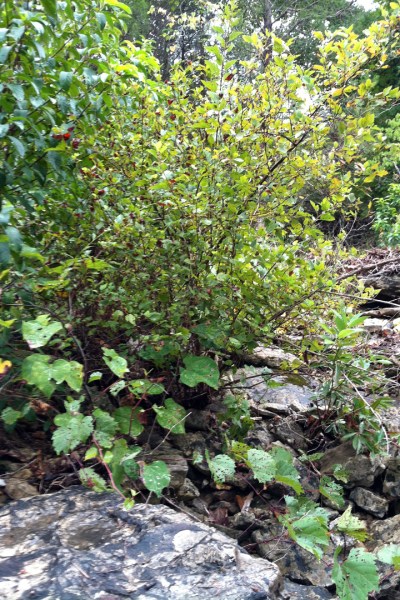
Ninebark (Physocarpus opulifolius intermedius) – host for Dicerca pugionata

On the other hand, another quite rare beetle that I encountered abundantly at Victoria Glades in the past seems to have rebounded from its long absence—the jewel beetle Dicerca pugionata. This beautiful beetle is associated with the scraggly clumps of ninebark (Physocarpus opulifolius intermedius) that hang on in the moist toe slopes of the glades. I wrote about this species earlier this year after re-discovering it in the glades; however, I couldn’t resist taking a few more photographs of this stunningly gorgeous species. This species also makes its appearance in the fall as well as spring, and in the two hours I spent searching I counted 13 beetles—more than I’ve ever seen on any one day. Interestingly, most of these were associated with a stand of plants in an area at the south end of the glade that I had never searched before and that appears not to have been subjected to fire management (cedar removal has been effected instead with a chain saw). Only a few of the beetles were found in the much more abundant plants growing in the area of the glade I am more familiar with and that has obviously been subjected to repeated burning. It’s not proof, but I’m just saying…

Dicerca pugionata on ninebark branch.

Adult beetles are colored almost precisely the same as the bark of their host plant.

More even lighting in this face shot compared to my previous attempts.

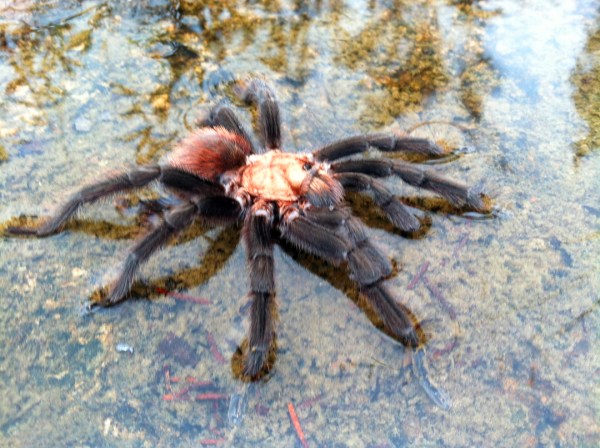
The cool temperatures and light drizzle were not conducive to much other insect activity, but while crossing the small, shallow creek that separates the south end of the glade from the main glade, the biggest male tarantula (Aphonopelma hentzi) that I have ever seen caught my attention as it crossed the creek. Situated only 30 miles south of St. Louis, Victoria Glades must represent the northeastern limit of distribution for the species, and although I once saw a tarantula crossing the road very near to this location, this is the first tarantula that I have actually seen in the glades that lie so close to St. Louis. Males are famous for their fall wanderings, presumably in search of the females that tend to stay within their burrows. This male was missing part of one of its hind legs but otherwise appeared quite healthy and robust. I hope he succeeds in finding a mate and sires many offspring and is not discovered by any of the poachers who regularly scour the glades and steal its more unusual inhabitants—the glades have already lost enough of their unique residents…

Can you find the tarantula crossing the creek? (Hint: 0.60X, 0.37Y)

Male Aphonopelma hentzi | Jefferson Co., Missouri

Copyright © Ted C. MacRae 2012

A classic fall ‘bycid

In eastern North America, autumn is the beginning of the end for most insect groups. Preparations for winter are either complete or well underway—eggs have been laid, nests have been provisioned, and larvae (hopefully) have eaten well enough to endure the long, cold months that lie ahead. But for a few insects, fall is just a beginning. Triggered by cooler temperatures, shortened daylength, and invigorating rains, adults of these insects burst forth under crisp, blue skies to feed amongst a plethora of fall flowers or prey upon other late season insects before the advancing cold, finally, forces a close to the season. As a beetle man, my favorite fall insects must be the “fall tigers” (i.e., tiger beetles) that come out in force and zip across barren sand dunes or bask on exposed rocks of dolomite glades. My fall insect collecting focuses almost exclusively on these insects, since my other favorite groups (jewel beetles and longhorned beetles) are, for the most part, restricted in their adult activity to the spring and summer months and long gone by the time fall rolls around. There are, however, a few longhorned beetles that buck the normal spring/summer rule for the family, namely species in the genus Megacyllene. The most commonly encountered of these is Megacyllene robiniae (locust borer), and anyone who has examined goldenrod (genus Solidago) and its profuse blooms during the fall has likely encountered this familiar beetle with its narrow, alternating, zig-zag bands of black and yellow.¹ I have seen this species many times and in many places; however, I still always enjoy seeing it anew in the field each fall—perhaps as some sort of confirmation that the fall season truly has arrived.

¹ If you see a “locust borer” in the spring, it is actually the closely related Megacyllene caryae (hickory borer), while further west in the Great Plains during fall you might find Megacyllene comanchei.

Megacyllene decora (amorpha borer) | Mississippi Co., Missouri

Another species in the genus that is far less commonly encountered, however, is Megacyllene decora (amorpha borer). I have encountered this stunningly beautiful species in only a handful of locations in Missouri (MacRae 1994)—all where stands of its larval host plant, Amorpha fruticosa (false indigo), grow in association with goldenrod and snakeroot (genus Eupatorium). These sites are primarily in the big river valleys of the state (Missouri and Mississippi Rivers), although I have found at least one site in the prairies of west central Missouri. Earlier this summer while traveling through the southeastern lowlands of Missouri, I noticed a stand of native Hibiscus growing within a wet ditch along the edge of a small city park and stopped by to look for the even rarer Hibiscus-associated jewel beetle, Agrilus concinnus (MacRae & Nelson 2003, MacRae 2006). While I did not find that species, I did notice fairly good numbers of A. fruticosa plants along the edge of the ditch as well and young goldenrod plants that had not yet reached flowering stage. At that moment I knew I had a good potential site to look for M. decora and made a mental note to stop at the site again later in the season when goldenrod began to bloom.
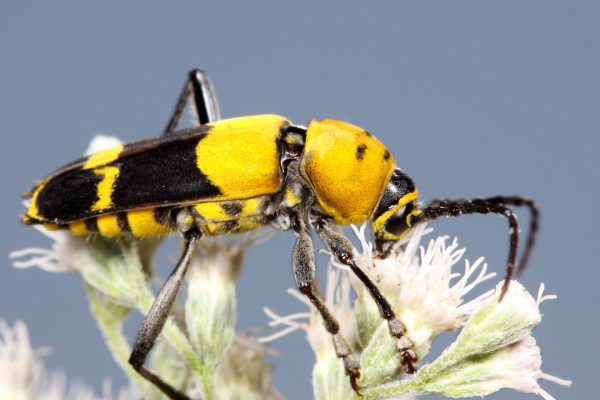
The species is distinguished from related species in the eastern U.S. by its wide black and yellow bands.

Last week I returned to the site to find not only goldenrod in its earliest stages of bloom, but an even greater number of Eupatorium serotinum plants already in bloom. I wanted to photograph the beetle, of course, but what I was really hoping for was to find and photograph the beetle on the stems of its Amorpha host plant (I have only seen this once before—all other sightings of the beetle have been on flowers of goldenrod and snakeroot). I approached each Amorpha clump cautiously and searched the stems carefully, also keeping an eye on the goldenrod and snakeroot blooms as I moved from one clump to the next. After searching a number of clumps, I finally found the adult shown in these photos. Fortunately, I knew from previous experience in collecting these beetles that they are not a particularly wary species (few aposematically- or mimetically-colored beetle are), so I was able to get a number of good photographs before I (stupidly) bumped the beetle with the diffuser over my flash heads and disturbed it.

”Blue sky” settings: ISO160–200, 1/200 sec, f/14–16, camera pointed near (not at) the sun.

It would be another half hour before I would find a second beetle, and in total on the day I saw only three (all on Eupatorium). This and the very early stage of the goldenrod blooms suggests to me that the beetles were just beginning to emerge—over the next few weeks I am sure they will become more numerous at the site, so I may yet have an opportunity to photograph one on its larval host plant when I pass by the area in a couple of weeks.

Normal ”normal” full-flash settings: ISO100, 1/250 sec, f/16.

REFERENCES:

MacRae, T. C. 1994. Annotated checklist of the longhorned beetles (Coleoptera: Cerambycidae and Disteniidae) known to occur in Missouri. Insecta Mundi 7(4) (1993):223–252.

MacRae, T. C. 2006. Distributional and biological notes on North American Buprestidae (Coleoptera), with comments on variation in Anthaxia (Haplanthaxia) viridicornis (Say) and A. (H.) viridfrons Gory. The Pan-Pacific Entomologist 82(2):166–199.

MacRae, T. C., and G. H. Nelson. 2003. Distributional and biological notes on Buprestidae (Coleoptera) in North and Central America and the West Indies, with validation of one species. The Coleopterists Bulletin 57(1):57–70.

Copyright © Ted C. MacRae 2012
2013 ESA World of Insects Calendar Selection

Today I received word from Richard Levine at the Entomological Society of America that one of my photos had been selected for the 2013 version of their famed World of Insects Calendar!

Excuse me for a moment please… (pumps fist, stirs the pot, does a very bad moon walk…)

Okay, I’m back. Honestly, this is an honor that I did not expect—at least not yet. Historically dominated by such giants in the world of insect macrophotography as Piotr Naskrecki,  Thomas Myers, and others, competition for ESA’s World of Insects Calendar is fierce. Last year more than 500 photographs were submitted for 13 slots (12 months and an introductory page) by 98 photographers from around the world. I was one of those photographers, though not selected (no surprise as I was a first-time submitter). However, I took great pleasure in seeing fellow bug blogger Adrian Thysse nab two of the 2012 slots, and I increased my resolve to try again for next year with a selection of eight mostly newer photographs.

At the suggestion of Dave Stone, I present each of those photos below along with a short description of why I submitted it. However, I’m not going to tell you which photo ultimately was selected—I thought it might be fun to see which photo you think was selected and why. As added incentive for guessing, I’m going to award 10 BitB Challenge points to each person who correctly picks the selected photograph. BitB Challenge Session #6 is coming down to the wire, so this could have a big impact on the overall standings.

The 2013 Calendar will become available for sale later this year (probably October) at the ESA website—last year’s version cost only $12 (discounted to $8 for ESA members, and free for those attending the annual meeting [which I will be attending this year]).


Megaphasma denticrus (Phasmida: Diapheromeridae) – giant walkingstick

From North America’s longest insect (21 Aug 2009).  This is one of my earlier super-closeup attempts. I liked the combination of blue and brown colors on the black background.


Buprestis rufipes (Coleoptera: Buprestidae) – redbellied Buprestis

From Special Delivery (13 July 2010).  The use of a white box shows off the brilliant (and difficult-to-photograph) metallic colors well, and I like the animated look of the slightly cocked head.


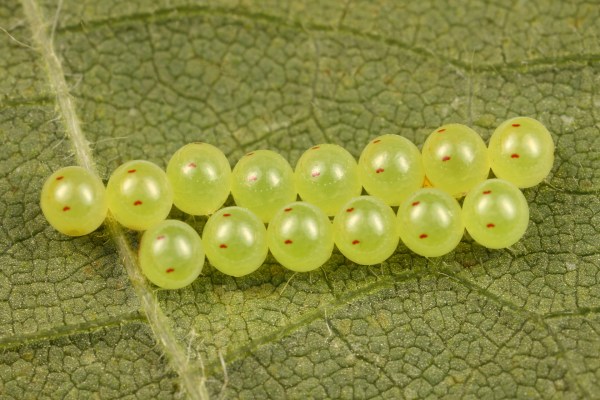
Edessa meditabunda (Hemiptera: Pentatomidae) – alquiche chico

From  (18 May 2011). I found these Edessa meditabunda stink bug eggs on the underside of a soybean leaf in Argentina almost ready to hatch. The developing eye spots in each egg gives the photo a “cute” factor rarely seen in such super close-ups.


Cicindela formosa generosa (Coleoptera: Carabidae: Cicindelinae) – eastern big sand tiger beetle

From  (10 May 2011). I like this slightly panned out view because of the sense of scale and landscape created by the inclusion of the plantlets and the view over the small rise.


Trimerotropis saxatilis (Orthoptera: Acrididae) – lichen grasshopper

From  (15 July 2011). Some of my favorite insect photos are not only those that show the bug in all its glory, but also tell a story about its natural history. This nymph is almost invisible when sitting on the lichens that cover the sandstone exposures in its preferred glade habitat. 


Tetracha floridana (Coleoptera: Carabidae: Cicindelinae) – Florida metallic tiger beetle

From  (23 August 2011). I used extension tubes to improve the quality of flash lighting (decreased lens to subject distance results in greater apparent light size), and I like the symmetry of the composition.


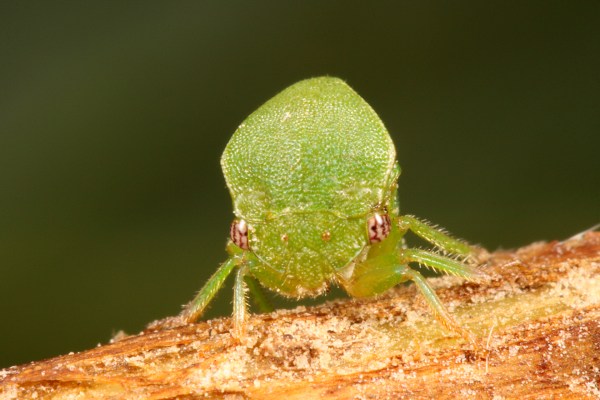
Spissistilus festinus (Hemiptera: Membracidae) – threecornered alfalfa hopper

From  (17 September 2011). Even though both the insect and the background are green, there is sufficient value contrast to create a pleasing composition, punctuated by the bizarre zig-zag pattern of the eyes.


Crossidius coralinus fulgidus (Coleoptera: Cerambycidae) – a rabbitbrush longhorned beetle

From  (4 October 2011). The blue sky background provides a pleasing contrast with the colors of this particular beetle and flowers.

Copyright © Ted C. MacRae 2012

Aglaoschema rufiventre in Chaco, Argentina

Aglaoschema rufiventre | Chaco Province, Argentina

I’ve mentioned a few times that April is not a very good time to look for beetles in northern Argentina, as the months preceding April are typically hot and dry. September through January would be a much better time, especially to look for the wood boring beetles (families Buprestidae and Cerambycidae) that I am so fond of. Still, if I am in Argentina in April then I must look for beetles in April, and while I didn’t see a single buprestid during my week in Corrientes and Chaco Provinces last month I did a fair number of cerambycid beetles on stands of goldenrod (Solidago chilensis) at a few localities in Chaco Province. One particularly common species was Aglaoschema rufiventre, a beautiful metallic green species with, you guessed it, a red abdomen. Aglaoschema is a rather large (27 species), exclusively Neotropical genus whose members superficially resemble the diurnal, brightly colored species of the tribe Trachyderini but actually belong to the tribe Compsocerini. Most of the species occur in Brazil, but six extend further south into Argentina. Of these, A. rufiventre most resembles A. haemorrhoidale and A. ventrale but is distinguished by its subcylindrical antennal scape—or first segment (clavate in A. ventrale) and non-roughened elytra (roughened—or “asperate”—in A. hemorrhoidale) (Napp 2007). No hosts have been reported for A. rufiventre (Monné 2001), so my finding of adults on flowers of S. chilensis seems to be the first reported host association for the species.

The species name refers to its “red belly”

I photographed several of these beetles on S. chilensis flowers at two locations in Chaco Province along Ruta 16 west of Resistencia, but I was generally unsatisfied with how the photos turned out. The combination of the beetles’ metallic sheen and the bright yellow color of the flowers made getting the right exposure and lighting difficult—I either blew out the yellow on the flowers or ended up with deep shadows on the beetles. One morning I encountered this female sitting on the seed head of an grass unidentified grass. Torpid from the cool temperatures and covered in morning dew, she was a most cooperative subject, and the colors of the seed head turned out to be much more complimentary for photographing the beetle that the bright yellow goldenrod flowers.

REFERENCES:

Monné, M. A. 2001. Catalogue of the Neotropical Cerambycidae (Coleoptera) with known host plant—Part I: Subfamily Cerambycinae, tribes Achrysonini to Elaphidiini. Publicações Avulsas do Museu Nacional 88:1–108.

Napp, D. S. 2007. Revisão do gênero Aglaoschema Napp (Coleoptera, Cerambycidae). Revista Brasileira de Zoologia 24(3):793–816.

Copyright © Ted C. MacRae 2012

Desmiphora hirticollis: Crypsis or Mimicry?

During my stay in Corrientes, Argentina last month, I was invited to spend the day with a colleague at his “camp” in Paso de la Patria. Located on the banks of the massive Rio Paraná at its junction with the Rio Paraguay, this small resort community boasts large tracts of relatively intact “Selva Paranaense,” which together with the Atlantic Forest in southeastern Brazil forms the second largest forest ecozone in South America outside of the Amazon. As my colleague skillfully prepared matambre, chorizo, and vacío (typical cuts of meat in Argentina) on the parilla (wood grill) at his camp, I explored the surrounding forest for insects. Early April is late in the season, and with generally droughty conditions in the area for the past several months there were few insects to be found. My luck improved, however, when I came upon a small area with stacks of fresh cut logs from recent wood cutting operations scattered through the area. Wood boring beetles (families Buprestidae and Cerambycidae) are often attracted to such wood piles, so approached each one slowly to look for day-active species of these beetles. After inspecting several piles without seeing anything on them, I began carefully turning over the logs to look for nocturnal species that tend to hide on the undersides during the day. Shortly I came across this highly cryptic species of cerambycid, and further searching revealed a fair number of these beetles hiding within the dozen or so log piles that I examined.

Desmiphora hirticollis on freshly cut guayabi (Patagonia americana) | Corrientes Prov., Argentina

I instantly recognized the genus as Desmiphora, an exclusively New World genus characterized by the presence of fasciculate tufts (or “pencils”) of erect or suberect hairs. Most of its nearly 50 species occur in Brazil, but two species extend as far north as southern Texas (Giesbert 1998). One of these is Desmiphora hirticollis, a widespread species found as far north as Corpus Christi, Texas and as far south as Bolivia and Argentina. I thought these beetles looked an awful lot like that species, and I later confirmed its identity as such due to its piceous (glossy brownish black) integument and the presence of small black pencils just before the elytral apices.

Adults are nearly impossible to see from overhead due to cryptic coloration…

The wood piles contained logs from several tree species, but all of the beetles that I encountered were on logs of guayaibi (Patagonula americana), a member of the family Boraginaceae and a characteristic component of Selva Paranaense (also an important timber species in Argentina). The number of individuals that I found and their occurrence only on guayaibi suggests it serves as a larval host for the beetle. Duffy (1960) described the larva from specimens collected out of Sapium sp. (family Euphorbiaceae), but in Texas this species is collected most often on Cordia spp. and Ehretia anacua (Rice et al. 1985)—both in the family Boraginaceae—with adults having been reared from Cordia eleagnoides (Chemsak & Noguera 1993).

…while the hair tufts may function in obscuring the body outline…

It seems obvious that coloration of the beetle and its pencils of hair function in crypsis. From overhead the beetles are almost impossible to discern as they sit motionless on the similarly colored bark of their host trees. Even in profile or oblique views where the body becomes somewhat more visible, the pencils seem to break up and obscure the outline of the body. I wonder, however, if crypsis is the only function of the pencils—Belt (2004) described the strong resemblance of another species in the genus, D. fasciculata—a similarly penicillate species, to short, thick, hairy caterpillars (insectivorous birds often refuse to prey upon hairy species of caterpillars). That species can be seen sitting openly on foliage during the day, while D. hirticollis seems to be strictly nocturnal; however, cryptic and mimetic functions need not be mutually exclusive, so perhaps for this species the pencils function a little for both.

…or perhaps even mimicking ”hairy” caterpillars.

REFERENCES:

Belt, T. 2004. The Naturalist in Nicaragua. Project Guttenberg eBook.

Chemsak, J. A. & F. A. Noguera.  1993.  Annotated checklist of the Cerambycidae of the Estacion de Biologia Chamela, Jalisco, Mexico (Coleoptera), with descriptions of new genera and species.  Folia Entomológica Mexicana 89:55–102.

Duffy, E. A. J. 1960. A Monograph of the Immature Stages of Neotropical Timber Beetles (Cerambycidae). British Museum of Natural History, London. 327 p.

Giesbert, E. F. 1998. A review of the genus Desmiphora Audinet-Serville (Coleoptera: Cerambycidae: Lamiinae: Desmiphorini) in North America, Mexico and Central America. Occasional Papers of the Consortium Coleopterorum 2(1): 27–43.

Rice, M. E., R. H. Turnbow, Jr. & F. T. Hovore. 1985. Biological and distributional observations on Cerambycidae from the southwestern United States (Coleoptera). The Coleopterists Bulletin 39(1):18–24.

Copyright © Ted C. MacRae 2012