Friday Flower – Spring Coralroot Orchid

As flowers go, I have a passion for orchids.  Despite comprising perhaps the largest family of flowering plants on earth, most people think of orchids as rare, epiphytic plants restricted to the lush, hyper-diverse, tropical rain forests of South America and southeast Asia.  In reality, terrestrial orchids abound in the temperate regions of the Northern Hemisphere, with more than 200 species occurring in the United States and Canada.  Some, such as the lady slippers (genus Cypripedium),  have blossoms as magnificent as their tropical counterparts, while others are less conspicuous and easy to overlook; however, all share the hallmark that unites the family—a modified petal forming a conspicuous lower lip¹

¹ Interestingly, the lip is actually derived from the uppermost petal, but in most species the flower twists during development so that the lip is oriented at the bottom.

Missouri is home to 34 species of orchids (one introduced, and another discovered in Missouri for the first time just a couple years ago).  None of them are truly common like Rudbeckia or Coreopsis, although some are far more common than is realized.  I’ve featured a few of these previously, including Spiranthes magnicamporum (Great Plains Ladies’-tresses), Platanthera lacera (green fringed orchid), Aplectrum hymenale (Adam and Eve orchid), and Goodyera pubescens (rattlesnake plantain orchid).  I’ve traveled to the far corners of the state to see them, but for today’s featured species—Corallorhiza wisteriana (spring coralroot)—I had to travel no further than my front yard.
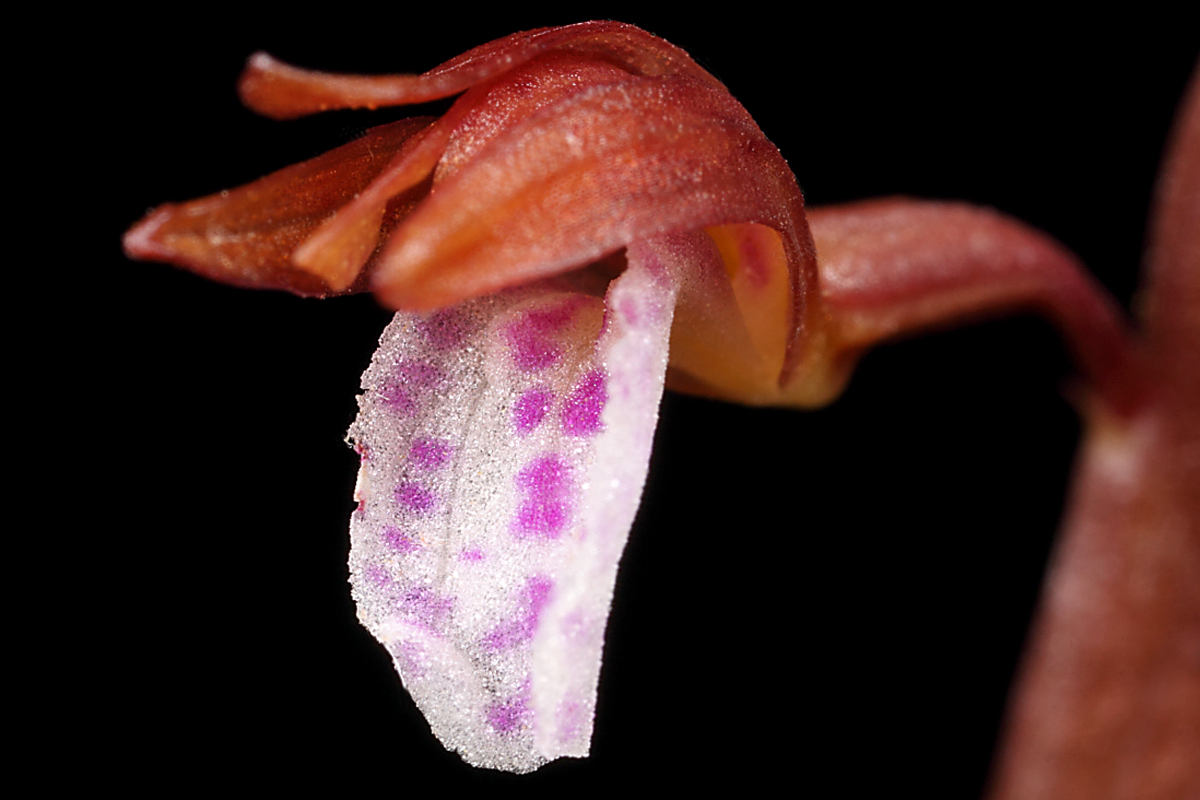

I’m sure my neighbors hate my front yard. I don’t use fertilizers or herbicides, and I’m unconcerned about the moss that grows amongst the thin stands of mixed grasses under the tall native oaks that shade much of the yard. My neighbor down the street especially probably shakes his head as he walks his dog past my yard every day, frustrated that I don’t share his passion for the lush, thick, über-green bluegrass monoculture that he has achieved (and must pay somebody to cut at least once a week). Spring must be especially frustrating for him, as I don’t even cut the grass until late May, giving the lawn an especially ragged, unkempt appearance. However, whatever my yard lacks in graminaceous greatness, it more than makes up for in its diversity of woodland natives—spring beauty, toothwort, trout lily, violets, coral bells… and spring coralroot. I have several colonies growing at different spots in the yard, all marked with surveyor’s flags to prevent accidental trampling until their bloom period ends and I can (begrudgingly) begin mowing the grass (no more than once a month, if I can get away with it). I’ve enjoyed these coralroot colonies every spring since I’ve lived here, but this spring was the first that I took the opportunity to photograph their blooms.
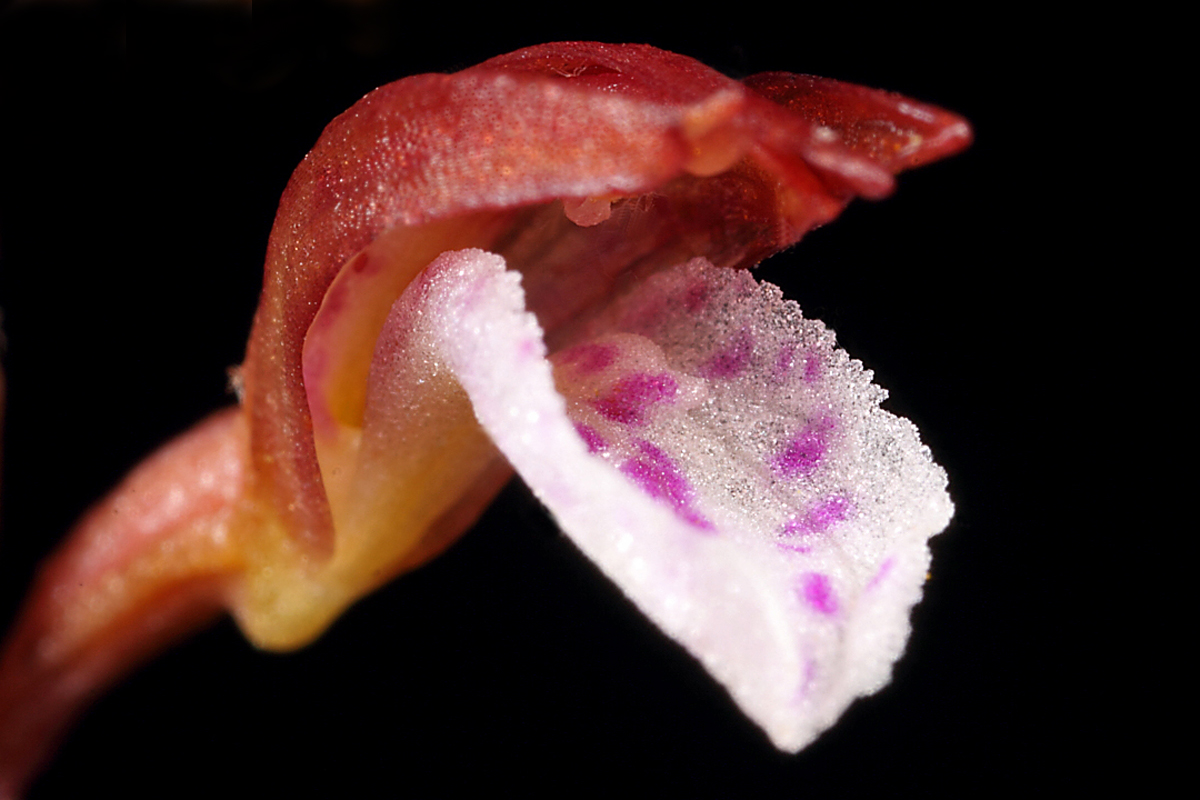
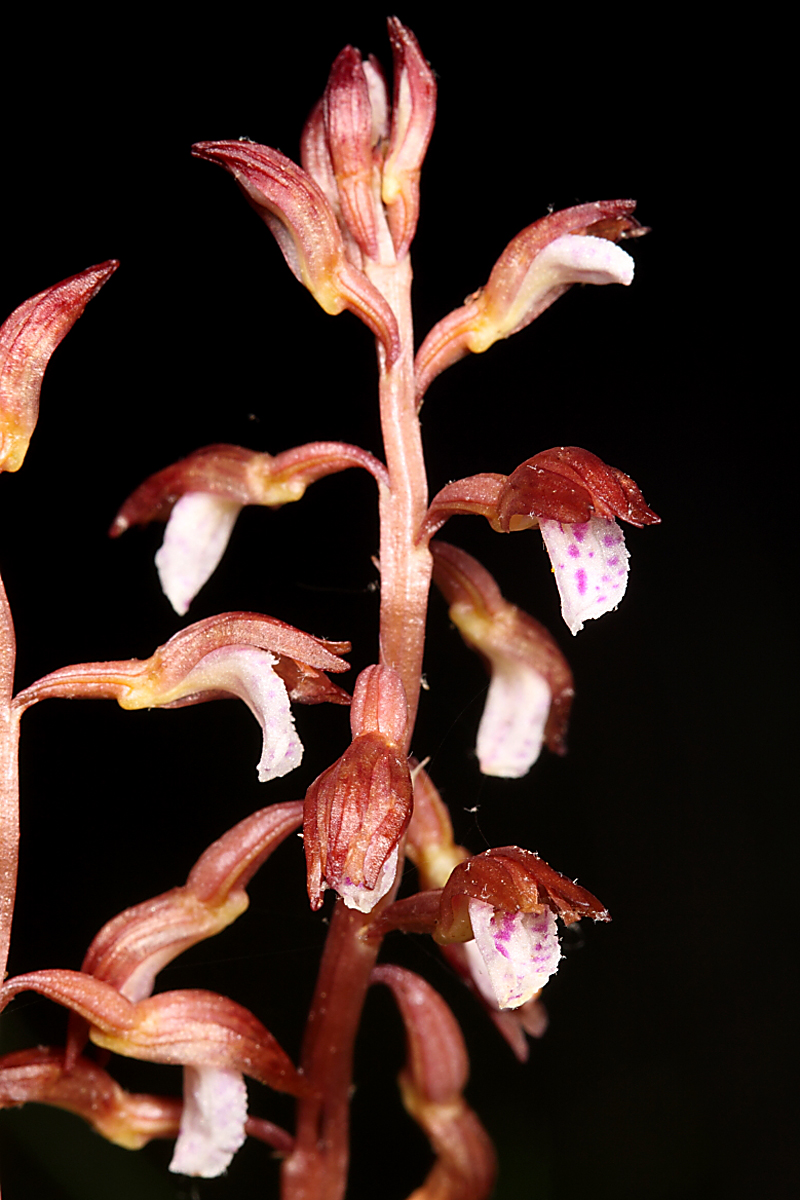
Of the three Corallorhiza species that can be found in Missouri, C. wisteriana is the most common, occurring in rich or rocky acidic soils of low wooded valleys, ravine bottoms, along streams and on ridges and slopes of open woods (Summers 1981).  My yard qualifies as the latter, occurring on a limestone ridge in mesic upland forest made only slightly more open by the late 1980s construction of the neighborhood and its minimal disturbance limited to the roads, driveways, home footprints and a small amount of associated lawn.  It is distinguished in Missouri from C. odontorhiza (Autumn coralroot) by its spring flowering period and larger flowers with notched or lobed lip, and from the rare C. trifida (known from only a few Missouri counties) by the purple or brownish stems and spotted lip.
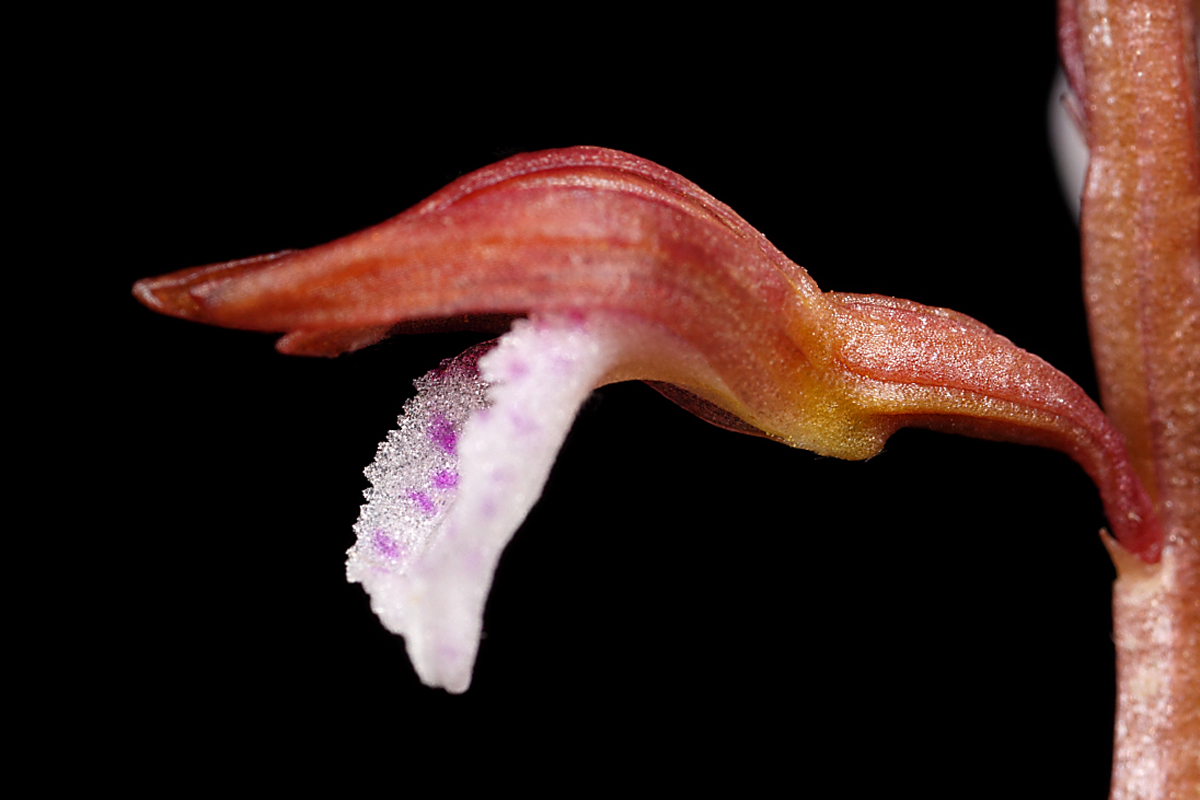

As suggested by the unusual coloration, Corallorhiza species are largely (though not completely) lacking in chlorophyll, and as a result are mostly unable to photosynthesize their own food. Instead, the bulbous rhizomes remain hidden within the soil for much of the year, forming symbiotic relationships with soil fungi and flowering only when conditions are favorable (Luer 1975). The past several springs have been wet here, and accordingly I’ve been rewarded with the wonderful sight of these exquisite tiny blossoms.

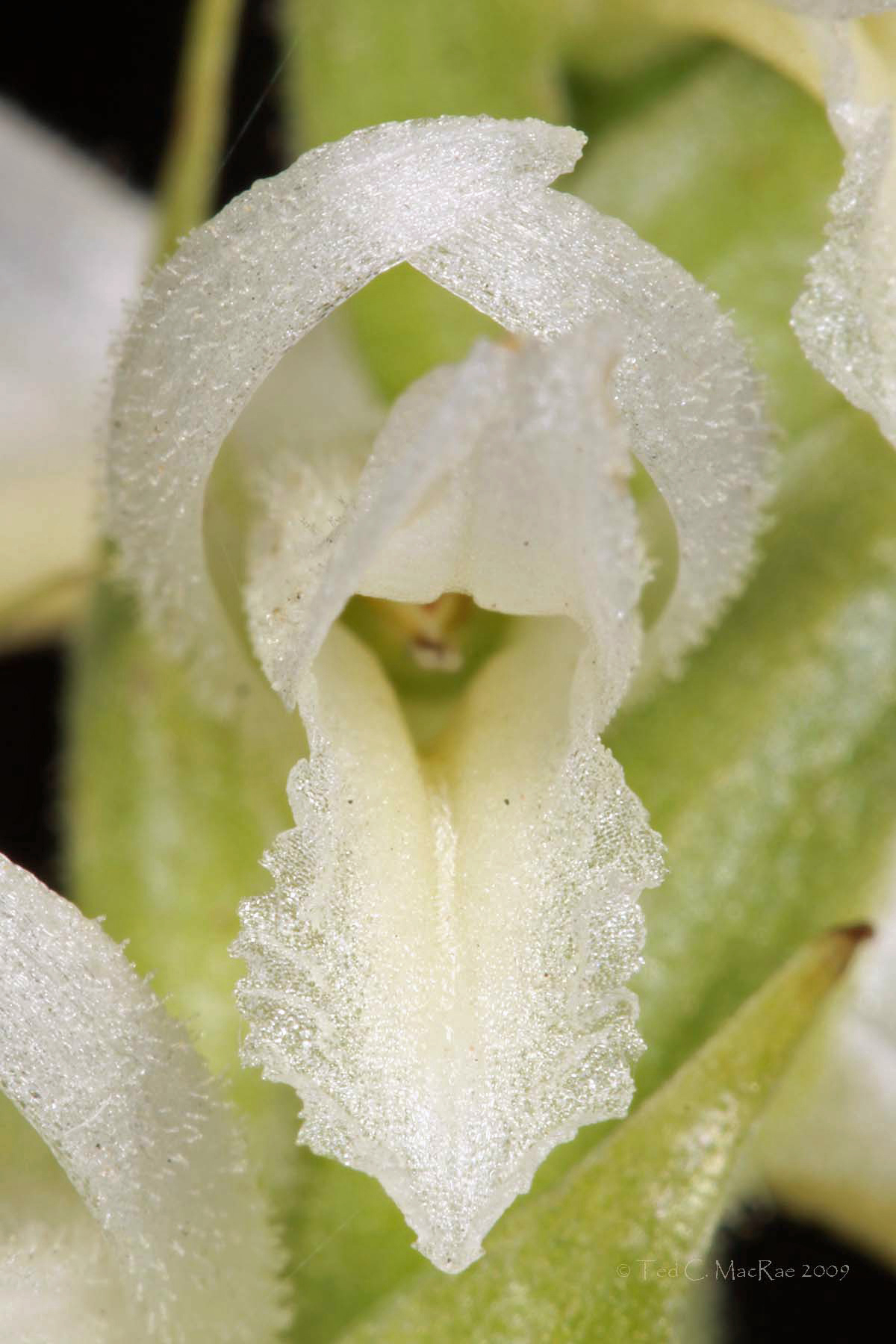
I can’t say that I’m entirely happy with these photographs, as I found it difficult to get the entire blossom in focus—when the petals were in focus the lip was not, and vice versa, even in straight lateral profile.  Nevertheless, they still show the delicate structure of the lip, with its scalloped edge and crystalline-appearing surface.  The blooms are fading now—soon there will be no above-ground evidence of their existence, and my neighbor and wife will likely gang up on me to finally power up the lawn mower.

REFERENCES:

Luer, C. A.  1975.The Native Orchids of the United States and Canada Excluding Florida.  The New York Botanical Garden, 361 pp. + 96 color plates.

Summers, B.  1981. Missouri Orchids.  Missouri Department of Conservation, Natural History Series No. 1, 92 pp.

Copyright © Ted C. MacRae 2011
Friday Flower – Orquídea bambu


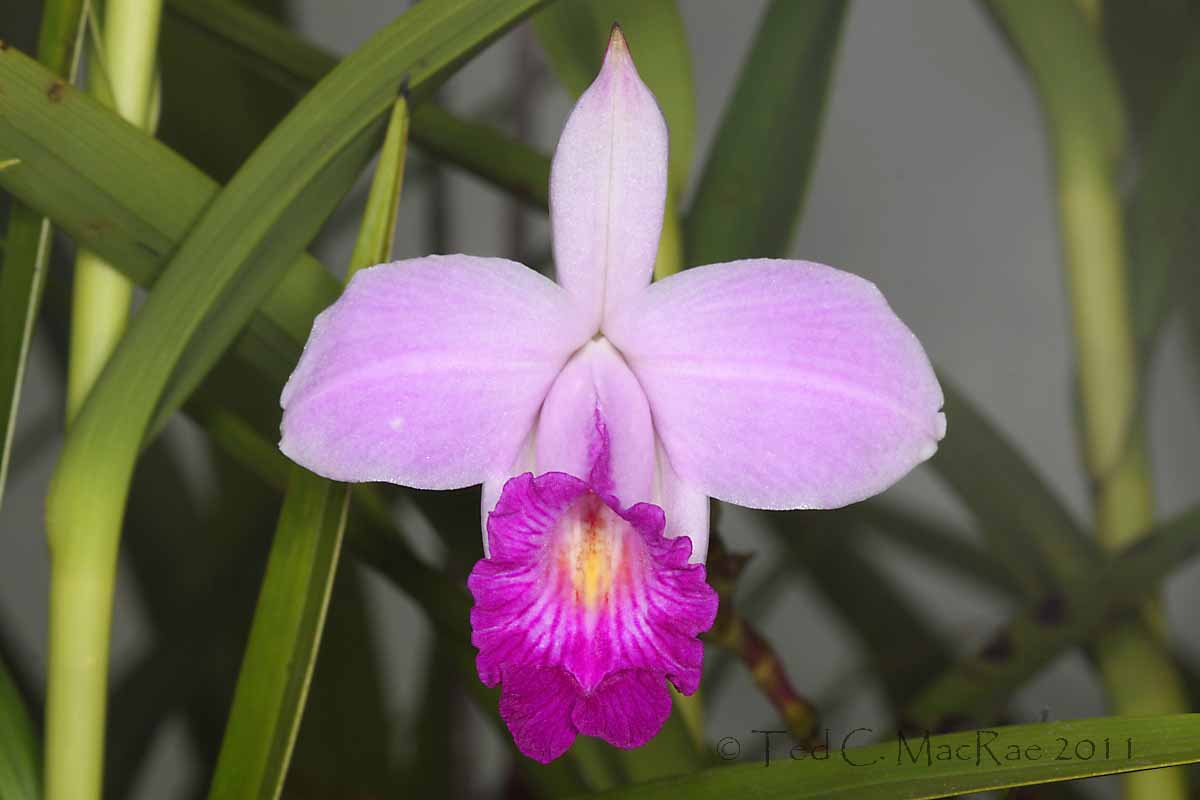
I arrived at our facility in Campinas, Brazil just before lunchtime.  I had spent the previous 20 hours on planes, trains, and automobiles (well, not trains), so when my colleague suggested that we take a short walk outside to the campus cafeteria I readily agreed.  Fresh air and at last a taste of that sumptuous Brazilian fare that I love so much sounded like a great idea.  As we walked to the cafeteria, I spotted these orchid blossoms on the tips of tall, reed-like stems growing in beds around the campus grounds… Orchids!  Growing in the ground, outside!  What a beautiful and appropriately tropical welcome to start things off.  I love orchids (and used to maintain a small collection back when I had time for such leisurely pursuits), so I asked my colleague if he knew which it was.  He didn’t, so I studied it carefully trying to remember its features so I could identify it later.  The terrestrial part struck me as a little odd for a Neotropical orchid, and I commented to my colleague that I’d bet it was something introduced from Asia.  That is precisely the case, although it took me a while to figure it out.  My initial Google and Flickr searches using terms such as “Brazil orchid” and the like produced pages and pages of Brazil’s famous diversity of native epiphytic species, but no obvious matches to this terrestrial species.  It later dawned on me that I should conduct my searches in Portuguese, and within the first page or two I found it – the appropriately named bamboo orchid (“orquidea bambusa”), Arundina graminifolia.


I would later see this orchid blooming not only in tended gardens, but from cracks in the pavement between buildings.  Originating from south and southeast Asia, this sole member of the genus is popularly cultivated in gardens across the tropics and has become naturalized in many areas.  Mary Farmer at A Neotropical Savanna has an excellent post on recognition and occurrence of this species in Panama, including detailed discussion and photographs of vegetational and floral morphology and its potential (or lack thereof) for becoming an invasive weed.

Copyright © Ted C. MacRae 2011

Friday Flower – green fringed orchid

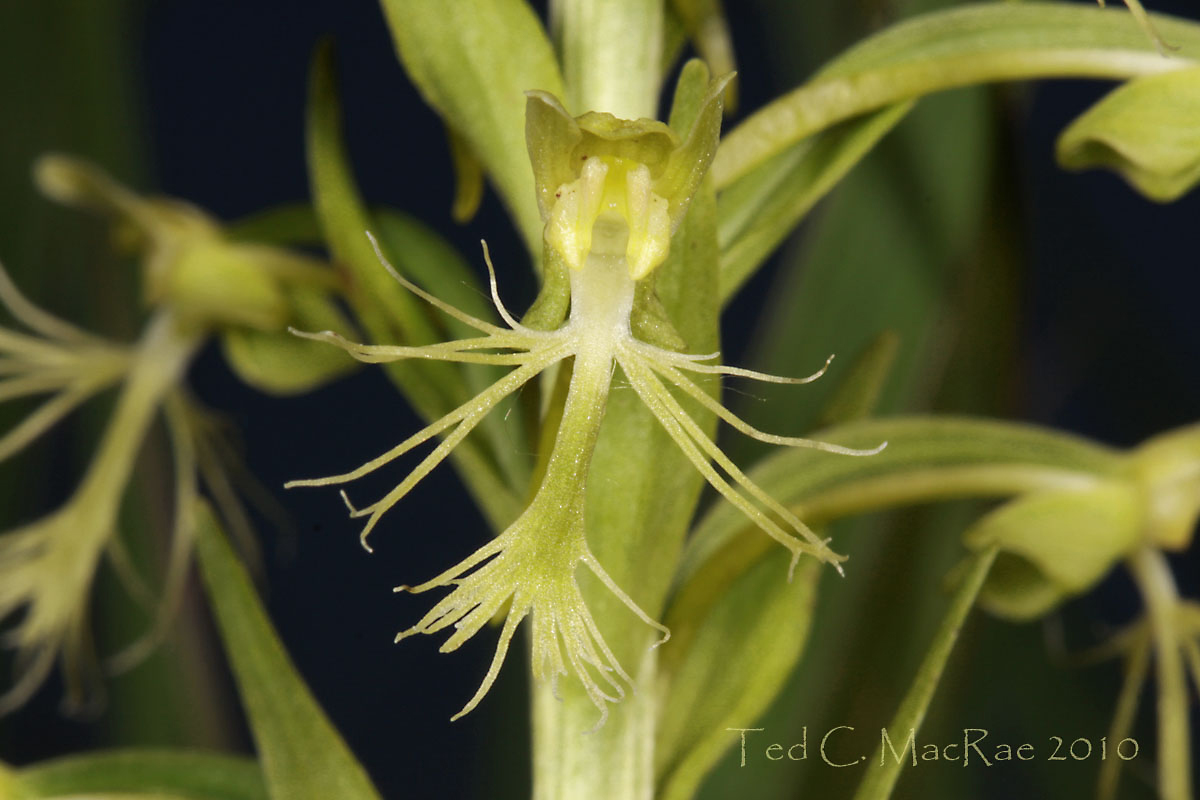
I may have been the “Beetle Group” leader for last May’s BioBlitz at Penn-Sylvania Prairie, a 160-acre tract of native tallgrass prairie in southwestern Missouri owned by the Missouri Prairie Foundation.  However, it was a plant – specifically the green fringed orchid  (Platanthera lacera) – that would prove be the highlight of my visit.  I’ve already lamented the paucity of beetles that I found at the prairie and the possible reasons for such.  It’s a shame, because to my knowledge the BioBlitz was the first real attempt to begin documenting the diversity of beetles and other insects that inhabit the prairie.  This is in great contrast to the vascular plants, of which about 300 mostly native prairie species have already been recorded from the site in active survey efforts that began even before its acquisition.   It’s no coincidence that prairie plant diversity would be so high in this frequently burned prairie remnant while beetles and other insects would be rather hard to find, since vascular plant diversity is the primary – and often the only – metric used to assess the success of and optimal timing for prescribed burning in native prairie remnants.  Unfortunately, the response of invertebrates to fire-centric management techniques such as those used here have not been so well considered, with the apparent declines in their populations now fueling an increasingly acrimonious debate on the subject.  But I digress…

Also called ragged fringed orchid, this species typifies the rather striking appearance of the genus as a whole.  I’ve always been quite enamored with orchids (even possessing a small collection during my young adult days that I grew outside under shadecloth during summer and indoors under artificial light during winter) but have encountered only a small fraction of Missouri’s 33 native orchid species – mostly in the genus Spiranthes (e.g., Great Plains Ladies’-tresses).  Despite not having seen this genus prior to this day, I knew immediately what I had stumbled upon (at least at the generic level) as we scoured the prairie in our search for its meager scraps of beetle life.  While not listed as threatened or endangered in Missouri, it is still quite uncommon, with populations scattered across the Ozark and Ozark Border counties and occurring with greater frequency in these Osage Plains in a variety of open, acidic-soiled habitats (Summers 1981).  As is typical for species with green-white colored flowers, the blossoms emit fragrance at night and thus attract sphinx moths (family Sphingidae) and owlet moths (family Noctuidae) for pollination, including the hummingbird clearwing hawkmoth (Hemaris thysbe) (Luer 1975).  While our Midwestern populations are considered “spindly and unattractive” compared to the more luxuriantly-blossomed plants of New England and maritime Canada (Luer 1975), I consider this to be the most strikingly handsome orchid I’ve encountered to date.

Photo Details: Canon 50D (ISO 100, 1/250 sec) w/ 100mm macro lens @ f/10 (whole plant) or f/18 (flower close-up), Canon MT-24EX flash (manual, 1/4 ratio) w/ Sto-Fen diffusers. Typical post-processing includes levels adjustment, minor cropping, and/or unsharp mask.

REFERENCES:

Luer, C. A.  1975. The Native Orchids of the United States and Canada Excluding Florida.  The New York Botanical Garden, 361 pp. + 96 color plates.

Summers, B.  1981. Missouri Orchids.  Missouri Department of Conservation, Natural History Series No. 1, 92 pp.

Copyright © Ted C. MacRae 2010

The joys of ecological restoration

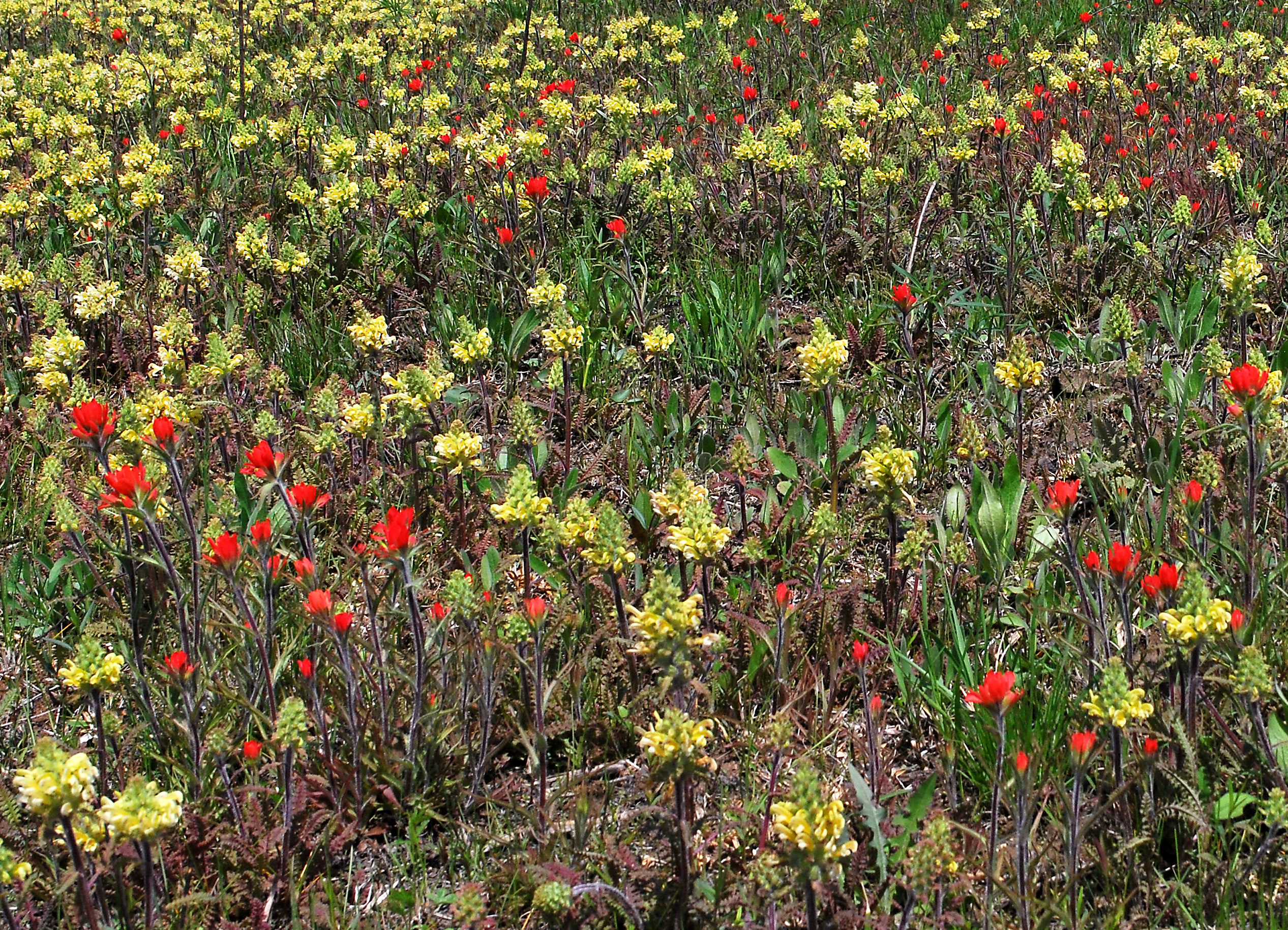
Indian paintbrush and lousewort now dominate patches of SNR

I moved to Missouri in the summer of 1988, having experienced 8 years of generous support of my family’s livelihood by my research on the infamous imported fire ants of the US Southeast, and their relatives in South America. When I arrived in the Midwest, I  hoped to land a job as an insect taxonomist in a university or museum, a goal of mine since before entering college. But this dream was one that even before moving to Missouri was dimming, and then receded ever further from the realm of possibility for me (and for traditionally trained taxonomists, generally), once here. So, I began to re-think what I might do with my work life. It would be something, I hoped, that would make some use of all the course work (mostly in entomology and botany) and research (on ant systematics) I had done during my 24 years (!) of getting educated and four additional years as a post-doc. As or more important, whatever job I ended up in would somehow have to allow me to share my life-long love of nature with others.

A museum drawer of ant specimens mounted for taxonomic study, the ants no doubt frustrated by the years of inattention they have received as I have tended to the duties of my day job.

Early in my residence in eastern Missouri, I made the acquaintance of the naturalist at a 2500-acre (1000-hectare) nature reserve outside of St. Louis. Shaw Arboretum, as it was then known, is country cousin to the world-renowned Missouri Botanical Garden, and is named after the Garden’s founder Henry Shaw. Long story short, in the summer of 1990 the naturalist mentioned to me that he would soon retire, the position would become available, and that I ought to apply. So I applied, and was hired as the arboretum’s naturalist in January 1991.

A dolomite glade plant endemic to a few counties in eastern Missouri, this leatherflower was established at SNR in the 1930s, but expanded exponentially after prescribed fire was introduced in the 1990s. Here, an ant characteristic of glades and dry prairies forages on the flower.

When I came on board, the “Arboretum” had mostly ceased to be an arboretum (a formal collection of trees for display, breeding and research), and most folks seemed unable to either pronounce or define the word. Indeed we learned, through a public survey, that the strange name and the stone wall in the front actually dissuaded people unfamiliar with it from entering! Yes, there were a few patches of exotic trees scattered around the property, especially in the conifer collection near the front entrance know as the “Pinetum”, but ever since the Garden had decided around 1930 that it would not, afterall move all of its horticultural operations to this then very rural site (the original intent of its purchase), formal arboretum and botanical garden type activities had been few and far between, and the site began gradually reverting from abandoned farmland to a wilder sort of place, as well as a haven for native biota. Thus, on its 75th anniversary in the year 2000, Shaw Arboretum was renamed Shaw Nature Reserve.

Colony-founding queen bumblebees are the primary actors in loosening pollen with ultrasound from shootingstar anthers, and distributing it about the plant population.

Around that time, my title changed too, to “Restoration Biologist”. The job is multifaceted; presenting public programs and classes on various aspects of the site’s natural history, writing and reviewing articles, acting as liaison to the vigorous regional group of academic ecologists who use the site for research and teaching, a very intermittent personal research program on ants resulting in sporadic publications, and last but certainly not least, ecological restoration.

Ecological restoration, in the broad sense, consists of  two primary practices:

  • Restoration of a natural community to structure and species composition presumed characteristic of an  ;;earlier condition (however arbitrary or ill-defined).
  • Reconstruction of regional, native-like habitats, de novo, using locally acquired native plant propagules in the appropriate settings of soil, hydrology,  slope aspect and climate.

Both  require essentially perpetual, follow-up maintenance, including invasive species control, mowing, haying, grazing, selective timber removal, species richness enhancements, and prescribed burning. All of these have many variations and nuances in application, and there can be impassioned arguments about their implementation in the literature, at conferences, and in forums and blogs on ecological restoration, native plants, butterflies, beetles, etc..

An ecologically conservative lily ally of undisturbed moist soil habitats now thrives in prairie plantings at the Reserve.

Attitudes about ecological restoration vary, among practitioners, among sociologists and philosophers, and in the general public. One broad attitudinal schism lies along the lines of  whether ecological restoration activities are some sort of primitivist, grand-scale gardening, or do they represent ecologically valid landscape conservation? Another question some pose is to what extent we should interfere with “natural successsion”? Be this as it may be, most people with functioning sensory perception agree the results can be very beautiful. The loveliness of the mosaic of colors in the herb layer of a spring woodland is inarguable, especially so after it has had its woody stem density reduced, and had the leaf litter burned off, to allow more light, rain and seeds to the soil surface — even where there is genuine concern about damage to invertebrate assemblages residing in forest duff. A waving meadow of grasses and flowers in a tallgrass prairie planting, intended to replace just a few of the tens of millions of acres of this ecosystem that have succumbed to the plow, has its own grand beauty, though its per-square-meter species density of plant species remains less than half that of a native prairie remnant and it is dominated mainly by habitat-generalist insect species rather than prairie specialists, even after 30 or more years.

A self-introduced grassland ant forages among a thriving, human-introduced population of this wet prairie gentian.

The smaller, daily rewards of restoration, to the practicing ecological restorationist and to those who visit his or her work, are many. Over 20 years, in the opened-up woods, restored glades and prairie and wetland plantings at SNR, I repeatedly have enjoyed the “sudden appearance” and increase in populations of ant species (of course) that I never observed during my early years of working at SNR (then scouring it for purposes of preparing an annotated ant list). The feeling I get upon discovering that a grouping of shooting star, royal catchfly, bunch flower or bottle gentian plants, are in bloom at a site where I spread their seeds five, seven, or even ten years earlier is a bit like that one feels when a child is born. The spontaneous colonization of SNR grassland plantings by prairie ragged orchid never fails to amaze me. Bird, or frog, or katydid and cricket songs in a former crop field or pasture, as the “restored” vegetation fills in and matures, is as pleasing to my ear as it is to my soul.

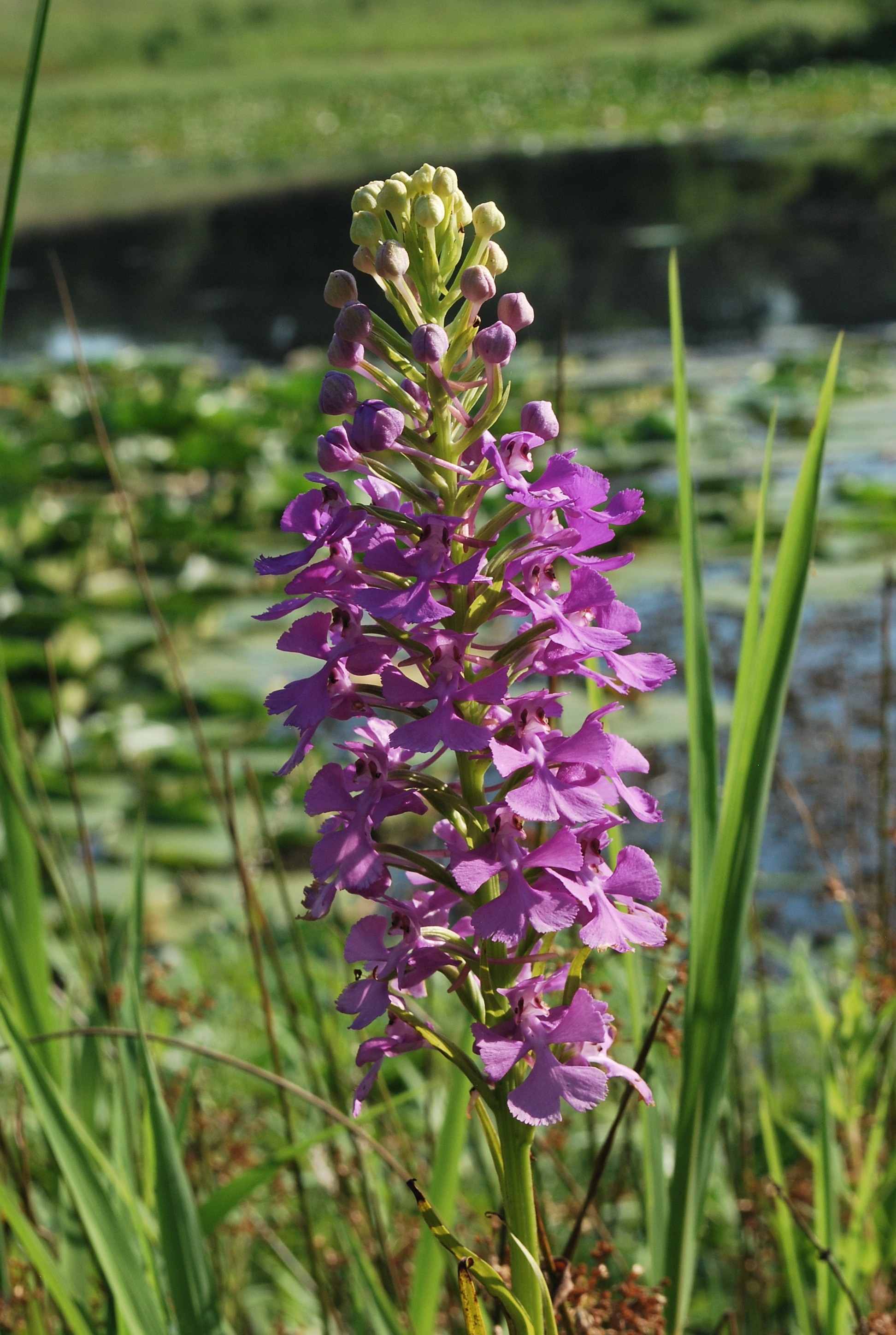
A few days ago (in early July), the director of the Reserve came to my office asking if I had noticed a purply pink, “possibly orchid” flower growing on a section of a berm (planted with native vegetation) in our 32-acre wetland complex. I had not been in the area recently, but headed right out to see what it was. Joyously, and not a little surprised, I learned that seeds of the purple fringeless orchid, sowed at a location nearby 17 years previously, had washed to this site, taken root, and as terrestrial orchids are wont to do, flowered after so many years!

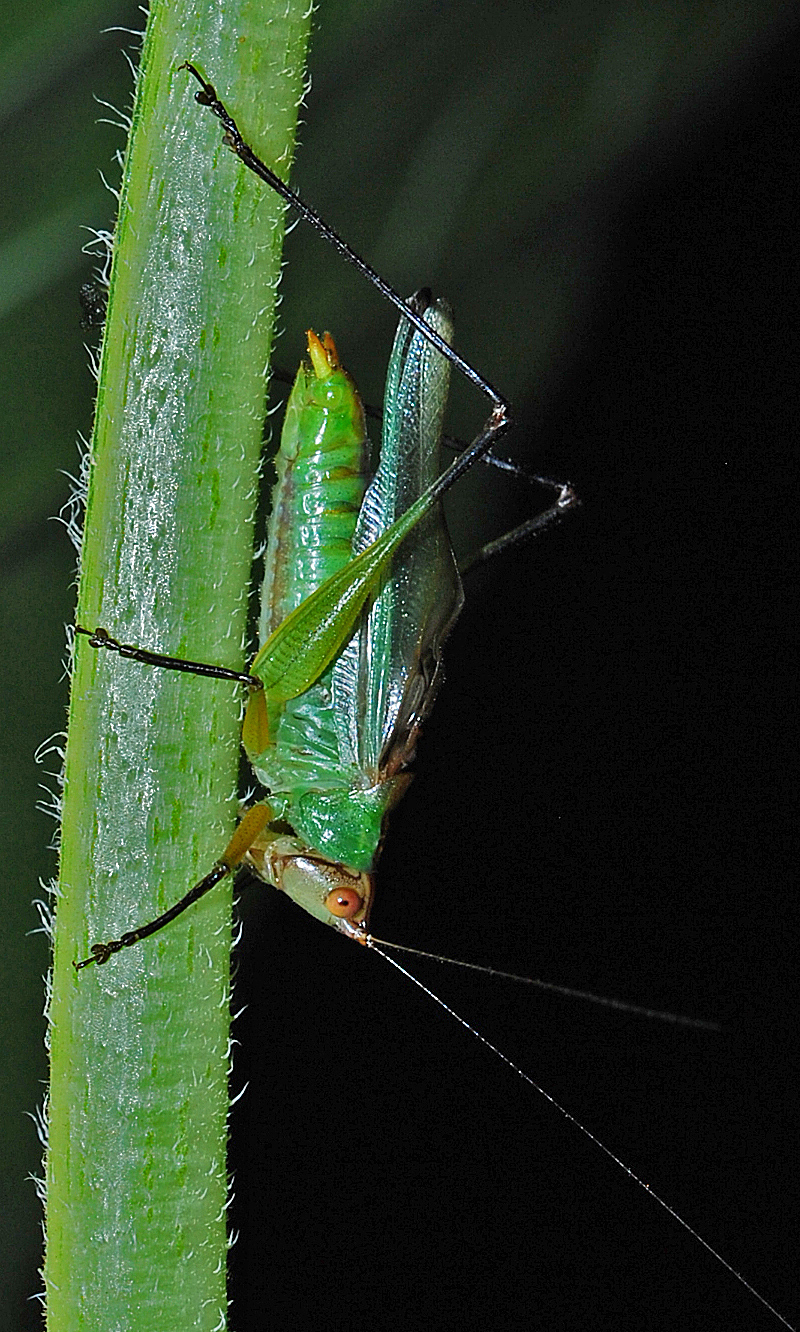
The black-legged greater meadow katydid thrives in low areas and near bodies of water in SNR

The prairie ragged orchid began to appear in old fields and prairie plantings where prescribed burning occurs at SNR. It has not been seen in fields maintained exclusively by mowing or haying.

The purple fringeless orchid surprised the restorationist and St. Louis area botanists by flowering in the SNR wetland area 17 years after the original sowing.

Copyright © James Trager 2010

Add to FacebookAdd to DiggAdd to Del.icio.usAdd to StumbleuponAdd to RedditAdd to BlinklistAdd to TwitterAdd to TechnoratiAdd to Yahoo BuzzAdd to Newsvine

Email to a friend

Great Plains Ladies’-tresses

First things first—everyone who participated in the quiz in the previous post correctly identified the orchid flower in the photo as belonging to the genus Spiranthes, and a few were on the right track with their species suggestion of S. cernua.  However, Scott Namestnik from Indiana and Doug Taron from Illinois, were the only ones who recognized it to be a close relative of that species, the recently-described S. magnicamporum.  Nice job!  The plants in these photographs were found during early October in the dry dolomite glades of White River Balds Natural Area in southwestern Missouri (part of Ruth and Paul Henning Conservation Area).  The creamy white inflorescences stood in stark contrast to the russet big bluestem (Andropogon gerardii) and rusty gold Indian grass (Sorghastrum nutans) stems that dominated the rocky landscape.

Spiranthes¹ is one of the more complex genera of North American orchids, seven of which are known to occur in Missouri (Summers 1985).  Spiranthes magnicamporum² is closely related to S. cernua and was only recently (1975) described as a distinct species.  Conclusive separation of the two species requires microscopic examination of the seeds (those of S. magnicamporum are monoembryonic, whereas a large percentage of the seeds of S. cernua are polyembryonic) (Luer 1975).  In the field, however, S. magnicamporum can generally be distinguished from S. cernua by its spreading rather than appressed lateral sepals and absence of basal leaves at the time of flowering³.  It is likely that many previous records of S. cernua in Missouri actually refer to this species, as both occur throughout much of southern Missouri and sporadically in northern Missouri (refer to the USDA Plants Database Missouri county level distributions for S. cernua and S. magnicamporum).  However, they are ecologically isolated in that S. cernua prefers wet lowlands with acidic soils, while S. magnicamporum is typically found in drier uplands with calcareous soils.  Both species are late-season bloomers, but S. magnicamporum blooms even later (mid-September into November) than S. cernua (mid-August to mid-October) and has more fragrant flowers.

¹ From the Greek speira—σπειρα,—”coil,” and anthos—ανθος,—”flower,” referring to the coiled or spiraled spike of flowers common in the genus.

² From the Latin magnus, “large,” and campus, “plain,” meaning “of the Great Plains” in reference to the primary geographic area where this species is found.

³ My identification of these plants as Spiranthes magnicamporum was confirmed by Dr. George Yatskievych, author of Steyermark’s Flora of Missouri.

Orchids as a whole exhibit highly specialized pollination biology, and species of Spiranthes are no exception, with the spiral arrangement of their flowers evidently an adaptation to pollination by long-tongued bees (e.g. bumblebees, Bombus spp., and megachilid bees) (van der Cingel 2001).  Flowers are protandrous, i.e., they are functionally male when they first open and become functionally female as they age, and open sequentially from the base, resulting in female flowers on the lower inflorescence and male flowers on the upper inflorescence.  Thus, bee pollinators tend to act as pollen donors when visiting lower flowers and pollen recipients when visiting upper flowers.  Pollinia from male flowers are attached to the bee’s proboscis as it tries to access nectar secreted into the base of the floral tube.  When visiting a plant, bees start at the bottom of the inflorescence and spiral up to the top before flying to the next plant.  The reasons for this behavior, called acropetal movement, are not fully understood but could be related to the tendency for nectar rewards to be greater in the lower flowers.  Whatever the explanation, the result is to promote outcrossing between neigboring plants.

While specific insect pollinators have been documented for a number of Spiranthes spp., apparently the only account of pollination in S. magnicamporum is documented by Jeffrey R. Hapeman, author of the website Orchids of Wisconsin:

I have seen a bumblebee (Bombus nevadensis ssp. americorum) pollinating Spiranthes magnicamporum in a prairie in southeastern Wisconsin. After visiting a number of inflorescences, the bee began to vigorously scratch at the pollinia on its proboscis, trying to remove them. The bee became so involved in trying to remove the pollinia that it fell to the ground, where it was easily captured. The specimen was determined by Steve Krauth, and is deposited in the Insect Research Collection at the University of Wisconsin-Madison. Apart from this observation, there are no published accounts of pollination of S. magnicamporum.

Photo details:
All photos: Canon 100mm macro lens on Canon EOS 50D (manual mode), ISO 100, MT-24EX flash w/ Sto-Fen diffusers.
Photo 1: 1/160 sec, f/14, flash 1/2 power.
Photo 2: 1/250 sec, f/16, flash 1/4 power.
Photo 3: 1/250 sec, f/20, flash 1/4 power.
Photo 4: w/ 36 mm extension tube, 1/250 sec, f/16, flash 1/8 power.

REFERENCES:

Luer, C. A.  1975.  The Native Orchids of the United States and Canada Excluding Florida.  The New York Botanical Garden, 361 pp. + 96 color plates.

Summers, B.  1981.  Missouri Orchids.  Missouri Department of Conservation, Natural History Series No. 1, 92 pp.

van der Cingel, N. A.  2001.  An atlas of orchid pollination: America, Africa, Asia and Australia. A. A. Balkema, Rotterdam, Netherlands, 296 pp.

Copyright © Ted C. MacRae 2009

Add to FacebookAdd to DiggAdd to Del.icio.usAdd to StumbleuponAdd to RedditAdd to BlinklistAdd to TwitterAdd to TechnoratiAdd to Yahoo BuzzAdd to Newsvine

Email to a friend

Friday Flower: Yes, it’s an orchid…

Photo details: Canon 100mm macro lens on Canon EOS 50D (manual mode), 36 mm extension, ISO 100, 1/250 sec, f/16, MT-24EX flash @ 1/8 power w/ Sto-Fen diffusers.

…but what kind? Identifying the genus should be relatively easy, but I suspect a species identification will be more of a challenge.  I’ll provide a little information and even a couple of literature sources that might be useful for achieving a specific determination.

  • Date of photograph: October 5, 2009.
  • Location: White River Balds Natural Area, Taney County, Missouri.
  • Habitat: Dolomitic limestone glade.

Answer and more photos will be posted shortly, so give it your best shot. Think big!

REFERENCES:

Luer, C. A.  1975.  The Native Orchids of the United States and Canada Excluding Florida.  The New York Botanical Garden, 361 pp. + 96 color plates.

Summers, B.  1981.  Missouri Orchids.  Missouri Department of Conservation, Natural History Series No. 1, 92 pp.

Copyright © Ted C. MacRae 2009

Add to FacebookAdd to NewsvineAdd to DiggAdd to Del.icio.usAdd to StumbleuponAdd to RedditAdd to BlinklistAdd to TwitterAdd to TechnoratiAdd to Furl

Answers to “Winter botany quiz #2”

Finally, I present to you the answers to “Winter botany quiz #2 “. The delay in providing these answers was two-fold. Firstly, I knew this would be a hard test, so I wanted to give people plenty of time to figure out the answers. Secondly, the answers were delayed an extra day due because of some debate that arose among the experts I consulted about – more on that below. I thank all those who participated, and while there was no clear-cut “winner”, several honorable mentions are deserved:

  • Doug Taron, who was the first to properly deduce the South African nature of these plants.
  • James C. Trager, a myrmecologist (yet still my friend!) who correctly identified the genus of .
  • Everyone, for guessing that was “an orchid” – although Tom @ Ohio Nature was the only one to use the formal scientific name for the family, and Doug Taron was the only one to attempt a generic identification (and came close – Oncidium and Ansellia are both assigned to the tribe Cymbidieae in the subfamily Epidendroideae).

Ornithogalum seineri (family Hyacinthaceae)
Ornithogalum is a large genus occurring mostly in the drier habitats of southern Africa and around the Mediterranean.  The genus and its relatives were formerly included in the Liliaceae (as many of the participants guessed), but the group is now given familial status as the Hyacinthaceae.  This genus contains numerous species of horticultural note.  One is (as James noted) O. umbellatum, or  “star of Bethlehem”, which in North America has escaped cultivation as a garden ornamental and gained status as an invasive weed.  Another is O. longibracteatum (syn. caudatum), a popular houseplant with the common name “pregnant onion”.  This species, native to the Cape and Natal Provinces of South Africa, is easily recognized by its bulb that “gives birth” to tiny replicas of itself just beneath a thin, transparent ‘onion’ skin (as shown in the photo at right from Trans-Pacific Nursery).  At flowering, a long spike grows from the center of the green strap leaves, eventually giving rise to a spearhead of tiny white flowers situated at the end.

While I couldn’t find much information about O. seineri, I did find this spectacular photo of numerous blooming plants in bushveld habitat amongst grazing zebra (photo by ingrid1968 in this post at SANParks.org Forum).  My view of this species was not quite so spectacular, as I saw only the lone plant in the photographs posted earlier.

Ansellia africana (family Orchidaceae)
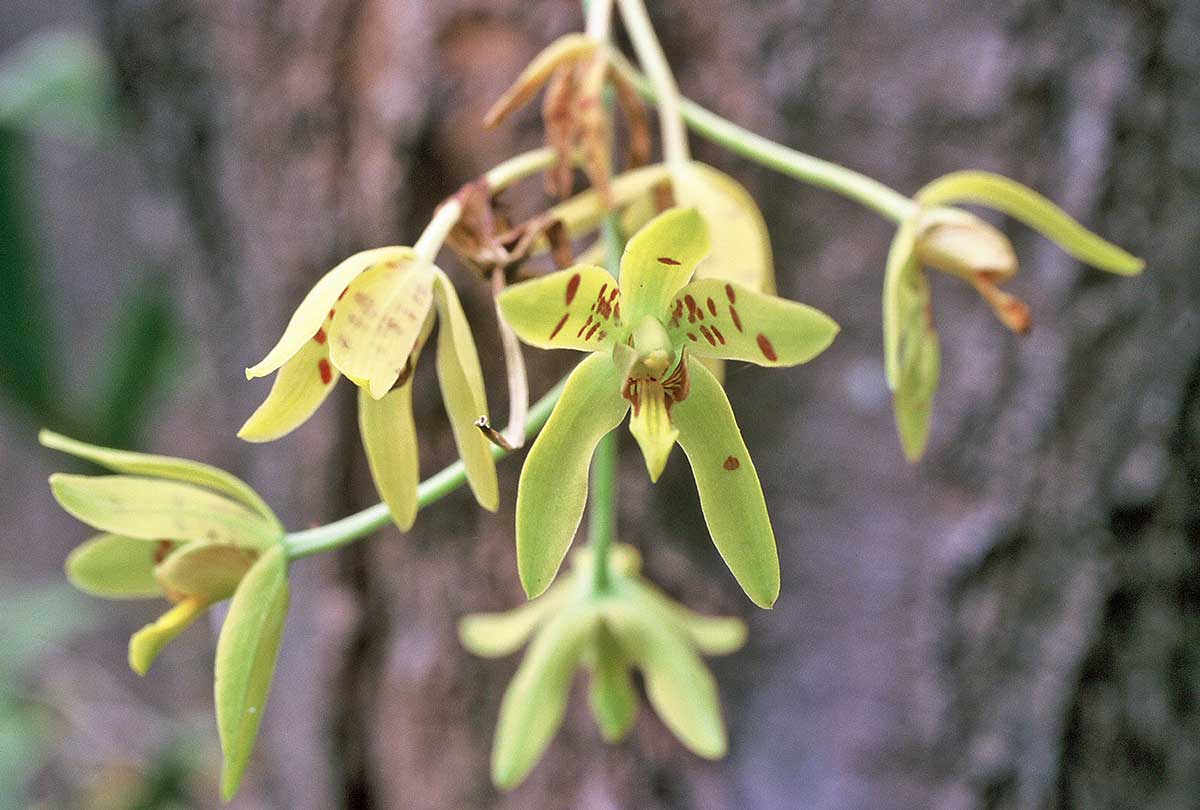
Ansellia is an African genus of orchid commonly called Leopard Orchid or African Ansellia.  There is some degree of morphological, geographical and ecological variation in Ansellia populations, with the result that several species, subspecies and varieties have been described.  Flower color varies from pure yellow to variably splotched with brown to almost completely black with finely indicated yellow divisions.  Recent taxonomic work has concluded that there are no discontinuities within the spectra of variations exhibited and the populations are thus attributable to the single, polytopic species, A. africana (Khayota 1999).

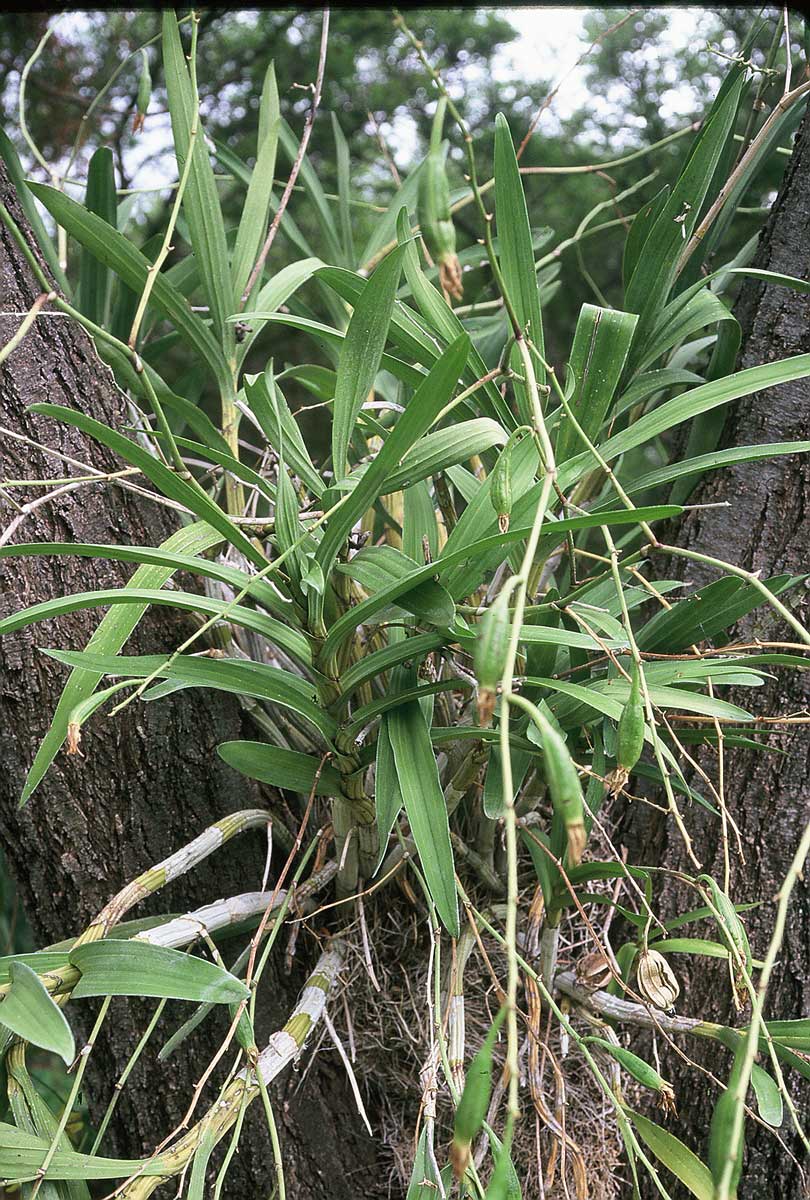
Ansellia africana is a large, perennial, epiphytic species that usually grows attached to the branches of tall trees but is sometimes found growing on rocks.  This genus is immediately recognizable by its large, cane-like pseudobulbs that arise from a basal rhizome and is notable for the white, needle-like, upward pointing aerial roots that form a sort of “trash basket” around the clump.  The term is surprisingly appropriate, since the root basket seems to function in catching dropping leaves, flowers and detritus which provide nutrients for the plant as they decay.  This species can grow to enormous size and often forms spectacular clumps, some of which have an estimated weight of more than one ton.

Of the three plants featured in the quiz, this was the one I expected someone would guess, since the species is popularly cultivated by orchid enthusiasts.  Unfortunately, the pressures of wild collection for commercial purposes has caused declines in its population.  The problem is exacerbated by the unsustainable methods use to harvest, transport, and cultivate wild-born plants.  Host trees are usually cut down and sections with the orchid removed, resulting in wholesale destruction of both orchids and hosts. After harvesting, plants are cut up and transported slowly in open handcarts, to be sold along roadsides where they may sit exposed to full sun for days or weeks.  Cutting the clumps damages the roots, and exposure results in dessication, making it difficult for harvested plants to recover once in cultivation.  Plants that do survive harvest and transplant suffer high mortality rates in cultivation due to improper attention to light and moisture regimes.

. Adenia sp., poss. glauca (family Passifloraceae)
To be completely honest, not only did I not expect anyone to guess this one, I didn’t think I was even going to be able to provide an answer. I sent the photos to my friend and colleague, George Yatskievych, director of the Flora of Missouri Project (and author of the recently published Steyermark’s Flora of Missouri, 1999 and 2006), who forwarded the photographs to several more colleagues, and at the same time I posted the photos on SANParks.org Forum (a fantastic resource, which I just recently discovered myself, for those interested in South Africa National Parks and their natural history). It took some time for these sources to weigh in with their opinion, which in the end were in agreement that it represented a species of African passion flower in the genus Adenia of the family Passifloraceae (not to be confused with Adenium, a genus of flowering plants in the family Apocynaceae – also occurring in Africa). As for which species, the choices had been narrowed down to either A. glauca or A. fruticosa. According to Imberbe, a photo of the leaves would have been diagnostic, and the flowers are also different (A. glauca has yellow flowers while those of A. fruticosa are green). Fred Dortort, in an article on the University of California at Berkely Botanical Garden website titled, “Passion and Poison“, notes that A. fruticosa has a tall, spindle-shaped caudex topped with a few thin, sparsely-leafed, arching branches, while in A. glauca the caudex is roughly globose and can become quite large. This description seems to favor A. glauca, which Imberbe also noted was known to occur in the area where I took the photographs.

Species identification aside, the genus Adenia is notable for its bizarre adaptations for water storage. Most of the 100 or so species in this Afrotropical and Indomalaysian genus have underground tubers. Those of species adapted to drier environments have grown proportionately larger, with some turning into above ground caudices that can take several different forms and that, in some species, may reach up to eight feet in diameter and height. Even more notable than these succulent adaptations are the poisonous properties that many plants in the genus possess. Not all species have been analyzed (and I found little or conflicting information about A. glauca and A. fruticosa), but one species in the genus – A. digitata – has gained notoriety as perhaps the most poisonous plant in the world. Two different toxins are found within its tuber, one a cyanogenic glycoside, the other a particularly potent toxin called modeccin. The latter is a 57kD protein that resembles ricin and acts a powerful inhibitor of protein synthesis by binding to ribosomes (Gasperi-Campani et al. 1978). Imberbe, in her comments about the photos I posted on SANParks.org Forum, noted the following about plants in this group:

…take heed of the Afrikaans name “Bobbejaangif” (Baboon poison)… It has been used as a fish poison, as well as in suicide and murder. It causes nausea, fits and liver and kidney damage.

REFERENCES:

Gasperi-Campani, A., L. Barbieri, E. Lorenzoni, L. Montanaro, S. Sperti, E. Bonetti, & F. Stirpe. 1978. Modeccin, the toxin of Adenia digitata. Biochemistry Journal 174:491-496.

Khayota, B. N. 1999. Notes on systematics, ecology and conservation of Ansellia (Orchidaceae), pp. 423-425. In: J. Timberlake & S. Kativu (eds.), African Plants: Biodiversity, Taxonomy and Uses, Royal Botanic Gardens, Kew.

Copyright © Ted C. MacRae 2009

Add to FacebookAdd to NewsvineAdd to DiggAdd to Del.icio.usAdd to StumbleuponAdd to RedditAdd to BlinklistAdd to Ma.gnoliaAdd to TechnoratiAdd to Furl

Winter botany quiz #2

In the first winter botany quiz, I learned that I have some rather astute botanists amongst my readership. They were not only able to quickly identify to species every plant I had pictured but also identify their commonality, sometimes from quite afar. As a result, this one is harder.  I use the term “winter botany quiz” in the broadest possible sense – just because it’s winter here doesn’t mean it’s cold everywhere! All of the photos were taken in the same general (for now unspecified) locality during late November and early December (this paragraph simply reeks of clues!).

To give everyone a fair chance, I’ve turned on comment moderation so people can submit their answers without seeing what has already been submitted.  I’ll remove moderation after a couple days or so.  First one with all the right answers wins the admiration and jealousy of their peers!

424046-r1-e018_018_21

#1A

424046-r1-e019_019_21

#1B - closeup of flowers in #1A

424046-r1-e020_020_2

#2A

424046-r1-e021_021_2

#2B - closeup of flowers of #2A

424046-r1-e022_022_2

#3A - the vine, not the trees

424046-r1-e023_023_2

#3B - closeup of vine base

Copyright © Ted C. MacRae 2009

Add to FacebookAdd to NewsvineAdd to DiggAdd to Del.icio.usAdd to StumbleuponAdd to RedditAdd to BlinklistAdd to Ma.gnoliaAdd to TechnoratiAdd to Furl