Living at the foothills of the Ozark Highlands, I sometimes forget how unique the biota of this ancient landscape truly is. More than 200 species of plants and animals are largely restricted to the region, with around 160 of these being true Ozark endemics found nowhere else on earth. The biodiversity of the region stems from the landform’s unusual geology, topography and hydrology, it’s ectotonal position within the North American continent, and its distinction as the only significantly elevated landform between the Appalachian and Rocky Mountains. Many Ozark endemics are found in the region’s abundant caves and sinkholes, formed by underground dissolution of its massive limestone/dolomite bedrocks. Others represent isolated populations of more typically northern plants and animals that found refuge here during the Pleistocene glacial advances. Still others evolved during periods of isolation when vast inland seas covered much of the continent’s interior.

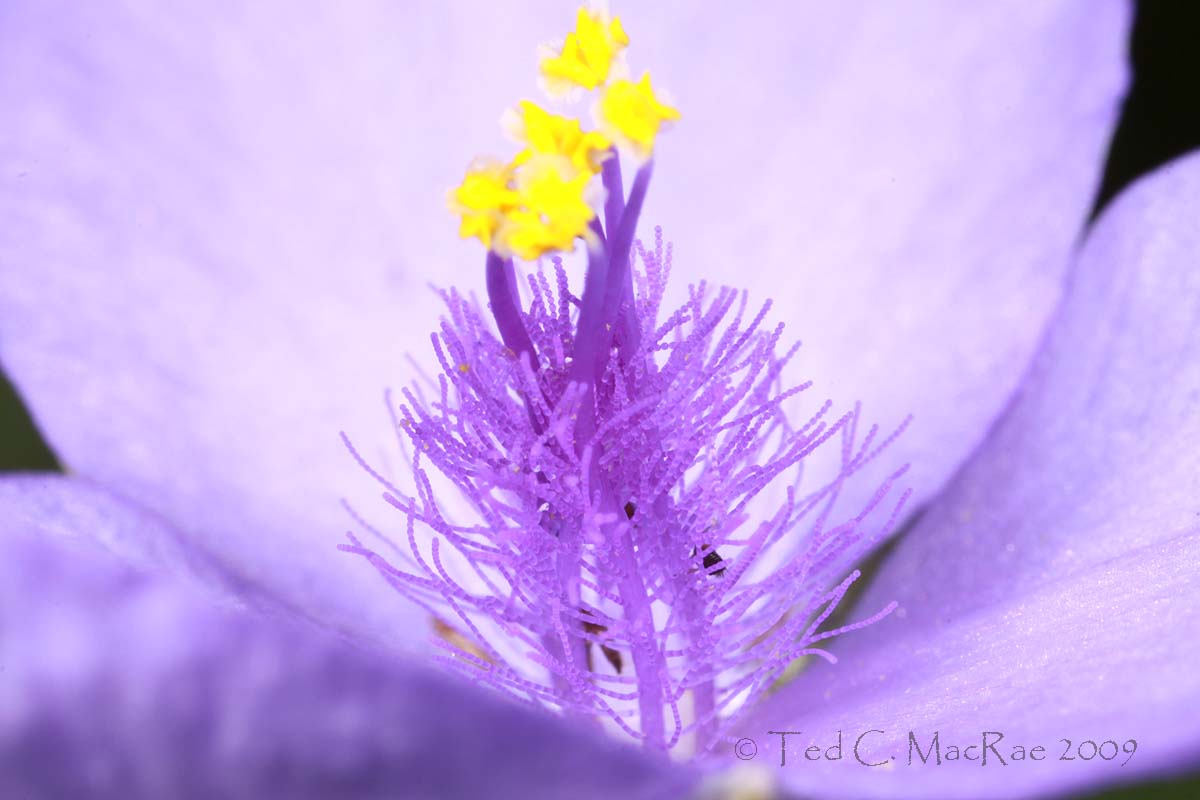
Tradescantia longipes, known locally as dwarf spiderwort or wild crocus, is a particularly exquisite Ozark endemic found scattered in dry igneous woodlands of the Missouri’s St. Francois Mountains and Arkansas’ Ouachita Mountains. I first saw this species two years ago in May at Crane Lake in the heart of the St. Francois Mountains, and the plants shown here were seen this past April in the igneous woodlands of Sam Baker State Park at the southernmost extent of the St. Francois Mountains’ igneous exposures. The genus to which this plant belongs contains some much more widely distributed (though no less striking) members (e.g. T. ohioensis, which I featured in my first “Friday Flower” post). Tradescantia longipes flowers are similar to those of T. ohioensis, but the plant differs from most others in the genus by its short, squat habit of growth and strictly basal leaves.
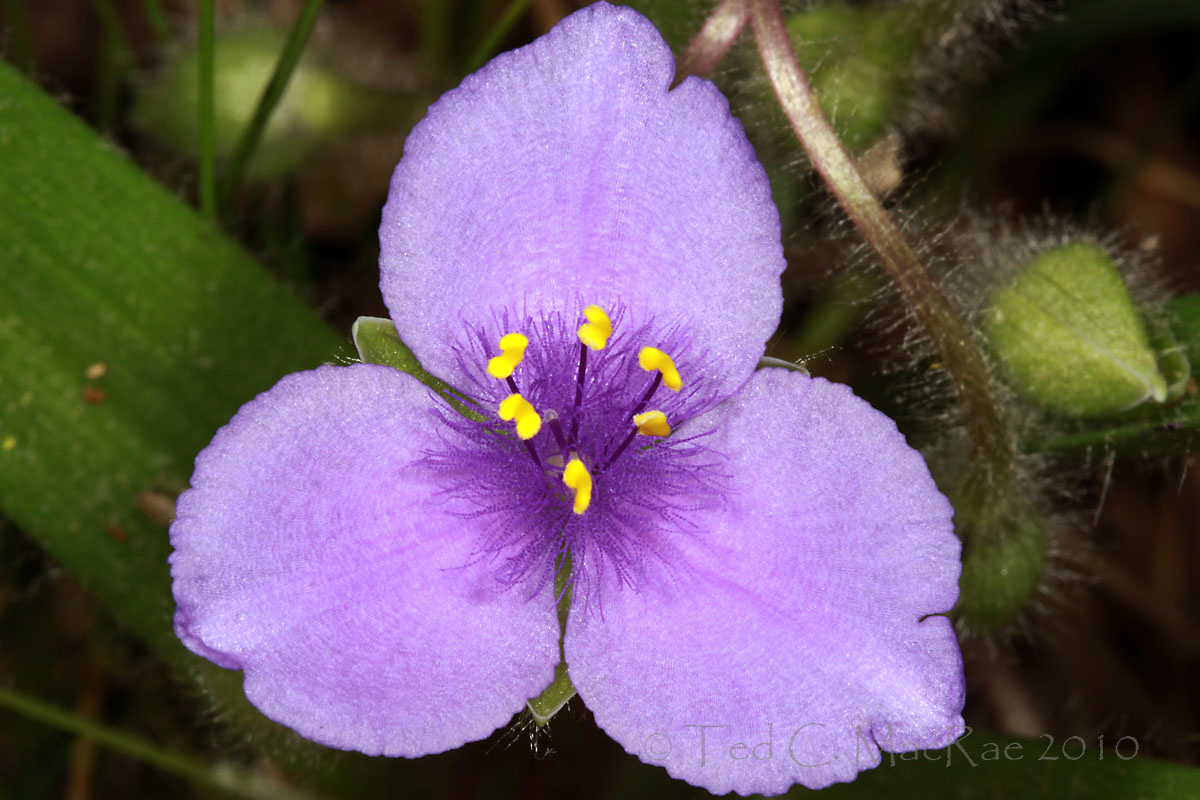
One feature shared by T. longipes with all other members of the genus is the dense fringe of hairs arising from the stamen filaments. I discussed these in my first Friday Flower post, noting that each of the 70-100 hairs per filament is composed of a chain of about 20 large, single cells – easily seen with low magnification. While their sensitivity to radiation and chemical mutagens has been recognized for many years (the hairs turn pink when exposed to radiation), less seems to be known about their natural function for the plant. It is interesting to note, however, that the flowers of Tradescantia and related genera rely heavily on insects for pollination (primarily bees and bee flies), yet they do not produce nectar. Faden (1992) has speculated that the stamen hairs might combine with floral scents and the nearly pollenless anthers to deceptively attract insects, provide footholds, retain pollen fall, and influence the pollen-collecting behavior of the insects.
Photo Details: Canon 50D (ISO 100, 1/250 sec, f/14-18), Canon 100mm macro lens, Canon MT-24EX flash (1/4 ratio) w/ Sto-Fen diffusers. Post-processing: levels, unsharp mask, minimal cropping.
REFERENCE:
Faden, R. B. 1992. Floral attraction and floral hairs in the Commelinaceae. Annals of the Missouri Botanical Garden 79(1):46–52.
Copyright © Ted C. MacRae




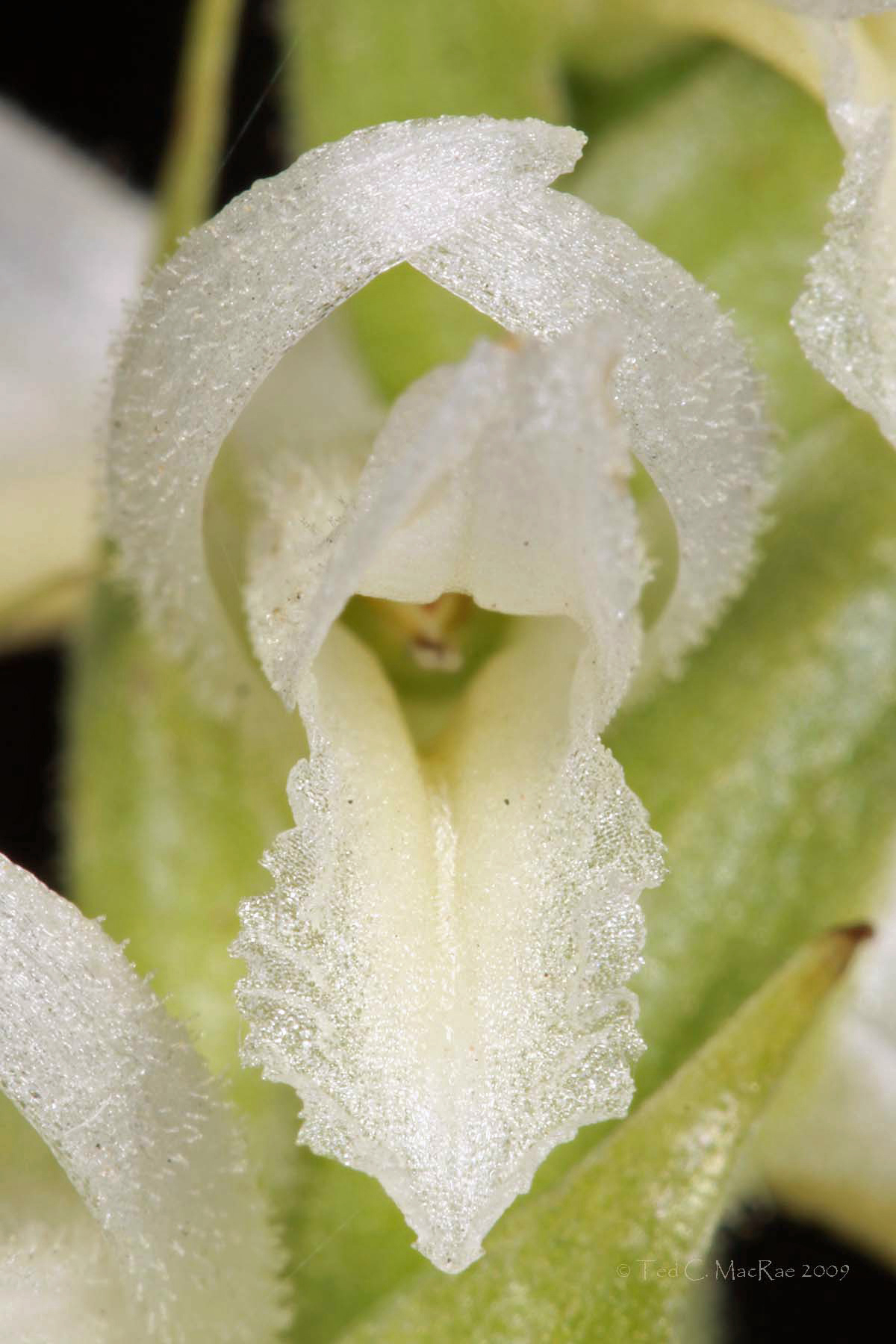
 Spiranthes¹ is one of the more complex genera of North American orchids, seven of which are known to occur in Missouri (Summers 1985). Spiranthes magnicamporum² is closely related to S. cernua and was only recently (1975) described as a distinct species. Conclusive separation of the two species requires microscopic examination of the seeds (those of S. magnicamporum are monoembryonic, whereas a large percentage of the seeds of S. cernua are polyembryonic) (Luer 1975). In the field, however, S. magnicamporum can generally be distinguished from S. cernua by its spreading rather than appressed lateral sepals and absence of basal leaves at the time of flowering³. It is likely that many previous records of S. cernua in Missouri actually refer to this species, as both occur throughout much of southern Missouri and sporadically in northern Missouri (refer to the




 Beetles In The Bush