T.G.I.Flyday – Andrenosoma fulvicaudum

Andrenosoma fulvicaudum | Stone Co., Arkansas

First, about the name. T.G.I.Flyday is my contribution to a collusional triad between dipterist Morgan Jackson, myrmecologist Alex Wild, and myself (uhm, beetles).  Although Alex blogs primarily about ants, he has long featured a “Friday Beetle Blogging” series.  I’ve also occasionally stepped on their toes with an ant or fly post, so Morgan and I thought it would be fun to complete the Friday switcheroo with a post about ants on his blog and one about flies on mine. Get it?… Oh well, it made me chuckle when we thought it up.  Anyway, here is my first T.G.I.Flyday contribution.

Among the flies (order Diptera), it is hard to pick anything but robber flies (family Asilidae) as the most charismatic group.  Several subfamilies of robber flies have candidates that vie for the most impressive species, mostly due to their enormous size combined with striking green eyes (e.g., Microstylum morosum, Diogmites neoternatus) or vivid, aposematic / mimetic coloration (e.g., Archilestris magnificus, Eccritosia zamon, Wyliea mydas).  However, my favorite subfamily is the Laphriinae—not because of the amazing bumble bee-like appearance of the nominate genus, but rather the larval food of all species in the subfamily; wood-boring beetle larvae.  Over the years, I have put up hundreds of batches of dead wood for rearing wood-boring beetles in the families Buprestidae and Cerambycidae, and not uncommonly do I find in one of the emergence containers—especially those containing dead pine—an adult of one of these impressive flies. Oftentimes their characteristic pupal cases will be found protruding from the emergence hole, in which case I pin it underneath the fly (just in case some ambitious dipterist examines my collection after I’m gone and finds that the pupal case of xx species is not yet described).  I’ve by now accumulated a rather decent little robber fly collection (especially considering that I’m really a coleopterist), graciously identified for the most part by world robber fly expert Dr. Eric Fisher (California Department of Food and Agriculture).

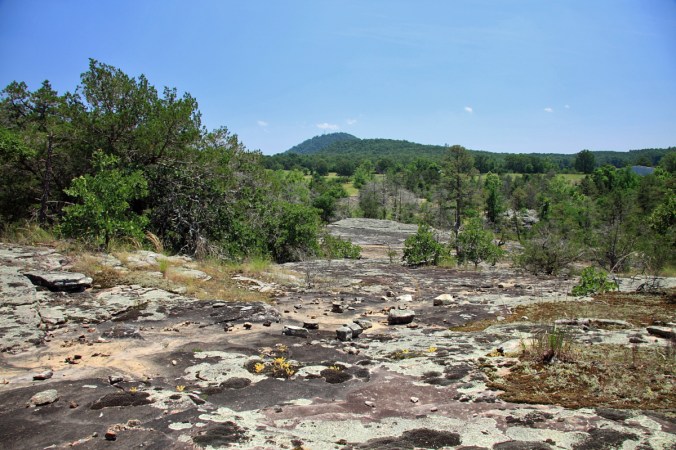
Last weekend I made the second in a series of trips I’ll be taking to the White River Hills region of north-central Arkansas in an effort to confirm the occurrence there of Cylindera celeripes (swift tiger beetle).  My efforts are focused on the area around Calico Rock, a marvelous system of acidic sandstone barrens interspersed amongst shortleaf pine and oak forests.  The occasional dead pines found in such areas are highly attractive to a variety of pine-associated buprestids and cerambycids (my first loves), and whenever I see a standing dead tree I make a beeline straight for it (the tiger beetles can wait).

This individual was sitting on the trunk of a dead shortleaf pine with a mirid bug for prey.

On this day, sitting on the trunk of the first dead pine that I approached was not a buprestid or cerambycid, but rather this laphriine robber fly.  Based on the reddish posteriodorsal markings of the abdomen and general gestalt, I take this to be Andrenosoma fulvicaudum, a widespread though never very abundant species that occurs across most of North America.  According to Bromley (1934), the species frequents dry, sandy locations where it rests on logs, stumps, or tree trunks exposed to the bright sunlight and is commonly observed preying on small hymenopterans.  These observations are quite consistent with mine, except this one was feeding on a true bug in the family Miridae (perhaps distracting it just enough to allow me these photographs).  Cannings (1998) notes that A. fulvicaudum is attracted to recently burned forests, which will provide a fresh supply of wood-boring beetle larvae on which its larvae can prey.  This is the only species of Andrenosoma occurring in eastern North America; four additional species are restricted to Texas and a fifth occurs only in the western U.S., but the genus reaches its greatest diversity in the Neotropics.

REFERENCES:

Bromley, S. W. 1934. The Laphriine Robber Flies of North America.  Ph.D. dissertation, Ohio State University, 358 pp.

Cannings, R. A. 1998. Robber flies (Insecta: Diptera: Asilidae), In I. M. Smith and G. G. E. Scudder [Eds.], Assessment of Species Diversity in the Montane Cordillera Ecozone, Burlington: Ecological Monitoring and Assessment Network.

Copyright © Ted C. MacRae 2011

Sugarcane Weevil in Brazil

Sphenophorus levis (sugarcane weevil) | Conchal, Brazil.

Brazil is one of the world’s top producers of sugarcane, and they have the Middle East to thank for it.  While the U.S. was responding to the 1973 OPEC oil embargo by building bigger and bigger SUVs, Brazil aggressively developed an alternative fuels industry based on sugarcane for ethanol production.  Today, about half of Brazil’s sugarcane is milled for ethanol, yet despite this enough raw sugar is produced from the remaining sugarcane crop to rival India as the world’s top producer.

The large acreage devoted to sugarcane and tropical climate in which it is grown make Brazil’s crop especially vulnerable to infestation by insect pests—and there are many!  One of the most important is Sphenophorus levis (sugarcane weevil, or “bicudo da cana-de-açúcar”).  Larvae bore in the roots and crown of the plant, reducing biomass accumulation and longevity.  This feature of the insect’s biology also makes the larvae extraordinarily difficult to control, since they are largely protected from chemical applications by surrounding plant tissues.  This adult beetle was captured in a field trap placed in a sugarcane field in Conchal, approximately 175 km N of São Paulo.  The traps consist of split sugarcane stalks buried under debris within crop rows—adults are attracted to the cut surface of the stalks, where they congregate in numbers.  Traps are used not only to monitor beetle occurrence and abundance in fields, but also to provide a source of insects for laboratory rearing and evaluation of control test agents.

Copyright © Ted C. MacRae 2011

Tracking Tetraopes texanus with Terry

Last month I traveled to Starkville, Mississippi to meet with an academic cooperator at Mississippi State University.  While arranging the trip, I contacted Terry Schiefer (no, not the fashion jewelry designer, but curator at the Mississippi Entomological Museum) to let him know I would be visiting.  Considering that late May should be pretty good insect collecting in that area, I wanted to see if he might be interested in doing a little beetle collecting after I finished up with my meetings.  Terry also specializes in Coleoptera and shares with me an interest in the taxonomy and faunistics of Cerambycidae and Cicindelinae.  I first met Terry some 13 years ago during my previous visit to MSU; I remember ogling at an impressive series of Aegomorphus morrisii, a spectacular species of longhorn beetle that was known at that time by precious few specimens and that he had recently found in Mississippi.  We hadn’t seen each other since but managed to keep in contact with occasional correspondence during the course of our longhorn studies.

Me & Terry Schiefer | Noxubee National Wildlife Refuge, May 2011.

Terry was more than happy to go beetle collecting with me, and among the possibilities that he mentioned when I arrived at the museum was nearby Noxubee National Wildlife Refuge.  I had done a little collecting there on my last visit, but I was especially intrigued when he mentioned the local population of an uncommon milkweed beetle species, Tetraopes texanus, that he had reported in one of the refuge’s prairie remnants (Schiefer 1998).  I have only seen this species once, up here in in east-central Missouri and which I reported as the species’ northernmost known population (MacRae 1994).  My more recent attempts to find this species have not been successful, so I was excited at the chance to see this longhorned species once again.

We arrived at the prairie with plenty of daylight to spare and began walking through the area where Asclepias viridis (its presumed host in Mississippi; in Missouri I found it on Asclepias viridiflora) was growing.  Typically milkweed beetles are quite approachable, having nothing to fear from predators by virtue of the cardiac glycosides that they sequester in their bodies from their milkweed foodplants and advertise so conspicuously with their bright red and black coloration.  Thus, we were looking for beetles sitting brazenly on the plants, but none were seen.  Eventually, Terry saw one in flight, and then I saw one in flight as well.  For some time, this was the only way we were seeing the beetles, and only by slowing down and scanning the prairie vegetation more carefully and deliberately did we begin to see the adults sitting on vegetation.  Interestingly, very few of them were seen actually sitting on milkweed plants.  Rather, they were on all manner of other plants, and they were very quick to take flight on our approach.  This was playing havoc with my desire to get field photographs of the beetles, especially field photographs on the host.  I decided that any photograph—host plant or not—was better than none, so I began attempting some shots.  My first one didn’t work out so well:


Finally I was able to get one of the beetle sitting on a plant, but the dorsal characters can’t be seen, nor is there anything about the photo that allows the species to be distinguished as T. texanus (the abruptly attenuate last antennomere distinguishes it from similar-appearing species):


Progress—more of the dorsal surface can be seen in the photo below, and the beetle is actually sitting on a milkweed plant.  However, the antennal tips are still frustratingly out of focus.  Note the completely divided upper and lower lobes of the eye—Tetraopes beetles give new meaning to the term “four-eyes”:


I chased beetle after beetle in flight, endlessly zigzagging across the prairie in what had to be a spectacle to any unknown observer.  Eventually, we found a beetle sitting on its host plant, and it remained calm during my deliberate approach.  I circled around for a good view of the dorsal surface and snapped off an apparent winner—everything in focus, good composition… but arghh, the antennal tips were clipped!


I kept at it and was about to back off a bit on the magnification and switch to landscape mode so I could get the full antennae in the frame when the beetle turned in a most fortuitous manner—nicely positioning its distinctive antennal tip right in front of a bright green leaf for contrast.  My friends, I present Tetraopes texanus on its presumed host plant, Asclepias viridis!


Terry and I were both puzzled by the flighty, nervous behavior that the beetles were exhibiting.  Neither of us had seen such behavior with milkweed beetles before, and I’m not sure I can offer any explanation for such.  I’d be interested in hearing any ideas you might have.

My thanks to Terry for showing me a few of his favorite spots (allowing me to collect a few choice species of longhorns), and to my co-worker/colleague Jeff Haines for indulging my desire mix a little beetle collecting into the business trip.  I hope they enjoyed it as much as I did.

REFERENCES:

MacRae, T.C. 1994. Annotated checklist of the longhorned beetles (Coleoptera: Cerambycidae and Disteniidae) occurring in Missouri. Insecta Mundi 7(4) (1993):223–252.

Schiefer, T.L. 1998. Disjunct distribution of Cerambycidae (Coleoptera) in the black belt prairie and Jackson prairie in Mississippi and Alabama. The Coleopterists Bulletin 52(3):278–284.

Copyright © Ted C. MacRae 2011
Bichos Argentinos #14 – Flies!

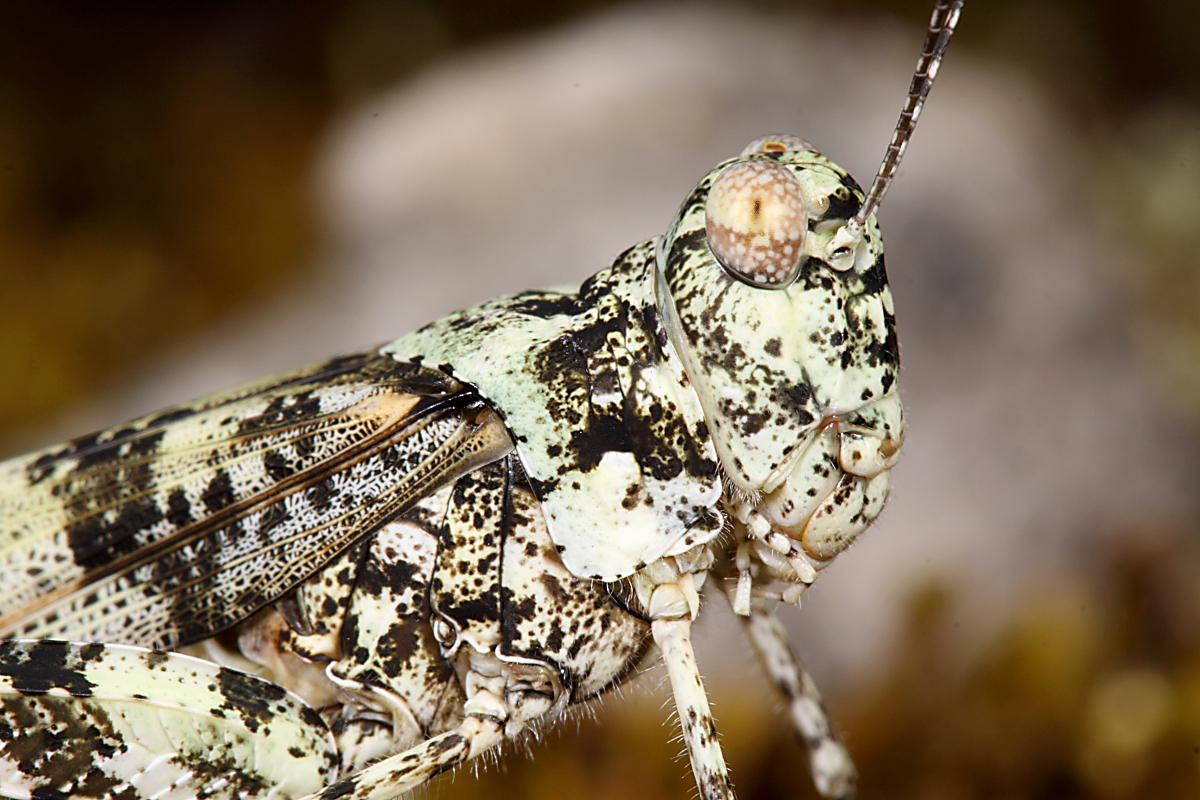
A few miscellaneous fly photos from La Reserva Ecológica Costanera Sur (Buenos Aires, Argentina)  taken last March.  I don’t have IDs except provisionally to family (let’s face it—flies are hard!).

I suppose something in the Tachinidae, based on the black and white striped coloration and distinct abdominal setae.


Definitely a robber fly (family Asilidae), but which one?


I suppose this is some kind of bottle fly (family Calliphoridae).


Nice eyes!


Copyright © Ted C. MacRae 20011

Brazil Bugs #16 – Royal Moth Larva

Citheronia laocoon? 1st instar larva | Campinas, Brazil

I was sure Super Crop Challenge #6 would be a win for the house, but Troy Bartlett scored an impressive points sweep by correctly deducing that the structures shown were the spines of an early instar caterpillar of “something akin to a hickory horned devil (Citheronia regalis).”  I found this caterpillar feeding on the foliage of a small tree in the Ciudad Universitaria (Distrito Barão Geraldo) area of Campinas, Brazil last January.  I must confess that I spent considerable time trying to identify it myself before I finally threw in the towel and called on the experts for help.  The spines made me think it must be some kind of nymphalid butterfly larva, although I had never seen such “fly swatter” clubs at the ends of the spines, so I sent the photo to Phillip Koenig, a local butterfly expert who has collected extensively in Ecuador.  He, too, was puzzled and forwarded the photo to Charley Eiseman, who himself didn’t know what to make of it and forwarded it on to Keith Wolfe, a lepidopterist who specializes in butterfly immatures.  After stumping his Brazilian contacts, Keith had the idea that perhaps it wasn’t a late-instar larva—as we all had assumed (this larva was a good 15–20 mm in length), but rather one in an early stadium.  A quick search of several standard websites revealed this to be the L1 or L2 larva of a species of Citheronia (Saturniidae, Ceratocampinae).  To support his ID, he provided links to larval photos of C. splendens (Arizona) and C. lobesis (Central America).  The L1 larva of both of these species bears the same “fly swatter” spines, and the latter is remarkably similar in color pattern as well.

In trying to determine what species of Citheronia occur in southeast Brazil, I came across this link with photos of a caterpillar from southern Brazil—the L1 looking nearly identical—that was eventually identified as the common Brazilian species C. laocoon.  Troy suggested C. brissotii—another good possibility as that species is found from southeastern Brazil through Uruguay to Argentina.  However, in perusing a number of online sources, it appears there are several other species of Citheronia that also occur in Brazil, so a species ID for the larva in this photo may not be possible.

Troy’s win vaults him into 3rd place in the current session overalls, but steady Tim Eisele took 2nd place with 6 pts and takes over the session lead.  Newcomer Roy rounds out the podium in 3rd place with 5 points.  Dave’s pity points are nothing to sneeze at, as they helped him retain sole possession of 2nd place in the overall standings (let that be a lesson to those who don’t play because they’re “stumped”!).  There will be at least two more challenges in the current session before a winner is crowned, so look for an opportunity to shake up the standings in the near future.

Copyright © Ted C. MacRae 2011

Super Crop Challenge #6

I thought I had everyone stumped in Super Crop Challenge #5, but Dave took advantage of the extended answer period and cracked the code for a solo win and the lead in the current session.  For this edition of Super Crop Challenge, I offer the following impossibly cryptic crop of a photo I took this past winter.  The organism is from Brazil, but that’s no excuse for punting since there are very similar North American counterparts.  Points for order, family, genus and a possible species ID are all up for grabs, as are the structures and specific life stage to which they belong.

Standard challenge rules apply, including moderated comments (to give everyone a chance to take part) and possible bonus points for being the first to guess correctly (in the off chance multiple people offer the same correct answers) or for making me chuckle.  Reminder: nobody walks away with no points, so it pays to try even if you haven’t a clue!

Copyright © Ted C. MacRae 2011

My Dad (reprise)

I first wrote this post on Father’s Day 2008. It didn’t appear on Beetles in the Bush, but rather my other blog, the now largely defunct Bikes Bugs and Bones.  My dad is my hero, my confidant, and my best friend.  It’s hard watching him age, but it would be even harder not to.  I repost on this day in his honor and urge everyone to honor their own father is some small way.  Happy Father’s Day!

Me and my dad | Pickle Springs Natural Area, St. Genevieve Co., Missouri, Dec. 2007

My dad had knee replacement surgery a couple days ago. The surgery went off without a hitch, and he’s doing very well. All signs are that he will bounce back quickly and suffer few, if any, complications. I’ve spent much of the past three days here at the hospital—sometimes providing support and encouragement, other times just keeping him company. He should be released tomorrow, and I’ll spend the rest of the week with him at his house—hopefully he’ll be able to get around okay by then.

Some thirty years ago, my dad got an infection that settled in his left hip. By the time doctors found it and figured out what was going on, his left hip socket had degenerated badly, and the only medical option after cleaning up the infection was a year in a full body cast that resulted in fusion of the socket with the femoral head. This left him with a left leg two inches shorter than his right, a bad limp, and a lifetime of pain medications. His right leg became his ‘good leg’ and his left became the ‘bad.’ Decades of walking with a cane and favoring his bad leg put a lot of pressure on his good leg, and at age 73 his right leg had had enough. Now, his good leg is his bad leg, and his bad leg is, well, still his bad leg. This will add a wrinkle to his recovery, since he won’t have a healthy leg to carry the load while his good leg recovers. But I will be there to help, if needed, and in a few weeks his good leg should be good as new.

My dad is not only my dad, but also my best friend. We have a relationship that is based on mutual love and respect, and I don’t know which of us appreciates more what we have with each other. It wasn’t always this way—my dad and I were estranged for 25 years starting when I was 10 years old. My parents married far too young, and each had their own issues—they were but children themselves. Having first me, then my brother and sister, only delayed but could not prevent the inevitable break up that resulted in my fathers absence. I paid a heavy price by not having a father during those crucial, formative years as I finished growing up, but I seem to have turned out okay regardless. It would take many years before I would be ready for something so bold as reconciliation, but maturity and the support of a loving wife eventually made it possible. There were difficult questions to answer, but through it I realized that my father had paid a heavy price as well. Not the selfish irresponsible man I had been taught about, instead I saw a sensitive, deeply introspective man who had lived a life of hard knocks, suffered the consequences, learned from his mistakes and turned his life around.

My dad loves to ride bikes. I do too, but I did not learn the love of cycling from him. My dad is simple yet elegant, with an understated class that people adore. I, too, try to show respect and modesty, but I did not learn these things from my father. We both love classical music (he can live without the metal), listen to NPR, and enjoy humor with more than a touch of irreverence—tastes acquired by each of us before we knew each other. What I have learned from my father during these past 15 years is why I am me—a gift I didn’t know I lacked. I don’t mourn the loss of those 25 years spent without my father, rather I rejoice at the very special relationship that we now have—perhaps possible only because of our separate pasts. My father describes that year in a body cast as the darkest period of his life. I did not know him then, so I could not be there to help him through it. While his recovery from knee replacement will not be near that ordeal, neither will it be easy. But I am here with him, and I know in my heart that whatever difficulties he faces during his recovery, he will look back on this as a small part of the best time of his life.

Copyright © Ted C. MacRae 2008

Forgotten Foto Friday: Eudioctria sp.

Eudioctria sp. | Shaw Nature Reserve, Gray Summit, Missouri

In keeping with my recent theme featuring insects from Shaw Nature Reserve, I present here a long-forgotten photograph that I took back in May 2009.  In fact, not only was this photo taken on the maiden voyage of my Canon dSLR setup, but it is the very first photograph of an insect that I took with the camera—image #19 (1-18 were the initial test shots and a few immediately discarded photos).  It won’t win any awards, but it’s not a bad photo, and the fact that I immediately began attempting shots with the lens dialed all the way up to 1:1 shows I had no qualms about going for broke.

As best I can tell, this is a member of the robber fly genus Eudioctria in the subfamily Stenopogoninae.  Species in this genus are among the tiniest of North American robber flies,  measuring only 6–8 mm in length (compare this with the spectacular 35–40 mm length of North America’s largest robber fly).  They superficially resemble species of the unrelated genus Cerotainia (subfamily Laphriinae) but lack the extra-long antennae. According to Norman Lavers (The Robber Flies of Crowley’s Ridge, Arkansas), Eudioctria can also be distinguished behaviorally, as it prefers flat leaves at the top of small shrubs, while Cerotainia tends to perch on twig-ends.  Eudioctria is primarily a western U.S. genus, although four of its 14 species (albius, brevis, propinqua, tibialis) occur in the eastern states (Adisoemarto and Wood 1975).  I can’t possibly determine which of those four species this individual represents, as to do so requires examination of facial gibbosities and judgements about the degree to which various body parts are pollinose(?)—perhaps I should stick with beetles!

REFERENCE:

Adisoemarto, S. and D. M. Wood.  1975.  The Nearctic species of Dioctria and six related genera (Diptera, Asilidae).  Questiones Entomologica 11:505–576.

Copyright © Ted C. MacRae 2011