Best of BitB 2011

Welcome to the 4th Annual BitB Top 10, where I get to pick my 10 (more or less) favorite photographs of the year. As an insect macrophotographer I still feel like a relative newcomer, although with three seasons under my belt fewer and fewer people seem to be buying it anymore. Granted I’ve learned a lot during that time, but the learning curve is still looking rather steep. I don’t mind—that’s the fun part! With that said, I present a baker’s dozen of my favorite photographs featured here during 2011. I hope they reflect the learnings I’ve had the past year and maybe show some progress over previous years (2009, 2008 and 2010).

One more thing—I’m including a special bonus for the first time in this year’s edition. Each of the photos shown below is linked to a 1680×1120 version that may be freely downloaded for use as wallpaper, printing in calendars, or any other use (as long as it’s personal and non-profit). It’s my way of saying thanks for your readership and support.


From  (posted 8 Jan). I’ve done limited photography with prepared rather than live specimens. However, the recreated aggressive-defensive posture of this greater arid-land katydid (Neobarrettia spinosa)—or “red-eyed devil”—was too striking to pass up. A clean background allows every spine and tooth to be seen with terrifying clarity.


From  (posted 6 Feb). I had never seen a cactus fly until I encountered this Nerius sp. I’m especially fond of the bizzarely-shaped head and un-fly-like spines on the front legs.


From  (posted 17 Feb). This photo of a fungus weevil, Phaenithon semigriseus, is one of the first where I nailed the focus right on the eye at such a magnitude of closeup (~3X) and also got the composition I was looking for. I didn’t notice at the time, but the beetle seems to be “smiling.”


From  (posted 28 Mar). One of the field techniques I’ve been practicing this year is actually holding the plant with the subject in one hand, resting the camera on my wrist and controlling it with the other hand, and manipulating the position of the plant to achieve a desired composition. It’s a difficult technique to master, but the results are worth it. The jumping spider, Euophrys sutrix, represents one of my earliest successful attempts with this technique.


From  (posted 30 Mar). This South American tree fruit weevil looks like it is sitting quite calmly on a branch. In reality, it never stopped crawling while I attempted to photograph it. Crawling subjects are not only difficult to focus on but also almost always have a “bum” leg. I achieved this photo by tracking the beetle through the lens and firing shots as soon as the center focus point flashed, playing a numbers game to ensure that I got at least one with all the legs nicely positioned. I’d have been even happier with this photo if I had not clipped the antennal tip.


From  (posted 4 May). Face shots of predatory insects are hard to resist, and in this one of the fiery searcher beetle, Calosoma scrutator, the angle of the subject to the lighting was perfect for showing off every ridge and tooth in its impressive mandibles.


From  (posted 10 May). I’ve taken plenty of lateral profile shots of tiger beetles, but I like this slightly panned out one especially because of the sense of scale and landscape created by the inclusion of the plantlets and the view over the small rise.


From  (posted 18 May). I found these Edessa meditabunda stink bug eggs on the underside of a soybean leaf in Argentina almost ready to hatch. The developing eye spots in each egg gives the photo a “cute” factor rarely seen in such super close-ups.


From  (posted 15 July). Some of my favorite insect photos are not only those that show the bug in all its glory, but also tell a story about its natural history. This nymphal lichen grasshopper, Trimerotropis saxatilis, is almost invisible when sitting on the lichens that cover the sandstone exposures in its preferred glade habitat. 


From  (posted 23 Aug). I know this is the second beetle face shot I’ve included in the final selections, but it was while photographing this rare Florida metallic tiger beetle, Tetracha floridana, in the middle of the night that I discovered the use of extension tubes to improve the quality of flash lighting (decreased lens to subject distance results in greater apparent light size). This is perhaps one of the best illuminated direct flash photographs that I’ve taken, and I also like the symmetry of the composition.


From  (posted 17 Sep). The three-cornered alfalfa hopper (Spissistilus festinus) is a common pest of alfalfa and soybean in the U.S. However, despite its abundance, I’ve never noticed the bizarre zig-zag pattern of the eyes until I took this photo. Even though both the insect and the background are green, there is sufficient value contrast to create a pleasing composition. Bumping up the ISO and a lower FEC setting prevented overblowing the light greens—easy to do with full flash macrophotography.


From  (posted 4 Oct). This longhorned beetle had settled in for the night on its Ericamera nauseosa host plant, allowing me to use higher ISO and lower shutter speed settings with a hand-held camera to achieve this very pleasing blue sky background, while retaining the sharpness of detail of the subject that comes from full-flash illumination. The blue sky background provides a more pleasing contrast with the colors of this particular beetle and flowers than the black background that is more typically seen with full-flash macrophotography.


From  (19 Dec). An uncommon underside view of these purple tree fungus (Trichaptum biforme) caps and use of flash illumination allows the colors to literally glow against the bright green lichens also growing on the tree. Keeping aperture at a moderate setting allows blurring of the caps further back, adding three-dimensionality to the photo and preventing it from looking ‘flat.’


Well, there you have it, and I hope you’ve enjoyed my selections. Please do tell me if you have a favorite among theses (and if there were other photos posted during 2011 that you think deserved making the final selections).

Copyright © Ted C. MacRae 2011

Swift Tiger Beetle: Species on the Brink

ResearchBlogging.orgIn July 2008, Chris Brown and I made a spur-of-the-moment trip to Hitchcock Preserve near Council Bluffs, Iowa, where only a week earlier Cylindera celeripes (Swift Tiger Beetle), one of North America’s most enigmatic tiger beetles, had just been discovered. Reportedly once common in the blufftop prairies of western Iowa and further west in eastern Nebraska and Kansas, this tiny (6–8 mm in length), flightless beetle has suffered severe population declines over the past 100 years. Only small numbers of individuals have been encountered outside of the type locality (Fort Riley, Kansas) in recent years, and in Nebraska the species is now considered extirpated (Spomer et al. 2008). Our reasons for going to Iowa had to do with our as yet unsuccessful effort to find the species in northwestern Missouri as part of our broader studies of the state’s tiger beetle fauna. Although it had never been recorded from Missouri, we felt there was some chance it might be found in the tiny loess hilltop prairie remnants still remaining in the state at the southern terminus of the Loess Hills landform. We reasoned our failure to find the species might be related to its very small size and rapid running capabilities (giving them more the appearance of small ants or spiders than tiger beetles), limited temporal occurrence, and tendency to hide amongst the bases of grass clumps (Pearson et al. 2006). If we could find the species at a locality where they were known to occur, perhaps an improved search image and better understanding of their precise microhabitat preferences would help us locate the species in Missouri.

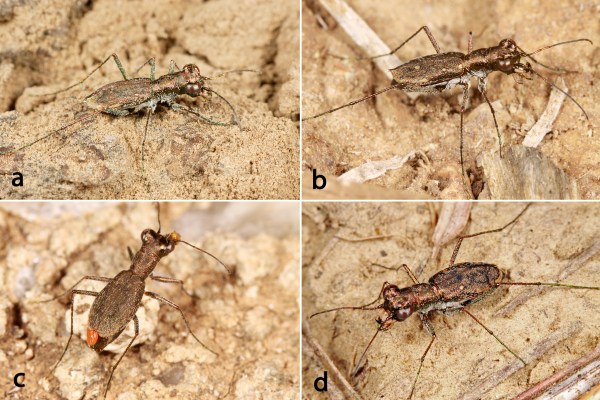
Fig. 1. Cylindera celeripes (LeConte) adults at: a) Hitchcock Nature Center, Pottawattamie Co., Iowa (13.vii.2008); b) Alabaster Caverns State Park, Woodward Co., Oklahoma (10.vi.2009); c) same locality as “b”, note parasite (possibly Hymenoptera: Dryinidae) protruding from abdomen and ant head attached to right antenna; d) Brickyard Hill Natural Area, Atchison Co., Missouri (27.vi.2009). Photos by C.R.Brown (a) and T.C.MacRae (b-d).

We didn’t realize it at the time, but that trip marked the beginning of a two-year study that would not only see us succeed in finding C. celeripes in Iowa, but also discover new populations in Missouri and northwestern Oklahoma (Figs. 1a–d). With so much new information about the species and the long-standing concerns by many contemporary cicindelid workers about its status, it seemed appropriate to conduct a comprehensive review of the historical occurrence of this species to establish context for its contemporary occurrence and clarify implications for its long term protection and conservation. This was accomplished through compilation of label data from nearly 1,000 specimens residing in the collections of contemporary tiger beetle workers, all of the major public insect museums in the states of Iowa, Kansas, Missouri, Nebraska, Oklahoma, and Texas, and the collections at the U.S. National Museum and Florida State Collection of Arthropods. Collectively, this material is presumed to represent the bulk of material that exists for the species, representing nearly all localities recorded for the species and time periods in which it has been collected.

Label data confirmed the historical abundance of this species, especially in the vicinity of Manhattan and Fort Riley, Kansas; Lincoln and Omaha, Nebraska; and Council Bluffs, Iowa. Hundreds of specimens were routinely collected in the native grassland habitats around these areas during the late 1800s and early 1900s, their abundance documented by entomologists in both journal articles and private letters. One of the most interesting examples of the latter was by Nebraska collector F. H. Shoemaker, who wrote the following in a 1905 letter to R. H. Wolcott:

There is another trip, down the river to the big spring by the railroad track near Albright, then across the river (the heronry route) where we collect hirticollis, repanda, vulgaris [= tranquebarica], cuprascens, and – vat you call ‘im? – celeripes! I took 147 of the latter in an hour and a half Sunday, and the supply was undiminished.

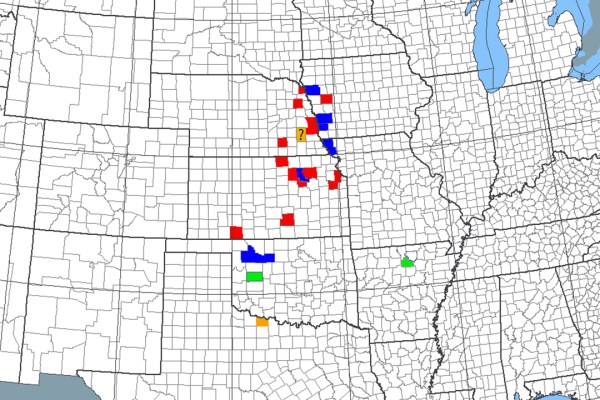
Fig. 8. Historical and currently known geographical occurrence of Cylindera celeripes by county. Red = last record prior to 1920; orange = last record 1941–1960 (“?” = questionable record); green = last record 1991–1996; blue = last record 2005–2011.

Although the recent collections of C. celeripes from near Council Bluffs and through the years near Fort Riley show that the species has managed to persist in these areas, there is little question that it is far less abundant and widespread now than it was in the early 20th century (Fig. 8).  Not only are the areas in which present day populations are known to occur limited, but the numbers of individuals seen in them are very low. In Missouri, the species was listed immediately after its discovery in the state as a species of conservation concern with a status of S1 (= “critically imperiled”) due to the highly restricted occurrence of suitable habitat (loess hill prairie) in the state and small populations observed within them. The situation is even worse in Nebraska, where the species has not been seen for nearly 100 years despite dedicated searches by expert contemporary tiger beetle workers such as Matt Brust and Steve Spomer. Considering the near-complete elimination of suitable native grassland habitats by conversion to agriculture and degradation of the few existing remnants due to encroachment by woody vegetation and invasive exotics, the likelihood of finding extant populations of C. celeripes in Nebraska seems remote. Only in the Red Hills of northwestern Oklahoma does the species appear to be secure due to the extensiveness of suitable areas of habitat and robust numbers of individuals observed within them at the present time. An enigmatic record exists from Arkansas, based on a single individual collected near Calico Rock in 1996. This individual represents a significant extension of the known geographical range of the species, but repeated attempts to find the species at that locality during the past year were not successful.

The persistence of populations, albeit small, in multiple areas, along with the occurrence of robust populations in northwestern Oklahoma, makes it unlikely that C. celeripesqualifies for listing as a threatened or endangered species at the federal level. Nevertheless, the limited availability of suitable habitat in many areas and low population numbers found within them clearly suggest that conservation measures are warranted at the state level, especially in Iowa, Kansas and Missouri, to prevent its extirpation from these states. In these states, land management practices should be implemented at sites known to support populations of the beetle in an effort to maintain and expand the native grassland habitats upon which they rely. These include various disturbance factors such as mechanical removal of woody vegetation, judicious use of prescribed burning, and selective grazing (taking care to do so in a manner that minimizes impacts to beetle populations).

REFERENCES:

MacRae, T. C. and C. R. Brown. 2011. Historical and contemporary occurrence of Cylindera (s. str.) celeripes (LeConte) (Coleoptera: Carabidae: Cicindelinae) and implications for its conservation. The Coleopterists Bulletin 65(3):230–241 DOI: 10.1649/072.065.0304

Pearson, D. L., C. B. Knisley and C. J. Kazilek. 2006. A Field Guide to the Tiger Beetles of the United States and Canada. Oxford University Press, New York, 227 pp.

Spomer, S. M., M. L. Brust, D. C. Backlund and S. Weins.  2008. Tiger Beetles of South Dakota & Nebraska. University of Nebraska, Department of Entomology, Lincoln, 60 pp.

Copyright © Ted C. MacRae 2011

Arriving now in a mailbox near you…


The latest issue of Cicindela (A quarterly journal devoted to Cicindelidae) has just been issued. My copy arrived yesterday and features on the cover a photograph that I took of Tetracha carolina in Florida this past August (original photo and more can be seen in my post ).

I’m also happy to report that I was lead author and co-author on the two papers included this issue. I’ll provide a more detailed summary of those papers in another post—look for it in the near future, or better yet contact Managing Editor Ron Huber to begin receiving your own copies of this fine journal (subscription and contact information here).

Copyright © Ted C. MacRae 2011
Cicindela albissima—The Coral Pink Sand Dunes Tiger Beetle

Coral Pink Sand Dunes State Park, Utah

The week had started off good, with three species of western sand dune endemic tiger beetles (Cicindela formosa gibsoni, C. scutellaris yampae, and C. arenicola) and a variety of sometimes spectacular Crossidius longhorned beeltes having been encountered.  Mid-week, however, had brought a lull in our success—the long drive to southwestern Idaho was not rewarded with finding C. waynei, endemic only to Bruneau Sand Dunes State Park, and an even longer drive was required to backtrack and then drop down to the southwestern corner of Utah in hopes of finding the equally rare and restricted C. albissima.  Had it not been for our continued success with different species and subspecies of Crossidius longhorns the drive might have felt like a lesson in futility.  Still, on a collecting trip a new day and new locality brings new hope, and anticipation grew as we passed through lodgepole pine forests on stunning black lava fields and wind-carved red sandstones on the final approach to Coral Pink Sand Dunes State Park.

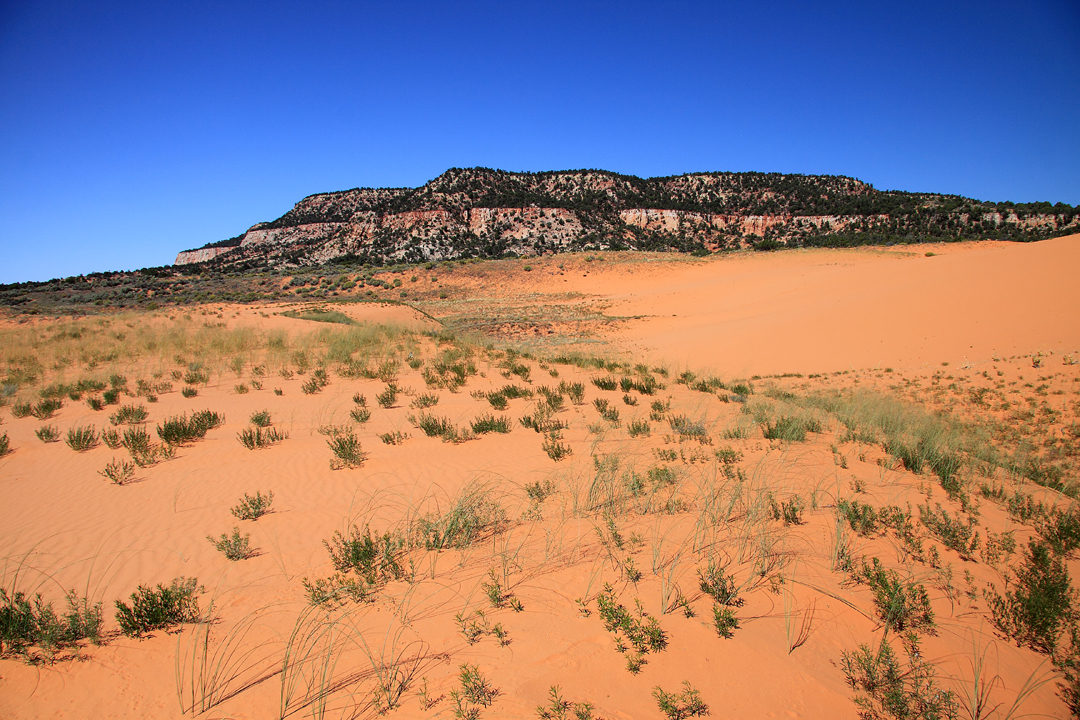
Colored pink by iron oxide minerals, the dunes are estimated at 10,000 to 15,000 years old.

Words cannot describe the stunningly spectacular landscape that unfolded before us as we entered the park.  The scenery alone makes Coral Pink Sand Dunes worthy, in my humble opinion, of National Park status, but it is C. albissima—occurring only on the park’s vivid pink dunes and nowhere else in the world—that makes this place truly special.  Precisely where in the park the beetle lives is a matter of public record, as Chris Wirth (author of the intermittent but highly focused blog Cicindela) and Randolph-Macon College Professor Emeritus Barry Knisley have produced a wonderfully detailed and well illustrated brochure about the beetle and its life history, population trends, and limiting factors.  What remained to be determined was whether the beetles would be active during the brief window of time available to look for it.  Cicindela albissima is a so-called “spring-fall” species in reference to the bimodal adult activity period, but activity in the fall is much less predictable than in the spring depending on moisture availability.  The day was perfect—temperatures in the 70s by mid-morning, only a light breeze, and a sharp, blue, cloudless sky.  All we could do was look.

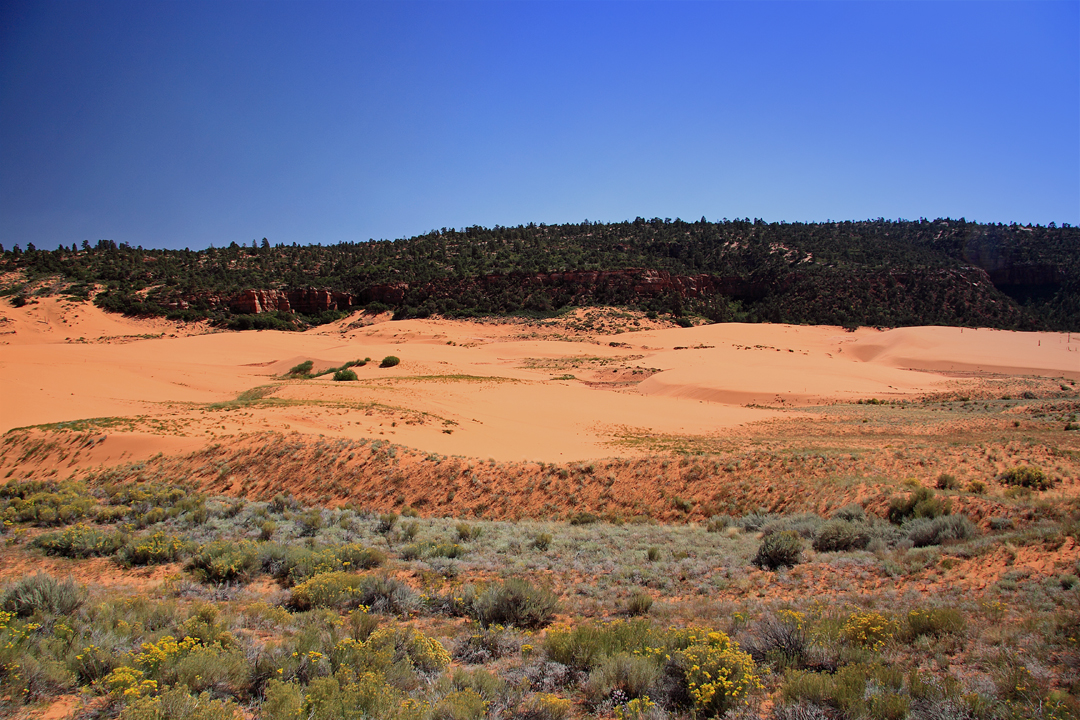
Adult beetles were found on the northern edge of this dune. A majority were seen amongst sparse vegetation rather than barren areas.

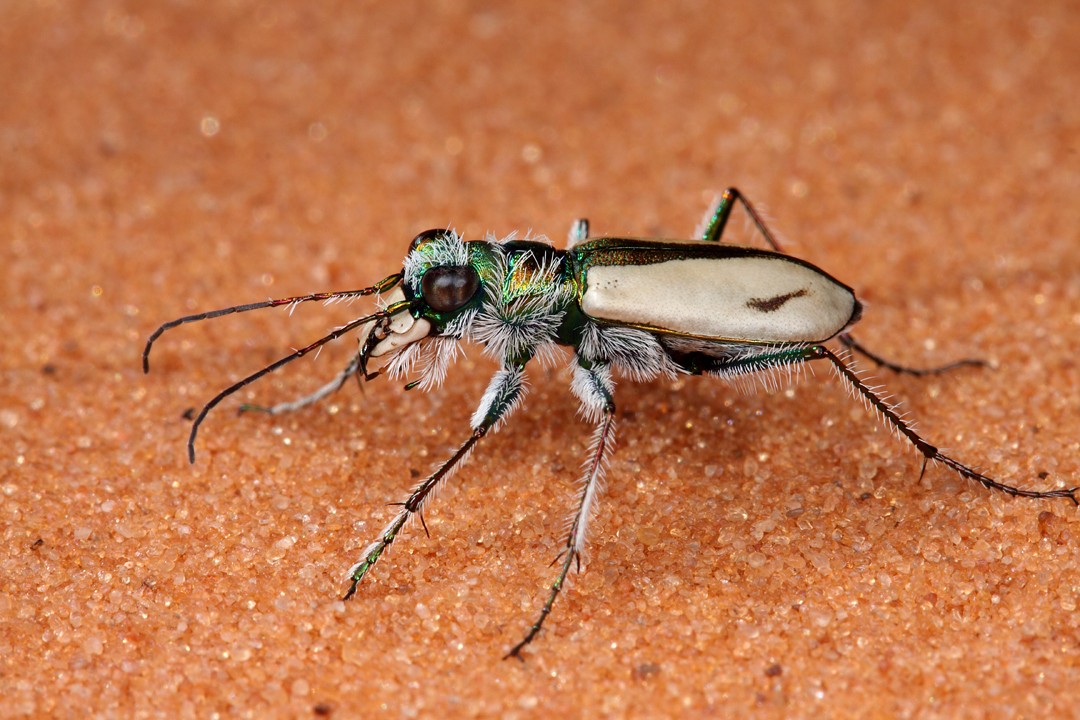
It didn’t take long really to find them, as the adults were already out in encouragingly strong numbers. Of the several dozen adults we saw, all but one were seen atop the northern edge of one particular sparsely vegetated dune.  I suspect the larval burrows were at the bottom of the steep northern dune escarpment in the more stable wind-scoured sandstone clays that lay between individual dunes.  Vivid white and floating across the sand on long delicate legs, the elegance of their beauty was a stark contrast to the harshness of the surrounding landscape.  With a miniscule range of only 400 hectares, C. albissima is one of North America’s rarest tiger beetles, and I felt truly priviledged to join the small ranks of those who have seen this beetle alive in its native habitat and could appreciate the significance of the event.  Of course, the sense of accomplishment would not be complete unless I also succeeded in photographing the species in the field, and although the adults were quite wary and active, I was happy with several of the photos that I ended up with.  Similar to what I observed with C. arenicola, adults amongst the vegetation seemed slightly less skittish than those out in the open, so it was in the vegetated areas that I concentrated my efforts.  My only regret was not adding extension tubes to allow some real closeup portraiture, but the beetles seemed far too wary to have put up with the decrease in working distance that would have entailed.  At any rate, here are some of my favorites:


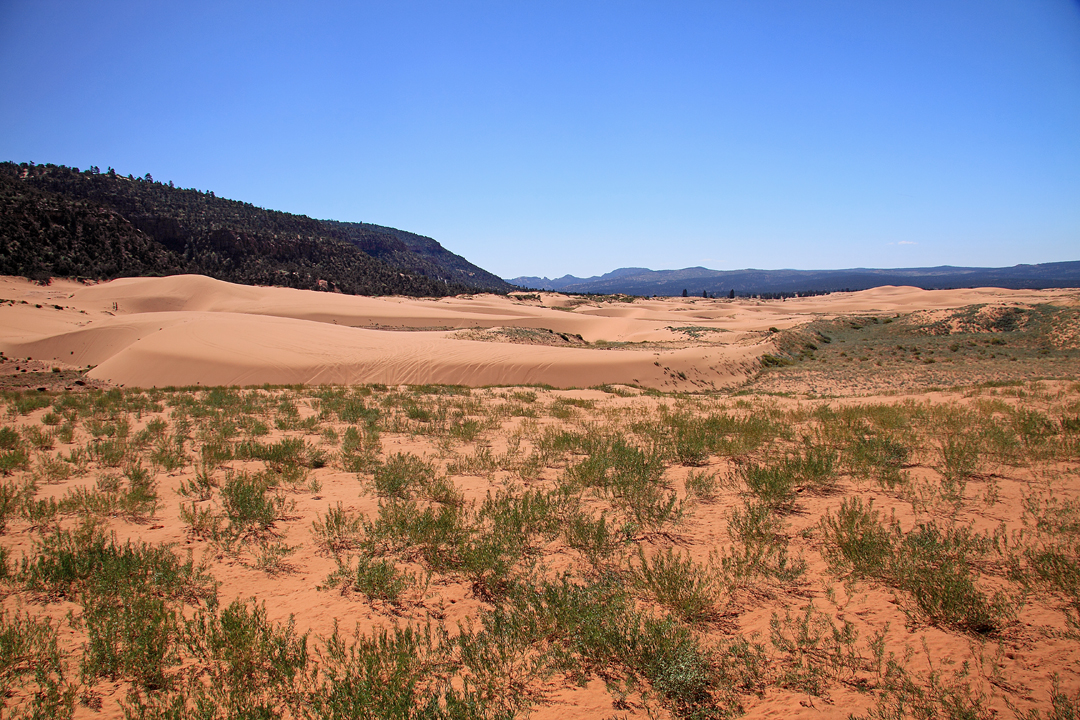
What the future holds for C. albissima remains unclear.  Designation of the beetle’s home range as a preserve (albeit tiny) would seem to offer long term protection, but a  large portion of this area is open to off-road vehicular traffic (although not a single one was seen during the time that we were there).  An even greater threat exists in the potential for extended drought affecting the entire population, and as greenhouse gases continue to accumulate in the atmosphere the chance of impacts from unusual weather events only grows. I feel lucky to be among the few that have witnessed this beautiful species in nature, but I sincerely hope I am not among the last.

ORV tracks can be seen just outside the conservation area boundary

Copyright © Ted C. MacRae 2011

Isn’t she splendid?!

Cicindela splendida | Bald Hill Glade Natural Area, Ripley Co., Missouri

This gorgeous female Cicindela splendida emerged recently from one of my rearing containers.  She was one of several 3rd instar larvae that I collected this past June from their burrows in a dolomite glade in southeastern Missouri.  I had suspected they might represent this species because of the bright, metallic sheen on their heads and decided to rear them out to find out for sure.  Rearing tiger beetles is fun and easy—all you have to do is fill a container with native soil, make a “starter” burrow¹ and drop them in. In this case, I also partially sunk a native rock into the soil in the center of the container, something I have started doing recently as it gives the emerged adult an elevated and more visually appealing surface on which to perch than the soil should I desire to take photographs.

¹ Larvae will dig new burrows on their own, but starter burrows allow you to place the burrow where you want it.  They are essential if more than one larva is introduced to the container, as wandering larvae will fight when they encounter each other. I like to start the burrow in a corner of the container (a pencil works great for this) and push down to the bottom of the container so I can see into the burrow from outside to monitor the larva as it develops.  After introducing the larva to its burrow, I push the soil around the entrance to seal it lightly to keep the larva from immediately crawling back out.  The larva will eventually reopen the burrow but generally accepts it, digging it out further to its liking and shaping the entrance to precisely fit the size and shape of its head.

Reared from 3rd instar larva, burrow in sparsely vegetated clay exposure of dolomite glade.

With tiger beetle rearing, feeding time is fun time! Our lab rears insects for testing in abundance, and there are always leftovers. Really just about any insect that can be pulled into the burrow will be acceptable as prey, but lepidopteran caterpillars are my favorite. I use mostly early instar tobacco hornworm larvae, choosing the size as appropriate for the size of the tiger beetle larva—the big ones (e.g. 3rd instar Tetracha) can handle caterpillars 35-40 mm in length and 6-8 mm in diameter, while neonates must be used for the smallest ones (e.g. 1st instar Cylindera celeripes and C. cursitans). I find it endlessly entertaining to sneak up on the larva sitting at the entrance of its burrow, slowly position a caterpillar above the burrow entrance with forceps, and dangle it to entice the tiger beetle larva to lurch out, grab the caterpillar, and drag it down into its burrow—all in a split second! If the larva drops down from the burrow entrance during my approach I just drop the caterpillar into the burrow (though this isn’t nearly as much fun).

Copyright © Ted C. MacRae 2011

St. Anthony Dune Tiger Beetle

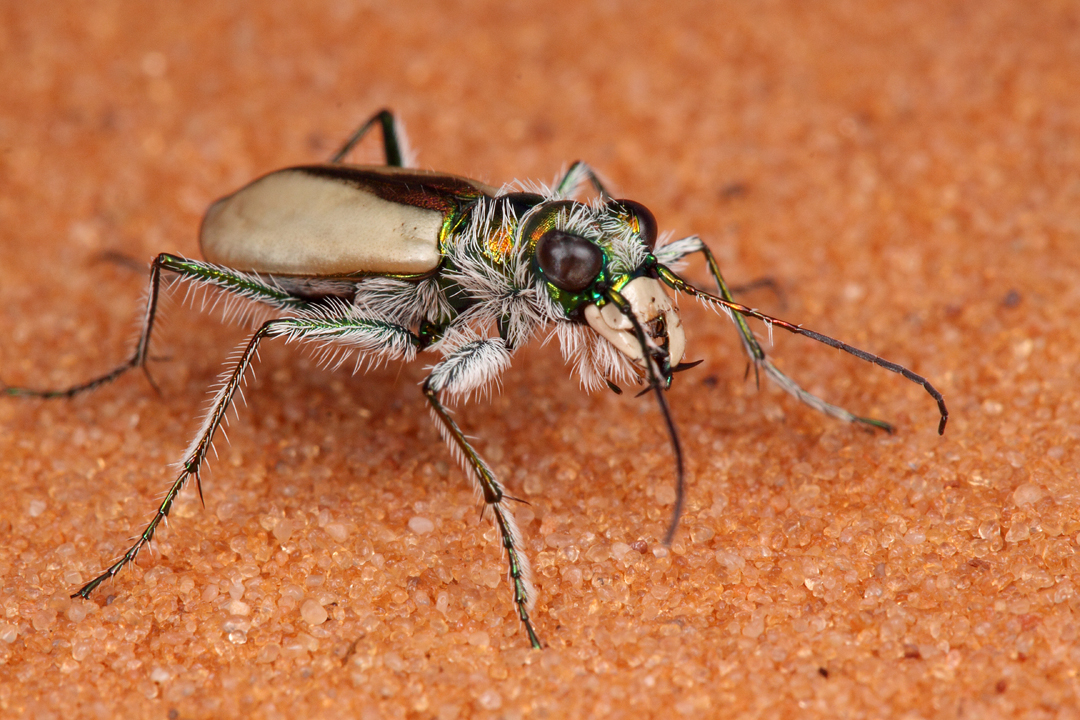
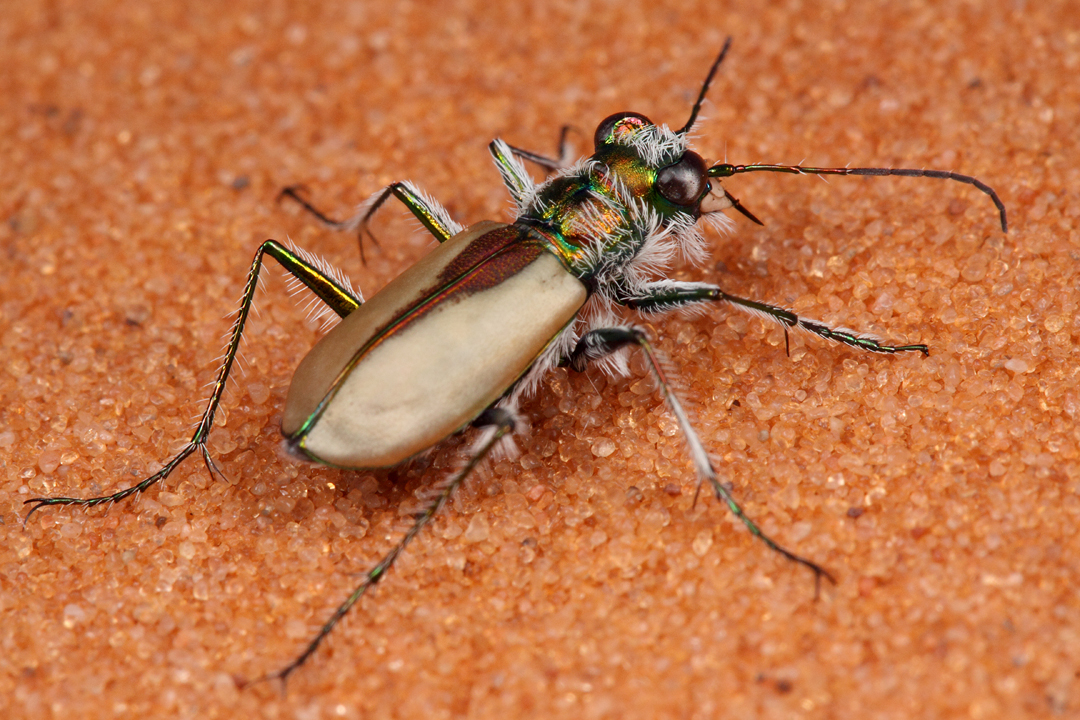
Sand dune habitat for Cicindela arenicola | vic. Idaho Falls, Idaho

After kicking off the 2011 fall tiger beetle trip by finding Cicindela formosa gibsoni and C. scutellaris yampae in the Yampa Valley sand dunes in northwestern Colorado, I was even more optimistic about my chances of seeing the main goals of the trip—the four C. maritima species group endemics that inhabit sand dunes in Idaho (St. Anthony Dune Tiger Beetle—C. arenicola, and Bruneau Dune Tiger Beetle—C. waynei), Utah (Coral Pink Sand Dune Tiger Beetle—C. albissima), and Colorado (Colorado Dune Tiger Beetle—C. theatina).  Each of these closely related species is restricted to a single sand dune system in their respective states, resulting in small populations that are especially vulnerable to drought and threats to their required habitats (primarily invasive plants and offroad recreational vehicles).  Cicindela arenicola, described from the St. Anthony Dune system of southeastern Idaho (Rumpp 1967) was our first target, and while the drive through the Snake River Valley—aspen and maple in blazing full color—was stunningly beautiful, all I could think about during the 6-hour drive was the rising temperatures outside and the tendency of these sand dune tiger beetles to dig in if it gets too hot.  I had information about several localities along the St. Anthony Dune system, and by the time we arrived at the first of these it was already early afternoon.

Cicindela arenicola adult burrows

Walking onto the dunes at a locality near Idaho Falls, it didn’t take long to find the unmistakable signature of adult activity—burrows.  Many insects (especially bees) and even non-insects (spiders, solifugids, etc.) that live on sand dunes create burrows that can look similar to those created by adult tiger beetles.  However, after years of experience I can almost tell at a glance whether a burrow has been created by a tiger beetle versus some other arthropod by the size and shape of the opening and appearance of the diggings.  When there is doubt, a little bit of excavating with a knife gives further clues in the shape of the tunnel—flatter than most other diggers and angling almost horizontally back into the sand before taking a dive a few inches back.  Wind quickly obliterates evidence of the burrow entrance and pile of diggings, so when these are present and fresh-looking the beetles have either just dug in or just dug out.  I excavated a number of burrows that turned out to be empty, suggesting the beetles were out and about if only I could find them.  And find them I did, mostly along the sloping, south-facing dune face above the flatter sand plain below.  They were as beautiful as I imagined they would be—bold, white markings, screaming green and copper highlights on the head and pronotum, and a dense covering of white hairs on the sides and undersurface.  They were also extremely active and wary, so much so that I didn’t even attempt to photograph them for the time being despite the decent number of individuals that we saw at the site.

Cicindela arenicola adult excavating burrow (click for better view of beetle just inside burrow entrance)

Cicindela arenicola in completed adult burrow | September 2011 | Idaho Falls, Idaho

There were other nearby sites that I had planned to check also, but with good numbers seen already and several other interesting insects (e.g., Crossidius spp.) found in abundance on the blooms of snakeweed plants growing on the backside of the dunes, there was really no reason to go anywhere else.  Besides, I still had not even attempted a field photograph of C. arenicola (although I had made sure to capture some live adults for studio shots that night as a backup).  As the sun began sinking in the western sky and temperatures began to cool off, I noticed the adults were becoming scarce and that fresh burrows were appearing on the dune surface.  In contrast to earlier in the day, adult beetles were found in nearly every burrow that I excavated—the beetles were digging in, and if I wanted field photographs it was now or never.  I managed a few distant shots of the first several adults I tried to stalk, but none of these were close to keepers.  I eventually noticed that beetles in the sparsely vegetated areas of the dune seemed to be slightly more approachable than those out on the open dune surface (perhaps they felt a little more secure in the presence of some cover), and although the vegetation often obscured clear views of the beetles, it was at least a more manageable problem than not even being able to approach them.  Finally, after considerable effort, I managed the photograph shown below.  I’d like to take credit for the near perfect composition and focus, but it was an actually a completely accidental shot.  I had been stalking the beetle for some time and had finally gotten closer to it than I had managed for any other beetle.  Rather than a presenting me with a lateral profile, the beetle was directly facing me as I closed in for the shot. Just as I pressed the shutter the beetle turned profile and then darted off.  Other than nipping the middle tarsus I don’t think I could’ve framed this uncropped photo better if I had tried.

Cicindela arenicola | September 2011 | vic. Idaho Falls, Idaho

Cicindela arenicola is closely related to C. waynei (known only from sand dunes in and around Bruneau Dunes State Park in southwestern Idaho), and it is only recently that the two have been considered separate species.  Cicindela waynei differs in its generally green rather than bronze coloration, more expanded white markings, and the presence of a curious upward projecting tooth on the male mandible (Pearson et al. 2006).  There are some populations in south-central Idaho assigned to C. arenicola that show an intergradation of characters between the two species, primarily in the presence of individuals with green coloration and expanded markings, so I found it interesting to encounter just such an individual at this southeastern Idaho site as well.  The individual, a male (and photographed in a terrarium that evening), looks very much like C. waynei except that it lacks the distinctive mandibular tooth characteristic of that species.

Male from same locality with green elytra and expanded markings

Cicindela arenicola is largely restricted to the Snake River Plain of southern Idaho, with a small population also occurring in the Centennial Sandhills of southwestern Montana (Winton et al. 2010). The sand dunes on which these beetles depend have suffered numerous assaults in recent years at the hands of man, with exotic invasives (Bouffard et al. 2009), trampling by cattle (Bauer 1991), and offroad vehicular traffic having the greatest impact on tiger beetle populations.  The species has been considered for listing on the Endangered Species List due to the imperiled nature of its limited habitat, but to this point such status has not yet been accorded.  It has, however, been listed as globally imperiled by the Idaho Department of Fish and Game and the Bureau of Land Management.  Most people are completely unaware that this beetle exists, and probably fewer still would even care.  For me personally, however, the chance to see this rare and beautiful beetle in its native habitat and spend time watching its behavior was a thrill I won’t soon forget.

Tiger beetle's-eye view of its preferred sand dune habitat.

I haven’t forgotten about the challenges that led to this post.  However, the hour is late and I need my rest.  Points will be awarded over the next day or so, and the winner of BitB Challenge Session #4 will be crowned!  In the meantime, I’ve released the submitted comments so you can see how your answers fared against the competition—no do-overs!

REFERENCES:

Bauer, K. L. 1991. Observations on the developmental biology of Cicindela arenicola Rumpp (Coleoptera: Cicindelidae). Great Basin Naturalist 51:226–235.

Bouffard, S. H., K. V. Tindall and K. Fothergill. 2009. Herbicide treatment to restore St. Anthony tiger beetle habitat: a pilot study. Cicindela 41(1):13–24.

Pearson, D. L., C. B. Knisley and C. J. Kazilek. 2006. A Field Guide to the Tiger Beetles of the United States & Canada: Identification, Natural History, and Distribution of the Cicindelidae. Oxford University Press, New York, NY. 227 pp.

Rumpp, N. L. 1967. A new species of Cicindela from Idaho (Coleoptera: Cicindelidae). Proceedings of the California Academy of Science 35:129–140.

Winton, R. C., M. G. Kippenhan and M. A. Ivie.  2010.  New state record for Cicindela arenicola Rumpp (Coleoptera: Carabidae: Cicindelinae) in southwestern Montana.  The Coleopterists Bulletin 64(1):43–44.

Copyright © Ted C. MacRae 2011

The Methocha

As pointed out in my recent post, , there is much to learn still regarding tiger beetle larval parasitoids. In addition to bee flies (order Diptera, family Bombyliidae) of the genus Anthrax, tiphiid wasps (order Hymenoptera, family Tiphiidae) in the genus Methocha also parasitize tiger beetles in their larval burrows. Unlike bee flies, however, which sneakily lay their eggs in and around tiger beetle burrows when their victim isn’t watching, Methocha females aggressively engage the larva and even allow themselves to be grasped within the beetle larva’s sickle-shaped mandibles in order to gain entry to the beetle’s burrow.

Methocha appears to be a rather diverse genus, but it’s taxonomy is still incompletely known. George Waldren from Dallas, Texas is working on a revision of the genus and has found several new species in Texas alone. George is interested in seeing Methocha material from other areas as well and recently sent me the following reminder that adult females are active now:

…if you know of any areas with many tiger beetle larvae, now is the time to find Methocha. They superficially look like Pseudomyrmex ants, but once you see one you’ll catch on to them quickly. I collected more than 70 females today in a large aggregation of Tetracha carolina burrows.

In a subsequent message he adds:

Collect as many as you can, since they seem to be highly seasonal and rare most of the year. I almost always find them around beetle populations in sandy creek beds and receding bodies of water. A pooter works best if they are abundant and there isn’t much for them to hide under. Using your fingers also works—the sting is mild and usually doesn’t pierce the skin (depends on the person and size of the wasp). Vial collecting one by one works just as well.

Methocha females are generally overlooked due to their specialized life history and few specimens are in collections. Males are better represented since they’re easily collected with malaise traps.

If you have any Methocha specimens or manage to collect some, please contact George (contact info can be found at his BugGuide page). BugGuide does have a few photographs of these wasps to give you an idea of what they look like, but this excellent video titled “The Methocha” from Life in the Undergrowth with David Attenborough provides an unparalleled look at their appearance and behavior:


Copyright © Ted C. MacRae 2011
Cicindela scutellaris yampae – Yampa Festive Tiger Beetle

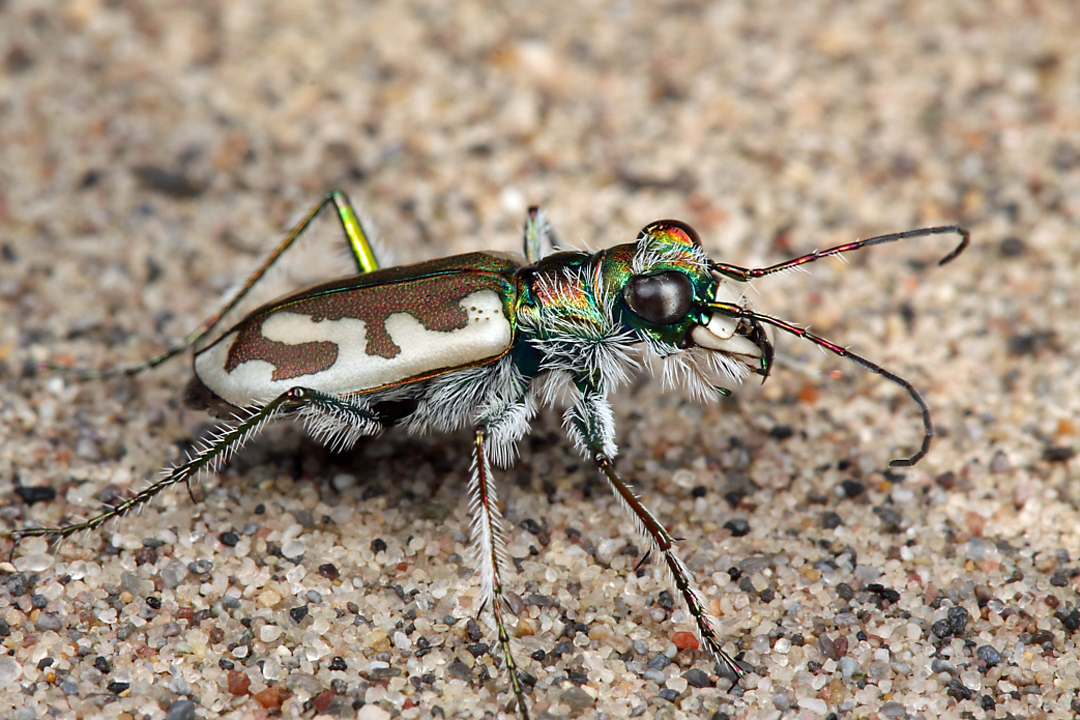
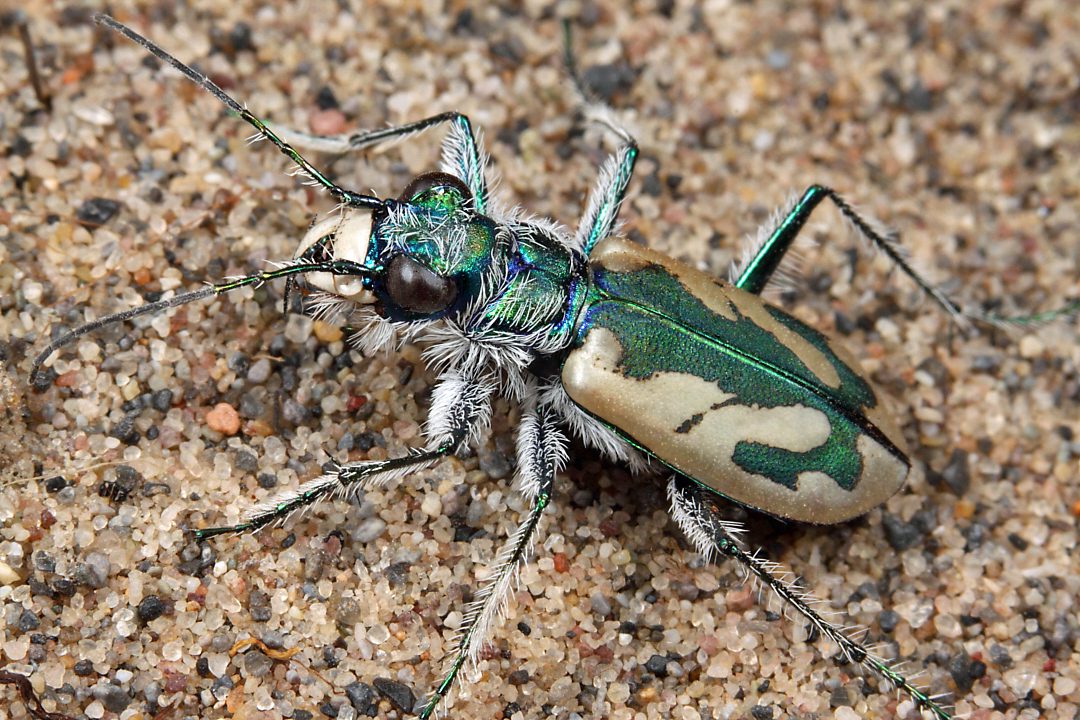
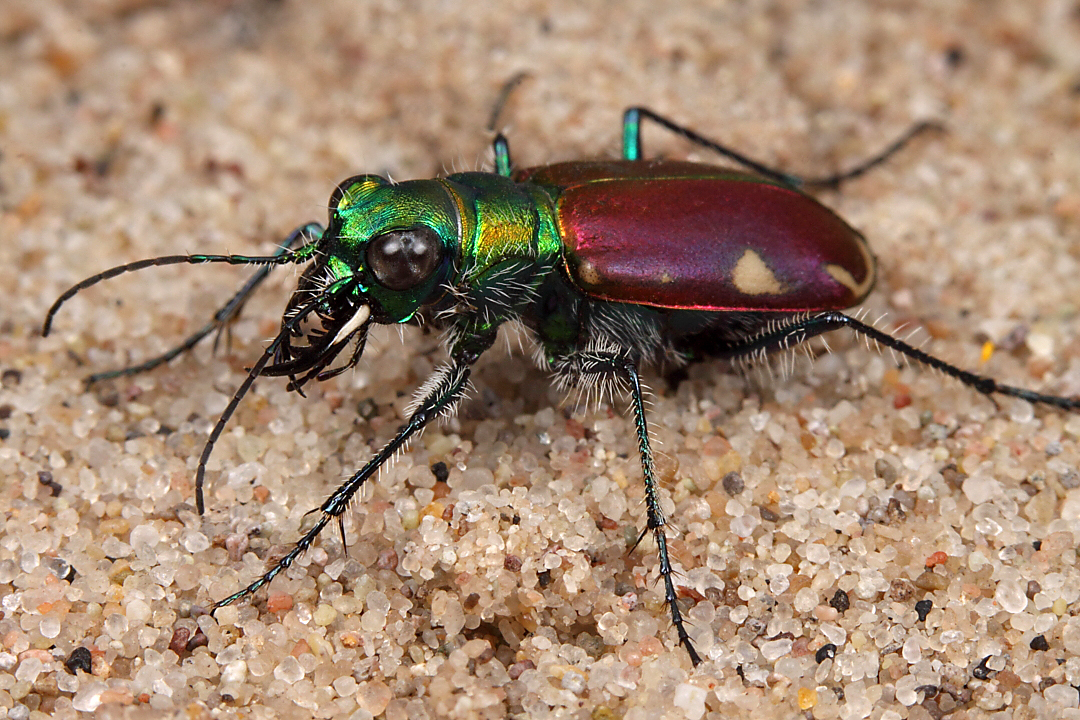
In A Field Guide to the Tiger Beetles of the United States and Canada (Pearson et al. 2006), Cicindela scutellaris yampae (Yampa Festive Tiger Beetle) is one of 223 species and subspecies listed in the book’s index to species and subspecies. Although the book’s alphabetical listing places it second to last in the list, it surely must be considered near the top of any list based on beauty. It is also among the most geographically restricted tiger beetles in North America, restricted to the Maybell Sand Dunes in northwestern Colorado where it occurs with the equally beautiful, rare, and restricted Cicindela formosa gibsoni (Gibson’s Big Sand Tiger Beetle). Like that subspecies, C. s. yampae was one of six endemic sand dune tiger beetles targeted in this year’s Annual Fall Tiger Beetle Trip™, and as these photos show I was lucky enough to find it.

Cicindela scutellaris yampae | nr. Maybell, Colorado

As a species, C. scutellaris is one of North America’s most widely distributed and polytopic species, with the nominate and lecontei forms inhabiting a wide swath of the Great Plains and Midwest.  Around the eastern, southern, and western perimeters of its geographical distribution occur numerous named subspecies exhibiting a tremendous diversity of variations on the species’ “normal” coloration and maculation.  Cicindela s. yampae is most similar to the nominate subspecies due to its green head and prothorax with purple-red elytra, but it differs in possessing a broad white maculation on the side of each elytron (top photo).  There are individuals, however, in which the maculation is reduced to isolated spots (bottom photo), resembling somewhat the pattern of maculations seen in C. s. lecontei further to the east.

C. scutellaris yampae w/ reduced maculations

Pearson et al. (2006) note that records over the years suggest the remaining populations of this beetle are small. We did not see many individuals on our visit to the type locality east of Maybell early this past week (perhaps no more than seven total), and we saw none at a formerly larger sand dune about 10 miles west of Maybell.  In past years this latter site has supported good numbers of the beetle, but it has apparently succumbed to vegetational encroachment of the formerly more open sand dune. As far as I am aware there are no conservation measures in place on any level to protect these remaining populations and ensure that adequate suitable habitat remains to enhance the beetle’s long-term prospects.

REFERENCE:

Pearson, D. L., C. B. Knisley and C. J. Kazilek. 2006. A Field Guide to the Tiger Beetles of the United States and Canada. Oxford University Press, New York, 227 pp.

Copyright © Ted C. MacRae 2011