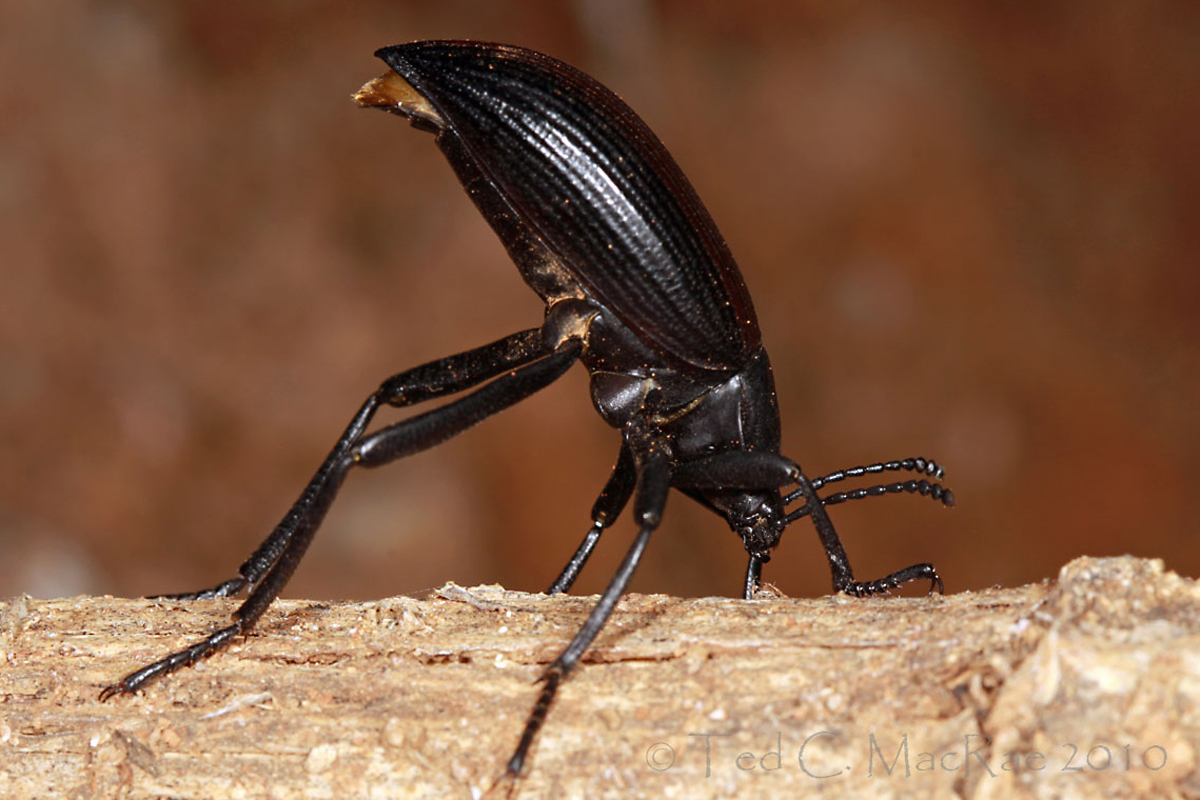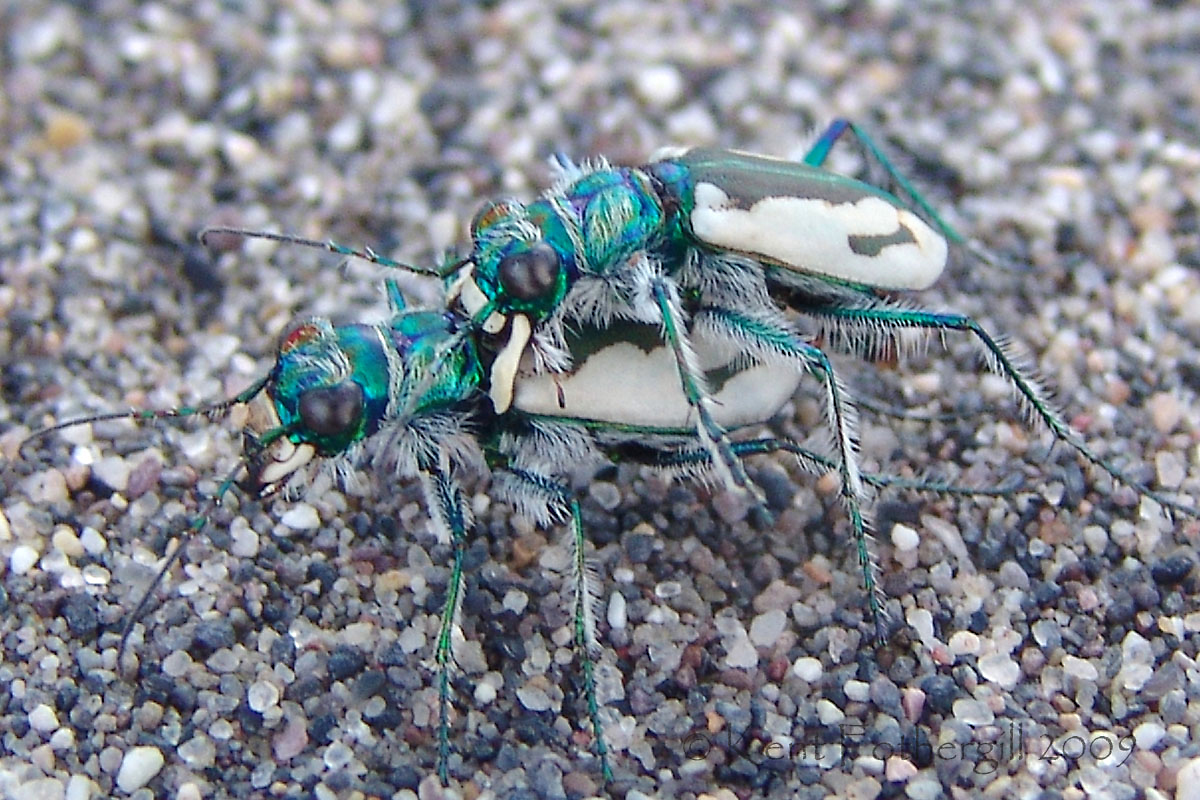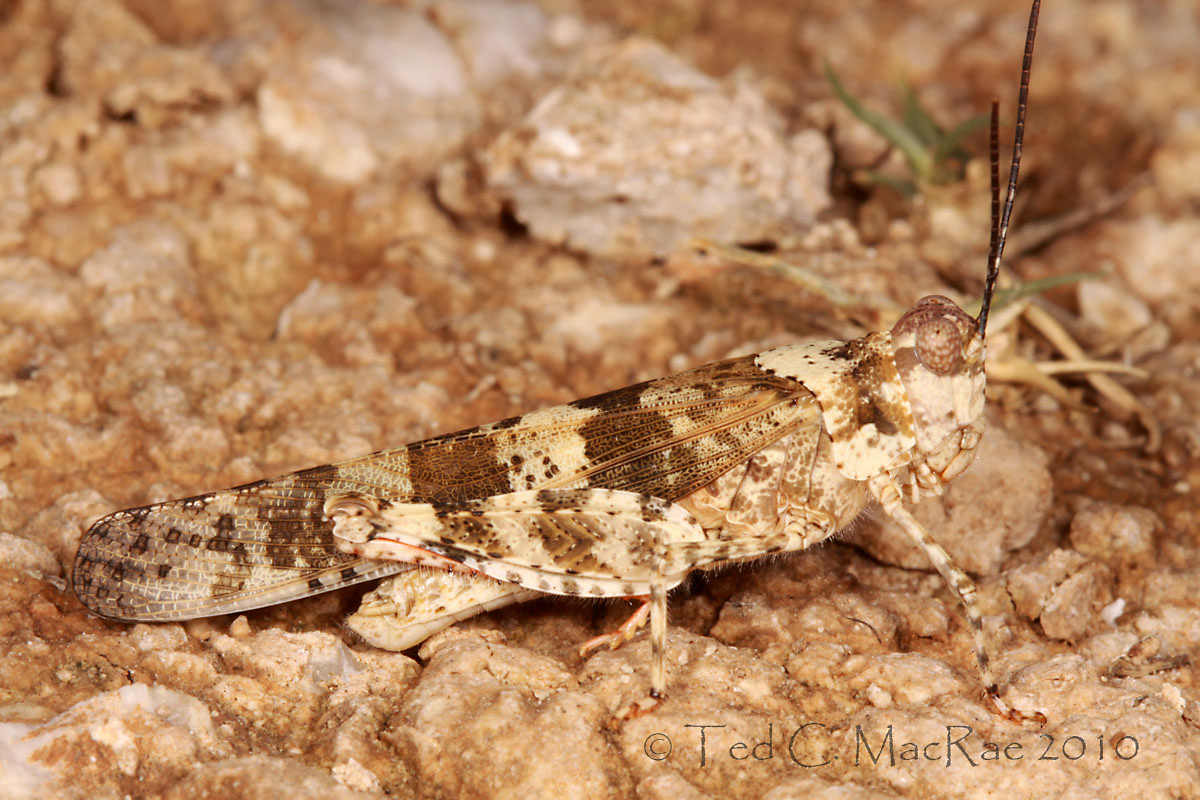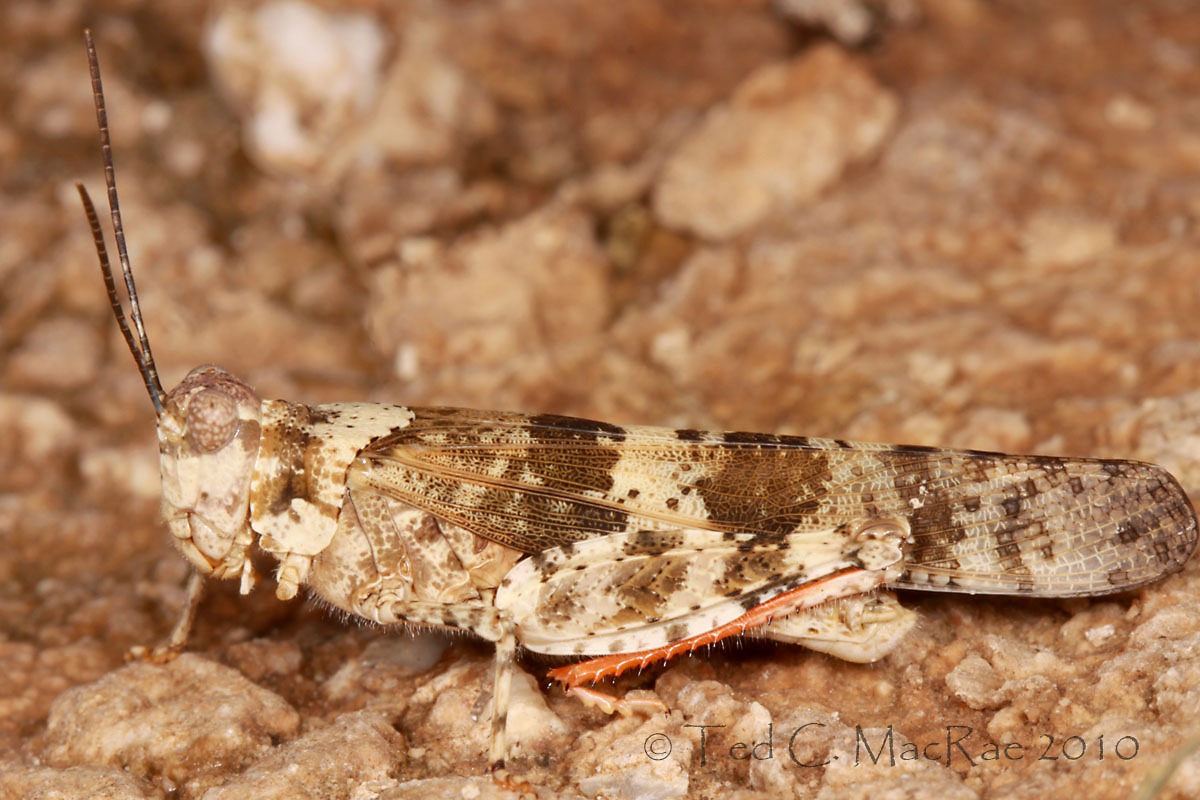
“Cicindelophilically”


My good friends Kent Fothergill and Kelly Tindall passed through St. Louis last week on their way back home from a visit to Columbia.  I was happy for the chance to get together with them – if only for a short visit, as I hadn’t seen them since the summer before last when Kent joined forces with Chris Brown and I to conduct a survey for Cylindera cursitans (ant-like tiger beetle) in southeast Missouri.  (You may recall that I orginally met Kent when he emailed me out of-the-blue after moving to southeast Missouri in 2007 to let me know he liked tiger beetles.  I responded by suggesting that he look for this long sought-after species, which he found the very next day!)  Kent had told me in arranging the visit that they had something they wanted to give me, and since I had some specimens of theirs to return it seemed a convenient way to make the exchange.  I had no idea what it was they wanted to give me, but I knew they’d been to the recent Entomological Society of America meetings in Indianapolis and figured they must have purchased a cool beetle specimen or something for me.

After arriving at my office, they told me that they’d had the chance to meet John Acorn, a rare celebrity in the world of natural history study.  Most people known John as the host and creative force behind Acorn the Nature Nut, an award-winning television series in which John’s inspiring personality and infectious love of nature introduce viewers to various aspects of Alberta’s natural history.  John is also, however, an accomplished entomologist, with one of his special interests being… you guessed it – tiger beetles!  In 2001, John published The Tiger Beetles of Alberta: Killers on the Clay, Stalkers on the Sand, one of the most accessible and highly entertaining treatments of the family (er… supertribe) to date (if I can ever get my act together and write The Tiger Beetles of Missouri, I want to model it after this book).  John was at the ESA meetings selling original artwork of the different tiger beetle species occurring in Alberta, and Kent and Kelly mentioned to him that they had a friend back in Missouri who would love one of his prints – selecting “Cicindela purpurea auduboni black morph”.  Somehow, my name and association with this blog came up, to which John replied, “Oh, I know about Beetles in the Bush” and then signed the print for me as shown below.  Wow!

I hope Kent and Kelly understand my stunned silence upon first seeing the print they had so generously given to me and the inscription it bore.  I felt a little silly afterwards returning their kind gesture by just giving them back specimens that were already theirs.  I’m honored by their friendship and will be reminded of it now everytime I look at the print on my office wall.

REFERENCE:

Acorn, J.  2001.  Tiger Beetles of Alberta: Killers on the Clay, Stalkers on the Sand.  The University of Alberta Press, Edmonton, xix + 120 pp.

Copyright © Ted C. MacRae 2010

Add to FacebookAdd to DiggAdd to Del.icio.usAdd to StumbleuponAdd to RedditAdd to BlinklistAdd to TwitterAdd to TechnoratiAdd to Yahoo BuzzAdd to Newsvine

Email to a friend

Posted in Cicindelidae, Coleoptera | Tagged , , , , , , , | 24 Comments

Ants invade Beetles in the Bush!

For months now, your Beetles in the Bush host, Ted, has been nudging me to blog, in the end resorting to offering me a guest blogger gig at BitB. Given this golden opportunity, I’ve decided to utilize my web-logging debut to introduce my favorite insects, the fabulous Formicidae. First, a disclaimer: I have not mastered ant photography, and so will rely on the undisputed king of ant photographers, Alex Wild, through links to his numerous, unexcelled images.

Since about age 5, I can remember being interested in virtually anything living, but especially in small, active creatures. From the beginning, I have had a particular attraction to ants. With some notable exceptions, and aside from the pulchritudinous feature of their svelte waists, ants aren’t what most folks would call pretty, but they are — How else to say it? — just plain “cool”!

First, who are they and where do they come from? Ants constitute a single family, Formicidae, within the insect order Hymenoptera, so their relatives are wasps, bees, sawflies, horntails, gall wasps, and a vast array of small parasitic wasps that are mostly unappreciated except by specialists who study them. Within Hymenoptera, the ants are considered to belong to the superfamily Vespoidea, along with hornets, paper wasps, potter wasps and other solitary relatives.  The evidence at present indicates the first animals we would call ant had diverged from their common ancestry with these other stinging wasps some time in the Cretaceous, 130 million years ago, more or less.  Ants are classified in a varying number of subfamilies, currently at about 20. Fossils in amber up to 100 million years old represent early members of several modern subfamilies, and a few extinct groups. Most of us in the Northern Hemisphere Temperate Zone are familiar only with the big two subfamilies, Formicinae (carpenter ants, weaver ants, honey ants, etc.) and Myrmicinae (fire ants, harvester ants, leaf-cutter ants, etc.). In much of North America, folks may also be familiar with an abundant member of another subfamily, Dolichoderinae, namely odorous house ants, which frequent our gardens, kitchen counters, wall spaces, and even electrical outlets, especially in spring.

Ants are a conspicuous and often dominant presence in the World of the Little (or, what Piotr Nascrecki, in one of my favorite books, calls the “Smaller Majority” ). It is difficult for any observant person to sit still, outdoors in good weather, and not begin to see ants doing what ants do. They scurry about singly, in pairs or threesomes or foursomes, or in long lines, or columns. Our notice may be further piqued by their habit of transporting sundry bits of biomass or mineromass (pebbles, etc.).  Often this is just taking out the inedible food waste, or sawdust or soil excavated while expanding or remodeling their nests.  Less visibly, because more diffusely in space, ants carry a variety of items from foraging to their nests to provide nutrition for their colonies, or to add mass or create functional structure to their nests (to create better drainage, to provide incubation space for developing brood, and in some desert ants, to capture dew). In one of the most spectacular examples of ants transporting things, the so-called “slave-making” ants carry home the mature brood of a related species, these young ants later maturing in the brood-robbers’ nest to become its work force!

Shiny red workers of Polyergus lucidus return with pupae pillaged from a nest of Formica incerta several meters away. Two brown and differently proportioned workers of the latter that matured from raids earlier in the life of this Polyergus colony may be seen at the right of the photo.

Perhaps, not so widely known is that most of what most ants carry home is not some large, heavy particle in their mandibles, but rather is liquid carried in an expansible section of their esophagus called the crop. Because of the fine diameter of their gullets, adult ants cannot eat anything other than the most minute solid particles (e.g., pollen grains, loose cells from their prey).  Solid items may be cut up to feed to the legless, pale larvae, or the larvae may even be placed directly upon the killed prey to bite into it and feed on their own, using their flexible “necks”.  Adult ants get pre-digested food in return, in the form of glandular secretions loosely termed saliva, but which may be either a glandular secretion from the larva itself or simplify pre-liquefied flesh of prey lapped up from the larva’s messy eating.  In some lineages, known as Dracula ants, adults actually “bleed” the larvae through rapidly healing wounds made at particular locations on the larval exoskeleton.

Okay, I need to get back to my regular work, so let’s bring this home (to winter in the United States). Many of us are now in the dead of winter, or so it would seem. But, on sunny days, sap is beginning to flow upward in maple and other trees, and one ant species may actually be seen, creeping slowly through the woods, in search of dead arthropods and earthworms, or perhaps some sweet sap oozing from a sapsucker wound in a tree. This is Prenolepis imparis, sometimes called “winter honeypot ant”. This is a partial misnomer. While foragers may indeed fill their crops to over-full with sweet sap or honeydew, the very bloated “honeypots” in the deep nests of this ant are in fact, fat pots, having converted their food to whitish body fat. This is later converted to a glandular secretion that serves as food for developing larvae.  These ants are likely to be seen anywhere near where oaks of just about any species grow, and the where the soil is moist but well-drained. Look for these shiny little dark brown ants during your walks in the woods, on the sunny days that are sure to increase in number and warmth in the coming months.

Copyright © James C. Trager 2010

Add to FacebookAdd to DiggAdd to Del.icio.usAdd to StumbleuponAdd to RedditAdd to BlinklistAdd to TwitterAdd to TechnoratiAdd to Yahoo BuzzAdd to Newsvine

Email to a friend

Posted in Formicidae, Hymenoptera | Tagged , , , , , , | 18 Comments

BitB’s Newest Contributor

Those of you who have followed this blog for any length of time have likely noticed fairly regular participation in the comments sections by one James C. Trager.  Occasionally irreverent and always articulate, his informed quips are among those that I have enjoyed the most.  One can surmise from James’ comments that he knows a thing or two about entomology himself, but to say this would be an understatement!  Like me, James is a passionate entomologist whose scientific interests take him deep into many related fields of natural history study.  Unlike me, James is a formally trained insect taxonomist, specializing in ants (family Formicidae).  He has conducted numerous biogeographical and systematic studies on this group, much of it in the southeastern U.S. (list of publications), and is the current project leader for the Missouri Ants and Illinois Ants pages at AntWeb.org (whose ambitious goal is to provide information and high quality color images for each of the ~10,000 known ant species).  James’ deep knowledge of this single taxon, however, does not limit his interest in other insects — singing insects in particular are among his favorites. It is, thus, with great pleasure that I introduce James as the newest BitB contributor.

In fact, James and I have known each other for many years, as we are both based in the St. Louis area.  James is a restoration ecologist at Shaw Nature Reserve, a 2,500-acre ecological preserve located in the Ozark foothills (and just 15 miles from my house).  Originally established by the Missouri Botanical Garden for managed plant collections, its recent focus has shifted to environmental education and ecological research, and James has played a key role in their many ongoing wetland, woodland, prairie and glade (xeric limestone prairie) restoration efforts.  This experience combines with his entomological expertise and extensive travel within the U.S. and abroad (e.g., Ecuador) to give him a breadth of knowledge and perspective achieved by few, and I think you will find his writings most enjoyable.  Look for his first post to appear in the next day or so.

Ted & James in restored woodland at Shaw Nature Reserve. Photo by Madison MacRae.

Copyright © Ted C. MacRae 2010

Add to FacebookAdd to DiggAdd to Del.icio.usAdd to StumbleuponAdd to RedditAdd to BlinklistAdd to TwitterAdd to TechnoratiAdd to Yahoo BuzzAdd to Newsvine

Email to a friend

Posted in [No taxon] | Tagged , , , , , , , | 10 Comments

Circus of the Spineless #47

When I started participating in blog carnivals last year, Circus of the Spineless was – for me – the pinnacle of blog carnivals.  I wanted to take my shot at hosting this venerable celebration of creepy crawlies, and even though the waiting list for hosting was almost a year long, I offered my services and settled in for the long wait until February 2010.  Ten months have passed and the time has come.  In the meantime, I did my blog carnival host début with Berry Go Round #21 and snatched the sophomore slot for nature blogging’s newest carnival with House of Herps #2.  Through those efforts, I learned that blog carnival hosting is an incredible amount of work/fun, and while plants and herps are fascinating, inverts are my true love.  It is, thus, with great pride that I join the ranks of previous hosts in presenting this, the 47th edition of CotS.  Featured below are 16 submissions by 14 contributors that cover representatives from 5 classes in 3 invertebrate phyla.  A humorous look at some of the personalities behind invertebrate study is presented as a bonus for those who make it to the end.

If you missed last month’s issue, you can find Circus of the Spineless #46 at Kate’s Adventures of a Free Range Urban Primate, and next month’s edition will be hosted by Matt Sarver at The Modern Naturalist.

Phylum CNIDARIA
–Class ANTHOZOA

Coral Reefs
The Voltage GateJeremy at The Voltage Gate reports on peer-reviewed research on the impact of herbivorous fish on the recovery of coral reefs in his post, Protecting herbivorous fishes significantly increases rate of coral recovery.  Coral reefs have been hard hit by the challenges of bleaching and disease, pressures likely linked to climate change, and macroalgae, when given the opportunity to dominate, provide even further challenges.  This can happen when populations of herbivorous fish, major grazers of macroalgae, are reduced through commercial harvest.  The study authors evaluated ten sites over a two-and-a-half year period in and around the Exuma Cays Land and Sea Park (ECLSP), which was established as a no-take marine reserve in 1986, finding an increase of coral cover during the study period from 7 percent to 19 percent.  However, ECLSP reefs were responsible for all of this increase, with no net recovery occurring outside the ECLSP.  These results illustrate the importance of reserves as a refuge for biodiversity and the service they provide in keeping marine systems intact.

Phylum MOLLUSCA
–Class GASTROPODA¹
—-“Informal Group” OPISTHOBRANCHIA

Sea slug (Glaucus atlanticus)
Deep-Sea NewsThis gorgeous nudibranch species got a foul slandering when they started washing up on Gold Coast beaches in Australia.  Miriam Goldstein debunks this unfair treatment in her post, Sea slugs have self esteem too, at Deep-Sea News, noting its absolutely stunning iridescent blue and silver color with gorgeous feathery tentacles.  Further exception is taken with such descriptors as “slimy”, “venomous”, “blue-bottle eating”, and “cannibals” – with the truth behind each of these terms far more fascinating than the visceral reaction their use was intended to elicit.  Good news as well – you don’t have to travel to Australia to see these things – they live throughout the world’s open oceans (but you will have to get far from shore, where the pelagic jellys upon which they feed can be found).

—-“Informal Group” PULMONATA

Iron-clad snail (Cyrsomallon squamiferum)
Deep-Sea NewsI’ve known about iron-clad beetles, species of Zopheridae whose exoskeleton is so hard and thick it is almost impossible to impale them with an insect pin.  I’d never heard of an iron-clad snail, however, until I read Dr. M’s post, The Evolution of Iron-Clad Samurai Snails With Gold Feet, at Deep-Sea News.  Unlike the seemingly iron-impregnated beetles, these snails actually utilize iron sulfide in a series of armor plates covering the “foot.”  Just described in 2003 from a hydrothermal vent in the Indian Ocean, it is the only known animal known to use iron sulfide as skeletal material.  Only time will tell if these snails achieve the same popularity as living jewelry as the beetles.

¹ The taxonomy of the Gastropoda is under constant revision, as the results of DNA studies increasingly reveal as possibly polyphyletic many of the former orders (including the Opisthobranchia and Pulmonata, now known as “informal groups”).

Phylum ARTHROPODA
–Class CRUSTACEA
—-Order DECAPODA

Samurai crab (Heikea japonica)
ArthropodaMike Bok at Arthopoda shares two stories about this crab – one an ancient Japanese legend, the other a modern piece of scientific folklore – in his post, Samurai Crabs: Transmogrified Japanese warriors, the product of artificial selection, or pareidolia?  In the first, popular legend alleges that these crabs were transformed from drowned samurai warriors, each one identifiable by the face of the fallen samurai that it bears on its backs and for whom the crab searches in the depths of the oceans around Japan.  This ancient legend has led to a modern scientific quibble about whether the stylized face that can be seen on the crab’s carapace is the result of artificial selection by generations of superstitious Japanese fishermen, who have selectively released crabs bearing any resemblance to a human face.  This may make for compelling scientific debate, but Mike counters even the considerable eloquence of Carl Sagan in providing his own thoughts on why this likely is not true.

—-Order AMPHIPODA

Amphipod (Phronima spp.)
ArthropodaIn another example of the intermixture of science and culture, Mike Bok (Arthopoda) asks, Did Phronima inspire the design of the Alien Queen?  Mike agrees with the claim that the original “soldier” alien morph seen in “Alien” (1979) was based on a painting by artist H. R. Giger, but he thinks that Phronima more likely influenced the design of the queen alien morph in “Aliens” (1986).  The truth may remain hidden at Stan Winston Studios, but the broad crest atop the head of Phronima, bearing tubular, upward-pointing eyes, its “necro-parasitic” tendencies, and a chillingly suggestive photograph of the beast from a 1981 paper lend an air of plausibility to Mike’s hypothesis.

–Class ARACHNIDA
—-Order PHALANGIDA

Harvestmen, daddy-long-legs
Kind of CuriousJohn at Kind of Curious follows up on David Attenborough’s Life in the Undergrowth Episode 1 with his post, Daddy Long Legs Daddies (aka Harvestman).  Looking like spiders but lacking their venomous and silk-spinning abilities, it seems that nobody can agree on the proper name for these spider relatives.  Brits call them “harvestmen”, but Americans call them “daddy-long-legs”, a term that in the UK refers rather to crane flies (which less informed Americans simply call “giant mosquitoes”).  Let’s not even mention the daddy-long-legs spider (Pholcus phalangioides), which actually is a spider.

—-Order ARANEA

Neoscona crucifera (barn spider)
XenogereAnyone who hikes along woodland trails in the eastern U.S. during autumn knows what a “spider stick” is – i.e., any handy stick that can be waved probingly in front of one as they hike, lest they run smack into the web of any number of orb weavers that are fond of stretching their large webs across such natural insect flyways. Jason, at Xenogere, has some biggun’s in his neck of the woods, which he describes in intriguing detail in his post, Walking with spiders – Part 3. Barn spiders are some of the biggest, allowing one to fully appreciate their polychroism and polymorphism. I challenge even the most arachnophic of readers to look at Jason’s photographs and not be mesmerized by their beauty.

–Class INSECTA
—-Order ODONATA

Autumn meadowhawk dragonfly (Sympetrum vicinum)
Rambling Woods~The Road Less TraveledMichelle at Rambling Woods~The Road Less Traveled presents a stunning series of photographs of this gorgeous red dragonfly in her post, Circus of The Spineless~Curiosity will conquer fear even more than bravery will.~James Stephens.  Perching on her hanging basket of pink-flowered begonias, colors matching perfectly, it was almost as if the dragonfly has staked a claim on the hanging basket as it own personal territory.  Where there is one, there are others, and her neighbor’s deck had both a red male and a blue female doing… well, see Michelle’s diagram.

—-Order COLEOPTERA

Horned passalus (Odontotaenius disjunctus)
Anybody Seen My Focus?Joan Knapp at Anybody Seen My Focus?  shows photographs of this beetle in her post, Bess Beetle: Horned Passalus (Odontotaenius disjunctus), as it lumbered slowly and gracefully over a fallen tree branch.  Perhaps the cool temperatures were the reason for its sloth.  Or perhaps the missing antenna indicated a feeble, old individual on its last (six) legs.  A brief interruption for photographs seemed not to deter the beetle from its destination, somewhere in the leaf litter beyond the log…

—-Order LEPIDOPTERA

Skipper butterflies (family Hesperiidae)
Nature of a ManRandomtruth at Nature of a Man loves skippers (are they butterflies, or aren’t they?), and you’ll love his photographs of these delightful little half-butterflies in his post, Day Skippers.  While there is some slight doubt about the identity of individuals he sees in his backyard (skippers are notoriously difficult to identify in the field), there is no doubt that these little guys are loaded with personality.  You won’t believe the “natural history” moment he caught on film (er… pixels?) and presented in the final photo sequence.

Monarch butterfly (Danaus plexippus)
GrrlscientistGrrlscientist summarizes a recent peer-reviewed paper in her post, Migratory Monarch Butterflies ‘See’ Earth’s GeoMagnetic Field.  The paper reports on photoreceptor proteins in monarch butterflies known as “cryptochromes” that not only allow the butterflies to see ultraviolet light, but also allows them to sense the Earth’s geomagnetic field.  These highly conserved proteins evolved from the light-activated bacterial enzyme phytolase, which functions in DNA damage repair.  Most animals have one of two types of cryptochromes, but monarchs have both – providing the first genetic evidence that the vertebrate-version of cryptochrome is responsible for the magnetoreception capabilities in migratory birds.  Further research may provide insight on the workings of the circadian clock, which could lead to better understanding of sleep disorders and mental illnesses such as depression and seasonal affective disorder, as well as development of new treatments for jet lag and shift-work ailments.

—-Order HYMENOPTERA

Ants (family Formicidae)
Wild About AntsKatydids, grasshoppers, cicadas – what do ants have on these singers of the insect world?  Plenty, as Roberta at Wild About Ants points out in her post, Ants: No Longer the Strong Silent Types.  It turns out that ants have patches of ridge-like structures on their gaster, which they rub against a curved ridge (called a “scraper”) on the petiole to communicate with each other via stridulation.  While lacking the decibel level of a cicada, these sounds are nevertheless in the audible range for human ears and are thought to have alarm, mating, and recruitment functions.  Even more fascinating, stridulation is not the only tool in the ant music chest – drumming and rattling have also been documented.  Curiously, however, ants do not possess ears, rather likely sensing sounds through their legs or by specialized hairs on their antennae.  Check out the provided links to SEM photographs and a sound recording.

Bald-faced hornet (Dolichovespula maculata)
Hill-Stead's Nature BlogDiane Tucker, Estate Naturalist at the Hill-Stead Museum in Farmington, Connecticut, writes at Hill-Stead’s Nature Blog. In her post, Be it ever so humble, she takes a look at some of the different animal nests that become revealed during autumn’s leaf drop – particularly those made by the bald-faced hornet (and also birds such as oriole’s).  From its start as simple cluster of chambers, to its growth over the course of the summer – growing fatter until the summer’s apex of warmth and light, then tapering off with the approach of fall, these insect homes are a marvel of nature – intricately constructed homes made entirely of paper.

—-Order DIPTERA

Common green bottle fly (Lucilia sericata)
Bug Girl's BlogBug Girl discusses the resurging use of bottle fly larvae in her post, Maggot therapy.  The academic among us will appreciate her discussion of the mechanisms that allow these seemingly disgusting vermin to function as incredibly delicate microsurge0ns in cleaning and disinfecting open wounds.  The morbid among us will appreciate the links to the most entertainingly disgusting medical photos one can imagine.  Check it out – but not over your lunch hour!

BUGS IN FIR

Wanderin' Weeta (With Waterfowl and Weeds)Wanderin’ Weeta (With Waterfowl and Weeds) was going to make an owl out of Douglas fir cones, but instead she found globular springtails, a crab spider, and a ladybug in a sprig of fir.  We’re glad she has an interest in little hitchhikers such as these, even if the kids at school when she was growing up didn’t.

ENTOMOLOGY HUMOR

Bug Girl shows that entomologists have a sense of humor with her post, Monday Morning bug jokes – a video compilation of jokesters from the recent Entomological Society of America Annual Meeting in Indianapolis.  My favorites were the best dung beetle pickup line (“Is this stool taken?”) and Marvin Harris’ rendition of the minimum number of insects needed to elicit control (1 pubic louse, or 1/2 codling moth larva :)).  J. McPherson was equally, if unwittingly, hilarious due to his Christopher Lloyd-esque mannerisms.  My favorite entomological joke of all, however, was not featured, so I offer the following addendum to Bug Girl’s post:

Copyright Ted C. MacRae 2010

Add to FacebookAdd to DiggAdd to Del.icio.usAdd to StumbleuponAdd to RedditAdd to BlinklistAdd to TwitterAdd to TechnoratiAdd to Yahoo BuzzAdd to Newsvine

Email to a friend

Posted in Amphipoda, Arachnida, Araneae, Calliphoridae, Collembola, Crustacea, Danaidae, Decopoda, Formicidae, Hesperiidae, Lepidoptera, Libellulidae, Odonata, Opiliones, Passalidae, Vespidae | Tagged , , , , , , , , , , , , , , , , , | 24 Comments

Triple Quiz

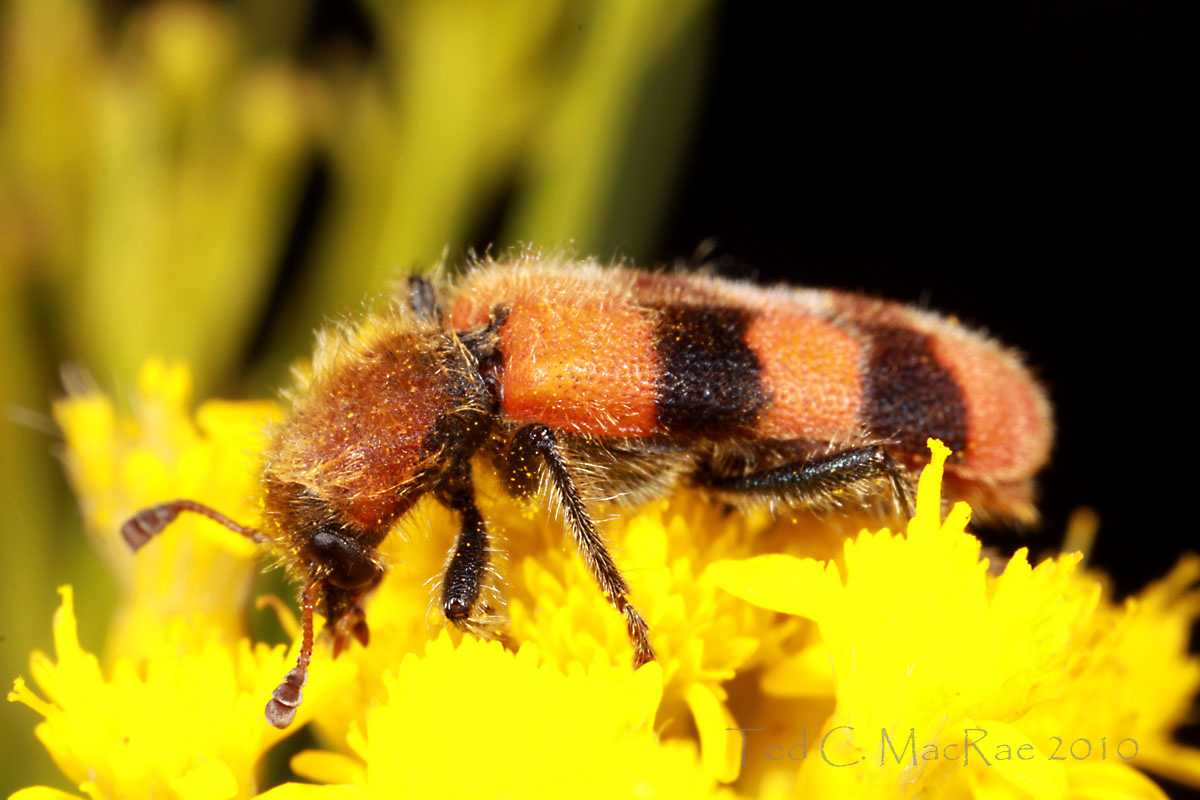
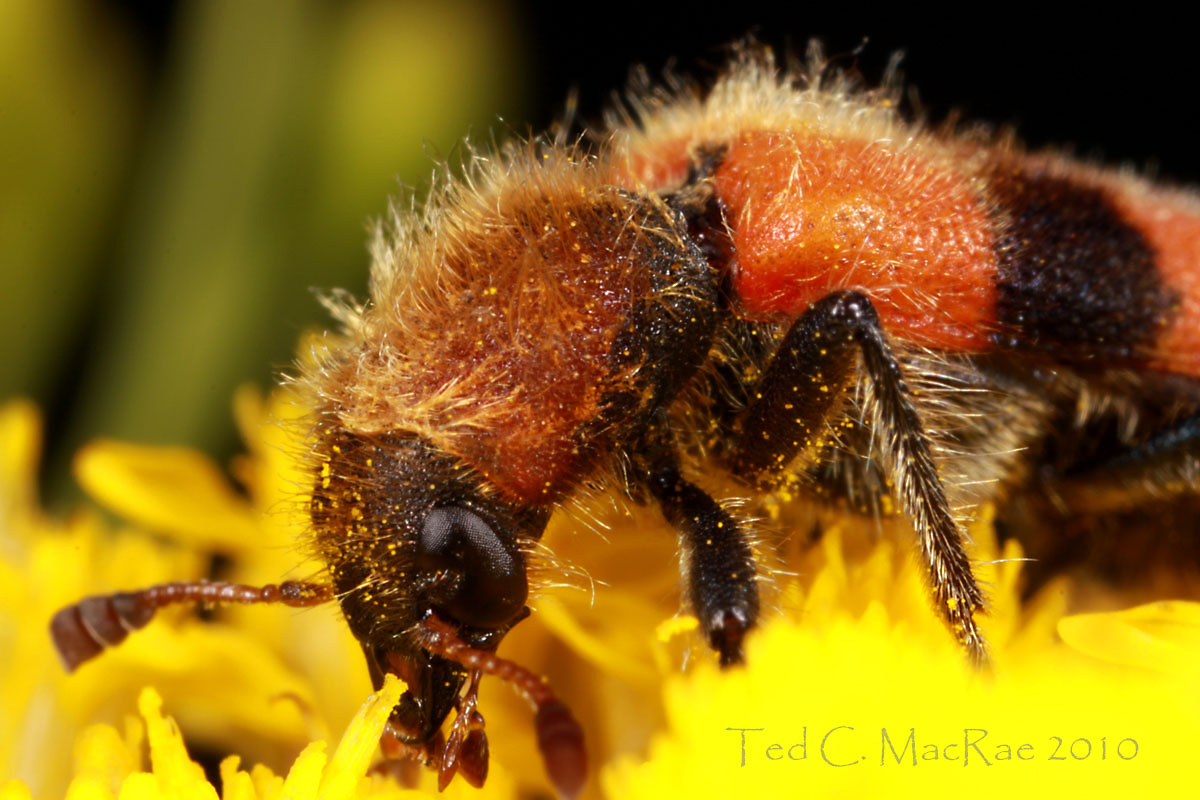
Photo Details: Canon EOS 50D w/ Canon 100mm macro lens, ISO 100, 1/250 sec, f/20, MT-24EX flash w/ Sto-Fen diffusers.

  1. Entomology Quiz: Name the beetle.
  2. Botany Quiz: Name the plant.
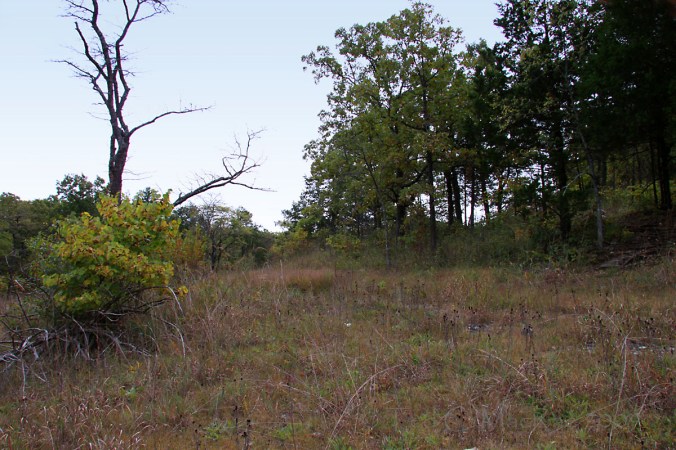
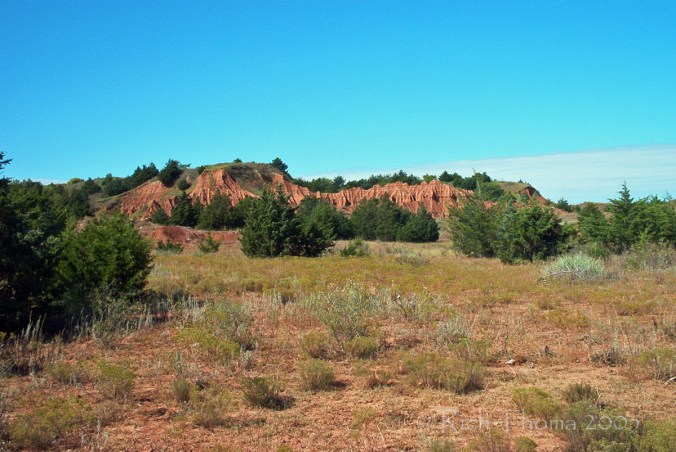
  3. History Quiz: Name the location (yes, attentive readers will be able to deduce this).

While you ponder these questions, please make note of two upcoming blog carnivals:

  • Circus of the Spineless – I’ve waited almost a year to host issue #47 of this venerable blog carnival – look for its appearance early next week.  Send me your submissions by January 31 if you want to be included in this issue – ossified homeotherms need not apply.
  • An Inordinate Fondness – The inaugural issue of this monthly blog carnival devoted to beetles is set to debut in mid-February at the home site.  Post submissions are already starting to come in, so don’t miss this chance to be a founding participant.  Submissions are due by February 15 – either by email or using this handy BlogCarnival submission form.

I’ve discovered a few more interesting blogs since my last blogroll update – the following are definitely worth a visit:

  • Biodiversity in Focus Blog – A new blog by graduate student Morgan Jackson.  Amazing photographs of stilt-legged flies (Diptera: Micropezidae).
  • BunyipCo – David Rentz writes about entomology from Queensland, Australia, with a focus on orthopteroid insects and the rain forest.
  • I Love Insects – Entomology student and insect enthusiast Erika Lenz really loves insects.
  • nbell.dk/BLOG – A relatively new blog by a dragonfly/butterfly enthusiast in Denmark.
  • Forest Fragments – Just a stone’s throw from my backyard, the staff at Washington University’s Tyson Research Center has begun a blog about their 2,000-acre experiment.
  • Exploring the Remnants – A brand new blog from Aaron Brees, who explores Iowa’s natural history.  Drop by and give him a jump start.

For those really interested in exploring entomology-related blogs, Anna Miller has provided nice descriptions of her Top 25 Entomology Blogs.  Yes, I made the list, as did most of the other usual suspects, but you might find one or two that you didn’t know about.

Copyright © Ted C. MacRae 2010

Add to FacebookAdd to DiggAdd to Del.icio.usAdd to StumbleuponAdd to RedditAdd to BlinklistAdd to TwitterAdd to TechnoratiAdd to Yahoo BuzzAdd to Newsvine

Email to a friend

Posted in Coleoptera | Tagged , , , , , , , , , | 14 Comments

A matter of diffusion

In my Best of 2009 post, I mentioned four skills that, to me, seemed to be crucial for becoming a successful insect macrophotographer: 1) composition, 2) understanding lighting, 3) knowing how to use a flash, and 4) knowledge of the subject.  Of these, I’m most comfortable with the last – three decades of insect study have given me the chance to observe a tremendous diversity of insects in a variety of situations and habitats.  Many species are located only through understanding of their haunts and habits, and the ability to capture them relies upon successful approach techniques.  Collecting insects has been excellent preparation for photographing them.  I’m also reasonably satisfied with my compositional skills – at least in this early stage of my development as a photographer.  I don’t expect to win any photo competitions (yet), especially since my intent as a photographer is at least as much for scientific documentation as it is for artistic expression, but I’m satisfied that I’m on the right track and developing the eye I’ll need to make good progress.

What I’m not satisfied with yet are the middle two – understanding lighting and knowing how to use a flash.  Let’s face it, I was starting from square one here.  My only prior experience with insect photography were middlin’ attempts in the mid-1980’s using an Olympus OM-10 body, a Zuiko 50mm lens (maximum magnification 1:2), and natural light only.  I quickly lost interest (too distracting for the collecting), picking it back up only for my 1999 trip to South Africa.  Fast forward to May 2009 and my acquisition of a bona fide insect macrophotography setup, complete with Canon’s 100mm f/2.4 and 65mm 1-5X macro lenses and their MT-24EX macro twin flash.  Talk about giving a Ferrari to someone who had just received their learner’s permit!  I like a good challenge, however, and spent the rest of 2009 with camera in hand on several memorable field trips – shooting lots of frames, deleting many on the spot and more when I saw them on the computer, and occasionally stumbling onto a pretty good one.

While I still have much to learn, one thing I did realize is that lighting remains a challenge even with a decent setup such as mine.  The MT-24Ex flash unit, in particular, while seemingly the flash of choice among Canon-using amateur insect macrophotographers, produces a very harsh light.  The capabilities and shortcomings of this flash unit have been reviewed in great detail by several insect macrophotographers much more knowledgeable than I (e.g., Alex Wild, Dalantech, Kurt, etc.), so I simply refer you to their websites if you’re interested rather than try to summarize here.  However, the one thing they all emphasize with this flash unit is the need for diffusers.  Diffusing light is easy; a simple sheet of tracing paper will do.  However, diffusing light in a manner that is equally effective with both the 65mm and 100mm lenses (with their shorter and longer working distances, respectively) and also convenient for field-use is hard.  For most of the 2009 season, I tried using Sto-Fen Omni-Bounce Diffusers, and while they were marginally better than no diffusers at all, the results were still not satisfying.  More recently, I’ve been experimenting with the Gary Fong Puffers, which Dalantech has modified for use with the MT-24EX.  I hadn’t yet committed to constructing the diffusers as described and conducting controlled comparisons between the Puffers and Sto-Fens, but my initial tinkering with the Puffers has me impressed.  Below are two photos of Cicindela splendida (the aptly-named Splendid Tiger Beetle) – the first (which some of you may remember from this post) was taken in the field using the Sto-Fen diffusers and the 65mm lens (1X)…

…while the second was taken recently of this same beetle (in captivity on native soil) using the Puffers attached to the Sto-Fens and the 100mm lens (at slightly less than 1X).

Both photos have been cleaned up a bit with post-processing; however, neither has been altered dramatically.  While not a true one-to-one comparison due to different venues (field versus captivity) and lenses (65mm versus 100mm), the second photo is clearly superior to the first, with softer lighting resulting in richer colors and far fewer specular highlights on the insect body.   I had to bump the lighting up considerably for the second photo, since the Puffer combined with the Sto-Fens cut the light levels quite a bit, yet still the photo lacks any of the harshness and washed appearance of the first photo.  The use of the 100mm lens in the second photo also should have presented a greater challenge for the lighting due to the increased working distance (~8 inches, compared to only 2-3 inches for the 65mm lens).  I’m really quite pleased with the results of this initial experiment – enough to the point that I’ve ordered the necessary materials and am ready to dive into construction of my own set of “Dalantech-Puffers.”

Copyright © Ted C. MacRae 2010

Add to FacebookAdd to DiggAdd to Del.icio.usAdd to StumbleuponAdd to RedditAdd to BlinklistAdd to TwitterAdd to TechnoratiAdd to Yahoo BuzzAdd to Newsvine

Email to a friend

Posted in Cicindelidae, Coleoptera | Tagged , , , , , , , , | 15 Comments

Friday Flower: Crystallofolia (“Frost Flowers”)

Crystallofolia (frost flowers) on dittany (Cunila origanoides).

While hiking the middle stretch of the Ozark Trail’s Wappapello Section, my friend Rich and I witnessed a bounty of crystallofolia, or “frost flowers”.  These fragile, yet exquisite formations are, of course, not flowers at all, nor are they true frost (which forms directly from water vapor without first condensing), but rather are thin layers of ice that form as water is drawn from cracks in plant stems and freezes upon contact with cold air.  As the water continues to be drawn from the plant by capillary action, newly forming ice pushes older ice further out, creating delicate, folded, curling ribbons of ice that resemble many-layered flower petals.  Air trapped within the ice upon freezing imparts a frothy white appearance.

Frost flowers are not an uncommon phenomenon, and I have seen them on more than a few occasions during my frequent off-season hikes.  However, never before had either Rich or I seen the numbers that we saw during our hike on this, the second day of the New Year.  Frost flowers are normally encountered during the first hard freezes of fall when the ground is not yet frozen.  Water in the stems of certain plants expands as a result of the freezing air temperatures, causing vertical cracks to form along the length of the stem through which the ice ribbons are extruded. The formations are rather ephemeral, usually melting or sublimating away by late morning in fall’s typically mild daytime temperatures.  As fall progresses to winter, water stores in the plant stems become depleted after several freezes or locked up when the ground itself freezes, and as a result frost flowers are rarely seen later than December in Missouri. However, it has been a wet and mild fall and early winter, and after an extended period of moisture during December, Missouri was finally gripped by a severe cold spell with lows in the single digits and daytime highs remaining down in the teens and 20s.  The saturated, yet unfrozen ground provided a good source of moisture for plant stems to draw upon, and continuous subfreezing air temperatures allowed frost flowers to persist throughout the days and attain remarkable size. The photo above was taken in late afternoon as a sinking sun shone brightly on the west-facing slope where this formation was seen, persisting in all its fragile glory.

In Missouri, frost flowers are primarily associated with dittany (Cunila origanoides), species of Verbesina (V. virginica, white crownbeard; and V. alternifolia, yellow ironweed), and camphor weed (Pluchea camphorata).  Frost flowers are rarely seen on any other plant in Missouri, and I don’t know what it is about these plants and not others that make them suitable for frost flower formation.  Dittany is a daintly little member of the Lamiaceae, and as such has square stems – perhaps the angles on the stem are prone to splitting.  However, there are many other lamiaceous plants and non-lamiaceous square-stemmed plant species in Missouri that do not form frost flowers.  Likewise, Verbesina and Pluchea belong to the Asteraceae and do not have square stems.  They are, however, larger, more robust plants with thick, pithy stems that may be capable of holding a large amount of water and mature late in the season after most other plants have already dried up, perhaps allowing them to retain sufficient moisture in the stem late enough in the season to allow frost flower formation when conditions are right.  The majority of the frost flowers we saw were on dittany – dainty, delicate, fragile formations 2-3 inches across. However, at the end of the hike, as we were exploring the area around the parking lot, we found a stand of Verbesina (I suspect V. alternifolia), with which some of the most enormous and robust frost flowers that I have ever seen were associated.  Following are additional views of some of the more impressive formations we saw and the plants they were associated with.

Frost flowers on dittany - shaded, protected areas produced the largest formations.

Partial thawing during ribbon formation causes exquisite twists and turns.

Like snowflakes, each frost flower is one-of-a-kind.

Dittany (Cunila origanoides) dried stem, leaves, and fruits.

Verbesina sp. frost flowers were enormous - this one was approx. 5 inches wide.

Dried fruits of Verbesina sp. (poss. alternifolia).

Copyright © Ted C. MacRae 2009

Add to FacebookAdd to DiggAdd to Del.icio.usAdd to StumbleuponAdd to RedditAdd to BlinklistAdd to TwitterAdd to TechnoratiAdd to Yahoo BuzzAdd to Newsvine

Email to a friend

Posted in Asteraceae, Lamiaceae | Tagged , , , , , , | 33 Comments

House of Herps #2

House of HerpsWelcome to the 2nd issue of House of Herps, the monthly blog carnival devoted exclusively to reptiles and amphibians.  The brainchild of Amber Coakley, (Birder’s Lounge), and Jason Hogle (xenogere), this new blog carnival had an auspicious start with the inaugural issue and its 21 contributions – an impressive level of participation for a new carnival.  This month the carnival moves off-site, and I am honored to serve as the first off-site host.  The enthusiasm continues with issue #2, for which I received 22 submissions from 18 contributors.  Ever the taxonomist, I present them to you below grouped by traditional classification¹.

¹ It should be noted that modern classification has “evolved” substantially from this traditional classification due to the advent of DNA molecular analyses. For example, lizards are a paraphyletic grouping, and even the class Reptilia has been subsumed within a broader class containing dinosaurs and birds. I stick with the traditional classification here for reasons of familiarity and convenience.

Class AMPHIBIA (Amphibians)
-Order CAUDATA (Salamanders)

California Giant Salamander (Dicamptodon ensatus).  At the nature of a man, Ken talks about not one, but two close encounters last fall with this otherwordly-looking creature.  The first one he saw was a monster of a salamander, measururing a whopping 12 inches (30 cm) in length as it brazenly lounged on a mountain bike trail.  Remaining docile for photographs, imagine Ken’s surprise when the salamander started barking at him when he picked it up to move it to safer ground!  In his second encounter, he got to watch one chomp down on a banana slug – mmm tasty! 

-Order ANURA (Frogs)

Upland Chorus Frog (Pseudacris feriarum).  At Anybody Seen My Focus?, Joan normally only gets to hear the breeding season calls of the chorus frog and his friends who have taken up residence in the water-filled bathtub that serves as a planter in her greenhouse, usually bobbing under the water upon any approach.  But on this occasion, he agreed to photographs, even allowing a final closeup.

Gulf coast toad (Bufo nebulifer).  At Dolittle’s Domain, Dr. Doolittle marvels at one of the many toads that she has found parked under the outside light all night (along with the bats and armadillos) during the cold darkness of December.  Rather than fleeing the camera flash in the face, he simply hunkered down trying to make himself flatter, apparently thinking that would make him invisible and not realizing that he just looked fatter!

Northern Cricket Frog (Acris crepitans).  HoH‘s own Jason weaves artful writing with stunning photographs to distinguish one of the smallest land vertebrates in North America at xenogere.  Despite their ubiquity, these little frogs often go unnoticed due to the smallness of their size, their impressive leap, and their extreme variability.  Get a good look at one, however, and you might notice a key feature or two.

American Bullfrog (Rana catesbeiana).  At Willow House Chronicles, barefootheart looks at frogs on the opposite end of the size spectrum, in fact North America’s largest frog living in an increasingly naturalized man-made pond in eastern Ontario.  These behemoths are more frequently heard than seen by their distinctive “yelp” and splash in response to being approached.  If you are lucky enough to get as good a look as barefootheart did, you might be able to distinguish male from female by looking at its eyes, ears, and throat.

Class REPTILIA (Reptiles)
-Order TESTUDINES (Turtles)

Common Snapping Turtle (Chelydra serpentina).  We have three contributions dealing with these grizzled, ancient, grotesquely beautiful reptiles.  The first one comes from Michelle at Rambling Woods, who shows us how it is possible to tame your pet common snapper (but only to a certain degree).  If her story isn’t enough, she also presents a short video clip on the common snapping turtle (Baby snapping turtleREMEMBER – don’t ever try to catch or hold a snapping turtle with your bare hands!).  In another post, HoH‘s own Amber talks about her attempts to rescue a snapping turtle at Birder’s Lounge.  Fortunately for Amber, the little guy was just a tot – not nearly big enough to prune a digit and thwart Amber’s display of compassion.  It’s amazing how a creature so dinosaurian at maturity can still be so cute as a youngster.  In the third contribution about these fascinating creatures, Marge at Space Coast Beach Buzz talks about her snap (get it?) decision to adopt one of these animals, only to change her mind after discovering its true identity (and before losing any fingers).

Green Sea Turtle (Chelonia mydas).  David at Living Alongside Wildlife notes that while green iguanas falling from trees were a popular news report from the unusual cold snap experienced in the southeatern U.S. last month, they were not the only reptiles so adversely affected.  Sea turtles, populations of which have already been compromised by loss of nesting sites, fishing practices, and trash pollution, also found the coastal waters too cold for normal function.  While natural hardships may be nature’s way, he argues (quite effectively) that it is our responsibility to help mitigate their effects considering the perilous position in which we’ve placed these majestic animals to begin with.

Eastern Box Turtle (Terrapene carolina).  Two contributors submitted posts about these lovable oafs.  At A DC Birding Blog, John posted a photo of a box turtle seen at Brigantine Beach.  He wonders if their always disgruntled look is a result of him disturbing from their activities.  These turtles are easily identified by their bright markings – usually dark brown or olive-colored with bright orange or yellow patterns, dome-shaped carapace, and hinged plastron (bottom part).  Individual turtles have unique designs on their shells, making them identifiable in the field.  Turtles can get worms, believe it or not, and Celeste at Celestial Ramblings adds them to the growing list of animals that she has had to de-worm (including herself, ick!).  Step-by-step instructions and explicit photos combine to show that this is not an easy job, requiring no less than three people – “just another day at the office.”  Hmm – cats look easier!

Diamondback terrapin (Malaclemys terrapin).  The diamondback terrapin is the only species of turtle in North America that spends its life in brackish water (salty but less so than sea water).  At Kind of Curious, John describes efforts by The Wetlands Institute to prevent vehicle mortality caused by terrapins crossing roads in their attempt to reach higher ground for laying eggs.

-Order SQUAMATA
–Suborder LACERTILIA (Lizards)

Common collared lizardCommon Collared Lizard (Crotaphytus collaris).  From Jill at Count Your Chicken!  We’re Taking Over! comes this delightful encounter with one of North America’s most charismatic lizards.  I’ve had my own experiences with these guys, but I’ve never gotten one to crawl on my hat or – even better – gotten one to pose with me for a photograph!

Prairie Lizard (Sceloporus consobrinus).  Near my backyard, Marvin at Nature in the Ozarks presents a nice compendium of this species complimented with beautiful photographs.  Marvin not only discusses identification, distribution, life cycle, habitat, and food, but also comments on the recent DNA molecular analyses that have resulted in a reclassification of the former polytopic “fence lizard” and split up the many subspecies into full-fledged species – a man after my taxonomic heart!

“Culebrilla ciega” (Iberian Worm Lizard) (Blanus cinereus).  Javier at macroinstantes writes an artful blog focusing on natural history of the Iberian Peninsula (it is written in Spanish, but Google can easily translate to English for those who need it).  In this post, he presents extraordinary photographs of this subterranean reptile that is endemic to the Iberian Peninsula.  Traditionally classified in the family Amphisbaenidae, it is now considered to belong to its own family the Blanidae.

“Lagartija de Valverde” (The Spanish Algyroides) (Algyroides marchi).  Javier (macroinstantes) also writes about this small lizard that was only discovered in 1958.  With a global range limited to a few mountain streams in a mountainous area of southern Spain covering less than 2,000 km², it is clasified as endangered on the IUCN Red List.  Like so many of the world’s reptiles, its severely fragmented population is suffering declines due to continuing habitat degradation.

–Suborder SERPENTES (Snakes)

Western Rattlesnake (Crotalus viridis).  On the Colorado front range, Sally at Foothills Fancies had three encounters with this aggressive species on her property.  Fortunately, Sally has a “nonagression treaty” with rattlesnakes and allows them to go about their business as much as possible.  Those that get too close for comfort are humanely relocated rather than simply dispatched.  Sadly, many of Sally’s neighbors are not quite so understanding.

Texas Indigo Snake (Drymarchon corais erebennus).  These snakes do not have any such nonaggression treaty, and David at Living Alongside Wildlife contributes another piece illustrating the rattlenake-eating capabilities for which Indigo snakes are famous.  The photographs in the post show a large individual consuming a Western Diamondback Rattlesnake. David explains how these snakes are often identified as blacksnakes and reveals the characters visible on predator and prey that allow their correct identification.

Black Rat Snake (Elaphe obsoleta).  Right here in my home state, Shelly at Natural Missouri characterizes black rat snakes as one of the most commonly encountered snakes in Missouri.  Large snakes reaching up to 6 feet in length, they often end up in basements and cellars in the fall in search of a place to spend the winter – just in time for Halloween!  These snakes are often needlessly killed because of their resemblance to the venomous cottonmouth or water moccasin that they superficially resemble.  However, Shelly has the same nonaggression treaty with these snakes that Sally has with rattlesnakes (although her husband is not quite so sympathetic). 

-Order CROCODILIA (Crocodilians)

American Alligator (Alligator mississippiensis).  David at Living Alongside Wildlife also contributed two pieces on North America’s largest reptile.  In his post Gatorzilla, he examines commonly e-mailed pictures and text about so-called “giant” alligators, debunking myths about 25 foot long monsters, clarifying the identity of misidentified Nile crocodiles, and exposing cases of camera trickery.  In his post Mommy Dearest, he recounts his nervewracking experience when he stumbled upon an alligator nest while knee deep in a south Georgia swamp at night.  Worse, the babies had hatched!  Read the post to see if David got out of there with both of his legs.

GENERAL HERPETOLOGY

Sometimes simply the act of looking for herps is as enjoyable as the herps that are found.  However, it has been a tough January for Bernard at Philly Herping.  A particularly cold snap in the first half of what is already the coldest month of the year made herping at his favorite cemetary a lesson in futility.   I hope you notice the irony – cemetary?, no sign of life?, cold-bloodedness (okay, okay – ectothermic)?

I hope you’ve enjoyed this issue of House of Herps.  The February issue moves over to xenogere, where Jason’s considerable carnival hosting talents are sure to be on full display.  Submit your slimy, scaley, cold-blooded contributions by Febrary 15, and look for the issue to appear by February 18.

Copyright © Ted C. MacRae 2010

Add to FacebookAdd to DiggAdd to Del.icio.usAdd to StumbleuponAdd to RedditAdd to BlinklistAdd to TwitterAdd to TechnoratiAdd to Yahoo BuzzAdd to Newsvine

Email to a friend

Posted in Amphibia, Reptilia | Tagged , , , , , , , , , | 29 Comments