Which one do you think will win?
Copyright © Ted C. MacRae 2010


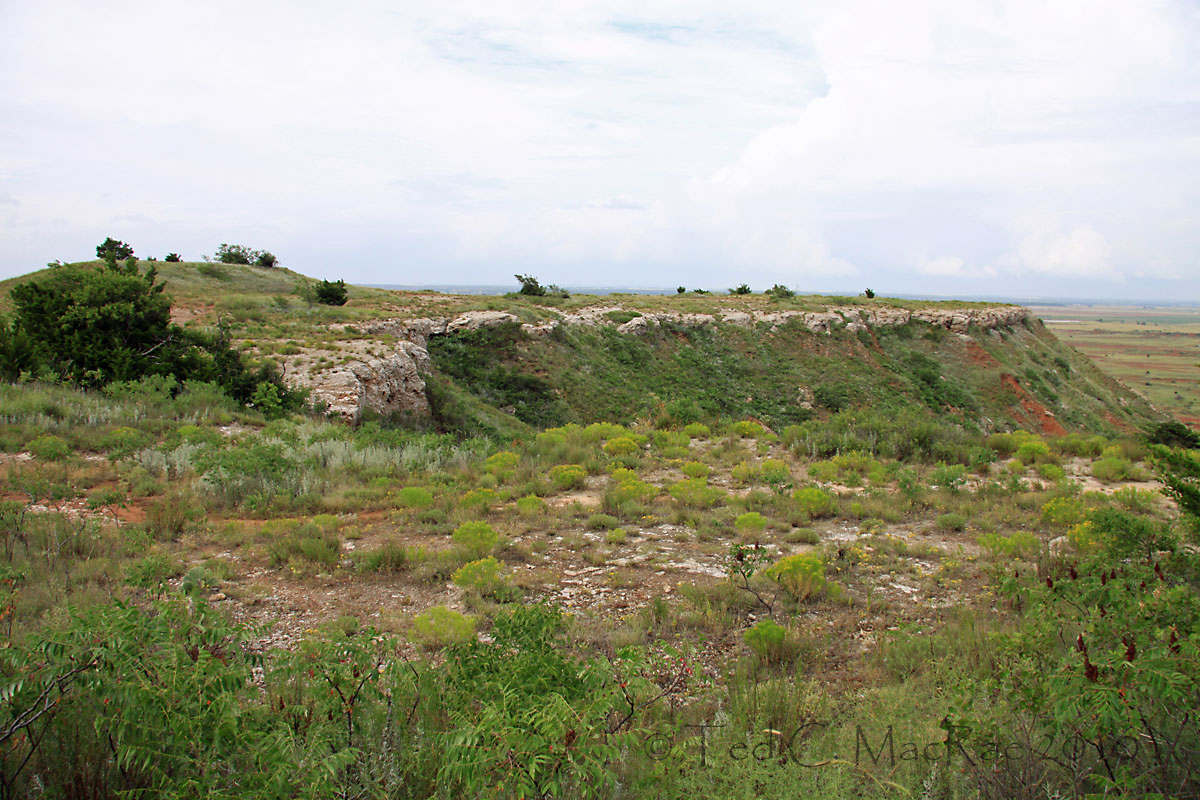 A few weeks ago, while waiting to begin my nocturnal hunt for the Great Plains giant tiger beetle (Amblycheila cylindriformis) in northwestern Oklahoma, I spent the daytime atop one of the red flat-topped mesas that meander through the area in nearby Gloss Mountain State Park. Although my trip was all about seeing this giant of a tiger beetle in the wild for the first time (I could hardly wait for dusk to begin my search), I found enough splendid insects of other types atop the mesa to occupy my interest until that time. One of these was the still-robust population of the Swift Tiger Beetle (Cylindera celeripes) that I discovered last summer and delighted in photographing yet again, while another was North America’s largest robber fly – Microstylum morosum! I had just finished photographing one of the tiger beetles near the edge of the mesa when I turned and saw one of these impressively large flies sitting calmly on the ground nearby.
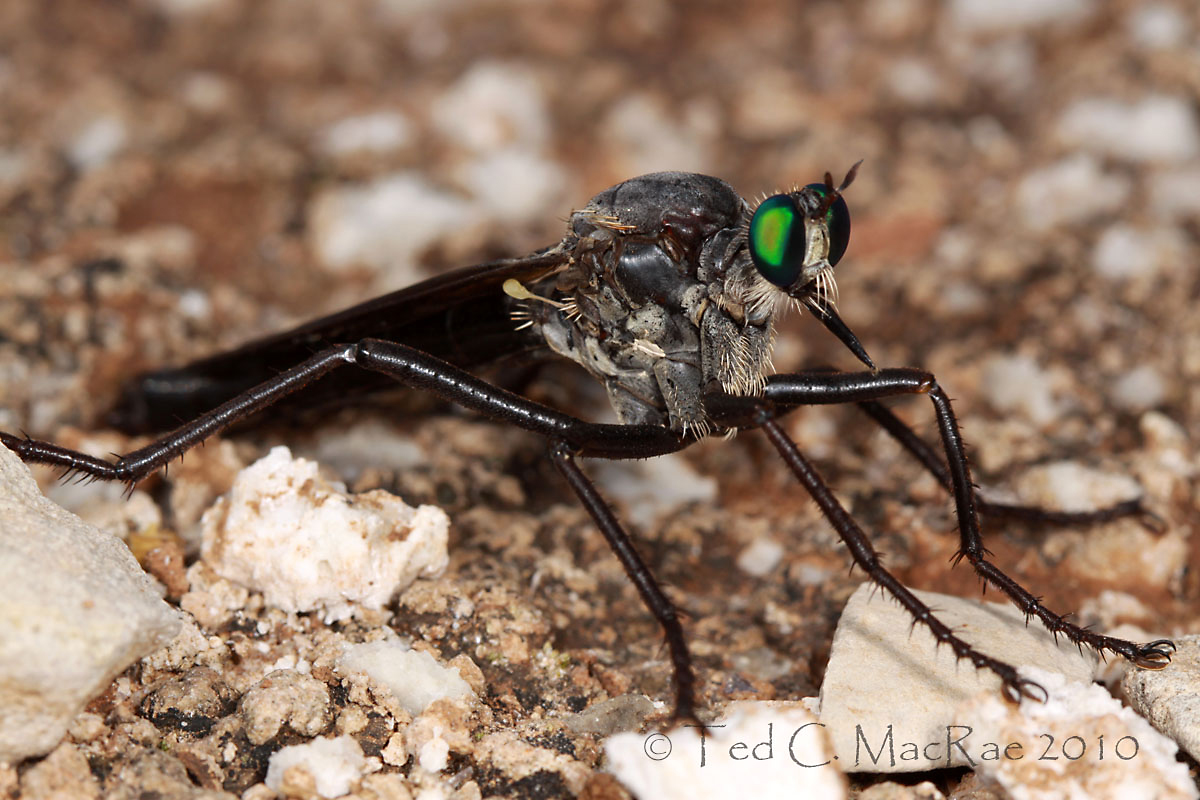 I first encountered this species last year in southwestern Missouri (a new state record!), so there was no question about its identity. I also remembered how skittish they were and how difficult it was to get even the two mediocre photographs that I included in the resultant post. Expecting the same, I kept my eye on the ground-sitter while preparing the camera and approached it with extreme caution. To my surprise, it showed no sign of being alarmed or wanting to take flight. I crouched down low and marveled at its monstrous impressiveness as I took frame after ever closer frame – eventually zeroing in on the head and its stunningly magnificent emerald-green eyes.
 Satisfied that somewhere in the dozen and a half frames that I shot was at least one or two winners, I sat up and probed towards it with my finger to see how quickly it took flight. It just sat there tenaciously until my touch caused it to finally take wing. Winds were gusty atop the mesa, which may have accounted for its cooperativeness. Standing up, I noted a few scattered eastern redcedars (Juniperus virginiana) in the mixed-grass prairie at the highest point of the mesa. I recalled that robber flies are fond of “hilltopping” – a mating strategy whereby males fly to the highest point in their immediate landscape to defend a small territory or perch that provides a good vantage for spotting females and competing males (see Hilltopping by Eric Eaton at Bug Eric for a good discussion about this) – and my own experience with this species in Missouri and the way it tended to perch in the trees scattered across the upper part of the rocky, dolomite glade where I found them. I wandered up to the redcedars, and as soon as I came close enough to one of them I saw another individual take flight – looking like some super-sized mosquito with it’s long legs spread wide as it clumsily flew to another tree. As it turned out, I saw a number of individuals and mating pairs perching and flying among the trees on top of the mesa, each more spectacular than the previous.
Until recently, Microstylum morosum was considered a Texas-endemic. However, Beckemeyer and Carlton (2000) documented this species to be much more broadly distributed in the southern Great Plains (from Texas up into Oklahoma and Kansas and west into New Mexico, Arizona, and Colorado), and Warriner (2004) recorded it shortly afterwards in Arkansas. Although the species apparently occurs throughout Oklahoma (Beckemeyer and Carlton recorded from 13 counties across the state), my observation of it in Major County does seem to represent a new county record for the species. There is another U.S. species in the genus, M. galactodes, and it has also been recorded from Oklahoma (the closest record is in nearby Woodward County). However, it is easily distinguished by its generally smaller size, milky white wing membranes, reddish-brown body, and head and thoracic dorsum evenly covered with whitish pruinescence, while M. morosum has the wings and body black to brown and thoracic pruinescence restricted to the lateral margins (Beckemeyer and Carlton 2000). I’m not sure I would have recognized that species for what it was had I seen it, but if it is anywhere near as impressive as M. morosum then I hope I have the fortune to find it someday as well.
Photo Details:
Landscape: Canon 50D w/ 17-85mm wide-angle lens (17mm), ISO 100, 1/100 sec, f/10, ambient light. Typical post-processing (levels, unsharp mask).
Insects: Canon 50D w/ 100mm macro lens, ISO 100, 1/250 sec, f/10 (photo 1), f/18 (photo 2), Canon MT-24EX flash (1/4 ratio) w/ Sto-Fen diffusers. Typical post-processing (levels, minor cropping, unsharp mask).
REFERENCES:
Beckemeyer, R. J. and R. E. Carlton. 2000. Distribution of Microstylum morosum and M. galactoides (Diptera: Asilidae): significant extensions to previously reported ranges. Entomological News 111(2):84–96.
Warriner, M. D. 2004. First Arkansas record of the robber fly Microstylum morosum (Diptera: Asilidae). The Southwestern Naturalist 49(1):83–84.
Copyright © Ted C. MacRae 2010


Last summer, while looking for North America’s most beautiful longhorned beetle in the dolomite glades of southwest Missouri’s White River Hills, I also came across good numbers of a tiger beetle species that I had previously considered rather uncommon in the state – Cicindela rufiventris (eastern red-bellied tiger beetle). While I have seen this species at numerous localities throughout the Ozark Highlands, I had not seen them in such numbers as were present along a rocky 2-track leading through one of the glades and into the adjacent dry upland forest. I had intended to post about them much sooner than now, but they took a backseat to the photos I obtained of the stunning Plinthocoelium suaveolens and the fantastic diversity of Floridian tiger beetles that I encountered in the following weeks. I had, in fact, completely forgotten that I had these photos until Steve Willson, author of Blue Jay Barrens, presented two posts with some excellent behavioral observations of this species in Ohio (see his posts Eastern Red-Bellied Tiger Beetle and Tiger Beetle Behavior).
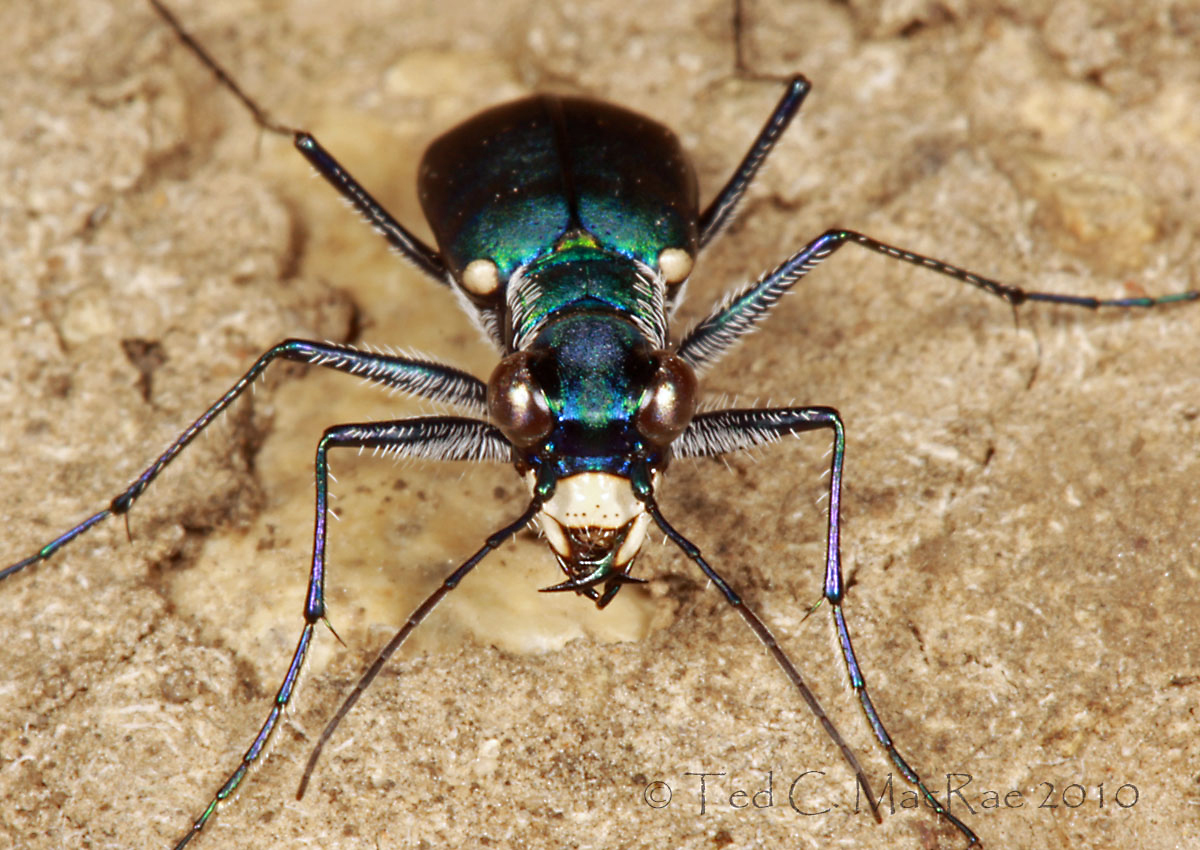
In Missouri, I have found this species exclusively in the Ozark Highlands region, primarily along rocky clay exposures along roadsides and on trails and 2-tracks through open pine forests on sandstone substrates. As I mentioned, however, I never saw large numbers of individuals – just a few here and there. On this rocky, dolomite 2-track though, the species was quite abundant, to the point that I was able to pick and choose the more “cooperative” subjects for photography instead of stalking interminably behind a precious skittish few. In my second trip to the region two weeks later, I would find the species again abundant along trails winding through the region’s finest and most extensive dolomite glade systems at Hercules Glades Wilderness. In previous years I haven’t spent much time in the extreme southern Ozarks during July and August, since by then most woodboring beetle activity has largely ceased – this probably explains why I’ve not seen this summer active species more abundantly before now.
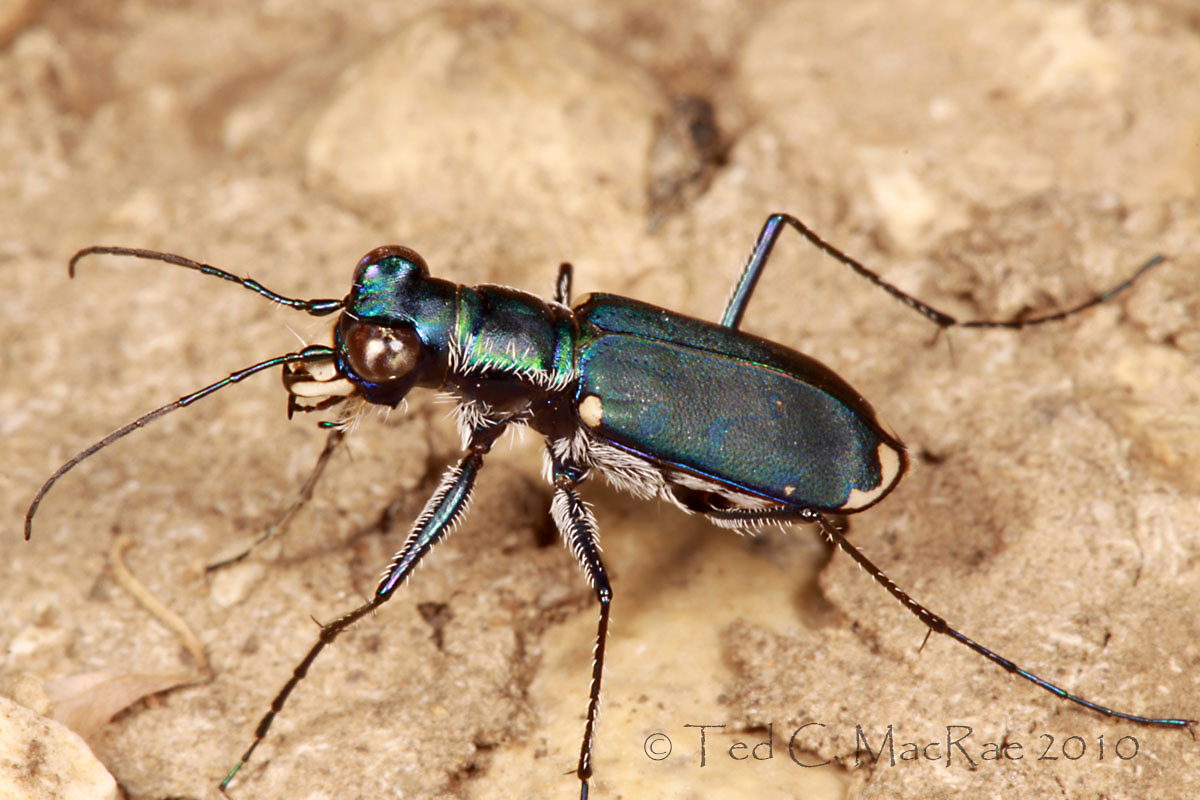
Cicindela rufiventris is quite closely related to C. ubiquita¹, both of which are included in the subgenus Cicindela (Cicindelidia), dubbed the “American Tiger Beetles” by Pearson et al. (2006). It is immediately recognizable, however, by its red-orange abdomen – hints of which can be seen in these photos and which is fully exposed during flight. It also lacks the distinct sutural row of green punctures on the elytra exhibited by the latter, and the upper body coloration tends to be a little more variable in Missouri, ranging from dull dark brown or black to dark blue. According to Pearson et al. (2006), populations in southern Missouri represent the northern fringe of an intergrade between the nominate subspecies to the east and subspecies cumatilis ranging from southwestern Louisiana into eastern Texas. The distinction between these two subspecies is a matter of degree, with the latter exhibiting reduced maculations and a blue rather than brown or black upper body. The influence of cumatilis can be clearly seen in the individual shown in the first three photographs, while the individual in the photo below is much more “nominate” in appearance. For taxonomic purposes, individuals from these populations are probably best classified as “Cicindela (Cicindelidia) rufiventris rufiventris x rufiventris cumatilis intergrades.” Such nomenclature implies that these individuals represent hybrids between two geographically distinct populations, since subspecies in the strictest sense represent genetically divergent populations made allopatric or near-allopatric as a result of isolating geographical barriers. However, tiger beetle taxonomy is replete with “subspecies” that more likely represent extremes of clinal variation, of which cumatilis appears to be one example. The opposite expression of this cline can be found in a few isolated populations near Boston, in which the elytral maculation is at its most developed – these populations have been designated as subspecies hentzi.
¹ Referred to by most authors as Cicindela punctulata.
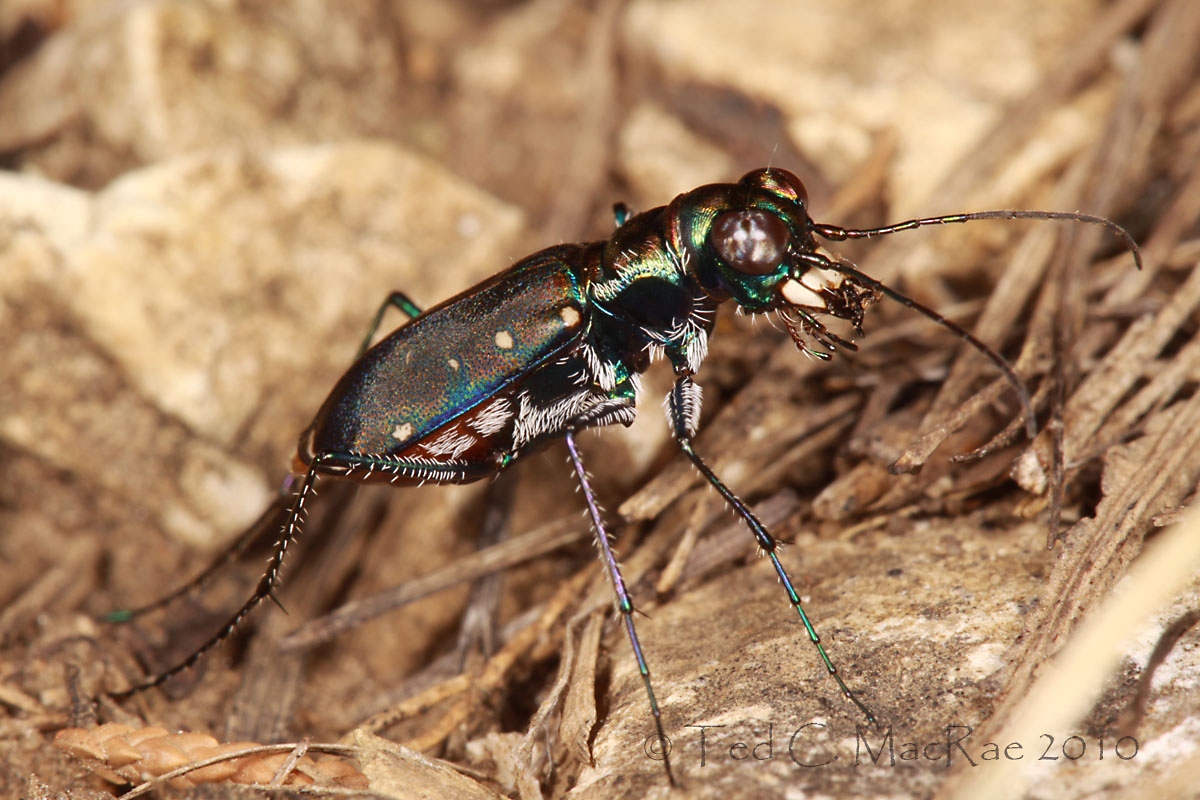
Photo Details: Canon 50D w/ 100mm macro lens, ISO 100, 1/250 sec, f/25 (photos 1-2), f/29 (photo 3), f/18 (photo 4), Canon MT-24EX flash (1/4 ratio) w/ Sto-Fen diffusers. Typical post-processing (contrast and unsharp mask).
REFERENCES:
Pearson, D. L., C. B. Knisley and C. J. Kazilek. 2006. A Field Guide to the Tiger Beetles of the United States and Canada. Oxford University Press, New York, 227 pp.
Copyright © Ted C. MacRae 2010

View from the Col du Soulor, French Pyrénées.
Most of you have probably surmised by now that I’ve been away for the past two weeks. More specifically, I’ve been in Europe following the Tour de France and testing my own mettle as a cyclist in the French Pyrénées and the streets of Paris. In the past two weeks, I’ve logged 710 km (I’m too tired to figure out what that is in miles) – most of it in the mountains over the same Cols and descents as this year’s Tour de France. I’ve climbed (and descended) 10 mountain passes totaling well over 10,000 m of vertical ascent, reached speeds of 75 kph, rubbed elbows with more than 10,000 other cyclists in the 181-km Etape du Tour (finishing in the top 10%), seen six stages of the Tour de France, sought autographs from the world’s top pro cyclists, and sprinted against some seriously fast guys in Paris. Add gorgeous 200-year old hotels, sumptuous French cuisine, and the comradery of 17 other like-minded individuals (including my lovely wife), and you have the makings of a trip that will not soon be forgotten.
My sincerest thanks to Anne McCormack, Alex Wild, James Trager, and Rich Thoma for filling in for me during my absence with their guest posts here at Beetles in the Bush. I hope you enjoyed their contributions as much as I did (a safe bet, judging from the many comments their posts generated). I’m a little bleary-eyed from the trip back home today, but life should return to normal quickly. My trip was light on natural history – sometimes one has to make choices, and for this trip I decided to maintain cycling as the focus. The big camera stayed home, and the point-and-shoot was used mostly for capturing race action. Still, scenes like the one above – taken from the ascent of the Col du Soulor – captivated the natural historian in me and left me wanting to learn more about the unique flora and fauna that must exist in these gorgeous mountains. Perhaps next time…
Copyright © Ted C. MacRae 2010


Today’s guest blogger is longtime friend and insect collecting partner Rich Thoma. Rich and I first met nearly 30 years ago and have been collecting insects together ever since. Rich is a strong advocate for educating children about natural history and has developed some rather fun methods for doing this. His unique sense of humor in doing this is on display in this post.
While Ted’s away, he asked me to fill in for him with an article for Beetles in the Bush. I thought I would take this opportunity to introduce you to some unique beetle species found in my collection. All were caught long ago when I first started collecting insects. Here they are for your enjoyment!
 The Colorado Mr. Potatoe Head Beetle was first discovered by Dan Quayle, ex vice president of the United States cleaning his son’s toy box when the family moved from the vice presidential mansion. Most entomologists feel this beetle is a subspecies of the very common potato pest, the Colorado Potato beetle. It has been speculated that a shipment of Mr. Potato Head toys was somehow mixed with a shipment of GMO modified sweet California Russet Potato’s. The beetles needing a new food source found the hollow, interior of the Mr. Potato head toy to their liking. Inedible plastics from the toy have been incorporated into the exoskeleton of the beetle.
 Today the lawn ornament beetle is considered rare. This insect’s population exploded in the mid- 1900’s when lawn ornaments, particularly pink flamingos were popular. This Cerambycid was named P. phaenicopterus after the flamingo genus Phaenicopterus in recognition of its strong association with plastic pink flamingos. Beetle populations have steadily declined as the pink flamingos have decreased in popularity. There is hope this species may rebound with the increase in other plastic yard items such as lawn chairs and big wheels.
 A common denizen of landfills of the mid-western U.S., Z. styrofoamensis is considered a scavenger preferring party garbage, plastic and styrofoam plates and cups. The white coloration is variable. Some specimens have only a few small white patches whereas others are nearly all white. In rare instances the white exoskeleton expands so much that it takes the shape of a packing peanuts. This explains why this species was overlooked for so long. Scientists performing landfill research were unaware this species was present due to its exact mimicry of the packing material so often discarded in today’s dumps. Recent research has shown the white coloration can be directly correlated to the amount of styrofoam eaten.
 A common denizen of battlefields and army bases around the world. This dung beetle is known to lay its eggs inside empty bullet shells and then pack it with dung. Inside the bullet shell, larvae are protected from being crushed by the heaviest of military equipment. One is likely to find this species any place guns are fired. Adults have four extremely sensitive, orange and yellow sound sensors on the elytra. At the sound of a rifle shot, adults fly from miles away towards the sound. Hundreds of this beetle species can be found, after an army platoon has taken target practice for the day. The first male to arrive at a bullet shell, quickly rolls it as far away from the noise as possible. Females are attracted to males that stridulate a sound something like “Ready, Aim, Fire”.
 This is the first known, genetically enhanced species developed to combat one of the worlds growing refuse problems, tires. Essentially scientists were able to cross a common scarab beetle with a Mexican jumping bean. The combination produced a new species capable of consuming rubber. Scientists quickly released thousands of these beetles into the ever growing, piles of old and used tires found in today’s junkyards. The tire decomposition program was deemed a complete success. As so often happens, however, when all the tires in landfills and dumps were consumed, the beetles switched to tires still in use. There has been a rash of flat tires causing millions in damage. At its worst, the Goodyear Beetle can consume all four wheels and the spare in less than a week.
 This species of beetle is only attracted to flashes of colorful lights such as at fireworks displays and Pokemon reruns. In flight, the body absorbs the flashes of color and retransmits them, often in technicolor. Some of the latest fireworks displays have been enhanced by releasing thousands of this beetle prior to the show. Similar flashes have been observed if a beetle lands on a television screen during a Pokemon show. The same flashes that cause epileptic seizures in some people, cause this beetle to buzz the national anthem of Mexico.
As with other insects, the species described above are easy to collect if you know how. Searching museum specimens, one quickly realizes that the only people collecting these insects were all under 12 (as was I when I collected each species). If you want to collect these beetles, the best opportunities will come if you take along a child. Children seem to be the only ones who have the imagination to find these beetles.
This is an opportunity to point out that today’s children are being denied the chance to enjoy the outdoors and learn about the wonderful creatures that live there. For the most part, our education system no longer devotes the time to teach about the plants and animals that occupy our planet. Even at home, children now spend their free time playing video games and watching TV instead of being outdoors. Few kids get the chance to walk on a dirt path in the woods or hold any living creature in the palm of their hand.
This is where you, the reader of this blog can make a difference. You can give our next generation the chance to enjoy the wonders from the creatures that live all around us. The next time you go out in the field to collect insects, take a kid with you. Volunteer at a local library, school or park. All these places cannot exist without volunteers and you have a lot to offer. It is amazing how much kids will learn about the world around them given the chance. The surprise in how much you learn in return from them!
Copyright © Richard S. Thoma 2010


[The following is an invited post by Alex Wild of Myrmecos blog]
Little did Ted know that giving me the keys to his beetle blog meant I’d be able to use his own soapbox to convince everyone that Hymenoptera (the ants, bees, and wasps) are just waaaayyyyy cooler than Coleoptera.
Exhibit A:
 Leucopsis sp. ovipositing into a solitary bee nest
Meet Leucospis. This colorful insect, about a centimeter in length, is a parasite of wood-nesting bees and wasps. In this photo she is drilling down through a leafcutter bee nest to lay her egg in one of the bee’s sealed cells. There, her larva will consume the developing bee.
Leucospid wasps aren’t terribly common, so I was rather surprised to see this one on my front porch in downtown Urbana.

Indian paintbrush and lousewort now dominate patches of SNR
I moved to Missouri in the summer of 1988, having experienced 8 years of generous support of my family’s livelihood by my research on the infamous imported fire ants of the US Southeast, and their relatives in South America. When I arrived in the Midwest, I hoped to land a job as an insect taxonomist in a university or museum, a goal of mine since before entering college. But this dream was one that even before moving to Missouri was dimming, and then receded ever further from the realm of possibility for me (and for traditionally trained taxonomists, generally), once here. So, I began to re-think what I might do with my work life. It would be something, I hoped, that would make some use of all the course work (mostly in entomology and botany) and research (on ant systematics) I had done during my 24 years (!) of getting educated and four additional years as a post-doc. As or more important, whatever job I ended up in would somehow have to allow me to share my life-long love of nature with others.

A museum drawer of ant specimens mounted for taxonomic study, the ants no doubt frustrated by the years of inattention they have received as I have tended to the duties of my day job.
Early in my residence in eastern Missouri, I made the acquaintance of the naturalist at a 2500-acre (1000-hectare) nature reserve outside of St. Louis. Shaw Arboretum, as it was then known, is country cousin to the world-renowned Missouri Botanical Garden, and is named after the Garden’s founder Henry Shaw. Long story short, in the summer of 1990 the naturalist mentioned to me that he would soon retire, the position would become available, and that I ought to apply. So I applied, and was hired as the arboretum’s naturalist in January 1991.

A dolomite glade plant endemic to a few counties in eastern Missouri, this leatherflower was established at SNR in the 1930s, but expanded exponentially after prescribed fire was introduced in the 1990s. Here, an ant characteristic of glades and dry prairies forages on the flower.
When I came on board, the “Arboretum” had mostly ceased to be an arboretum (a formal collection of trees for display, breeding and research), and most folks seemed unable to either pronounce or define the word. Indeed we learned, through a public survey, that the strange name and the stone wall in the front actually dissuaded people unfamiliar with it from entering! Yes, there were a few patches of exotic trees scattered around the property, especially in the conifer collection near the front entrance know as the “Pinetum”, but ever since the Garden had decided around 1930 that it would not, afterall move all of its horticultural operations to this then very rural site (the original intent of its purchase), formal arboretum and botanical garden type activities had been few and far between, and the site began gradually reverting from abandoned farmland to a wilder sort of place, as well as a haven for native biota. Thus, on its 75th anniversary in the year 2000, Shaw Arboretum was renamed Shaw Nature Reserve.

Colony-founding queen bumblebees are the primary actors in loosening pollen with ultrasound from shootingstar anthers, and distributing it about the plant population.
Around that time, my title changed too, to “Restoration Biologist”. The job is multifaceted; presenting public programs and classes on various aspects of the site’s natural history, writing and reviewing articles, acting as liaison to the vigorous regional group of academic ecologists who use the site for research and teaching, a very intermittent personal research program on ants resulting in sporadic publications, and last but certainly not least, ecological restoration.
Ecological restoration, in the broad sense, consists of two primary practices:
Both require essentially perpetual, follow-up maintenance, including invasive species control, mowing, haying, grazing, selective timber removal, species richness enhancements, and prescribed burning. All of these have many variations and nuances in application, and there can be impassioned arguments about their implementation in the literature, at conferences, and in forums and blogs on ecological restoration, native plants, butterflies, beetles, etc..

An ecologically conservative lily ally of undisturbed moist soil habitats now thrives in prairie plantings at the Reserve.
Attitudes about ecological restoration vary, among practitioners, among sociologists and philosophers, and in the general public. One broad attitudinal schism lies along the lines of whether ecological restoration activities are some sort of primitivist, grand-scale gardening, or do they represent ecologically valid landscape conservation? Another question some pose is to what extent we should interfere with “natural successsion”? Be this as it may be, most people with functioning sensory perception agree the results can be very beautiful. The loveliness of the mosaic of colors in the herb layer of a spring woodland is inarguable, especially so after it has had its woody stem density reduced, and had the leaf litter burned off, to allow more light, rain and seeds to the soil surface — even where there is genuine concern about damage to invertebrate assemblages residing in forest duff. A waving meadow of grasses and flowers in a tallgrass prairie planting, intended to replace just a few of the tens of millions of acres of this ecosystem that have succumbed to the plow, has its own grand beauty, though its per-square-meter species density of plant species remains less than half that of a native prairie remnant and it is dominated mainly by habitat-generalist insect species rather than prairie specialists, even after 30 or more years.

A self-introduced grassland ant forages among a thriving, human-introduced population of this wet prairie gentian.
The smaller, daily rewards of restoration, to the practicing ecological restorationist and to those who visit his or her work, are many. Over 20 years, in the opened-up woods, restored glades and prairie and wetland plantings at SNR, I repeatedly have enjoyed the “sudden appearance” and increase in populations of ant species (of course) that I never observed during my early years of working at SNR (then scouring it for purposes of preparing an annotated ant list). The feeling I get upon discovering that a grouping of shooting star, royal catchfly, bunch flower or bottle gentian plants, are in bloom at a site where I spread their seeds five, seven, or even ten years earlier is a bit like that one feels when a child is born. The spontaneous colonization of SNR grassland plantings by prairie ragged orchid never fails to amaze me. Bird, or frog, or katydid and cricket songs in a former crop field or pasture, as the “restored” vegetation fills in and matures, is as pleasing to my ear as it is to my soul.
A few days ago (in early July), the director of the Reserve came to my office asking if I had noticed a purply pink, “possibly orchid” flower growing on a section of a berm (planted with native vegetation) in our 32-acre wetland complex. I had not been in the area recently, but headed right out to see what it was. Joyously, and not a little surprised, I learned that seeds of the purple fringeless orchid, sowed at a location nearby 17 years previously, had washed to this site, taken root, and as terrestrial orchids are wont to do, flowered after so many years!
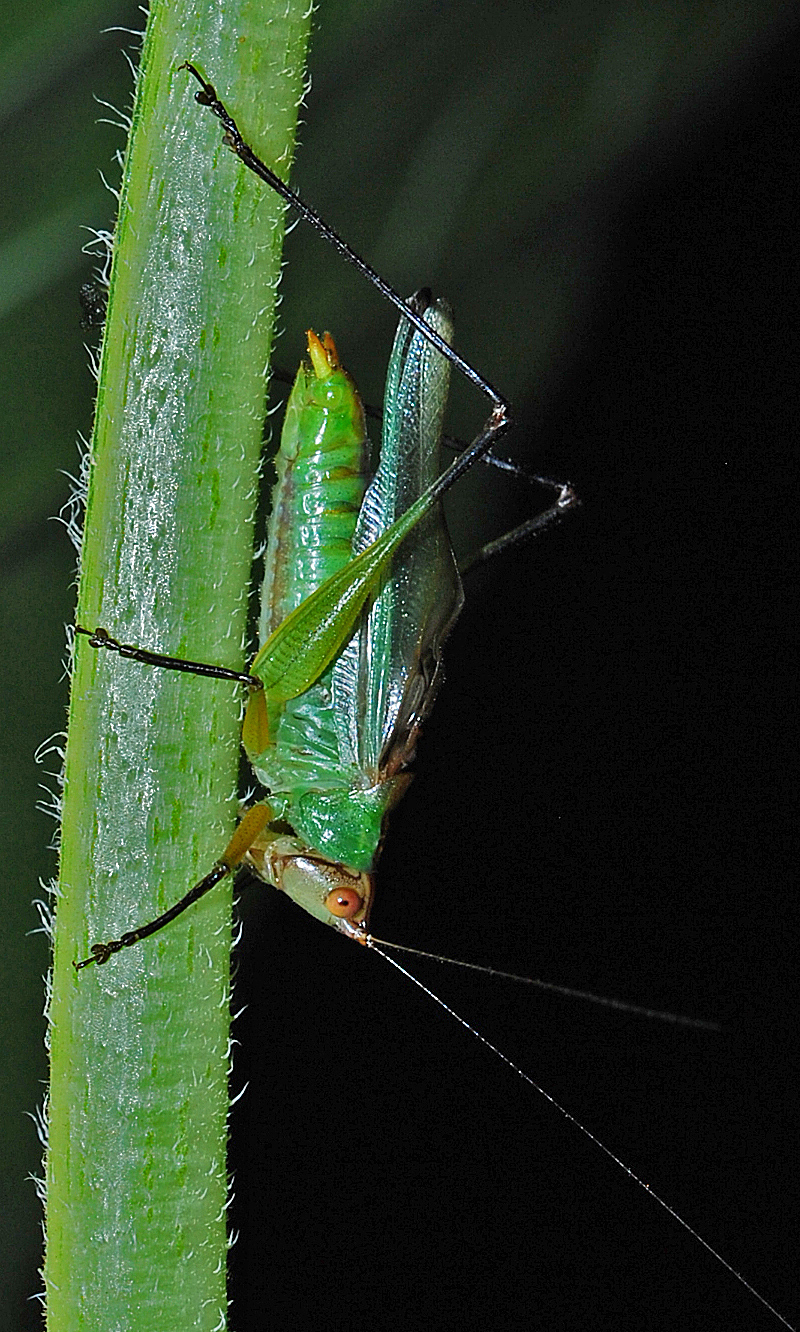
The black-legged greater meadow katydid thrives in low areas and near bodies of water in SNR

The prairie ragged orchid began to appear in old fields and prairie plantings where prescribed burning occurs at SNR. It has not been seen in fields maintained exclusively by mowing or haying.

The purple fringeless orchid surprised the restorationist and St. Louis area botanists by flowering in the SNR wetland area 17 years after the original sowing.
Copyright © James Trager 2010
The following is an invited post by Alex Wild of Myrmecos Blog:

Myrmecologists Gary Alpert & Phil Ward mucking about with magnetic termites. Cape York Peninsula, Australia, 2004.
Ted MacRae so graciously guest blogged for me last week, so I figured it’s time to turn this around and send one Ted’s way. One of the great joys of Beetles in the Bush is Ted’s photojournalistic coverage of various insect collecting adventures. In that vein, I will recount an Australian expedition with famous ant guys Gary Alpert and Phil Ward from back in 2004. I never blogged the trip because, hey, I didn’t blog back then.


