Clouded beetles amidst spectacular scenery

“Westerly from Westgard Pass is a view equaled in few parts of America. In the middle distance, a dozen miles away and nearly a mile below, lies the fertile Owens Valley, extending at right angles north and south over a hundred miles, and on the farther side, distant a score of miles, tower the snow-clad Sierras, with serrated crests and symmetric domes and peaks outlined against the sky at an approximate height of two and one-half miles vertical above the level of the ocean, and extending north and south far as the eye can see. The vision is rich reward for a journey of a thousand leagues.”—A. L. Westgard, March 1915
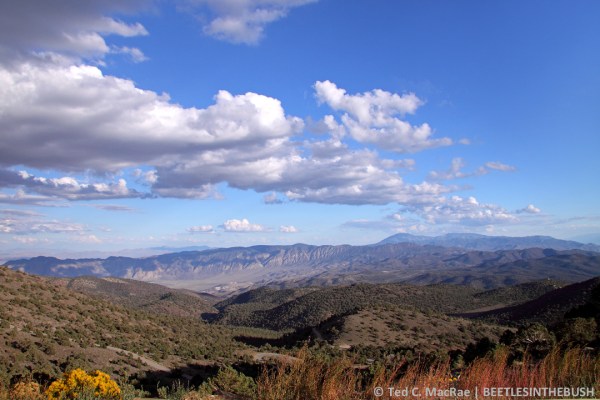
View of Westgard Pass from higher up in the White Mountains near Ancient Bristlecone Pine Forest.

View to Westgard Pass from higher up in the White Mountains near Ancient Bristlecone Pine Forest.

After a morning spent searching for Crossidius coralinus caeruleipennis (perhaps the most sublimely beautiful of the subspecies) in the high desert sage of the wide open Owens Valley floor near Bishop, California, we made the short drive south to Big Pine, turned sharply left, and began the slow, twisting ascent through a narrow gap between the White Mountains to the north and the Inyo Mountains to the south. Eventually reaching an elevation of 7,313 ft,  Westgard Pass serves as access to Earth’s oldest living things! and, in doing so, provides some of the most striking scenery in the entire Basin and Range Province of eastern California.

Westgard Pass, Inyo Co., California.

Chrysothamnus viscidiflorus (small plants with yellow flowers) host Crossidius hirtipes nubilus adults.

Field mate Jeff Huether and I no doubt wanted to see the grotesquely beautiful trees growing in Ancient Bristlecone Pine Forest and were happy to enjoy the magnificent scenery along the way, but our trek to Westgard Pass had also a strictly entomological purpose—to search for Crossidius hirtipes nubilus, among the most uniquely colored and geographically restricted of the C. hirtipes subspecies. Approaching the summit, the narrow, rocky gorge opened up to a broad expanse of pinyon/juniper woodland, and nestled among the ubiquitous sage we found the plant we were looking for—yellow rabbitbrush (Chrysothamnus viscidiflorus) in full bloom.
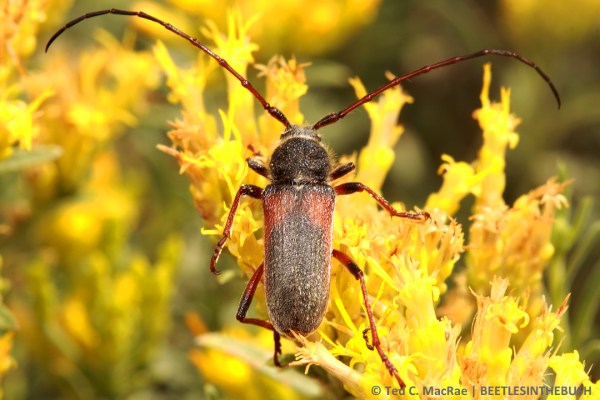
Crossidius hirtipes nubilus (male) on flowers of Chrysothamnus viscidiflorus.

Crossidius hirtipes nubilus (male) on flowers of Chrysothamnus viscidiflorus (field photo).

It took a while, however, before we found the beetles that we were looking for. Robust gray rabbitbrush (Ericameria nauseosa) plants in full bloom conspicuously dominated the roadsides and demanded our initial attentions, but our only reward was the widespread Crossidius ater. Not even a single Crossidius coralinus specimen could be claimed as consolation. Still, we knew the real quarry was further back from the roadsides, on the much smaller and less conspicuous yellow rabbitbrush that serves as an adult host for Crossidius hirtipes and most of its subspecies. Once we turned our attentions to these smaller plants we found the first adult fairly quickly, but precious few were seen considering the many plants that we examined until we finally zeroed in on one area just south of the summit where the beetles seemed to occur with slightly greater frequency. While not numerous, we eventually found enough beetles for us to declare, “Let’s go see the bristlecone pines!”

In addition to their longer antennae, males are distinguished by xxx.

In addition to longer antennae, males are distinguished by less extensive clouding (studio photo).

This subspecies is among the most distinctive of all the C. hirtipes subspecies due to the combination of dark reddish-brown coloration and extreme, dark clouded area of the elytra (Linsley & Chemsak 1961). It most closely resembles C. h. rhodopus, which occurs further north in the Mono Basin, but that subspecies is not as dark and lacks the extensive clouding of black on the apical portions of the elytra.
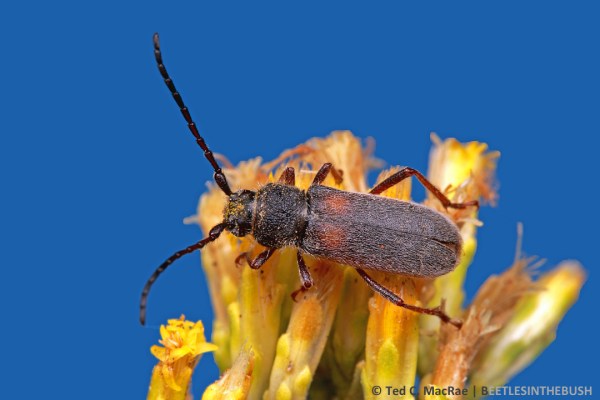
Females have the elytral markings xxx.

Females have the markings greatly expanded to almost completely cover the elytra (studio photo).

The dark clouding actually represents an expansion of the dark stripe found along the suture of the elytra of many C. hirtipes subspecies, most of which exhibit sexual dimorphism in the degree to which this stripe is developed. In some subspecies the stripe is present in the females but absent in the males, while in others the stripe is present in both but more fully developed in the female. In C. h. nubilus the sutural stripe reaches an extreme state of development, covering much of the apical two-thirds of the elytra in the male and being so greatly expanded in females that almost the entire elytra are covered except for two small subbasal patches revealing the ground color of the elytra.

REFERENCES:

Linsley, E. G. & J. A. Chemsak. 1961. A distributional and taxonomic study of the genus Crossidius (Coleoptera, Cerambycidae). Miscellaneous Publications of the Entomological Society of America 3(2):25–64 + 3 color plates.

Copyright © Ted C. MacRae 2014

What was that insect?

Yesterday I posted an identification challenge of a different sort. The main subject in the photo was a jewel beetle (family Buprestidae), but there was also another insect in the photo—a small parasitic wasp sitting on the branch below the beetle. Some of you saw it—Charley Eiseman was the first and correctly guessed it was a member of the family Encyrtidae, earning 5 pts, and Wikispecies editor gets 5 pts for further identifying it as a member of the genus Metaphycus. Honestly, I took several shots of the beetle and never saw the wasp until I examined the photograph during processing. I’m not certain, but I think the small object next to the wasp could be a scale insect (family Coccidae), which are known hosts of Metaphycus spp.

Of course, there is still the jewel beetle, and it wouldn’t be fair for me to award points for the wasp but not the beetle. Heath gets 5 pts for first identifying the beetle in the genus Agrilus; however, nobody was able to identify the species as A. granulatus—commonly associated with cottonwood and poplar (Populus spp.) across North America. Since Charley was the only person to mention both the beetle and the wasp, I’m going to give him a tie-breaking bonus point and declare him the challenge winner.

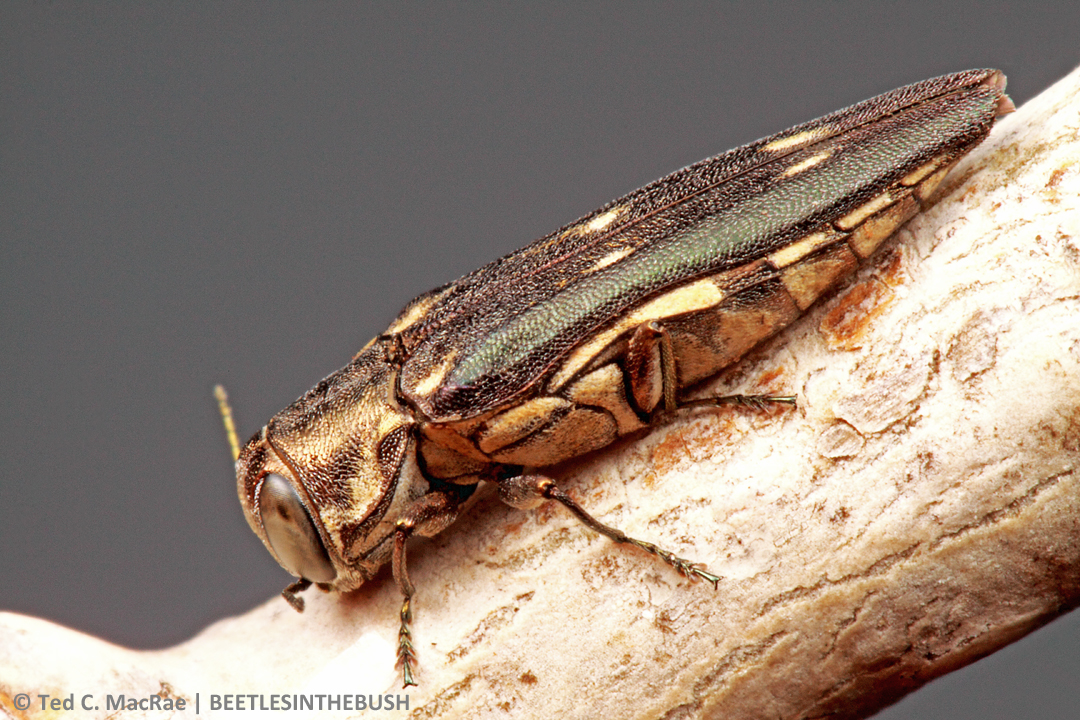
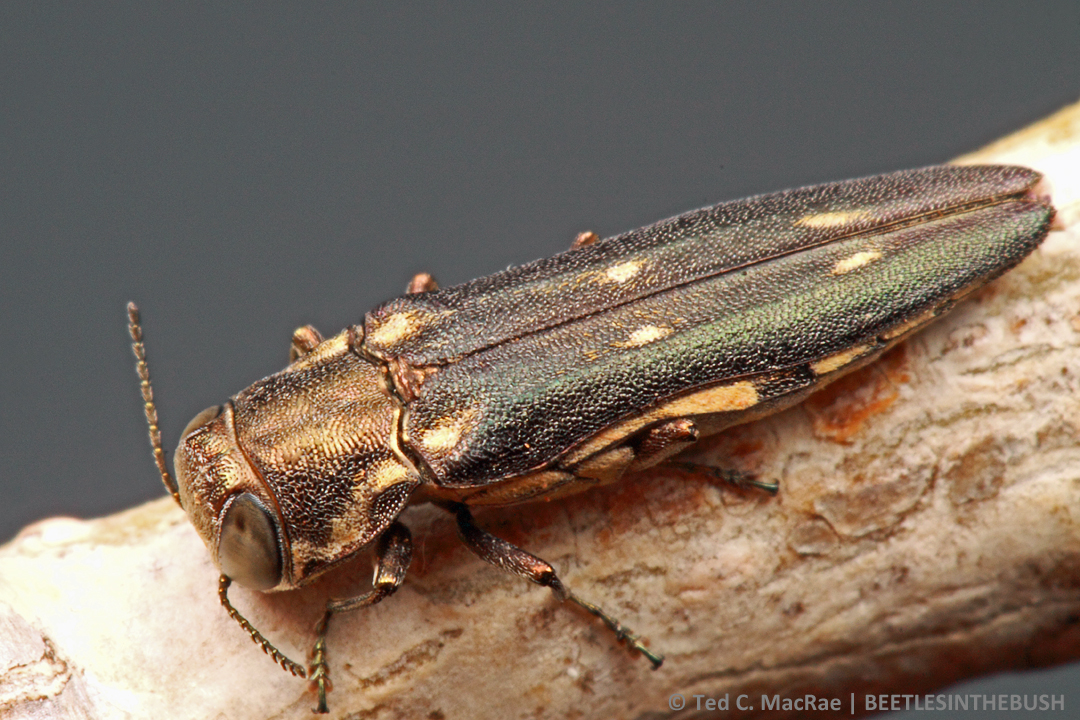
Populations of A. granulatus have been assigned to several subspecies—the beetle shown here (photographed June 2013 at Beaver Dunes, Oklahoma) represents the nominate form—restricted to the U.S. east of the Rocky Mountains, where it breeds in native eastern cottonwoods (P. deltoides) and introduced Lombardy poplars (P. nigra var. ‘Italica’). Agrilus granulatus is often confused in collections with A. quadriguttatus, but that species is associated with willow (Salix spp.) and can be further distinguished by the less dense pubescence of the lower face not obscuring the surface; the pronotum with the lateral margins evenly rounded and not strongly sinuate at the base, the median channel less distinct, and the lateral depressions scarcely pubescent; and the elytra more gradually narrowed posteriorly with the tips more acutely rounded and more coarsely serrulate and the pubescent spots less distinct (Fisher 1928).

Here are a few more photographs of the jewel beetle (without the wasp):

Agrilus granulatus granulatus on Populus deltoides | Beaver Dunes, Oklahoma

Agrilus granulatus granulatus on Populus deltoides | Beaver Dunes, Oklahoma

Agrilus granulatus granulatus on Populus deltoides | Beaver Dunes, Oklahoma

Agrilus granulatus granulatus on Populus deltoides | Beaver Dunes, Oklahoma

Agrilus granulatus granulatus on Populus deltoides | Beaver Dunes, Oklahoma

Agrilus granulatus granulatus on Populus deltoides | Beaver Dunes, Oklahoma

REFERENCE:

Fisher, W. S.  1928. A revision of the North American species of buprestid beetles belonging to the genus Agrilus.  U. S. National Museum 145, 347 pp.

Copyright © Ted C. MacRae 2014

Receiving a shipment of insects for identification…

…is like Christmas all over again!

Unopened shipping box

Unopened shipping box

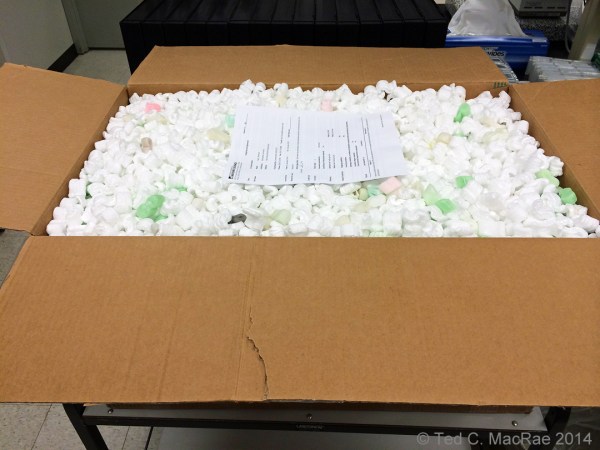
The sight of a newly delivered box sitting outside my office brings on a rush of excitement. The sight of an enormous box is even more exciting. I know what’s inside is gonna be good, but I don’t know how good. Will there be rare species I haven’t seen before? Will there be specimens representing new (and, thus, publishable) state records or host associations? By the same token, the bigger the box, the more nervous I get. Shipping pinned insect specimens can be risky, and the potential for damage to the specimens increases as the size of the shipment increases—it all depends on how well they were packed (and a little bit of luck!). The prominent “Fragile” labeling, detailed description of the contents, and up arrow indicators are all good first signs.

Opened shipping box w/ paperwork

Opened shipping box w/ paperwork

I remain optimistic as I open the shipping box and see foam peanuts filling the box almost, but not completely, to the brim to allow a little bit of shuffle for shock absorption. The specimen boxes are also completely hidden under the top layer of foam peanuts, suggesting there is enough vertical clearance inside. Lastly, paperwork placed inside the shipping box and on top of the cushioning ensures that the shipment can be delivered even if the outer shipping label is damaged or lost.

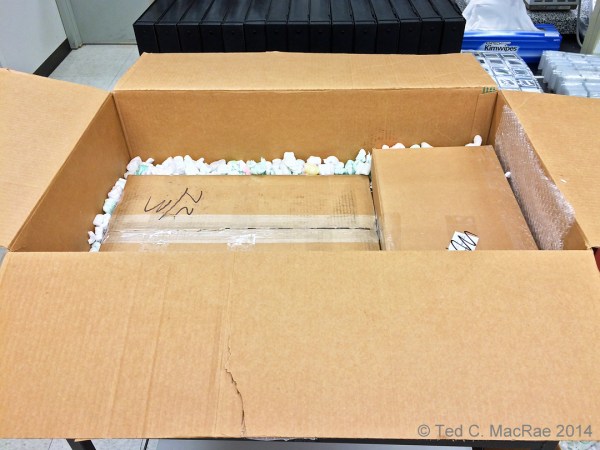
Inner shipping boxes

Inner shipping boxes

Below the top layer of foam I find two inner shipping boxes. I am a little concerned by the lack of clearance between the inner shipping boxes and the sides of the outer shipping box—ideally there should be a foam-filled gap of at least a couple of inches to allow some lateral shock absorption. I am also concerned that the two inner shipping boxes are not also bound to prevent bumping against each other, although the lack of space between them and the outer shipping box probably makes this point moot.

Opened inner shipping boxes

Opened inner shipping boxes

Inside the inner shipping boxes are very nicely wrapped specimen boxes. I’m not sure the inner wrapping to cushion the specimen boxes from each other accomplishes all that much other than to increase the size of the inner shipping boxes, which in turn decreases the clearance between the inner and outer shipping boxes. I would have rather seen the specimen boxes bound tightly together into a small unit to have additional space between them and the outer shipping box.

Unopened specimen boxes

Unopened specimen boxes

Seven classic insect specimen shipping boxes—the excitement (and nervousness) mounts as I prepare to open them and get my first look at the enclosed specimens.

Opened specimen boxes

Opened specimen boxes

A fine selection of gorgeous jewel beetles—mostly from Colorado but with a good number of specimens collected from countries around the world. But uh-oh, no inner false lids! A false lid rests directly on top of the pins of the specimens inside and is held in place by cushioning between the false and true lids. False lids are essential in shipments of any size to keep the pinned specimens, especially heavy-bodied ones, from working their way loose from the foam and bouncing around inside the specimen box during shipment. Fortunately, all of the specimens stayed put in most of the specimen boxes, …

Shipping damage

Shipping damage

…but one or two of the really heavy-bodied specimens did work their way loose in a couple of the boxes. As a result, there was some minor damage in the form of broken tarsi and antennae. The damage, however, is not great, and with fine-tipped forceps and a little bit of clear finger nail polish I should be able to effect decent (if not perfect) repairs. To the shipper’s credit, they made extensive use of brace pins on each side of heavier-bodied specimens in all of the boxes—this probably served to keep the damage as minimal as it was.

Although I salivate looking at the specimens—nearly 800 in all, I must set aside my desire to dive right into them and turn my attentions back to a previously received shipment (also numbering in the several hundreds). As soon as I finish that shipment, I’ll start working on this one, but I suspect that while I’m working on it I will receive another shipment that, like this one, competes newly for my attentions.

Copyright © Ted C. MacRae 2014

Pop! goes the beetle

Alaus oculatus (eyed elater) | Beaver Dunes State Park, Oklahoma

Alaus oculatus (eyed elater) | Beaver Dunes State Park, Oklahoma

Last June while collecting beetles from cottonwood trees at Beaver Dunes State Park, Oklahoma, I came across one of my favorite beetles—Alaus oculatus, or eyed elater (family Elateridae, or click beetles). Large by click beetle standards, the most striking feature of eyed elaters is, of course, their false eye spots, which are not eyes at all but patches of pubescence—black surrounded by a narrow ring of white—intended to look like eyes and located prominently on the prothorax rather than the head. A handful of related species are also found in various parts of the U.S., all of which exhibit variations on this same eye spot theme. Undoubtedly these spots serve to frighten would-be predators, much like the false eye spots on the thorax of many lepidopteran caterpillars. The true eyes, of course, are much smaller and are located on the head in front of the “false eyes.” In contrast to the prominently visible eye spots, pubescence on the rest of the body seems to function in cryptic coloration. The mottled patterning blends in with the bark of trees where these beetles usually hang out for effective concealment.

Look into my eye(spot)s!

Look into my eye(spot)s!

If either of those first two lines of defense don’t work, the beetles exhibit “thanatosis” by lying still with legs and antennae appressed to the body to fool the would-be predator into thinking that they are already dead.

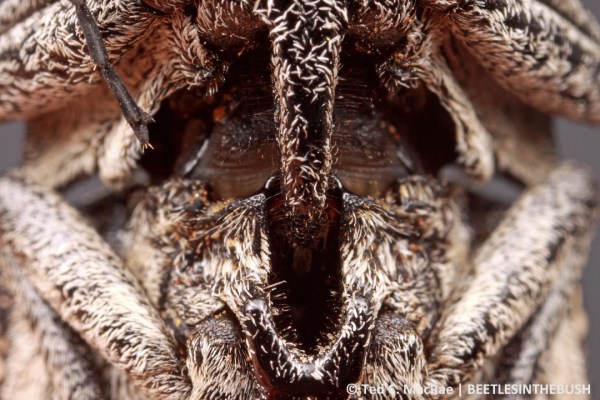
A ventral look at the clicking mechanism between the pro- and mesosterna.

Adults exhibit “thanatosis” (play dead)  when disturbed.

Their most remarkable defensive behavior, however, is their ability to snap or “click” their bodies with enough force to free themselves from the grasp of a novice predator (or careless entomologist). The click is produced by a large prosternal spine and mesosternal notch on the beetle’s underside. To click, the beetle arches back its head and pronotum to retract the spine from the notch cavity, the tip of which is then pressed against the edge of the notch. Muscles within the thorax contract, storing elastic energy, and as the flexible hinge between the pro- and mesothoraces moves, the spine slides until its tip passes over the edge of the notch, releasing the elastic energy stored in the thoracic musculature and snapping the spine back into the notch cavity with enough force to produce an audible click.

A large spine on the prosternum fits into a groove on the mesosternum.

A large spine on the prosternum fits into a groove on the mesosternum.

This clicking ability also comes in handy if the beetle frees itself from the grasp of a predator and lands on its back. While the beetle’s legs are too short to right itself, its click is capable of launching the beetle high into the air. By tumbling while in the air, the beetle has a 50% chance of landing on its feet (thus, several attempts may be required). When jumping from a hard surface, the beetle is actually capable of launching itself to a height that is several times its body length and can tumble several times while in the air. This raises an interesting question, since theoretically an elevation of only one body length and half of a body revolution are all that is needed for an upside-down beetle to right itself. The power of the click, thus, grossly exceeds the minimal requirement for righting, yet the beetles seem incapable of moderating the force of the click. Furthermore, the 50% probability of landing suggests that they are also incapable of controlling the orientation of their body during the jump and landing. Did the clicking mechanism initially evolve to combat the grasp of predators and was then co-opted for use in jumping, or was the ability to jump the selective pressure that drove its evolution?

Locked and loaded—the mechanism is primed for the click.

Locked and loaded—the mechanism is primed for the click.

Ribak & Weihs (2011) used biomechanical analyses with Lanelater judaicus to support the idea that the click evolved primarily as a mechanism for vertical jumping. They reason that the excessive vertical distance of the jumps ensures sufficient height when jumping from soft substrates such as foliage or loose soil. A followup study evaluating the effect of natural substrates (Ribak et al. 2012) found that jump height was dramatically reduced (by ~75%) when the beetles jumped from leaves that covered approximately half of the study site and that the reduction in jump height was directly correlated with the amount of work absorbed by the substrate. This provides further evidence that the beetles do not moderate their jumping force and instead simply aim to jump “as high as possible” and rely on random chance for landing back on their feet.

After clicking, the spine returns to its resting position out of the groove.

After clicking, the spine returns to its resting position within the groove.

REFERENCE:

Ribak, G., S. Reingold & D. Weihs. 2012. The effect of natural substrates on jump height in click-beetles. Functional Ecology 26(2):493–499 [abstract].

Ribak, G. & D. Weihs. 2011. Jumping without using legs: The jump of the click-beetles (Elateridae) is morphologically constrained. PLoS ONE 6(6):e20871. doi:10.1371/journal.pone.0020871 [full text].

Copyright © Ted C. MacRae 2014

Beetles by Chuck

A few months before his passing last August, Chuck Bellamy asked me if I was would like to have his photographic slide collection. I was, of course, deeply honored by this request, for in addition to becoming one of the most prolific students ever of jewel beetles, Chuck had for years photographed live adult beetles in the field and major type specimen holdings such as those at The Natural History Museum in London and the Muséum national d’histoire naturelle in Paris. As uncomfortable as it was discussing with him matters related to his impending mortality, I also knew that it was important to him that his slides end up in the hands of someone who would appreciate their great scientific value and, hopefully, make them available to the larger community of jewel beetle enthusiasts. A few weeks after he passed, three large, white, cardboard boxes showed up at my office—each one containing six or seven portfolio box binders with several hundred slides.

Chuck will be honored in an upcoming issue of The Coleopterists Bulletin. In addition to personal remembrances and a suite of papers describing new species of beetles named after him, the issue will feature some of Chuck’s best live adult images scanned from slides in the collection that I received. Choosing the photos was not easy, but I eventually narrowed down to 15 that I thought best represented the taxonomic diversity of jewel beetles, ranked them from most to least favorite, sent scanned images to fellow buprestophile Rick Westcott for him to do likewise, and tallied the combined rankings to determine the final selections. Six of the photos will appear on a plate within the issue, and a seventh will appear on the cover. I won’t spoil the surprise here by revealing what species were selected. Rather, I’ll just whet appetites by posting the photos that were not selected (despite which I think you’ll agree that they are still good photos).

Julodis chevrolati Laporte | Sep 2000, W. Springbok, Schaaprivier, Northern Cape Prov., RSA.

Julodis chevrolati Laporte | Sep 2000, W. Springbok, Schaaprivier, Northern Cape Prov., RSA.

Acmaeodera (s. str.) griffithi Fall | Apr 2001, Mohawk Valley, Yuma Co., Arizona, USA.

Acmaeodera (s. str.) griffithi Fall | Apr 2001, Mohawk Valley, Yuma Co., Arizona, USA.

Polycesta (Arizonica) aruensis Obenberger | Apr 2001, Frink Springs, Imperial Co., California, USA.

Polycesta (Arizonica) aruensis Obenberger | Apr 2001, Frink Springs, Imperial Co., California, USA.

Evides pubiventris  (Laporte & Gory) | Jan 1999, Geelhoutbosch, Northern [Limpopo] Prov., RSA.

Evides pubiventris (Laporte & Gory) | Jan 1999, Geelhoutbosch, Northern [Limpopo] Prov., RSA.

Castiarina klugii (Gory & Laporte) | Australia.

Castiarina klugii (Gory & Laporte) | Australia.

Temognatha chalcodera (Thomson) | Western Australia.

Temognatha chalcodera (Thomson) | Western Australia.

Sphaerobothris (s. str.) platti (Cazier) | 1998,  E. Jacumba, San Diego Co., California, USA.

Sphaerobothris (s. str.) platti (Cazier) | 1998, E. Jacumba, San Diego Co., California, USA.

Dystaxia elegans Fall | 1998, Warner Springs, San Diego Co., California, USA.

Dystaxia elegans Fall | 1998, Warner Springs, San Diego Co., California, USA.

Copyright © Ted C. MacRae 2014, photos by Charles L. Bellamy

Review of North American Chalcophora

The latest issue of The Coleopterists Bulletin arrived in my mailbox recently, and among the several papers of interest to me is a review of the North American species of the jewel beetle genus Chalcophora¹ (family Buprestidae). This genus contains some of the largest jewel beetles in North America and, due to their surface sculpturing and strict association with pine trees, are commonly referred to as “sculptured pine borers.” Four of the five species occur in the eastern U.S. and Canada, while only one, C. angulicollis, is found in the western states and provinces.

¹ I’d be interested to know how people pronounce this name. I’ve always pronounced it “kal-koh-FOR-uh”, but I’ve heard others use “kal-KAW-for-uh” or even “chal-KAW-for-uh.”

The review, authored by Crystal Maier and Mike Ivie at Montana State University, should put to rest a long-standing debate on the validity of the single western species. The four eastern species are distinct and easily distinguished from each other by virtue of color, presence/absence of ridges on the front legs, presence/absence of spines at the elytral apices, and, of course, male genitalia. Chalcophora angulicollis, on the other hand, has drifted in and out of synonymy under C. virginiensis, the most widespread of the four eastern species. The most recent changes in status were Bright (1987), who regarded C. angulicollis a synonym and treated all Canadian populations as C. virginiensis, followed by Nelson et al. (2008), who reinstated the former as a valid species. Neither of these actions were supported by any discussion of characters or detailed justification.

Chalcophora spp. (Maier & Ivie 2013)

Figs. 1–5. Chalcophora species, habitus. 1) C. virginiensis, Arkansas; 2) C. angulicollis, Idaho; 3) C. liberta, Wisconsin; 4) C. georgiana, Florida; 5) C. fortis, New York. Source: Maier & Ivie (2013).

My impression has always been that the two species are distinct, and I have maintained specimens separately in my collection despite Bright’s synonymy. Chalcophora angulicollis always seemed to me a little more cupreous in coloration and a little more robust. I know that these are weak characters, and they can easily be a result of geographical variability within a species. However, considering the wide and nearly complete disjunction between the distributions of these two species across the nearly treeless Great Plains, it seemed to me prudent to consider them distinct until conclusively proven otherwise. I was therefore pleased to find out that my suspicions were correct when I visited Mike Ivie in Bozeman, Montana this past summer and learned of this manuscript in progress. Mike and his graduate student Crystal had found a morphological difference in the mouthparts that consistently distinguished the two species—C. angulicollis with the penultimate maxillary palpomere flattened and relatively shorter, while in C. virginiensis this structure is cylindrical and relatively longer. Correlated with these structural differences in the mouthparts are the relatively wider male genitalia of C. angulicollis (<3.3 times as long as wide, versus >3.9 times as long as wide for C. virginiensis) and its weakly serrate to crenulate posterolateral elytral margin (weakly to strongly serrate in C. virginiensis).

In addition to reevaluating the status of C. angulicollis and C. virginiensis, the paper provides high quality images of the dorsal habitus (see figure above), elytral apices, and male genitalia for all five North American species, a revised key to the species, and an updated distribution map showing locality/state records for the two aforementioned species in the context of forest cover in North America. Type material also was examined for all species, each of which is redescribed and annotated with abbreviated taxonomic synonymy (complete synonymies are available in other recent publications), notes on variation, comparisons with other species, and recorded hosts and distributions.

REFERENCE:

Bright, D. E. 1987. The Metallic Wood-Boring Beetles of Canada and Alaska. Coleóptera. Buprestidae. The Insects and Arachnids of Canada, Part 15. Agriculture Canada Publication 1810, NRC Research Press, Ottawa, 335 pp. [pdf].

Maier, C. A. & M. A. Ivie. 2013. Reevaluation of Chalcophora angulicollis (LeConte) and Chalcophora virginiensis (Drury) with a review and key to the North American species of Chalcophora Dejean (Coleoptera: Buprestidae). The Coleopterists Bulletin 67(4):457–469 [abstract].

Nelson, G. H., G. C. Walters, Jr., R. D. Haines, & C. L. Bellamy.  2008.  A Catalogue and Bibliography of the Buprestoidea of American North of Mexico.  Coleopterists Society Special Publication No. 4, The Coleopterists Society, North Potomac, Maryland, 274 pp. [description].

Copyright © Ted C. MacRae 2014

Best of BitB 2013

Welcome to the 6th Annual “Best of BitB”, where I pick my favorite photographs from the past year. Like last year, 2013 was another year of heavy travel. For work I did my annual tour of soybean field sites throughout Argentina during late February and early March, then cranked it up for my own field season with frequent travel to sites in Illinois and Tennessee from May to October. In the meantime I spent a week at company meetings in Las Vegas in August, toured field sites across the southeastern U.S. for two weeks in September, visited Argentina again in October to finalize research plans for their upcoming season, and finished off the travel year by attending the Entomological Society of America (ESA) Meetings in Austin, Texas during November. On top of all this, I managed to slip in two of the best insect collecting trips I’ve had in years, with 10 days in northwestern Oklahoma in early June and another 10 days in California, Nevada, Utah, and Colorado during late August, and I got to play “visiting scientist” during short trips to Montana State University in late July and the Illinois Natural History Survey in late October! Of course, during my brief interludes at home I wasn’t sitting still, giving entomology seminars to several local nature societies and hosting two ESA webinars on insect photography. Needless to say, come December I was more than ready to spend some quite time at home (well, except for hiking most weekends) and am happy to report that I’ve successfully become reacquainted with my family and office mates. It’s a peripatetic life—and I wouldn’t have it any other way!

Okay, let’s get down to business. Here are my favorite BitB photographs from 2013. This year was less about learning new techniques as it was about refining the techniques I’ve found most useful for the style I’ve chosen as a photographer, i.e., hand-held, in situ field shots that (hopefully) excel at both natural history and aesthetic beauty. Links to original posts are provided for each photo selection, and I welcome any comments you may have regarding which (if any) is your favorite and why—such feedback will be helpful for me as I continue to hone my craft. If you’re interested, here are my previous years’ picks for 2008, 2009, 2010, 2011, and 2012. Once again, thank you for your readership, and I hope to see you in 2014!


Tremex columba, female ovipositing | Sam A. Baker State Park, Missouri

Tremex columba female drilling for oviposition into hardwood trunk | Sam A. Baker State Park, Missouri

From Ovipositing Pigeon Horntail (posted 6 Jan). I like this photo for the combination of vibrant, contrasting colors between the wasp and moss-covered wood and the visualization it provides of the remarkable depth to which this wasp will insert its ovipositor into solid wood!


Eurhinus cf. adonis on Solidago chilensis | Chaco Province, Argentina

Eurhinus cf. adonis on Solidago chilensis flowers | Chaco Province, Argentina

From Giving me the weevil eye! (posted 28 Apr). While a little soft, the color combination is pleasing and the pose taken by the beetle almost comically inquisitive.


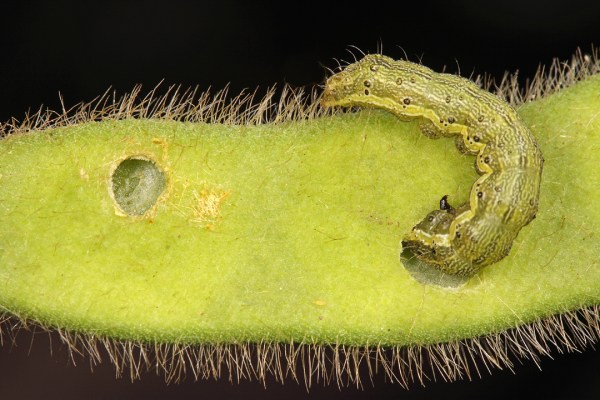
Helicoverpa gelotopeon feeding on soybean pod | Buenos Aires Prov., Argentina

Helicoverpa gelotopeon feeding on soybean pod | Buenos Aires Prov., Argentina

From Bollworms rising! (posted 30 Mar). This is the first photo of an economic pest that has made one of my “Best of BitB” lists. The two holes in the soybean pod, one with the caterpillar and its head still completely inserted, visualizes how the feeding habits of these insects can so dramatically affect yield of the crop.


cf. Eremochrysa punctinervis | Gloss Mountains, Major Co., Oklahoma

cf. Eremochrysa punctinervis | Gloss Mountains, Major Co., Oklahoma

From “Blue-sky” tips and tricks (posted 1 July). Insects with a lot of delicate detail and long, thin appendages are especially difficult to photograph against the sky due to wind movement. See how I dealt with the antennae of this delicate lacewing without resorting to the standard black background typical of full-flash macrophotography.


Cicindela scutellaris lecontei x s. unicolor

Cicindela scutellaris lecontei x s. unicolor intergrade | Holly Ridge Natural Area, Stoddard Co., Missouri

From The Festive Tiger Beetle in Southeast Missouri (posted 25 Oct). I like this photo a lot more now than I did when I first took it. Its shadowy feel and the beetle “peering” from behind a leaf edge give a sense of this beetle’s attempts to hide and then checking to see if the “coast is clear”


Batyle suturalis on paperflower (Psilostrophe villosa) | Alabaster Caverns State Park, Woodward Co., Oklahoma

Batyle suturalis on Psilostrophe villosa flowers | Alabaster Caverns State Park, Woodward Co., Oklahoma

From Tips for photographing shiny beetles on yellow flowers (posted 10 Aug). “Bug on a flower” photos are a dime a dozen, but shiny beetles on yellow flowers with natural sky background can be quite difficult to take. All of the techniques for dealing with the problems posed by such a photo came together nicely in this photo.


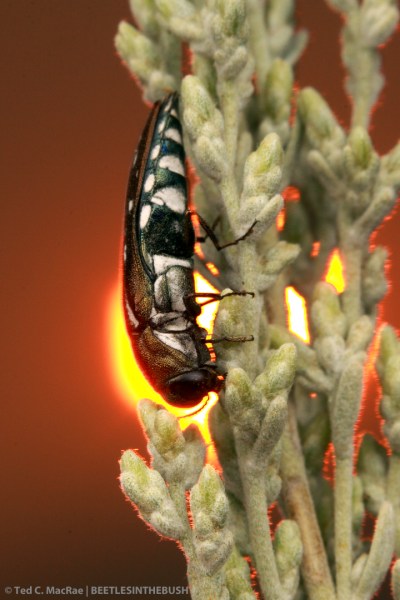
Agrilus walsinghami | Davis Creek Regional Park, Washoe Co., Nevada

Agrilus walsinghami | Davis Creek Regional Park, Washoe Co., Nevada

From Sunset for another great collecting trip (posted 1 Sep). This photo is not without its problems, with a little blurring of the backlit fuzz on the plant, but the placement of the sun behind the subject’s head and resulting color combination make it my favorite in my first attempts at achieving a “sun-in-the-sky” background with a true insect macrophotograph.


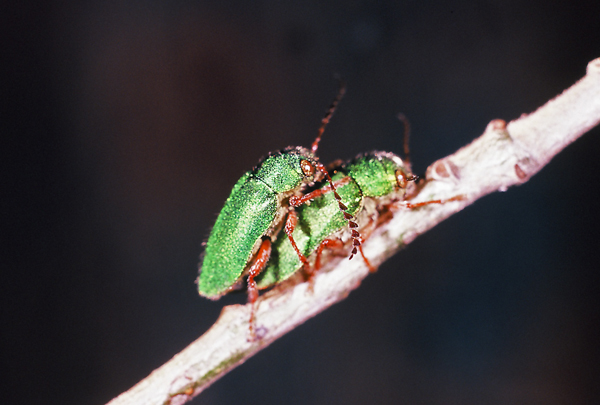
A tiny male mates with the ginormous female.

Pyrota bilineata on Chrysothamnus viscidflorus | San Juan Co., Utah

From Midget male meloid mates with mega mama (posted 8 Nov). Another blue-sky-background photograph with good color contrast, its real selling point is the natural history depicted. with some of the most extreme size dimorphism among mating insects that I’ve ever seen.


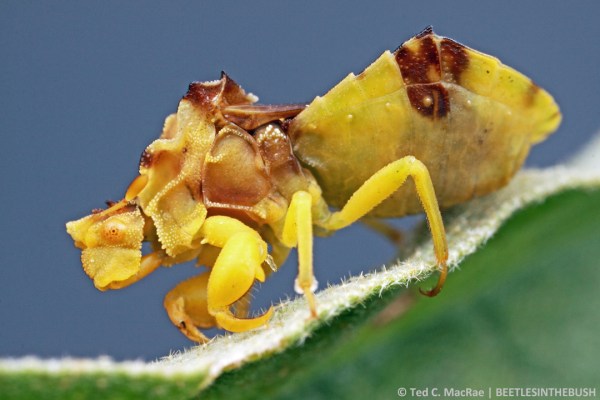
Phymata sp.

Phymata sp. on Croton eleagnifolium foliage | Austin, Texas

From ESA Insect Macrophotography Workshop (posted 13 Nov). The oddly sculpted and chiseled body parts of ambush bugs makes them look like they were assembled from robots. Contrasting the body against a blue sky gives a more unconventional view of these odd beasts than the typical top-down-while-sitting-on-a-flower view.


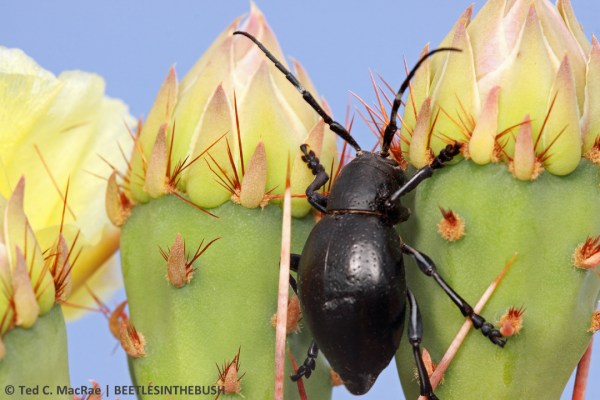
Fourth attempt - holding detached pad up against sky for cleaner background.

Moneilema armata on Opuntia macrorhiza | Alabaster Caverns State Park, Woodward Co., Oklahoma

From Q: How do you photograph cactus beetles? (posted 24 Nov). Photographing cactus beetles requires patience, persistence, long forceps, and strong forearms. Natural sky provides a much more pleasing background than a clutter of cactus pads and jutting spines.


I hope you’ve enjoyed this 2013 version of “Best of BitB” and look forward to seeing everyone in 2014.

Copyright © Ted C. MacRae 2013

Virtual Mantle 2013

One of my favorite customs over the holidays is exchanging Christmas e-cards with my fellow entomologist/natural historian friends and colleagues. On the sending side, I’m especially fond of the “insect-with-Photoshopped-Santa-hat” variety (see 2011’s Santa Jaws and 2012’s Buprestis saintnicholasii), but I broke from the insect part of the theme this year and instead used a lizard to wish everybody a Felizard Navidad! On the receiving side, and in the spirit of my first Virtual Mantle post last year, here are the e-cards that I received for my virtual mantle this year from entomologists as near as neighboring Illinois and as far as Europe and Asia! If you didn’t send me an e-card this year, I hope you’ll consider sending one to me in 2014!

Sam Heads, Illinois Natural History Survey, Champaign

Sam Heads, Illinois Natural History Survey, Champaign

Mark Kalashian,  National Academy of Sciences of Armenia, Yerevan

Mark Kalashian, National Academy of Sciences of Armenia, Yerevan

Denis Keith, Muséum des Sciences Naturelles et de Préhistoire 5bis, Chartres, France

Denis Keith, Muséum des Sciences Naturelles et de Préhistoire 5bis, Chartres, France

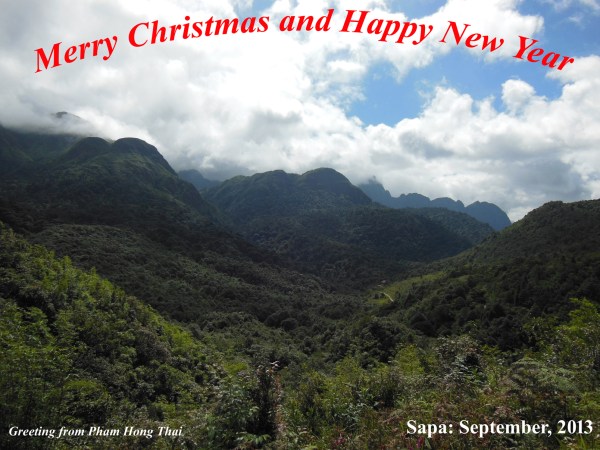
Hong Thai Pham, Institute of Ecology and Biological Resources, Hanoi, Vietnam

Hong Thai Pham, Institute of Ecology and Biological Resources, Hanoi, Vietnam

Erico Ruzzier, Mirano, Italy

Erico Ruzzier, Mirano, Italy

Ilja Trojan, South Moravia, Czech Republic

Ilja Trojan, South Moravia, Czech Republic

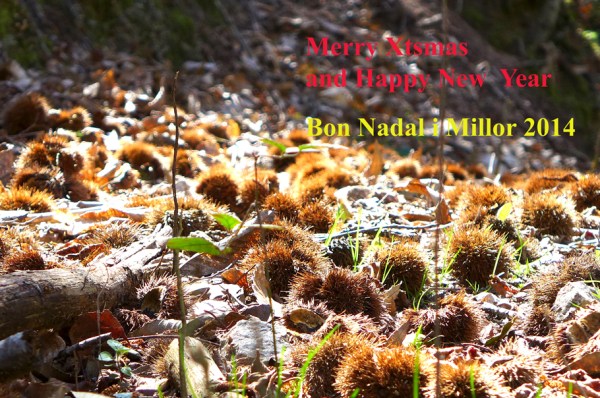
Eduard Vives, Museo Nacional de Ciencias Naturales, Barcelona,  Spain

Eduard Vives, Museo Nacional de Ciencias Naturales, Barcelona, Spain

Junsuke Yamasako, Ehime University, Tarumi, Matsuyama, Japan

Junsuke Yamasako, Ehime University, Tarumi, Matsuyama, Japan

Copyright © Ted C. MacRae 2013