
Tetracha floridana (Florida Metallic Tiger Beetle) | Pinellas Co., Florida
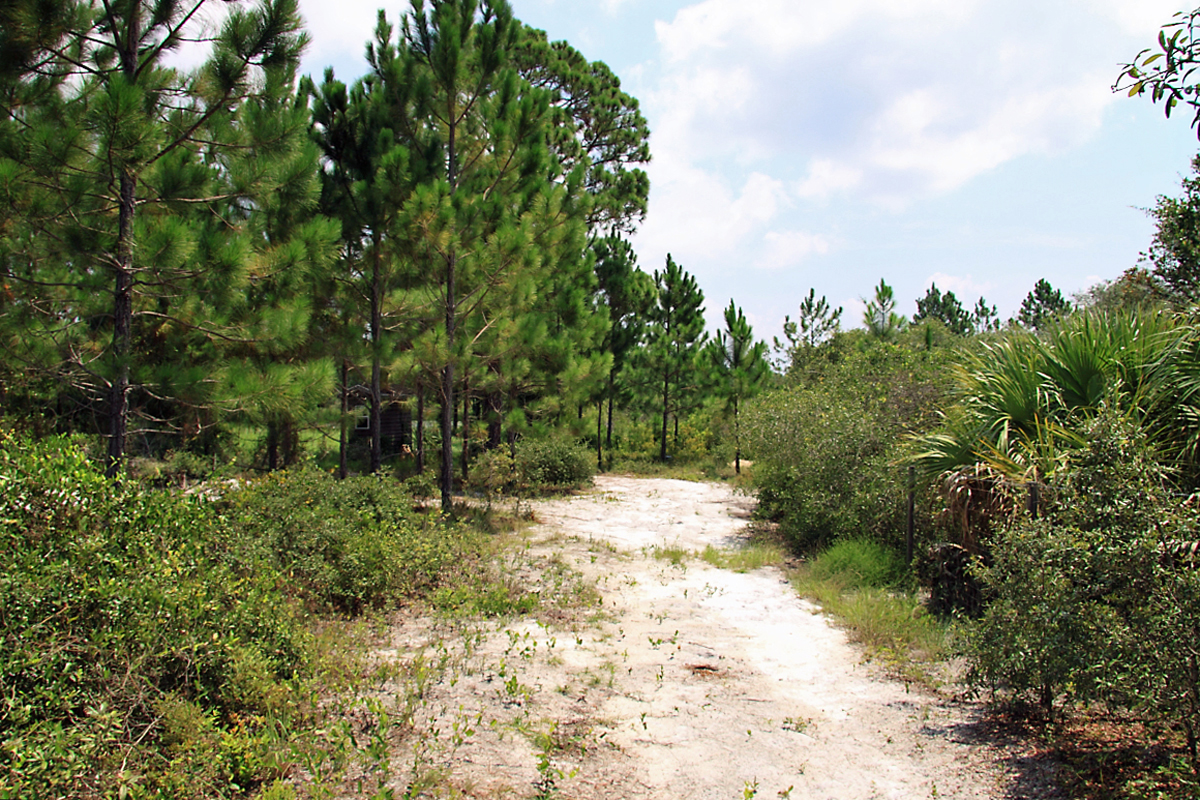
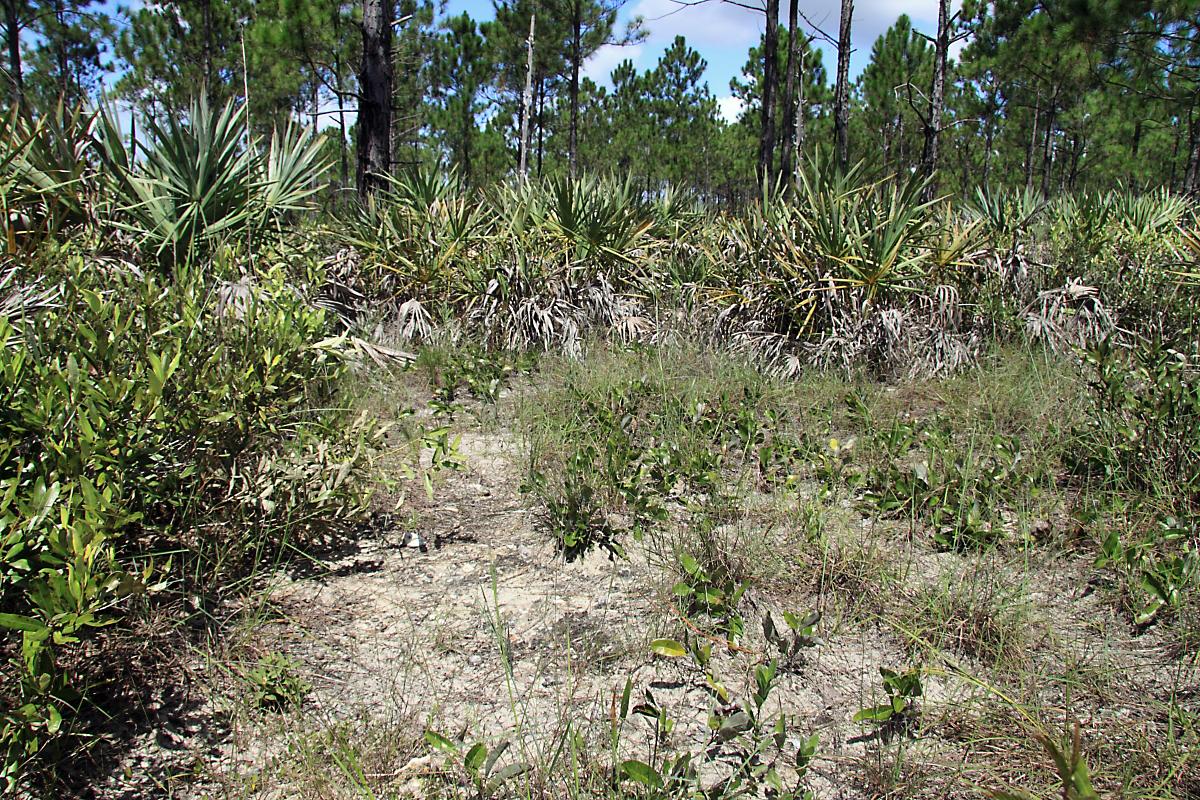
For two years I waited. The narrow strip of coastal scrub and mangrove marsh along the intracoastal waterway behind my sister-in-law’s condominium in Seminole, Florida had been an unexpected surprise during my first visit in August 2009. Despite its small size and urban surroundings, it proved to be a good spot for tiger beetles, including Ellipsoptera marginata (Margined Tiger Beetle) and the closely related E. hamata lacerata (Gulf Coast Tiger Beetle). Also living there was a much rarer tiger beetle—the Florida-endemic species Tetracha floridana (Florida Metallic Tiger Beetle), but I did not know this at the time. In fact, had I not happened upon some larval burrows as I was leaving the preserve and decided to collect a few and rear them to adults, I would still not know they were there. Only after the two larvae that made it back to St. Louis alive emerged as adults in their rearing container did I realize what I had found. The reason I had not seen any adults during my visit was simple—they, like all members of the genus to which they belong, are strictly nocturnal! Nevertheless, I knew I would return sooner or later and have another shot at seeing adults of this species in the wild.

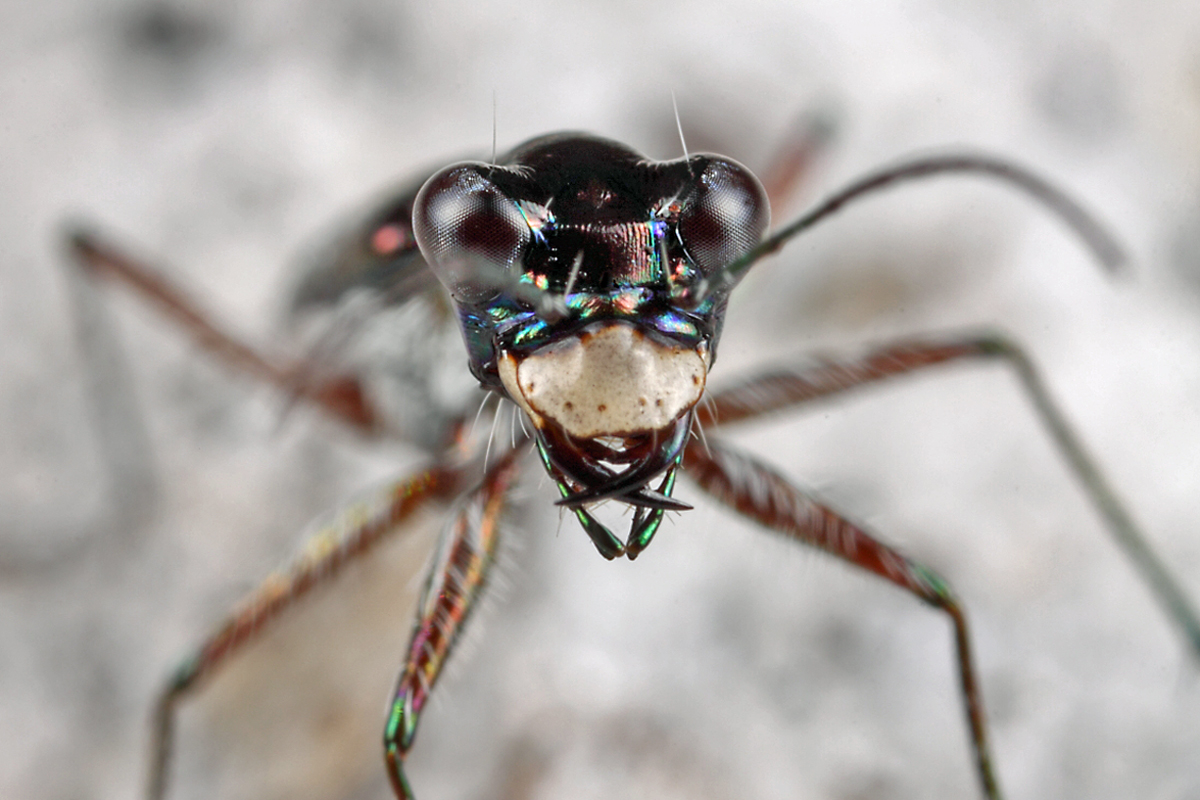
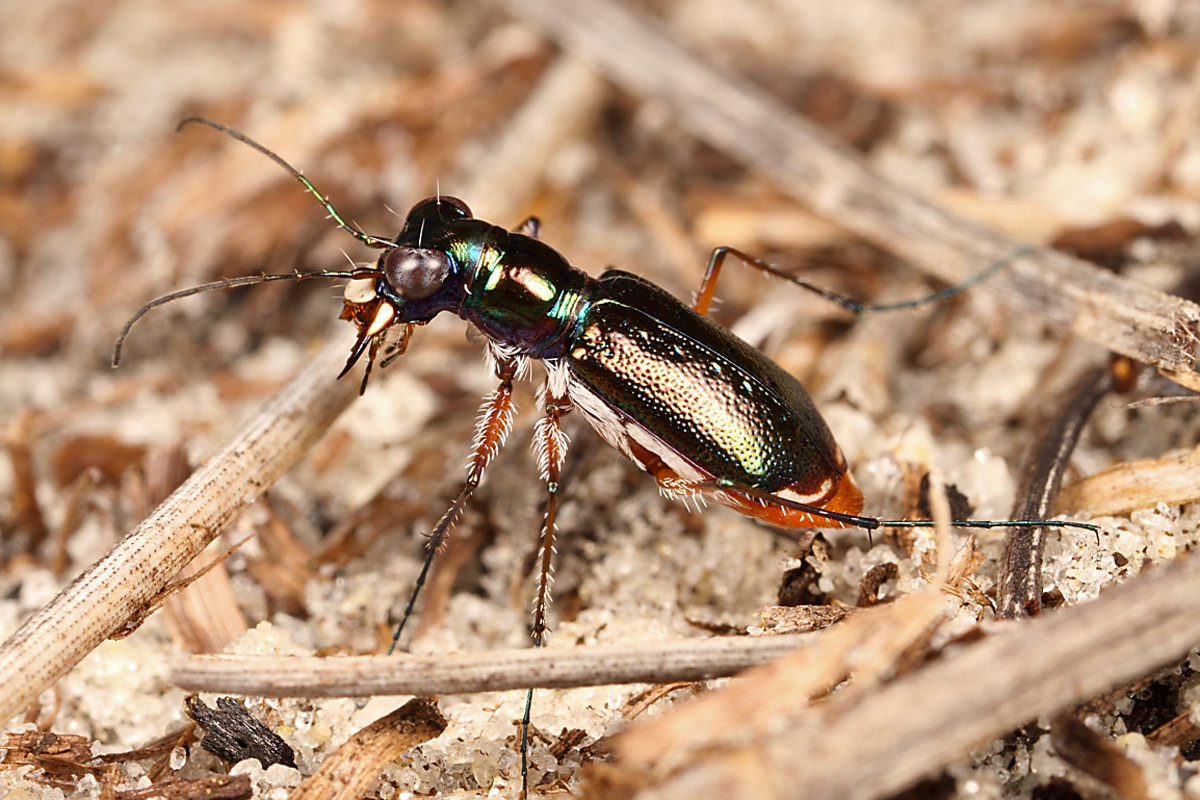
A male, distinguishable by the thick brushy pads on the front tarsi.
And return I did. My wife and I decided fairly early this year that we wanted to return to Florida for our summer vacation. She likes the beach and her sister, and the kids like the beach and their aunt. I don’t like the beach so much (though my sister-in-law is pretty cool), but I love Florida for its diversity of tiger beetle species and their high level of endemism. During my 2009 trip I managed to find nine species, which, in addition to T. floridana, included also the very rare and potentially threatened Cicindelidia highlandensis (Highlands Tiger Beetle), known only from the Lake Wales Ridge in central Florida, and the (near) endemic Ellipsoptera hirtilabris (Moustached Tiger Beetle). This year I set my sight on several other endemics—e.g. Cicindelidia floridana (Miami Tiger Beetle)—and near-endemics—e.g. Cicindelidia scabrosa (Scabrous Tiger Beetle). My searches for these targets would have to wait for a few days, but for T. floridana I had only to wait until nightfall on the day we arrived. The bleating chorus of tree frogs was my signal, and as the rest of the family retired to their bedrooms I geared up with my collecting fanny pack, camera bag and headlamp and headed out to the marsh.
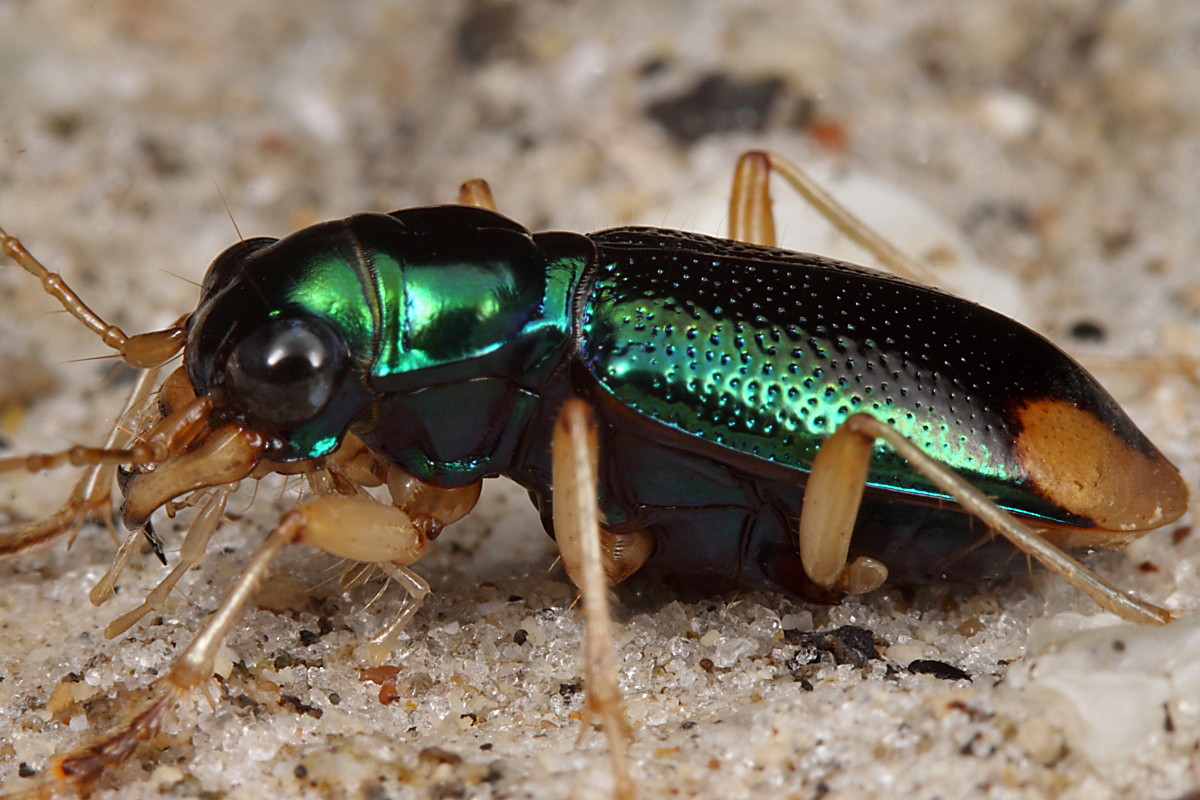
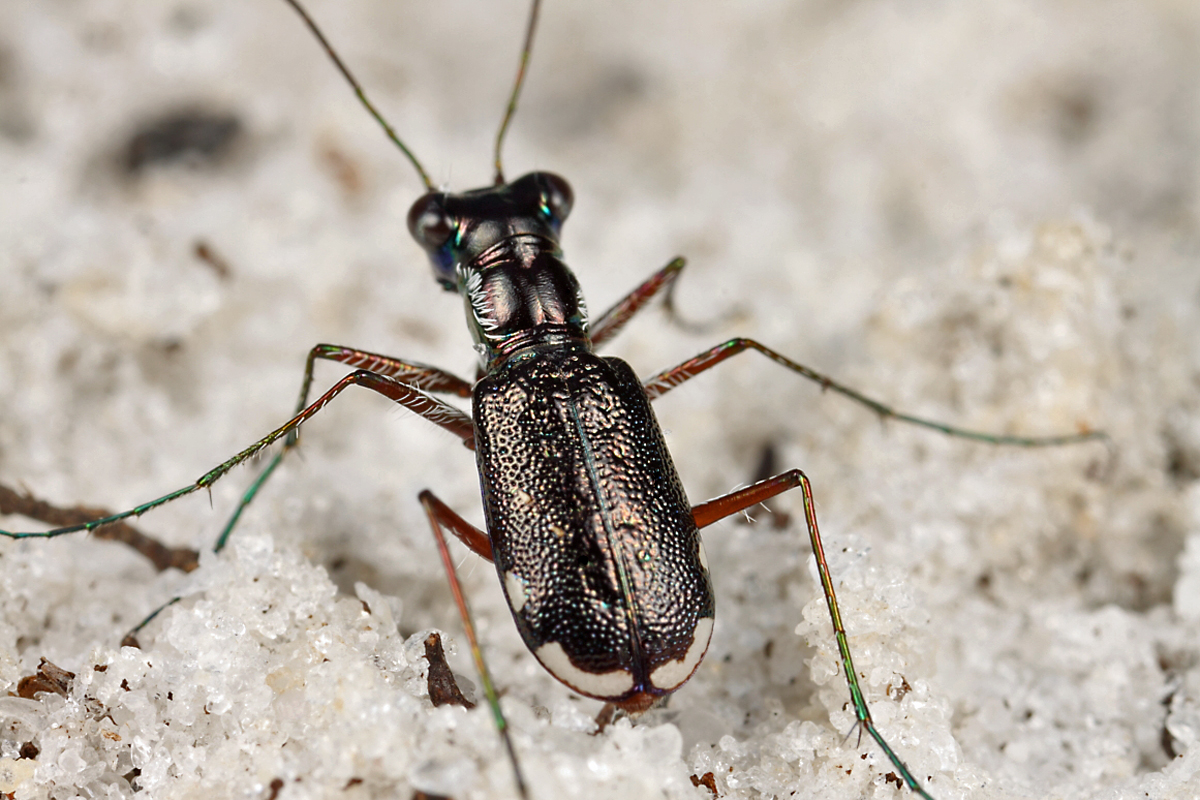
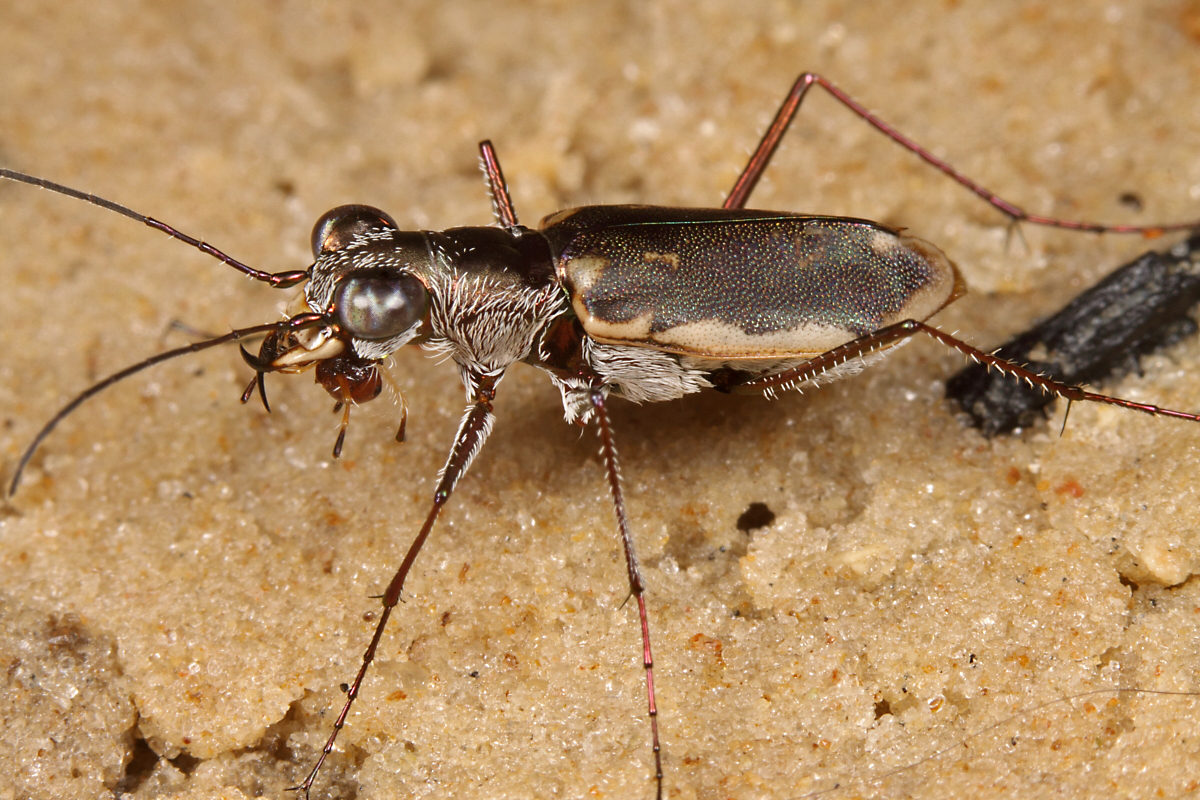
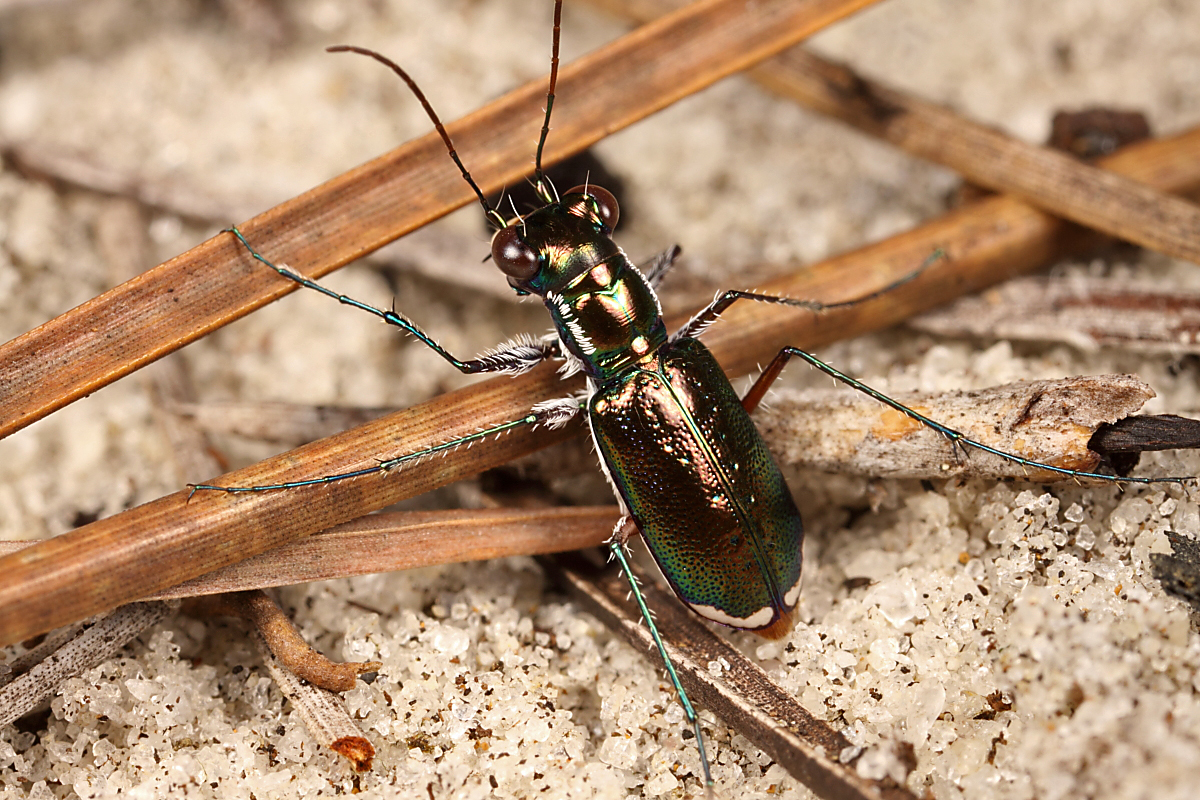
The species lacks the violaceous reflections found on the elytra of T. carolina.
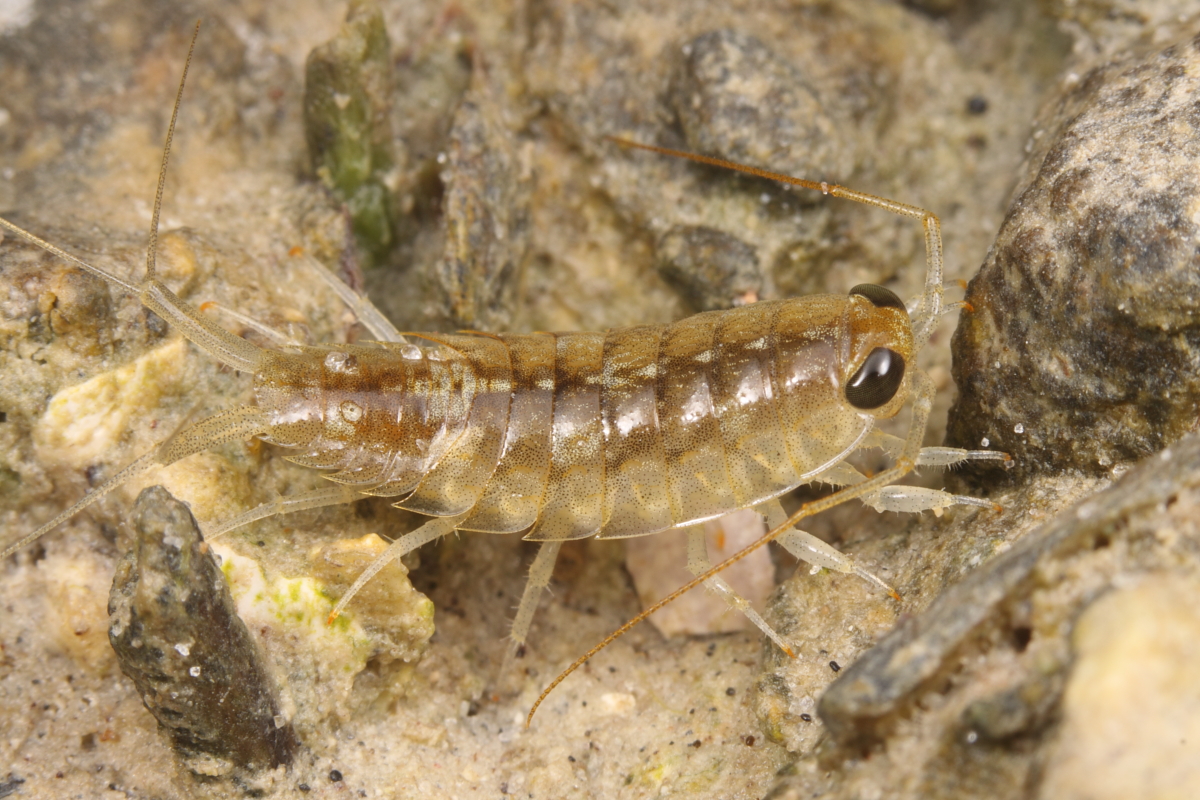
As I mentioned in my previous post, it was a little unnerving to walk into the marsh surrounded by darkness and greeted by scuttling hordes of sea slaters. The anticipation of finally seeing T. floridana, however, was more than enough motivation to forge onward while deliberately scanning the ground with my headlamp. For some amount of time I focused on the more barren areas, which is where I would have expected the adults to occur, but only after I also began scanning some of the sparsely vegetated ground—typically slightly elevated above the moister and more barren areas—did I see the first adult. Its agile dash into and through the vegetation upon my approach was a little surprising and required more effort than I expected to finally capture it. Elation! Finding rare species is always a treat, but it is extra special when you find one where nobody previously knew it existed. Over the course of the next 1½ hours (as well as the following night and two nights after that) I would see countless adults, giving me comfort that I could collect a reasonable voucher series without causing negative impacts on the population.

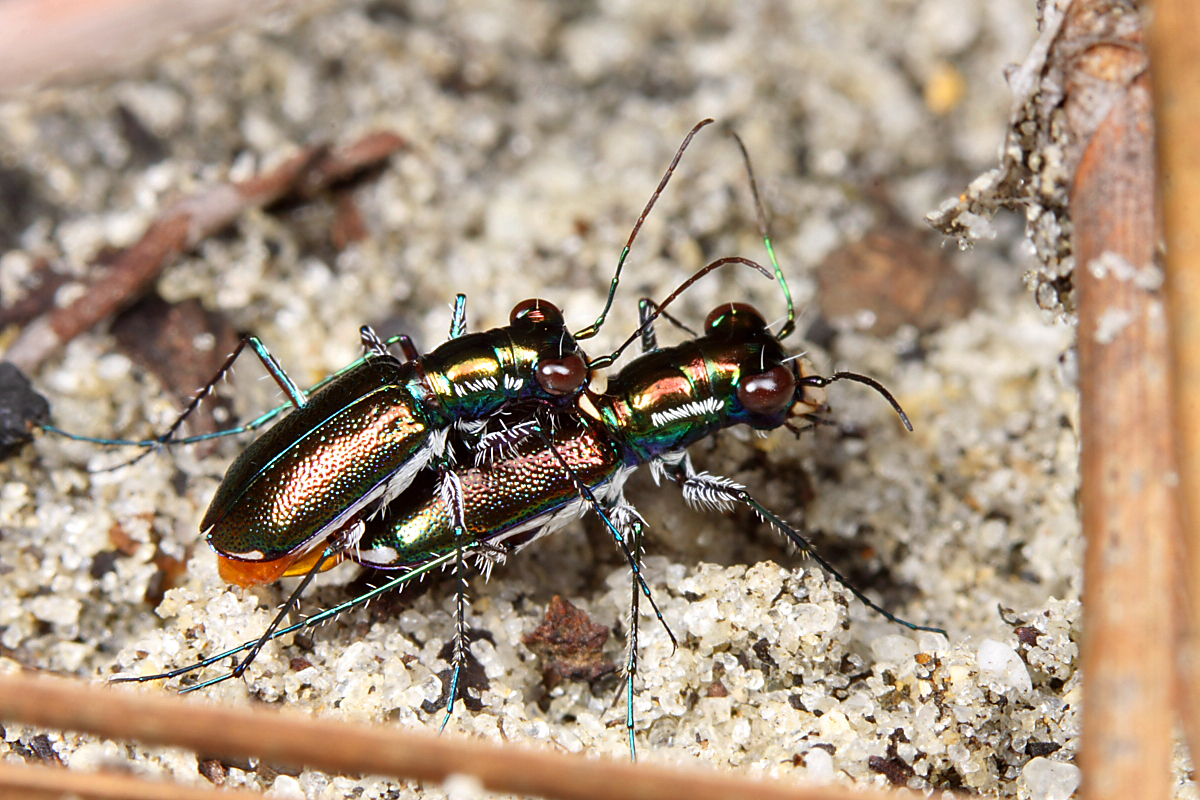
A female oviposits in the soil amongst the sparse, salt-tolerant vegetation.
I had hoped to see mating pairs but never did; however, I did find a female in the act of oviposition. Consistent with the apparent adult preference for sparsely vegetated areas rather than barren ground, the female was nestled amongst the vegetation while she excavated a hole for the egg she would lay. On the last night that I visited the marsh, I focused my efforts on finding larval burrows, starting in the area where I had seen them two years ago. I only found a few but succeeded in fishing one 3rd-instar larva out of its burrow. You see, even though I photographed one two years ago, the larva of this species remains undescribed in the literature. Since I allowed the two larvae I had collected to complete their development to adulthood, I still lacked preserved specimens that could be used for the basis of a description. I now had one, but for a formal description it would be better to have at least a few examples. Remembering that I had seen the female ovipositing amongst vegetation rather than out in the open, I began searching the nearby vegetated areas for burrows. This approach was met with better success, and from the dozen or so burrows that I was able to find, I succeeded in fishing out two more 3rd-instars. I already have several preserved larvae of Tetracha virginica (Virginia Metallic Tiger Beetle) and a single T. carolina (Carolina Metallic Tiger Beetle) collected in southeastern Missouri by my good friend Kent Fothergill—this small series of T. floridana now leaves me lacking only the also-undescribed T. impressa (Upland Metallic Tiger Beetle) among the four North American (sensu stricto) species of Tetracha. I will be anxious to compare the larvae of T. floridana I now have with those of T. carolina and T. virginica in an effort to find species-specific characters.

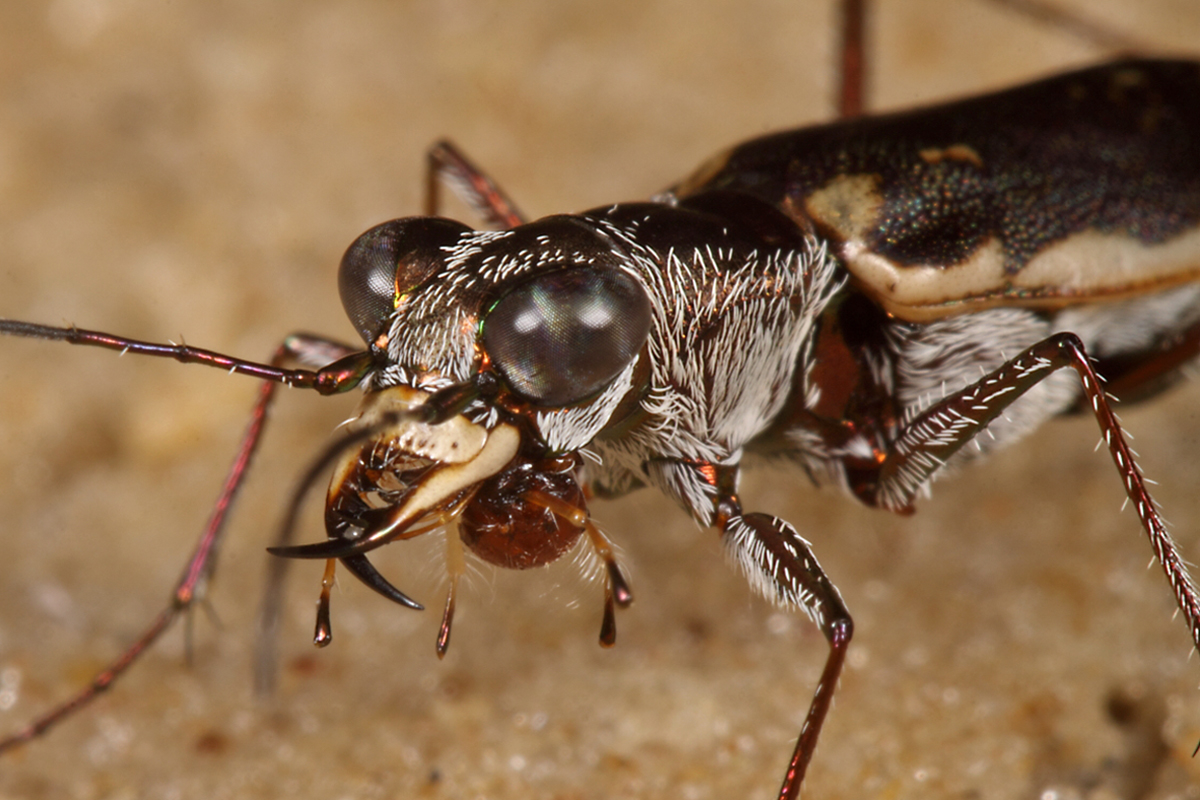
This male is sporting some very impressive teeth on his mandibles.
Copyright © Ted C. MacRae 2011











 Beetles In The Bush