Botanizing at Prairie Fork Conservation Area

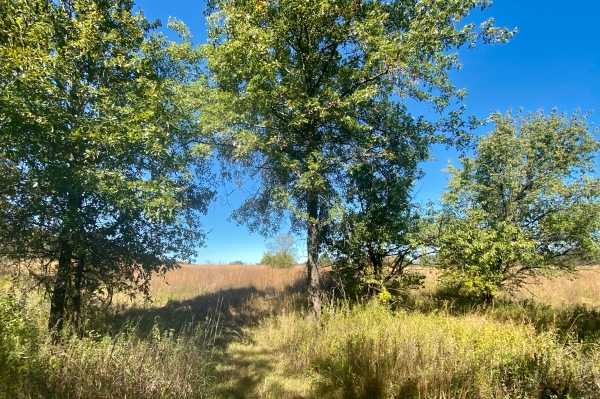
Restored claypan prairie around Crow Pond.

Today’s outing for the Webster Groves Nature Study Society (WGNSS) Botany Group was Prairie Fork Conservation Area, a newish Missouri Department of Conservation (MDC) property that is open to the public only by appointment. The 911-acre property lies within the historic 9-mile long prairie of Callaway County, Missouri—namesake for Nine Mile Prairie Township. Prior to MDC ownership, the property was owned by Ted Jones, son of the founder of Edward Jones Financial Company, and his wife Pat, who began dedicated conservation practices beginning in the 1950s. Obviously, conservation in those days—with its reliance on plantings of many now-invasive exotics such as Lespedeza sericea (sericea lespedeza), Lonicera mackii (bush honeysuckle), and Elaeagnus angustifolia (Russion olive), meant something very different than it does today. Nevertheless, the foresight and generosity of Ted and Pat Jones ultimately led to the creation a conservation area where more than half of its area has been or is being restored to claypan prairie resembling as much as possible its presettlement character.
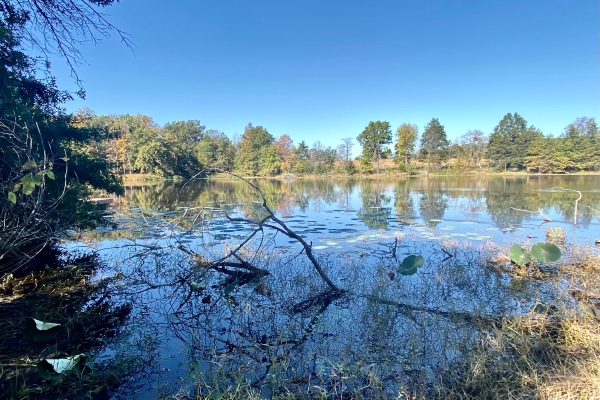
Crow Pond.

The group engaged in two short hikes—the first through several garden plantings and then at the interface between tallgrass prairie and upland forest surrounding the perimeter of Crow Pond. Almost immediately we were treated to the sight of Gentiana andrewsii (closed gentian) in bloom. To the uninitiated, the mature flowers appear to be still-unopened buds. In fact, the corolla in this species remains closed, and the flowers are pollinated by bumblebees, which must force their way through the closed corolla. We would see numerous plants as we traveled around the pond, with most being difficult to access and photograph due to the thick, surrounding vegetation.
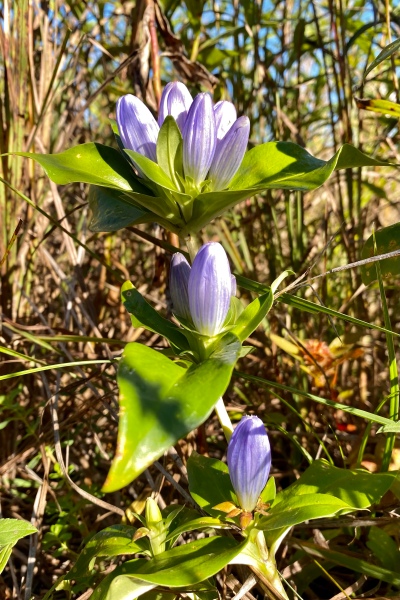
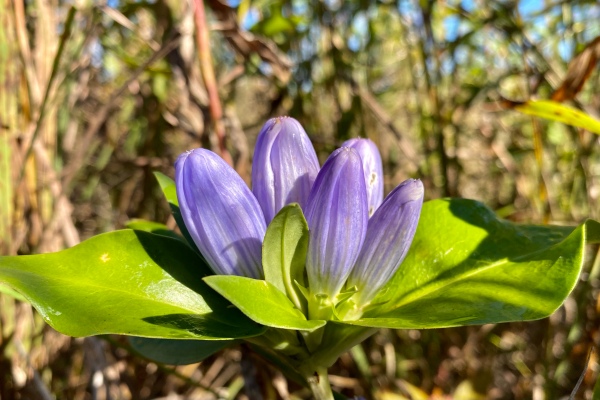
Gentiana andrewsii (closed gentian) mature inflorescences.

At pond’s edge, we found several examples of Symphyotrichum laterifolium (calico aster), one of the few white fall asters that can be identified fairly easily in the field due to its profusion of smaller-than-average-sized flowers along lateral branches with relatively few rays (9–16) and disc florets turning from pale yellow to purple, lance-elliptic leaves with a “Mohawk” (i.e., hairs only along the midvein) on the underside, and stems covered in soft, white hairs.
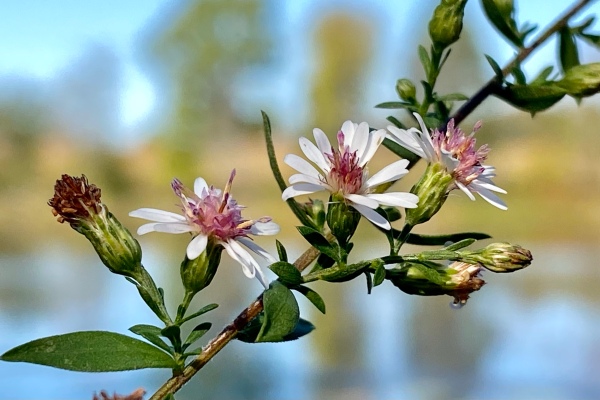
Symphyotrichum laterifolium (calico aster).

At the far end of the pond, the group noticed Taxodium distichum (bald cypress) trees (native to southeastern Missouri but not this far north) with strange-looking galls on the twigs. There was some discussion about whether they were caused by an insect or a fungus—their rusty-brown color and numerous spikes brought to mind the galls on Juniperus virginiana (eastern red-cedar) caused by the fungus Gymnosporangium juniperi-virginianae (cedar-apple rust). The fact that both Taxodium and Juniperus are in the family Cupressaceae made the idea of a rust fungus being the culprit seem even more likely. Nevertheless, a little online sleuthing (thank goodness for smart phones!) revealed that the actual culprit was, indeed, and insect—specifically Taxodiomyia cupressiananassa (cypress twig gall midge), a tiny fly. The spongy galls are snow-white at first and then turn brown with age, eventually dropping from the tree as leaves are shed. Maggots pupate inside the galls and adults may emerge from galls that are still on the tree later in the season. Maggots usually overwinter inside fallen galls to pupate and emerge as adults the following spring.
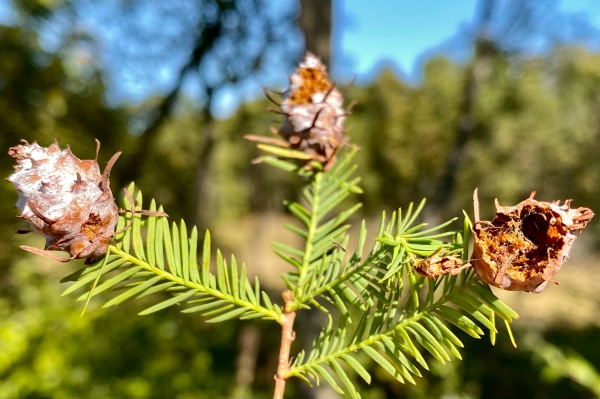
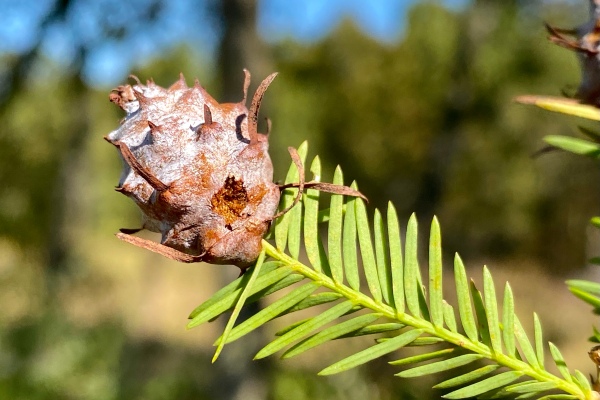
Galls caused by Taxodiomyia cupressiananassa (cypress twig gall midge) on Taxodium distichum (bald cypress).
Galls start out snow-white but turn brown with age.

As we walked, some of the more adventurous among us partook in freshly fallen fruits of Diospyros virginiana (persimmon). Those that were plucked from trees just as they were ready to drop were found to be the tastiest and least stringent, and sucking on the five or so seeds per fruit stretched out the flavor as long as possible. As we enjoyed the impromptu snack, a few still-flowering plants of Bidens aristosa (bearded beggarsticks or tickseed sunflower) were seen near the pond margin.

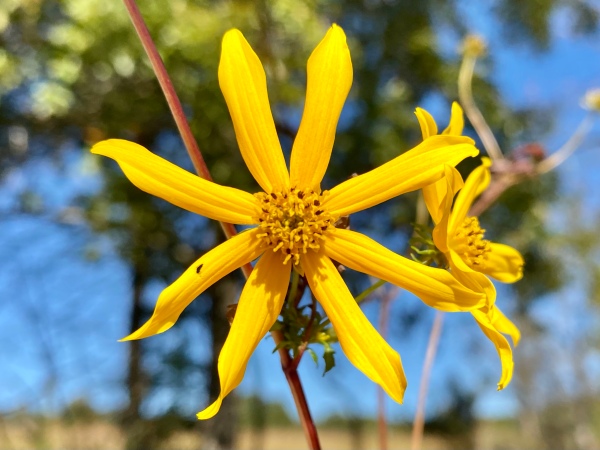
Bidens aristosa (bearded beggarsticks or tickseed sunflower).

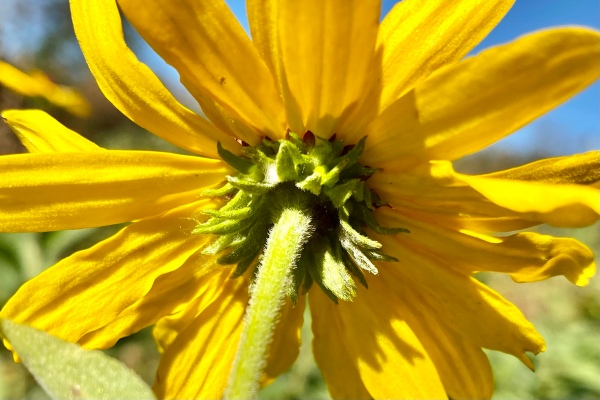
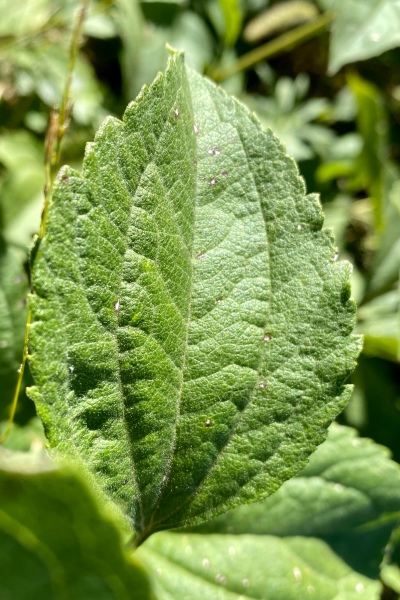
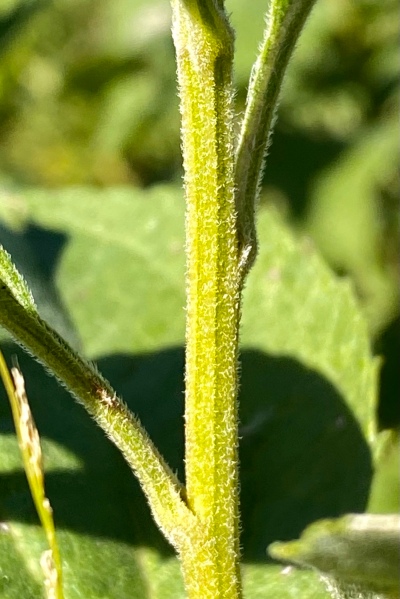
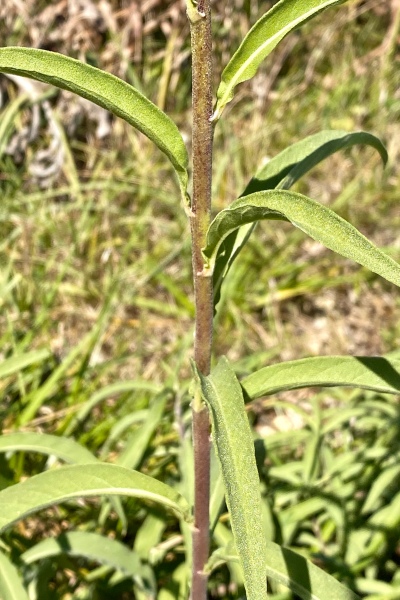
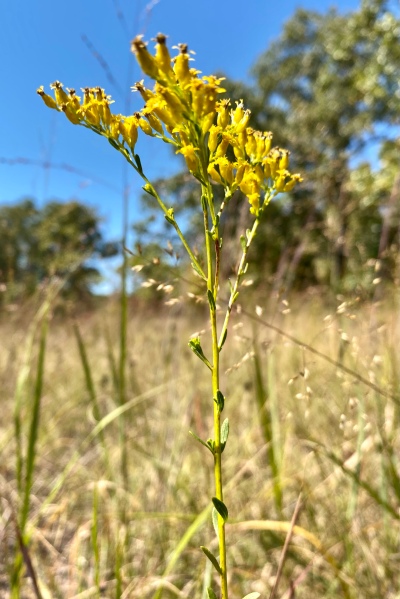
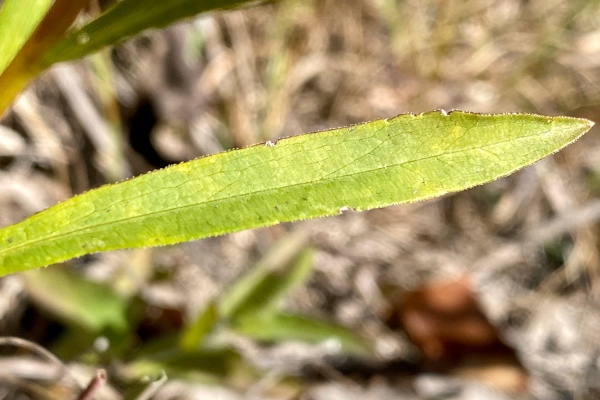
Eventually, we spotted from afar a large patch of bright, yellow-flowered composites in the distance. Their brown-purple discs brought the genus Rudbeckia immediately to mind, and our initial thought was R. subtomentosa (sweet coneflower) after seeing some of the large leaves with lobes. Still, the time of bloom seemed very late, and the plants were not as tall nor the leaves as “gray” as would be expected for that species. In reality, the majority of leaves were not lobed, and we decided they instead represented a form of R. fulgida (orange coneflower)—a highly variable and taxonomically difficult complex of populations.
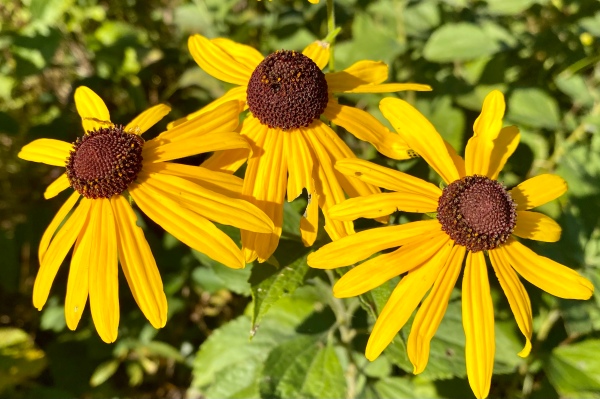
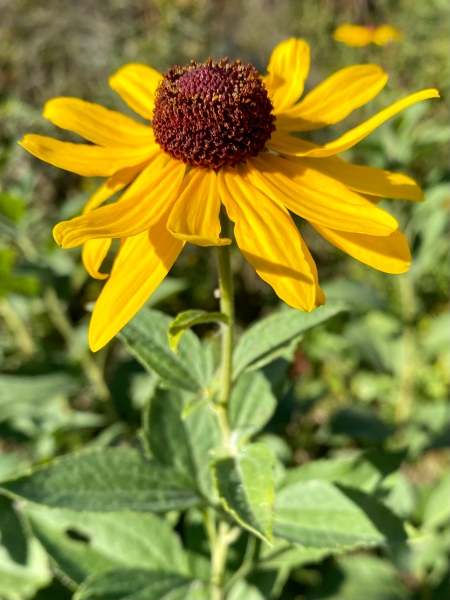
Rudbeckia fulgida (orange coneflower).
Rudbeckia fulgida (orange coneflower) involucre.
Rudbeckia fulgida (orange coneflower) leaf.
Rudbeckia fulgida (orange coneflower) stem.

After completing the circuit around Crow Pond, the group caravanned to the northernmost and most recently renovated quarter on the property. Most of the plants established in this large tract of now-tallgrass prairie were well on their way to fall seed (and, in fact, had been combine-harvested for such), but mowing along the gravel access road allowed some still-green regrow the—the most dramatic being Helianthus maximiliani (Maximilian sunflower). This uncommon sunflower is most similar to H. grosseserratus (sawtooth sunflower) due to its large attractive flowers and narrow, curved leaves. However, leaves of the former are grayish due to the presence of many tiny hairs covering the surface of the leaf (in the latter leaves are glabrous), and the stem is rough—also due to the presence of hairs (in the latter the stem is glabrous and has a glaucus coating that can be rubbed off).
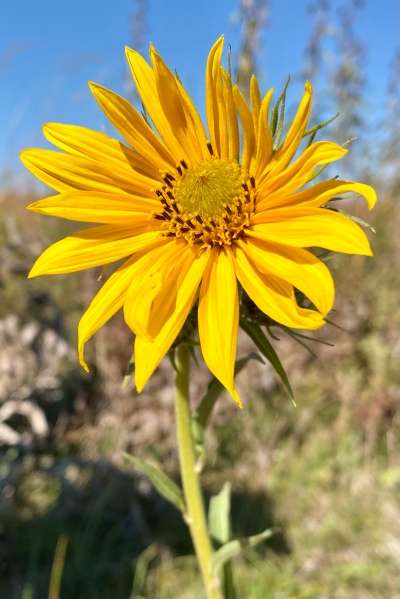
Helianthus maximiliani (Maximilian sunflower).
Helianthus maximiliani (Maximilian sunflower) involucre.
Helianthus maximiliani (Maximilian sunflower) stem/leaves.
Helianthus maximiliani (Maximilian sunflower) leaf.

The group agreed that three weeks earlier would have been a good time to see the area, and next spring or summer would be even better!

©️ Ted C. MacRae 2021

Hiking at Grand Bluffs Conservation Area

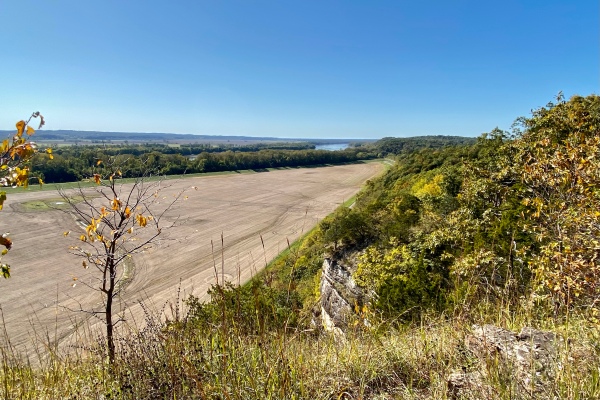
300-ft bluffs tower above the Missouri River valley.

Balmy conditions continue as we head into the back half of October. For today’s hike, I decided to try something new and settled on Grand Bluffs to check out the spectacular views that are said to be available from atop its 300-ft bluffs that overlook the Missouri River valley.

The Missouri River Valley stretches off to the west.

I expected fall colors to be well advanced by now, but at least in this area the forests remain mostly green with only hints of the yellows, reds, and oranges that will soon explode across the canopy. The parking lot is near the valley, so the hike to the overlook is mostly up, sometimes for fairly long stretches. The views from the lookout, however, are breathtaking and well worth the effort to get there.

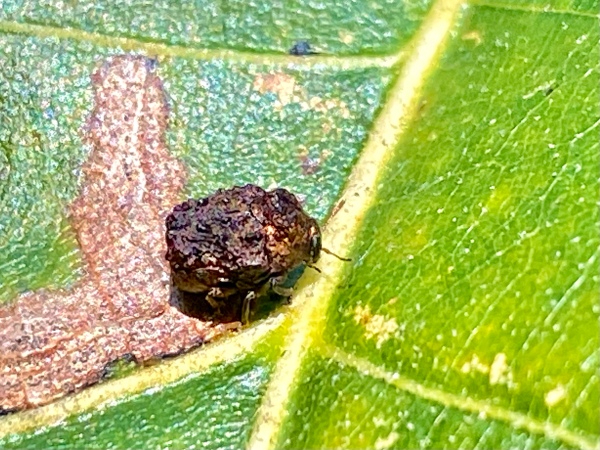
Warty leaf beetle (Neochlamisus sp.).

On the way up, fall asters (Symphyotrichum spp.) and goldenrods (Solidago spp.) bloomed prolifically along the trailsides under mesic deciduous forest—I saw three species of the former (anomalum, oolentangyense, and turbinellum) and two of the latter (nemoralis and petiolaris).

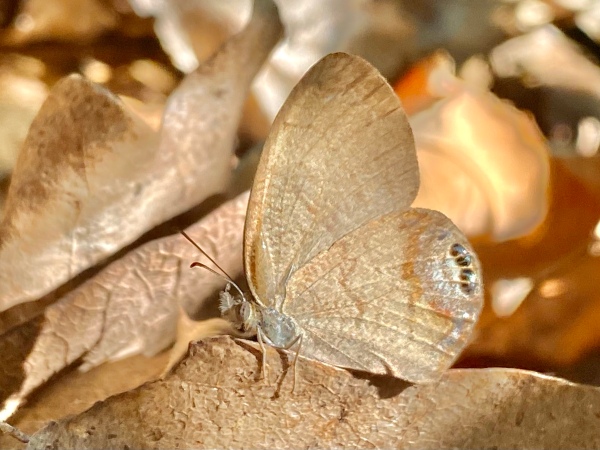
Gemmed satyr butterfly (Cyllopsis gemma).

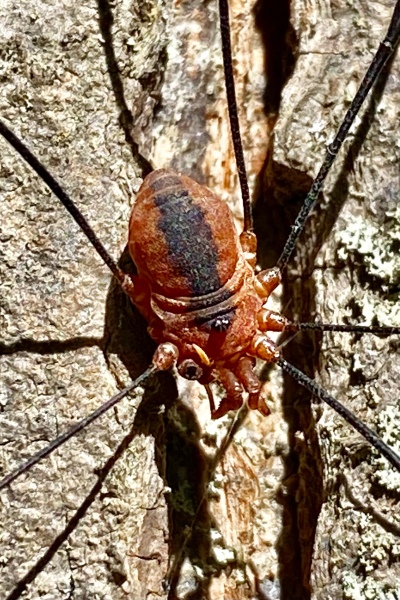
Insects seen included syrphid flies and halictid bees on the fall asters, several warty leaf beetles (Neochlamisus sp.) feeding on foliage of black oak (Quercus velutina), and gemmed satyr (Cyllopsis gemma) butterflies flitting above the forest floor. A male eastern harvestman (Leiobunum vittatum) sitting in the trunk of a shagbark hickory (Carya ovata) proudly displayed his elongated, spiny pedipalps for all to see.

Eastern harvestman (Leiobunum vittatum).

The hike back down was almost as deliberate as the hike up, taking care to watch my footing as the late afternoon shadows grew longer and sharper through the dappled sunlight. While 2.7 miles is not a long hike, it was sufficient for the day, and I look forward to returning during the winter when an open canopy will afford even more spectacular views from atop the bluffs.

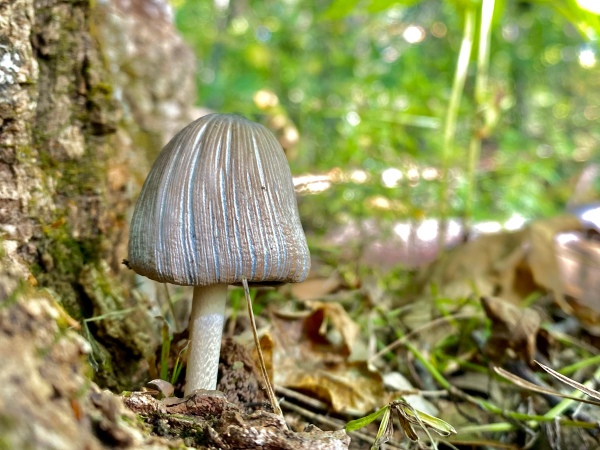
One of the dark-spored mushrooms (family Psathyrellaceae) at the base of a sugar maple (Acer saccharum).

©️ Ted C. MacRae 2021

Hiking at Valley View Glades Natural Area

My good hiking/collecting buddy Rich called me yesterday and asked if I was interested in a hike. Since I am retired, and he is retired, there was nothing on either of our schedules that prevented us from doing it the very next day, so we decided to come to one of our favorite places that we haven’t been to in awhile—Valley View Glades Natural Area near Hillsboro.

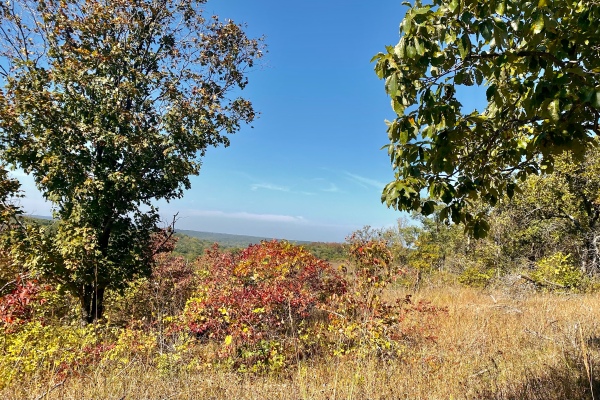
Fall color beginning at Valley View Glades Natural Area.

I brought my big camera along because I figured Great Plains ladies’-tresses orchids (Spiranthes magnicamporum) would be in good bloom, and I wanted to get good closeups with a blue sky background (I was successful in that regard—photos coming soon). I also brought along my collecting pack in case we found a beetle or two, but in this regard I was only half-successful—careful examination of several ninebark (Physocarpus opulifolius intermedius) patches did not reveal any Dicerca pugionata (seen a week ago at nearby Victoria Glades), but I did find a Blackburn’s earth-boring beetle (Geotrupes blackburni) on the trail. We also found a gum bumelia (Sideroxylon lanuginosum) tree with copious amounts of frass at the base, indicating infestation by a bumelia borer (Plinthocoelium suaveolens), and I recorded the location so I could put an emergence cage at the base of the tree next season to catch the emerging adult.

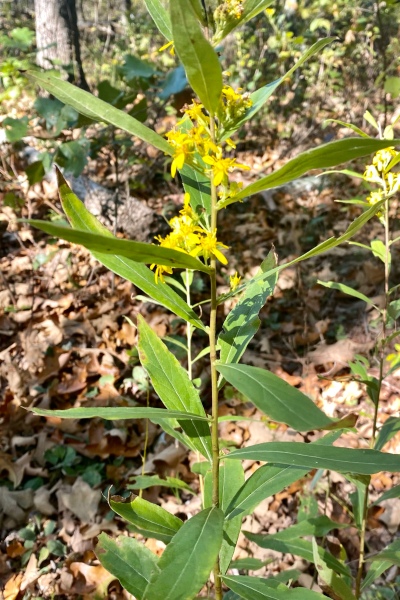
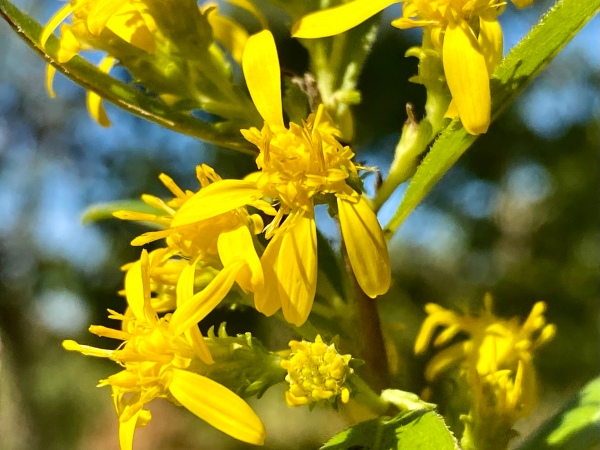
One other item of botanical interest was downy goldenrod (Solidago petiolaris) growing near the margins of the dry post oak woodlands—a species I’ve not previously noticed but was able to recognize due to its combination of recurved phyllaries and moderately widened leaves without teeth (Buckley’s goldenrod, S. buckleyi, also has recurved phyllaries but wider leaves with the edges distinctly toothed).

Downy goldenrod (Solidago petiolaris).

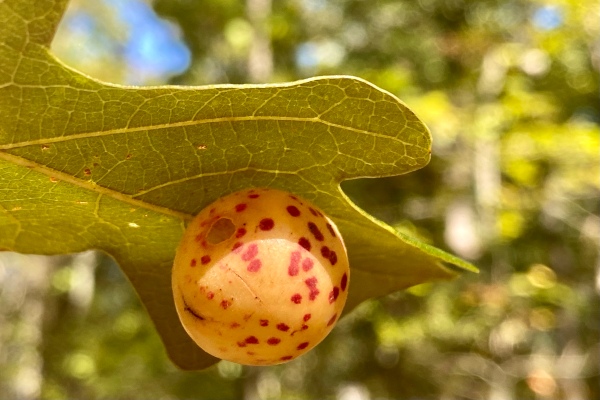
An especially colorful gall caused by the cynipid wasp Atrusca quercuscentricola on the leaf of post oak (Quercus stellata) piqued both entomological and botanical curiosity.

Atrusca quercuscentricola gall on leaf of post oak (Quercus stellata). Note adult emergence hole in upper left of gall.
Atrusca quercuscentricola gall on leaf of post oak (Quercus stellata)—turned upside down.

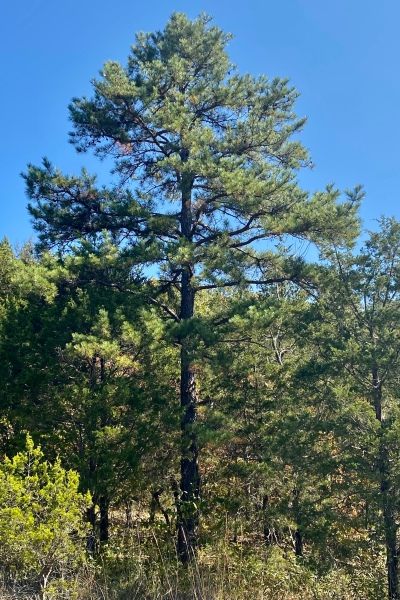
Near the end of the hike, I pointed out a shortleaf pine (Pinus echinata) tree that may be the northernmost naturally-occurring shortleaf pine in the state. I am aware of some trees further north along Hwy 21 at Sunridge Tower Park and in St. Louis Co. at Rockwoods Reservation, but I believe in both of these cases they are planted.

Shortleaf pine (Pinus echinata).

©️ Ted C. MacRae 2021
Hiking at Hughes Mountain Natural Area

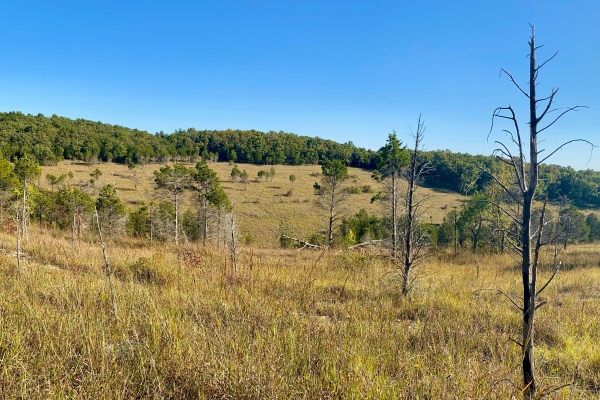
Even though I ended the bait trapping season last weekend, I still plan to get out on a weekly basis to explore some areas that I haven’t been able to visit yet this season. Tops on the list for me is Hughes Mountain Natural Area, an exposed rhyolite dome in the St. Francois Mountains that features dry oak-hickory woodlands surrounding xeric igneous glades.

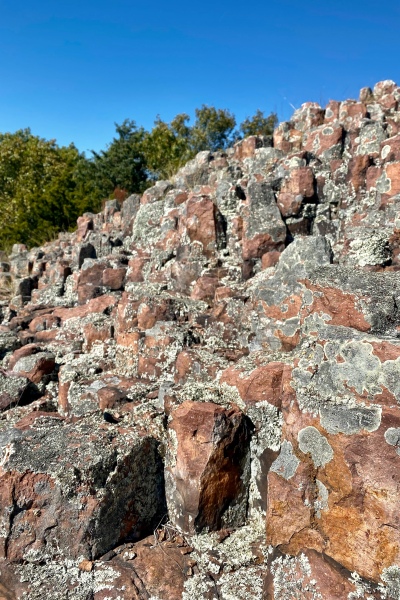
Hughes Mountain summit.

The main thing I was hoping to see was Tragidion coquus, a spectacular longhorned beetle that seems common in some areas (e.g., Texas) but is rarely seen in Missouri. I saw one here three years ago in late September at the woodland/glade interface, and a recent conversation with fellow cerambyciphile Dan Heffern, who mentioned that they seem to prefer recently burned oak woodlands, makes me think that is why I saw it here (the surrounding woodlands are managed with periodic prescribed burns to stave off woody encroachment of the glade proper).

Columnar fracturing of rhyolite dome.
Eastern red-cedar (Juniperus virginiana) on the glade.

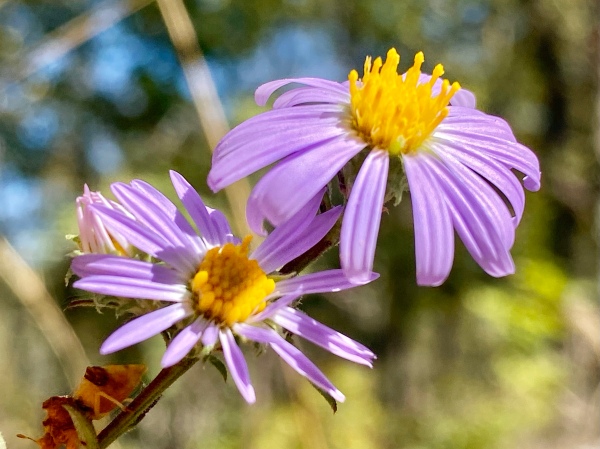
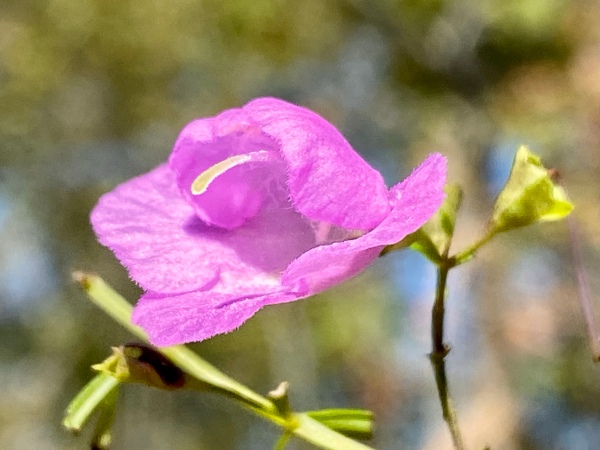
I hiked along the trail through the forest leading to the main glade, noting an abundance of many-rayed aster (Symphyotrichum anomalum) in bloom and a few persisting blooms on now-rank plants of slender false foxglove (Agalinis tenuifolia).

Many-rayed aster (Symphyotrichum anomalum). Note the photobombing ambush bug (Phymatodes sp.) on the stem in the lower left corner.
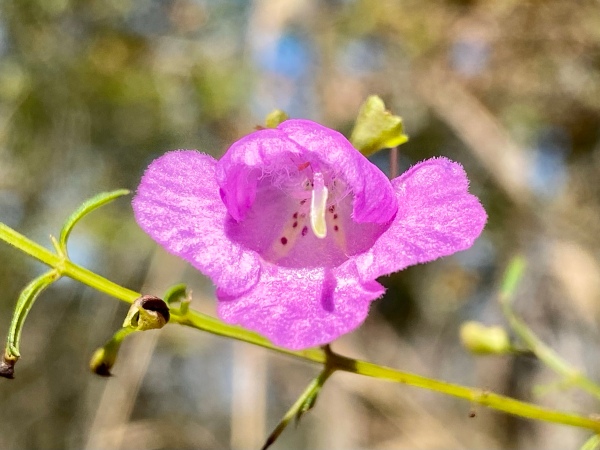
Slender false foxglove (Agalinis tenuifolia).
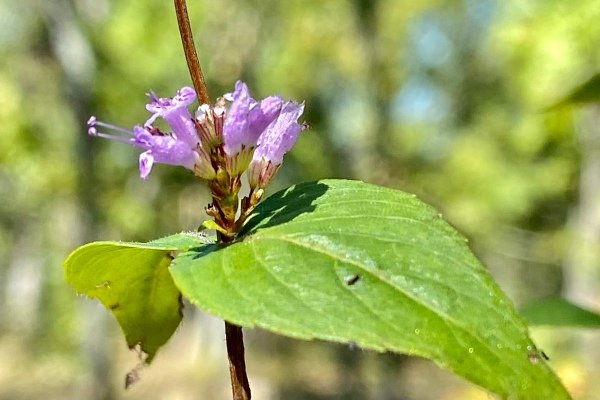
Common dittany (Cunila origanoides).

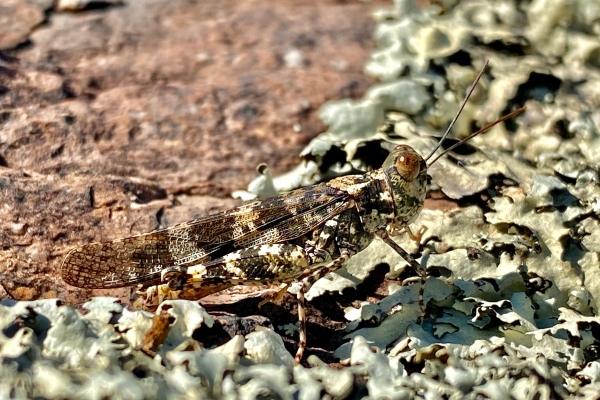
After reaching the main glade, I stayed along the interface around its entire perimeter, hoping to see one of the beetles either resting on foliage or in flight. It was a good day to look—sunny and relatively warm, but no beetles were seen. In fact, even though we haven’t yet had any frost, there was not a lot of insect activity in general with the exception of marvelously cryptic lichen grasshoppers (Trimerotropis saxatilis), which were common on the glade along with a variety of other grasshoppers.

The remarkably cryptic lichen grasshopper (Trimerotropis saxatilis).

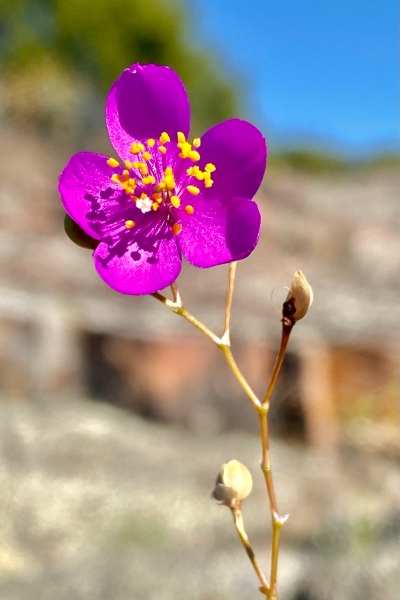
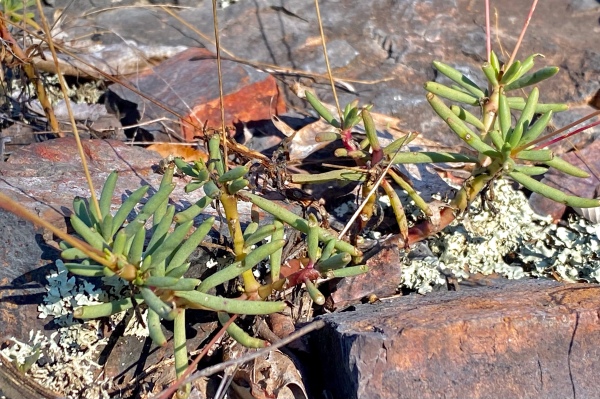
There was also little blooming on the glade, which made the chances of seeing the beetle even lower since they are known to be attracted to flowers such as thoroughwort (Eupatorium spp.) and blazingstar (Liatris spp.). I did find a few persisting blooms of the hot-pink largeflower fameflower (Phemeranthus calycinus), but most other plants were well past bloom. Eventually I completed the walk around the glade perimeter and worked my way back.

Largeflower fameflower (Phemeranthus calycinus) flower.
Largeflower fameflower (Phemeranthus calycinus) basal leaves.

At one point, I found a clump of small shagbark hickories (Carya ovata) that were oozing sap at several points along the main trunks and noted a variety of insects feeding at the sap flows. I checked carefully, thinking that they might include T. coquus, but none were seen—just flies, butterflies, and a wheel bug assassin bug (Arilus cristatus). Shortly afterwards, I reached the car—my bottles empty but my soul nourished by another day surrounded by nature.

An abnormal fall-blooming serviceberry (Amelanchier arborea).

©️ Ted C. MacRae 2021
Orchids blooming at Victoria Glades Conservation Area

Victoria Glades Conservation Area.

The late summer explosion of yellow composites has subsided greatly over the past week—Missouri conflower (Rudbeckia missouriensis) and rosinweed (Silphium integrifolium), and ashy sunflower (Helianthus mollis) have all gone to seed, and only sporadic still-blooming individuals of prairie dock (Silphium terebinthinaceum) and goldenrods—including old field goldenrod (Solidago nemoralis), stiff goldenrod (S. rigida), and Gattinger’s goldenrod (S. gattingeri)—can be found. Gattinger’s goldenrod, in particular, deserved extra attention, as this species has only a few known population centers and comes as close to a true Missouri endemic as any plant species in the state. It can be distinguished by its basally disposed, glaucus leaves which become very small on the upper stem and its pyramidal inflorescences radiating out from the stem in all directions.

Solidago gattingeri (Gattinger’s goldenrod).

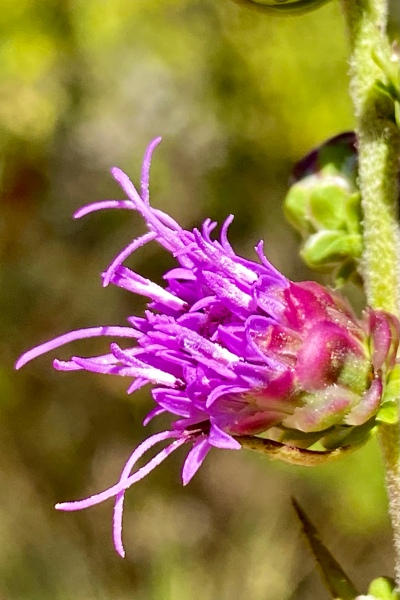
The decline of the fall composites does not mean, however, that the glades are now without color, as vibrant purples still dot the glade perimeter in the form of Liatris asperas (rough blazingstar).

Liatris asperas (rough blazingstar).

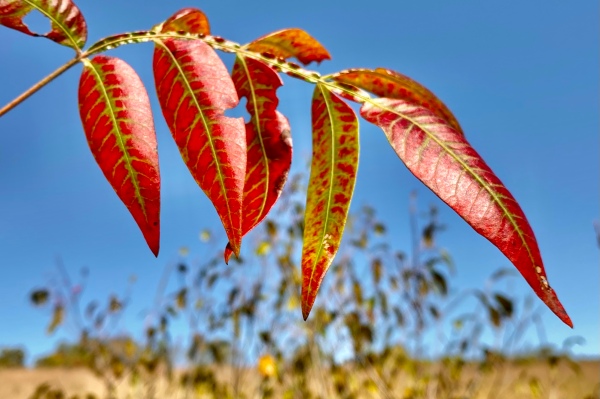
Sumacs, as well—both shining (Rhus copallinum) and fragrant (R. aromatica), and flowering dogwood (Cornus florida) have already begun turning rusty to bright red.

Shining shining (Rhus copallinum).

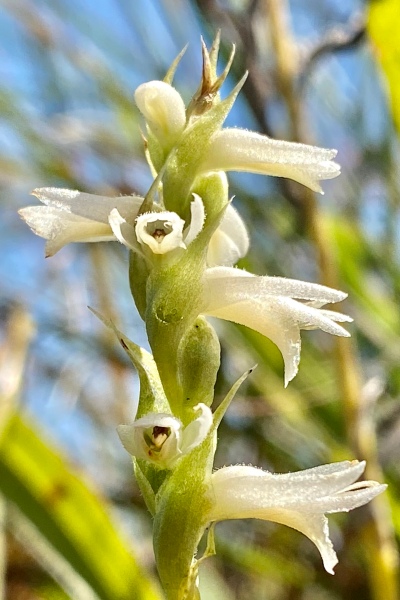
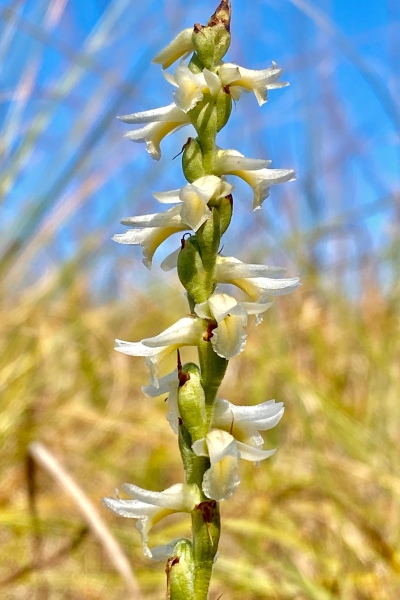
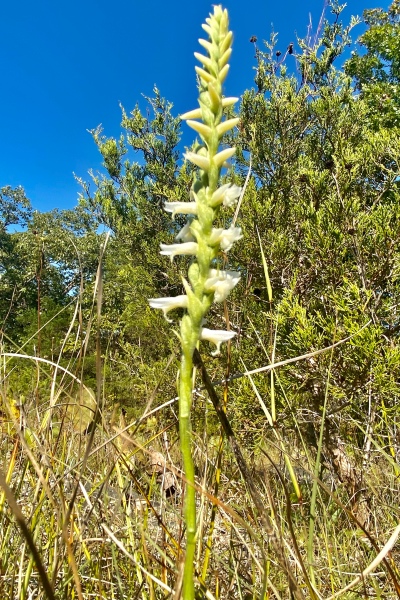
Nor does it mean that nothing new is coming into flower—Great Plains ladies’-tresses orchid (Spiranthes magnicamporum) are blooming for the first time this week, and I saw numerous individuals still developing their inflorescences to suggest a fantastic October display is around the corner.

Great Plains ladies’-tresses orchid (Spiranthes magnicamporum).

©️ Ted C. MacRae 2021
Plant of the day—stiff sunflower

Silphium terebinthinaceum (prairie dock) blooms across the glade.

I’ve been coming to Victoria Glades Conservation Area regularly for nearly 40 years now, yet still I continue to find things that I’ve not seen before. It had continued hot and muggy the last couple of days until a cold front come through, bringing rain and the classic early fall cool-off. The pre-flowering plants of a different goldenrod and blazing star still haven’t bloomed, but I’m fairly certain they are Solidago ridiga (stiff goldenrod) and Liatris aspera (rough blazingstar), respectively. They should definitely be in full bloom by the time I check the traps again in 10 days.

Solidago ridiga (stiff goldenrod) pre-bloom inflorescence.
Liatris aspera (rough blazingstar) pre-bloom inflorescence.

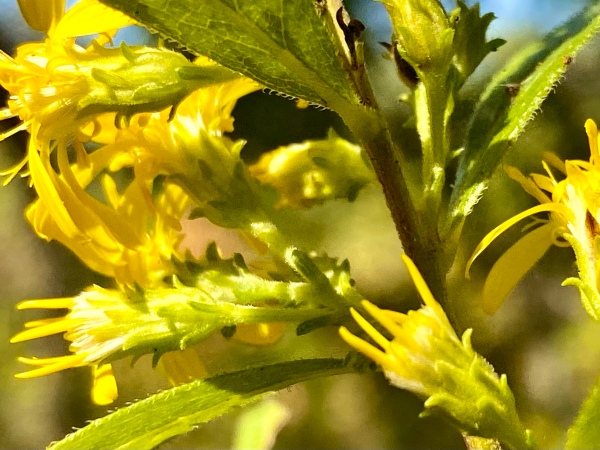
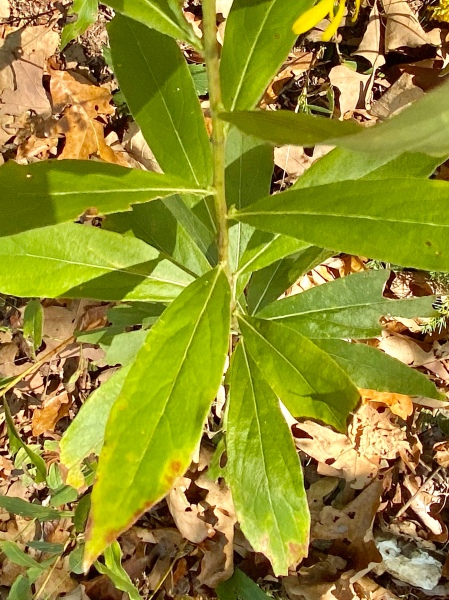
The plant of the day today, however, is what I believe to be Helianthus pauciflorus (stiff sunflower), a few plants of which I saw at the top of the knoll on the west side. There are no iNaturalist records for this species either here or at nearby Valley View Glades, but the WGNSS Botany Group has it on their floral list for Victoria Glades. This is a first sighting for me, but I am confident in the identification due to the dark disc florets, stiff lanceolate opposite leaves with rough upper and lower surfaces, and generally only one flower head per stem.

Helianthus pauciflorus (stiff sunflower) inflorescence.
Helianthus pauciflorus (stiff sunflower) involucre.
Helianthus pauciflorus (stiff sunflower) stem/leaves.
Helianthus pauciflorus (stiff sunflower) leaf adaxial surface.
Helianthus pauciflorus (stiff sunflower) leaf abaxial surface.

Unfortunately, non-native species continue to pop up with regularity in this gem of a natural area. This includes not only plants, such as Centaurea stoebe (spotted knapweed), a single plant of which I found in bloom at the edge of the parking lot…

Centaurea stoebe (spotted knapweed).
Centaurea stoebe (spotted knapweed) inflorescence.

…but also insects, such as this Tenodera sinensis (Chinese mantis) found perched on the trunk of Quercus stellata (post oak).

Tenodera sinensis (Chinese mantis) on Quercus stellata (post oak).

©️ Ted C. MacRae 2021
Botanizing at Creve Coeur Lake

Mallard Lake at Creve Coeur Lake Park.

The forecast over the weekend called for possible rain, so the WGNSS Botany Group chose a location close to home in case we got rained out. I would have never thought of Creve Coeur Park as a place to botanize, but the environs surrounding the lakes, particularly Mallard Lake, get good moisture and have been allowed to revert to semi-native vegetation (with a few significant exotic invasives) for many years now. We first examined a few native garden plantings near the parking lot and saw several things not typically found in this part of the state, but the most interesting to me was Liatris scariosa (savanna blazingstar), one of our less common species, and it’s large fantastically showy blooms.

Liatris scariosa (savanna blazingstar) inflorescence.
Liatris scariosa (savanna blazingstar) floret.

Eupatorium serotinum (late boneset) was blooming profusely along the margins of the lake—I scanned the flowers for a while hoping to see some interesting beetles, with several Euphoria leucographa (a common flower chafer) being the only beetles seen. As I looked, I enjoyed Steve’s explanation of the common name of late boneset compared to another common Missouri species, Eupatorium altissimum (tall boneset)—the former actually blooms later than “late boneset,” and the latter is actually as tall as “tall boneset”!

Further along the lake margin we found a stand of “Helianthus” sunflowers, but these proved to be the lookalike Heliopsus helianthoides (false sunflower)—I’d been fooled by their straight yellow color versus the orange-yellow color that is more typical of the species. A good character to distinguish this species when the color is not diagnostic is the double-rank of phyllaries on the underside of the flower head, with the inner ones short and rounded and the outer ones long and pointed-recurved.

Heliopsus helianthoides (false sunflower).
Heliopsus helianthoides (false sunflower) inflorescence.
Heliopsus helianthoides (false sunflower) involucre.

There is also another easy way to distinguish false sunflower—by noting the presence of Lygaeus turcicus (false milkweed bug, also called the heliopsis bug), a close relative of L. kalmii (small milkweed bug) which looks very similar to the latter but, as indicated by the common name, feeds exclusively on false sunflower instead of milkweed. We eventually found several of the bugs (which, sadly, did not cooperate for photos), further confirming our identification of the plants.

We diverted to a dry, sandy spot under the bridge to check out some ant lion pits. Also called “doodlebugs,” these relatives to lacewings are surely the inspiration for the brain-eating “Ceti eels” in Star Trek: The Wrath of Khan! In the area, a super-fresh Limenitis arthemis astyanax (red-spotted purple) probed for salts on the ground, posing beautifully for a few photos.

Limenitis arthemis astyanax (red-spotted purple).

Walking along the trail north of Mallard Lake, we saw two species of vining plants: Amphicarpaea bracteata (hog peanut), and Apios americana (groundnut). Both of these plants belong to the bean family (Fabaceae) and have underground edible portions—the former in the form of peanut-like fruits formed from self-fertilizing, “cleistogamous” flowers that bloom near the ground (or even underground), and the latter in the form of tubers that form like strings of beads along the underground rhizomes of the vine. Both were important food sources for indigenous cultures. I’ve never seen either of these species in bloom (the flowers of groundnut, in particular, were unlike any other I’ve seen), so it was nice to be able to compare them on plants growing nearly side-by-side.

Amphicarpaea bracteata (hog peanut) inflorescence and leaves.
Amphicarpaea bracteata (hog peanut) inflorescence.
Apios americana (groundnut).
Apios americana (groundnut) inflorescence.
Apios americana (groundnut) leaf.

Walking back towards the cars, we had one more “DYC” (damned yellow composite) to test our ID skills. Fortunately, Helenium spp. (sneezeweed) are easily distinguished from other DYCs by their wedge-shaped ray florets with lobed tips and protuberant, nearly spherical disks. Helenium autumnale (common sneezeweed) is identified to species by its combination of yellow disk florets and broad leaves attached to a conspicuously winged stem.

Helenium autumnale (common sneezeweed).
Helenium autumnale (common sneezeweed) inflorescences.
Helenium autumnale (common sneezeweed) stem/leaves.

By the time we reached our cars, I was as hungry, sweaty, and thirsty as I’ve ever been on one of these walks. My thirst and appetite for knowledge, however, were, for the moment, completely satiated.

A dragonfly perched on the branch above me.

©️ Ted C. MacRae 2021
Botanizing at Pickle Creek Natural Area

View atop a sandstone hoodoo.

Our destination for this week’s Monday field trip with the Webster Groves Nature Study Society (WGNSS) Botany Group was Pickle Creek Natural Area. This gem of a site has one of the most natural history action-packed 2.5 miles of trail in Missouri, featuring moist sandstone canyons, fascinating sandstone “hoodoos,” and unique sandstone glades. Fr. Sullivan got there early to beat the heat and had a few interesting things to show us in the small sandstone glade (more correctly called a xeric sandstone prairie) near the trailhead. These included two new-to-me glade specialists: Hypericum gentianoides (pineweed), and Trichostema dichotomum (blue curls).

Hypericum gentianoides (pineweed).

Beginning along the trail we saw two species of aster still not quite ready to bloom: Symphyotrichum anomalum (many-rayed aster), with its distinctively reflexed phyllaries, and S. patens (spreading aster), distinctive by its strongly clasping leaves with rounded basal auricles. Two species of goldenrod were also present: the very common Solidago nemoralis (old-field goldenrod) in early bloom, and the very conservative (CC value = 8) S. buckleyi (Buckley’s goldenrod), its buds still growing for bloom in early September. Passing through the first of many deep cuts through the sandstone, we saw a small Aralia racemosa (American spikenard)—cousin to the devil’s walking sticks (A. spinosa) that we saw last week in southeastern Missouri. The plant was already past bloom and sporting bright red-purple berries.

Aralia racemosa (American spikenard).

Further down into one of the moist valleys, we found one of our objectives: Goodyera pubescens (downy rattlesnake plantain). I have seen this native orchid many times, as it’s distinctive white-veined leaves are a prominent winter sight in this area; however, this was the first time that I’ve seen them in bloom. Most of those with flower stalks were a bit past peak bloom, but we found at least a couple of plants still with good flowers for photographs. There were also many more basal leaf rosettes in the area without flower stalks, indicating a good population.

Goodyera pubescens (downy rattlesnake plantain).

The sandstone hoodoos of the area are among its most unique feature, and John showed us a spot on one of them where all three Missouri species of Vaccinium (a genus of plants in the blueberry family) can be found growing right next to each other: V. arboreum (farkleberry), V. pallidum (lowbush blueberry), and V. stramineum (deerberry).

All three Missouri Vaccinium species can be seen in this photo: V. arboreum (farkleberry) at upper right, V. pallidum (lowbush blueberry) at right-center, and V. stramineum (deerberry) at lower left.

The last mile of the hike was more difficult due to the heat, but the deep, sandstone canyons and moist north-facing bluff still provided visual interest and a bit of cool relief. At the end of the hike, John almost tripped over a Geotrupes splendidus (splendid earth-boring beetle) lumbering across the trail.

©️ Ted C. MacRae 2021