Near the end of June this summer, the Webster Groves Nature Study Society (WGNSS) Entomology Group visited Pinewoods Lake Recreation Area in Carter Co., Missouri for an evening of blacklighting in the shortleaf pine/scarlet oak forests that surround the lake. I have spent many a weekend here since my first visit way back in 1984—in fact, I have probably collected insects here more than any other place on earth outside of Victoria Glades (Jefferson Co., south of St. Louis). Of the many insects we saw during the outing, the emergence of Missouri’s largest cicada—Megatibicen grossus (northern dusk-singing cicada, formerly known as Tibicen auletes)—was among the most interesting.
We had heard the distinctive song of the males as dusk settled over the campground, but it wasn’t until after nightfall that we began to see the large, chunky nymphs crawling up the trunks of trees in preparation for emergence. Their size alone was sufficient to distinguish them from two other cicada species that were also singing in the area—the slightly smaller Neotibicen lyricen (lyric cicada), and the much smaller Neocicada hieroglyphica (hieroglyphic cicada).

As we watched one particular individual begin the process of emergence, we were surprised to see the newly emerging adult was fluorescent lime green in color! As it slowly inched its way out of its exuvia, it leaned ever more backward until it freed itself completely and then hung itself vertically to allow the body to harden—a process that would take several hours!
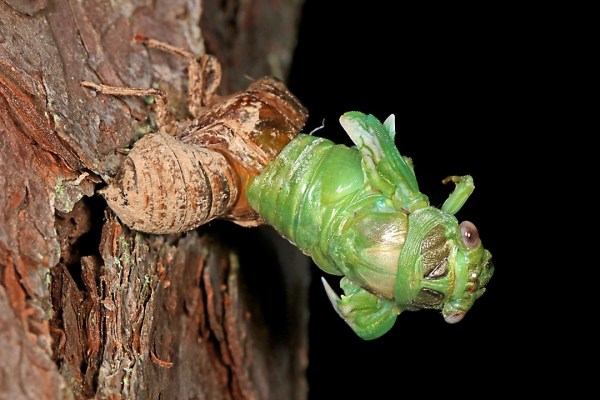
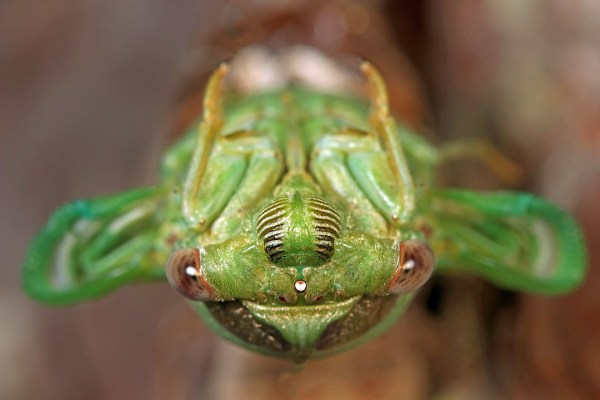
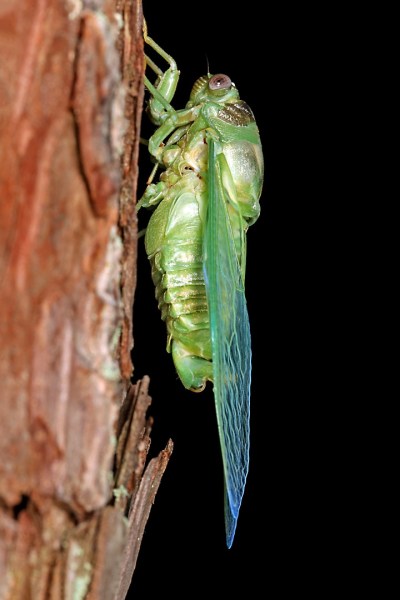


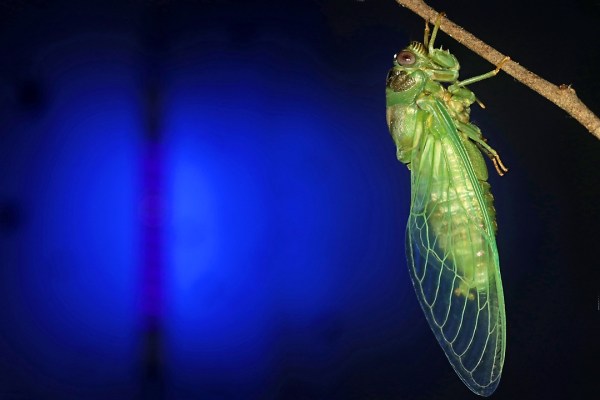
Interestingly, adults of the other two species I mentioned above (N. lyricen and N. hieroglyphica) visited our blacklights, but N. grossus did not. Conversely, the only nymphs we saw emerging were N. grossus. We watched this individual until well into the wee hours of the morning, then allowed it to “hang out” in our tent for the rest of the night while its body hardened and took on its normal color. The next morning, we placed the now hardened adult—a fine male—on the trunk of a pine tree, where it cooperated with us fully while we photographed it.

©️ Ted C. MacRae 2026


Nicely done, Ted! Still slowly plugging away on the Cicadas of Virginia, where M. grossus is also the largest species. They have only just started emerging here in Richmond. Soon, their choruses in our neighborhood will be almost deafening!
Extraordinarily stunning creature in all its colors and forms.