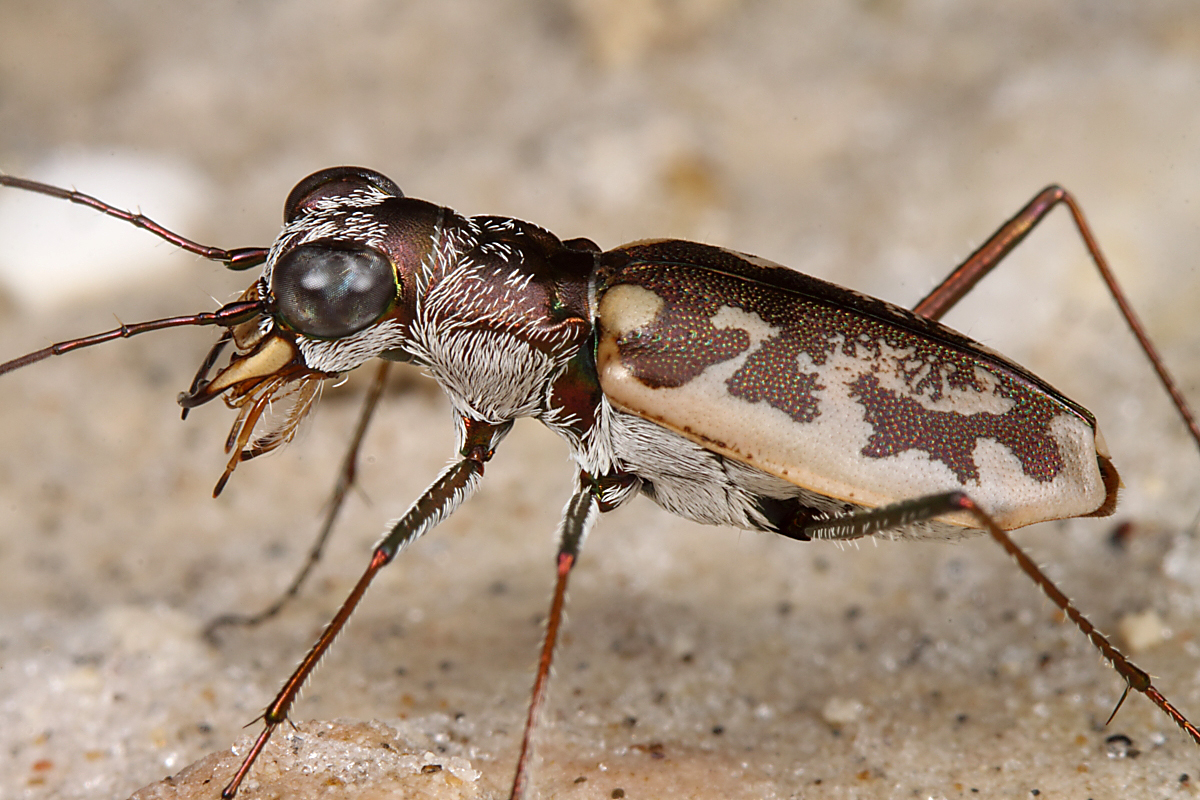
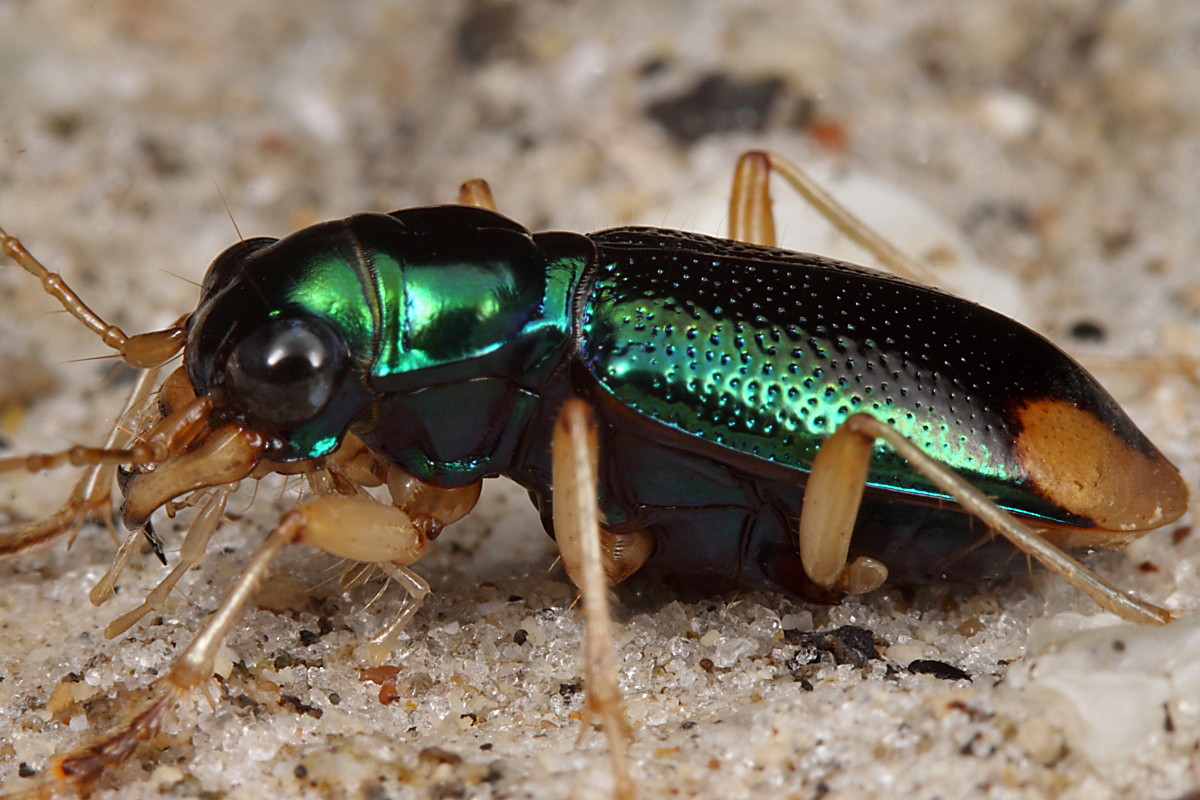
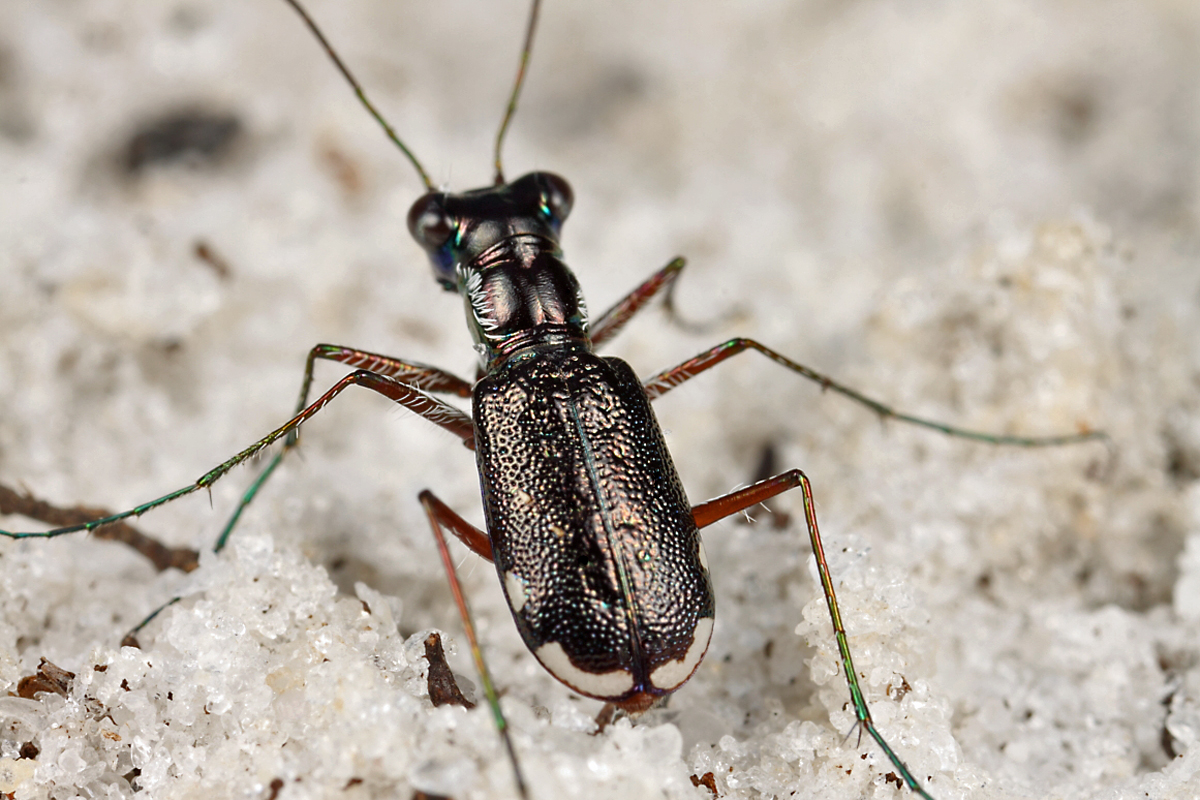
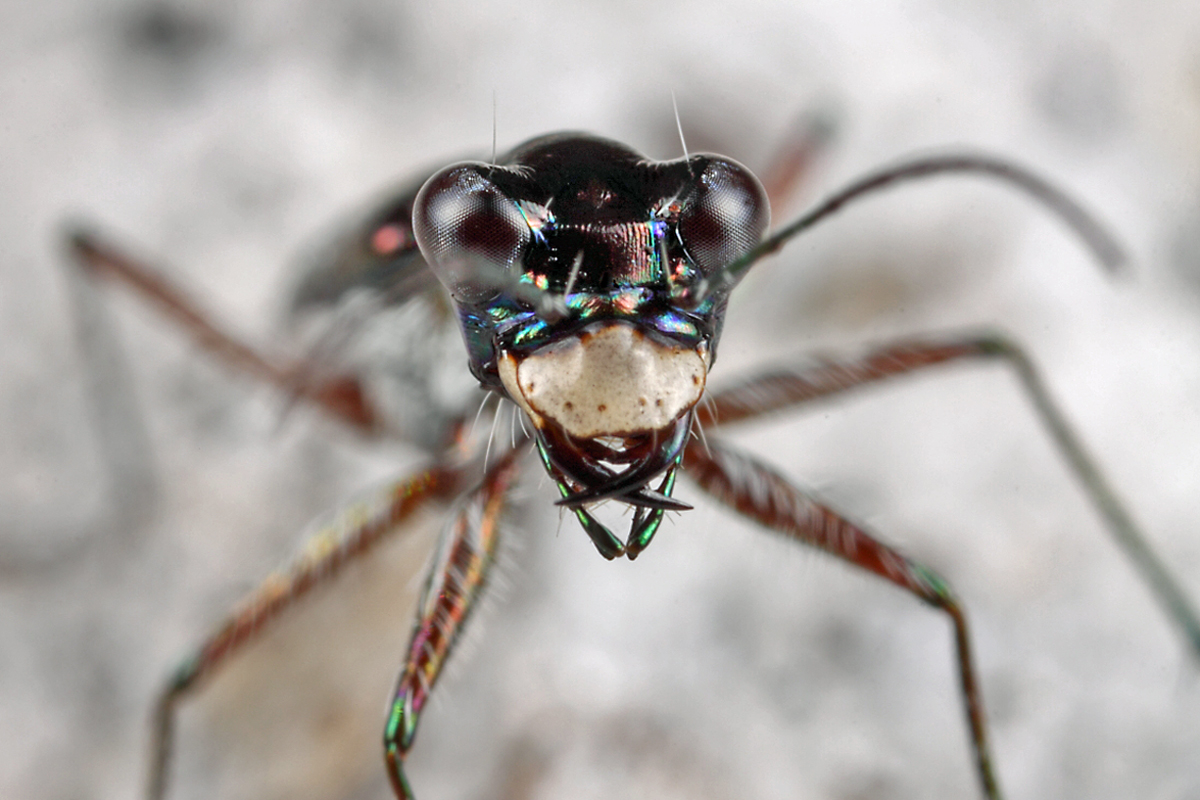
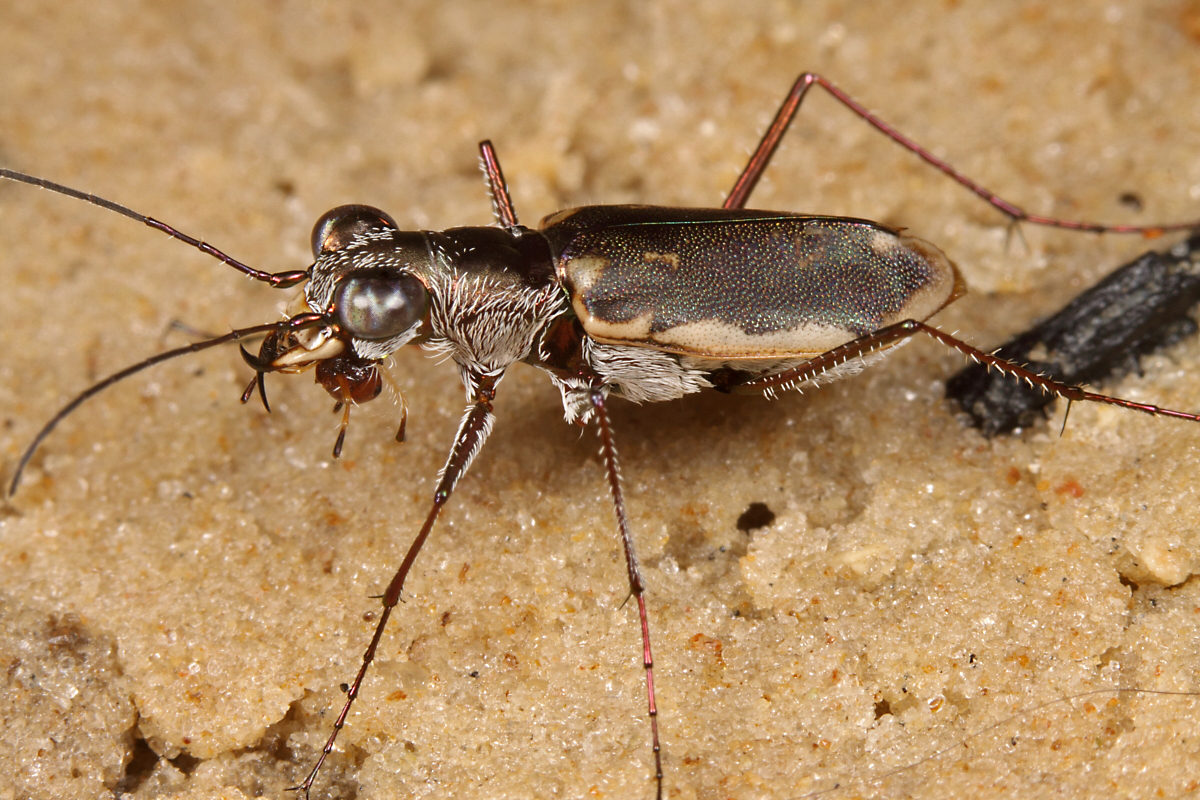
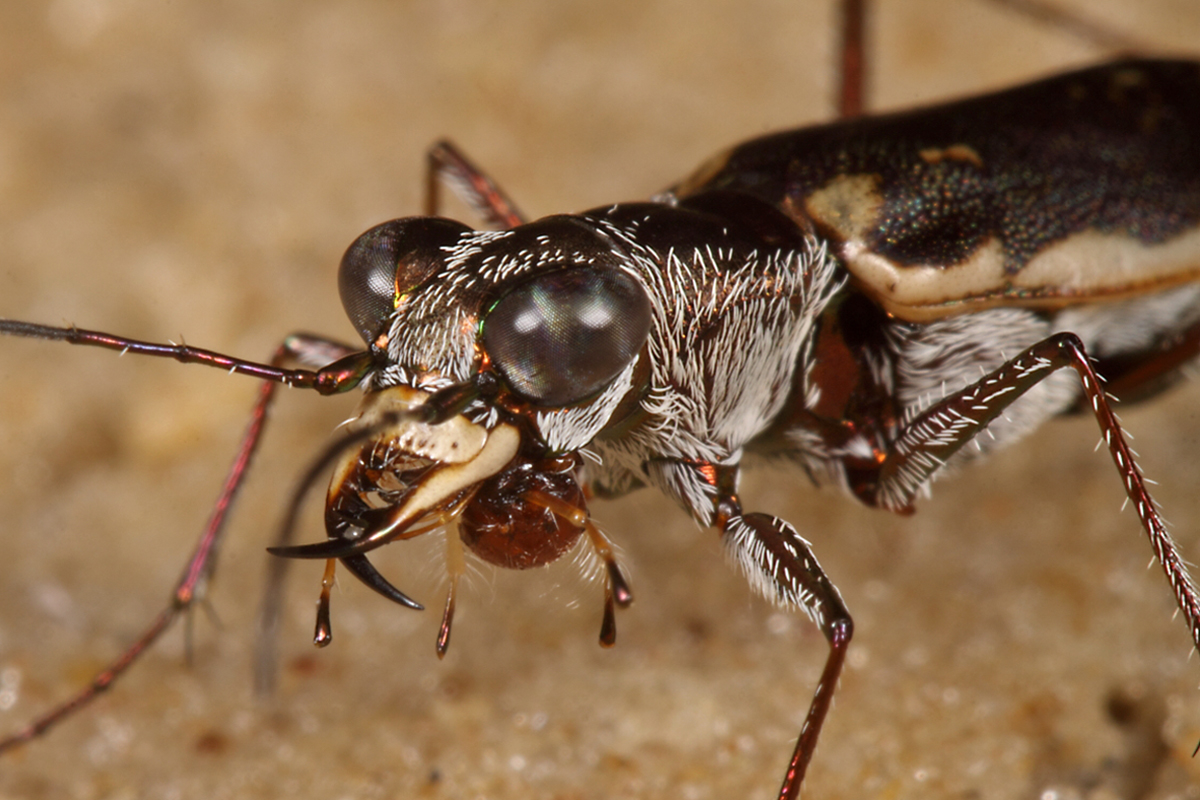
The photos in this post of Tetracha floridana (Florida Metallic Tiger Beetle) illustrate a technique that I have begun using recently to improve the lighting in my full-flash insect macrophotographs—use of extension tubes! I know this sounds strange, and I actually just stumbled onto it myself when I started using extension tubes in combination with my Canon EF 100mm macro lens. Okay, I can hear it now: “Why not use the Canon MP-E 65 mm macro lens?” It’s a good question, as at magnifications above 1X there is no finer lens than the 65mm. However, the tiger beetles that I spend a lot of time photographing are right in that size range where sometimes I need magnifications below 1x (whole body shots of medium to large species), while other times I need magnifications above 1X (small species and closeups—particularly face shots). Fortunately, the entire spectrum of magnifications (up to 5X) is covered by these two lenses, but there is, unfortunately, no overlap. This is where the extension tubes come in—when all 68mm are added the 100mm lens effectively changes from a 1.0X–∞ lens to a 0.7–2.0X lens. This gives a frame width of 11–33 mm, perfect for nearly all North American tiger beetles (most species range from 6-20 mm, excluding legs and antennae).
In addition to allowing a more appropriate range of magnifications without the need to switch out lenses, this has one other effect—it moves the lens a little closer to the subject. That in itself is of no particular benefit, but since I use the front-of-the-lens-mounted Canon MT-24EX dual flash, it also moves the flash a little closer to the subject. It’s not a huge distance, only about 20 mm, but keep in mind that the flash heads extend forward from the front of the lens (especially with the Kaiser shoes that I use with my diffuser), and the front of the diffuser itself lies at about 60 mm in front of the lens face. Thus, at 1X the the front of the diffuser sits ~80 mm from the subject with the 100mm lens only, but with 68 mm of extension tubes added it sits only 60 mm from the subject. The closer the light source is to the subject, the greater the apparent light size, and larger apparent light size results in more even lighting with reduced specular effects.
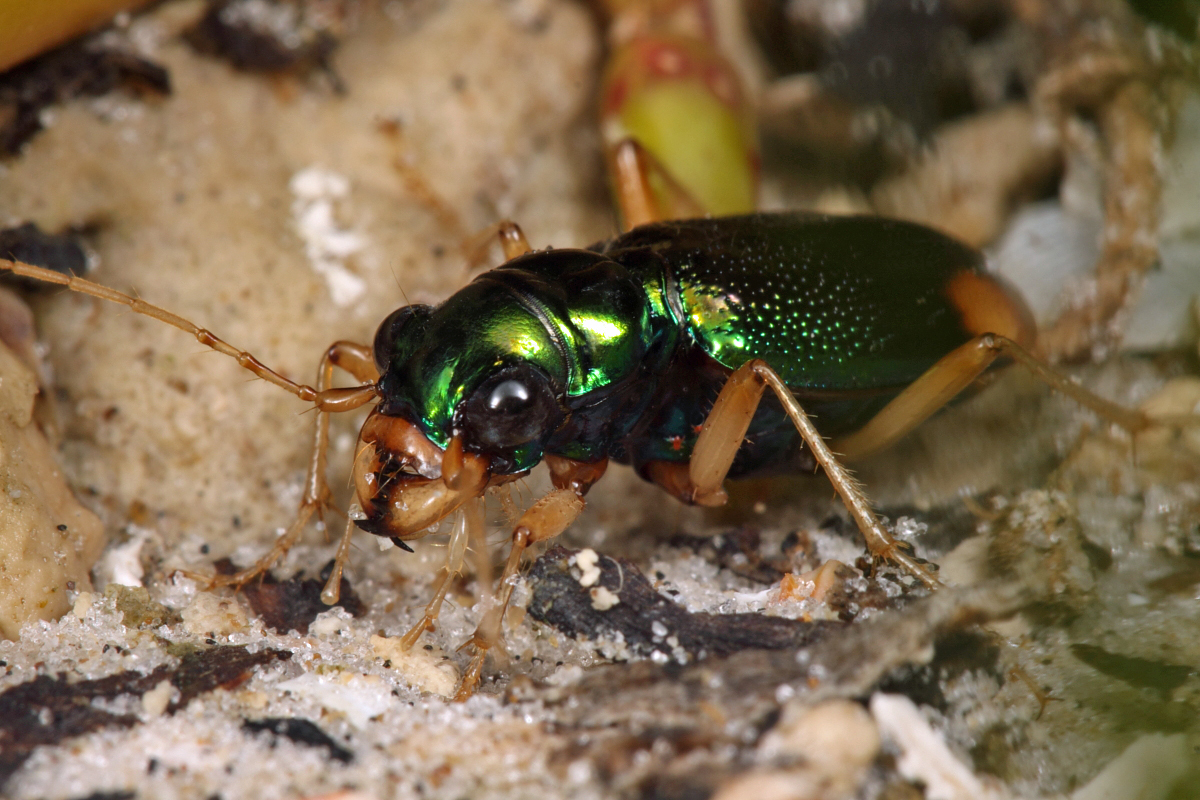
Tetracha floridana | Pinellas Co., Florida (100mm lens only)
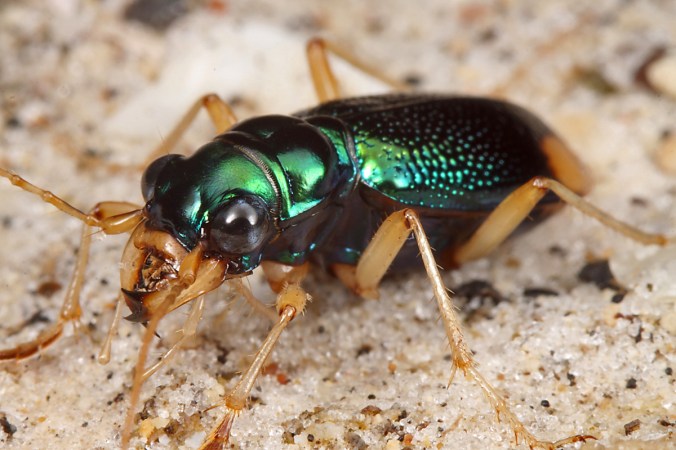
- 100mm lens + 68mm extension tubes
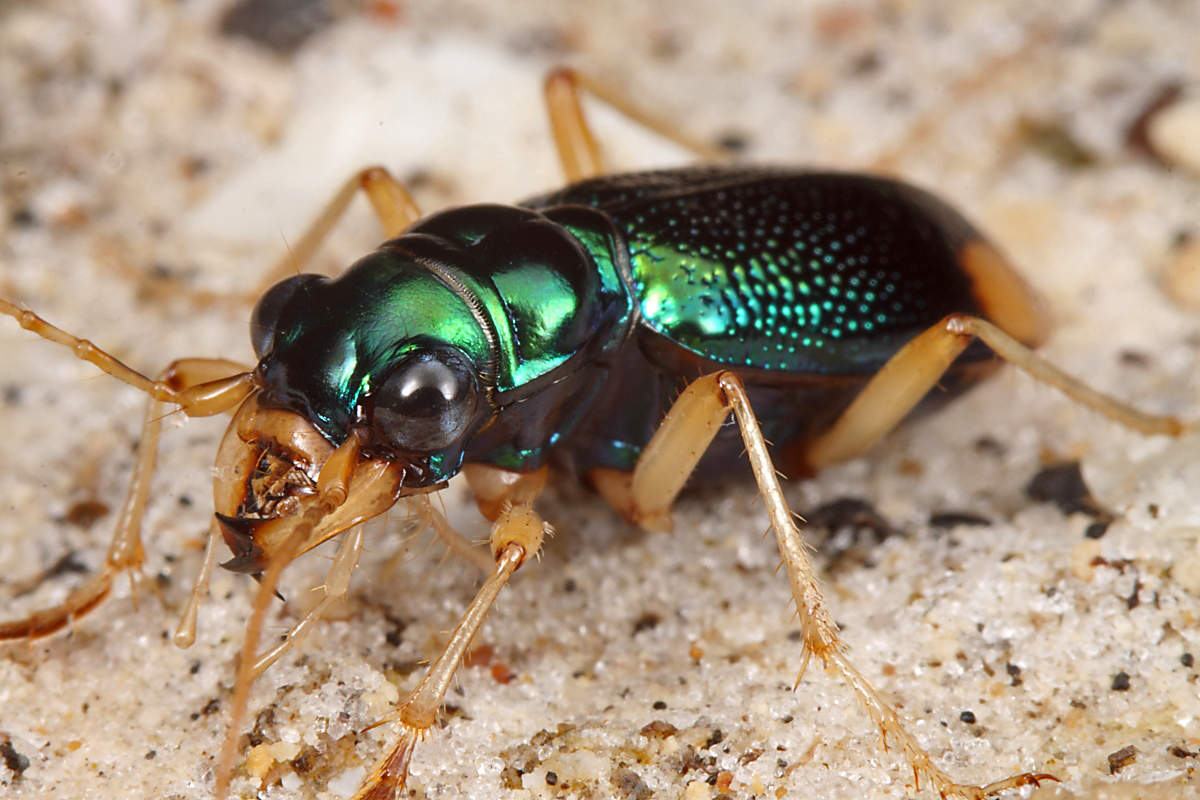

100mm lens only (slightly cropped)

100mm lens + 68mm extension tubes
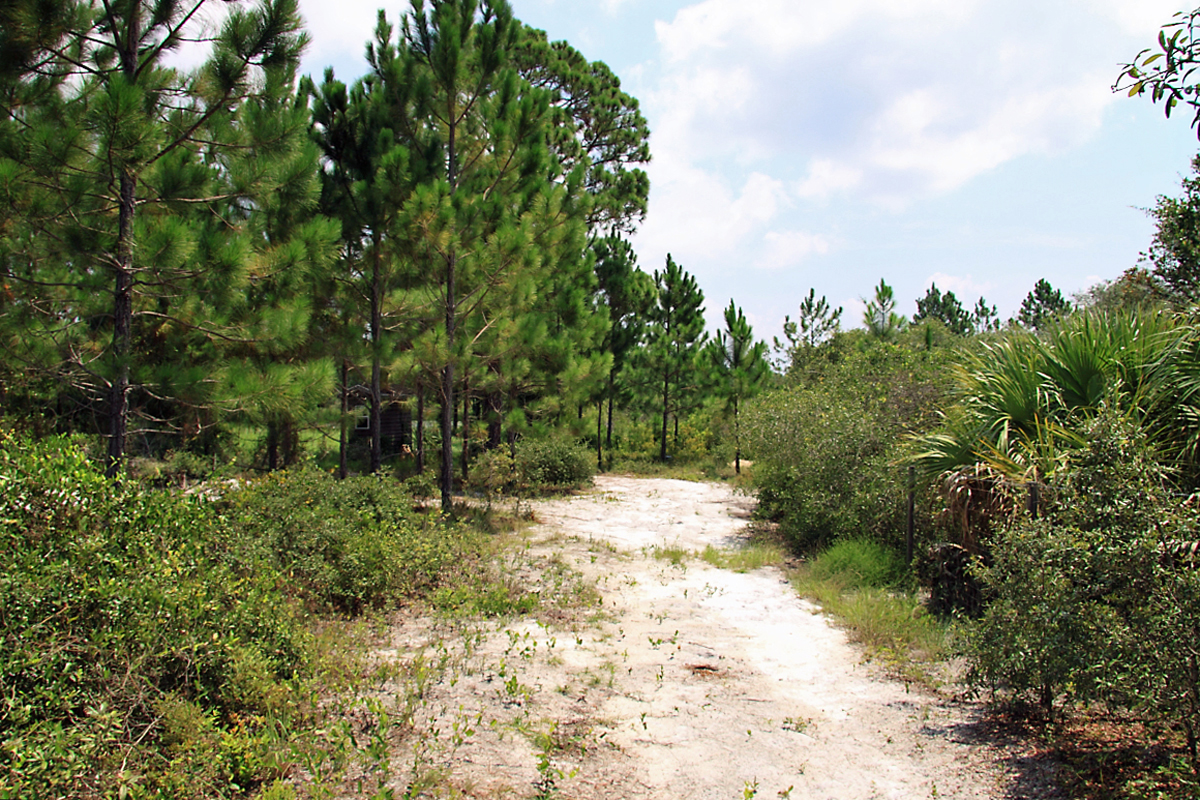
The primary disadvantage to doing this is loss of ability to focus to infinity. Frankly, this is functionality I never used with the 100mm lens, preferring instead the 17-85mm wide-angle lens for more general landscape and habitat photos. The other downside is that placing the lens closer to the subject can result in greater chance of “spooking” the subject and causing it to flee or behave evasively. Again, however, my experience is that if a subject can be photographed at 1X with the 100mm lens, it can be photographed at 2X with the 100mm lens + extension tubes.
Has anybody else ever tried this, and if so what was your experience?
Copyright © Ted C. MacRae 2011






 Beetles In The Bush