Ghosts in the night

This summer I’ve spent quite a few nights hanging out along the Mississippi River—lamp on my head, vials in my pocket, and an ultraviolet (UV) light setup on the sandy banks. UV light collecting for insects (also called “blacklighting”) is a popular method among us beetlers, but for a number of reasons it’s been a while since I’ve done a lot of heavy blacklighting myself. That all changed this year when I decided I needed to get a better handle on the Missouri distribution of two species of tiger beetles, Ellipsoptera cuprascens and E. macra, found only in sandy habitats along the shores of the state’s two big rivers—the Missouri and Mississippi—and, fortuitously, attracted to blacklights at night. Blacklighting alongside these big rivers is a relatively new experience for me, as my previous experiences have been mostly in forests—either here in the Midwest or out in the desert southwest. Along the big rivers, as soon as the sun dips below the horizon hordes of hungry mosquitos descend upon me and choking swarms of caddisflies quickly envelop the blacklight. Liberal application of Deet keeps the mosquitoes at bay, but checking the sheet behind the blacklight to see if anything of interest has landed requires a bit of a mad dash and a quick retreat, all the while holding my breath and clamping the shirt cuff around my neck to prevent the swarming bugs from flying into spaces where I don’t want them.

Arctosa littoralis (beach wolf spider) | Lewis Co., Missouri

Wandering away from the blacklight and exploring along the beach in the black of night is also a relatively new experience. While I’ve done a fair bit of night collecting away from the light, again this has tended to be in forests and woodlands with a beating sheet in hand looking for jewel beetles, which still hang out on the same host plants they can be found on during the day but are far less inclined to zip away as soon as they hit the sheet like they do when the sun is high overhead. I haven’t spent much time shining a lamp on the sand of a big river beach, so I wasn’t quite sure what to expect (other than hopefully a tiger beetle!). As I walked along the beach, I occasionally saw blue-green glowing dots on the sand—I recognized these fairly quickly as the eyes of spiders reflecting the light from my headlamp. However, at first when looked closer at the spot where I thought a spider should be sitting I didn’t see anything. It took a few tries before finally I saw ghost-like movement on the sand, and when I moved cautiously and got down close to the sand I finally saw a magnificent, white wolf spider sitting motionless—perfectly colored to blend into the sand on which it was sitting.

The mottled, white coloration is conspicuous on wet sand…

I quickly hurried back to the car and got my camera, set it up with a 100mm macro lens and extension tubes (hoping I could get real close), and went back to the spot where I’d seen the spider to see if I could find it again. I didn’t, but not too much searching was required before I found another one. Unfortunately, I didn’t succeed in photographing that one either. It was apparent to me that I was going to have to use the same ultra-cautious and slow movements that I use with tiger beetles if I was going to succeed in photographing one or more of these spiders. I quickly figured out that they were easier to see if I looked right along the water’s edge, as in that situation the white coloration of the spider actually stood out against the darkened, wet sand. (Of course, photographing them on the wet sand was a tad dirtier for me, but I’m not afraid to get filthy dirty when it comes to photographing arthropods.) I also figured out that I could more easily find the spiders on the wet sand and then follow them up to the drier sand for photos that better showed just how marvelously cryptic their coloration was.

…but provides perfect camouflage on the dry sand further away from the water’s edge.

Those of you familiar with my work know that I love frontal portraits, but I found this to be almost impossible during my first attempts. It was hard enough approaching the spider from the front without it bolting before I could get set behind the camera, but in the few cases where I did actually manage this then it would bolt as soon as I made any microadjustment in the position of the camera to compose the shot. It occurred to me that the spider was sensing vibration from moving the camera on the ground (ground-resting the camera is a technique that I use commonly to get the lowest possible angle on my subjects)—makes sense, as spiders are intensely tuned into vibrations for  prey capture. Once I began keeping my hand flat under the camera as sort of a makeshift “beanbag” I was able to make the final adjustments necessary to get shots like the one shown below and in ID Challenge #20.
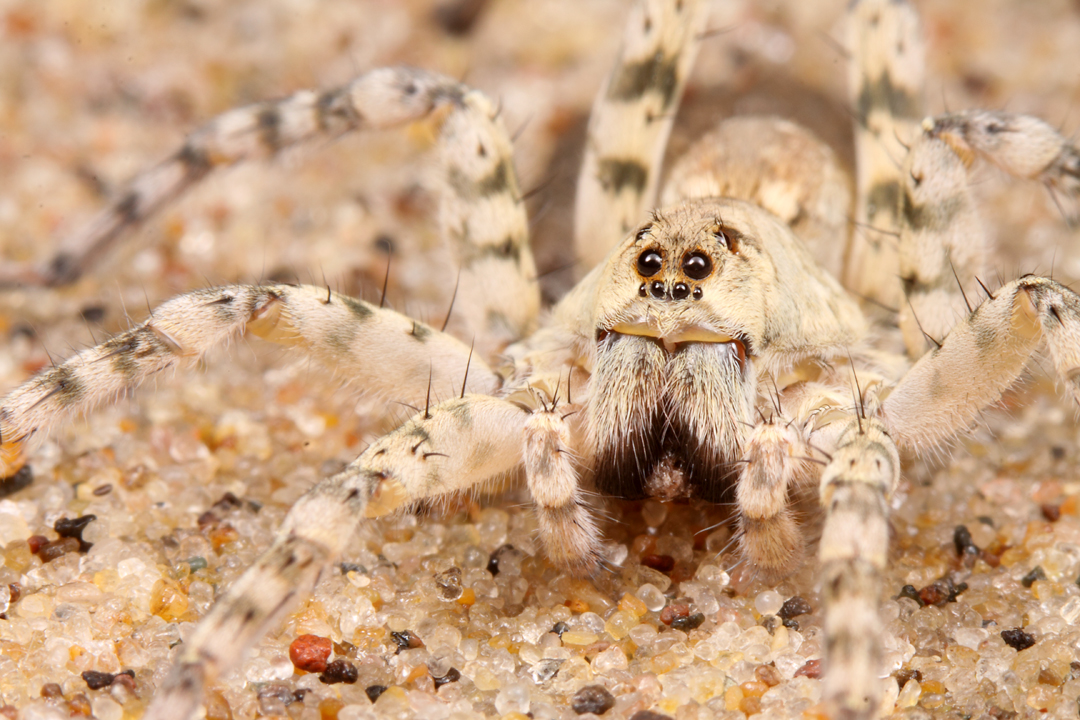
Active primarily at night, the spider’s eyes glow blue-green when hit by light.

According to Dondale & Redner (1983) this should be Arctosa littoralis—widespread in littoral habitats across North America but, at least at the time of their revision, not recorded from Missouri [in fact, it seems no species of Arctosa was known from Missouri until A. virgo was recorded from oak-hickory forests in the southern part of the state by Bultman (1992)]. I’ll leave it to the spiderphiles to determine if this actually represents a new state record or (more likely) if I just haven’t dug deep enough into the literature.

Congratulations to 3-time champ Ben Coulter, who swooped in from his hiding place with 30 pts to win ID Challenge #20—the final challenge of BitB Challenge Session #6. It wasn’t enough, however, to disturb the overall standings, and Brady Richards maintained his overall lead with 28 pts to win Session #6. Sam Heads was just one point away from the win in this challenge, but his 29 pts were enough to earn a tie for 2nd place in the overall standings with Mr. Phidippus, who finished a respectable 4th place in this challenge. Nobody else came close to these three gentlemen in the overalls, so they deserve their accolades and loot (please contact me for details on the available choices). In case you haven’t been following along, here is a summary of the BitB Challenge champions to this point, listed by session:

  1. Ben Coulter
  2. Ben Coulter
  3. Max Barclay
  4. Ben Coulter
  5. Mr. Phidippus
  6. Brady Richards

REFERENCES:

Bultman, T. L. 1992. Abundance and association of cursorial spiders from calcareous fens in southern Missouri. Journal of Arachnology 20:165–172.

Dondale, C. D. & J. H. Redner. 1983. Revision of the wolf spiders of the genus Arctosa C . L. Koch in North and Central America (Araneae: Lycosidae). Journal of Arachnology 11:1–30.

Copyright © Ted C. MacRae 2012

ID Challenge #20

Has it really been seven weeks since the last ID Challenge? BitB Challenge session #6 overall leaders Brady Richards (66 pts), Mr. Phidippus (58 pts), and Sam Heads (54 pts) must think I’m trying to duck the final standings so I don’t have to doll out any loot. Let’s finish this session with a straight up ID Challenge—3 pts for order (der!), 4 pts for family, 5 pts for genus, and (to separate the imagos from the neonates) 6 pts for species. Bonus question worth 5 pts—what is the best way to search for this species? That’s a whopping total of 23 pts up for grabs in this one challenge (not including any discretionary bonus pts that might be awarded), so not only are the leaders not safe from each other, but from any number of other participants lurking just below them in the standings.  Please read the full rules if you are not already familiar with them—good luck!

Copyright © Ted C. MacRae 2012

A non-black background is better… often!

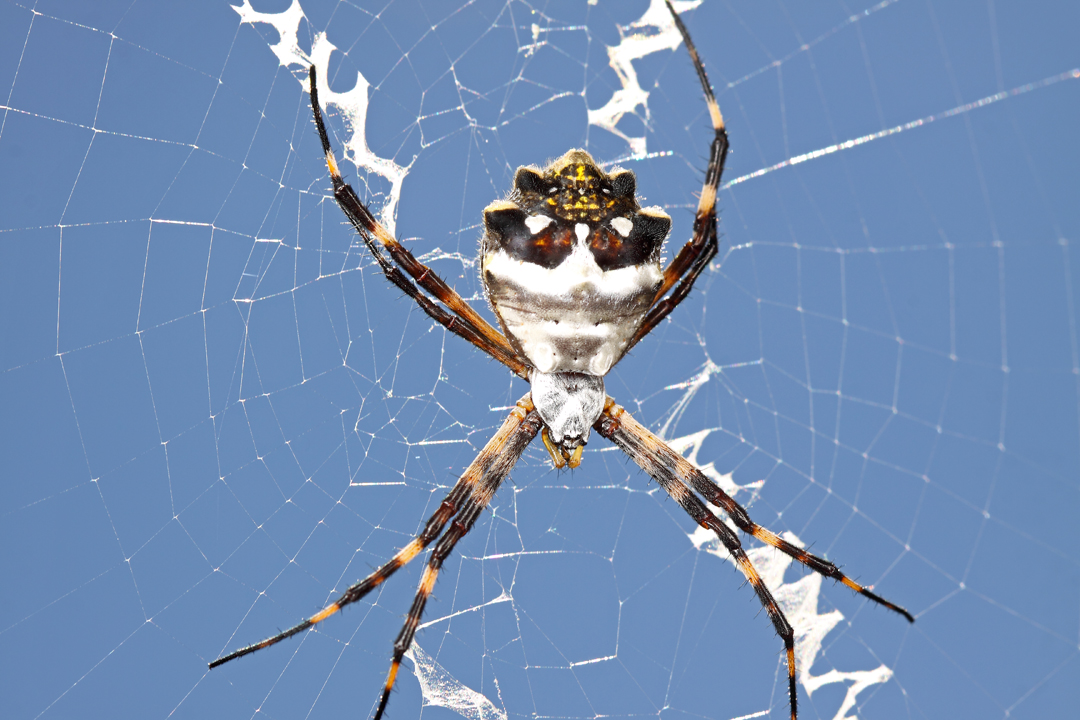
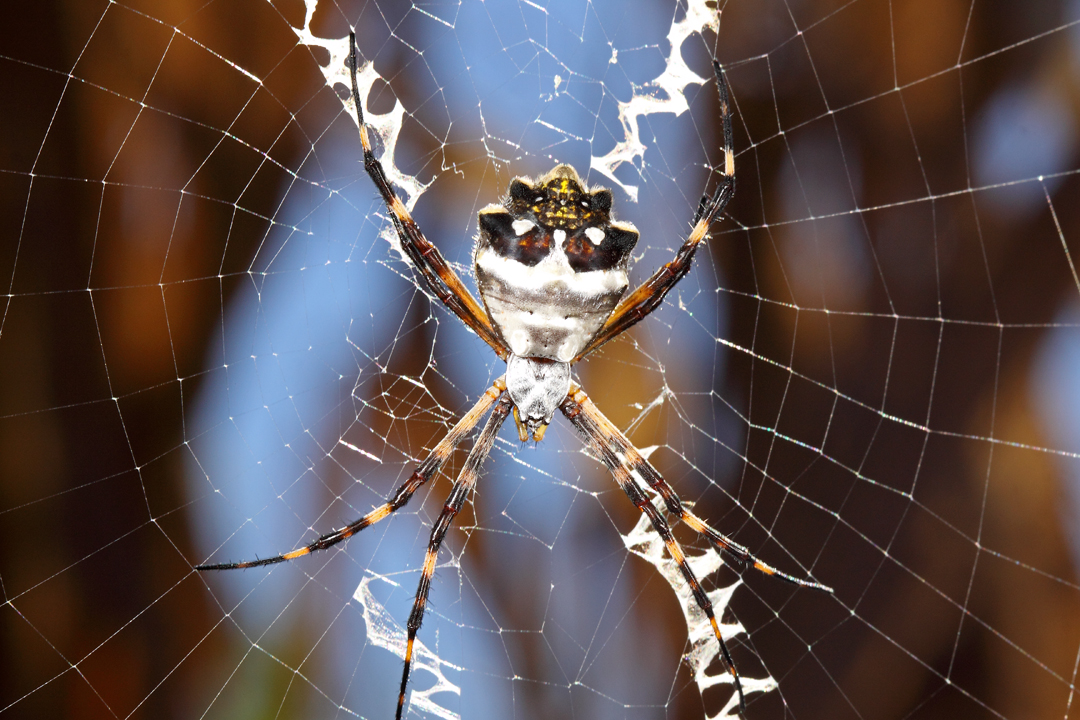
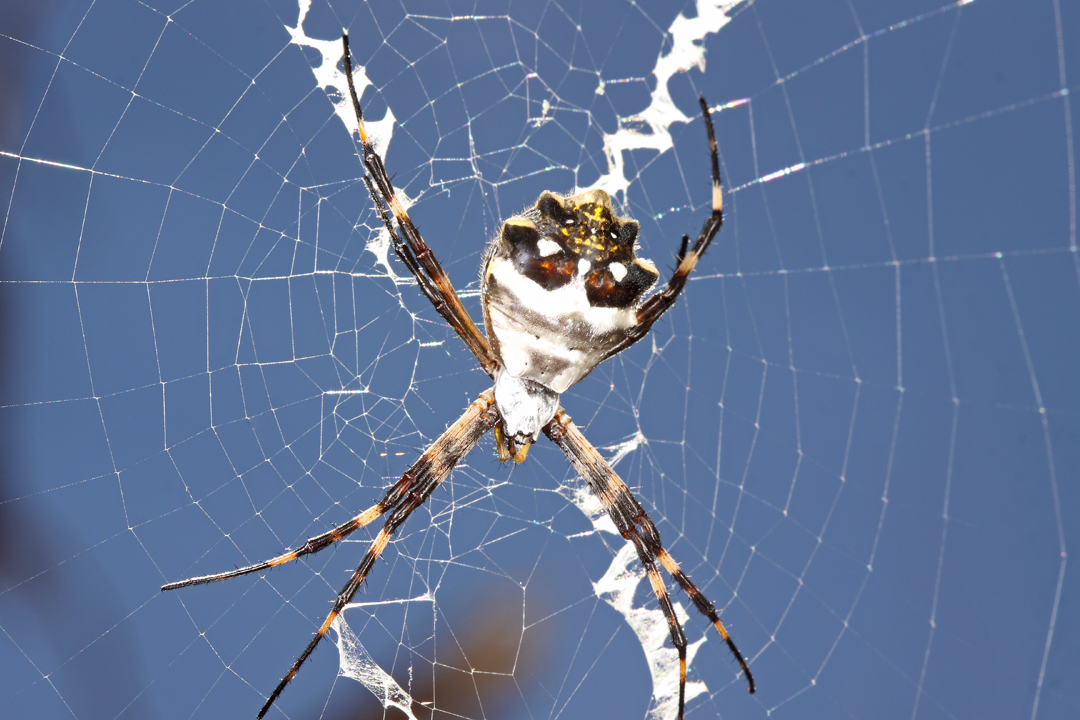
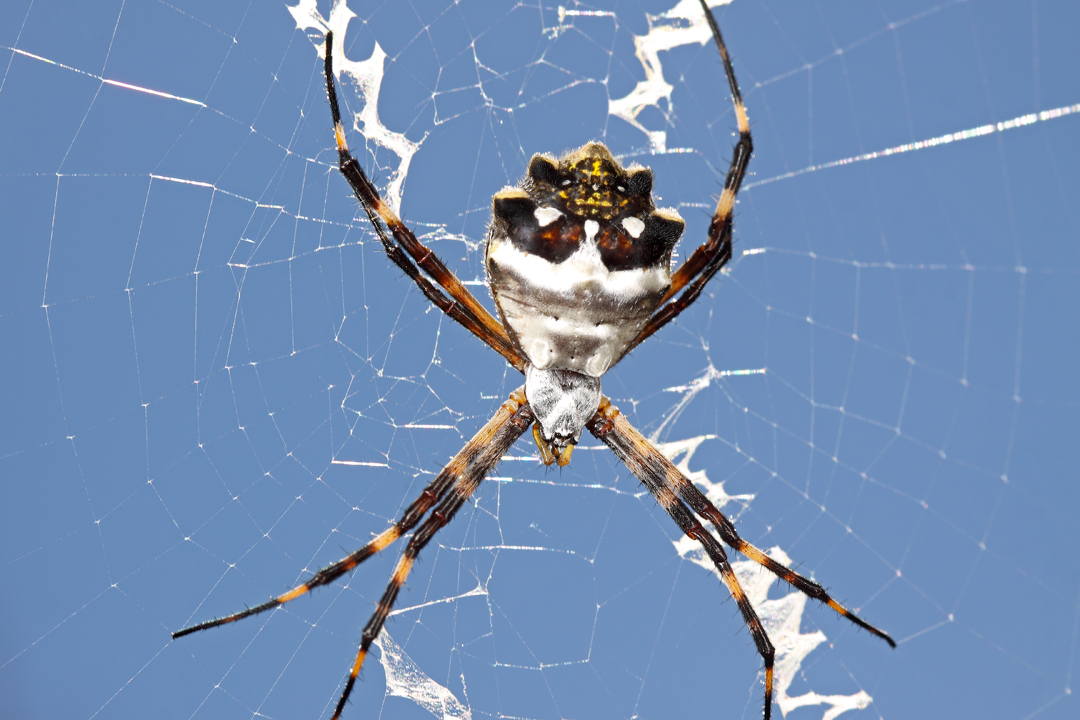
In my previous post, A black background is better… sometimes, I came to the defense of the oft-maligned pitch black background. Some macrophotographers studiously avoid black backgrounds (BBs), claiming that they look ‘unnatural’. However, as I discussed in my previous post, there are situations—primarily with light-colored or translucent subjects or those that are seen only at night—where BB can be aesthetically pleasing or more consistent with the subject’s natural history (or both, as in the case of the subject of my last post). On  the other hand I do agree that BBs are overused, showing up in many photos where a non-black background would have been a better choice. The reason for this is simple—BBs are easy! All one must do is ensure that the area behind the subject is clear of light-reflecting objects. While this is certainly preferable over cluttered backgrounds with random leaves, branches, grass stems, etc. that distract from the subject, a BB may nevertheless not be the most aesthetically pleasing  choice for the photo (I am guilty of this myself). Non-black backgrounds, on the other hand, require more forethought, not only about what color to use and how to achieve it, but also regarding camera and flash settings which can be a bit trickier due to the fact that both background and subject must be properly exposed.

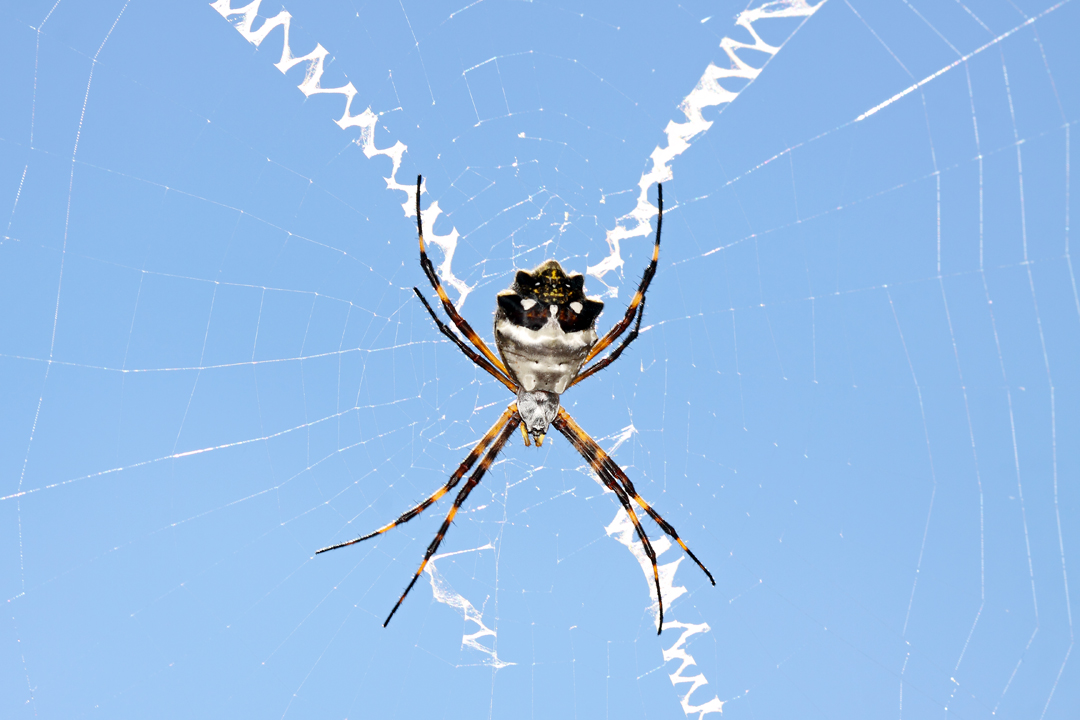
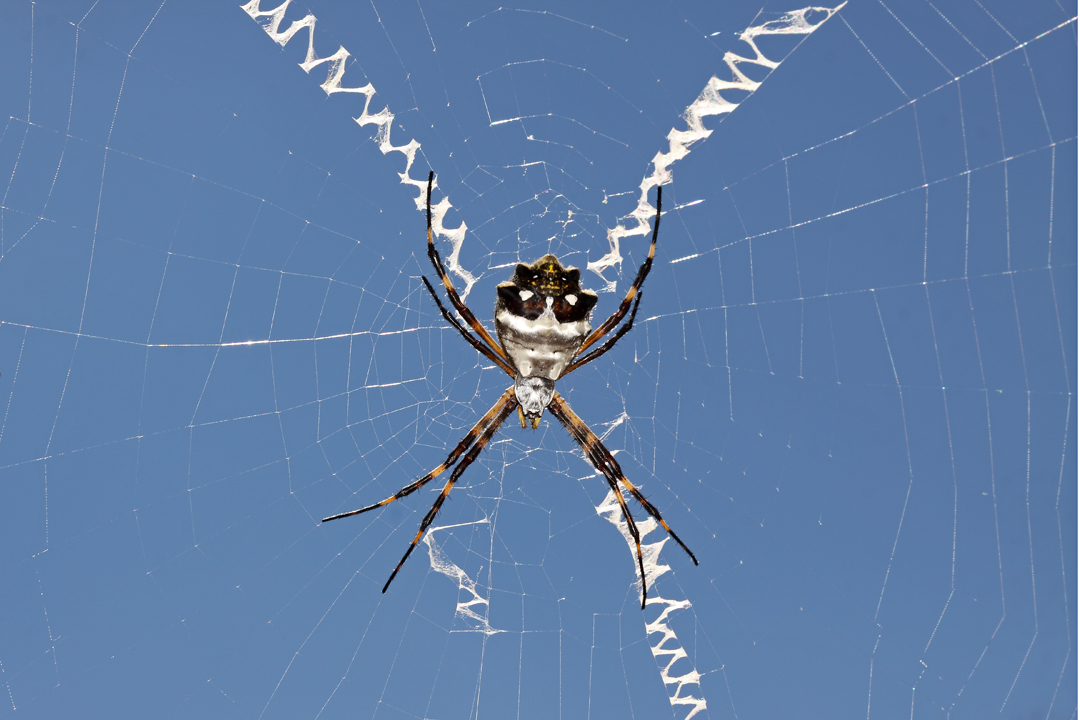
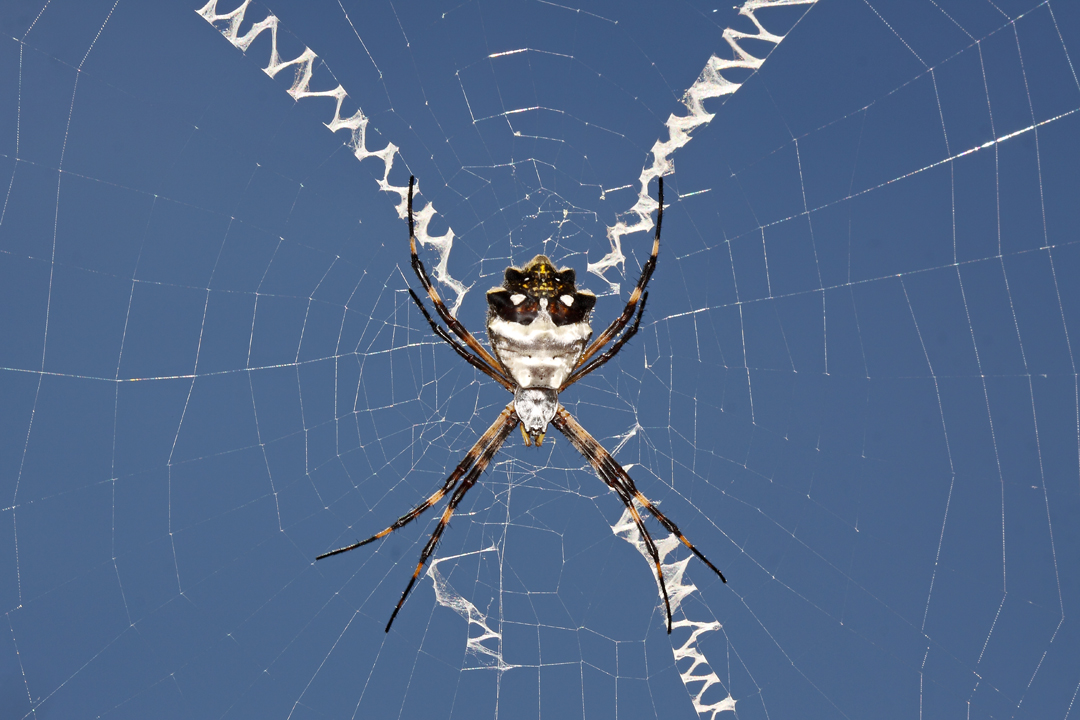
Argiope argentata (silvery argiope) | Santa Fe Province, Argentina

Choice of background to a large degree reflects the style of the photographer. Some may choose a particular color based purely on aesthetics, but as an in situ macrophotographer I prefer backgrounds that are consistent with the natural history of the subject—diffuse green for subjects typically seen on foliage, gray or brown for those typically found crawling on trunks and branches, and sky blue for those found out in the open (e.g., perched atop flowers). Each of these backgrounds requires different technique, and this large orb weaver, Argiope argentata (silvery argiope), which I encountered in a corn field near Villa Cañas (Santa Fe Province, Argentina) back in April, is an example of the latter. In contrast to the strictly nocturnal orb weaver (Eriophora ravilla) in my previous post, this species and its congeners are commonly seen suspended on their webs in broad daylight. BB worked well with E. ravilla, but it would not be a good choice for A. argentata due to the large amount of dark coloring on the subject. More importantly, it contradicts this spider’s diurnal nature. I could have used natural light, but the sun was shining on the other side of the spider. However, this actually made it easier to achieve the blue sky background while illuminating the subject with flash. The large size of the spider (the body alone measured ~35 mm in length) put a lot of distance between the subject and the lens, which allowed the use of a larger aperture (f/10) with still acceptable depth-of-field. With a bright sky and the sun nearly behind the spider, I was able to keep a low sensitivity setting (ISO 100) to prevent graininess and a fast shutter speed (1/250 sec) to prevent motion blur. The slightly larger aperture was all that was needed to achieve a natural blue sky color in the background. More difficult was actually clearing the background between the spider and the sky, as the web was slung low amongst the tall corn plants. The series of photos below (click to enlarge) shows the results of my earlier attempts to photograph the spider; at first not thinking about the distracting corn plants, and then trying to avoid them by angling myself lower relative to the spider, which ultimately resulted in a bad angle on the spider:

I finally decided to just break over the offending corn plants (above the ears!) to clear the background and give me the angle that I preferred. After that I was able to snap away to my heart’s content. Here is a closer view of the spider:

Lastly, I show the following series of photos to demonstrate the dramatic effect that aperture can have on a blue sky background. If you have a bright sky and don’t need a lot of DOF (e.g., you have a large subject-to-lens distance or a small subject lying within a narrow plane), adjusting the aperture up or down is a great way to achieve the precise color of blue desired. Larger apertures (lower f values) will result in a paler blue color, while smaller apertures (higher f values) create a deeper blue. In the photos below (click to enlarge), flash and camera settings are the same as those mentioned above except aperture: f/10 (left), f/13 (center) and f/16 (right).

Copyright © Ted C. MacRae 2012
A black background is better… sometimes

Eriophora ravilla (a tropical orb weaver) | Pinellas Co., Florida

If there is one subject that causes more disagreement among macrophotographers, it is the pitch black background. Granted, black backgrounds are common—almost ubiquitous in macrophotography, since they are easily created by using full flash illumination and ensuring that nothing lies behind the subject close enough to reflect the light from the flash. Detractors, however, claim that it gives subjects an ‘unnatural’ look, as they are rarely seen this way in nature. This may be true, but I still believe that for some subjects the black background simply cannot be beat for its aesthetics, even if the subject is not normally seen in this manner. Take, for example, the Great Plains ladies’-tresses orchid—nothing but a pitch black background could better showcase the delicate, white blossom and its almost crystalline lower lip!

That said, however, there are some subjects for which a pitch black background actually can be considered a ‘normal’ background. This tropical orb weaver spider (Eriophora ravilla) is one example. Unlike many other members of the family Araneidae (orb weavers), species in this genus are strictly nocturnal and not seen hanging on a web during daylight hours. Hiding in a curled leaf during the day, they emerge at night and build a large web (up to 1 meter wide), only to consume it by morning and return to their hiding place until the next evening. My nephew Jack and daughter Madison and I first saw this spider during our nighttime foray into the intertidal mangrove marsh behind my sister-in-law’s condominium in Seminole, Florida last month while discovering rare, endemic beetles and their larvae. Knowing that it would likely build its web in the same place on subsequent evenings, I went out a few nights later with my camera and took a few shots.

Some claim that black backgrounds are undesirable for even nocturnal subjects; that there is nothing ‘natural’ about an artificial, narrow beam of light illuminating a single subject at night since no animal other than a person with a flashlight would see something like this. This contention seems a little strained, as one could take such a stance on illumination of any kind. Technically speaking even colors don’t actually exist, so the rendering of subject images on camera film/sensor, whether by natural or artificial illumination,  is itself biased towards human sensibilities. Regardless, the sight of an eerily glowing spider hanging in the blackness strikes a familiar chord with anyone who has wandered the bush by night. A black background not only recreates that human experience, but also emphasizes the subject’s (in this case strictly) nocturnal nature with stark elegance.

At first I took this spider to represent the very common barn spider, Neosona crucifera—widespread across North America. However, after noting the dark femora and yellow “shoulders” of the abdomen I began to rethink that ID. Fortunately, I took one photo of the ventral side (not shown) that shows well the color pattern diagnostic for the circum-Caribbean species E. ravilla.

Copyright © Ted C. MacRae

Damon diadema—Tanzanian giant tailless whip scorpion

Damon diadema, Tanzanian giant tailless whip scorpion (adult female)

I’ve reared more than my share of arthropods over the years—from easy ones like Madagascan hissing cockroaches to hard ones like certain tiger beetles (in fact, I’m the only person to have ever seen the larva of Cylindera celeripes, much less reared them from egg to adult) to the innumerable tarantulas, scorpions, millipedes, hickory horned devils, darkling beetles, etc. that fall somewhere in between. And that’s just as a hobby entomologist—nevermind that it has often been my job over the years to rear dozens of species of insects and other “critters” as part of my professional duties. One group of arthropods, however, that I have not yet tried to rear are tailless whip scorpions or whip spiders. Members of the arachnid order Amblypygi, they are not scorpions, not whip scorpions, not even spiders, but rather something else. Like other arachnids they have eight legs and the combined head and thorax (cephalothorax); however, more than any other arachnid, tailless whip scorpions have stumbled upon a most insect-like body plan—the first pair of true legs are modified to long, thin, sensory appendages that mimic in form and function insect antennae, leaving—again, like insects—only three pairs of walking legs, and as predators they have the anteriormost pair of appendages (pedipalps) modified into grasping,  jaw-like structures analogous to the toothy mandibles of predaceous insects.

Adult males have the pedipalps extending past the ”knee” of the first pair of walking legs…

Of course, any resemblance to insects ends right there—tailless whip scorpions look like they belong not only to another class, but another world! Flattened, scuttling sideways at blinding speeds, and with legs all asplay at odd angles, they are as frightful and menacing in appearance as the hairiest, jaws-dripping-with-venom spider imaginable. However, nothing could be further from the truth. Lacking the sting of a scorpion, the venom of a spider, the powerful bite of other “jawed” creatures, or even defensive chemicals of any kind, tailless whip scorpions have only their speed and ability to hide in the slimmest of crevices to prevent them from becoming easy meals for the vertebrate predators with which they share their world.

…while in females the pedipalps are distinctly shorter.

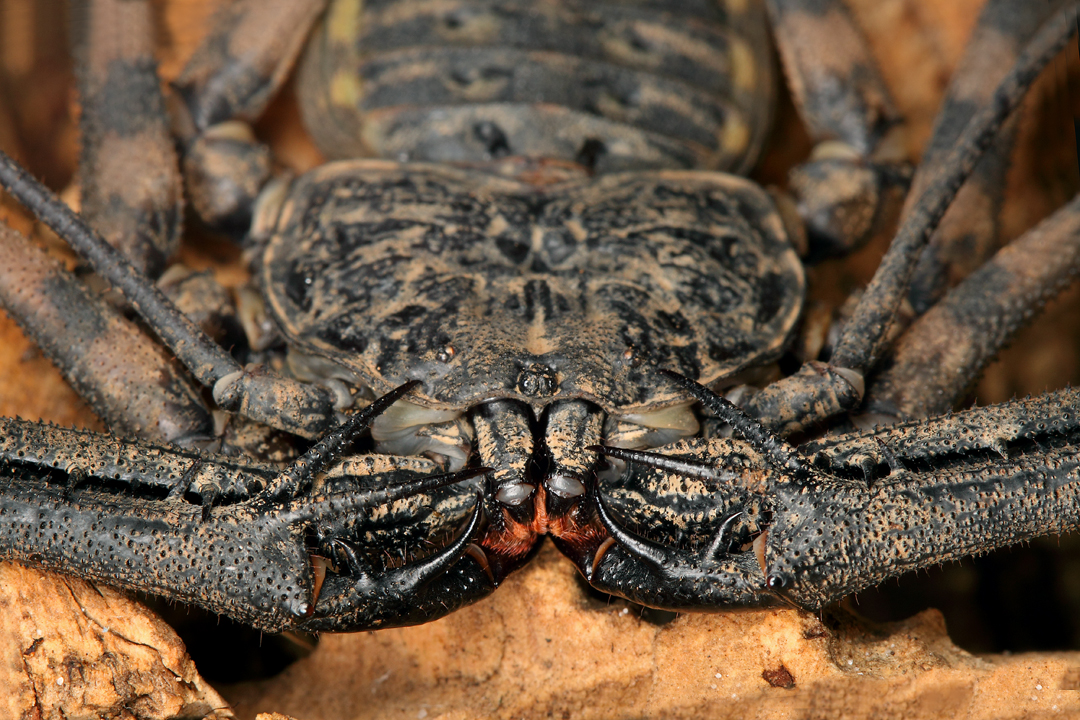
The male and female Damon diadema, or Tanzanian giant tailless whip scorpion, featured in these photos belong to Martin Hauser, a dipterist with the California Department of Food and Agriculture in Sacramento who I had the pleasure to spend some time with last month. Like me, Martin is a fan of invertebrates as pets, but unlike me he has strayed into unusual taxa that I haven’t yet tried—these tailless whip scorpions being perhaps the most impressive of these odd groups. Hailing from east Africa (eastern Tanzania and Kenya north to Ethiopia and Somalia), this species has gained some popularity in recent years among hobbyists due to their adaptability to culture, relatively docile nature, and—of course—their terrifyingly impressive size (body length up to 30 mm according to Prendini et al. 2005, although some hobbyist forums state as much as 2 inches, and with “whip” spans many times that). In this species males and females are immediately distinguishable by the relative length of the pedipalps—highly elongate in males and with the “elbow” extending past the “knee” of the first pair of walking legs, while shorter in females and not reaching the knee. Damon diadema is the largest of the East African Damon variegatus species-group, and while there are other amblypygids in the world that are larger (e.g., Acanthophrynus from Central and South America, with up to 10″ leg-span and nearly 20″ whip-span), none are so tolerant of captive rearing as this species. There seems to be some confusion about identification of Damon spp. among hobbyists, and even Martin wasn’t sure which species his represented; however, according to Prendini et al. (2005) all of the species are easily distinguished morphologically. Damon diadema is one of only two species in the genus with two spines rather than one on the ventral surface of the pedipalp trochanter, the other being D. brachialis from southern African and unknown in captivity. In the closeup face shot of the adult male below, two spines can be seen on the right pedipalp trochanter, just visible between two of the pedipalp apical spines.

Pedipalps modified as raptorial ”claws” make these arachnids formidable predators.

I visited Martin at a good time, for not only did he have these marvelous monsters available for me to photograph, but one of the females had just recently produced a brood of young. All of them had reached 2nd instar by the time of my visit, with one or two already at 3rd instar. It was interesting to note the tendency of the juveniles to aggregate under the adult female, as if they needed/wanted her for protection. While seemingly obvious, this is actually quite interesting because most amblypygids are considered to be solitary and intolerant of conspecifics (Walsh & Rayor 2008). Damon diadema, however, is known to live in prolonged subsocial groups, apparently aided by kin discrimination abilities. I find this fascinating, considering the extraordinarily limited neural capacity of these creatures—there are only so many brain cells available for conducting the business of life without diverting any of them to the ability to recognize unrelated conspecifics, much less their own kin. It is the reason so many spiders and other predaceous invertebrates tend to live solitary lives and have evolved elaborate courtship dances to convince a potential partner that they are, in fact, a mate and not a meal.

Two ventral spines on the pedipalp trochanter distinguish Damon diadema in east Africa.

I was so impressed by these creatures that after returning home from California I set about finding a source from which I could purchase one of them—or better yet a male/female pair. Sadly, I could not find any sources—my dream of seeing these fantastically fearsome-looking fellows in an aquarium in my office would have to wait. I happened to mention this in passing during correspondence with Martin about other matters, and although it was not intended as a suggestion (or even anticipated that it could be interpreted as such), Martin immediately offered to send me a couple of his juveniles. How could I refuse?! We corresponded a little more about preparations for and timing of the shipment, and on Friday last week the package arrived. Neither of us were completely sure how well the little guys would handle a 3-day transcontinental journey, so it was with a blend of anticipation and trepidation that I opened the package. Imagine my surprise when I found them not only alive and well, but all six of them were alive and well! Well, for now they are all going under the name “Baby Damon,” but I suppose as they grow and (hopefully) develop some distinctiveness I can start giving each of them their own, unique name. It may take awhile—individuals of this species don’t mature sexually until around 12-15 months. Martin was also kind enough to include some small, temporary containers that will provide better confines until they are large enough to move into the large terrarium that I readied for them, and just as Dave has been  doing with his tarantulas, it will be fun to monitor the progress of each individual through their molts. This will continue to provide entertainment even after they reach adulthood, as amblypygids continue to molt and increase in size all of their life. Their lives could also be long ones—I’ve read of people maintaining this species for 10 years or more as adults, so it looks like I am in this for the long haul. A formidable challenge it might seem, but in addition to the invertebrates I mentioned above, I’ve also spent the past several decades being responsible for cats, dogs, rats, salamanders, and—most recently—two hominine juveniles (and females at that). Now that’s a challenge!

This 2nd instar youngster can already handle crickets its own size.

REFERENCES:

Prendini, L., P. Weygoldt & W. C. Wheeler. 2005. Systematics of the Damon variegatus group of African whip spiders (Chelicerata: Amblypygi): Evidence from behaviour, morphology and DNA. Organisms, Diversity & Evolution 5:203–236.

Walsh, R. E. & L. S. Rayor. 2008. Kin discrimination in the amblypygid, Damon diadema. The Journal of Arachnology 36:336–343.

Copyright © Ted C. MacRae 2012
Welcome “Baby Damon”!

”Baby Damon”—one of six 2nd instar Tanzanian giant tailless whip scorpions that now call me Papa!

Just a quick post to formally introduce “Baby Damon,” who arrived last Friday with several siblings courtesy of my friend Martin Hauser in California. Damon represents the species Damon diadema, or the Tanzanian giant tailless whip scorpion. It will take at least a year for Damon to reach maturity, and he may live as long as ten years or more, so it looks like I’m in this for the long haul! When I visited Martin in California a couple of weeks ago I had a chance to photograph Damon’s terrifyingly impressive mother and father as well—look for those pics soon!

Copyright © Ted C. MacRae 2012
Poised for the bounty

Misumenops pallidus on soybean | Santa Fe Province, Argentina

By mid-April I was near the end of my 8-week stay in Argentina. One of the more enjoyable tasks during this time was to go back out and visit some of the soybean fields that I had seen earlier in the season. I enjoy watching the progression of soybeans over time—both in plant phenology and in the guilds of insects present. Defoliating caterpillars like Rachiplusia nu (oruga medidora) and Anticarsia gemmatalis (oruga de las leguminosas) abound during the late vegetative and early to mid-reproductive stages of growth, feeding day and night on the lush, green foliage. As the days grow shorter and cooler, the soybean fields slowly morph from dark green to tawny-yellow, and leaf-feeding guilds give way to seed-feeding stink bugs like Piezodorus guildinii (chinche de las leguminosas) and Nezara viridula (chinche verde).

Ever present amongst the plant-feeding insects are their natural enemies, with spiders being among the more numerous predators. This small (~10 mm length) crab spider (family Thomisidae) was seen in a soybean field in Santa Fe Province with the plants at R6 stage of growth (pods completely filled). I’m fairly certain it represents Misumenops pallidus based on its close resemblance to the spider in this photo. Piezodorus guildinii stink bugs were especially abundant, and just as the crop of newly hatched nymphs was poised to take advantage of the fat, juicy seed pods, this spider seemed poised and ready to take advantage of the fat, juicy nymphs. In fact, M. pallidus is the most abundant crab spider in soybean agroecosystems in the Humid Pampas of Argentina (Liljesthröm et al. 2002), which as a group comprise nearly half of all spiders in those systems (González et al. 2009). Perhaps one reason for this is their generalist prey selection tendencies, feeding on prey species such as R. nu and P. guildenii when they are abundant and switching to non-pest prey species (except the heavily sclerotized weevils and the large and noxious adults of N. viridula) when they are absent (González et al. 2009).

REFERENCES:

González, A., G. Liljesthröm, E. Minervino, D. Castro, S. González & A. Armendano. 2009. Predation by Misumenops pallidus (Araneae: Thomisidae) on insect pests of soybean cultures in Buenos Aires Province, Argentina. The Journal of Arachnology 37:282–286.

Liljesthröm, G., E. Minervino, D. Castro & A. González. 2002. La comunidad de arañas del cultivo de soja en la provincia de Buenos Aires, Argentina. Neotropical Entomology 31:197–209.

Copyright © Ted C. MacRae 2012

Cosmetid harvestman with parasitic/phoretic mites in Argentina

Metalibitia sp. poss. paraguayensis | Corrientes Province, Argentina

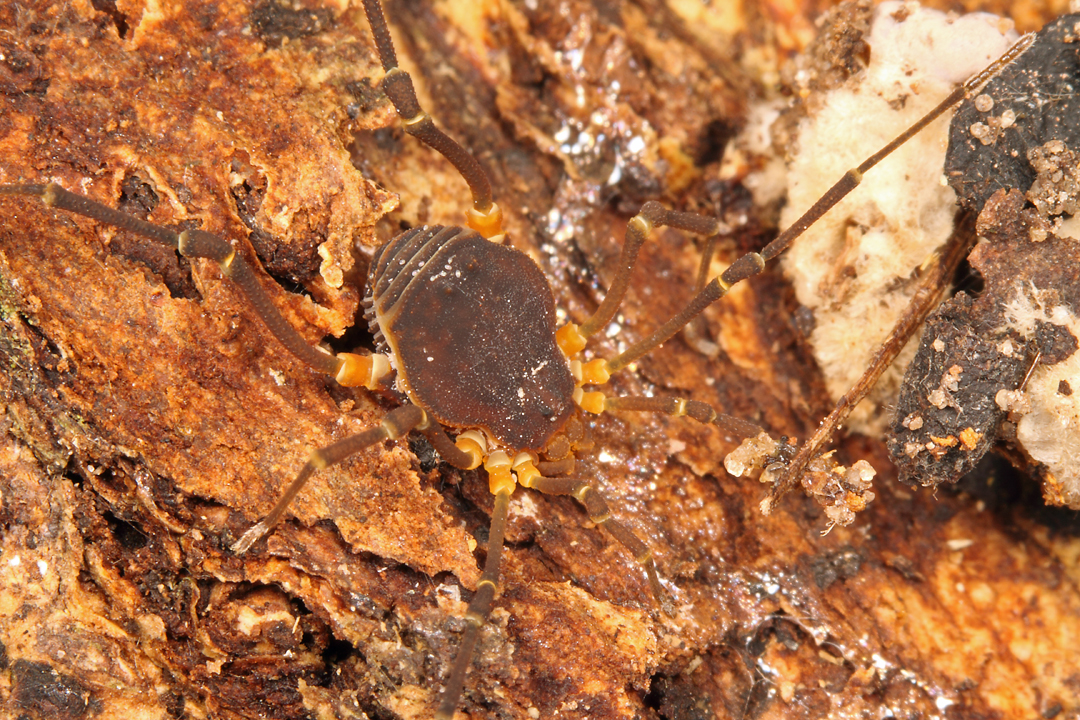
While searching logpiles last month in a relatively intact tract “Selva Paranaense” near Paso de la Patria (Corrientes Prov., Argentina), the most interesting find for me was , a bizarre longhorned beetle that is either amazingly cryptic or a curious mimic (I couldn’t decide). There wasn’t much else to be seen in the logpiles—it had been a very dry summer in northern Argentina, but I did find this interesting species of harvestman (class Arachnida, order Opiliones) huddled together in one of the punkier piles of wood.

Knowing little about harvestman taxonomy (but knowing of several specialists who do), I sent the photos around for expert opinion. Everyone responded with the same opinion—family Cosmetidae, apparently distinguished by its spoon-shaped pedipalps. Marshal Hedin compared them to this similar-looking species photographed in Bolivia, Christopher Taylor (Catalogue of Organisms) thought they might be a species of Metalibitia and Ricardo Pinto-da-Rocha suggested M. paraguayensis as having been recorded from the province of Corrientes (although a specimen would need to be examined to confirm the identification). My thanks to each of these gentlemen for weighing in on a possible ID.

Argentina represents the southernmost extent of this strictly New World family of harvestmen, while to the north the family extends up to the southern U.S. (genus Vonones). In between, the family is diverse and comprises up to one-third to one-half of the harvestman fauna (Kury & Pinto-da-Rocha 2007). Many species in the family are ornately marked, giving rise to the family name which is derived from the Greek kosmetós (= ornate)—check out this gallery of photos at Flickr to see some truly spectacular examples.

While I was photographing these individuals, and even when I first began processing the photos, I thought that they were quite dirty and debated whether to clean them in PhotoShop. Then I realized that the numerous white spots were not debris, but mites! Whether these represent a parasitic or phoretic relationship is not clear to me, however, and none of the gentlemen I sent the photos to offered any comment about them. Erythraeid and thrombidiid mites are well documented as harvestman ectoparasites during their larval stage, with recorded hosts including Neotropical species of Cosmetidae (Townsend et al. 2008). The tiny, white mites on these individuals, however, do not resemble the large, red erythraeid mites (probably genus Leptus) that I have seen parasitizing our North American harvestman species, and their numbers on multiple individuals is, to me, more indicative of a phoretic relationship. If you want to become thoroughly confused by the tremendous diversity of mites the parasitize harvestmen, see the comprehensive review by Cokendolpher (1993).

REFERENCES:

Cokendolpher, J. C. 1993. Pathogens and parasites of Opiliones (Arthropoda: Arachnida). The Journal of Arachnology 21:120–146.

Townsend, V. R., D. N. Proud, M. K. Moore, J. A. Tibbetts, J. A. Burns, R. K. Hunter, S. R Lazarowitz & B. E. Felgenhauer. 2008. Parasitic and phoretic mites associated with Neotropical harvestmen from Trinidad, West Indies. Annals of the Entomological Society of America 101(6):1026–1032.

Kury, A. B. & R. Pinto-da-Rocha. 2007. Cosmetidae Koch, 1839. Pp 182–185. In: R. Pinto-da-Rocha, G. Machado & G. Giribet (Eds.). Harvestmen: The Biology of the Opiliones. Harvard University Press, Cambridge and London, x + 597 pp.

Copyright © Ted C. MacRae 2012