La Reserva Ecologica Costanera Sur

Reserva Ecológica Costanera Sur, Buenos Aires, Argentina.

I spent this past weekend in Buenos Aires, Argentina before embarking on a one-week whirlwind tour to visit field sites in several other parts of the country.  It was supposed to be a short rest stop, but I can do nothing of the sort when there are exotic lands to explore.  Despite its rank as the fourth largest city in South America and the location of my hotel in the heart of downtown, only a short walk was needed to arrive at Reserva Ecológica Costanera Sur, a 350-hectare park located on the banks of the Rio de la Plata.  Originating as a debris field from construction during the 1970s, sedimentation and subsequent revegetation have created a naturalistic setting reminiscent of the original wet Pampas grasslands that occurred in the area.

A system of levees with trails courses through the wet grasslands.

Coursing through the area is a system of levees topped with gravel walking/biking trails that have become flanked with woody vegetation.  Native species such as ceibo (Erythrina crista-galli) and palo borracho (Chorisia speciosa) are common, although exotics such as Canary palms (above photo) have also become established.  In total, more than 11 km of trails are available, and having as much time as I desired on Sunday to explore the area, I walked every one of them once (and some twice) for a total hike of close to 15 km (not counting my morning walk to the area and then back to my hotel during late afternoon).  I wouldn’t say the area was teeming with insects, and those that I did encounter are not too dissimilar from those I am more familiar with in North America.  However, this is the southern Neotropics, so just about everything I encountered was something I had not seen before.  I went photography-crazy, snapping more than 250 shots on the day (and keeping about 100).

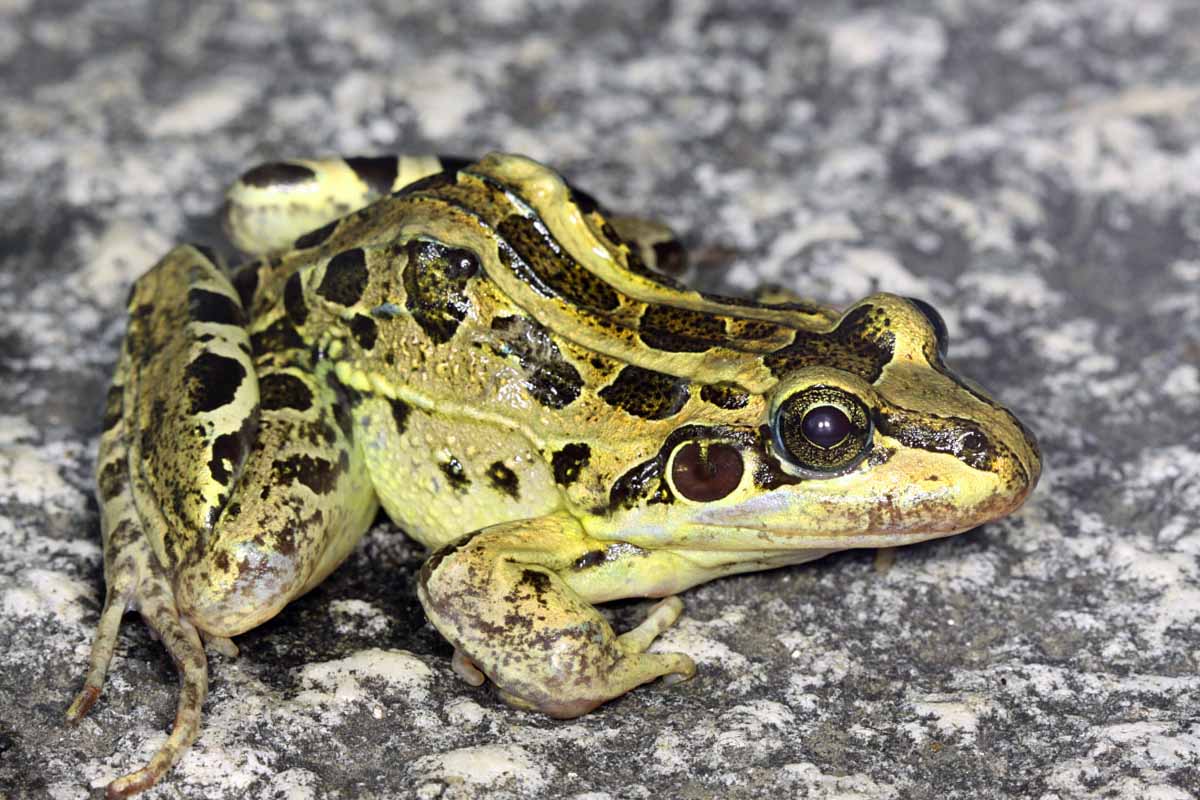
Leptodactylus ocellatus (rana criolla).

This frog was the first thing I encountered, even before walking through the Reserve gates.  Using the galleries at this fan site I believe it to represent Leptodactylus ocellatus (rana criolla, or “Creole frog”).  He was a sad sight when I first saw him – dry and dusty on the sidewalk outside of the Reserve.  I passed him by at first thinking he must be dead, then came back when my conscious started complaining, only to find him still alive.  I bathed him in water from my bottle, which perked him up rather quickly (not to mention making him much more photogenic!).  After a few photos, he revived sufficiently to jump off the stone wall bordering the Reserve into the grassy marsh.  I had done my good deed for the day.

Leptodactylus ocellatus (rana criolla) - my attempt at a natural light closeup.

Parabuteo unicinctus unicinctus (Gavilán Mixto) (I think!).

Also just before entering the Reserve gates, I scared up this hawk who flew a short distance ahead and landed on a post facing me.  Now, I have never once in my life attempted to photograph a bird, and with my longest lens being only my 100mm macro I’m ill-equipped for such even if I wanted to.  However, the hawk did not fly too quickly as I cautiously re-approached, and when I was within range I decided to give it a try.  I carefully crouched to ready my equipment and then cautiously rose to take a shot, and right then the hawk decided to take off.  Not a great shot, of course, but not bad either – especially for a first bird shot ever, and good enough to give me some amount of confidence in my ID as Parabuteo unicinctus (Gavilán Mixto, or “Mixed Hawk” – known in the U.S. as Harris’ Hawk).

Riodina lysippoides (Danzarina Chica)

Insect activity was rather light for the first couple hours after I arrived, but as the day began to heat up so did the number and diversity of the insects that I encountered.  While I waited for activity to pick up, I saw this pretty little butterfly that seemed surely a type of metalmark (family Riodinidae) and that I later identified as Riodina lysippoides (Danzarina Chica, or “Smaller Dancer”).  Shortly after taking this photo, I encountered another photographer who was obviously after insects.  I approached him and introduced myself to see what he was looking for, and it was butterflies.  I showed him my photo, but he did not know the name of the butterfly, only commenting that it was “bastante común” (common enough).  I’m confident in my ID, but this North American beetle collector won’t be too embarrassed if one of you lepidopterists needs to provide a correction.  I did see one other photographer that day as well, presumably after birds based on the yard-long lens he was carrying, but I did not talk to him.  Otherwise, I got plenty of strange looks from the hordes of walkers, runners, bikers, and picnickers that had come out to enjoy this Carnival weekend Sunday!

Copyright © Ted C. MacRae 2011


Brazil Bugs #2

A few more photographs from this past week in Campinas, Brazil.  It rained during the afternoon but stopped by the time I arrived back at the hotel, allowing me to stroll the lavishly landscaped grounds during the mild evening hours.  There is a pink-flowered shrub forming a hedge row in back of the hotel that is highly attractive to many types of insects.  The identity of the shrub remains a mystery to me, and most of the insects I’m finding on it I can recognize only to family – I’m hoping the hotel staff will be able to name the former and that the readers of this blog might be able to provide IDs for the latter.

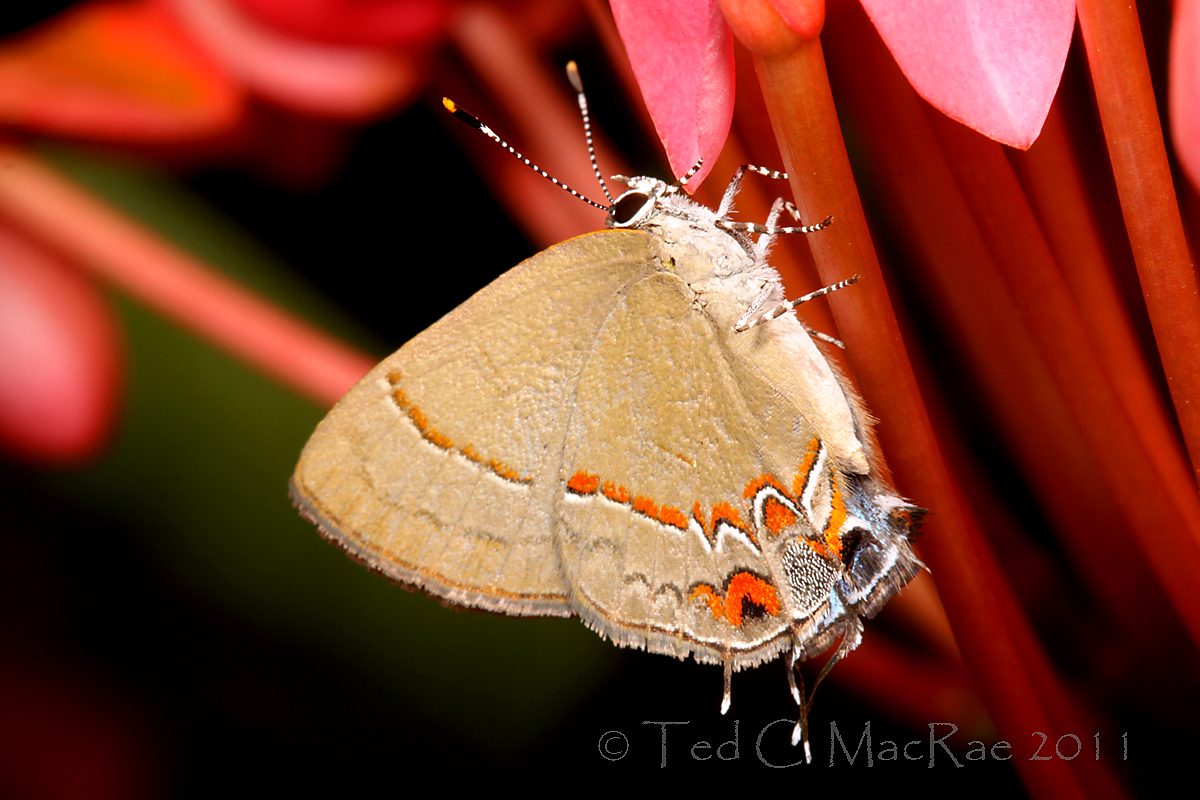
Calycopis sp. poss. origo (Lepidoptera: Lycaenidae). ID by Dave Hubble and Chris Grinter.

It took a bit of effort to find an unobstructed view of this hairstreak butterfly (family Lycaenidae) as it visited the flowers within the shrub.  Every time I tried to move foliage out of the way to get a good view, the butterfly became alarmed and flew to another part of the hedge row.  My antics drew the attention of a hotel worker, who was apparently interested enough in what I was doing to act as a spotter whenever the butterfly flew to help me relocate it.  Eventually I got a few shots that I was happy with, including the above.

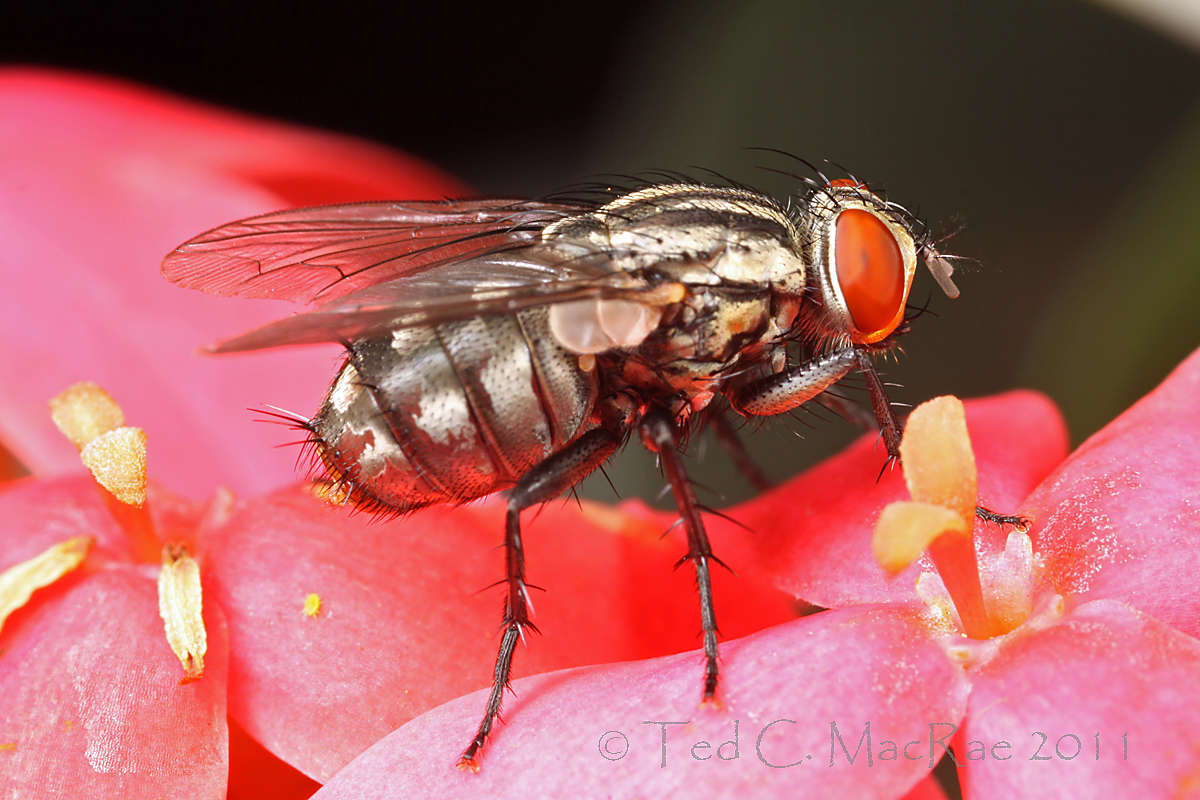
A flesh fly (Diptera: Sarcophagidae).

I presume this to be a type of flesh fly (family Sarcophagidae) based on the stout bristles and color pattern that seems typical for the family.  I like the striking contrast in coloration between the fly and the flower.  There are a few fly bloggers who I’m hoping might be able to give a better identification.

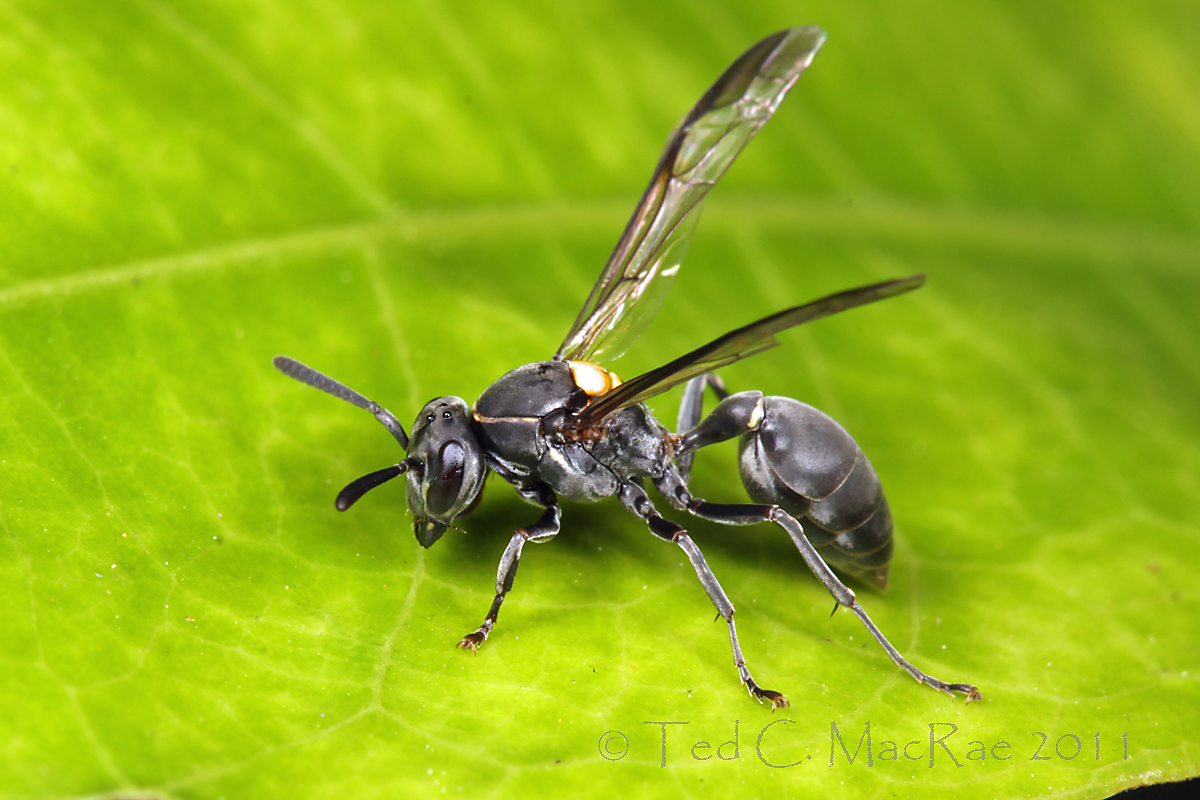
A potter/mason wasp? (Hymenoptera: Vespidae).

This appears to me to be some kind of potter or mason wasp (family Vespidae, subfamily Eumeninae) – it was a bit smallish at only about 12mm in length.  I hope one of the knowledgeable wasp bloggers out there (ahem… Eric?) can at least confirm this level of identification and perhaps the tribe or genus as well. 

Azya orbigera (Coleoptera: Coccinellidae). ID by Tucker Lancaster.

Every ladybird beetle (family Coccinellidae) I’ve ever seen is some variation of black and red/orange/yellow and has a smooth, glabrous appearance.  This beetle is cobalt blue with a dense pubescence over the dorsal surface, but it still seems to me to be some type of ladybird beetle.  It was a tiny little thing, so I suppose it could be one of the multitude of small beetle families with which I am unfamiliar.

Quedas sp.? (Hemiptera: Cicadidae).

This cast cicada exuvium was not on the shrub, but on a nearby tree at about eye level.  I really wish I could have seen the cicada that emerged from it, because this is certainly the biggest cicada exuvium I have ever seen.  I was about to simply label it “family Cicadidae” but seem to recall that cicada higher classification is in a bit of flux these days.  At any rate, given its great size I wonder if it might represent one of the giant cicadas in the genus Quesada.

I still have many more insect photographs from the past week and will certainly increase that number over the next week as well.  Stay tuned!

Copyright © Ted C. MacRae 2011

Flaming the debate

Eastern redcedar encroaching loess hilltop prairie, a critically imperiled natural community in Missouri.

ResearchBlogging.orgAs my interest in prairie insects has increased over the past few years, so has my interest in their conservation. Many insects are restricted to prairies through dependence upon prairie plants or their unique physical and trophic characteristics. Thus, preservation of not only prairie plants but their insect associates as well is a major goal of conservationists.  The task is daunting – for example only ~1% of tallgrass prairie remains in the central U.S., the rest long ago converted to agriculture or otherwise irreparably altered.  Prairies are dynamic natural communities that rely upon disturbance – this need to “disturb to preserve” creates an oxymoronic conundrum for restoration ecologists that is made even more difficult by the fragmented nature of today’s prairie landscape.  The situation here in Missouri is even more difficult, as nearly all of our grassland preserves (tallgrass prairie, sand prairie, loess hilltop prairie and glades) are exceedingly small and highly disjunct relicts not connected as parts of larger systems.

In recent years, prescribed burning has become the management tactic of choice for restoring and maintaining grassland preserves.  There are good reasons for this – not only are increased floral diversity and reversal of woody encroachment well-documented responses to fire, but burning is also highly cost-effective (a critical consideration in today’s climate of shrinking public budgets).  As the use of prescribed burning on grassland preserves has become widely adopted, however, concerns about the impacts of fire on invertebrate populations have been raised.  The subject is now an area of intense research, but studies are hampered by the limited availability of large, long-unburned tracts of native prairie, and no scientific consensus has yet emerged.  Regrettably, the debate has polarized into “pro-” and “anti-fire” camps that seem unable to communicate with each other constructively.  This is unfortunate, since both ends of the spectrum offer ideas that could be used to achieve the goal of preserving prairie remnants while mitigating concerns about invertebrate impacts.  I have previously expressed my own views on the subject, a position that I suspect some might mistakenly characterize as “anti-fire.”  While I do support the use of prescribed burning, I do not support its use with no consideration of other prairie management strategies such as haying and light grazing (not to be confused with the heavy, abusive, unmanaged kind of grazing that has degraded so much of our landscape).  All of these tools (as well as parcels that receive no management at all) have potential value in prairie management and should be considered.

Those interested in potential fire impacts on prairie invertebrates will be interested in this latest salvo by Scott Swengel and colleagues, who used metadata analysis to correlate declines of prairie butterflies in the Midwest with the widespread adoption of prescribed burning as a management tactic.  The authors present convincing evidence that tallgrass prairie butterfly populations are not co-evolved with fire regimes currently used for prairie management, although their conclusions will no doubt be challenged.  Nevertheless, until a firmer scientific consensus can be achieved, prudence should dictate some measure of caution in the use of fire as an exclusive prairie management tactic.

Dear Colleagues:

We are pleased to announce a new article by Scott Swengel, Dennis Schlicht, Frank Olsen, and Ann Swengel, based on long-term data that has just been published online,  Declines of prairie butterflies in the midwestern USA.  This paper is available free from Springer Open Choice at http://www.springerlink.com/content/l732444592662434/fulltext.pdf or by going to the Journal of  Insect Conservation Online First section and scanning through the articles in ascending number order until getting to articles posted 13 August 2010.

The trends of tallgrass prairie skippers shown here, although disastrous, underestimate the decline in Iowa and Minnesota for several reasons:

  1. In statistical testing we only include sites with adequate data for testing, which eliminates many sites from inclusion that had 100% declines of a specialist we know about.
  2. Nearly all sites with long time series were the top sites to begin with, which are likely to take a longer time to show large declines than medium or low-quality sites.
  3. Recent government sponsored surveys not included here show another round of huge declines for Poweshiek Skipperling in Iowa and Minnesota.
  4. Some species went undetectable by the late 1980s and early 1990s, so didn’t register as a presence when the study began.  Hence, they cannot show a decline since then.

Some good news is that conservation based on existing knowledge of specialists’ management responses gets far better results (as shown by Regal Fritillaries and Karner Blues in Wisconsin than typical management.  So declines like this are not inevitable.

The Ecological Interpretations and Conservation Conclusion section of Discussion contain some of our new insights explaining the observed about land-use effects on prairies and butterflies.

Scott Swengel

My thanks to Scott Swengel for giving me permission to reprint his introduction.

REFERENCE:

Swengel, S. R., D. Schlicht, F. Olsen & A. B. Swengel. 2010. Declines of prairie butterflies in the midwestern USA Journal of Insect Conservation: DOI 10.1007/s10841-010-9323-1.

Copyright © Ted C. MacRae 2010

Friday Flower – Pawpaw

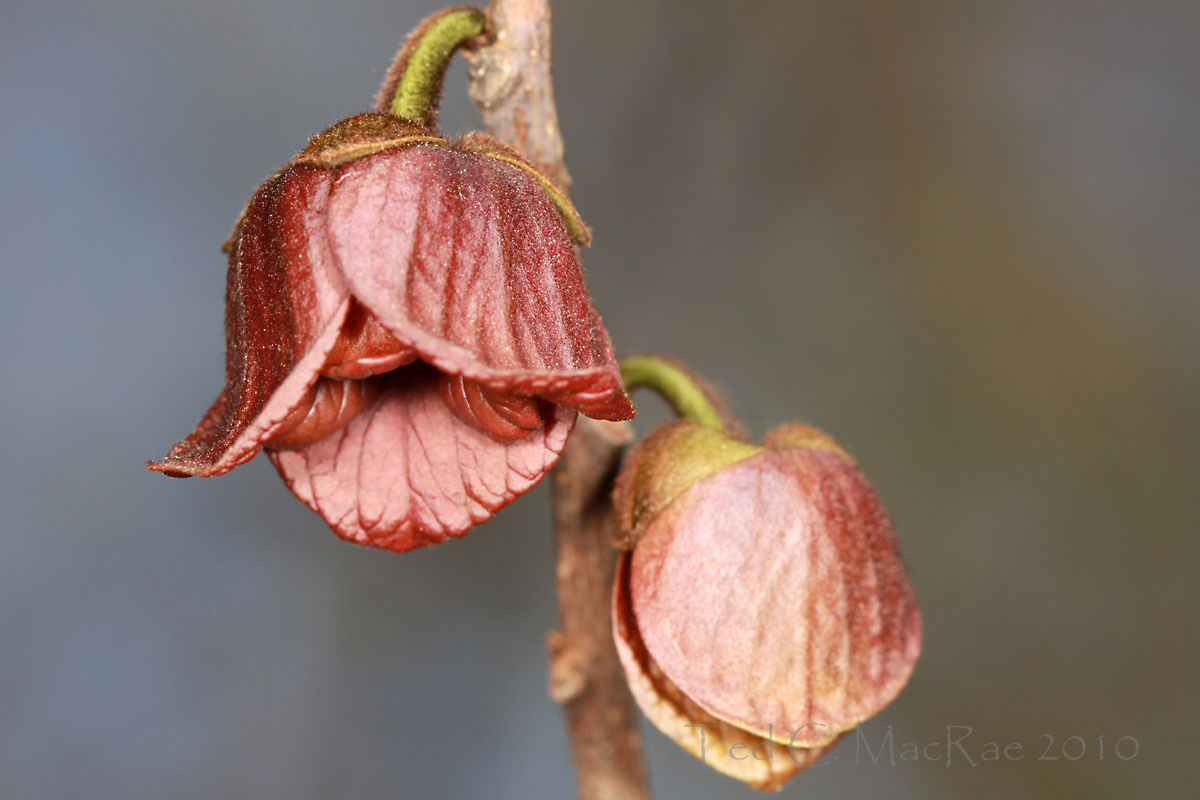
As my friend Rich and I stood in the verdent understory admiring the spectacular panicles of red buckeye punctuating the green lushness, a small brown flower on a leafless branch above me caught my eye.  “Pawpaw!” I exclaimed, perhaps partly in amazement that it took us awhile to notice the trees that were, in fact, all around us.  Pawpaw (Asimina triloba) is a member of the only temperate genus in the otherwise exclusively tropical and subtropical family Annonaceae (Custard Apple Family).  Although not nearly as restricted in occurrence in Missouri as the red buckeyes with which they were growing, they are nevertheless always a treat to see. Scattered throughout the state, they can be found growing in bottomland forests, ravines in mesic upland forests, along woodland streams, and at bases of bluffs (Yatskievych 2006).

Pawpaws are, of course, famous for their large edible fruits, sometimes called Indian bananas, Missouri bananas, Michigan bananas, [insert eastern state here] bananas, etc.  Technically, however, the pawpaw fruit is a berry, since it is derived from a single pistil and has multiple seeds embedded within the pulpy matrix.  I’ve not tried the fruit myself, not for lack of desire but rather an inability to find them when they ripen in fall before the birds and mammals get to them.  Some effort has been made to cultivate the plant for fruit production, but low fruit set seems to be a persistent problem due to reproductive self-incompatibility.

Pawpaw also famously serves as the larval food plant for the zebra swallowtail butterfly, Eurytides marcellus (family Papilionidae).  Beyond this, however, there seem to be not many insects associated with the plant.  I have collected dead wood of pawpaw in an effort to determine the species of wood-boring beetle species that are associated with it.  The only species I’ve reared is the longhorned beetle, Elaphidion mucronatum (whose common name “spined oak borer” belies the fact that it is one of the most polyphagous of all North American species), and two other longhorned beetles, Eupogonius pauper and Urgleptes querci (also highly polyphagous), have also been reported being reared from dead wood of this plant.  I have not associated any jewel beetles with pawpaw, nor have any such associations been reported in the literature.  It would appear that woodboring beetles are not fond of the soft, weak wood of pawpaw, perhaps due to the plant’s annonaceous acetogenins with known pesticidal qualities (Ratnayake et al. 1993) (acetogenins are also under investigation as anti-cancer drugs).  Other poisonous compounds, chiefly alkaloids, are found in various parts of the plant, especially the seeds and bark, and likely play a role in herbivore defense. Insect pollinators also seem to be infrequent, as I have not noted any insects on its flowers. Most members of the family are pollinated by beetles (Yatskievych 2006), but the meat-colored, downward-facing, not-so-sweet-smelling flowers of pawpaw suggest pollination by flies, perhaps those attracted to carrion.

REFERENCE:

Ratnayake, S., J.K. Rupprecht, W.M. Potter, and J.L. McLaughlin. 1993. Evaluation of the pawpaw tree, Asimina triloba (Annonaceae), as a commercial source of the pesticidal annonaceous acetogenins. p. 644-648. In: J. Janick and J.E. Simon (eds.), New Crops. Wiley, New York.

Yatskievych, G. 2006. Steyermark’s Flora of Missouri, Volume 2. The Missouri Botanical Garden Press, St. Louis, 1181 pp.

Copyright © Ted C. MacRae 2010

Add to FacebookAdd to DiggAdd to Del.icio.usAdd to StumbleuponAdd to RedditAdd to BlinklistAdd to TwitterAdd to TechnoratiAdd to Yahoo BuzzAdd to Newsvine

Email to a friend

Circus of the Spineless #47

When I started participating in blog carnivals last year, Circus of the Spineless was – for me – the pinnacle of blog carnivals.  I wanted to take my shot at hosting this venerable celebration of creepy crawlies, and even though the waiting list for hosting was almost a year long, I offered my services and settled in for the long wait until February 2010.  Ten months have passed and the time has come.  In the meantime, I did my blog carnival host début with Berry Go Round #21 and snatched the sophomore slot for nature blogging’s newest carnival with House of Herps #2.  Through those efforts, I learned that blog carnival hosting is an incredible amount of work/fun, and while plants and herps are fascinating, inverts are my true love.  It is, thus, with great pride that I join the ranks of previous hosts in presenting this, the 47th edition of CotS.  Featured below are 16 submissions by 14 contributors that cover representatives from 5 classes in 3 invertebrate phyla.  A humorous look at some of the personalities behind invertebrate study is presented as a bonus for those who make it to the end.

If you missed last month’s issue, you can find Circus of the Spineless #46 at Kate’s Adventures of a Free Range Urban Primate, and next month’s edition will be hosted by Matt Sarver at The Modern Naturalist.

Phylum CNIDARIA
–Class ANTHOZOA

Coral Reefs
The Voltage GateJeremy at The Voltage Gate reports on peer-reviewed research on the impact of herbivorous fish on the recovery of coral reefs in his post, Protecting herbivorous fishes significantly increases rate of coral recovery.  Coral reefs have been hard hit by the challenges of bleaching and disease, pressures likely linked to climate change, and macroalgae, when given the opportunity to dominate, provide even further challenges.  This can happen when populations of herbivorous fish, major grazers of macroalgae, are reduced through commercial harvest.  The study authors evaluated ten sites over a two-and-a-half year period in and around the Exuma Cays Land and Sea Park (ECLSP), which was established as a no-take marine reserve in 1986, finding an increase of coral cover during the study period from 7 percent to 19 percent.  However, ECLSP reefs were responsible for all of this increase, with no net recovery occurring outside the ECLSP.  These results illustrate the importance of reserves as a refuge for biodiversity and the service they provide in keeping marine systems intact.

Phylum MOLLUSCA
–Class GASTROPODA¹
—-“Informal Group” OPISTHOBRANCHIA

Sea slug (Glaucus atlanticus)
Deep-Sea NewsThis gorgeous nudibranch species got a foul slandering when they started washing up on Gold Coast beaches in Australia.  Miriam Goldstein debunks this unfair treatment in her post, Sea slugs have self esteem too, at Deep-Sea News, noting its absolutely stunning iridescent blue and silver color with gorgeous feathery tentacles.  Further exception is taken with such descriptors as “slimy”, “venomous”, “blue-bottle eating”, and “cannibals” – with the truth behind each of these terms far more fascinating than the visceral reaction their use was intended to elicit.  Good news as well – you don’t have to travel to Australia to see these things – they live throughout the world’s open oceans (but you will have to get far from shore, where the pelagic jellys upon which they feed can be found).

—-“Informal Group” PULMONATA

Iron-clad snail (Cyrsomallon squamiferum)
Deep-Sea NewsI’ve known about iron-clad beetles, species of Zopheridae whose exoskeleton is so hard and thick it is almost impossible to impale them with an insect pin.  I’d never heard of an iron-clad snail, however, until I read Dr. M’s post, The Evolution of Iron-Clad Samurai Snails With Gold Feet, at Deep-Sea News.  Unlike the seemingly iron-impregnated beetles, these snails actually utilize iron sulfide in a series of armor plates covering the “foot.”  Just described in 2003 from a hydrothermal vent in the Indian Ocean, it is the only known animal known to use iron sulfide as skeletal material.  Only time will tell if these snails achieve the same popularity as living jewelry as the beetles.

¹ The taxonomy of the Gastropoda is under constant revision, as the results of DNA studies increasingly reveal as possibly polyphyletic many of the former orders (including the Opisthobranchia and Pulmonata, now known as “informal groups”).

Phylum ARTHROPODA
–Class CRUSTACEA
—-Order DECAPODA

Samurai crab (Heikea japonica)
ArthropodaMike Bok at Arthopoda shares two stories about this crab – one an ancient Japanese legend, the other a modern piece of scientific folklore – in his post, Samurai Crabs: Transmogrified Japanese warriors, the product of artificial selection, or pareidolia?  In the first, popular legend alleges that these crabs were transformed from drowned samurai warriors, each one identifiable by the face of the fallen samurai that it bears on its backs and for whom the crab searches in the depths of the oceans around Japan.  This ancient legend has led to a modern scientific quibble about whether the stylized face that can be seen on the crab’s carapace is the result of artificial selection by generations of superstitious Japanese fishermen, who have selectively released crabs bearing any resemblance to a human face.  This may make for compelling scientific debate, but Mike counters even the considerable eloquence of Carl Sagan in providing his own thoughts on why this likely is not true.

—-Order AMPHIPODA

Amphipod (Phronima spp.)
ArthropodaIn another example of the intermixture of science and culture, Mike Bok (Arthopoda) asks, Did Phronima inspire the design of the Alien Queen?  Mike agrees with the claim that the original “soldier” alien morph seen in “Alien” (1979) was based on a painting by artist H. R. Giger, but he thinks that Phronima more likely influenced the design of the queen alien morph in “Aliens” (1986).  The truth may remain hidden at Stan Winston Studios, but the broad crest atop the head of Phronima, bearing tubular, upward-pointing eyes, its “necro-parasitic” tendencies, and a chillingly suggestive photograph of the beast from a 1981 paper lend an air of plausibility to Mike’s hypothesis.

–Class ARACHNIDA
—-Order PHALANGIDA

Harvestmen, daddy-long-legs
Kind of CuriousJohn at Kind of Curious follows up on David Attenborough’s Life in the Undergrowth Episode 1 with his post, Daddy Long Legs Daddies (aka Harvestman).  Looking like spiders but lacking their venomous and silk-spinning abilities, it seems that nobody can agree on the proper name for these spider relatives.  Brits call them “harvestmen”, but Americans call them “daddy-long-legs”, a term that in the UK refers rather to crane flies (which less informed Americans simply call “giant mosquitoes”).  Let’s not even mention the daddy-long-legs spider (Pholcus phalangioides), which actually is a spider.

—-Order ARANEA

Neoscona crucifera (barn spider)
XenogereAnyone who hikes along woodland trails in the eastern U.S. during autumn knows what a “spider stick” is – i.e., any handy stick that can be waved probingly in front of one as they hike, lest they run smack into the web of any number of orb weavers that are fond of stretching their large webs across such natural insect flyways. Jason, at Xenogere, has some biggun’s in his neck of the woods, which he describes in intriguing detail in his post, Walking with spiders – Part 3. Barn spiders are some of the biggest, allowing one to fully appreciate their polychroism and polymorphism. I challenge even the most arachnophic of readers to look at Jason’s photographs and not be mesmerized by their beauty.

–Class INSECTA
—-Order ODONATA

Autumn meadowhawk dragonfly (Sympetrum vicinum)
Rambling Woods~The Road Less TraveledMichelle at Rambling Woods~The Road Less Traveled presents a stunning series of photographs of this gorgeous red dragonfly in her post, Circus of The Spineless~Curiosity will conquer fear even more than bravery will.~James Stephens.  Perching on her hanging basket of pink-flowered begonias, colors matching perfectly, it was almost as if the dragonfly has staked a claim on the hanging basket as it own personal territory.  Where there is one, there are others, and her neighbor’s deck had both a red male and a blue female doing… well, see Michelle’s diagram.

—-Order COLEOPTERA

Horned passalus (Odontotaenius disjunctus)
Anybody Seen My Focus?Joan Knapp at Anybody Seen My Focus?  shows photographs of this beetle in her post, Bess Beetle: Horned Passalus (Odontotaenius disjunctus), as it lumbered slowly and gracefully over a fallen tree branch.  Perhaps the cool temperatures were the reason for its sloth.  Or perhaps the missing antenna indicated a feeble, old individual on its last (six) legs.  A brief interruption for photographs seemed not to deter the beetle from its destination, somewhere in the leaf litter beyond the log…

—-Order LEPIDOPTERA

Skipper butterflies (family Hesperiidae)
Nature of a ManRandomtruth at Nature of a Man loves skippers (are they butterflies, or aren’t they?), and you’ll love his photographs of these delightful little half-butterflies in his post, Day Skippers.  While there is some slight doubt about the identity of individuals he sees in his backyard (skippers are notoriously difficult to identify in the field), there is no doubt that these little guys are loaded with personality.  You won’t believe the “natural history” moment he caught on film (er… pixels?) and presented in the final photo sequence.

Monarch butterfly (Danaus plexippus)
GrrlscientistGrrlscientist summarizes a recent peer-reviewed paper in her post, Migratory Monarch Butterflies ‘See’ Earth’s GeoMagnetic Field.  The paper reports on photoreceptor proteins in monarch butterflies known as “cryptochromes” that not only allow the butterflies to see ultraviolet light, but also allows them to sense the Earth’s geomagnetic field.  These highly conserved proteins evolved from the light-activated bacterial enzyme phytolase, which functions in DNA damage repair.  Most animals have one of two types of cryptochromes, but monarchs have both – providing the first genetic evidence that the vertebrate-version of cryptochrome is responsible for the magnetoreception capabilities in migratory birds.  Further research may provide insight on the workings of the circadian clock, which could lead to better understanding of sleep disorders and mental illnesses such as depression and seasonal affective disorder, as well as development of new treatments for jet lag and shift-work ailments.

—-Order HYMENOPTERA

Ants (family Formicidae)
Wild About AntsKatydids, grasshoppers, cicadas – what do ants have on these singers of the insect world?  Plenty, as Roberta at Wild About Ants points out in her post, Ants: No Longer the Strong Silent Types.  It turns out that ants have patches of ridge-like structures on their gaster, which they rub against a curved ridge (called a “scraper”) on the petiole to communicate with each other via stridulation.  While lacking the decibel level of a cicada, these sounds are nevertheless in the audible range for human ears and are thought to have alarm, mating, and recruitment functions.  Even more fascinating, stridulation is not the only tool in the ant music chest – drumming and rattling have also been documented.  Curiously, however, ants do not possess ears, rather likely sensing sounds through their legs or by specialized hairs on their antennae.  Check out the provided links to SEM photographs and a sound recording.

Bald-faced hornet (Dolichovespula maculata)
Hill-Stead's Nature BlogDiane Tucker, Estate Naturalist at the Hill-Stead Museum in Farmington, Connecticut, writes at Hill-Stead’s Nature Blog. In her post, Be it ever so humble, she takes a look at some of the different animal nests that become revealed during autumn’s leaf drop – particularly those made by the bald-faced hornet (and also birds such as oriole’s).  From its start as simple cluster of chambers, to its growth over the course of the summer – growing fatter until the summer’s apex of warmth and light, then tapering off with the approach of fall, these insect homes are a marvel of nature – intricately constructed homes made entirely of paper.

—-Order DIPTERA

Common green bottle fly (Lucilia sericata)
Bug Girl's BlogBug Girl discusses the resurging use of bottle fly larvae in her post, Maggot therapy.  The academic among us will appreciate her discussion of the mechanisms that allow these seemingly disgusting vermin to function as incredibly delicate microsurge0ns in cleaning and disinfecting open wounds.  The morbid among us will appreciate the links to the most entertainingly disgusting medical photos one can imagine.  Check it out – but not over your lunch hour!

BUGS IN FIR

Wanderin' Weeta (With Waterfowl and Weeds)Wanderin’ Weeta (With Waterfowl and Weeds) was going to make an owl out of Douglas fir cones, but instead she found globular springtails, a crab spider, and a ladybug in a sprig of fir.  We’re glad she has an interest in little hitchhikers such as these, even if the kids at school when she was growing up didn’t.

ENTOMOLOGY HUMOR

Bug Girl shows that entomologists have a sense of humor with her post, Monday Morning bug jokes – a video compilation of jokesters from the recent Entomological Society of America Annual Meeting in Indianapolis.  My favorites were the best dung beetle pickup line (“Is this stool taken?”) and Marvin Harris’ rendition of the minimum number of insects needed to elicit control (1 pubic louse, or 1/2 codling moth larva :)).  J. McPherson was equally, if unwittingly, hilarious due to his Christopher Lloyd-esque mannerisms.  My favorite entomological joke of all, however, was not featured, so I offer the following addendum to Bug Girl’s post:

Copyright Ted C. MacRae 2010

Add to FacebookAdd to DiggAdd to Del.icio.usAdd to StumbleuponAdd to RedditAdd to BlinklistAdd to TwitterAdd to TechnoratiAdd to Yahoo BuzzAdd to Newsvine

Email to a friend