Today I received word from Richard Levine at the Entomological Society of America that one of my photos had been selected for the 2013 version of their famed World of Insects Calendar!
Excuse me for a moment please… (pumps fist, stirs the pot, does a very bad moon walk…)
Okay, I’m back. Honestly, this is an honor that I did not expect—at least not yet. Historically dominated by such giants in the world of insect macrophotography as Piotr Naskrecki, Thomas Myers, and others, competition for ESA’s World of Insects Calendar is fierce. Last year more than 500 photographs were submitted for 13 slots (12 months and an introductory page) by 98 photographers from around the world. I was one of those photographers, though not selected (no surprise as I was a first-time submitter). However, I took great pleasure in seeing fellow bug blogger Adrian Thysse nab two of the 2012 slots, and I increased my resolve to try again for next year with a selection of eight mostly newer photographs.
At the suggestion of Dave Stone, I present each of those photos below along with a short description of why I submitted it. However, I’m not going to tell you which photo ultimately was selected—I thought it might be fun to see which photo you think was selected and why. As added incentive for guessing, I’m going to award 10 BitB Challenge points to each person who correctly picks the selected photograph. BitB Challenge Session #6 is coming down to the wire, so this could have a big impact on the overall standings.
The 2013 Calendar will become available for sale later this year (probably October) at the ESA website—last year’s version cost only $12 (discounted to $8 for ESA members, and free for those attending the annual meeting [which I will be attending this year]).

Megaphasma denticrus (Phasmida: Diapheromeridae) – giant walkingstick
From North America’s longest insect (21 Aug 2009). This is one of my earlier super-closeup attempts. I liked the combination of blue and brown colors on the black background.
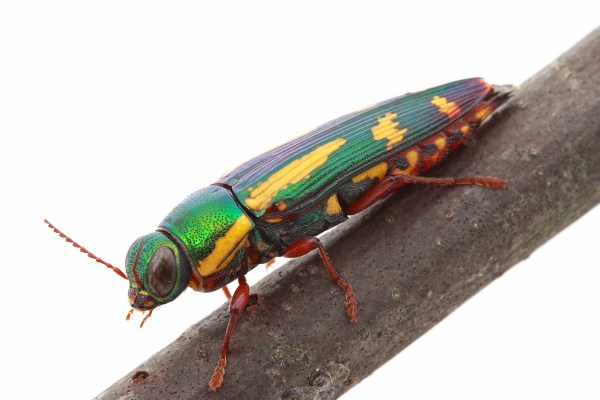
Buprestis rufipes (Coleoptera: Buprestidae) – redbellied Buprestis
From Special Delivery (13 July 2010). The use of a white box shows off the brilliant (and difficult-to-photograph) metallic colors well, and I like the animated look of the slightly cocked head.
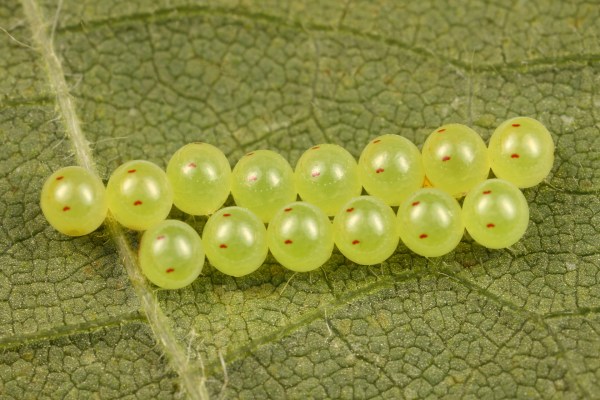
Edessa meditabunda (Hemiptera: Pentatomidae) – alquiche chico
From Stink Bugs on Soybean in Argentina (18 May 2011). I found these Edessa meditabunda stink bug eggs on the underside of a soybean leaf in Argentina almost ready to hatch. The developing eye spots in each egg gives the photo a “cute” factor rarely seen in such super close-ups.

Cicindela formosa generosa (Coleoptera: Carabidae: Cicindelinae) – eastern big sand tiger beetle
From Big, Bold, and Beautiful (10 May 2011). I like this slightly panned out view because of the sense of scale and landscape created by the inclusion of the plantlets and the view over the small rise.

Trimerotropis saxatilis (Orthoptera: Acrididae) – lichen grasshopper
From Oedipodine Rex (15 July 2011). Some of my favorite insect photos are not only those that show the bug in all its glory, but also tell a story about its natural history. This nymph is almost invisible when sitting on the lichens that cover the sandstone exposures in its preferred glade habitat.

Tetracha floridana (Coleoptera: Carabidae: Cicindelinae) – Florida metallic tiger beetle
From Why I Roamed the Marsh at Night (23 August 2011). I used extension tubes to improve the quality of flash lighting (decreased lens to subject distance results in greater apparent light size), and I like the symmetry of the composition.
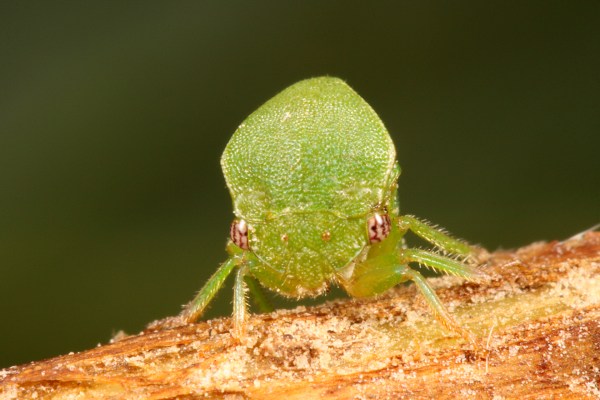
Spissistilus festinus (Hemiptera: Membracidae) – threecornered alfalfa hopper
From Crazy Eyes (17 September 2011). Even though both the insect and the background are green, there is sufficient value contrast to create a pleasing composition, punctuated by the bizarre zig-zag pattern of the eyes.

Crossidius coralinus fulgidus (Coleoptera: Cerambycidae) – a rabbitbrush longhorned beetle
From Crossidius coralinus fulgidus (4 October 2011). The blue sky background provides a pleasing contrast with the colors of this particular beetle and flowers.
Copyright © Ted C. MacRae 2012






 Beetles In The Bush