Is Missouri’s disjunct population of Johnson’s tiger beetle extirpated?

ResearchBlogging.orgThe December 2010 issue of the journal CICINDELA came out a little over a week ago. Leading off inside is the first in a series of papers that I, along with colleagues Chris Brown and Kent Fothergill, have prepared detailing our work with several species of tiger beetles in Missouri of potential conservation interest. At the start of our surveys, Missouri’s tiger beetle fauna was already fairly well characterized, at least qualitatively, due to the efforts of heavy hitters Ron Huber and Dave Brzoska, who for many years lived in nearby eastern Kansas. Despite their attentions, however, questions lingered regarding the precise distribution and status of several species of restricted geographical occurrence within the state, and our surveys over the past 10 years have sought to resolve these questions and, if necessary, recommend conservation efforts to secure the long-term survival of these species within the state.
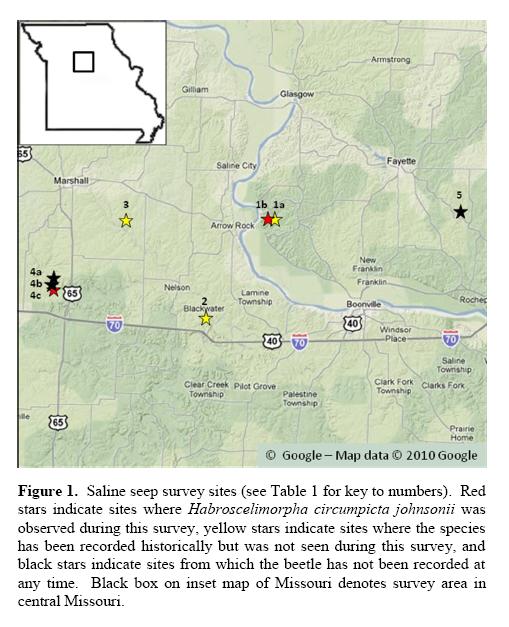
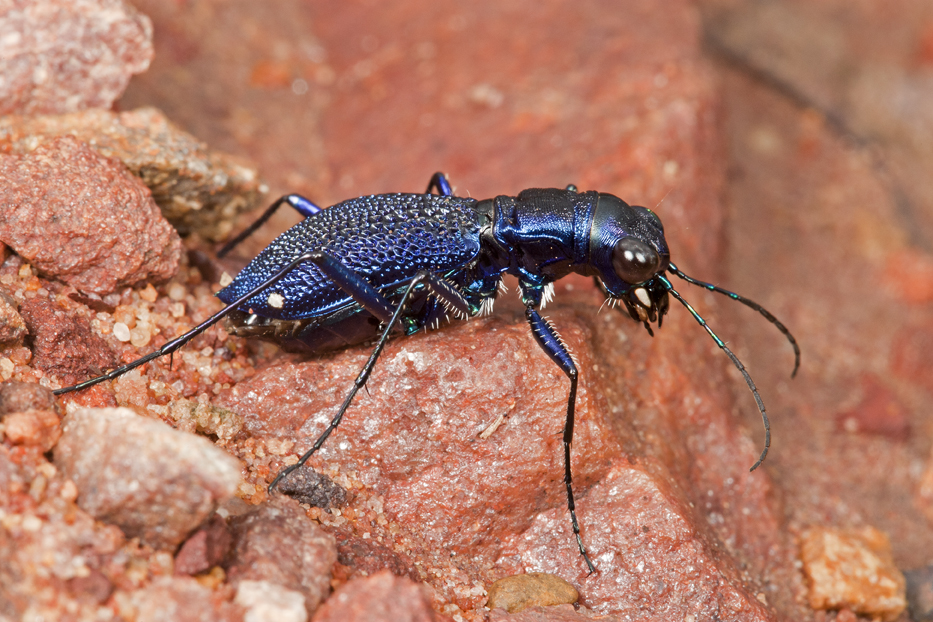
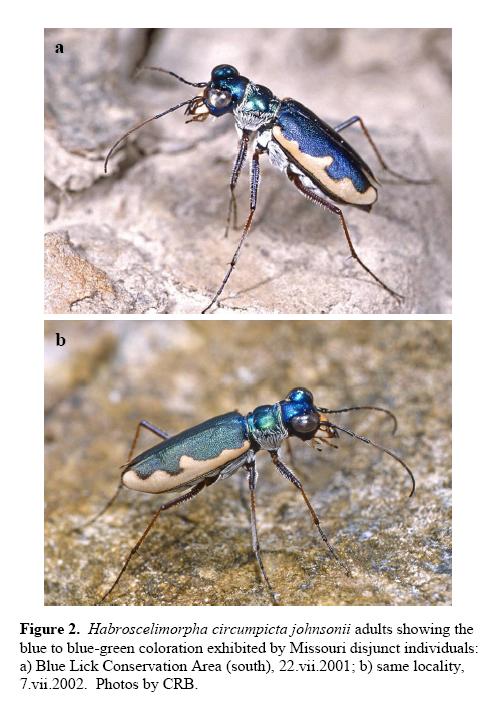
One of these species of interest is Habroscelimorpha circumpicta johnsonii (Johnson’s tiger beetle). This subspecies is widely distributed in inland areas of the central and south-central United States, where it is associated exclusively with barren areas surrounding saline seeps. Despite the broad occurrence of the main population, the Missouri population of this subspecies has long been of particular interest for several reasons: 1) its widely disjunct isolation, occurring several hundred miles east of the nearest populations in central Kansas, 2) its strict association with the highly restricted saline seeps of central Missouri (Fig. 1), and 3) the exclusive blue-green coloration of the adults (Fig. 2) that contrasts with the varying proportions of reddish and/or dark morphs, in addition to blue-green morphs, found in other populations. The highly disjunct and isolated occurrence of this population and its unique coloration have been considered by some workers as grounds for separate subspecific status. Another restricted, disjunct population of this species in North Dakota has already been accorded subspecific status – H. circumpicta pembina.
Despite its restricted occurrence in Missouri, a long history of collection records exist for the subspecies. Numerous specimens are housed in the Enns Entomology Museum in Columbia, Missouri, with a majority of these coming from a single location (Boone’s Lick Historic Site) and dating back as early as 1954. In more recent years (1985-1992), Ron Huber and Dave Brzoska found significant numbers of beetles at two additional locations near Boone’s Lick. Despite these numerous records, the subspecies was listed as a “Species of Conservation Concern” by the Missouri Natural Heritage Program with a status of “S2S3” (vulnerable or imperiled) due to the rarity of its required saline seep habitats in Missouri. Unfortunately, this alone did not appear to be sufficient protection for the species, as my own observations beginning in the mid-1990s suggested that populations of the beetle had declined significantly from their historical levels. Concomitant with these apparent declines was the observation that the sites supporting these beetles had themselves suffered severe degradation that reduced their apparent suitability as habitat for the beetle. As a result of these observations, Chris and I initiated comprehensive surveys during the 2001 field season to assess the conservation status of the Missouri population and identify potential new sites. Our first order of business was to petition a status change to “S1” (critically imperiled), and for the next three years we regularly visited the historical sites throughout the presumed adult activity period, noting occurrence of adults and recording their numbers and the circumstances of their habitat associations. Included in these surveys also were two new sites identified using the Missouri Natural Heritage Database.

The results were not good – during the 3-year survey, only a single beetle was observed at the historical location of Boone’s Lick, and none were observed at the two other locations discovered by Ron Huber and Dave Brzoska. More significantly, all three sites had suffered severe degradation due to vegetational encroachment, cattle trampling, or other anthropogenic disturbance. Moreover, of the two potential new sites identified, only one of these (Blue Lick Conservation Area) was found to support a small population of the beetle. Three apparently suitable saline seeps exist at this latter site; however, beetles were observed at only one of them. During the final year of the survey, prolonged flooding occurred at this site (frustratingly, a result of earth-moving operations by site personnel), which was followed in subsequent years by significant vegetational encroachment (Fig. 3). No beetles were observed at this site during the final year of the survey, nor has the species been seen there in multiple visits to the site in the years since.

Is the Missouri disjunct population of Johnson’s tiger beetle extirpated? There is little reason to be optimistic. What is clear is that the beetle is now below detectable limits, and with the loss of suitable habitat at all sites known to have supported the beetle in the past and little chance that new, high-quality sites will be identified, prospects for an unaided comeback are dim. The saline seep habitats at the three historic sites appear to have suffered irreparable degradation and offer little restoration potential to the degree required to support viable beetle populations; however, there are still two saline seeps at Blue Lick that do offer at least a semblance of suitable habitat. It is imperative that these last remaining examples of Missouri’s critically imperiled saline seeps habitats receive the highest priority for protection if the beetle (should it still exist) is to have any chance of surviving in Missouri. Johnson’s tiger beetle is only one of several tiger beetle species whose presence in Missouri appears to be in jeopardy (others being Dromochorus pruinina – loamy ground tiger beetle, and Cylindera celeripes – swift tiger beetle). I end this post with our closing admonition in the paper:

The loss of this beautiful and distinctive beetle from Missouri’s native fauna would represent a significant and tragic loss to this state’s natural heritage. We urge the Missouri Department of Conservation, the Missouri Department of Natural Resources, and other conservation organizations within the state to identify and allocate the resources needed to develop and implement a recovery plan for the species in Missouri.

REFERENCE:

Brown, C. R. and T. C. MacRae. 2011. Assessment of the conservation status of Habroscelimorpha circumpicta johnsonii (Fitch) in Missouri CICINDELA 42(4) (2010):77-90.

Postscript. On a happier note, I am pleased to be joining the editorial staff for CICINDELA. While my role as layout editor is more functional than academic, I am nevertheless thrilled with the chance to “rub shoulders” with the likes of Managing Editor Ron Huber and long-time cicindelid experts Robert Graves and Richard Freitag. I hope my contributions to the journal’s production on the computer end of things will be favorably received by its readership.

Copyright © Ted C. MacRae 2011

Brazil Bugs #13 – Gorgulho do fungo

Phaenithon semigriseus (Anthribidae) - Parque Municipal, Distrito Barão Geraldo, São Paulo, Brazil. ID by Jose Ricardo M. Mermudes.

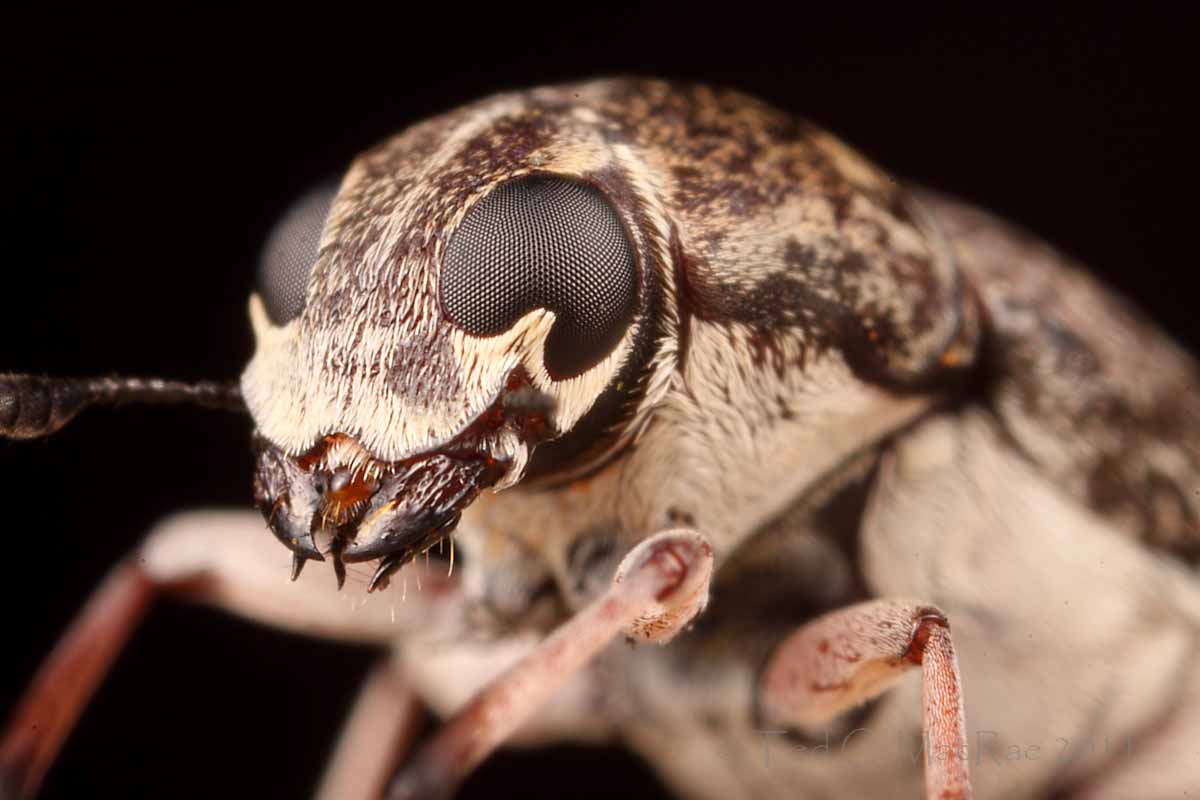
Over the weekend during my trip to Brazil last month, I took a walk in the municipal park near my colleague’s home in Barão Geraldo. There was a rather large lake with a walking trail going around it, and although much of the vegetation was planted, there were some less kempt and more native-looking sections along the trail where I hoped to find some insects to photograph. As it turned out, there weren’t a whole lot of interesting insects, but I did see a capybara (“capivara” in Portuguese) – the largest rodent species in the world (picture a guinea pig the size of a small real pig) – for a brief moment before it splashed in alarm into the lake and swam away. One of the few interesting insects I did see was this little fungus weevil (family Anthribidae) on the bark of a large, recently felled tree. At only ~3-4mm in length, it was a rather tiny species as anthribids go – especially in the tropics – and lacked the comically elongated face that some species possess. Still, there is something humorous in its portrait.

Fungus weevils differ from true weevils (family Curculionidae) by having the antennae unelbowed.  I have no clue about the identity of this individual below family level, and there don’t seem to be a whole lot of entomologists that study this group of weevils (should anybody have a clue, please do leave a comment).  I simply must post these photos, however, because I think it is the first time I actually nailed the focus right on the eye with a closeup of this magnitude (~3X).  I actually took some closer shots also (in the 4X range), but I really didn’t care for the composition with the lens zoomed in to that degree.

Update 02/17/11, 9:53 a.m.: I just received an email from Jose Ricardo M. Mermudes (Universidade Federal do Rio de Janeiro), who informs me that the species is Phaenithon semigriseus (Germar, 1824). It would seem that this photo at Coleoptera Neotropical has, until now, been the only image of this species on the web.

My thanks to Dr. Mermudes! 

Copyright © Ted C. MacRae 2011

Featured Guest Photo – Dromica kolbei

Dromica kolbei? - Kruger National Park, South Africa. Copyright © Joe Warfel 2011.

Shortly after I returned from Brazil, this stunning photo was sent to me by Joe Warfel, who himself had just returned from a trip to South Africa.  Joe had seen the beetle at Punda Maria camp in the northern part of Kruger National Park, had deduced that it represented a species in the genus Dromica, and included the following notes about its behavior:

It did not fly, only ran, ran, ran, ran…. you get the picture.  But stopped briefly now and then to deposit eggs in the  soil.  My best guess from my limited tiger beetle references is Dromica sp.  Any help for identification you may give would be appreciated.

Although I have not collected this genus myself, I recognized it instantly as a member of such based on specimens and images I have seen.  Carabidae of the World contains fine images of a number of species in this genus, of which Dromica kolbei (W. Horn, 1897) seems to be a pretty good match.  However, more than 170 species are currently included in the genus, and while a modern revision is in progress (Schüle and Werner 2001; Schüle 2004, 2007), the bulk of the genus still remains to be treated.  As a result, this really should be considered as just a provisional ID.

Dromica is a strictly sub-Saharan African genus of tiger beetles whose included species are denizens of dry lands – savannahs, grasslands, open woodlands, and semideserts, and are generally absent in the moister, more heavily forested areas of western Africa.  Like a number of other tiger beetle genera, they have given up the power of flight to capitalize on their fast running capabilities.  This flightlessness and the strict association of adults with often short rainy seasons has led to both spatial and temporal isolation of numerous, localized populations of restricted geographical range.  This has no doubt contributed to the diversification of the genus across the mosaic of suitable habitats covering central, eastern, and southern Africa.  Schüle and Werner (2001) suggest that a good number of new species may still await discovery in the more remote or yet inaccessible areas of the countries of occurrence.  I had hoped to encounter these beetles (and also Manticora, or the giant African tiger beetles) during my visit to South Africa in 1999, but luck was not with me in this regard (although I did collect several fine specimens of the handsome Ophryodera rufomarginata (Boheman) and also a few species in the genera Cicindina and Lophyra).

My sincere thanks to Joe Warfel for allowing me to post his excellent photograph.  I featured photographs by Joe in an earlier post (A Tiger Beetle Aggregation), and his other photos can be seen at EighthEyePhotography (you must see this striking harvestman from Trinidad!).

REFERENCES:

Schüle, P. 2004. Revision of the genus Dromica. Part II.  The “elegantula-group” (Coleoptera: Cicindelidae). Folia Heyrovskana 12(1):1–60.

Schüle, P. 2007. Revision of the genus Dromica. Part IV.  Species closely related to Dromica albivittis (Coleoptera: Cicindelidae). African Invertebrates 48(2):233–244.

Schüle, P. and K. Werner. 2001. Revision of the genus Dromica Dejean, 1826. Part I: the stutzeri-group (Coleoptera: Cicindelidae). Entomologia Africana 6(2):21–45.

Copyright © Ted C. MacRae 2011 (text)
Answers to ID Challenge #5 – Artrópodes em casca de árvore morta

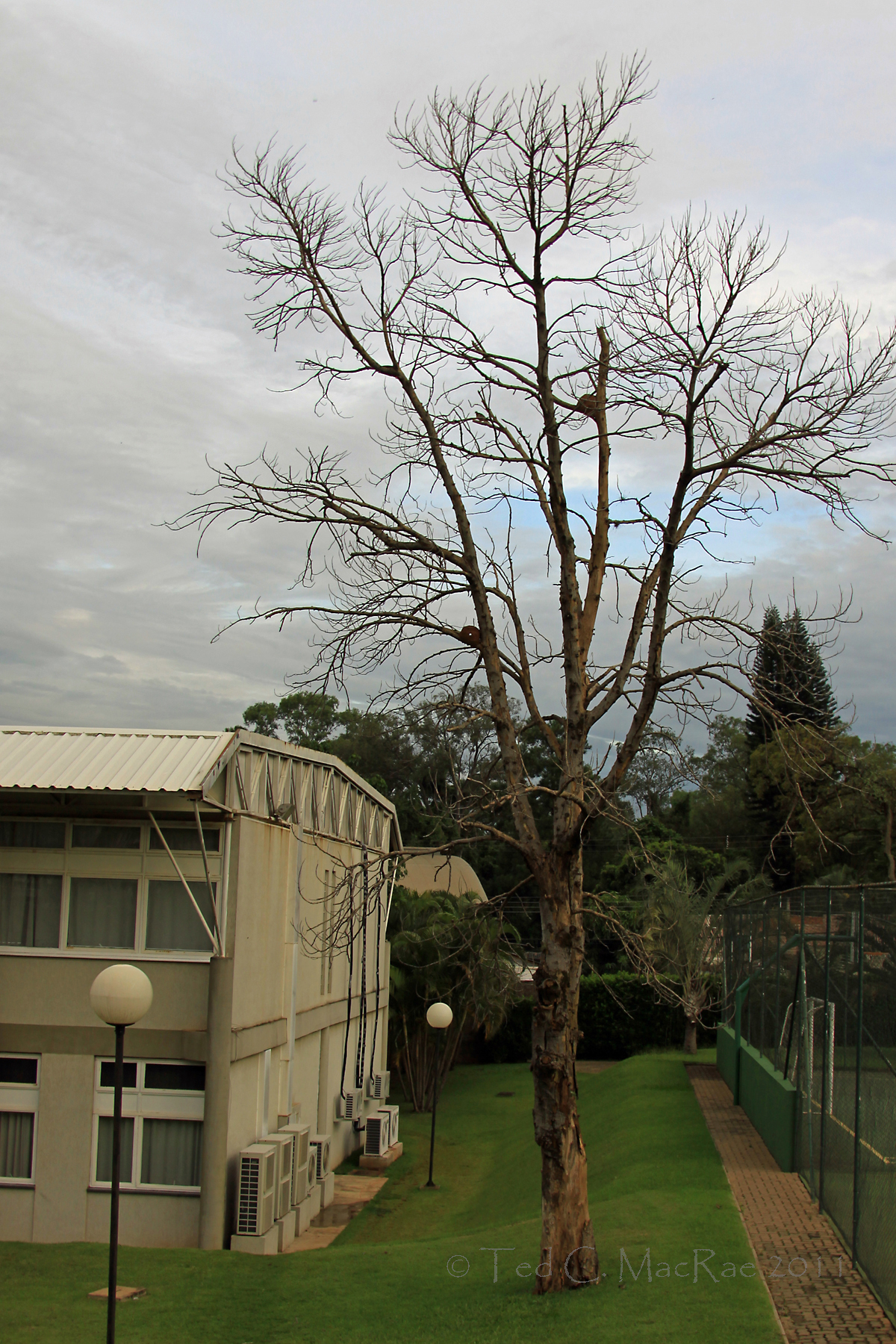
Dead tree in Campinas, Brazil

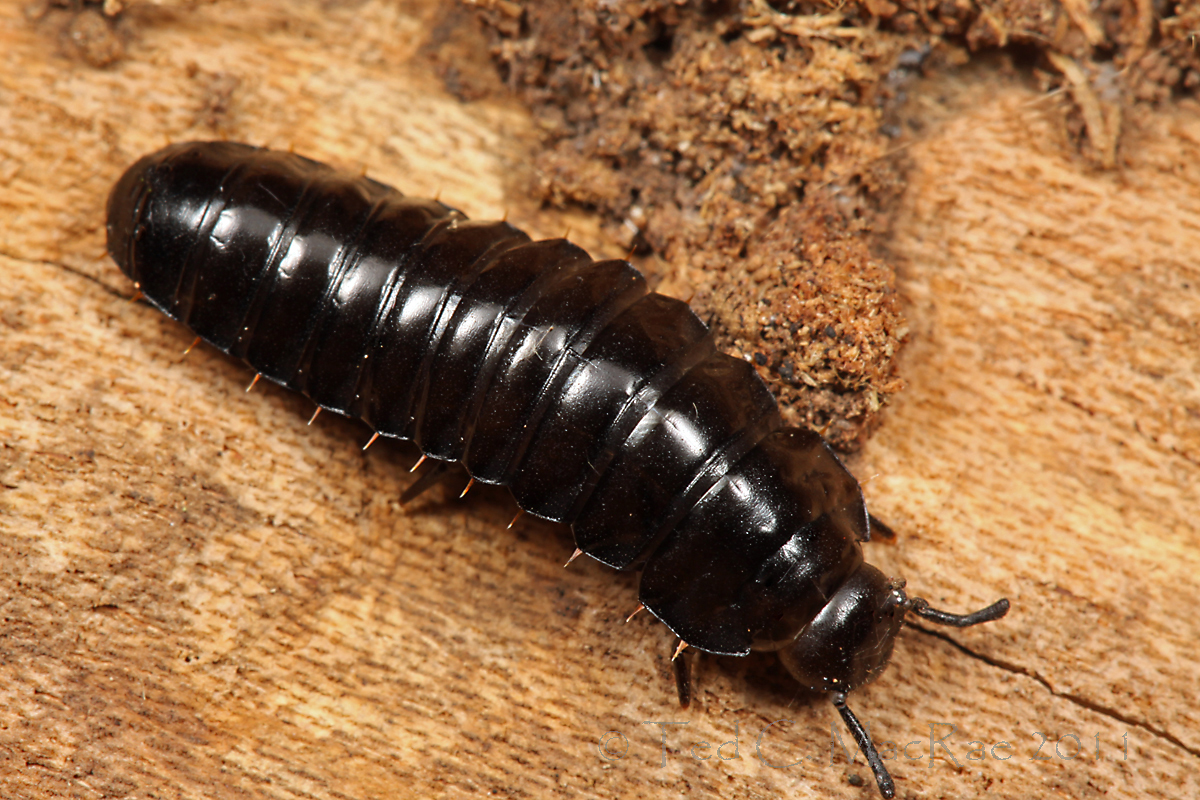
After checking into my hotel in Campinas, Brazil I couldn’t wait to start exploring the grounds to see what insect life I might be able to find.  Almost immediately, I encountered this dead tree in back of the hotel.  To a beetle collector, a dead tree is an irresistible draw – especially one that is still standing and with loosely hanging bark, as in this one.  I approached the tree, gave it a look up and down the trunk to see if any beetles or other insects might be found on the outer surface of the bark, and when none were seen began carefully peeling sections of the bark away from the trunk.  Out from beneath the first section darted a small, black lizard – it reminded me in general form of our North American fence lizards (genus Sceloporus), but honestly it darted so fast up the trunk that I didn’t get a good look at it (much less even the chance to attempt a photograph).  Peeling the bark further away from the wood revealed a goodly number of what I took to be beetle larvae, although they were unlike anything I’d ever seen before.  They were fairly good-sized – about 25mm in length, and although there are a number of beetle families whose larvae may be encountered under the bark of dead trees, there aren’t many with larvae of this size.

Coleopteran larva (Tenebrionidae?) under bark of dead tree.

Despite their odd appearance, their basic gestalt suggested to me that they might be something in the family Tenebrionidae (darkling beetles).  Sadly, the state of beetle larval taxonomy is far from complete, especially in the tropics, and given the extraordinary diversity of the order as a whole I knew it could be difficult to impossible to identify them.  This task was further complicated by the fact that I did not collect any voucher specimens.¹

¹ Insect collecting permits are required in Brazil and are exceedingly difficult to obtain.  Although enforcement is lax, a few unlucky foreigners have been caught and suffered tremendous inconvenience at the hands of notoriously unsympathetic authorities.  This being a business trip, I had no desire to tempt fate for the sake of a few larvae in a group I don’t even study.

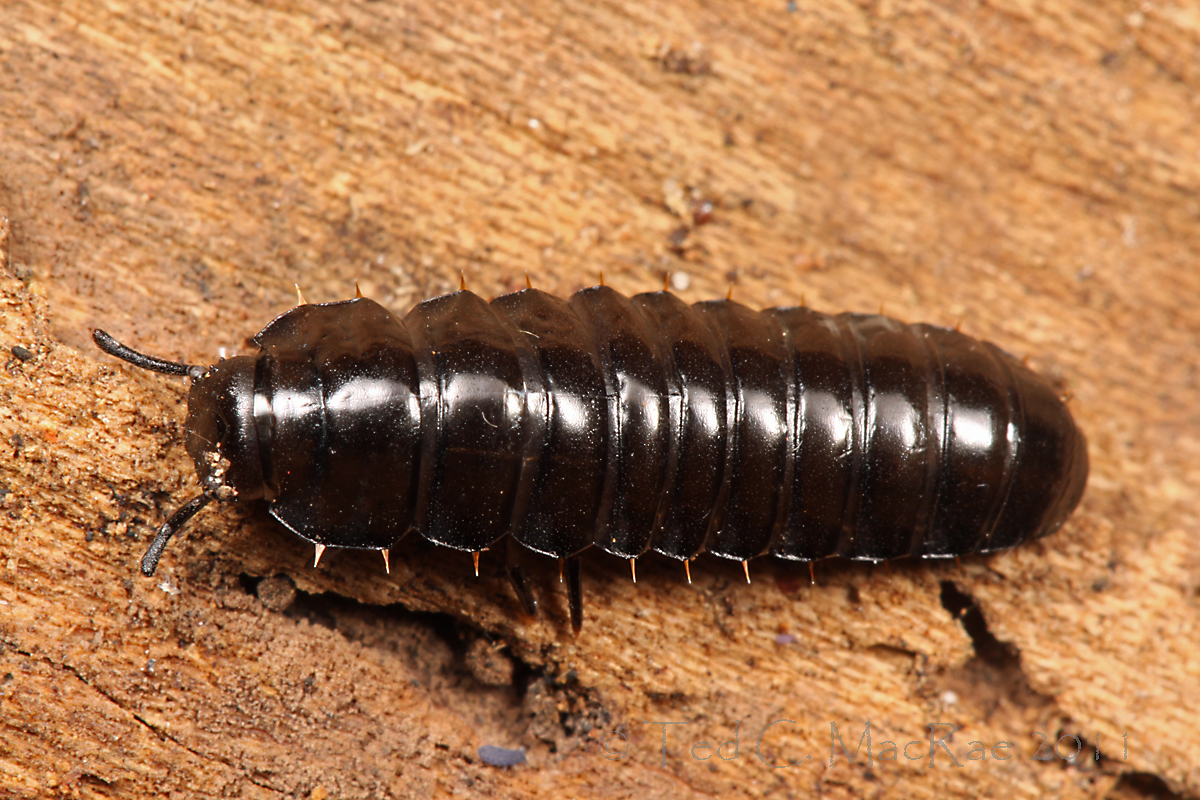
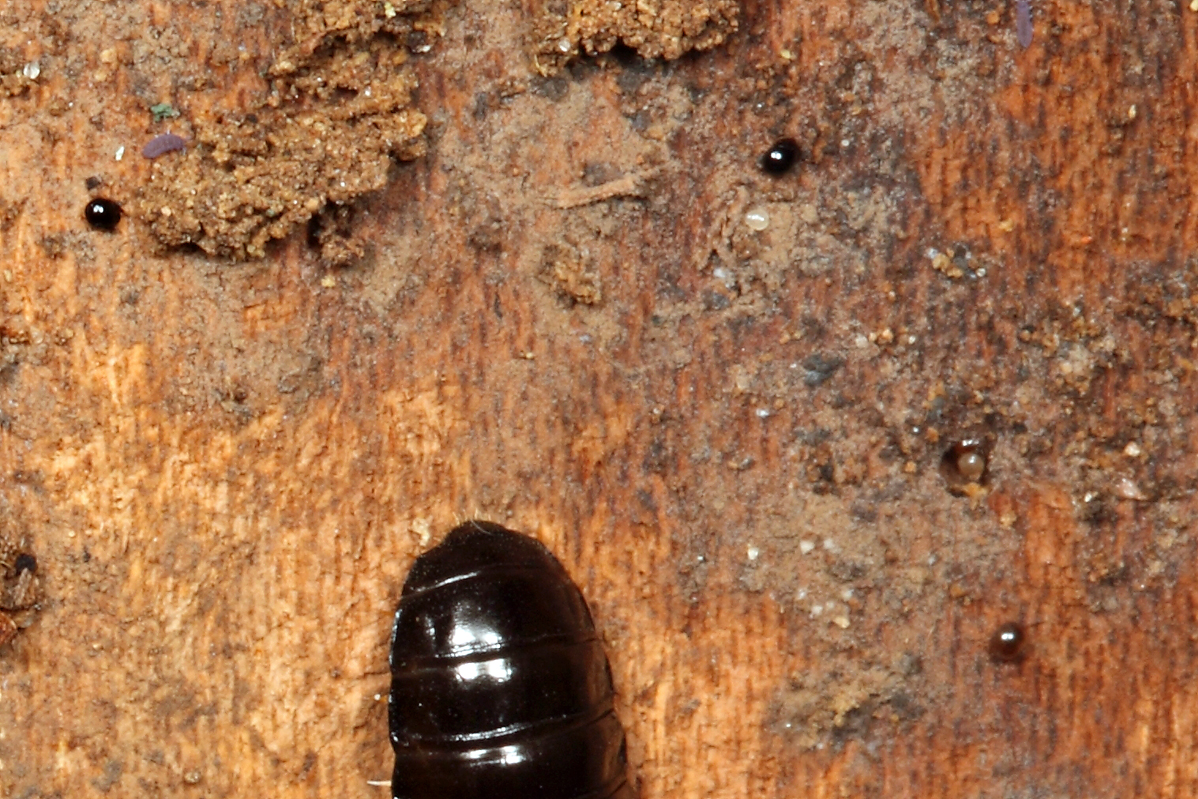
Despite a millipede-like appearance, six legs and loose cluster of ocelli indicate its true identity.

After consulting all of the print and online resources at my disposal and failing to find a convincing match at even the family level, I began to second guess not only whether these were tenebrionids, but larvae or even beetles.  I’m not aware of any tenebrionids with larviform adult females, but such are common in the Lampyroidea.  That didn’t seem to fit, however, as the latter tend to be much more flattened and armored in appearance, and the round head is really unlike the elongate and narrow head so often seen in that group.  The actually began to wonder if it was even a beetle – most xylophagous beetle larvae are light-colored and rarely so heavily sclerotized, and the antennae are unlike the typical 3-segmented antennae seen with most xylophagous beetle larvae.  In fact, the antennae and the shape of the head actually reminded me of a millipede, but the obvious presence of six legs (and no more) made this untenable (even though 1st instar millipedes are hexapod, the large size of these individuals precludes them from being 1st instar anything).  Eventually, I could only conclude that they were coleopteran – possibly a larviform adult, but more likely larval.  As a last resort I sent photos to Antonio Santos-Silva, a coleopterist at the University of São Paulo.  Although he specializes in Cerambycidae, I reasoned this might be a fairly common species since I had found good numbers on a single tree in an urban area near São Paulo, and as such it might be something he would recognize.  Antonio quickly replied saying that he agreed it was the larva of a species of Tenebrionidae, with an appearance similar to the larvae of Goniodera ampliata (a member of the Lagriinae, formerly considered a separate family).  I’ve not been able to find photos of the larva of Goniadera or related genera, but these do bear a striking (if more glabrous) resemblance to these presumed tenebrionid larvae from Australia.  Until a more convincing opinion is forthcoming, Tenebrionidae seems to be the consensus.

Polyxenid millipedes and two types of Collembola (several Poduromorpha and one Entomobryomorpha)

Three tiny adult coleopterans (family?) surround a large larval coleopteran

Although nobody zeroed in on Tenebrionidae for this challenge (#5 in the ID Challenge series), I must say that I enjoyed the diversity of opinion about what it might represent.  Moreover, congratulations to those who ‘took nothing for granted’ and noted the presence of several other organisms in the photo – this is where the big points were to be earned, and several participants successfully ID’d what I take to be a number of poduromorph collembolans, a single entomobryomorph collembolan, a central cluster of polyxenid millipedes, and several indistinct but clearly coleopteran adults (see super crops above).  David Hubble got the most correct answers to earn 15 points and the win in this inaugural post of BitB Challenge Season #2, while Dave and Troy Bartlett earned 13 and 10 points, respectively, to complete the podium.  Seven other participants got in on the fun and earned some points – I hope you’ll join the fun next time, too!

Copyright © Ted C. MacRae 2011

Recent literature – The Coleopterists Bulletin

Volume 64, No. 4 - December 2010

I returned to the office this week after spending two weeks in Brazil to find the December 2010 of The Coleopterists Bulletin in my inbox.  I don’t think there is another journal that I look forward to more eagerly than this one (with the possible exception of CICINDELA) – with each issue, I know that regardless of whether it contains any papers in my priority groups of interest (jewel beetles, longhorned beetles, and tiger beetles), it will nevertheless contain well-written articles presenting results of high-quality research on nothing but beetles – pure elytral ecstasy!  This latest issue, however, is a real keeper.  Gracing the cover is a stunning image of the South African jewel beetle species Julodis viridipes, photographed by my good friend and world jewel beetle expert Chuck Bellamy, and inside are three tiger beetle papers and two longhorned beetle papers – it’s almost as if the issue were produced just for me.

Friend and colleague Mathew Brust takes credit for two of the three tiger beetle papers.  In the first (Brust et al. 2010), he compares the efficiency of the three main methods for collecting tiger beetle larvae: fishing, stab-and-grab, and excavation. They found fishing to be the most efficient and least damaging of the three methods, an important finding for tiger beetle conservation where the availability of efficient, non-lethal survey methods is critical.  (What are “fishing” and “stab-and-grab” you ask?  Read the paper.)  In the second paper (Brust and Hoback 2010), Matt teams up with University of Nebraska entomologist Wyatt Hoback to provide new distributional records and larval descriptions of Nebraska’s tiger beetle, Cicindela nebraskana.  Ironically, this species is quite rare in it’s namesake state, and their findings give clues about the habitats in which it is most likely to occur (I had the good fortune to contribute a small amount of data).  In the third tiger beetle paper, Robert Richardson (2010) notes an overwhelming preponderance of left-superior mandibles in two species of Omus and speculates on the selective pressures that might operate on different tiger beetle clades to produce such a finding – a truly interesting read.

As for longhorned beetles, Sánchez-Martínez et al. (2010) report the utilization of living oaks by an apparently disjunct population of the marvelously beautiful Crioprosopus magnificus in central Mexico, complete with photographs of the larval workings and detailed emergence data.  (I am also reminded that I have a post on this very species that I need to put up).  Closer to home, Terence Schiefer and Patricia Newell (2010) independently recognized the existence of an undescribed subspecies of the red-edged saperda, Saperda lateralis, in the lower Mississippi Delta Region of the southeastern U.S., which together they describe as S. lateralis rileyi (named for Edward Riley, indefatigable collector of beetles, and collector of much of the type material).  Okay, I know what you’re thinking – “A new subspecies of S. lateralis? No way!”  Well, I was skeptical also when I first saw the title – several untenable and no longer recognized subspecies have already been described for this broadly distributed and variable species.  However, after noting the nature of the diagnostic characters, seeing the photographs, and studying their partially allopatric distributions, I was convinced.

In addition to the above papers, there were also a number of interesting book reviews in the issue, including The Chiasognathinae of the Andes, reviewed by M. J. Paulsen, A Field Guide of the Dynastidae Family of the South of South Americano access, reviewed by Ronald M. Young, and three book reviews by our beloved Art Evans: Illustrated Identification Guide to Adults and Larvae of Northeastern North American Ground Beetles (Coleoptera: Carabidae) [including tiger beetles]; The African Dung Beetle Genera; and Weevils of South Carolina (Coleoptera: Nemonychidae, Attelabidae, Brentidae, Ithyceridae, Curculionidae)no access.

REFERENCES:

Brust, M. L. and W. W. Hoback. 2010. Larval description and new Nebraska distribution records for Nebraska’s tiger beetle, Cicindela nebraskana Casey (Coleoptera: Carabidae). The Coleopterists Bulletin 64(4):341-346.

Brust, M. L., W. W. Hoback, and J. J. Johnson. 2010. Fishing for tigers: A method for collecting tiger beetle larvae holds useful applications for biology and conservation. The Coleopterists Bulletin 64(4):313-318.

Richardson, R. K. 2010. Mandibular chirality in tiger beetles (Carabidae: Cicindelinae). The Coleopterists Bulletin 64(4):386-387.

Sánchez-Martínez, G., O. Moreno-Rico, and M. E. Siqueiros-Delgado. 2010. Crioprosopus magnificus Leconte (Coleoptera: Cerambycidae) in Aguascalientes, Mexico: Biological observations and geographical distribution. The Coleopterists Bulletin 64(4):319-328.

Schiefer, T. L. and P. Newell. 2010. A distinctive new subspecies of Saperda lateralis F. (Coleoptera: Cerambycidae) from the southeastern United States. The Coleopterists Bulletin 64(4):329-336.

Copyright © Ted C. MacRae 2011

Brazil Bugs #3 – Gorgulho Enorme!

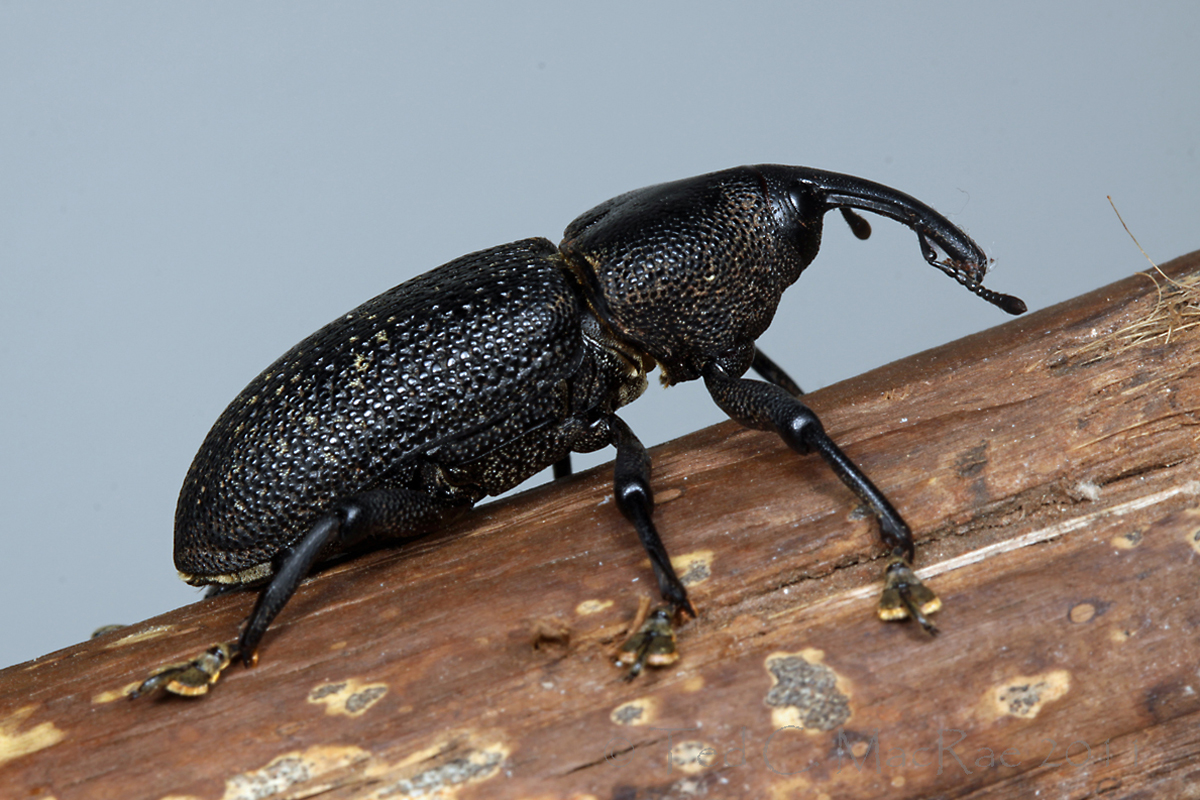
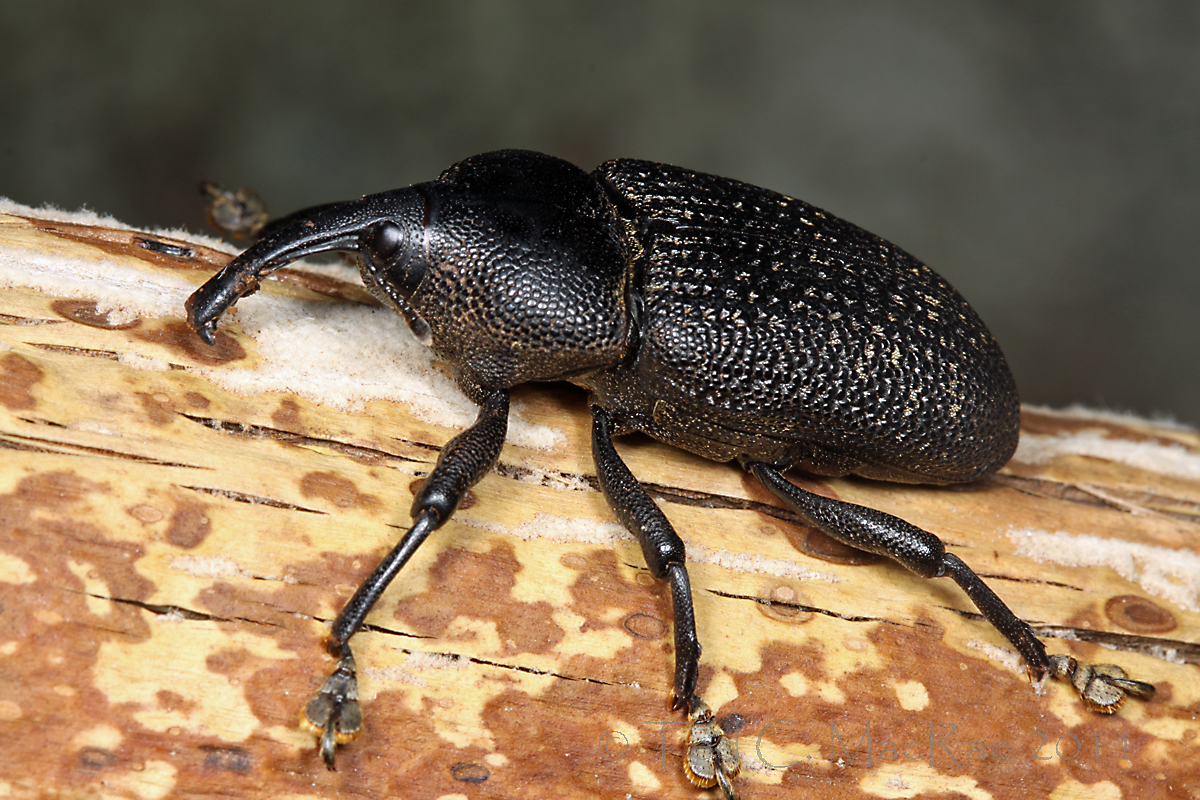
The second night at the hotel on the outskirts of Campinas (São Paulo, Brazil), I found this enormous weevil laying on the ground underneath some windows.  It was dead but completely relaxed and in perfect shape.  I wondered if it had been attracted to lights in the window the previous evening and flown there as its “last hurrah.”  This beast of a weevil – measuring a good 30mm from the tip of the snout to the apex of the elytra – immediately brought to my mind giant palm weevils of the genus Rhynchophorus (Coleoptera: Curculionidae).  I looked around and saw palm trees everywhere, so I figured that must be what it was.  I picked up one of the dead fronds from under a nearby palm tree and placed the weevil on the stem for a few photographs.  Given it’s freshness, it was quite easy to place in a lifelike pose, and I placed the stick in various positions to get a few different backgrounds.  As I was shooting, I noticed another, smaller, weevil on the ground near where I had found the first one – also dead and fresh.  Considering that Rhynchophorus often reaches pest status on palms, this further confirmed the ID in my mind.

Once back in the hotel room I smugly entered “giant palm weevil” into Google to bring up some images and confirm my ID (and also make sure my photos were at least on par with published images).  When the images came up, I saw immediately that my weevil was not a giant palm weevil at all.  While the South American species (R. palmarum) is black, the pronotum and elytra are much smoother and distinctly striate.  I don’t know if this weevil is a member of the same subfamily (Rhychophorinae) as the giant palm weevils, but it certainly not a member of that genus.  Still, considering its large size and distinctive appearance, I remained confident that an ID would come quickly.  Sadly, this has not proven to be the case – no search term I’ve tried involving the term “giant black weevil Brazil” or its many variations brings up anything remotely similar.  So, after spending much more time trying to identify this beetle than I should have, I leave it in the hands of my readers in the hopes that one of you will recognize it and provide a name.  Only when we have a name will it be possible to know something more about how this beetle lives (and if my placing it on a dead palm frond was a truly artificial setup).

Photo Details: Canon 50D w/ 100mm macro lens (ISO 100, 1/200 sec, f/16-18), Canon MT-24EX flash w/ oversized DIY concave diffuser. Typical post-processing (levels, minor cropping, unsharp mask).

Update 01/24/11: Thanks to Henry Hespenheide (via Facebook) and Art Evans, who clued me in to the genus Homalinotus (subfamily Cholinae).  I found a key to the 21 known species of this exclusively Neotropical genus (Vaurie 1973) and consider this individual to represent H. coriaceus – broca do cacho do coqueiro (black coconut bunch weevil).  This species breeds in the stems of old leaves of several native palms; however, it has adapted to the introduced coconut palm and apparently become a limiting factor in the commercial production of coconuts.  Thus, I can breathe easy now knowing that my photographs of this individual on the stem of a dead palm frond represent an entirely natural setting.

REFERENCE:

Vaurie, P.  1973.  The weevil genera Homalinotus and Ozopherus of the Neotropical Cholinae (Coleoptera, Curculionidae).  Bulletin of the American Museum of Natural History 152(1):1–49.

Copyright © Ted C. MacRae 2011

Brazil Bugs #2

A few more photographs from this past week in Campinas, Brazil.  It rained during the afternoon but stopped by the time I arrived back at the hotel, allowing me to stroll the lavishly landscaped grounds during the mild evening hours.  There is a pink-flowered shrub forming a hedge row in back of the hotel that is highly attractive to many types of insects.  The identity of the shrub remains a mystery to me, and most of the insects I’m finding on it I can recognize only to family – I’m hoping the hotel staff will be able to name the former and that the readers of this blog might be able to provide IDs for the latter.

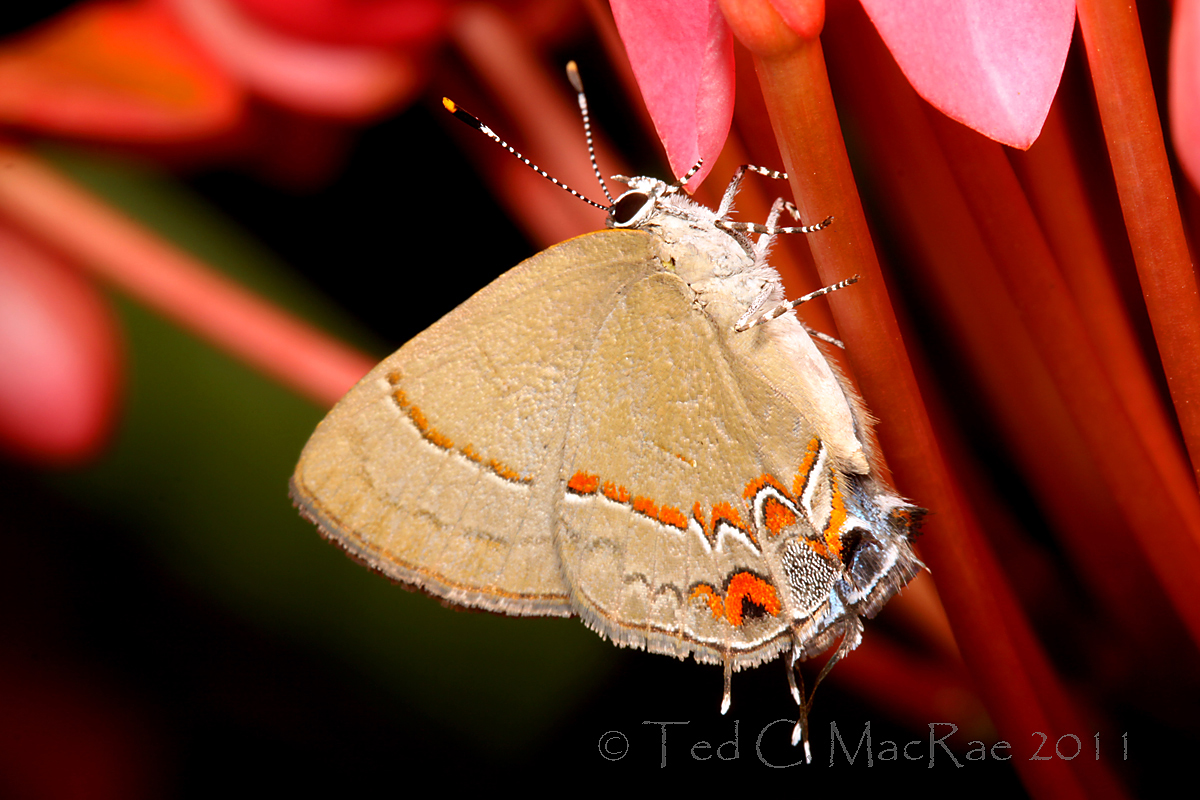
Calycopis sp. poss. origo (Lepidoptera: Lycaenidae). ID by Dave Hubble and Chris Grinter.

It took a bit of effort to find an unobstructed view of this hairstreak butterfly (family Lycaenidae) as it visited the flowers within the shrub.  Every time I tried to move foliage out of the way to get a good view, the butterfly became alarmed and flew to another part of the hedge row.  My antics drew the attention of a hotel worker, who was apparently interested enough in what I was doing to act as a spotter whenever the butterfly flew to help me relocate it.  Eventually I got a few shots that I was happy with, including the above.

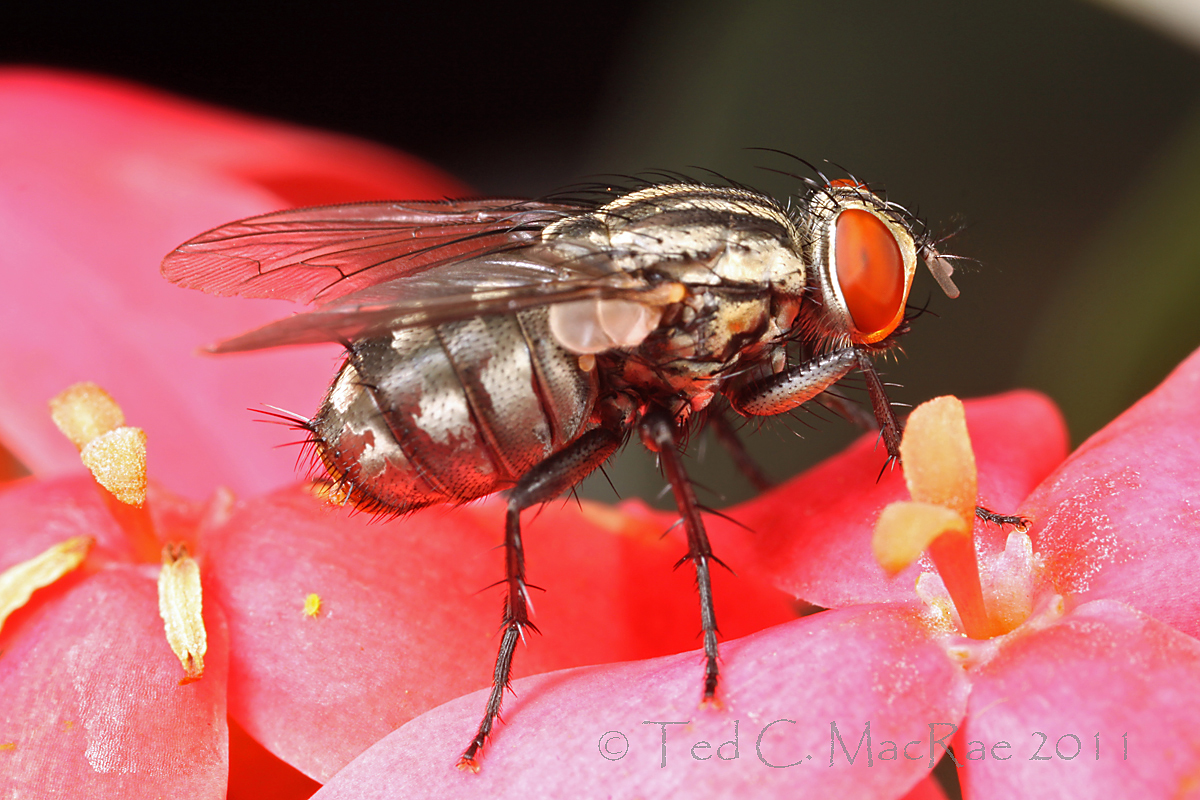
A flesh fly (Diptera: Sarcophagidae).

I presume this to be a type of flesh fly (family Sarcophagidae) based on the stout bristles and color pattern that seems typical for the family.  I like the striking contrast in coloration between the fly and the flower.  There are a few fly bloggers who I’m hoping might be able to give a better identification.

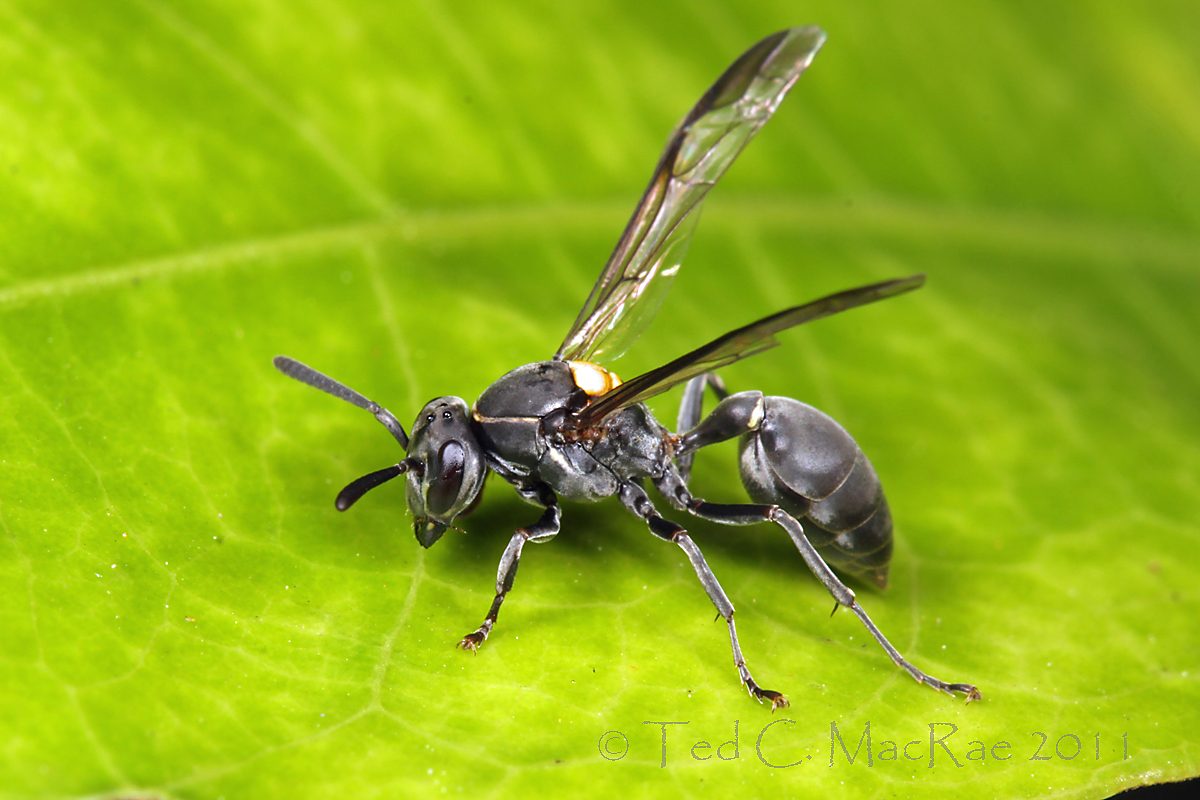
A potter/mason wasp? (Hymenoptera: Vespidae).

This appears to me to be some kind of potter or mason wasp (family Vespidae, subfamily Eumeninae) – it was a bit smallish at only about 12mm in length.  I hope one of the knowledgeable wasp bloggers out there (ahem… Eric?) can at least confirm this level of identification and perhaps the tribe or genus as well. 

Azya orbigera (Coleoptera: Coccinellidae). ID by Tucker Lancaster.

Every ladybird beetle (family Coccinellidae) I’ve ever seen is some variation of black and red/orange/yellow and has a smooth, glabrous appearance.  This beetle is cobalt blue with a dense pubescence over the dorsal surface, but it still seems to me to be some type of ladybird beetle.  It was a tiny little thing, so I suppose it could be one of the multitude of small beetle families with which I am unfamiliar.

Quedas sp.? (Hemiptera: Cicadidae).

This cast cicada exuvium was not on the shrub, but on a nearby tree at about eye level.  I really wish I could have seen the cicada that emerged from it, because this is certainly the biggest cicada exuvium I have ever seen.  I was about to simply label it “family Cicadidae” but seem to recall that cicada higher classification is in a bit of flux these days.  At any rate, given its great size I wonder if it might represent one of the giant cicadas in the genus Quesada.

I still have many more insect photographs from the past week and will certainly increase that number over the next week as well.  Stay tuned!

Copyright © Ted C. MacRae 2011
Calm waters, frenzied beetles

North Fork River - Ozark Co., Missouri

The North Fork River in south-central Missouri, like most Ozark rivers and streams, flows clear and cold over gravelled bottoms. Sustained year-round by the numerous seeps and springs that result from the region’s unique Karst geology, it meanders through a mix of forest and woodland alongside massive bluffs of half-a-billion-year-old dolomite. While small rapids can be found where gravel bars approach the bluffs, for the most part the shallow waters course lazily and idyllically south toward the White River in northern Arkansas.

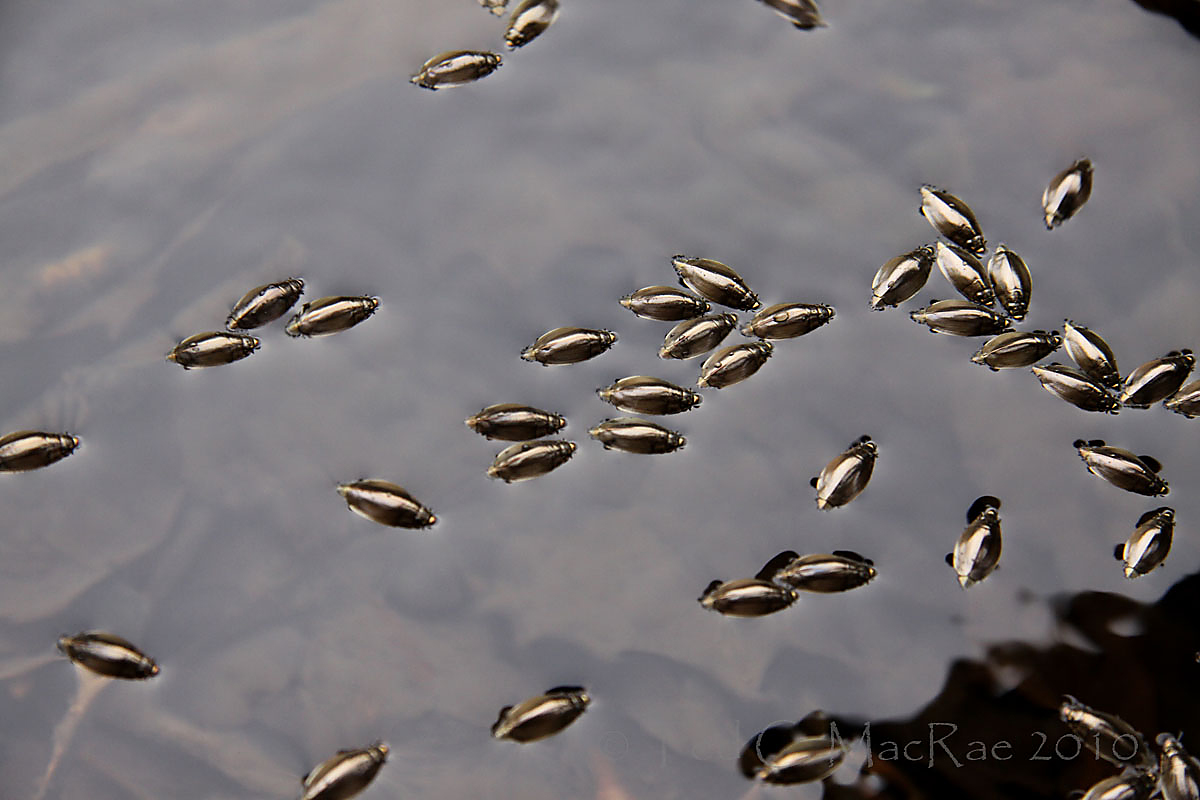
Dineutus sp. (poss. discolor, per Brady Richards)

Lazy waters are the domain of whirligig beetles (family Gyrinidae).  We encountered this ‘raft’ of beetles in a sheltered pool near the shore of the North Fork River while hiking the Ozark Trail last October.  These frenzied little beetles live almost exclusively on the surface of the water, where they feed on organisms or scavenge debris in their famously and erratically conspicuous aggregations.  Such behavior might make them seem vulnerable to predation, but in actuality the reverse is true.  Beetles in rafts benefit from the increased number of eyes that can better scan the environment for potential threats than can individual beetles (Vulinec and Miller 1989), and the larger the raft the more efficiently this occurs.  There is also evidence that the appearance of the rafts themselves is a signal to warn potential predators (primarily fish) of the noxious chemicals produced in the beetles’ paired pygidial glands (Ivarsson et al. 1996), despite the decidedly non-aposematic coloration of the beetles themselves.

Photo Details: Canon 50D w/ 17-85mm zoom lens, natural light. Photo 1 – 17mm, ISO 100, 1/25 sec, f/5.6; photo 2 – 85mm, ISO 500, 1/160 sec, f/5.6. Typical post-processing (levels, minor cropping, unsharp mask).

REFERENCES:

Ivarsson, P., B.-I. Henrikson and J. A. E. Stenson.  1996.  Volatile substances in the pygidial secretion of gyrinid beetles (Coleoptera: Gyrinidae).  Chemoecology 7(4):191–193.

Vulinec, K. and M. C. Miller. 1989. Aggregation and Predator Avoidance in Whirligig Beetles (Coleoptera: Gyrinidae). Journal of the New York Entomological Society 97(4):438–447.

Copyright © Ted C. MacRae 2011