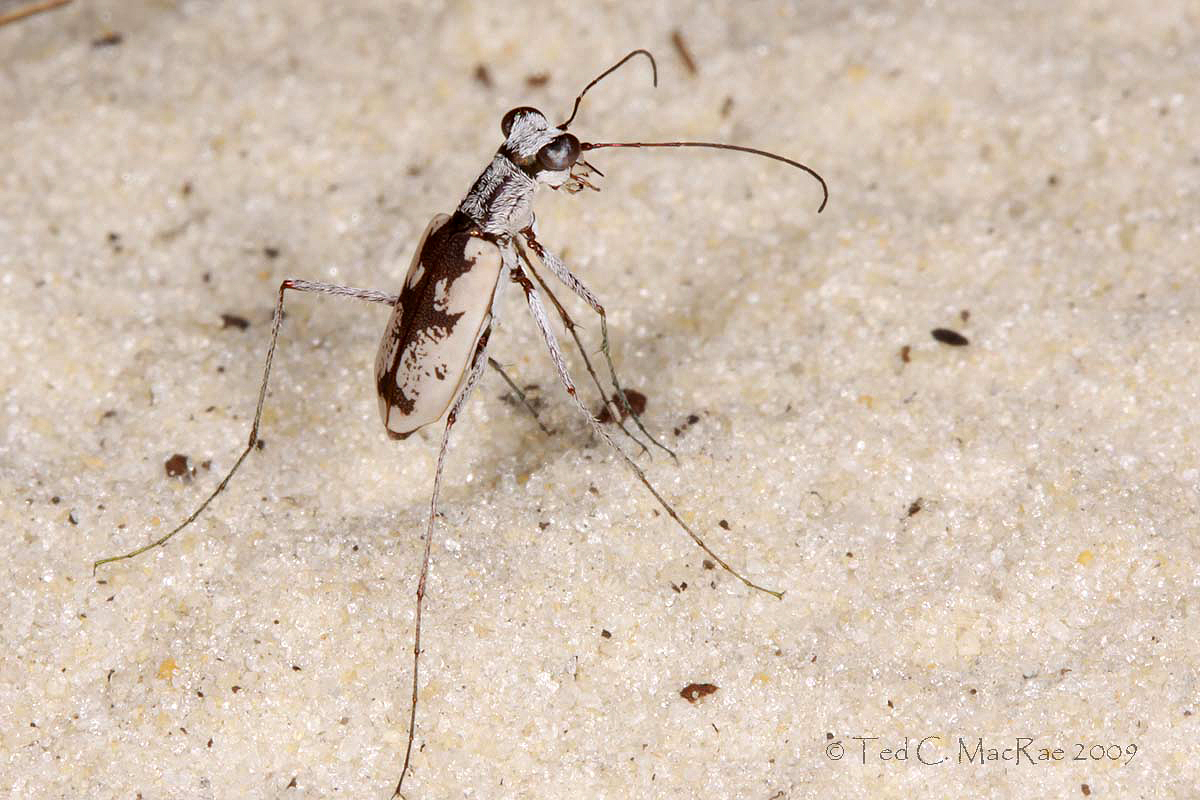
A Tiger Beetle Aggregation

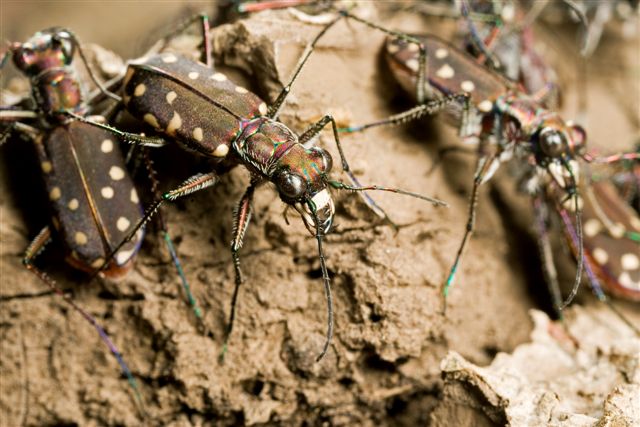
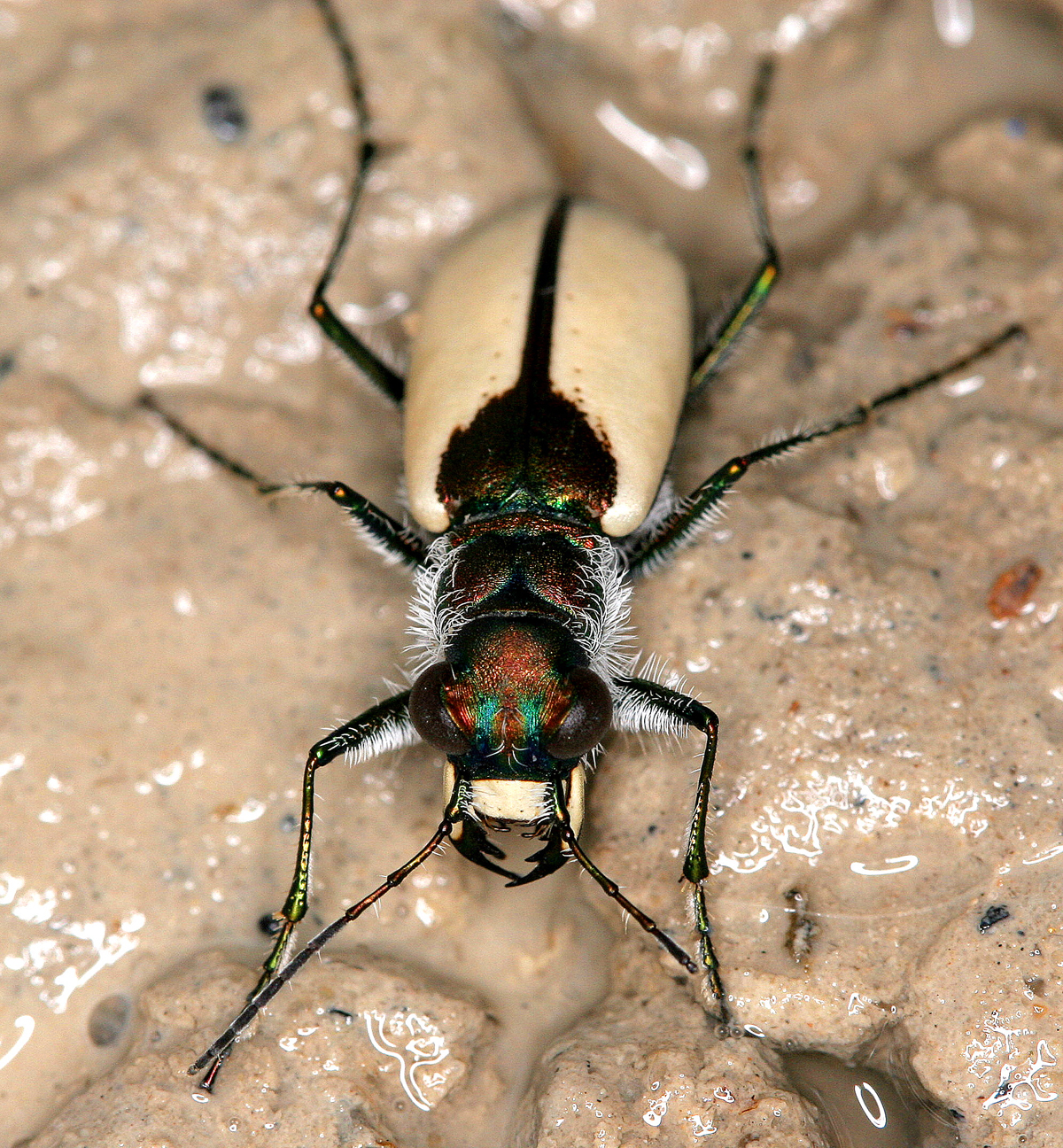
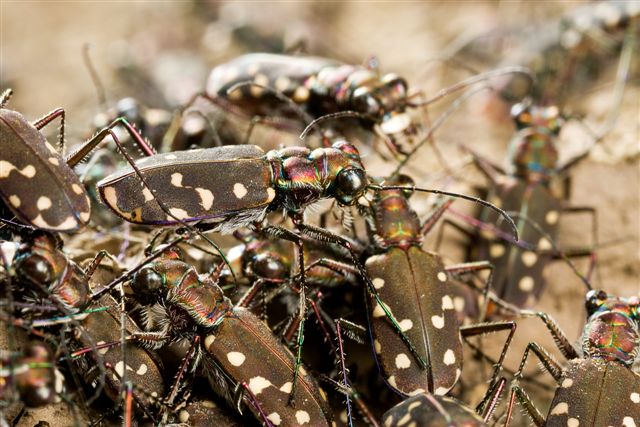
Not long ago, I received an interesting series of photographs from Joe Warfel, a nature photographer and macro specialist based in Massachussetts.  Joe traveled to Arizona last July, where he photographed an aggregation of Cicindela (Cicindelidia) sedecimpuntata (Western Red-bellied Tiger Beetle¹) near a small pool in the bottom of a dry creek bed at night.  Joe estimates that there may have been as many as 200 to 300 beetles per square meter in the aggregation, most of which were just “hanging out” and with only occasional individuals mating or feeding on moths that had been attracted to his headlamps.

¹ Found in the Sonoran and Chihuahuan Deserts of the southwestern U.S. and south through Mexico to Costa Rica. U.S. and northern Mexican populations are assigned to the nominate subspecies, while more southern populations are classified into four additional subspecies (Erwin and Pearson 2008).

Western Red-bellied Tiger Beetles are among the first tiger beetles to appear prior to the summer monsoons in the Sonoran Desert.  The species is famous for its daytime aggregations of as many as several thousand individuals, which congregate along the drying waterways and prey upon stranded tadpoles and other aquatic organisms (Pearson et al. 2006).  Joe noted that he has seen these aggregations many times before during the daytime at small pools and mudflats, with beetles usually mating and feeding frantically.  However, the aggregation shown in these photographs differs from those daytime aggregations by the relative inactivity of the beetles and the fact that they were congregated on dry ground rather than the moist areas that they frequent during the daytime.  In these respects, it seems to more resemble a communal nocturnal roost such as has been reported for several species of Odontocheila in South America.  In those cases, up to 70 beetles have been found resting on the foliage of low shrubs, apparently as an adaptation to avoid predation by multiplying chemical defense effectiveness as well as awareness of approaching enemies (Pearson and Vogler 2001 and references therein).  Cicindela sedecimpunctata is primarily a diurnal species (i.e., it is active during the daytime), though individuals are often attracted to lights at night, and adults of most diurnal species have been reported spending the night protected in burrows or under detritus and vegetation.  I am not aware of communal nocturnal roosts as a reported behavior for C. sedecimpunctata or any other North American tiger beetle species.

It is a bit ironic to think of tiger beetles – voracious predators that they are – as prey, but they must have many of their own predators to deal with since most species employ multiple antipredator mechanisms. In addition to the communal roosting behavior seen in these photos, a second antipredator characteristic exhibited by this species can be seen in their bright orange abdomen.  The abdomen is fully exposed only during flight, seemingly implying a “flash coloration” function for the bright color that disappears upon landing, momentarily confusing potential predators.  However, Pearson (1985) experimentally determined that orange abdomens in tiger beetles actually have an aposematic function in protecting them from predation against robber flies.  Most tiger beetle species with an orange abdomen also release a combination of benzaldehyde and cyanide² when captured (any tiger beetle collector is familiar with the characteristic “fruity” smell of a tiger beetle releasing benzaldehyde).  Pearson painted the abdomen of paper tiger beetles models either orange or black and endowed them with or without a drop of fresh benzaldehyde.  When presented on a tether to robber flies in the field, orange-abdomened models with benzaldehyde triggered significantly fewer attacks from robber flies than any other combination.  Interestingly however, vertebrate predators (lizards and birds) were not deterred by the defense chemicals or by the orange abdomen, perhaps explaining why only some and not all tiger beetle species produce defense chemicals and have bright orange abdomens (Pearson and Vogler 2001).

² Tiger beetles, thus, join millipedes as being among the few invertebrates that are capable of producing cyanide.
My sincere thanks to Joe Warfel for allowing me to use his photographs. More of his work can be seen at Eighth-Eye Photography.  Joe also recently had several images published in American Scientist magazine (November/December 2009 issue) for an article on harvestmen.  Check out the jaws on that juvenile!

REFERENCES:

Erwin, T. L. and D. L. Pearson. 2008. A Treatise on the Western Hemisphere Caraboidea (Coleoptera). Their classification, distributions, and ways of life. Volume II (Carabidae–Nebriiformes 2–Cicindelitae). Pensoft Series Faunistica 84. Pensoft Publishers, Sofia, 400 pp.

Pearson, D. L.  1985.  The function of multiple anti-predator mechanisms in adult tiger beetles (Coleoptera: Cicindelidae).  Ecological Entomology 10:65–72.

Pearson, D. L., C. B. Knisley and C. J. Kazilek. 2006. A Field Guide to the Tiger Beetles of the United States and Canada. Oxford University Press, New York, 227 pp.

Pearson, D. L. and A. P. Vogler.  2001. Tiger Beetles: The Evolution, Ecology, and Diversity of the Cicindelids.  Cornell University Press, Ithaca, New York, 333 pp.

Copyright © Ted C. MacRae 2010

Add to FacebookAdd to DiggAdd to Del.icio.usAdd to StumbleuponAdd to RedditAdd to BlinklistAdd to TwitterAdd to TechnoratiAdd to Yahoo BuzzAdd to Newsvine

Email to a friend

Alkali Tiger Beetle

Eunota togata globicollis - Salt Plains NWR, Oklahoma

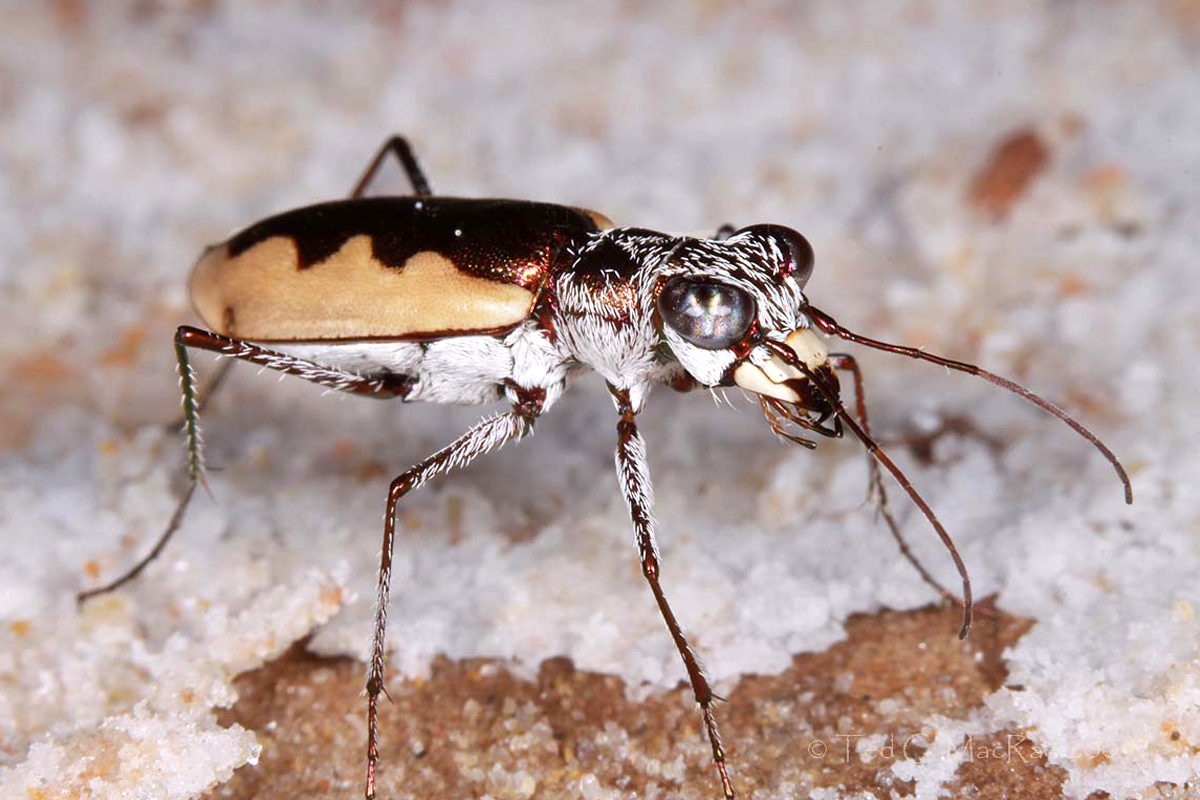
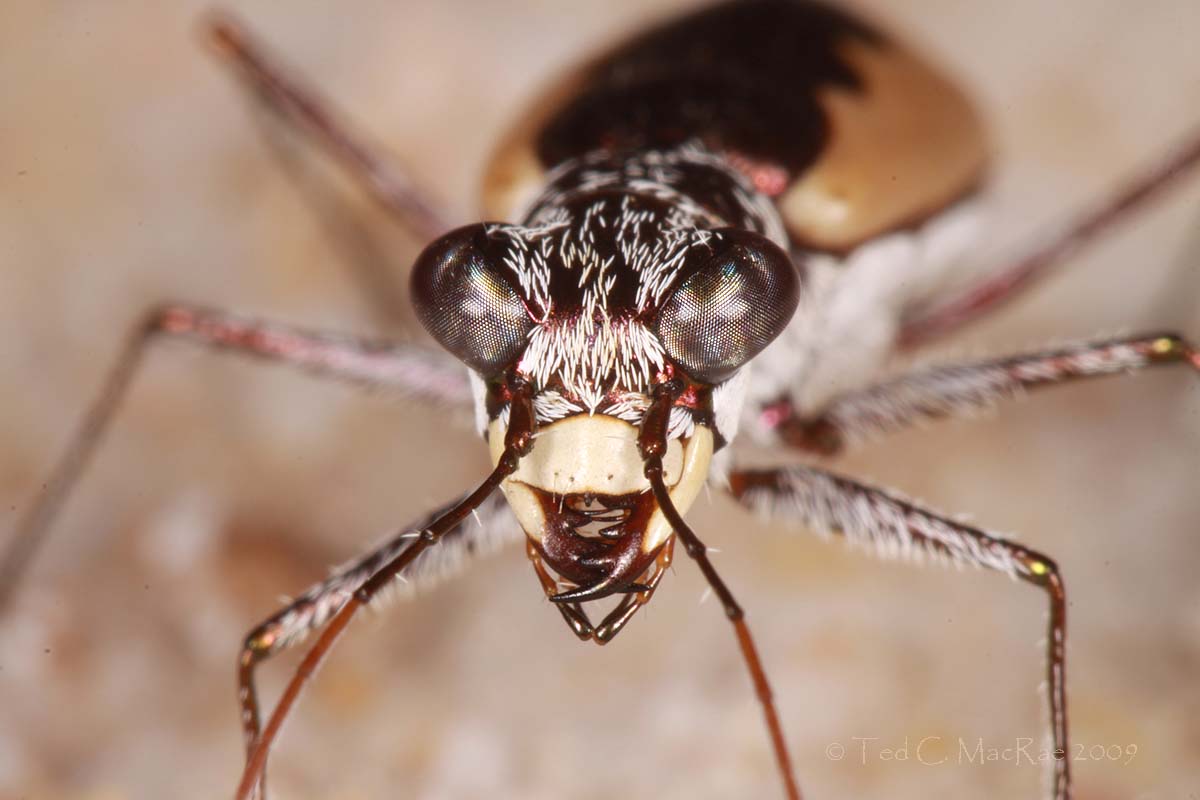
I haven’t written much about my early October trip to Oklahoma, where I had hoped to confirm a hunch that the gorgeous Cicindela pulchra (Beautiful Tiger Beetle) would be found in the red clay/gypsum hill habitats of Woodward and Major Counties (the same place where I had found the much rarer Cylindera celeripes the previous June).  Unfortunately, a sudden cold snap and overcast skies conspired against me for the duration of that short, 5-day trip, reducing tiger beetle activity to near zero and sending me back to Missouri with little to show for my efforts — save a scorpion, a torpid Cicindela splendida, and some very beautiful ladie’s-tresses orchids in peak bloom.  I did have one moderately successful day, however, when I returned to Salt Plains National Wildlife Refuge in north-central Oklahoma, a place where I observed seven species of tiger beetles during my June trip.  An eighth species that I did not see on that trip, but which I had observed in previous years, was my goal this time, and despite the cold temperatures and cloudy skies I was fortunate to find several individuals of Eunota togata globicollis.  Occurring primarily on saline flats in the central and southern Great Plain, this subspecies was called the Alkali Tiger Beetle¹ by Erwin and Pearson (2008), who reserved for the nominate form (found in salt marshes and tidal flats along the Gulf Coast) the more descriptive name White-cloaked Tiger Beetle².  A third subspecies, E. togata fascinans (Salt Flat Tiger Beetle) is restricted to salt flats in central New Mexico and west Texas (Pearson et al. 2006) (you may remember this subspecies from my habitat partitioning post last month).

¹ In reality, I have come to consider the term ‘alkali’ as a bit of a misnomer, as it is saline soils specifically — not just those with high pH (alkaline) — that the species is fond of. Moreover, there are many species of tiger beetles in addition to this one that are associated with saline soils.

² Okay, I might as well just get all this off my chest. Pearson et al. (2006) gave common names to each species of tiger beetle in the U.S., but not subspecies. I think most non-taxonomists probably consider this a good thing, although it is not without its problems (some species already had multiple common names applied to them, forcing choices that are sure not to please everyone). Erwin and Pearson (2008) took this further and came up with common names for all of the subspecies as well, and like any good taxonomist they steadfastly applied existing common names only to nominate forms. Eunota togata, however, is an example where the original common name would have been better applied to one of the non-nominate subspecies. The species epithet togata means “cloaked” (being derived from the Latin word toga — a reference to the broad white band running along the elytral margins). Each of the two non-nominate forms are distinguished by the white band being more broadly expanded (indeed, almost entirely covering the elytra in subspecies fascinans), yet it is the nominate subspecies — the least “cloaked” of the three — that retains the original common name. A silly argument I suppose, but if we start applying the “prinicple of priority” to common names in the same manner as scientific names, then what have we gained? Of course, I am of the opinion that most insect groups are too diverse and their taxonomy still too unstable to warrant a rigid system of “official” common names. Is it really any easier to learn White-cloaked Tiger Beetle than Eunota togata? How about Mount Ashland Night-stalking Tiger Beetle instead of Omus cazieri? And this is not even considering what happens when category-level shifts occur. For example, the genus Tetracha was formerly called the Big-headed Tiger Beetles; however, its former subgenera were recently elevated to genus level. Erwin and Pearson, accordingly, applied the common name to the entire subtribe containing Tetracha and its relatives and applied a new common name, Metallic Tiger Beetles, to the new, more limited concept of Tetracha. Thus, in an ironic case of common name instability despite no change in scientific name, the Virginia Big-headed Tiger beetle (Tetracha virginica) became the Virginia Metallic Tiger Beetle. Are your eyes bugging yet? Common names may be appropriate for higher vertebrates, but can they really be used effectively for beetles and other insect groups where the increasing use of molecular tools is sure to result in additional, perhaps radical, shifts in taxonomy? There — I said it, and I feel a lot better!

This species is restricted to saline flats in the central/southern Great Plains.

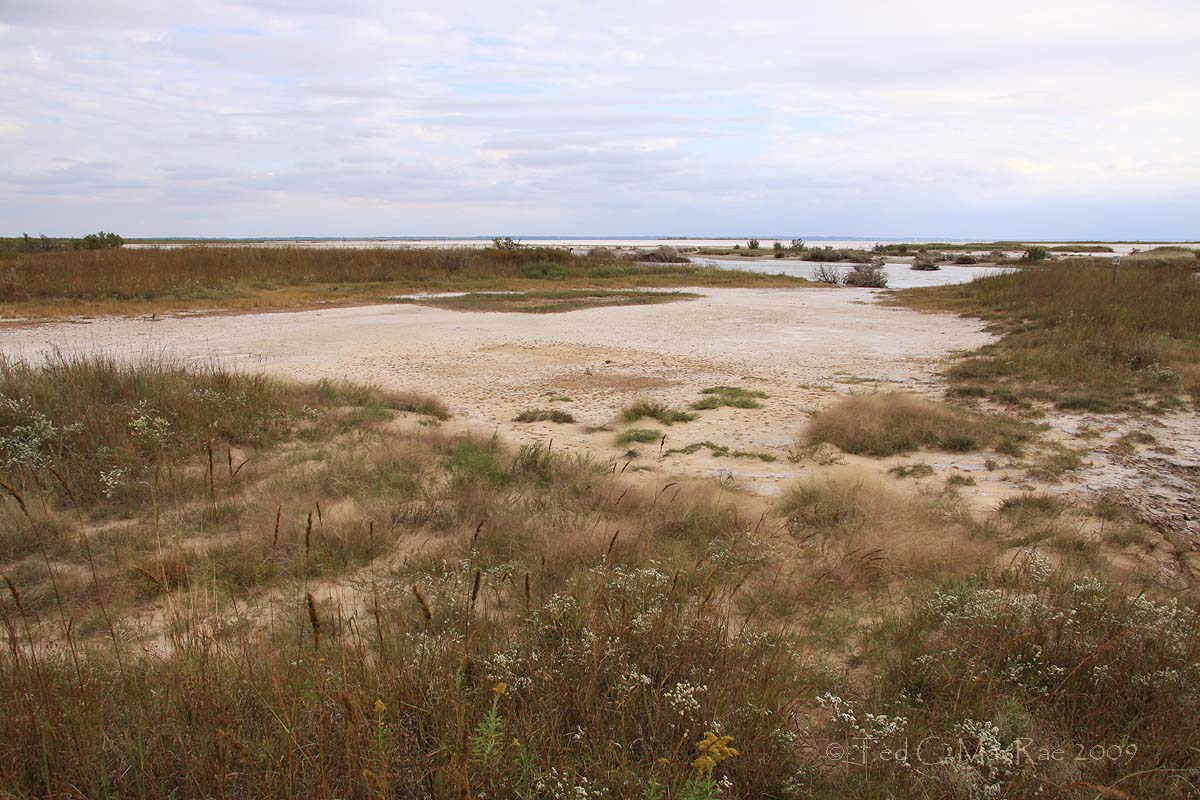
Of the eight tiger beetle species that I’ve now observed at Salt Plains NWR, half of them (Cicindela fulgida, C. nevadica knausii, E. togata globicollis, and Habroscelimorpha circumpicta johnsonii) are true saline habitat specialists.  One of the other four species (Cicindela tranquebarica kirbyi) is also fond of saline habitats but also occurs commonly on dry, sandy soils as well, and two show a high affiinity for nearly any moist (Cicindela repanda) or moist to dry (Cicindela punctulata) soils with little regard for salinity.  Only Cicindela formosa, a denizen of dry, deep sands seems a little out of its element on the moist, salty mud at Salt Plains NWR — perhaps the few individuals I’ve observed here are incidental visitors, mistaking the white, barren expanses of salt-encrusted soil for the dry sand the species prefers during disperal searches.  This again brings up the question of habitat partitioning for competition avoidance among tiger beetle species sharing the same habitat.  Eunota togata globicollis is active during the spring and fall and, thus, temporally isolated from C. nevadica knausii and H. circumpicta johnsonii (both summer-active species).  The other saline specialist at Salt Plains NWR (C. fulgida) is active during the same seasons as E. togata globicollis; however, in my observations that species prefers the sparsely-vegetated zone at the edge of the saline flats, while E. togata globicollis prefers to stay out in the more open areas.  These observations mirror those of Melius (2010) for E. togata fascinans and the other seven species he noted in the Laguna del Perro area of New Mexico, and of Willis (1967), who recorded as many as 11 sympatric tiger beetle species in saline habitats in the central U.S.

Saline flats at Salt Plains NWR are home to eight species of tiger beetles.

Microhabitat selection and seasonal occurrence are not the only isolating mechanisms that can minimize interspecific competition among the different tiger beetle species at Salt Plains NWR.  Cicindela tranquebarica kirbyi is also a spring/fall species and doesn’t appear to display a preference for open versus vegetated areas, potentially allowing it to compete directly with both E. togata globicollis and C. fulgida.  However, C. tranquebarica kirbyi is a decidely larger species, while the other two are smaller, and correlated with such differences in overall size is the size of their mandibles.  Mandibular size directly correlated to prey size in a number of tiger beetle species (Pearson and Mury 1979), thus providing another mechanism for avoiding competition between these three co-occurring species. 

Photo details:
Beetles: Canon 100mm macro lens w/ 68mm Kenco extension tubes on Canon EOS 50D (manual mode), ISO 100, 1/250 sec, f/18-20, MT-24EX flash 1/4 power w/ Sto-Fen diffusers.
Landscapes: Canon 17-85mm zoom lens (22mm) on Canon EOS 50D (landscape mode), ISO 100, 1/100 sec, f/10, natural light.

REFERENCES:

Erwin, T. L. and D. L. Pearson. 2008. A Treatise on the Western Hemisphere Caraboidea (Coleoptera). Their classification, distributions, and ways of life. Volume II (Carabidae-Nebriiformes 2-Cicindelitae). Pensoft Series Faunistica 84. Pensoft Publishers, Sofia, 400 pp.

Melius, D. A. 2009. Post-monsoonal Cicindela of the Laguna del Perro region of New Mexico. CICINDELA 41(4):81-89.

Pearson, D. L., C. B. Knisley and C. J. Kazilek. 2006. A Field Guide to the Tiger Beetles of the United States and Canada. Oxford University Press, New York, 227 pp.

Pearson, D. L. and E. J. Mury. 1979. Character divergence and convergence among tiger beetles (Coleoptera: Cicindelidae). Ecology 60:557–566.

Willis, H. L.  1967.  Bionomics and zoogeography of tiger beetles of saline habitats in the central United States (Coleoptera: Cicindelidae).  The University of Kansas Science Bulletin 47(5):145-313.

Copyright © Ted C. MacRae 2010

Add to FacebookAdd to DiggAdd to Del.icio.usAdd to StumbleuponAdd to RedditAdd to BlinklistAdd to TwitterAdd to TechnoratiAdd to Yahoo BuzzAdd to Newsvine

Email to a friend

“Cicindelophilically”


My good friends Kent Fothergill and Kelly Tindall passed through St. Louis last week on their way back home from a visit to Columbia.  I was happy for the chance to get together with them – if only for a short visit, as I hadn’t seen them since the summer before last when Kent joined forces with Chris Brown and I to conduct a survey for Cylindera cursitans (ant-like tiger beetle) in southeast Missouri.  (You may recall that I orginally met Kent when he emailed me out of-the-blue after moving to southeast Missouri in 2007 to let me know he liked tiger beetles.  I responded by suggesting that he look for this long sought-after species, which he found the very next day!)  Kent had told me in arranging the visit that they had something they wanted to give me, and since I had some specimens of theirs to return it seemed a convenient way to make the exchange.  I had no idea what it was they wanted to give me, but I knew they’d been to the recent Entomological Society of America meetings in Indianapolis and figured they must have purchased a cool beetle specimen or something for me.

After arriving at my office, they told me that they’d had the chance to meet John Acorn, a rare celebrity in the world of natural history study.  Most people known John as the host and creative force behind Acorn the Nature Nut, an award-winning television series in which John’s inspiring personality and infectious love of nature introduce viewers to various aspects of Alberta’s natural history.  John is also, however, an accomplished entomologist, with one of his special interests being… you guessed it – tiger beetles!  In 2001, John published The Tiger Beetles of Alberta: Killers on the Clay, Stalkers on the Sand, one of the most accessible and highly entertaining treatments of the family (er… supertribe) to date (if I can ever get my act together and write The Tiger Beetles of Missouri, I want to model it after this book).  John was at the ESA meetings selling original artwork of the different tiger beetle species occurring in Alberta, and Kent and Kelly mentioned to him that they had a friend back in Missouri who would love one of his prints – selecting “Cicindela purpurea auduboni black morph”.  Somehow, my name and association with this blog came up, to which John replied, “Oh, I know about Beetles in the Bush” and then signed the print for me as shown below.  Wow!

I hope Kent and Kelly understand my stunned silence upon first seeing the print they had so generously given to me and the inscription it bore.  I felt a little silly afterwards returning their kind gesture by just giving them back specimens that were already theirs.  I’m honored by their friendship and will be reminded of it now everytime I look at the print on my office wall.

REFERENCE:

Acorn, J.  2001.  Tiger Beetles of Alberta: Killers on the Clay, Stalkers on the Sand.  The University of Alberta Press, Edmonton, xix + 120 pp.

Copyright © Ted C. MacRae 2010

Add to FacebookAdd to DiggAdd to Del.icio.usAdd to StumbleuponAdd to RedditAdd to BlinklistAdd to TwitterAdd to TechnoratiAdd to Yahoo BuzzAdd to Newsvine

Email to a friend

A matter of diffusion

In my Best of 2009 post, I mentioned four skills that, to me, seemed to be crucial for becoming a successful insect macrophotographer: 1) composition, 2) understanding lighting, 3) knowing how to use a flash, and 4) knowledge of the subject.  Of these, I’m most comfortable with the last – three decades of insect study have given me the chance to observe a tremendous diversity of insects in a variety of situations and habitats.  Many species are located only through understanding of their haunts and habits, and the ability to capture them relies upon successful approach techniques.  Collecting insects has been excellent preparation for photographing them.  I’m also reasonably satisfied with my compositional skills – at least in this early stage of my development as a photographer.  I don’t expect to win any photo competitions (yet), especially since my intent as a photographer is at least as much for scientific documentation as it is for artistic expression, but I’m satisfied that I’m on the right track and developing the eye I’ll need to make good progress.

What I’m not satisfied with yet are the middle two – understanding lighting and knowing how to use a flash.  Let’s face it, I was starting from square one here.  My only prior experience with insect photography were middlin’ attempts in the mid-1980’s using an Olympus OM-10 body, a Zuiko 50mm lens (maximum magnification 1:2), and natural light only.  I quickly lost interest (too distracting for the collecting), picking it back up only for my 1999 trip to South Africa.  Fast forward to May 2009 and my acquisition of a bona fide insect macrophotography setup, complete with Canon’s 100mm f/2.4 and 65mm 1-5X macro lenses and their MT-24EX macro twin flash.  Talk about giving a Ferrari to someone who had just received their learner’s permit!  I like a good challenge, however, and spent the rest of 2009 with camera in hand on several memorable field trips – shooting lots of frames, deleting many on the spot and more when I saw them on the computer, and occasionally stumbling onto a pretty good one.

While I still have much to learn, one thing I did realize is that lighting remains a challenge even with a decent setup such as mine.  The MT-24Ex flash unit, in particular, while seemingly the flash of choice among Canon-using amateur insect macrophotographers, produces a very harsh light.  The capabilities and shortcomings of this flash unit have been reviewed in great detail by several insect macrophotographers much more knowledgeable than I (e.g., Alex Wild, Dalantech, Kurt, etc.), so I simply refer you to their websites if you’re interested rather than try to summarize here.  However, the one thing they all emphasize with this flash unit is the need for diffusers.  Diffusing light is easy; a simple sheet of tracing paper will do.  However, diffusing light in a manner that is equally effective with both the 65mm and 100mm lenses (with their shorter and longer working distances, respectively) and also convenient for field-use is hard.  For most of the 2009 season, I tried using Sto-Fen Omni-Bounce Diffusers, and while they were marginally better than no diffusers at all, the results were still not satisfying.  More recently, I’ve been experimenting with the Gary Fong Puffers, which Dalantech has modified for use with the MT-24EX.  I hadn’t yet committed to constructing the diffusers as described and conducting controlled comparisons between the Puffers and Sto-Fens, but my initial tinkering with the Puffers has me impressed.  Below are two photos of Cicindela splendida (the aptly-named Splendid Tiger Beetle) – the first (which some of you may remember from this post) was taken in the field using the Sto-Fen diffusers and the 65mm lens (1X)…

…while the second was taken recently of this same beetle (in captivity on native soil) using the Puffers attached to the Sto-Fens and the 100mm lens (at slightly less than 1X).

Both photos have been cleaned up a bit with post-processing; however, neither has been altered dramatically.  While not a true one-to-one comparison due to different venues (field versus captivity) and lenses (65mm versus 100mm), the second photo is clearly superior to the first, with softer lighting resulting in richer colors and far fewer specular highlights on the insect body.   I had to bump the lighting up considerably for the second photo, since the Puffer combined with the Sto-Fens cut the light levels quite a bit, yet still the photo lacks any of the harshness and washed appearance of the first photo.  The use of the 100mm lens in the second photo also should have presented a greater challenge for the lighting due to the increased working distance (~8 inches, compared to only 2-3 inches for the 65mm lens).  I’m really quite pleased with the results of this initial experiment – enough to the point that I’ve ordered the necessary materials and am ready to dive into construction of my own set of “Dalantech-Puffers.”

Copyright © Ted C. MacRae 2010

Add to FacebookAdd to DiggAdd to Del.icio.usAdd to StumbleuponAdd to RedditAdd to BlinklistAdd to TwitterAdd to TechnoratiAdd to Yahoo BuzzAdd to Newsvine

Email to a friend

Me and my buds!

Those of you who have followed this blog for any length of time have seen repeated references to my friends and colleagues, Chris Brown and Rich Thoma. Rich and I have been collecting insects together for almost 25 years now (since shortly after we bothed first moved to the St. Louis area), and Chris has joined us in the fun for the past ten years as well. It is rare when all three of us can get out in the field together – meshing hectic professional and family lives with the sometimes coincident, sometimes divergent insect collecting goals of three fathers can be challenging. Nevertheless, at least once or twice a year we manage to converge on a date and enjoy each other’s company out in the field. I don’t think I’m ever happier than when I’m in the field (well, except when one of my daughter’s nestles into my lap to watch a movie!), and the chance to share that experience with close friends of like interest is especially gratifying.

Chris is quite an accomplished insect photographer himself, having been at it for much longer than I’ve known him and providing me great coaching as I’ve begun testing the waters myself. Recently, he sent me some photos from our 2009 field trips to the lowlands of southeastern Missouri and the Loess Hills of northwestern Missouri. Those were two exciting trips, revealing new localities for Cicindela scutellaris, the discovery of Cylindera celeripes in Missouri, the rediscovery of Ellipsoptera macra, and even a new state record robber fly.  The sharing kind of guy he is, he’s granted me permission to post them here (plus one taken by Rich Thoma).

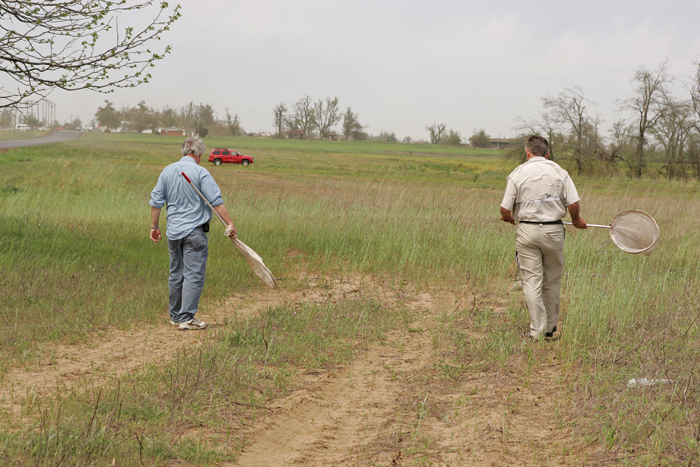
Rich (left) and Ted scan 2-track through sandy ground in the southeastern lowlands looking for tiger beetles.

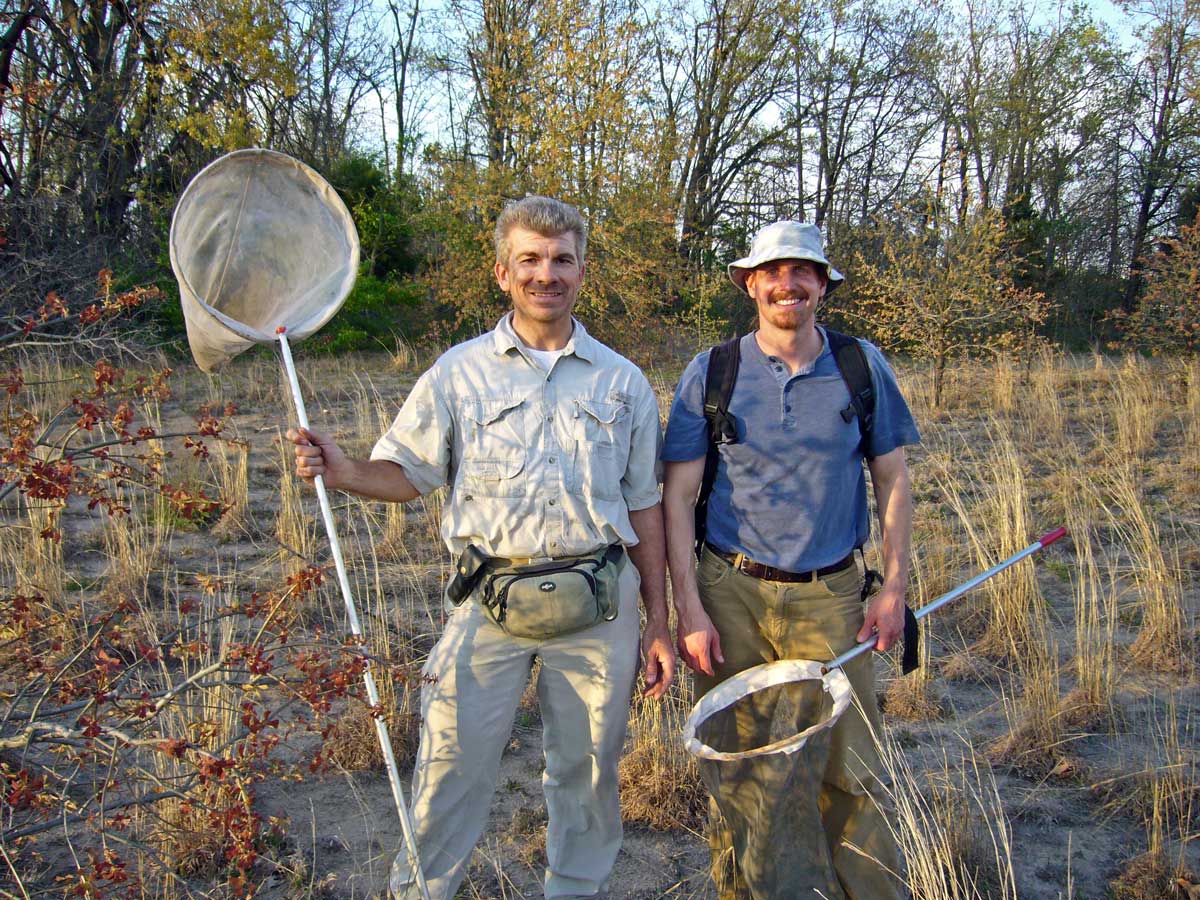
Ted and Chris take a break from looking for tiger beetles in a sand prairie relict. Photo by Rich Thoma.

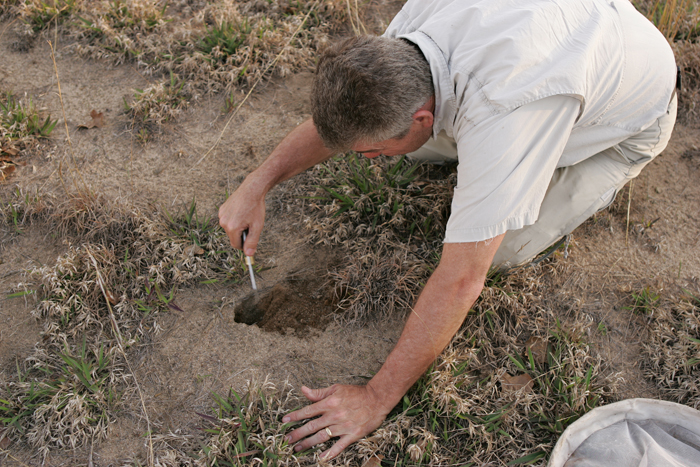
Ted attempts to extract an adult tiger beetle from its daytime burrow in a sand prairie relict.

Ted scans the open sand in a sand prairie relict for adult tiger beetles.

Ted fishes for a tiger beetle larva in a sand prairie relict.

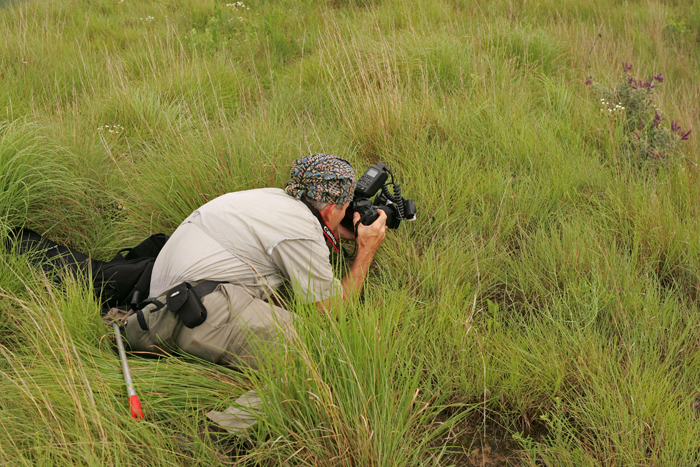
Ted photographing the robber fly, Ospriocerus abdominalis, at Star School Hill Prairie in the Loess Hills of northwest Missouri.

Distant view of Ted (small spot in center) photographing Ospriocerus abdominalis at Star School Hill Prairie.

Copyright © Ted C. MacRae 2009

Add to FacebookAdd to DiggAdd to Del.icio.usAdd to StumbleuponAdd to RedditAdd to BlinklistAdd to TwitterAdd to TechnoratiAdd to Yahoo BuzzAdd to Newsvine

Email to a friend

Habitat Partitionining in Tiger Beetles

Cicindela willistoni estancia

Cicindela willistoni estancia. Photo by David Melius.

ResearchBlogging.orgThe latest issue of CICINDELA (December 2009, vol. 41, no. 4) contains an interesting paper by David A. Melius titled, “Post-monsoonal Cicindela of the Laguna del Perro region of New Mexico.” This paper continues a theme that I have touched on a few times in recent posts regarding the partioning of resources by multiple species of tiger beetles utilzing the same habitat. The author reports on the results of two visits to the Laguna del Perro salt lake region of New Mexico (Torrance County) in July 2009, during which time he recorded a total of eight tiger beetle species in the area. As in many other parts of the arid west, tiger beetles in this region are highly dependent upon summer monsoonal rains to trigger adult emergence (Pearson et al. 2006), resulting in multiple species occupying a given habitat during the relatively short post-monsoonal period. However, according to the competitive exclusion principle (Hardin 1960), two species cannot stably coexist in the same habitat and compete for the same resources—one of the two competitors will always overcome the other unless resources are partitioned to avoid competition.

Cicindela willistoni estancia

Cicindela willistoni estancia. Photo by David Melius.

Tiger beetles that occupy the the same habitats employ a variety of mechanisms for avoiding direct competition. One of these is partitioning the environment into different “microhabitats.” One of the earliest reports of this was by noted American ecologist Victor Shelford, who reported that adult tiger beetles on the southern shores of Lake Michigan occupied different habitats from water’s edge to oak forest floor (Shelford 1907). Similarly, Choate (2003) found three sympatric species of tiger beetles in a coastal mudflat region in South Carolina, each of which utilized a different portion of the salt marsh. I myself have noted multiple species occupying the same habitat in Oklahoma’s Salt Plains National Wildlife Refuge, on a coastal salt marsh in Florida, and in the White River Hills of southwestern Missouri.

In the present study, the author noted distinct preferences among the eight species for different microhabitats within and adjacent to the salt flats, including 1) thick, wet mud immediately adjacent to the water, 2) damp, soft sand 10-20 m from the water and devoid of vegetation, and 3) dry to damp sand further away from the water with salt-tolerant plants. Nearby roadside habitats were also noted as an additional microhabitat. The species found and their preferred niches were:

  • Cicindela fulgida rumppii, exclusively in vegetated dry sand areas around the salt flats.
  • Cicindela (Cicindelidia) nigrocoerulea, mostly 10-20m from the water’s edge, a few also in roadside habitat.
  • Cicindela (Cicindelidia) punctulata chihuahuae, exclusively in roadside habitats.
  • Cicindela (Cicindelidia) willistoni estancia, mostly along the water’s edge.
  • Cylindera terricola cinctipennis, exclusively in dry grassy areas away from the water.
  • Ellipsoptera nevadica, exclusively along the water’s edge.
  • Eunota togata fascinans, unvegetated areas near and 10-20m from the water’s edge.
  • Habroscelimorpha circumpicta johnsoni, limited to roadside habitats and vegetated dry sand areas around the salt flats.

These microhabitat partitions can be visualized below. Note that although eight total species were collected, only 2-4 occur within each particular microhabitat and that all eight species were limited to just 1 or 2 microhabitats, resulting in unique species-guilds for each.

Some differences were also noted in species present during the different trips, suggesting that species occurring within the same microhabitat are also utilizing differences in temporal occurrence to further minimize competition. Differences in size among the different species were noted as well – for example, of the four species occurring in the vegetated, dry-damp sand microhabitat, Cylindera terricola is notably smaller and Habroscelimorpha circumpicta notably larger than the others. Since mandible length of adult tiger beetles is highly correlated with preferred prey size (Pearson et al. 2006), this likely results in utilization of different prey, further partioning resources within the different microhabitats.

I thank David A. Melius (Albequerque, New Mexico) for allowing me to include his stunning photographs of Cicindela willistoni estancia in this post.

REFERENCES:

Choate, P. M., Jr. 2003. A Field Guide and Identification Manual for Florida and Eastern U.S. Tiger Beetles.  University Press of Florida, Gainesville, 224 pp.

Hardin, G. 1960. The competitive exclusion Principle. Science 131:1292-1297.

Melius, D. A. 2009. Post-monsoonal Cicindela of the Laguna del Perro region of New Mexico. CICINDELA 41(4):81-89.

Pearson, D. L., C. B. Knisley and C. J. Kazilek. 2006. A Field Guide to the Tiger Beetles of the United States and Canada. Oxford University Press, New York, 227 pp.

Shelford, V. E. 1907. Preliminary note on the distribution of tiger beetles (Cicindela) and its relation to plant succession. Biological Bulletin of the Marine Biological Laboratory at Woods Hole 14:9-14.

Copyright © Ted C. MacRae 2009

Add to FacebookAdd to DiggAdd to Del.icio.usAdd to StumbleuponAdd to RedditAdd to BlinklistAdd to TwitterAdd to TechnoratiAdd to Yahoo BuzzAdd to Newsvine

Email to a friend

BitB Best of 2009

In my first post of 2009, I looked back at the photographs I had posted during 2008 and picked some of my personal favorites. I hesitated then to call myself a photographer (and still do), but I at least now have suitable equipment to aid in my progress toward that eventual goal. I have learned much over the past six months in my first attempt at serious insect macrophotography (prioritizing in situ field photographs of unmanipulated subjects as a matter of personal choice).  Through this, I’ve come to realize the following skills to be the most important for success:  

  1. Composition
  2. Understanding lighting
  3. Knowing how to use a flash
  4. Knowledge of the subject

I’ll give myself a “A” in the last of these, but in the other areas I still have much to learn. With this caveat, and for the last post of 2009, I offer the following twelve photographs as my final choices for the 2nd Annual “Best of BitB”:  

Best beetle

Cylindera celeripes (swift tiger beetle), Woodward Co., Oklahoma

From Revisiting the Swift Tiger Beetle – Part 1 (June 30).  A decent enough photograph, especially considering that I’d had my camera for about a month when I took it.  However, the discovery of robust populations of this formerly rare and enigmatic species throughout northwestern Oklahoma (and later also in northwestern Missouri) was the most significant find of the 2009 field season, and this photograph is the best capture of that moment.

Best fly

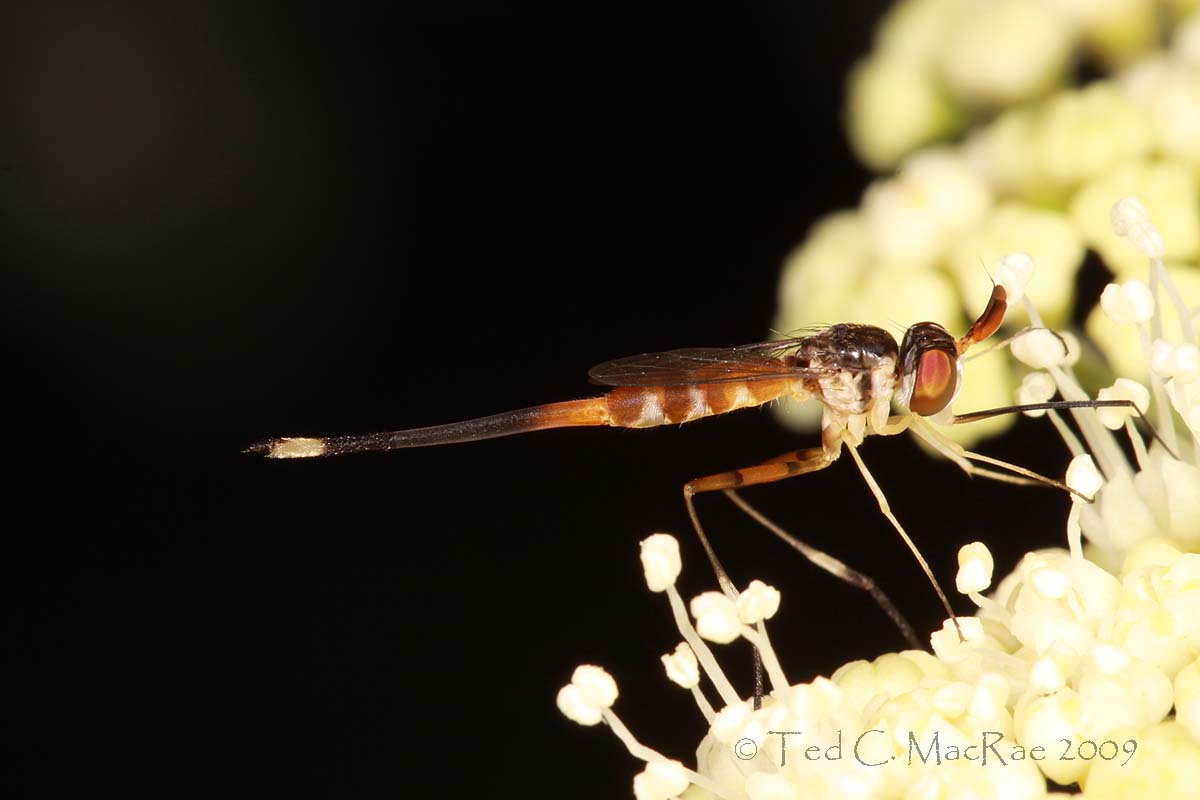
Stylogaster neglecta, a species of thickheaded fly

From Overlooked, needle-bellied, thick-headed fly (Aug 14).  One of my first good “black background” shots.  The white tip of the abdomen compliments the white flower stamens against the background.

Best “true” bug

Beameria venosa, a prairie obligate cicada

From North America’s smallest cicada (Aug 4).  So many different shades of green with white frosting on the bug’s body.  I tried taking this shot in portrait and it just didn’t work—I liked this landscape shot much better.

Best predator

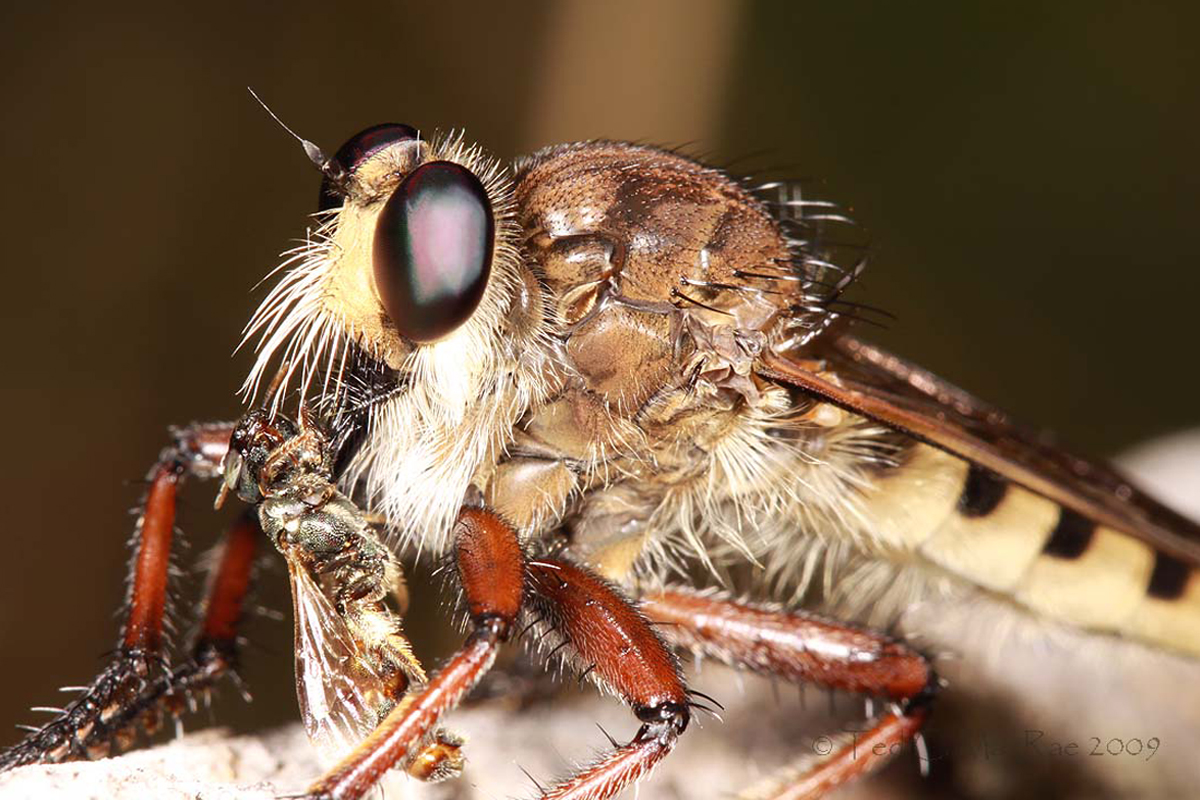
Promachus hinei (Hines giant robber fly) & Ceratina sp. (small carpenter bee) prey

From Prey bee mine (Sept 14).  Robber flies are immensely photogenic, especially those in the genus Promachus due to their prominent “beards.”

Best camoflauge

Dicerca obscura on bark of dead persimmon

From The “obscure” Dicerca (June 19).  Sparkling and gaudy as specimens in a cabinet, the coloration of many jewel beetles actually helps them blend almost perfectly with the bark of their preferred tree hosts.

Best immature insect

Tetracha floridana (Florida metallic tiger beetle) 3rd-instar larva

From Anatomy of a Tiger Beetle Larva (Oct 22).  “Otherwordly” is invariably the first word that comes to mind when someone sees a tiger beetle larva for the first time.  I was lucky enough to get this one in profile with a nice view of its abdominal hump and its curious hooks.

Best arachnid

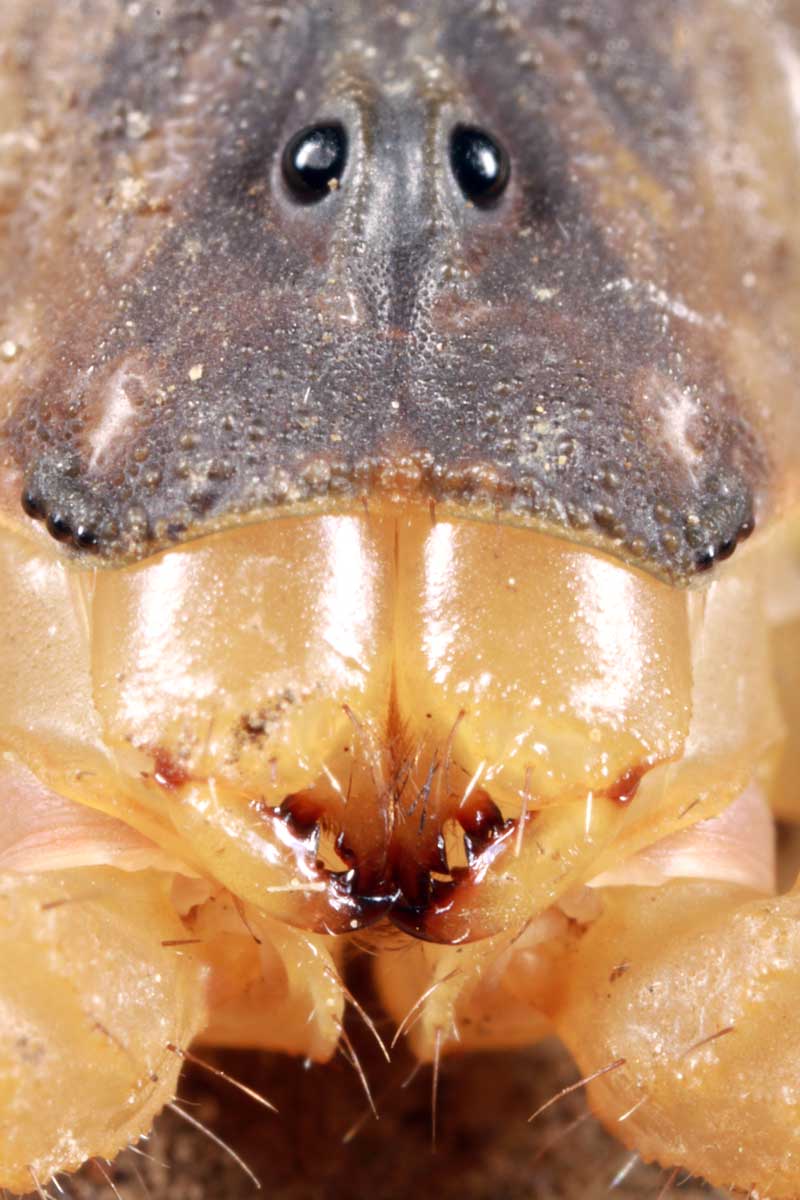
Centruroides vittatus (striped bark scorpion)

From A face only a mother could love (Oct 6).  Despite some minor depth-of-field problems with this photograph, I’m fascinated by its “smile.”

Best reptile

Eastern collared lizard (Crotaphytus collaris collaris) adult male

From North America’s most beautiful lizard (July 10).  A simply spectacular lizard—all I had to do was frame it well and get the flash right.

Best wildflower

Spiranthes magnicamporum (Great Plains ladies

From Great Plains Ladies’-tresses (Dec 7).  Few flowers are as photogenic as orchids, even native terrestrials with minute flowers such as this one.  I like the frosty texture of the lip and the starkness of the white flower on the black background.

Best natural history moment

Thermoregulatory behavior by Ellipsoptera hirtilabris (moustached tiger beetle)

From Tiger Beetles Agree—It’s Hot in Florida! (Dec 18). I chose this photo for the classic “stilting” and “sun-facing” thermoregulatory behaviors exhibited by this tiger beetle on a blistering hot day in Florida.

Best closeup

Megaphasma denticrus (giant walkingstick)

From North America’s longest insect (Aug 21).  I haven’t tried a whole lot of super close-up photographs yet.  I liked the combination of blue and brown colors on the black background.

Best Landscape

Sand Harbor Overlook, Lake Tahoe, Nevada

From Sand Harbor Overlook, Nevada (March 23).   My choice for “best landscape” again comes from Lake Tahoe.  This is not a great photo technically—I was still using a point-and-shoot and had to deal with foreground sun.  However, none of the other photos I took during my March visit to the area captivate me like this one.  I like the mix of colors with the silhouetted appearance of the trees on the point.

Copyright © Ted C. MacRae 2009

Add to FacebookAdd to DiggAdd to Del.icio.usAdd to StumbleuponAdd to RedditAdd to BlinklistAdd to TwitterAdd to TechnoratiAdd to Yahoo BuzzAdd to Newsvine

Email to a friend